
Key Takeaways
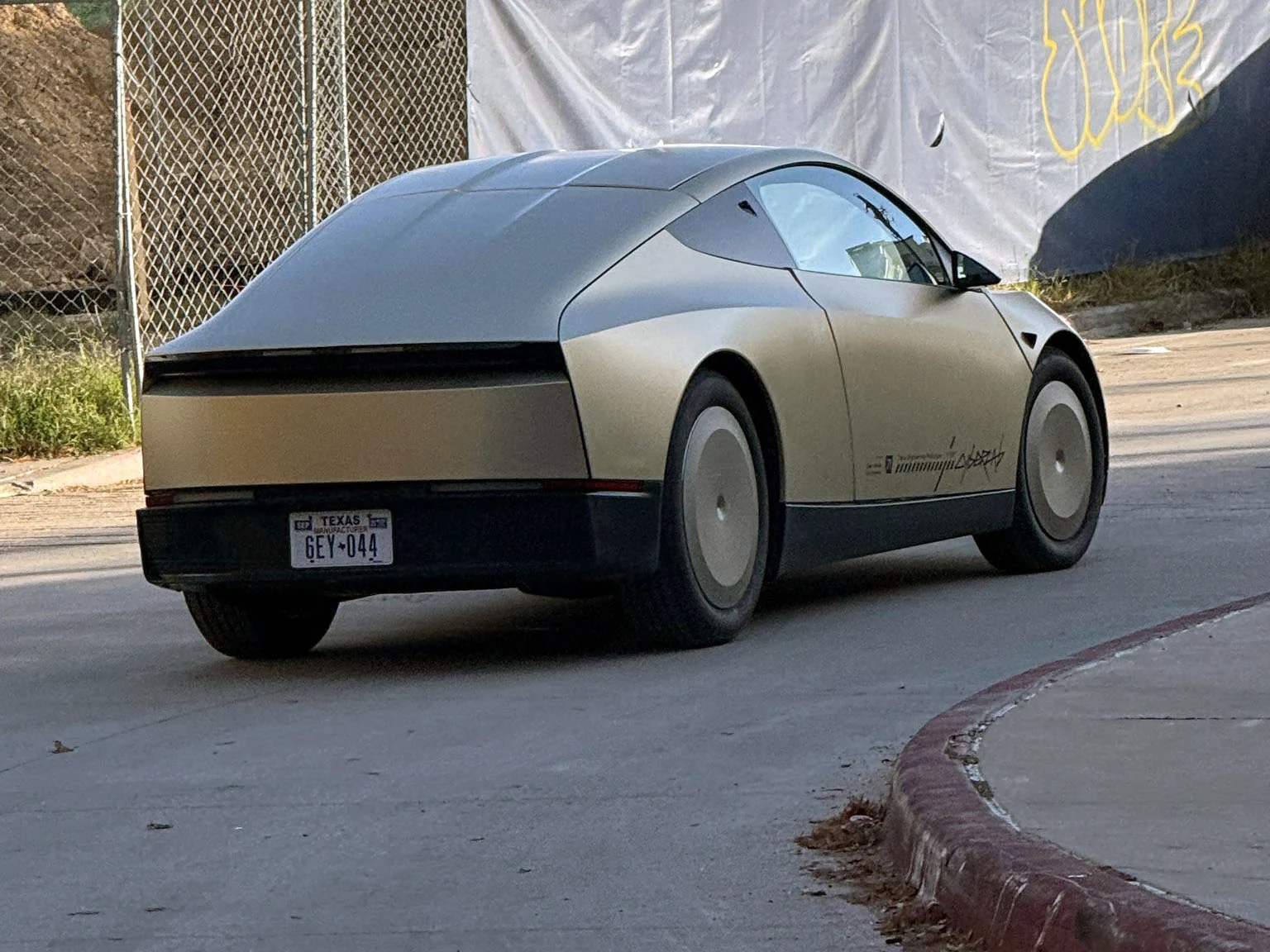
1. Tesla is testing its driverless Cybercab, which has no pedals or steering wheel, on public roads in Austin.
2. The Robotaxi ride-share service began with the Model Y using a specialized FSD 14 (Unsupervised) software version.
3. Tesla plans to include owner vehicles in its Robotaxi platform by 2026, but older HW3 vehicles will not qualify.
4. The Cybercab has been evaluated at Tesla’s factory and is now deemed ready for public road testing.
5. The Cybercab operates autonomously and lacks human intervention options, raising questions about its performance in busy traffic.
Tesla is testing its driverless Cybercab, which lacks pedals and a steering wheel, on public roads for the very first time.
The two-seater has been seen cruising in downtown Austin, where Tesla first initiated its Robotaxi ride-share service focused on driverless cars. The service started with the new Model Y, utilizing a specialized FSD 14 (Unsupervised) software version, as this was the first permit Tesla could obtain. The aim was to map out the area and try out the ride-share payment application using a vehicle that drivers were already familiar with.
Plans for Expansion
Elon Musk mentioned that Tesla intends to incorporate owner vehicles into its Robotaxi platform in 2026, likely including the new 2026 Model Y models as well as the Cybercab. Unfortunately, owners of older HW3 vehicles won’t be able to include their cars in the fleet due to limitations of their FSD computer and camera equipment, which cannot support unsupervised FSD. Their best bet is a restricted version of FSD 14 Lite, but the Cybercab won’t face this issue since it operates on Tesla’s advanced AI4 hardware.
Testing and Confidence
Tesla has been evaluating the self-driving Cybercab at its factory for some time now, even equipping standard Model 3 cars with a special Cybercab FSD kit to assess how it performs outside of factory limits.
Now, Tesla feels secure enough in the Cybercab’s ability to navigate autonomously to take it onto public roads for the first time. It’s unclear whether the self-driving, self-cleaning, and self-charging Cybercab had someone observing it from inside, but since this was its initial public appearance, it’s likely that a Tesla engineer was present in the driver’s seat.
Unique Driving Experience
“Driver” isn’t quite the right term, as the Cybercab doesn’t have pedals or a steering wheel. It will be intriguing to see how the Cybercab manages in busy traffic without the ability for human intervention in emergencies. While it has been seen operated manually with a gaming controller, that was solely for moving it within expo centers, and such actions won’t be feasible during rides for the Robotaxi service.
Source:
Link
Leave a Reply