Category: Computers

  • Corsair 4000D LCD: New Mid-Tower PC Case with 14.5″ Touchscreen

    Corsair 4000D LCD: New Mid-Tower PC Case with 14.5″ Touchscreen

    Key Takeaways

    1. The Xeneon Edge is a 14.5-inch touch-friendly display with a 2560 x 720 resolution and a 32:9 aspect ratio, designed for customizable info display.
    2. Corsair’s new Frame 4000D LCD mid-tower case features the Xeneon Edge attached, measuring 48 x 49 x 23 cm and accommodating GPUs up to 430 mm long.
    3. The Frame 4000D supports E-ATX motherboards and CPU coolers up to 170 mm tall, making it versatile for high-performance builds.
    4. The case offers excellent airflow and build quality, allowing for multiple fan configurations and various storage options, including two 3.5″ and four 2.5″ drive bays.
    5. The Frame 4000D LCD is priced at $399.99 and comes in black and white, available directly from Corsair.


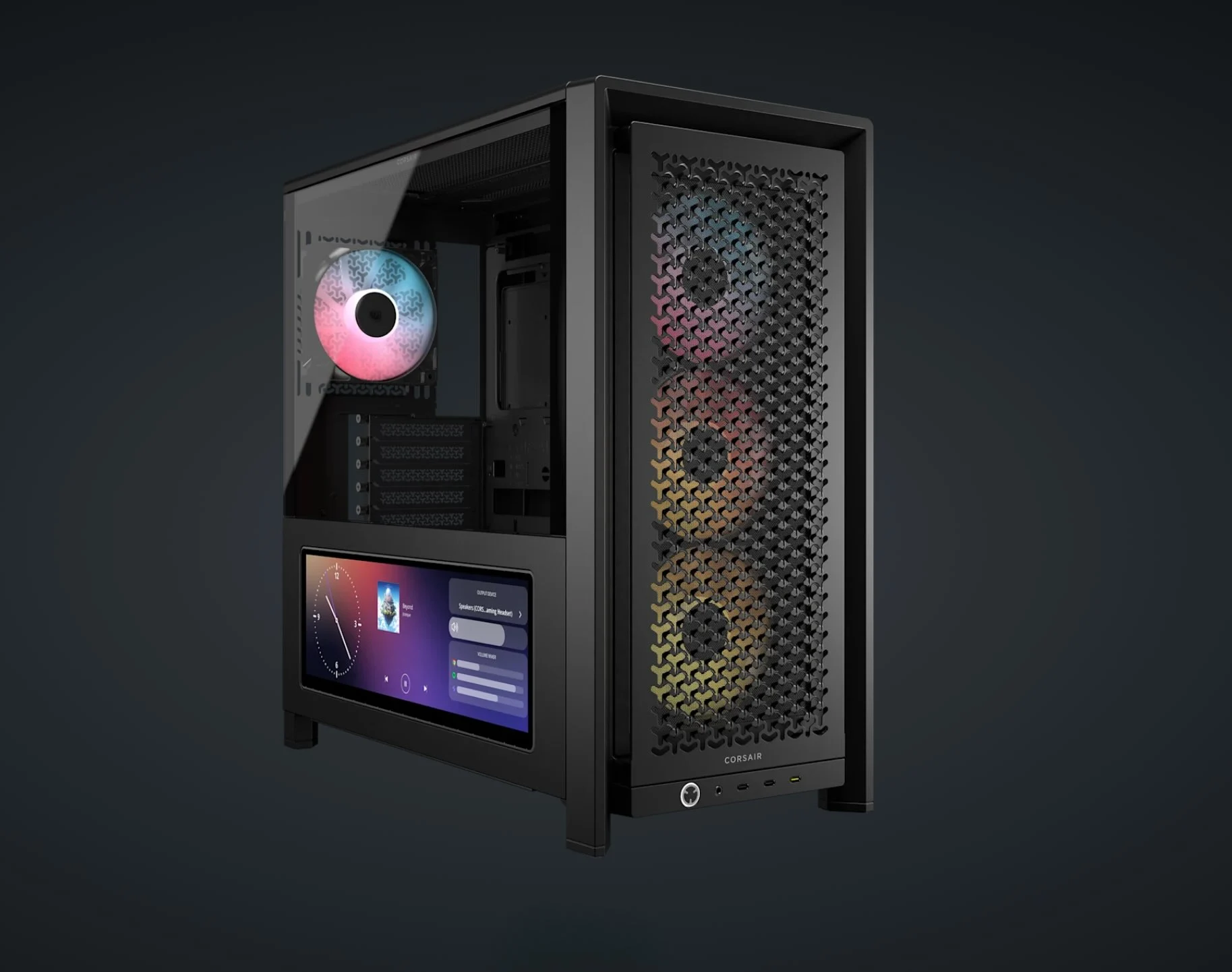
    Corsair fans probably know the Xeneon Edge well – it’s a 14.5-inch screen with a 32:9 aspect ratio, made to fit under a monitor or anywhere else you like, and it shows a lot of useful info with a customizable interface.

    Display Specs

    The Xeneon Edge is touch-friendly and has a resolution of 2560 x 720, with a peak brightness of 350 nits. However, it has a refresh rate of only 60 Hz, which is a bit underwhelming, but should still work fine for widgets that have movement.

    New Case Introduction

    Corsair has just launched the Frame 4000D LCD mid-tower case, which comes with the Xeneon Edge display attached to its side. This mid-sized case measures about 48 x 49 x 23 cm, or 18.9 x 19.29 x 9.45 inches. It can hold GPUs that are up to 430 mm long, and E-ATX motherboards fit just right. You can also use CPU coolers that are as tall as 170 mm (like the Noctua NH-D15, which is currently $140 on Amazon).

    Features and Pricing

    The Corsair 4000D gaming tower has gotten good reviews for its build quality and airflow, so the Frame 4000D should be no exception. You can install three 120 mm fans at the top, side, or front, and you can also add dual 200 mm fans at the front. Of course, the bottom can fit one 120 mm fan too.

    For storage, there are two 3.5″ drive bays and four 2.5″ drive bays. It also has multiple I/O ports at the front, including dual USB 3.2 Gen 1 Type-A, a 3.5 mm audio jack, and one USB 3.2 Gen 2 Type-C. The Frame 4000D LCD mid-tower case is priced at $399.99 and is available for purchase directly from Corsair in both black and white options.

    Source:
    Link


  • OneXPlayer Super X: 120Hz OLED, 85Wh Battery, Up to 128GB RAM

    OneXPlayer Super X: 120Hz OLED, 85Wh Battery, Up to 128GB RAM

    Key Takeaways

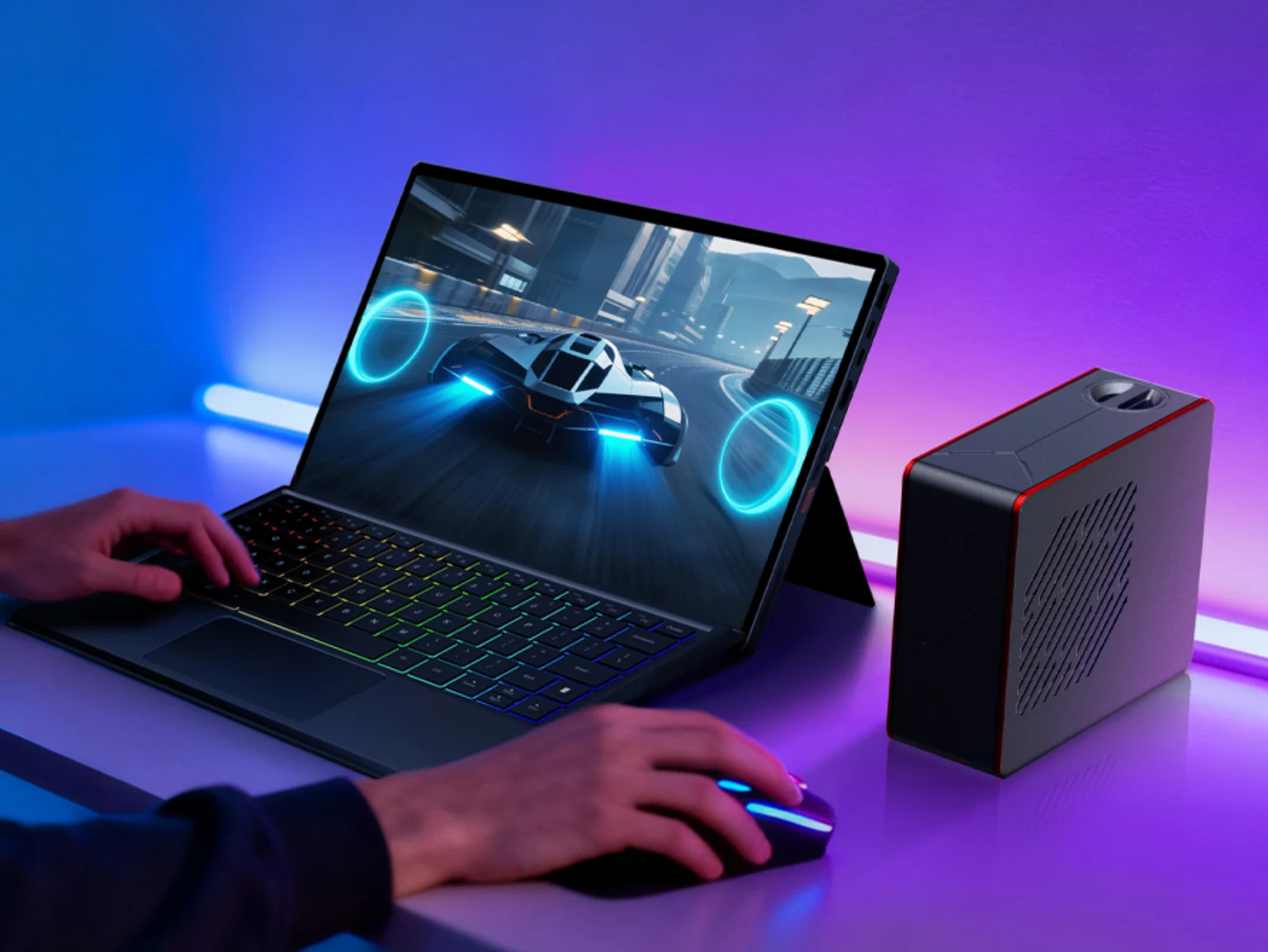
    1. One-Netbook has launched the OneXPlayer Super X, a competitor to the Asus ROG Flow Z13, featuring the AMD Ryzen AI Max+ 395 chip.
    2. The OneXPlayer Super X offers a 14-inch 2.8K AMOLED display with a 120 Hz VRR refresh rate and 500 nits peak brightness, surpassing the IPS display of the ROG Flow Z13.
    3. It includes a larger 83.5 Wh battery, multiple SSD slots, and optional liquid cooling, enhancing performance and design compared to Asus’s offering.
    4. Pricing for the OneXPlayer Super X starts at $1,899 for the entry-level model and goes up to $2,759 for the top-tier configuration with advanced features.
    5. Units ordered through Kickstarter are expected to start shipping in February 2026.


    One-Netbook has at last unveiled its answer to the newest Asus ROG Flow Z13 (currently priced at $2,169 on Amazon). First announced in August, the OneXPlayer Super X parallels its Asus rival with the AMD Ryzen AI Max+ 395 being the most potent chip available. Nevertheless, One-Netbook has chosen to go with the marginally less powerful Ryzen AI Max 385 as its entry-level option, instead of the Ryzen AI Max 390 found in the least expensive ROG Flow Z13.

    Display and Features

    In theory, the OneXPlayer Super X brings several benefits over the Asus model. For example, it features a 14-inch AMOLED screen instead of the IPS display that Asus uses in the latest ROG Flow Z13. This 2.8K AMOLED display also boasts a refresh rate of 120 Hz VRR, peak brightness of 500 nits, and supports 4,096 pressure levels for an active stylus.

    Hardware and Design

    The distinctions don’t stop there, as One-Netbook has also incorporated a bigger battery (83.5 Wh) compared to the ROG Flow Z13, along with an M.2 2280 SSD slot, a Mini SSD slot, and optional liquid cooling. This hardware is encased in a 314 x 208 x 12.5 mm chassis, not including the liquid cooling module, and weighs about 1.3 kg without the keyboard accessory. Interestingly, this cooling module boosts TDP levels by 50%, raising it from 80 W to 120 W.

    Pricing and Availability

    The OneXPlayer Super X is available starting at $1,899, featuring a Ryzen AI Max 385, 32 GB of RAM, and 1 TB storage. For an additional $100, at $1,999, you can upgrade to the more robust Ryzen AI Max+ 395 and 48 GB of RAM. The device’s top-tier configuration reaches $2,759, including a Ryzen AI Max+ 395, 128 GB of RAM, 1 TB of storage, and liquid cooling. It’s worth mentioning that liquid cooling can be added for an extra $60 on any configuration. As of now, One-Netbook aims to start shipping OneXPlayer Super X units ordered through Kickstarter in February 2026.

    Source:
    Link


  • FEVM Launches 1-Liter Mini PC with AMD Strix Halo APU

    FEVM Launches 1-Liter Mini PC with AMD Strix Halo APU

    Key Takeaways

    1. The AMD Strix Halo (FAEX1) features a compact design and is powered by the Ryzen AI Max+ 395 and Radeon 8060S integrated GPU.
    2. Gaming performance of the integrated GPU is comparable to the Nvidia RTX 4070 Laptop, with options for eGPU support through OCuLink and USB4 ports.
    3. The mini PC supports WiFi 7 and Bluetooth 5.4 and includes a 160 W cooling solution with active fans and a vapor chamber for optimal performance.
    4. It has a 1-liter chassis, three M.2 slots for PCIe 4.0 SSDs, and supports up to 128 GB of LPDDR5X RAM.
    5. The starting price in China is CNY 1,0999 (approximately $1,557), with limited availability outside of China.


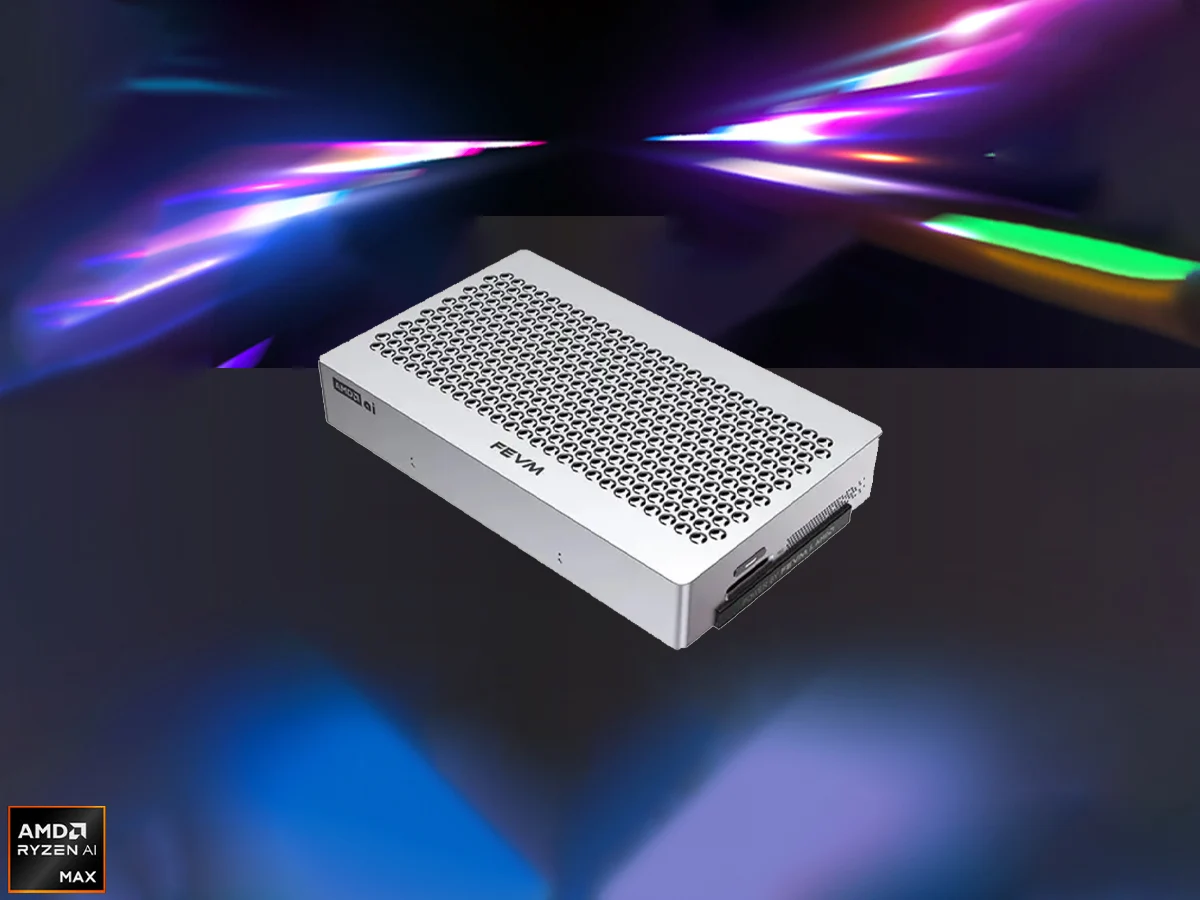
    FEVM has unveiled a new mini PC called the AMD Strix Halo, known as the FAEX1. This compact system boasts a grill-like design reminiscent of the Apple Mac Pro. Inside, it houses the top-tier Ryzen AI Max+ 395, along with the Radeon 8060S integrated GPU.

    Gaming Performance

    According to our benchmarks, this integrated GPU provides gaming performance comparable to the Nvidia RTX 4070 Laptop. For users wishing to add a discrete GPU, the mini PC features an OCuLink port and two USB4 ports, enabling eGPU functionality. These ports are supplemented by the following specifications:

    Connectivity and Cooling

    For wireless connections, the FEVM FAEX1 supports WiFi 7 and Bluetooth 5.4. The APU is complemented by what the manufacturer describes as a 160 W cooling solution, which includes two active fans and a sizable vapor chamber. FEVM states that this cooling system allows the PC to maintain “peak performance” even under heavy workloads.

    Specs and Pricing

    Other key features of the mini PC comprise a compact 1-liter chassis, three M.2 slots for PCIe 4.0 SSDs (such as the 2 TB Samsung 990 Pro priced at $209.99 on Amazon), and support for up to 128 GB of LPDDR5X RAM. The starting cost in China is CNY 1,0999, which roughs out to about $1,557. FEVM is not likely to officially release this Strix Halo model outside of China, as it typically refrains from selling most products globally. However, it may be found on marketplaces like AliExpress.

    Source:
    Link


  • Gigabyte to Manufacture Motherboards in India; Laptops and Monitors Next

    Gigabyte to Manufacture Motherboards in India; Laptops and Monitors Next

    Key Takeaways

    1. Gigabyte has formed a strategic partnership for local motherboard production in India to strengthen its market presence and reduce logistical challenges.
    2. The company offers a wide range of motherboards for Intel and AMD chipsets, with plans to extend local manufacturing to monitors and laptops in the future.
    3. Currently, graphics cards and other PC components are not part of this manufacturing initiative, and details about the contract manufacturer and specific motherboard models are not disclosed.
    4. This move aligns with India’s “Make in India” initiative, which encourages local manufacturing and aims to boost foreign investment and job creation.
    5. Other major tech companies, including Apple, HP, and Asus, are also increasing their manufacturing efforts in India, reflecting a growing trend in the electronics sector.


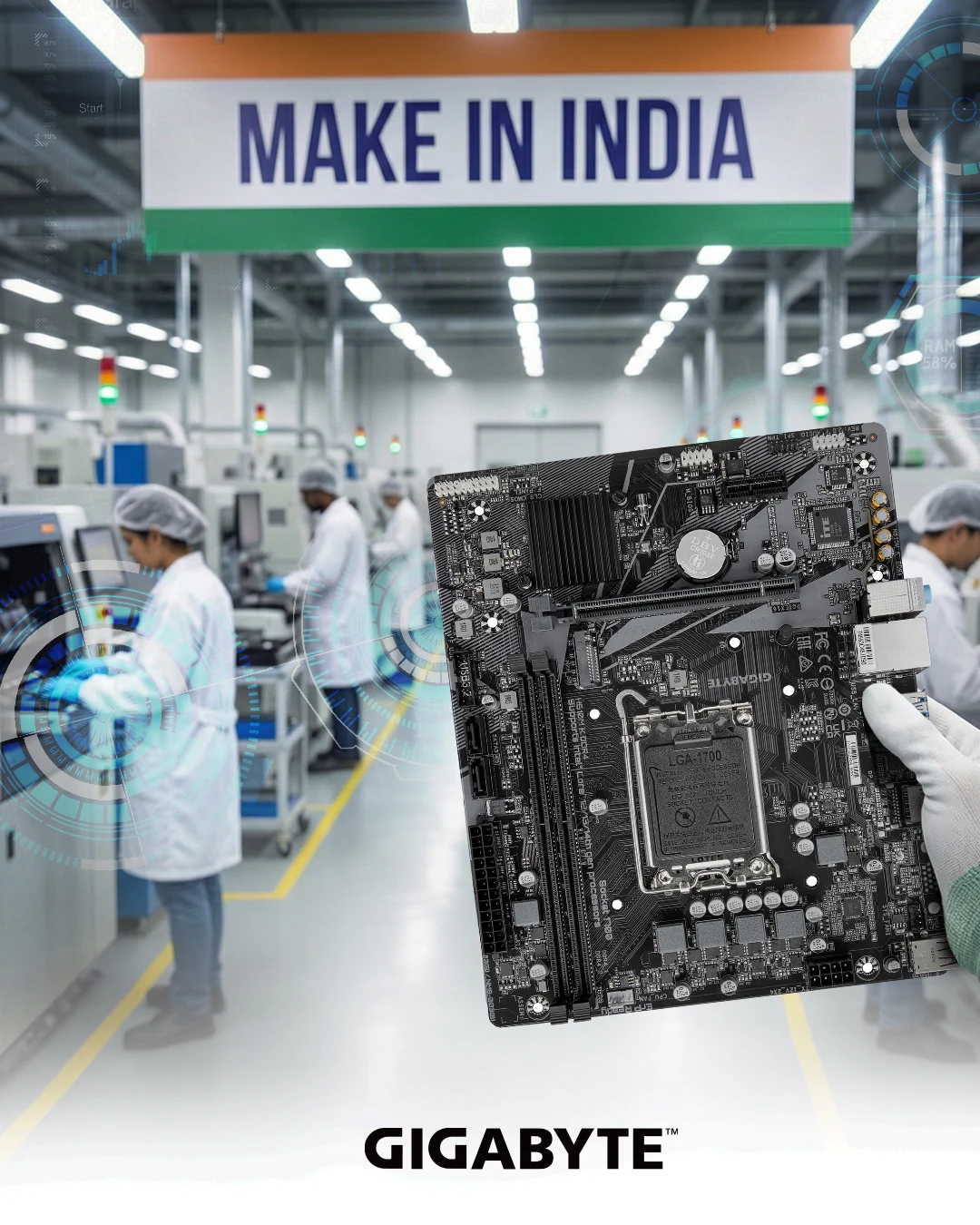
    Gigabyte has revealed that it has formed a “strategic contract manufacturing partnership” aimed at local motherboard production in India. The company believes that this new manufacturing effort will strengthen its market presence in India. Additionally, it will help reduce logistical challenges while maintaining high production and performance standards.

    Product Range and Future Plans

    Gigabyte provides a diverse selection of motherboards that support both Intel and AMD chipsets, which include the Aorus, Aero, Gaming, Ultra Durable, Eagle, and AI TOP series. Currently, the main goal is to boost local motherboard manufacturing, with visions to extend this production to monitors and laptops soon.

    Current Limitations

    At this point, graphics cards and other PC components are not included in this new initiative. Gigabyte has not disclosed the name of its contract manufacturer or the specific motherboard models that will be produced under this agreement.

    Industry Context

    With this move, Gigabyte is aligning itself with a growing number of OEMs benefiting from the Government of India’s “Make in India” initiative. This program aims to enhance local manufacturing capabilities, increase foreign direct investment (FDI), develop skills, and generate employment across 27 sectors, including electronics and IT.

    Make in India’s reduced duties and an attractive production-linked incentive (PLI) scheme appear to be very appealing to consumer tech OEMs looking to set up manufacturing in the country. Analysts expect that the electronics manufacturing services (EMS) market in India will reach $80 billion by FY27.

    Apple has been producing and exporting a notable volume of iPhone 17 Pro models in India, alongside its operations in China, while the iPhone 17 and iPhone Air are fully assembled in India through partners like Foxconn, Pegatron, and Tata Electronics. The value of Apple’s exports from India is projected at $12.8 billion for 2024.

    Other Manufacturers in India

    Several other major smartphone manufacturers have also chosen to base their production in India, including Samsung, Xiaomi, Oppo, Vivo, Realme, Motorola, and Lava.

    In the laptop segment, HP collaborated with Dixon Technologies’ subsidiary, Padget Electronics, and VVDN Technologies earlier this year to assemble laptops, desktops, and all-in-one PCs. Besides HP, Dixon is also responsible for manufacturing laptops for Lenovo and Acer.

    Asus similarly has a considerable number of its Vivobook, ExpertBook, and desktop PCs assembled in India by Dixon, Flex, and VVDN Technologies.

    You can find the Aorus Master 16 equipped with a Core Ultra 9 275HX and RTX 5070 Ti laptop available on Amazon.


  • NASA Completes Telescope to Detect 10x More Supernovae

    NASA Completes Telescope to Detect 10x More Supernovae

    Key Takeaways

    1. NASA has completed the construction of the Nancy Grace Roman Space Telescope after nearly a decade of work.
    2. The telescope’s High-Latitude Time-Domain Survey aims to identify around 27,000 Type Ia supernovae, significantly expanding our understanding of the universe.
    3. The Roman telescope will help astronomers accurately measure cosmic distances and explore dark energy and the expansion of the universe.
    4. It is equipped with a 288-megapixel Wide Field Instrument and a Coronagraph for imaging distant worlds.
    5. The mission will produce extensive astronomical images that will lead to groundbreaking discoveries, honoring Dr. Roman’s contributions to science.


    After nearly a decade of work, NASA has wrapped up the building of its next major space observatory. On November 25, engineers from the Goddard Space Flight Center successfully connected the inner and outer parts of the Nancy Grace Roman Space Telescope, signaling the end of its construction.

    A Step Towards Scientific Breakthroughs

    This important milestone moves the agency closer to achieving its ambitious scientific objectives. According to our earlier forecast report, the telescope’s High-Latitude Time-Domain Survey is expected to transform our comprehension of the universe by identifying around 27,000 Type Ia supernovae. This amount is ten times greater than the total detected by all previous space telescopes combined.

    New Insights into the Universe

    These brilliant explosions will enable astronomers to gauge cosmic distances with remarkable accuracy, providing crucial insights into dark energy and the ever-quickening expansion of the universe. In addition to regular supernovae, the mission aims to search for rare pair-instability explosions from the universe’s earliest stars.

    To facilitate this, the Roman telescope is outfitted with a 288-megapixel Wide Field Instrument capable of capturing sky areas larger than a full moon, along with a Coronagraph to image far-off worlds. After completing final tests, the observatory will head to the Kennedy Space Center for a scheduled launch aboard a SpaceX Falcon Heavy rocket, possibly as soon as fall 2026.

    A Legacy of Discovery

    The mission is set to gather vast amounts of astronomical images, which will allow scientists to make groundbreaking discoveries for many years, honoring Dr. Roman’s influence in advancing scientific tools for the wider community. — Jackie Townsend, Roman’s deputy project manager at NASA Goddard.

    Source:
    Link


  • Tiiny AI Pocket Lab: Mini PC with 12-Core ARM CPU & 80GB RAM

    Tiiny AI Pocket Lab: Mini PC with 12-Core ARM CPU & 80GB RAM

    Key Takeaways

    1. Tiiny Lab has created the Pocket Lab, a mini PC recognized by Guinness World Records as the “World’s smallest mini PC” for running LLMs with up to 120 billion parameters.
    2. The Pocket Lab is compact, measuring 14.2 x 8 x 2.5 cm and weighing only 300 grams, making it portable.
    3. Users can easily install popular open-source models with one click and will receive regular OTA software updates.
    4. The capability to run LLMs with 120 billion parameters is ambitious, but real-world performance and quantization details are not specified.
    5. For average users, a standard mini PC like the Minisforum AI X1 Pro may be a more practical choice and is priced at $1,087.90.


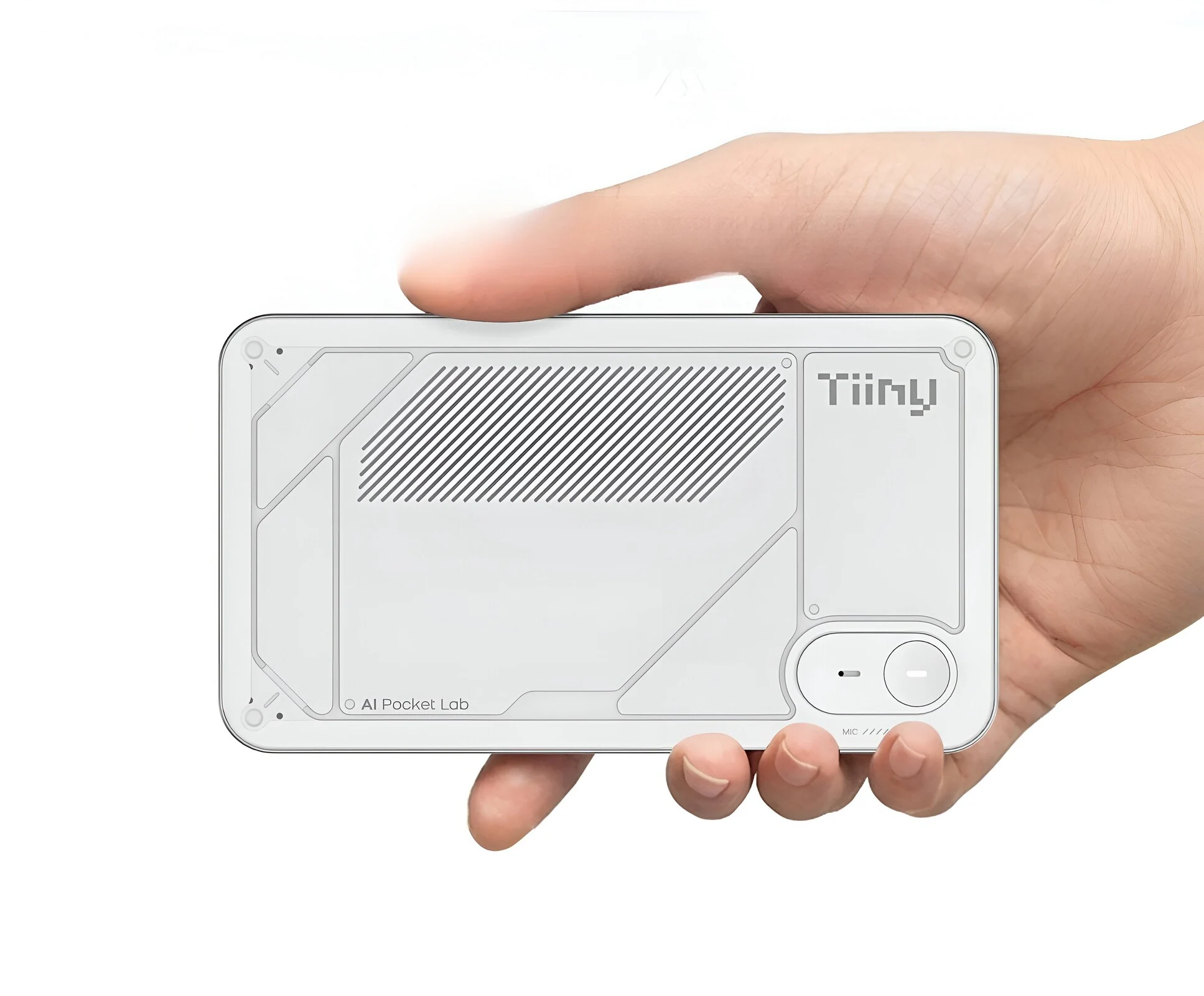
    Tiiny Lab is a startup from the US that seems to focus on making hardware for personal LLMs. Their newest creation is a mini PC called the Pocket Lab. This mini PC is very small and has powerful hardware that can run LLMs with up to 120 billion parameters, which is a bold statement.

    World’s Smallest Mini PC

    According to Tiiny AI, the Pocket Lab mini PC has been recognized as the “World’s smallest mini PC” in the 100B LLM Local category by Guinness World Records. This claim is quite specific, but it does highlight how compact the device is. The Pocket Lab measures just 14.2 x 8 x 2.5 cm (or 5.6 x 3.15 x 1 inches) and weighs only 300 grams, making it very easy to carry around.

    Easy Installation and Updates

    Tiiny AI also mentions that users can easily install popular open-source models like Llama, Qwen, DeepSeek, Mistral, Phi, and OpenAI GPT-OSS with just one click. They promise regular OTA software updates, which is a good sign. However, we will have to wait and see if they follow through on these promises. On the hardware side, the Pocket Lab mini PC is quite impressive, as shown in the details below:

    Tiiny AI asserts that the Pocket Lab can run LLMs with up to 120 billion parameters, but they haven’t specified the quantization levels. Currently, pricing details are not available, but it’s likely that the Pocket Lab mini PC will be on the expensive side. Even with a strong 4-bit quantization, managing a 120 billion parameter model seems unrealistic for a system with only 80 GB of total memory. Real-world performance remains to be seen.

    Alternatives for Regular Users

    For everyday users who don’t need local LLMs and have average performance needs, a standard mini PC like the Minisforum AI X1 Pro (which is priced at $1,087.90 on Amazon) might be a more suitable option.

    Source:
    Link


  • Intel Core Ultra 7 270K Plus Tops Geekbench 6 Multi-Core Test

    Intel Core Ultra 7 270K Plus Tops Geekbench 6 Multi-Core Test

    Key Takeaways

    1. The Intel Core Ultra 7 270K Plus features a 24-core configuration with 8 performance cores and 16 efficiency cores, increasing efficiency cores from the 265K model.
    2. It has a base and boost clock speed that is 100 MHz faster than the Core Ultra 7 265K.
    3. In Geekbench 5 tests, the 270K Plus scored 21,368 in multi-core performance and 3,235 in single-core performance, showing slight improvements over the 265K.
    4. The performance increase from the 265K to the 270K Plus is modest, with about 5.5% improvement in single-core and 3.7% in multi-core performance.
    5. Future Intel Nova Lake desktop CPUs are not expected soon, making the Arrow Lake Refresh the main option for new Intel-based builds in the near future.


    Intel’s new Core Ultra 7 270K Plus “Arrow Lake Refresh” has made another appearance on Geekbench, showing results that align closely with earlier leaks. The performance increase from the Core Ultra 7 265K to the 270K Plus is not much, thanks to higher clock speeds and more efficiency cores.

    Specifications of the 270K Plus

    The Intel Core Ultra 7 270K Plus is set to have a 24-core configuration, which includes 8 performance cores and 16 efficiency cores. This new model will have 4 more efficiency cores than its predecessor, the 265K, and features a base and boost clock that is 100 MHz faster, as per industry chatter. The test setup used a Gigabyte Z890 Eagle motherboard, which is currently priced at $210 on Amazon, along with 64 GB of DDR5-4800 RAM.

    Performance Insights

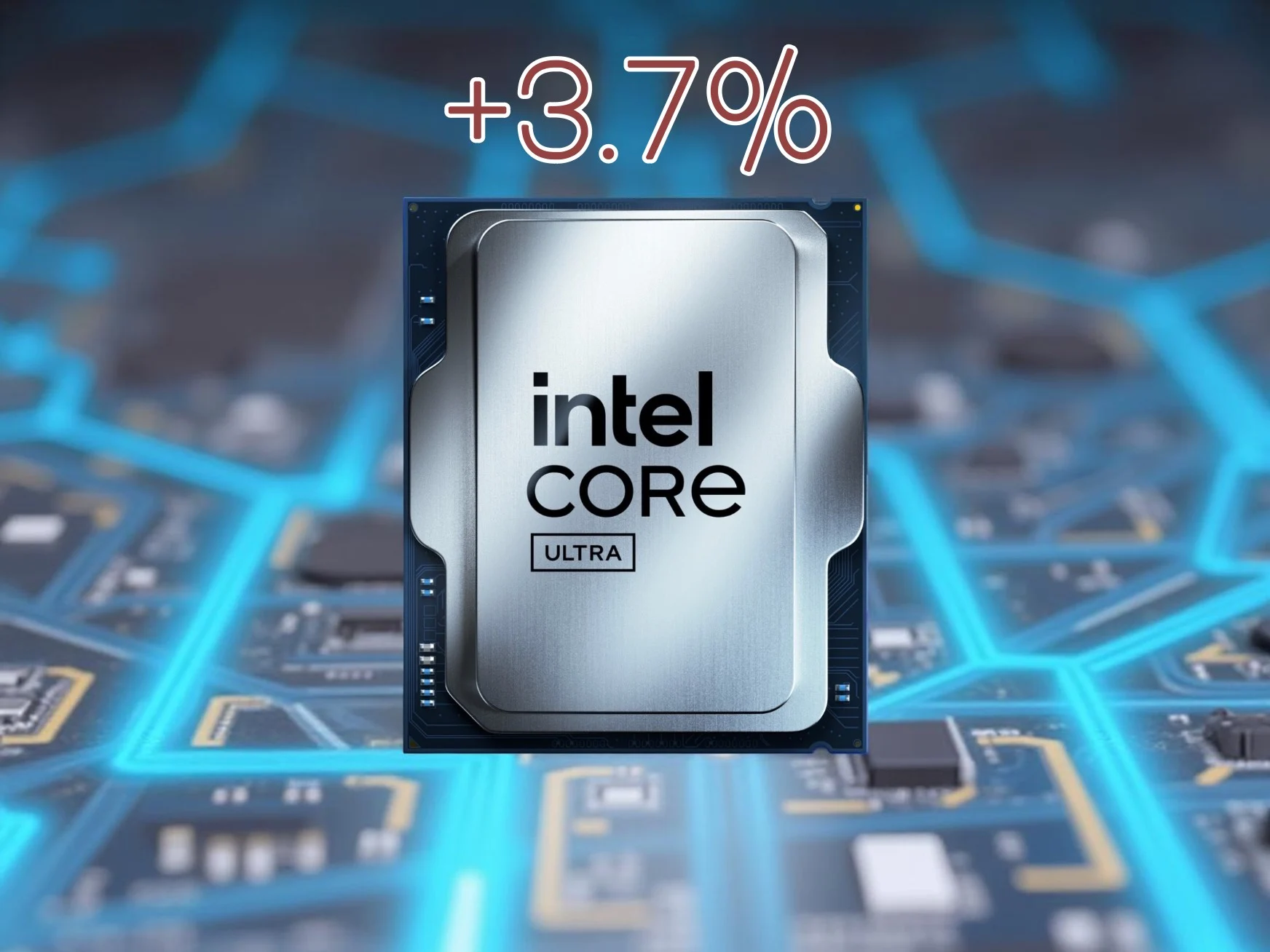
    In the Geekbench 5 test, the 24-core Core Ultra 7 270K Plus achieved a score of 21,368 in multi-core performance and 3,235 in single-core performance. For context, the 20-core Core Ultra 7 265K recorded scores of approximately 3,065 for single-core and 20,613 for multi-core, showcasing a slight yet noticeable improvement – about 5.5% in single-core and 3.7% in multi-core performance. With quicker memory and additional tuning, the Arrow Lake Refresh processors may offer even better performance enhancements.

    Future Considerations

    Given that new Nova Lake desktop CPUs from Intel are not anticipated in the near future, anyone wanting to create a new Intel-based computer will have to make do with the small upgrades that come with the Arrow Lake Refresh. Also, due to the soaring DRAM prices, putting together a new PC in 2026 might turn out to be quite a hefty investment.

    Geekbench, noted by TechPowerUp.

    Source:
    Link


  • Amazon Leo Develops Ground Network to Compete with Starlink

    Amazon Leo Develops Ground Network to Compete with Starlink

    Key Takeaways

    1. Amazon Leo plans to establish over 300 ground stations to improve internet speeds globally, competing with Starlink.
    2. The ground stations will consist of five satellite dishes in remote areas, facilitating data exchange with fiber networks.
    3. Amazon Leo’s services will integrate with AWS, allowing users to access cloud environments and third-party providers.
    4. The service aims to offer internet speeds of 1Gbps, 400Mbps, and 100Mbps, with latency under 50 milliseconds.
    5. Currently, Amazon Leo has around 150 satellites and will face challenges in achieving global coverage, unlike SpaceX’s established Starlink network.


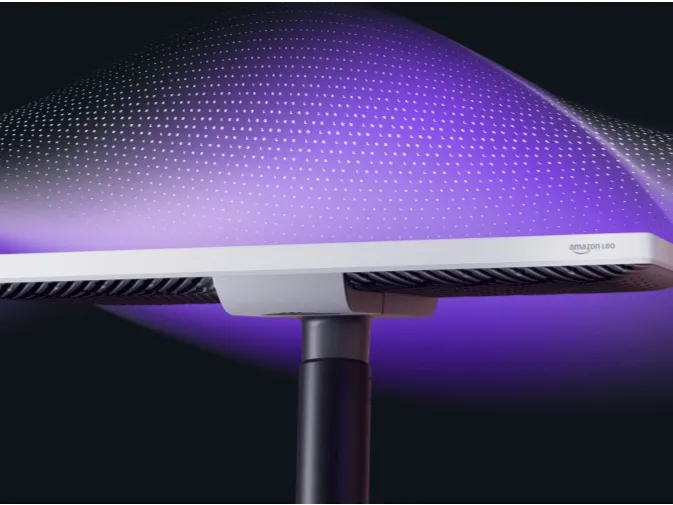
    Amazon Leo is getting ready to establish more than 300 ground stations to enhance internet speeds around the world, aiming to compete head-on with Starlink. This announcement was made during AWS re:Invent last week, where the company detailed its plans to produce millions of dishes for both consumers and businesses to access its satellite internet service.

    Gateway Stations Under Development

    The firm is focusing on the backend operations to create a network of gateway stations that will transmit data between the Leo satellites and local fiber networks. During a presentation at AWS re:Invent, networking engineer Nick Matthews mentioned that these ground stations will feature five satellite dishes located in remote regions. A slide he shared indicated that the company is planning over 300 such gateways, similar to Starlink’s ground stations that manage data flow between satellites in orbit. These ground stations will facilitate data exchange with a facility known as a Point of Presence, which is linked directly to fiber internet networks.

    Integration with AWS Services

    Amazon’s team highlighted that these ground facilities can integrate with the AWS service, which is a leading cloud provider serving major companies like Netflix and Twitch. This setup means that an Amazon Leo customer could utilize the satellite internet service to access an AWS cloud environment or connect to third-party cloud providers via a private network interconnect. This development is set to provide superior internet service for both individual consumers and business users of Amazon Leo, especially with the recent launch of a select beta program for enterprise clients.

    Internet Speed and Latency Plans

    The company plans to offer internet speeds of 1Gbps, 400Mbps, and 100Mbps through three different user terminal types. However, Matthews mentioned that Leo will feature a latency of under 50 milliseconds, which is slightly higher than Starlink’s latency of around 30ms. An Amazon executive had previously stated that Leo intends to launch in the first quarter, but the road ahead is challenging due to SpaceX’s established presence. Amazon must deploy hundreds more satellites before it can deliver a reliable internet service, and a slide from the presentation revealed that Leo won’t provide global coverage right away.

    At this time, Amazon Leo has a constellation of approximately 150 satellites, while SpaceX’s Starlink boasts over 9,000 satellites and serves more than 8 million customers worldwide. SpaceX also disclosed in July that it operates more than 100 gateway sites across the United States, which include a total of over 1,500 antennas catering to 2 million users in the country.

    Source:
    Link


  • UGREEN Unveils 850W Gold-Rated Power Supply Graphics Card Dock

    UGREEN Unveils 850W Gold-Rated Power Supply Graphics Card Dock

    Key Takeaways

    1. UGREEN’s LinkStation Graphics Card Expansion Dock allows users to connect full-sized desktop graphics cards to laptops and handheld gaming consoles.
    2. The dock features two connection options: an Oculink port for 64Gbps data transfer and a USB4 port for 40Gbps, with reverse charging capabilities.
    3. It supports large graphics cards up to 370mm in length and has a removable top cover for additional space, with an internal 850W power supply.
    4. Benchmark tests show the dock provides strong performance, achieving 30,164 points with an RTX 5090 compared to 34,508 points on a desktop.
    5. The LinkStation is priced at 2,299 yuan (approximately $325) and includes a one-year warranty.


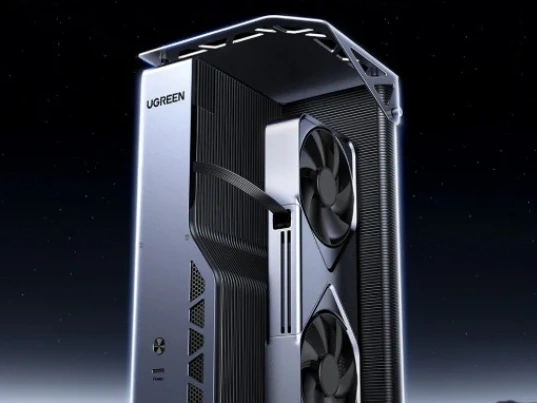
    UGREEN has made a name for itself with its chargers and accessories, but now it’s branching out into the realm of computer hardware with their latest product, the LinkStation Graphics Card Expansion Dock. This innovative dock allows users to attach a full-sized desktop graphics card to a laptop or handheld gaming console. Its design is semi-open and made from aluminum, promoting good airflow, and it comes with a built-in power supply rated at 850W for efficient performance.

    Connection Options

    The LinkStation provides two connection options to accommodate different devices and performance requirements. One of the methods is the Oculink port, which delivers impressive data transfer speeds of 64Gbps, ensuring a speedy and stable connection. Additionally, it has a USB4 port that operates at 40Gbps and can reverse charge up to 100W to keep your laptop powered while in use. Included in the package are both a 0.8m USB4 cable and a 0.5m Oculink cable, giving you everything you need to set it up right away.

    Compatibility and Power Supply

    This dock is designed to house large graphics cards measuring up to 370mm in length from popular brands such as NVIDIA, AMD, and Intel. If your graphics card exceeds the standard dimensions, the top cover can be removed to provide extra space. The internal power supply conforms to ATX 3.1 standards and is capable of supporting high-performance cards like the NVIDIA 40 and 50 series graphics cards.

    UGREEN has shared some benchmark results to highlight how the dock performs compared to a typical desktop setup. In a Port Royal test, an RTX 5090 graphics card achieved a score of 34,508 points on a desktop; however, when the same card was connected to a laptop through the LinkStation’s Oculink port, it scored 30,164 points. This shows that while a direct motherboard connection remains faster, the Oculink connection still provides a high level of performance for external setups.

    Pricing and Availability

    Weighing in at 5.08kg, the dock is currently available for purchase in China at a price of 2,299 yuan, which is approximately $325. This price also includes a one-year warranty, ensuring peace of mind for buyers.

    Source:
    Link


  • Open-Source Ergonomic Wireless Keyboard with Lenovo TrackPoint

    Open-Source Ergonomic Wireless Keyboard with Lenovo TrackPoint

    Key Takeaways

    1. Ergonomic Design: The PSKeeb 5 features a split design that aligns shoulders and enhances wrist and hand positioning, helping to prevent awkward hand positions and RSI symptoms.

    2. Unique Features: It includes a Lenovo ThinkPad-style track point, dual knobs, and a compact travel case that doubles as a laptop stand for improved portability and functionality.

    3. Columnar Stagger Layout: The keyboard has a 36-key layout with a columnar stagger arrangement, allowing fingers to rest comfortably on their respective keys, which enhances typing efficiency.

    4. Wireless Connectivity: Utilizing ZMK firmware, the PSKeeb 5 offers wireless connectivity between its two halves and the main device, reducing reliance on cables to just charging.

    5. Open-Source Plans: The creator plans to release the source code and build guide for the PSKeeb 5 soon, enabling others to create and improve on their own versions of the keyboard.


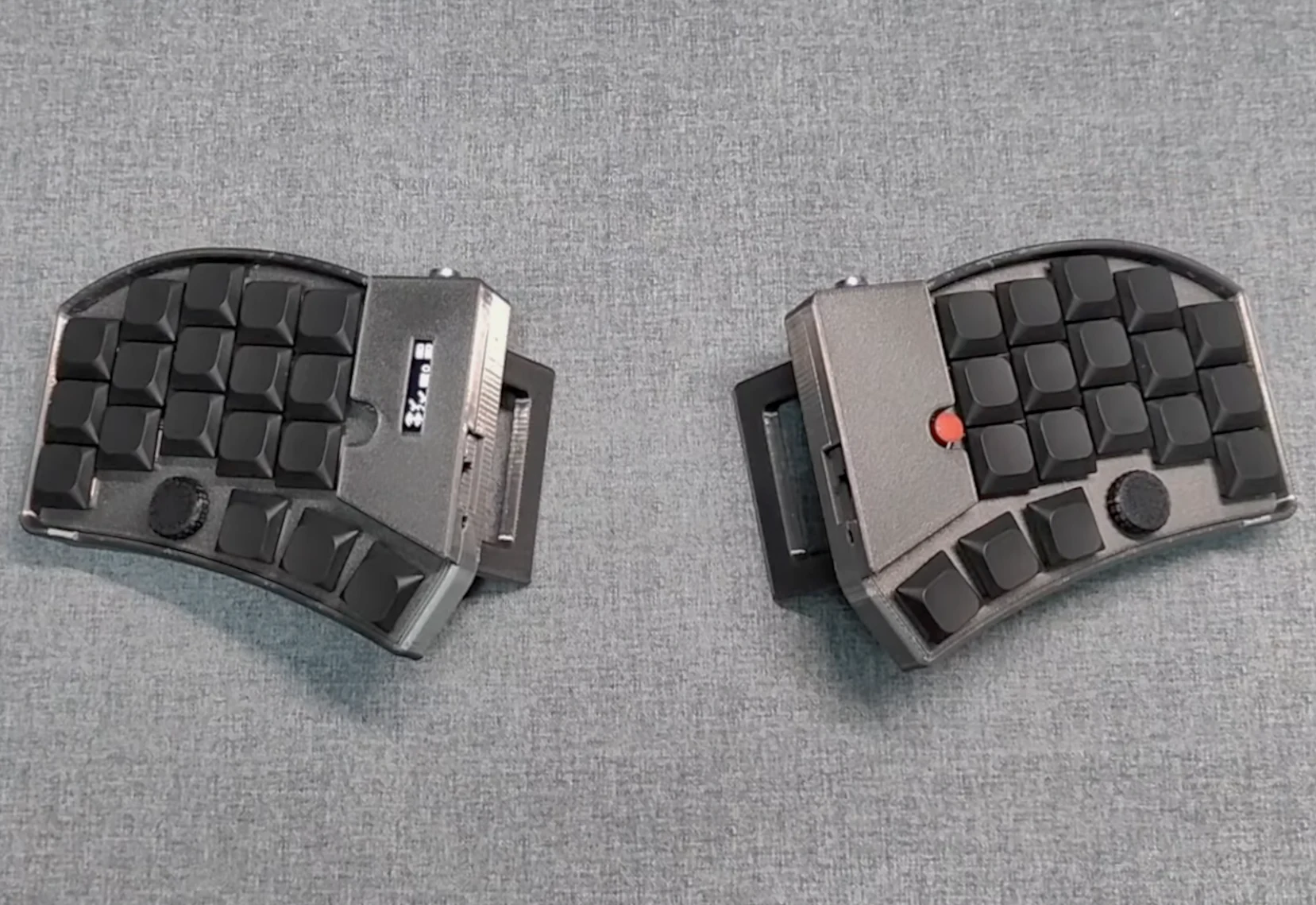
    Split mechanical keyboards are made to provide ergonomic and efficiency advantages, mainly due to their split design that helps align your shoulders and enhances wrist and hand positioning. There’s a wide range of options in the ergonomic mechanical keyboard market, especially innovative community projects like the low-profile wireless Beekeeb Toucan we recently discussed. However, a YouTuber named Tinker & Hack felt these options weren’t sufficient and has introduced the PSKeeb 5 — his version of a split wireless mechanical keyboard that combines features like a Lenovo ThinkPad-style track point, dual knobs, and a travel case that can be turned into a laptop stand.

    Key Features of the PSKeeb 5

    The PSKeeb 5 is a split wireless mechanical keyboard created with portability, comfort, and functionality in mind. It comes with a 36-key layout, featuring 5 columns, three rows, along with a three-key thumb cluster for each hand. The keys are arranged in a columnar stagger to allow each finger to rest comfortably on its respective key in the home row, preventing awkward hand positions. As mentioned in the project build log, the PSKeeb 5 is the fifth version of this project, initially conceived to help the creator with RSI symptoms, but it evolved into a quest for enhanced efficiency, portability, and comfort.

    Design and Build

    The PSKeeb 5’s cases are made through 3D printing and feature a steep tenting angle with built-in feet. The left half of the keyboard includes a small OLED display for monitoring keyboard configuration and status, while the right half features a Lenovo ThinkPad-style track point. Adjacent to each thumb cluster, there is a programmable rotary encoder, which has proven to be very beneficial in reviews of keyboards like the Keychron Q13 Max and Iqunix Magi65 Pro. This setup even includes a compact travel case that functions as a laptop stand, elevating the laptop to eye level for better ergonomics.

    Connectivity and Future Plans

    To facilitate portability and simple setup, the PSKeeb 5 employs ZMK firmware, enabling wireless connectivity between the two keyboard halves and the main device. Traditionally, split mechanical keyboards, such as the Corne V4 (sold on Amazon for $89), require a USB-C or TRRS cable to link the left and right halves, but with ZMK, these cables are only necessary for charging. The creator hasn’t yet released the source code or build guide for the PSKeeb 5, but he plans to open-source the design soon, allowing anyone motivated enough to create their own version and even improve upon it. Once available, the PSKeeb 5 split wireless keyboard will likely be posted on the creator’s GitHub page, where previous PSKeeb versions can also be found.

    The ZMK firmware that runs the PSKeeb 5 is recognized for its wireless efficiency, with some companies stating that it can provide thousands of hours of use from just 2,000 mAh. It also allows for detailed configuration of the keyboard’s functions via the ZMK Studio web interface, even wirelessly — a feature that remains quite uncommon even among custom mechanical keyboards.

    Source:
    Link