
Tag: Nancy Grace Roman Space Telescope

  • NASA Completes Telescope to Detect 10x More Supernovae

    NASA Completes Telescope to Detect 10x More Supernovae

    Key Takeaways

    1. NASA has completed the construction of the Nancy Grace Roman Space Telescope after nearly a decade of work.
    2. The telescope’s High-Latitude Time-Domain Survey aims to identify around 27,000 Type Ia supernovae, significantly expanding our understanding of the universe.
    3. The Roman telescope will help astronomers accurately measure cosmic distances and explore dark energy and the expansion of the universe.
    4. It is equipped with a 288-megapixel Wide Field Instrument and a Coronagraph for imaging distant worlds.
    5. The mission will produce extensive astronomical images that will lead to groundbreaking discoveries, honoring Dr. Roman’s contributions to science.


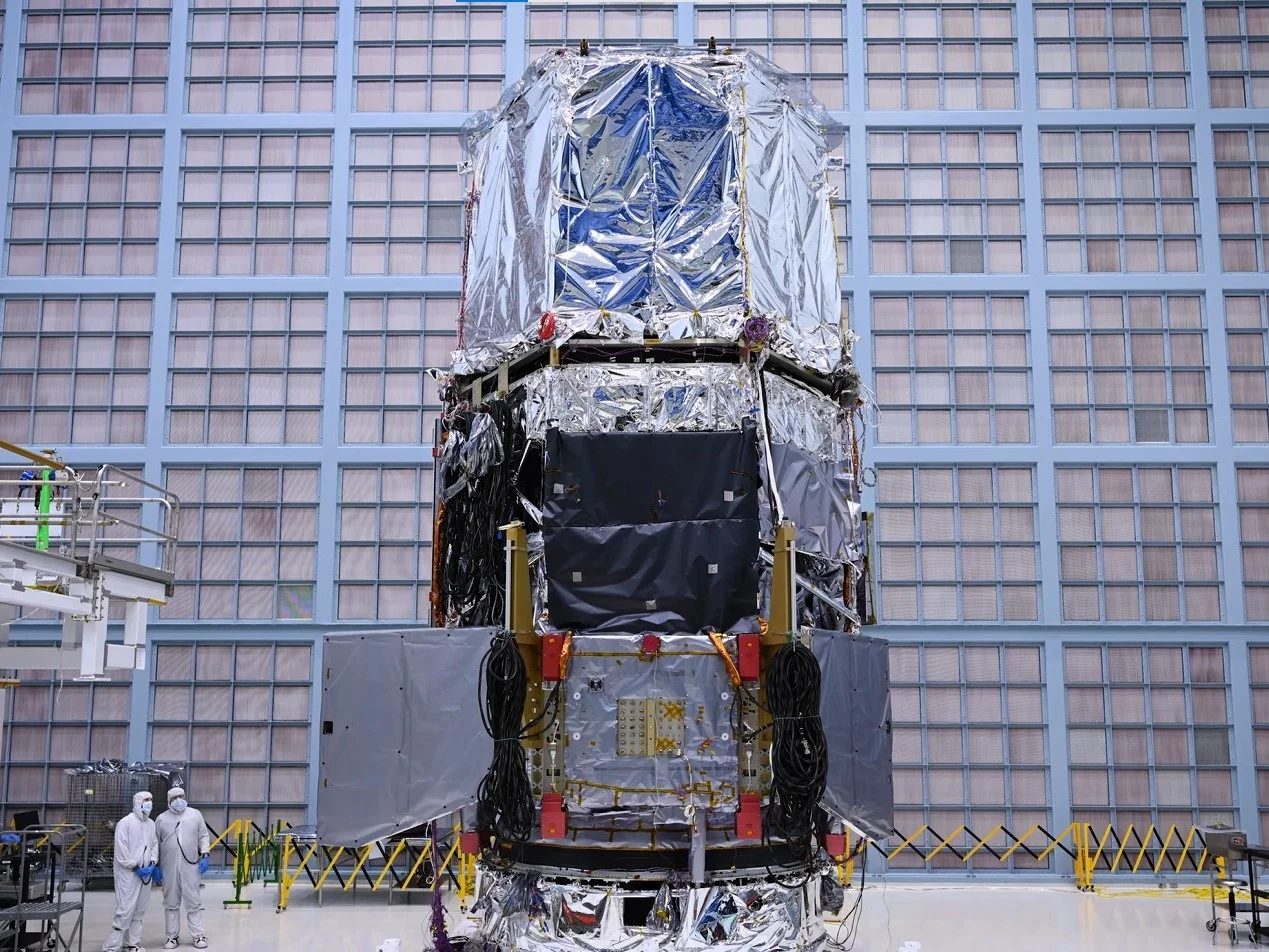
    After nearly a decade of work, NASA has wrapped up the building of its next major space observatory. On November 25, engineers from the Goddard Space Flight Center successfully connected the inner and outer parts of the Nancy Grace Roman Space Telescope, signaling the end of its construction.

    A Step Towards Scientific Breakthroughs

    This important milestone moves the agency closer to achieving its ambitious scientific objectives. According to our earlier forecast report, the telescope’s High-Latitude Time-Domain Survey is expected to transform our comprehension of the universe by identifying around 27,000 Type Ia supernovae. This amount is ten times greater than the total detected by all previous space telescopes combined.

    New Insights into the Universe

    These brilliant explosions will enable astronomers to gauge cosmic distances with remarkable accuracy, providing crucial insights into dark energy and the ever-quickening expansion of the universe. In addition to regular supernovae, the mission aims to search for rare pair-instability explosions from the universe’s earliest stars.

    To facilitate this, the Roman telescope is outfitted with a 288-megapixel Wide Field Instrument capable of capturing sky areas larger than a full moon, along with a Coronagraph to image far-off worlds. After completing final tests, the observatory will head to the Kennedy Space Center for a scheduled launch aboard a SpaceX Falcon Heavy rocket, possibly as soon as fall 2026.

    A Legacy of Discovery

    The mission is set to gather vast amounts of astronomical images, which will allow scientists to make groundbreaking discoveries for many years, honoring Dr. Roman’s influence in advancing scientific tools for the wider community. — Jackie Townsend, Roman’s deputy project manager at NASA Goddard.

    Source:
    Link


  • NASA Installs Powerful Sunblock with 427°F Temperature Difference

    NASA Installs Powerful Sunblock with 427°F Temperature Difference

    Key Takeaways

    1. The Nancy Grace Roman Space Telescope aims to discover around 100,000 cosmic explosions and evidence of the earliest stars.
    2. It has been equipped with two sunshields, called the Lower Instrument Sun Shade, to protect its instruments from solar heat and light.
    3. The sunshields consist of two panels, the Solar Array Sun Shield and the Deployable Aperture Cover, each measuring 7 × 7 feet and 3 inches thick.
    4. The lightweight design of the sunshields minimizes heat transfer, keeping the inner temperature extremely low while the outer side can reach high temperatures.
    5. The telescope is set for a launch between fall 2026 and May 2027, with a 70-day thermal vacuum test planned to ensure functionality in space-like conditions.


    NASA has reached another significant point in putting together the Nancy Grace Roman Space Telescope. This telescope is anticipated to uncover about 100,000 cosmic explosions and proof of the earliest stars. Recently, it has been fitted with two sunshields. These sunshields, known collectively as the Lower Instrument Sun Shade, are designed to shield the telescope’s delicate instruments from the heat and light of the Sun. This protection is essential since strong solar radiation could interfere with the telescope’s capability to pick up faint infrared signals from the universe.

    Details of the Sunshields

    The two panels that form the sunshield are named the Solar Array Sun Shield and the Deployable Aperture Cover. Each panel measures roughly 7 × 7 feet (2.13 × 2.13 m) and has a thickness of 3 inches (7.62 cm). Conrad Mason, an aerospace engineer at NASA Goddard, likens them to “giant aluminum sandwiches,” as their design consists of metal sheets on the top and bottom, sandwiching a lightweight honeycomb core in the middle.

    Lightweight Design and Thermal Protection

    Thanks to its clever design, the sunshields are both light and strong. The materials used help to minimize heat transfer, keeping the inner side at temperatures as low as −211° F (−135 °C), even while the side facing the Sun can reach up to 216 °F (102.22 °C). Each panel is covered with a special polymer film, featuring 17 layers on the side exposed to the Sun and one layer on the other side.

    Upcoming Tests and Launch Plans

    The sunshade will be folded away for launch and will deploy about an hour post-launch. Roman’s inner segment is now prepared for a 70-day thermal vacuum test, during which engineers and scientists will evaluate the complete functionality of the spacecraft, telescope, and its instruments under conditions that mimic space. With everything proceeding smoothly, NASA aims to launch Roman as soon as the fall of 2026, but definitely no later than May 2027.

    Source:
    Link

  • NASA’s New Telescope to Spot 10x More Ia Supernovae Than JWST

    NASA’s New Telescope to Spot 10x More Ia Supernovae Than JWST

    Key Takeaways

    1. NASA’s Nancy Grace Roman Space Telescope will launch by May 2027 for a two-year High-Latitude Time-Domain Survey, observing a large area of space every five days for 30 hours.
    2. The telescope is expected to discover around 27,000 type Ia supernovae, significantly increasing past findings and aiding in measuring cosmic distances.
    3. Research from the survey will provide insights into dark energy, with the potential to identify type Ia supernovae dating back 11.5 billion years.
    4. The survey may confirm the existence of “pair-instability” supernovae from the universe’s first massive stars.
    5. The Roman telescope is anticipated to uncover various cosmic phenomena, including 60,000 core-collapse supernovae and other unexpected discoveries.


    NASA’s Nancy Grace Roman Space Telescope is set to launch by May 2027. It will carry out an observation project called the High-Latitude Time-Domain Survey. This survey will involve 30-hour observations of a significant area in space, repeated every five days for two years. By stitching these observations together, scientists aim to create time-lapse videos that showcase various dynamic events in the cosmos.

    Focus on Supernovae

    One of the key events scientists want to investigate is supernovae, particularly type Ia supernovae. According to simulations of the High-Latitude Time-Domain Survey, the telescope is expected to find around 27,000 type Ia supernovae. This is a huge increase, potentially ten times more than what all past surveys have found combined.

    Type Ia supernovae are categorized as standard candles, which are celestial objects that help astronomers measure distances to their host galaxies. By analyzing the distance and the amount of light shift, scientists can gauge how fast the universe has expanded at different times.

    Insights into Dark Energy

    This research provides insights into dark energy, the enigmatic force believed to be driving the universe’s expansion. The Roman telescope could identify an astonishing number of these type Ia supernovae dating back as far as 11.5 billion years, offering unprecedented views.

    In addition to type Ia supernovae, the survey might also confirm the existence of “pair-instability” supernovae. These are incredibly powerful explosions thought to originate from the universe’s first stars—massive giants that were hundreds of times larger than the sun and left no remnants.

    Anticipating Surprises

    NASA’s Roman telescope is also expected to discover a variety of other cosmic phenomena in large quantities, including around 60,000 core-collapse supernovae, 40 tidal disruptions, 90 superluminous supernovae, and several kilonovae. “We’re definitely expecting the unexpected,” remarked Rebekah Hounsell, an assistant research scientist at NASA. This reflects the mission’s potential to revolutionize our understanding of the cosmos.

    Source:
    Link