Category: Computers

  • Samsung Poised to Regain Top DRAM Spot Amid Earnings Surge

    Samsung Poised to Regain Top DRAM Spot Amid Earnings Surge

    Key Takeaways

    1. Samsung’s operating profits reached over 18 trillion won (about US$12.2 billion) in Q4 2025, primarily from its Device Solutions division.
    2. The Device Solutions segment generated more than 15 trillion won, marking a 422% increase compared to the previous year.
    3. Samsung is expected to regain the top position in DRAM revenue rankings, previously held by SK hynix since Q1 2025.
    4. Rising DRAM prices, driven by increased demand from AI infrastructure and data centers, are contributing to Samsung’s profit surge.
    5. The average price for an 8 GB DDR4 module exceeded $8 in November, a 15.7% increase from October, with projections for further significant rises.


    According to sources in the industry that were reached by Yonhap News Agency, Samsung has made over 18 trillion won (about US$12.2 billion) in operating profits during the fourth quarter of 2025. Most of this revenue will come from the company’s Device Solutions (DS) division, which handles memory and foundry operations. It is estimated that this segment has produced more than 15 trillion won, marking a staggering increase of 422 percent compared to the previous year.

    A Shift in the Market

    This significant profit is likely to elevate Samsung back to the leading position in the DRAM revenue rankings, a spot that SK hynix took in the first quarter of 2025 after holding the top spot for 33 years. SK hynix capitalized on the AI surge to boost its high-bandwidth memory (HBM) chip business significantly.

    Reports from Yonhap indicate that Samsung’s resurgence in the market is largely due to the rising prices of DRAM. The rapid expansion of AI infrastructure, including data centers, is driving memory costs to unprecedented levels. Meanwhile, Samsung is also striving to enhance its HBM technology to match the capabilities of SK hynix’s products.

    Pricing Trends

    The average price for an 8 GB DDR4 module surpassed the $8 threshold in November, reflecting a 15.7 percent increase from the month before. This rise is even more pronounced compared to the $1.35 levels recorded in March, and it is projected to escalate by as much as 50 percent from Q3 to Q4.

    Source:
    Link


  • TrustKernel Launches PlugOS for Android on iPhone and Mac

    TrustKernel Launches PlugOS for Android on iPhone and Mac

    Key Takeaways

    1. Self-Contained Android Computer: PlugMate is a compact device that operates like a standalone Android computer, relying on a host device for power and input/output while securing its own data.

    2. User Experience and Security Features: The device offers plug-and-play functionality with advanced security features, including full-disk hardware encryption, pre-boot authentication, and self-destruct modes for unauthorized access.

    3. Compatibility and Performance: PlugMate can connect to various devices (iPhones, iPads, Macs, Android, Windows) and allows app downloads from different sources, but may struggle with resource-heavy applications due to its small size.

    4. Pricing and Current Offer: The retail price of PlugMate is $299, but it is currently available for $199, providing a secure option for users looking for a standalone device for sensitive information.

    5. Alternative Options: Users can consider purchasing a budget Android phone and installing a privacy-oriented custom ROM, like GrapheneOS, for similar functionality at a potentially lower cost and with greater flexibility.


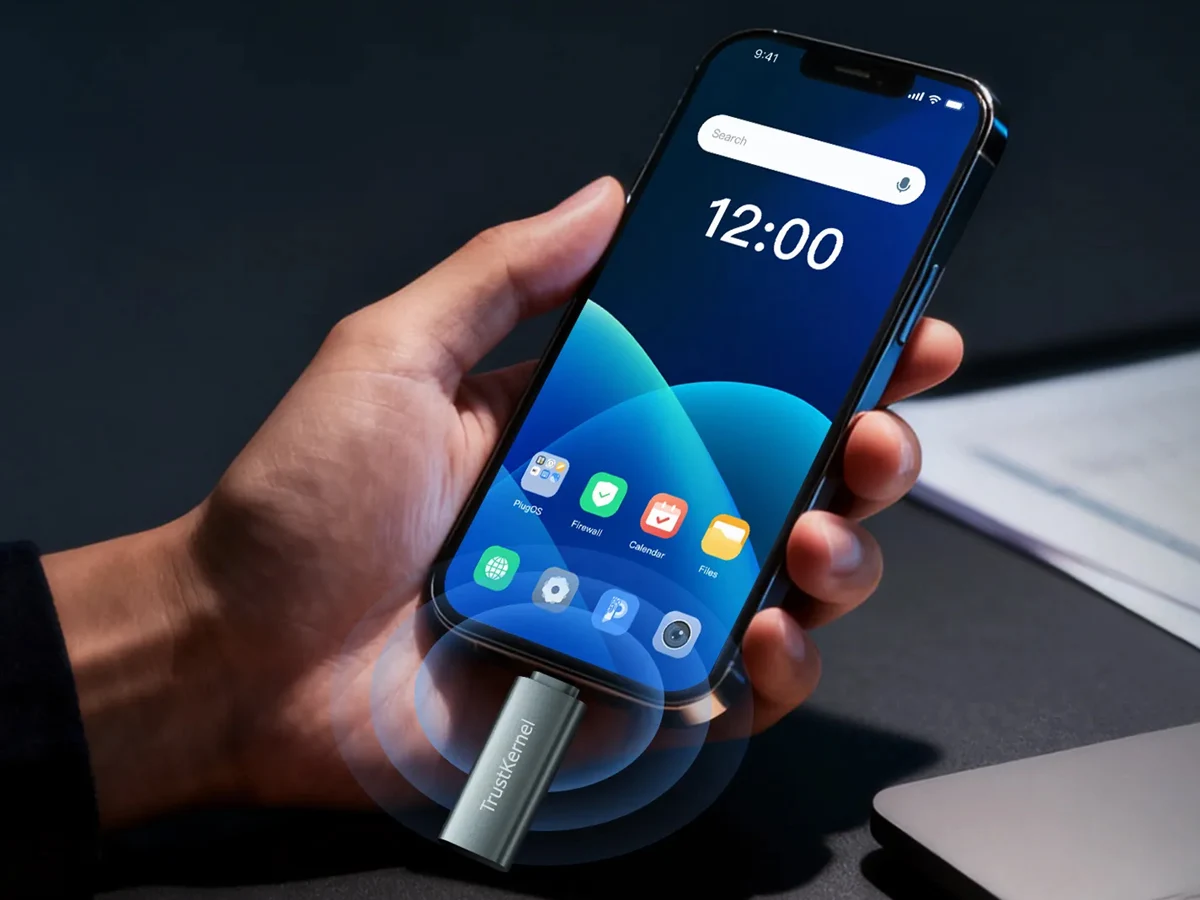
    TrustKernel has launched PlugOS for PlugMate, a device that’s about the size of a flash drive and features a USB-C connector. The operating system is promoted as a secure OS based on Android. This setup lets users run a different OS safely through a host device.

    Self-Contained Android Computer

    Basically, TrustKernel is marketing it like an Android computer that stands alone. While it depends on a host device for input/output and power, it handles all processing by itself. The device secures its data within its own hardware. It’s akin to Intel’s Compute Stick, but it uses USB-C, runs on Android, and comes in a more compact size.

    User Experience and Security Features

    PlugMate promises an easy plug-and-play experience, and with its “advanced security,” TrustKernel aims to attract various users. This includes individuals seeking a secure, standalone physical device for storing sensitive information.

    The company states that PlugOS features full-disk hardware encryption and pre-boot authentication to guarantee that only authorized users can access it. There are also multiple self-destruct modes available for scenarios where unauthorized access occurs.

    Compatibility and Performance

    On the compatibility front, TrustKernel claims PlugMate can connect to iPhones, iPads, Macs, Android devices, or Windows computers. Since it operates on Android, users can freely download and run apps from their chosen sources. However, because of its small design, it might struggle with resource-heavy applications.

    PlugMate is powered by an unspecified 8-core CPU, along with 128 GB of storage and 4 GB of RAM. TrustKernel mentions that the Android device includes virtualized sensors to help protect user privacy.

    Pricing and Alternatives

    Regarding pricing, TrustKernel has set the retail price of PlugMate at $299, but it is currently available for $199. At this price, if users don’t mind not having a portable secondary device, they could purchase a budget Android phone (like the Moto G 2025, currently priced at $149.99 on Amazon), install a privacy-oriented custom ROM like GrapheneOS, and achieve similar functionality with greater flexibility. This choice may also lead to fewer hardware restrictions overall.

    Source:
    Link


  • Minisforum MS-02 Ultra: RTX 5060 Runs Cyberpunk 2077 at 160 FPS

    Minisforum MS-02 Ultra: RTX 5060 Runs Cyberpunk 2077 at 160 FPS

    Key Takeaways

    1. Significant Upgrades: The MS-02 Ultra has improved features over the MS-01, including high-end processors, support for up to 256 GB DDR5 RAM, four M.2 SSD slots, and a PCIe 5.0 ×16 slot for desktop GPUs.

    2. Enhanced Design and Cooling: It comes in a larger 4.8-litre chassis that supports better cooling, a more powerful 350W PSU, and upgraded connectivity options like USB4 v2 and 25 GbE networking.

    3. Simple Setup: The internal setup is user-friendly, requiring only two screws for access, with limited space for components but well-organized RAM and storage slots.

    4. Performance Benchmarks: The MS-02 Ultra achieves notable scores in Geekbench 6 and Cinebench R24, though it shows slightly lower performance compared to higher-end CPUs in its class.

    5. Gaming Capability: The system demonstrates solid gaming performance at 1440p, averaging over 70 FPS in Red Dead Redemption 2 and around 75 FPS in Cyberpunk 2077 with DLSS enabled, showcasing its capabilities even with a compact GPU.


    The MS-02 Ultra was unveiled by Minisforum during Japan Autumn IT Week 2025 and was released as a barebones unit priced at $949 shortly after, in November 2025. Compared to its predecessor, the MS-01, the MS-02 Ultra features significant improvements, including new high-end processors, the ability to support up to 256 GB of DDR5 RAM, much larger storage with four M.2 SSD slots, and three PCIe slots, notably a PCIe 5.0 ×16 slot that can fit desktop GPUs.

    Upgraded Design and Connectivity

    The MS-02 Ultra is designed in a bigger 4.8-litre chassis, which Minisforum claims enhances cooling efficiency, supports a more robust 350W PSU, and introduces better connectivity options like USB4 v2 and 25 GbE networking, which are clear upgrades from the previous MS-01 model.

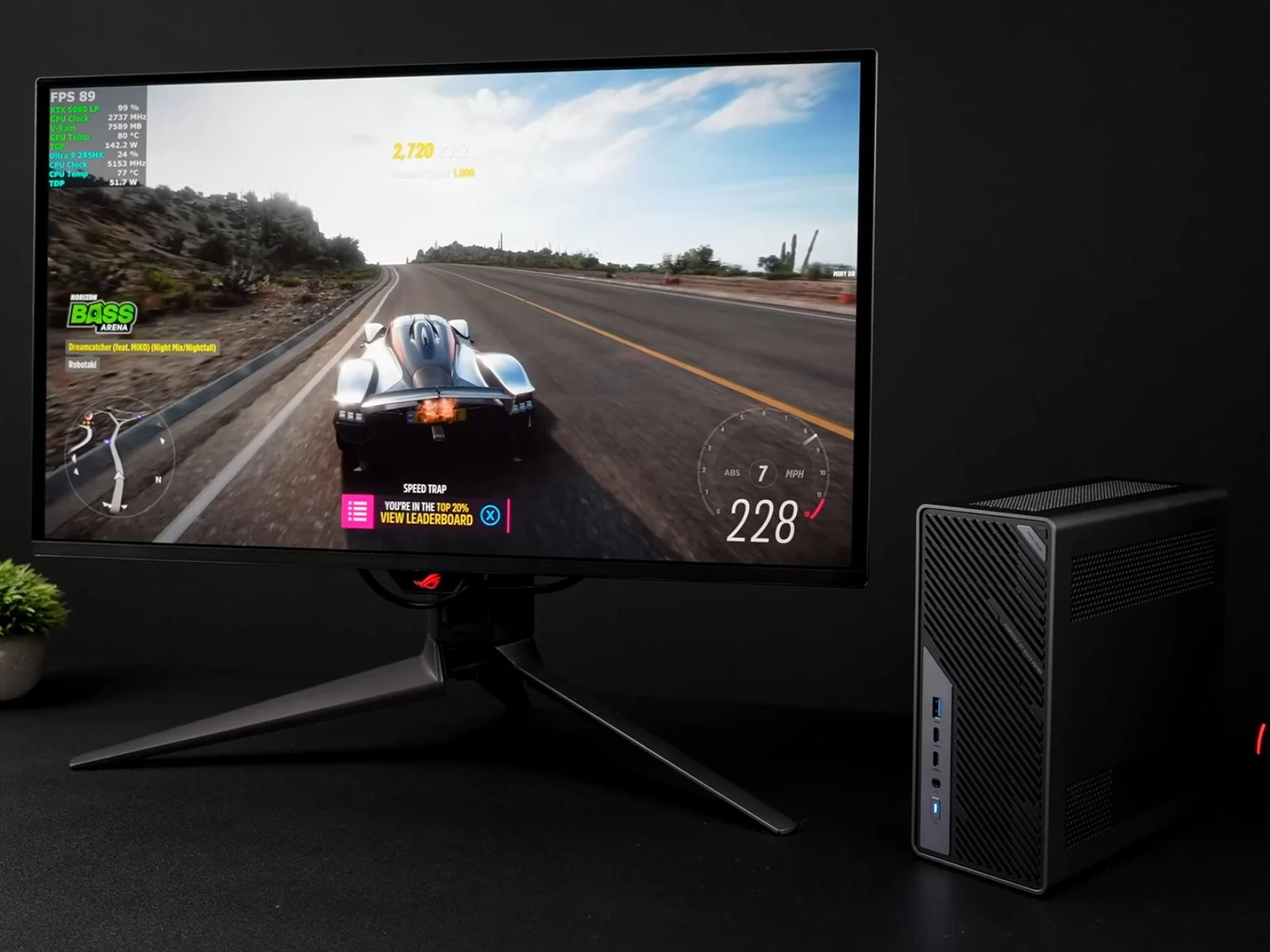
    To evaluate the new design and features, YouTuber ETA Prime set up their Minisforum MS-02 Ultra equipped with an Intel Core Ultra 7 285HX, 64 GB of DDR5 RAM, and an Nvidia GeForce RTX 5060 low-profile card that has 8 GB of GDDR7 VRAM.

    Easy Setup and Space Management

    In the video, the YouTuber kicks off with a teardown of the MS-02 Ultra, noting that the process is surprisingly simple—just two screws need to be removed for the internal frame to slide off. Inside, the CPU cooler and the 350W PSU take up most of the room, leaving limited space for a low-profile GPU, and as shown in the image, the RTX 5060 LP fits rather snugly.

    To maximize space, two SODIMM RAM slots are located on the opposite side of the motherboard, along with two M.2 slots.

    After adding the RTX 5060 LP, the PL1 for the Core Ultra 7 285HX reduces to 90 W while the PL2 drops to 110 W. Without the Nvidia GPU, the PL1 can reach 100 W, with the PL2 said to peak at 140 W.

    Performance Metrics

    Testing kicks off with Geekbench 6 single and multi-core benchmarks, where the Minisforum MS-02 Ultra achieves scores of 2,957 in single-core and 17,992 in multi-core. It’s important to note that these results reflect CPU performance with a dedicated GPU, which likely contributes to the lower scores. For perspective, Notebookcheck’s data shows the Intel Core Ultra 9 285HX with a median single-core score of 3,026 (around 2% higher) and a multi-core score of 20,758 (about 13% higher).

    Next, in Cinebench R24, the MS-02 Ultra scores 128 in single-core and 1,938 in multi-core. In comparison, Notebookcheck’s figures indicate the CPU scores 129 in single-core and 1,974 in multi-core. During 3DMark Time Spy testing, the MS-02 Ultra achieves a total score of 13,672, which is below the median score of 14,072 recorded in our database.

    Gaming Performance

    The YouTuber then transitions to real-world gaming tests. In Red Dead Redemption 2, using a blend of ultra, high, and medium settings without DLSS, the system averages slightly over 70 FPS at 1440p. Both CPU and GPU temperatures remain lower than anticipated, primarily due to the ventilation design and triple-fan cooling on the graphics card. Shadow of the Tomb Raider is assessed next at 1440p on very high settings, yielding an average of 121 FPS with no upscaling.

    Cyberpunk 2077 is also examined at 1440p on Ultra settings. With DLSS Quality enabled, the system averages around 75 FPS, and activating DLSS 4 frame generation at X4 boosts this to over 160 FPS. The YouTuber mentions that many buyers might not opt for an RTX 5060, but the test illustrates the system’s capabilities even with a compact GPU. For a more detailed look at the machine, you can check out the complete video linked below.

    Source:
    Link



  • Aoostar Launches Nex395 Mini PC with AMD Strix Halo APU & 128GB RAM

    Aoostar Launches Nex395 Mini PC with AMD Strix Halo APU & 128GB RAM

    Key Takeaways

    1. The Aoostar Nex395 mini PC features AMD Strix Halo technology and is now available in China, with design changes from the initial reveal in July 2025.
    2. It includes 128 GB of LPDDR5X RAM, allowing it to run most AI models smoothly, powered by the AMD Ryzen AI Max+ 395 processor and Radeon 8060S integrated GPU.
    3. The mini PC has three M.2 slots for PCIe 4.0 SSDs, with a notable storage option being a 2 TB Samsung 990 Pro.
    4. The Nex395 features a “Glacier VC” cooling system for stable performance during demanding tasks and has a compact design with a 140 W performance mode.
    5. The pricing for the single configuration with 2 TB storage is CNY 14,999 (approximately $2,121), with no confirmed worldwide release date yet.


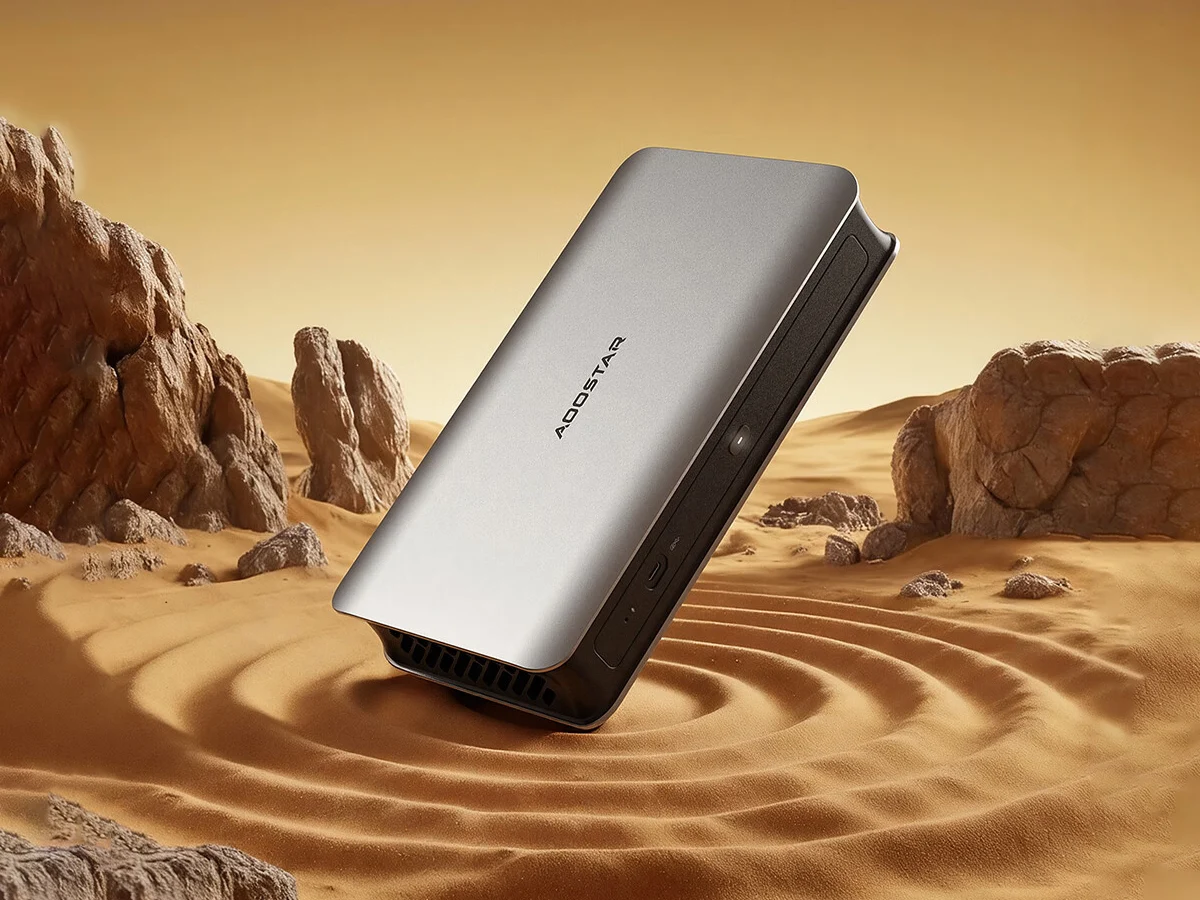
    Aoostar has officially launched the Nex395, a mini PC featuring AMD Strix Halo technology, which was first hinted at in July 2025. However, the retail version has some differences from what was initially shown. Recently, the company revealed changes to the design, and now, the system is available in China.

    Specs and Performance

    The Nex395 boasts an impressive 128 GB of RAM, with the standout feature being its 8,533 MT/s LPDDR5X memory, claimed to enable the mini PC to run most AI models effortlessly.

    In terms of power, the Aoostar Nex is driven by the AMD Ryzen AI Max+ 395 processor, which includes the Radeon 8060S integrated GPU. This GPU is currently AMD’s most potent integrated graphics solution, offering performance that rivals the Nvidia RTX 4070 Laptop, as shown in our evaluations.

    Storage and Cooling

    For storage, the mini PC provides three M.2 slots compatible with PCIe 4.0 SSDs, with a 2 TB Samsung 990 Pro currently priced at $189.99 on Amazon. Aoostar also emphasizes the Nex395’s “Glacier VC” cooling system, which aims to maintain stable performance even during demanding tasks. The system comes with a variety of connectivity options as well.

    Additionally, the compact design of the mini PC is noted, along with a 140 W performance mode, and it is reported to be simple to disassemble. In terms of pricing, there seems to be only one configuration available, featuring 2 TB of storage, priced at CNY 14,999 in China, which translates to roughly $2,121. While the Nex395 is anticipated to be released worldwide, Aoostar has not provided any specific information on that yet.

    Availability

    Aoostar’s product listing on JD (translated from Chinese) indicates that the Nex395 is set to capture attention with its unique features and strong performance capabilities.

    Source:
    Link


  • AMD Ryzen AI 9 HX 470 and Ryzen AI 7 450 Launch on Geekbench

    AMD Ryzen AI 9 HX 470 and Ryzen AI 7 450 Launch on Geekbench

    Key Takeaways

    1. The Ryzen AI 9 HX 470 scores 2,978 in single-core and 15,968 in multi-core Geekbench tests, showing slight improvements over the Ryzen AI 9 HX 370.
    2. The Ryzen AI 9 HX 470’s performance may be impacted by not consistently reaching its top speed of 5.3 GHz during testing.
    3. The Radeon 890M iGPU in the Ryzen AI 9 HX 470 scored 25,677 in the OpenCL benchmark but underperformed compared to the same GPU in the Strix Point variant, which scored 39,622.
    4. The Ryzen AI 7 450 achieved single-core and multi-core scores of 2,624 and 10,598, respectively, which are lower than those of the Ryzen AI 7 350.
    5. Overall, Gorgon Point shows only slight performance gains over Strix Point, with an official reveal expected at CES 2026.


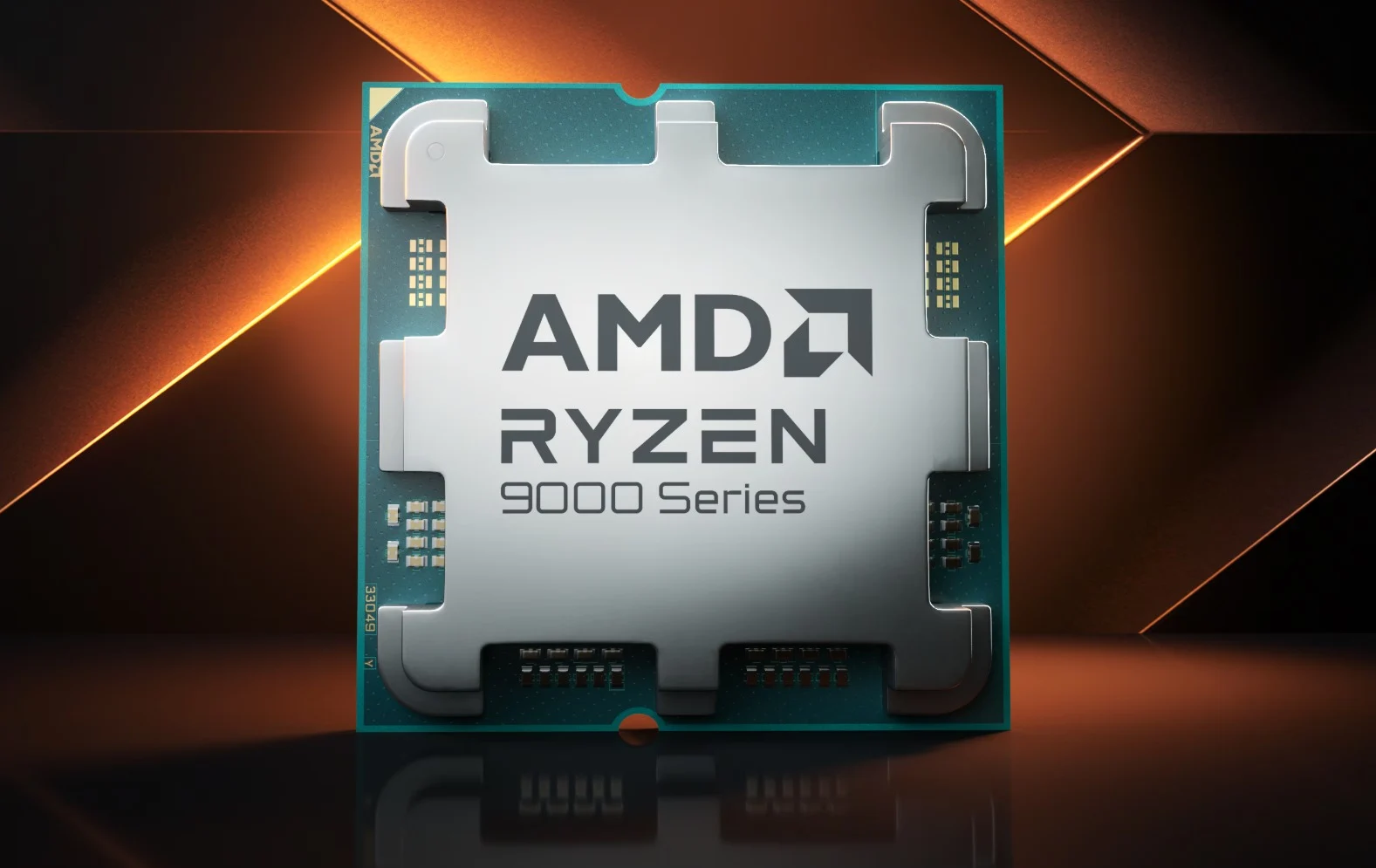
    Some recent Geekbench listings have provided additional details on AMD’s Ryzen AI 400 Gorgon Point CPU. Previous leaks had already shared some specifications, and now we are able to see a hint of performance improvements when compared to Strix Point.

    Performance Scores

    Taking a closer look at the top-tier Ryzen AI 9 HX 470, it achieves scores of 2,978 and 15,968 in Geekbench’s single-core and multi-core tests, respectively. This performance is quite similar to that of the Ryzen AI 9 HX 370, which scores 2,890 for single-core and 15,051 for multi-core. However, these results may not accurately represent Gorgon Point’s capabilities, as it does not consistently reach its top speed of 5.3 GHz. The testing was conducted on an unreleased Lenovo laptop featuring 32 GB of DDR5-2126 RAM, which likely impacts the Geekbench results.

    GPU Insights

    We also see some information regarding the Ryzen AI 9 HX 470’s Radeon 890M iGPU, which scored 25,677 in the OpenCL benchmark on Geekbench. Yet again, it does not surpass the performance of the same GPU found in the Strix Point variant, which scored 39,622 despite having a slightly higher boost clock (3.1 GHz compared to 2.9 GHz). This Radeon 890M version was tested on an Asus laptop equipped with 64 GB of DDR5-5572 memory.

    Ryzen AI 7 450 Performance

    Sadly, the Ryzen AI 7 450 does not perform any better, achieving single-core and multi-core scores of 2,624 and 10,598, respectively. For comparison, the Ryzen AI 7 350 averages 2,853 and 13,092. It was also tested on the same Lenovo laptop mentioned earlier, which has 32 GB of system memory. In terms of specifications, it maintains a 4+4 layout, with the Zen 5 cluster boosting up to 5.14 GHz.

    In summary, Gorgon Point appears to be only slightly quicker than Strix Point regarding raw performance. AMD is anticipated to reveal Gorgon Point at CES 2026.

    Source:
    Link


  • Dell Increases PC Prices by 20% as Lenovo Signals January Hikes

    Dell Increases PC Prices by 20% as Lenovo Signals January Hikes

    Key Takeaways

    1. Dell plans to increase PC prices by 15-20% in 2026, with Lenovo expected to follow suit.
    2. DDR5 memory costs have surged, rising up to 70%, and some DRAM components have increased by 170%.
    3. Lenovo is urging customers to place orders quickly as current quotes will expire on New Year’s Day.
    4. TrendForce has revised its 2026 notebook forecast from a 1.7% growth to a 2.4% decline due to rising production costs.
    5. Manufacturers may focus on promoting lower-spec laptops and tablets to manage pricing.


    As stated by TrendForce, the year 2026 looks like it will bring increases in prices for computing devices. The analytics company has found that Dell plans to increase PC prices by 15-20 percent, with Lenovo also expected to follow this trend.

    Rising Costs in the Industry

    The sector has been facing higher costs for DDR5 memory, with estimates showing a rise of up to 70 percent. Some DRAM components have even surged by 170 percent, driven by increased demand and supply chain challenges. Companies like Micron are reallocating resources to AI products that have better profit margins. Dell’s COO, Jeff Clarke, mentioned that he has “never seen memory-chip costs rise this fast.”

    Urging Customers to Act

    Lenovo is said to be encouraging its clients to secure orders swiftly, as all current quotes will go stale on New Year’s Day. This is not just Lenovo; major competitors like HP, Samsung, and LG are also evaluating the prices for their 2026 products. The categories that will see the most impact are AI PCs and tablets, where memory pricing could represent around 18 percent of the total cost of materials.

    Adjusting Forecasts

    TrendForce has updated its notebook forecast for 2026 due to the increasing production expenses. The projected growth has changed from a year-on-year increase of 1.7 percent to a decline of 2.4 percent, as it anticipates that demand will decrease because of higher BOM costs and restricted availability.

    Source:
    Link


  • Firebat Launches A8 Mini PC with Powerful AMD Strix Point APU

    Firebat Launches A8 Mini PC with Powerful AMD Strix Point APU

    Key Takeaways

    1. The Firebat A8 mini PC features the AMD Ryzen AI 9 365 APU with 10 cores.
    2. It includes the upgraded Radeon 880M integrated GPU built on RDNA 3.5 architecture for decent 1080p gaming performance.
    3. The mini PC supports an OCuLink port for adding external GPUs and has two USB4 ports for better compatibility.
    4. The dual-fan cooling system maintains performance at 65 W and supports up to 64 GB of DDR5 RAM.
    5. The barebones version is priced at approximately $911 on AliExpress, which is higher than competitors like the Beelink SER9.


    Firebat has launched an updated version of the A8 mini PC. This latest model is powered by a robust APU from the AMD Strix Point family. Specifically, it features the Ryzen AI 9 365, which includes a configuration of 10 cores.

    Integrated Graphics Upgrade

    The highlights of this AMD APU is the Radeon 880M integrated GPU, which succeeds the well-liked 780M. This GPU integrates 12 compute units and is built on the RDNA 3.5 architecture. While it may not be as powerful as the 890M, the 880M still provides a decent gaming performance at 1080p when FSR is activated.

    Expandable GPU Options

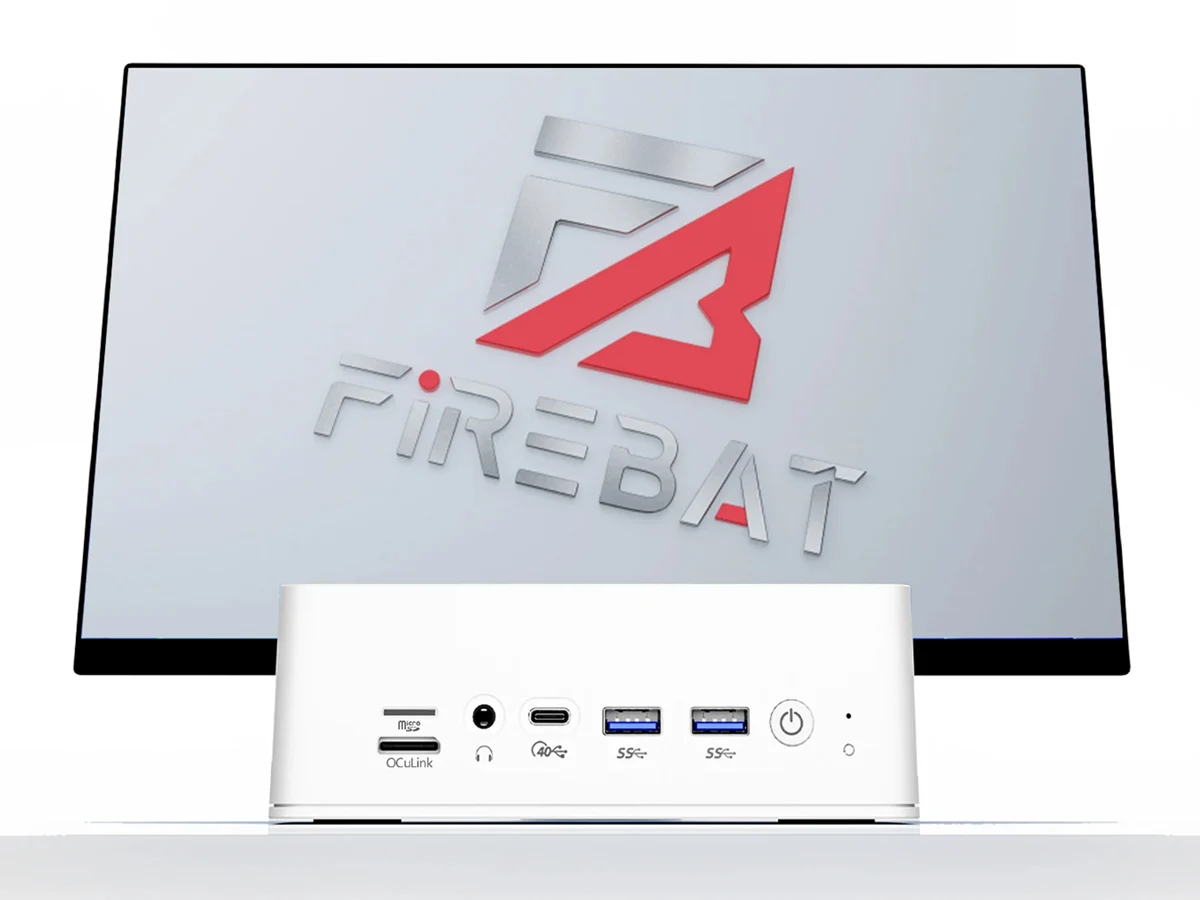
    If you are looking for more GPU strength, the new Firebat A8 is equipped with an OCuLink port, giving users the option to add an external GPU to the mini PC. It also has two USB4 ports to enhance external GPU compatibility. In addition to these connections, the system includes the following ports:

    Firebat emphasizes the dual-fan cooling design of the A8. This setup is claimed to enable the system to maintain a performance level of 65 W. Other important features are support for up to 64 GB of DDR5 RAM, WiFi 6, Bluetooth 5.2, and one M.2 2280 SSD slot. The barebones version of this Strix Point mini PC is currently listed on AliExpress for about $911. This price is quite high, especially when compared to other options like the Beelink SER9 powered by the Ryzen AI 9 HX 370, which offers 32 GB of RAM and 1 TB of storage for under $900.

    Source:
    Link


  • NASA Launches Tech Demo to Cut Spacecraft Design Costs

    NASA Launches Tech Demo to Cut Spacecraft Design Costs

    Key Takeaways

    1. NASA successfully launched the R5-S7 CubeSat on November 28 using a SpaceX Falcon 9 rocket.
    2. R5-S7 features affordable subsystems and shorter development schedules for quicker deployment.
    3. It is the first R5 satellite to perform a unique proximity operations maneuver for tasks like inspecting or repairing objects in orbit.
    4. The R5 series aims to demonstrate lower-cost spacecraft design and significantly reduce development time from years to months.
    5. R5-S7 was launched alongside three other CubeSats and additional satellites as part of the SpaceX Transporter-15 rideshare mission.


    On November 28 at 6:44 PM UTC, NASA successfully launched the R5-S7 (Realizing Rapid, Reduced-cost high-Risk Research project Spacecraft 7). This CubeSat was sent into space on a commercial rideshare mission using a SpaceX Falcon 9 rocket.

    Details About R5-S7

    R5-S7 is one of the CubeSats in the R5 series. It utilizes commercial off-the-shelf components and features more affordable subsystems. Moreover, it adheres to shorter development schedules, allowing for quicker deployment.

    Proximity Operations Maneuver

    This particular satellite is notable for its programming, which includes a unique proximity operations maneuver — making it the first R5 satellite to attempt this. The maneuver involves controlled movements close to another object and is set to initiate right after R5-S7 separates from the launch vehicle. This capability is crucial for future missions that might involve tasks like inspecting, repairing, or constructing structures in orbit.

    NASA’s Goals with the R5 Series

    With the R5 series, NASA’s goal is to demonstrate that designing spacecraft can be done at a lower cost and to significantly shorten the time frame from years to just a few months. R5-S7 was launched together with three other CubeSats funded by NASA. The SpaceX Falcon 9 rocket also deployed several additional satellites during this mission, all part of the SpaceX Transporter-15 rideshare initiative.

    Source:
    Link


  • MSI Prestige 13: Intel Panther Lake & OLED in 1kg Laptop

    MSI Prestige 13: Intel Panther Lake & OLED in 1kg Laptop

    Key Takeaways

    1. Introduction of Panther Lake Processors: The first laptops with Intel’s Panther Lake processors will be revealed at CES in January.

    2. Redesigned Aesthetics: The new MSI Prestige models feature a more advanced rounded design, with a new groove in the metal casing for improved Wi-Fi antenna placement.

    3. Lightweight Build: The laptops are made from a magnesium-aluminum alloy, with weights under 1 kg for the Prestige 13, 1.4 kg for the Prestige 14, and 1.6 kg for the Prestige 16.

    4. OLED Touchscreen: MSI plans to include an OLED touchscreen that supports stylus input, which is rare in the laptop market.

    5. Enhanced Display and Battery Life: The OLED display is expected to provide high frame rates and bright visuals, while the Panther Lake processors may offer battery life of up to 24 hours.


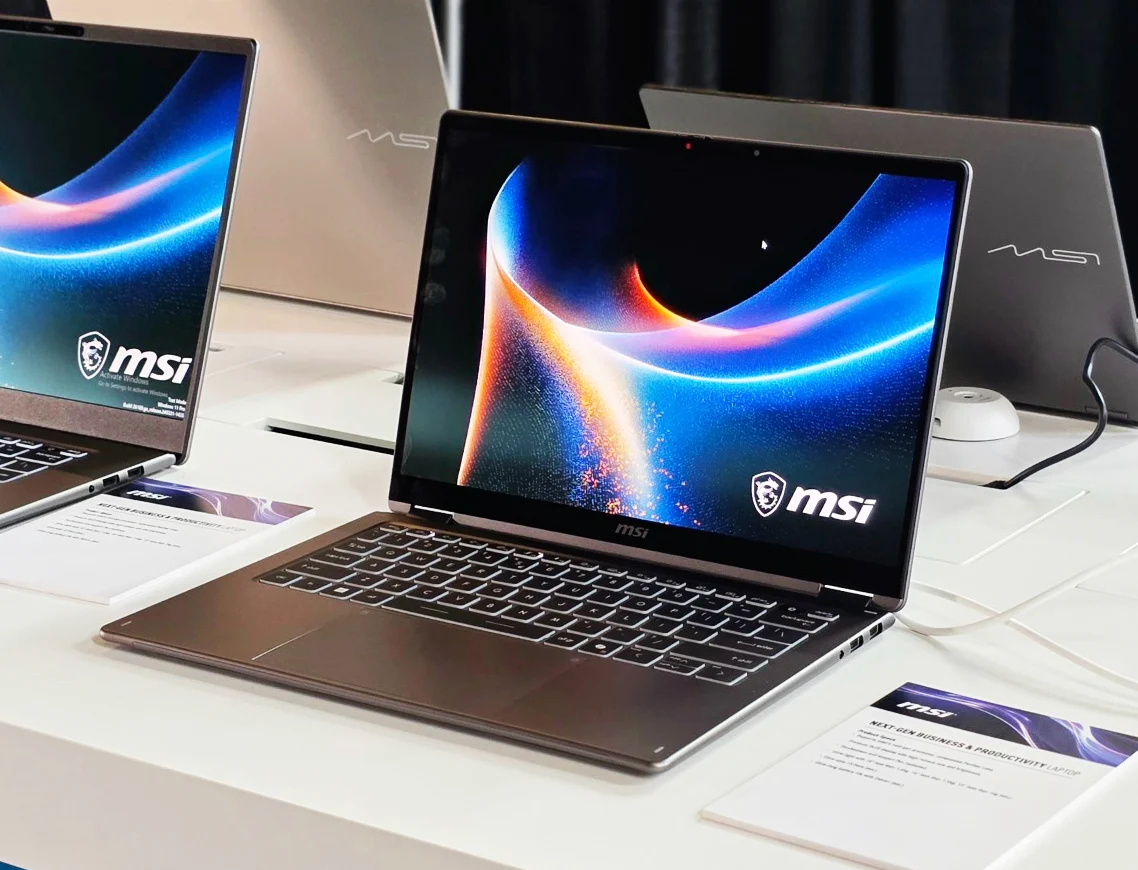
    The first laptops featuring Intel’s Panther Lake processors are set to be revealed at CES in January. YouTuber ETA Prime recently had a chance to preview the new MSI Prestige line. Although MSI hasn’t finalized the specs yet, the video showcases some intriguing features, starting with the overall design.

    Exciting Design Changes

    The current MSI Prestige 13 AI Evo sports a straightforward, angular design, but the upcoming models appear more advanced, with a significantly rounded case. They’ve also added a new groove in the metal casing at the front, likely intended for Wi-Fi antennas. The large trackpad and backlit keyboard remain consistent with the previous generation.

    Lightweight Construction

    Reportedly, the chassis is crafted from a magnesium-aluminum alloy, contributing to its lightweight nature. MSI claims that the new Prestige 13 weighs under one kilogram, the Prestige 14 is anticipated to be around 1.4 kilograms, and the Prestige 16 is expected to be about 1.6 kilograms. All three models maintain a thickness of 13.9 millimeters. MSI plans to include an OLED touchscreen that supports a stylus, which is quite uncommon in the laptop market.

    Impressive Display and Performance

    The OLED display is expected to deliver high frame rates and bright visuals, though MSI hasn’t provided any additional specifics yet. The Panther Lake chips are anticipated to enhance GPU performance significantly, as well as offer a battery life of up to 24 hours. Of course, the actual usage time will vary based on how the device is used and the brightness settings. More details about the next-generation MSI Prestige series will likely emerge during CES in January.

    Source:
    Link


  • AMD Ryzen 7 9850X3D Boost Clock Revealed in Geekbench Data

    AMD Ryzen 7 9850X3D Boost Clock Revealed in Geekbench Data

    Key Takeaways

    1. The Ryzen 7 9850X3D features eight Zen 5 CPU cores and sixteen threads.
    2. Boost clock speeds for the processor vary between listings, showing 5.6 GHz and 5.4 GHz.
    3. Performance tests reveal the Ryzen 7 9850X3D currently lags behind the Ryzen 7 9800X3D.
    4. The processor was tested with DDR5-4800 RAM, with potential for faster memory compatibility.
    5. The Ryzen 7 9850X3D is anticipated to be unveiled at CES 2026, alongside the Ryzen 9 9950X3D2.


    A recent listing on Geekbench has revealed important details about AMD’s forthcoming Ryzen 7 9850X3D processor. As expected, this model features eight Zen 5 CPU cores and sixteen threads. However, there is some inconsistency in its boost clock speed, which varies between different listings.

    Varying Clock Speeds

    One listing shows a boost clock of 5.6 GHz, while another lists it at 5.4 GHz. This discrepancy could be due to the fact that the chip was evaluated on different motherboards, which might have affected the performance outcomes. In its initial test with the Colorful B850M motherboard, the Ryzen 7 9850X3D achieved scores of 3,439 and 17,530 points. In a second test using the Maxsun B850ITX motherboard, it managed scores of 3,260 and 16,149.

    Performance Expectations

    In terms of performance, the Ryzen 7 9850X3D still trails behind the Ryzen 7 9800X3D, but this is not surprising since the new board has not been officially launched yet. Furthermore, both samples of the Ryzen 7 9850X3D were tested with DDR5-4800 RAM, while the B850 and AM5 platforms are compatible with much faster memory types.

    Anticipated Release

    Although not confirmed, the frequent sightings of this processor suggest that AMD may unveil the Ryzen 7 9850X3D at CES 2026. It is also expected that the Ryzen 9 9950X3D2 will be introduced at the same time. This would mark AMD’s first consumer-grade gaming CPU to feature a 3D V-cache tile on both of its CCDs.

    Geekbench (1)

    Source:
    Link