Category: Computers

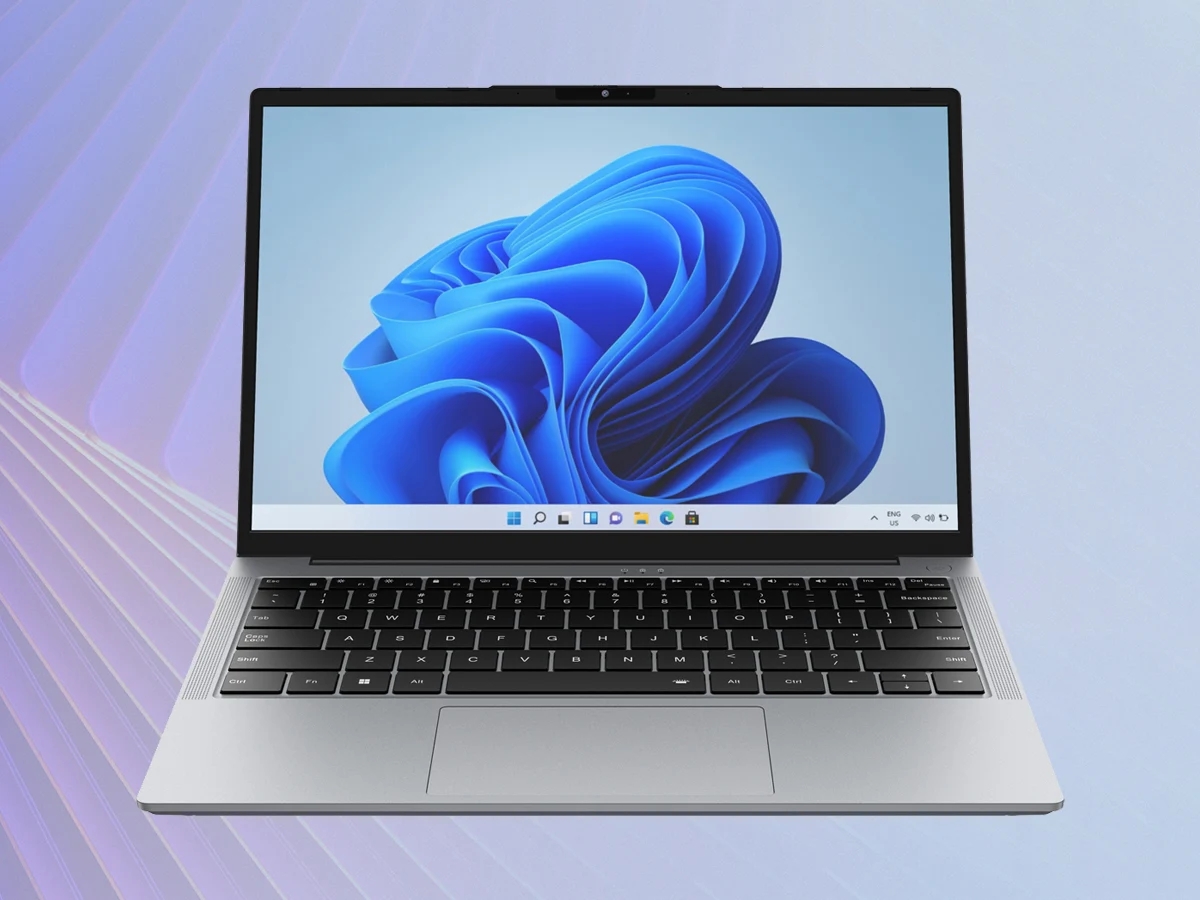
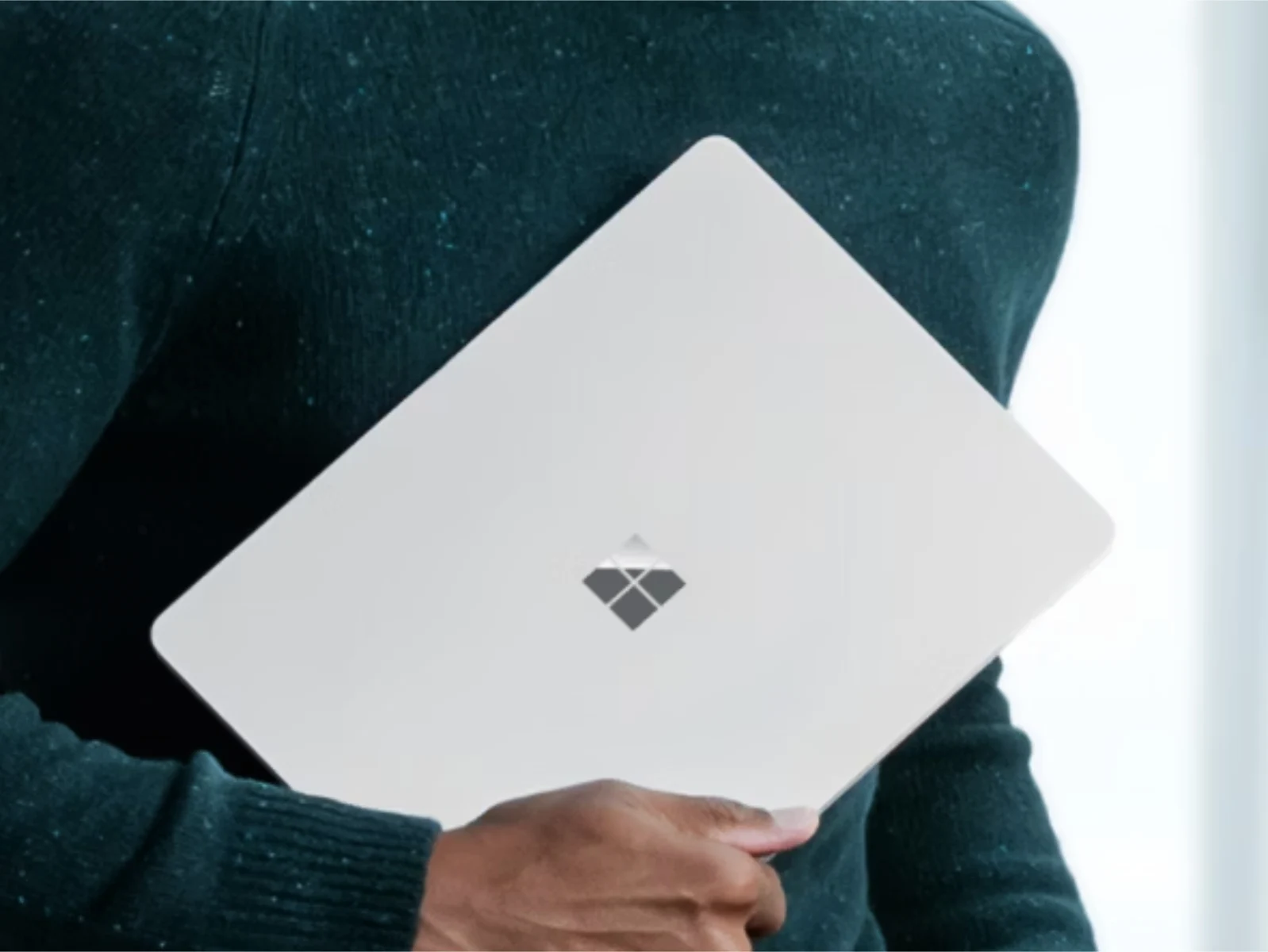
  • Microsoft Surface Laptop gains smaller size, Intel Panther Lake, 24GB RAM, brighter display

    Microsoft Surface Laptop gains smaller size, Intel Panther Lake, 24GB RAM, brighter display

    Key Takeaway

    – Surface Laptop 13-inch gains Intel’s Panther Lake platform with an 8-core Core Ultra 5 325, outperforming the Snapdragon X Plus X1P-42-100 in benchmarks.
    – Display remains 60 Hz IPS at 1920×1280, but brightness increases to 500 nits (up 25%); battery capacity stays at 50 Wh with official web-browsing life now rated around 14 hours.
    – New “for Business” model starts at $1,499 (US) with 16 GB RAM/256 GB SSD; up to 24 GB RAM and 1 TB SSD for $2,249.99, limited to Platinum finish and currently not available in some regions.


    Overview

    Last month, rumours emerged about Microsoft planning to upgrade its smaller Surface Pro and Surface Laptop products with Intel processors. Currently, the former only remains rumoured for now. Meanwhile, Microsoft has now updated the latter with Intel’s Panther Lake platform. The article keeps you updated on what’s new, while noting the ongoing rumours surrounding the Pro line and the tangible changes seen in the Laptop line here.

    Recap of prior releases

    To recap, the Surface Laptop 13-inch landed in 2025 with a Qualcomm Snapdragon X Plus X1P-42-100 chipset. This time, Microsoft has pivoted to the Core Ultra 5 325, an 8-core processor that outperforms the Snapdragon X Plus X1P-42-100 by a wide margin in our benchmarks. The gap between the pair’s iGPUs should be even larger, too. The comparison emphasizes a shift toward Intel-based performance while trying to maintain overall balance with the existing hardware ecosystem.

    Display and battery notes

    Unfortunately, Microsoft continues to include a 60 Hz IPS display that outputs at 1,920 x 1,280 pixels. However, the display now peaks at 500 nits, a 25% upgrade that brings it into line with the MacBook Neo (curr. $589 on Amazon). Also, the Surface Laptop’s battery capacity remains unchanged at 50 Wh. Official battery life estimates have dropped by 2 hours to 14 hours of active web usage, though. The change suggests a modest improvement in brightness but keeps the trade-off in power draw consistent with prior models.

    Pricing and configurations

    The new Surface Laptop 13-inch ‘for Business’ starts at $1,499 in the US with 16 GB of RAM and a 256 GB SSD. Alternatively, the laptop can be configured with up to 24 GB of RAM and a 1 TB SSD for $2,249.99, but only in a Platinum finish. At the time of writing, Microsoft is not offering 24 GB RAM variants in other markets like the UK and the Eurozone. This pricing structure positions the device within a premium tier, reflecting the shift to more capable internals and business-focused variants.
    Sources

  • New Surface PCs with Qualcomm Snapdragon X2 (2026)

    New Surface PCs with Qualcomm Snapdragon X2 (2026)

    Key Takeaway

    – Surface Laptop 8 and Surface Pro 12 use Intel Panther Lake and are labeled under the “for Business” category, though consumer purchases are still allowed.
    – New Snapdragon X2-based Surface laptops/2-in-1s are planned for later this year, with a staggered release due to limited Snapdragon X2 supply.
    – Consumer versions may gain an optional OLED display on Surface Laptop 8 and could be a 13.8-inch model, with separate timelines from business releases.


    Microsoft updates Surface lineup with Panther Lake chips and hints of Snapdragon models

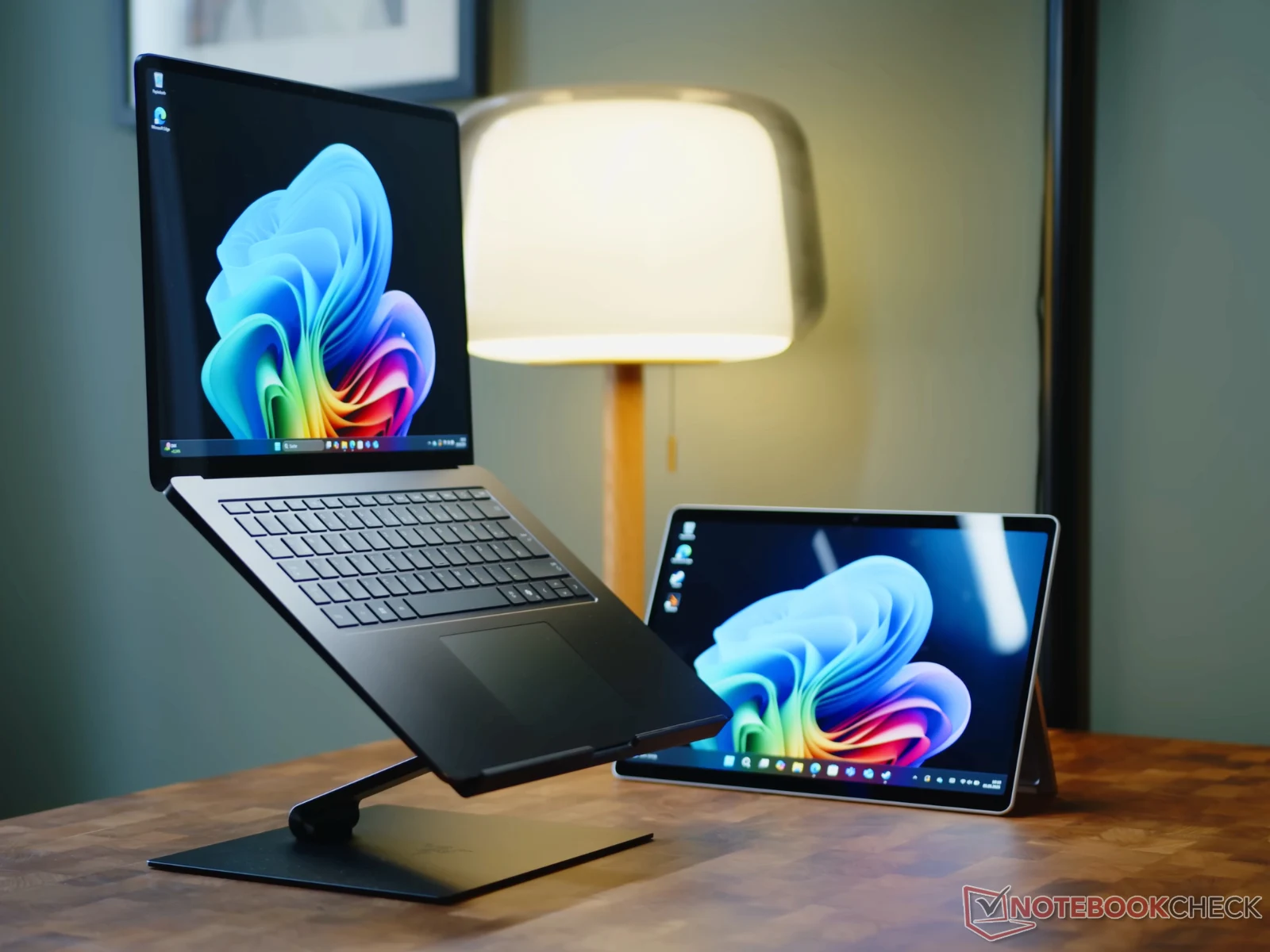
    Microsoft has just updated its Surface Laptop and Surface Pro series with Intel Panther Lake processors. Available as the Surface Laptop 8 and Surface Pro 12, both have been consigned to Microsoft’s ‘for Business’ category. Consumers can still purchase ‘for Business’ devices freely, though. The tone here feels like a company briefing, and it keeps the tech specifics clear, yet the readership may wonder about future consumer options. There is a sense of cautious expansion rather than a full consumer rollout, which keeps expectations balanced while informing on current availability and categorization.

    New chips, new plans, and a hint of Snapdragon

    Microsoft is not finished with new Surface Laptop or Surface Pro announcements this year, either. Instead, it has quietly confirmed that new Snapdragon-based models are on the horizon. Buried at the end of its press release, the company confirms that these models will rely upon Qualcomm’s Snapdragon X2 silicon to distinguish them from the existing Surface Laptop 7 and Surface Pro 11 (curr. $1,099 on Amazon). The wording implies a strategic shift toward mobile compute with distinctive silicon, while still maintaining the familiar Surface design language and ecosystem integration, albeit in a more business-focused frame for now.

    Unclear timing and supply concerns for Snapdragon X2

    Unfortunately, the company has not confirmed when these Snapdragon X2-based laptops and 2-in-1s will be available. For the time being, it has only committed to delivering them ‘later this year’. Reportedly, this staggered release is due in part to limited Snapdragon X2 supplies, with Windows Central adding that ‘Microsoft isn’t ready to ship the consumer models yet’. The article keeps a cautious vibe, emphasizing supply chain realities that could affect when consumers see these devices in stores or online portals, and hints that the consumer release may be more constrained than the business side.

    Rumors of a consumer rollout window and OLED options

    Previously, these consumer models were rumoured to be launching between July and September 2026. Moreover, Microsoft is expected to distinguish business and consumer verisons of Surface Laptop 8 with an optional OLED display in the latter’s favour. The consumer-grade Surface Laptop 8 may only be available as a 13.8-inch laptop, though. The potential OLED option signals an emphasis on display quality and premium credentials for non-business buyers, while the separate consumer line could preserve pricing and feature differentiation from business devices.


    Sources

  • GameSir G7 Pro: Metallic Silver Exclusive to Best Buy

    GameSir G7 Pro: Metallic Silver Exclusive to Best Buy

    Key Takeaway

    – The Metallic Silver variant introduces silver-finished faceplate elements with a black underside, black thumbsticks, and transparent black triggers, plus a silver charging dock, while retaining the same core features as other colors.
    – Key specs include TMR thumbsticks, Hall Effect triggers, optical ABXY buttons, mechanical micro D-pad, six-axis gyroscope, four customizable buttons (two lockable back buttons), four rumble motors, and 1,000Hz PC polling rate.
    – Availability and pricing: currently sold on Best Buy for $79.99, with purchase options for delivery or in-store pickup.


    New Color Launch and Availability

    The GameSir G7 Pro Tri-Mode wired controller for Xbox originally launched in Mech White and Shadow Ember in 2025. Then in January 2026, GameSir released a third color called Golden Ombre that is exclusive to Amazon. Now, it has followed it with a fourth that is available to purchase on Best Buy only.

    Color Details and Design

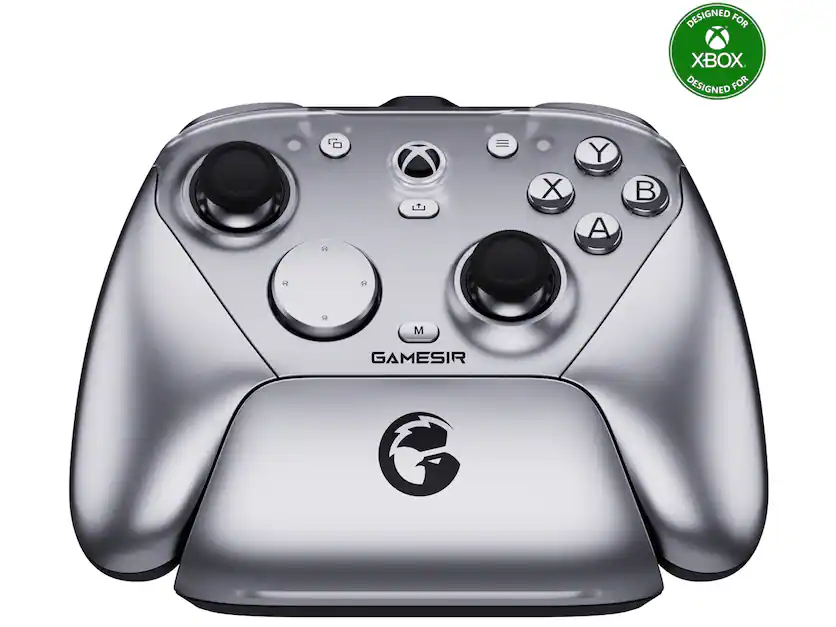
    The new color is called Metallic Silver, although only the faceplate, the D-pad, ABXY buttons, bumpers, and grips are actually silver with a metallic sheen. The underside is black and so are the thumbsticks, while the triggers are transparent black. There’s a silver charging dock included too. Save for these cosmetic changes, the features are the same as those of the other colors.

    Specifications and Features

    The controller has TMR thumbsticks, Hall Effect analog triggers with micro switch trigger stops, and an optical micro switch ABXY buttons. It also has a mechanical micro switch D-pad, a six-axis gyroscope, four customizable buttons including two lockable back buttons, four rumble motors, and a 1,000Hz polling rate (PC only). There’s an audio jack that works when connected to an Xbox or PC, and the built-in battery has a 1200mAh capacity.

    Connectivity and Compatibility

    The GameSir G7 Pro Tri-Mode wired controller (read our review) connects to Xbox via a wired connection but supports both wired and 2.4GHz wireless connections when connected to a PC. It also works with Android devices via Bluetooth.

    Availability and Pricing

    The Metallic Silver GameSir G7 Pro is available to buy now on Best Buy for $79.99. You can choose to have it shipped to you or you can pick it up at a local outlet.

    Sources
  • Surface Pro 12: 64GB RAM and Cellular Connectivity Announcement

    Surface Pro 12: 64GB RAM and Cellular Connectivity Announcement

    Key Takeaway

    – Surface Pro 12 introduces 12th-gen Intel Core Ultra CPUs (Core Ultra 5 335 or Core Ultra 7 366H) with LPDDR5X RAM options (16/32/64 GB) and no Arc B390 GPU option.
    – Available in 120 Hz IPS or OLED displays with battery options of 47 Wh (IPS) or 53 Wh (OLED), plus optional 5G cellular from launch.
    – Business-focused rollout: Surface Pro 12 launched first for business; Surface Pro 11 with Snapdragon remains on shelves, with Snapdragon X2 variants due later in 2026.


    Microsoft has launched the Surface Laptop 8 today

    Okay, so first thing, this paragraph changes style a bit and keeps a steady flow while still noting the core facts. The article repeats that Microsoft introduced the Surface Laptop 8 alongside a refreshed Surface Pro, which makes sense given their cadence of updates. There is mention of a Surface Pro 12 appearing globally, and the focus here is on business models rather than consumer variants, which affects availability timing and pricing dynamics. The tone remains informative but with a casual touch that hints at the strategic rollout and product positioning. The details about pricing references the typical pattern of higher prices for newer generations, bridging the information to what customers may expect in stores and online during launch windows.

    Key specs and configurations evolve

    In this paragraph, the writing shifts to a more technical register, stacking the specs in a concise list-like narrative without using bullet points. The Surface Pro 12 reportedly uses Intel Panther Lake processors from the twelfth gen, including Core Ultra 5 335 and Core Ultra 7 366H, with RAM options of 16, 32, or 64 GB LPDDR5X. This section explicitly notes the absence of an Arc B390 graphics option to align with the Surface Laptop 8, preserving consistency across the product line. The emphasis stays on hardware choices that impact performance, multitasking capability, and potential battery life, while keeping the prose readable for a general audience.

    Display, battery, and connectivity details

    Here, the style becomes more descriptive about the display and power aspects. The Surface Pro 12 offers a choice between 120 Hz IPS and OLED displays, paired with batteries rated at 47 Wh and 53 Wh respectively. The text also mentions optional 5G cellular connectivity available from day one, which is a key selling point for mobile professionals. The pricing note indicates a starting point in the US at $1,949, climbing to $2,249.99 with cellular, which helps shoppers gauge the added value of the connectivity option. The overall tone remains practical, highlighting what these options mean for daily use and on-the-go productivity.

    • Display choices: 120 Hz IPS or OLED
    • Battery options: 47 Wh or 53 Wh
    • Configurations: 5G available from launch

    Availability and business-focused rollouts

    In this final paragraph, the emphasis is on business-first availability and the strategic delay of consumer models. The article reiterates that the new Pro variant is being rolled out with business-oriented SKUs first, while the consumer sibling may follow later. The pricing remains a guiding beacon for potential buyers who need to weigh performance versus cost, and the absence of certain graphics options is framed as a deliberate alignment with the Laptop 8 lineup. The closing lines remind readers to consult official channels for the most current specs and regional availability, while keeping the style varied and accessible. The tone stays grounded, acknowledging that more versions and updates could surface in the future.


    Sources

  • Microsoft Surface Laptop 8 Debuts with Up to 64GB RAM and Arc B390 Graphics

    Microsoft Surface Laptop 8 Debuts with Up to 64GB RAM and Arc B390 Graphics

    Key Takeaway

    – Surface Laptop 8 updates: Lunar Lake → Panther Lake processors, up to Core Ultra X7 368H with Arc B390 iGPU, and 64 GB RAM options.
    – Display: 13.8″ or 15″ IPS PixelSense Flow with up to 120 Hz, resolution up to 3270×2180 (262 PPI); no OLED option.
    – Privacy screen: Integrated privacy feature (toggle via F1) on most models, but not available with 5G modem configurations.
    – Ports: Retains Surface Connect port and microSD card reader on the 15″ model.
    – Pricing: Starts at $1,949.99 (privacy screen variants from $2,549.99).


    Microsoft has finally updated its Surface Laptop series with eighth-generation models. Arriving right on schedule, the new Surface Laptop 8 replaces Lunar Lake versions of the Surface Laptop 7 rather than their Snapdragon-powered counterparts (curr. $1,199 on Amazon).

    Display specs and features

    Contrary to rumours, the Surface Laptop 8 has not launched with an optional OLED display. Instead, the new Surface Laptop continues to be available with 13.8-inch and 15-inch IPS ‘PixelSense Flow’ displays that deliver up to a 120 Hz refresh rate. Incidentally, Microsoft has increased the latter’s resolution to 3,270 x 2,180, which results in pixel density increasing from 201 PPI to 262 PPI.

    Privacy screen and ports

    Also, Microsoft has included integrated privacy screen technology, which can be activated by pressing the F1 key. Unfortunately, this display technology is unavailable on Surface Laptop 8 units configured with 5G modems. Setting that aside, all Surface Laptop 8 models retain Microsoft’s Surface Connect port, as well as a microSD card reader for its 15-inch model.

    Processors and performance

    Arguably, the only other major upgrade between the ‘for Business’ versions of the Surface Laptop 7 and Surface Laptop 8 is the transition from Lunar Lake to Panther Lake processors. Specifically, Microsoft’s new laptops will be available with up to the Core Ultra X7 368H, which brings Intel’s powerful Arc B390 iGPU to the table.

    Pricing and configuration

    The Surface Laptop 8 starts at $1,949.99 and can be configured with up to 64 GB of RAM. Meanwhile, privacy screen variants start at $2,549.99 in the US. Please see Microsoft’s website for more details.


    Sources

  • Forza Horizon 6 RTX 3060 Ti Review: Japan OK, Ray Tracing Not Supported

    Forza Horizon 6 RTX 3060 Ti Review: Japan OK, Ray Tracing Not Supported

    Key Takeaway

    – 1080p: 95 FPS with Medium (best balance); Extreme without RT ~49 FPS; Extreme with RT ~36 FPS (0.1% lows ~22 FPS) — RT markedly hurts performance.
    – 1440p: Medium ~83 FPS; Extreme without RT ~35 FPS; Extreme with RT ~16 FPS (unplayable); High preset recommended for smooth 1440p (~75 FPS, 0.1% lows ~65 FPS).
    – Recommendation: For RTX 3060 Ti, use 1080p Medium/High or 1440p Medium/High; avoid RT if aiming for playable frame rates.


    Forza Horizon 6 launched today and brings a new open-world racing festival set in Japan

    Following the release, we took a close look at how the RTX 3060 Ti performs when paired with a Ryzen 7 5800X, testing both 1080p and 1440p scenarios to see where this mid-range setup sits. The goal was to understand how Nvidia’s mid-range card handles the latest Playground Games title on a modern CPU and at common display resolutions, while also noting any notable changes in the game’s recommended presets for this hardware pairing. The benchmark data is presented below with specific numbers and settings preserved from the testing run.

    1080p performance highlights and what settings matter most

    At 1080p, the 3060 Ti shines best when the right balance of settings is chosen. In Medium preset, the game runs at an average of 95 FPS with very solid 0.1% lows around 88.7 FPS, marking the sweet spot for this CPU-GPU pairing. If you push to Extreme without Ray Tracing, you see the frame rate drop to about 49 FPS, which is generally playable but noticeably less fluid. Turning Ray Tracing on top of that causes the average to fall to 36 FPS, with 0.1% lows dipping to 22 FPS, which can be felt during aggressive driving or high-speed sections.

    1440p results show how resolution changes the equation

    When you upscale to 1440p, the Medium setting still delivers a respectable 83 FPS average, suggesting 1440p monitors can enjoy a smooth experience without too much compromise. However, Extreme without RT collapses to 35 FPS, and Extreme with RT drops to a problematic 16 FPS average. The game’s own recommendation for this hardware is the High preset, which holds up fairly well and provides a smooth 75 FPS average at 1440p with 0.1% lows around 65 FPS, showing better consistency than Extreme options.

    Bottom line for 3060 Ti users and practical guidance

    The key takeaway is straightforward: at 1080p, Medium or High settings at this resolution or at 1440p with Medium/High are the most balanced choices for this card. Ray tracing, although supported, imposes a significant performance hit on the 3060 Ti that this tier of GPU typically cannot absorb without sacrificing fluidity. Those aiming for the best possible experience without RT should stick to the Medium/High range, depending on resolution, to preserve smoother frame pacing and more reliable 0.1% lows across play sessions.


    Sources

    • Samsung 1TB 990 Pro SSD Price Cut on Amazon and Best Buy

      Samsung 1TB 990 Pro SSD Price Cut on Amazon and Best Buy

      Key Takeaway

      – The 1-TB 990 Pro is on sale for $249.99 (down from $339.99), offering fast sequential read/write speeds and low thermals without a heatsink.
      – PC component prices have stabilized somewhat in recent months, with small drops observed in the US.
      – Real-world 1TB 990 Pro performance averages around 5.09 GB/s read and 5.28 GB/s write (AS SSD) across tested machines.


      Pricing note and sale context

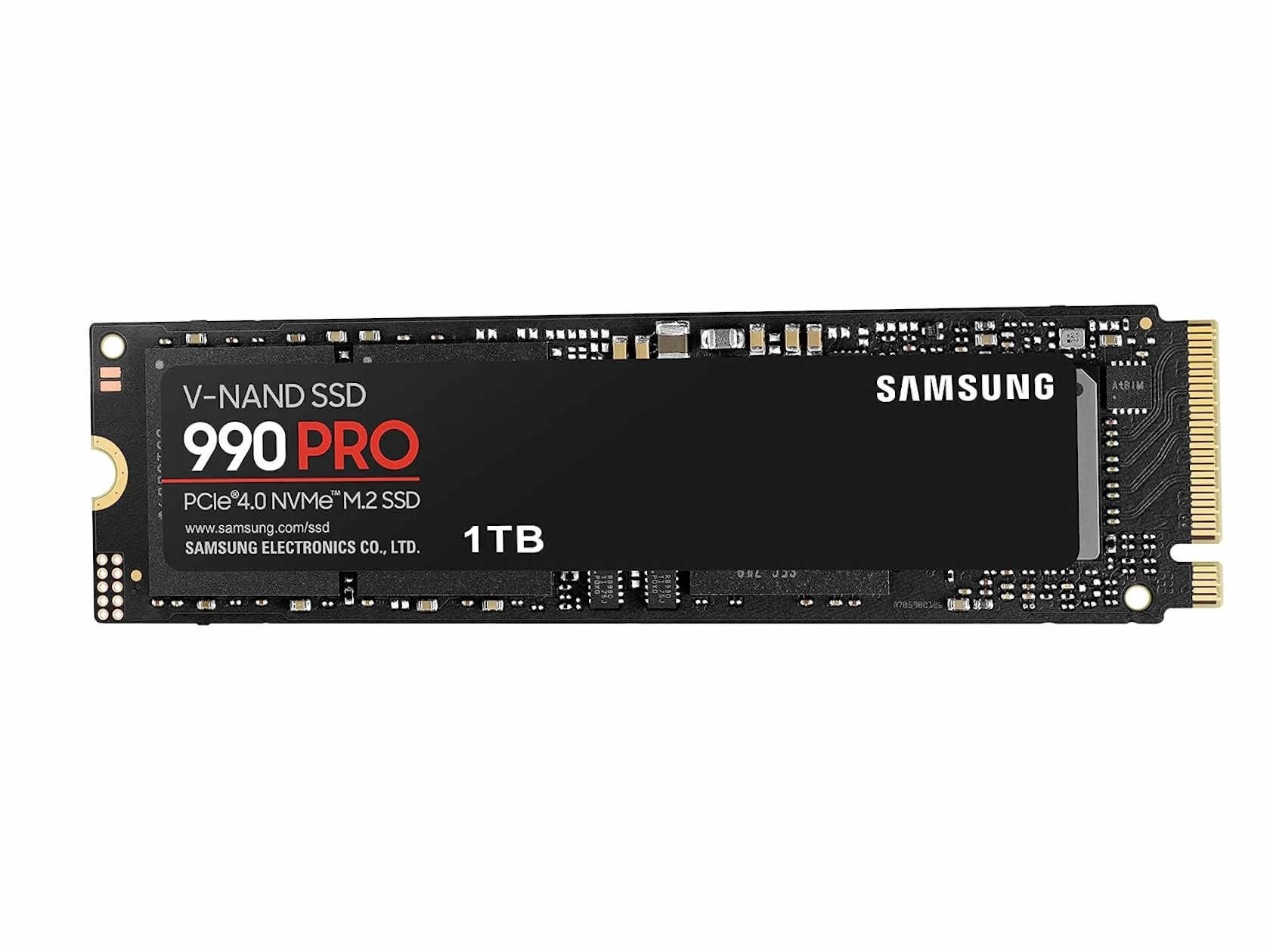
      If you’ve been holding out on upgrading or increasing your storage space in your system of choice due to the ongoing memory, storage, and hardware crunch, which caused tech prices to skyrocket, then you might be in for some relief because the 1-TB 990 Pro is currently on sale for $249.99, down from $339.99, making it a good option for users who don’t need ample storage but want lightning-fast read and write speeds and top-tier performance.

      Market trends and price fluctuation

      SSD prices have been on the higher side for a while, along with DDR5 and DDR4 memory, leading to a rise in counterfeit items among other consequences. However, the past few months have been somewhat stable, leading to a small drop in certain PC component prices in the States.

      Performance figures and efficiency

      While far away from the theoretical limit of the PCIe 4.0 interface of 7.9 GB/s, our tests show the average 1-terabyte 990 Pro delivers sequential AS SSD read speeds of 5.09 GB/s with writes even higher at 5.28 GB/s (19 machines tested in total), which is solid. Best of all, it operates efficiently and produces low thermals without needing a heatsink.

      Historical pricing and model context

      It must be noted that SSD prices haven’t fallen back to what they once were just yet. The 1-TB and 2-TB variants of the Samsung SSD were released in 2022 for $169.99 and $289.99, respectively. The 2-TB model is currently discounted, too in the States, but it’s not a good price.

      Disclaimer and note on deals

      Disclaimer: Notebookcheck is not responsible for price changes carried out by retailers. The discounted price or deal mentioned in this item was available at the time of writing and may be subject to time restrictions and/or limited unit availability.

      Sources
      • Affordable Laptops from Smartphone Factories: Project Firefly for Wildcat Lake

        Affordable Laptops from Smartphone Factories: Project Firefly for Wildcat Lake

        Key Takeaway

        – Intel’s Project Firefly aims to cut costs and speed up production of low-cost laptops by standardizing components and leveraging smartphone supply chains.
        – A reference design with slim bezels, a large trackpad, and a 1.1 cm thickness showcases the intended thin, modern form factor, but may raise production costs due to the metal chassis.
        – Wildcat Lake (e.g., Core 5 320) offers usable office/web performance, but trails the Apple A18 Pro; price trends may rise due to ongoing DRAM shortages, unless Firefly accelerates broader adoption.

        Intel Wildcat Lake and the Drive for Low-Cost Laptops

        Intel Wildcat Lake is aimed at countering the Apple MacBook Neo priced at $589 on Amazon. The very first notebooks using low-cost Intel chips, like the Honor Notebook X14 and the Chuwi UniBook, are already cheaper than apples entry‑level laptop, and prices might drop further later on. This happens because Intel has announced Project Firefly, a plan to leverage the smartphone supply chain for producing affordable laptops.

        Standardization and Design Goals

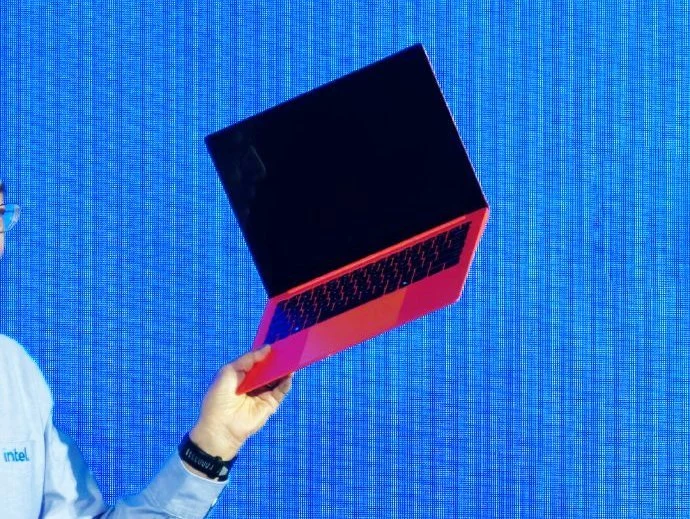
        To achieve this, Intel is pushing toward greater standardization of many parts. Motherboards, connectors, batteries and similar components are meant to be modular and simple to assemble in plants, enabling diverse laptop designs. Costs could fall by using the existing groundwork in smartphone supply chains. As seen in photos from Golden Pig Upgrade, Intel has shown a reference design that looks quite modern with slim display bezels, a huge trackpad, and a thickness of only 1.1 centimeters.

        Economic Pressures and Market Outlook

        Yet, such a slim metal chassis will raise costs, inevitably. Project Firefly might become very significant in the market for cheap laptops over the coming years, as prices are expected to climb due to the DRAM shortage. Provided that Intel doesn’t drop Project Firefly as quickly as Firefly was dropped in a prior episode. Wildcat Lake chips, like the Intel Core 5 320, run somewhat slower than the Apple A18 Pro in the MacBook Neo, but offer usable performance for office and web tasks when paired with fast LPDDR5X-7467 memory.


        Sources

      • Lenovo 16-Inch Laptop: 120Hz Display, 32GB RAM, Intel Panther Lake

        Lenovo 16-Inch Laptop: 120Hz Display, 32GB RAM, Intel Panther Lake

        Key Takeaway

        – The ThinkBook 16 Gen 9 IPL uses Arrow Lake-based Core Ultra 5/7 CPUs and lags behind Gen 8 with Arrow Lake in performance benchmarks; entry variant starts at £1,099.99/€1,288–€1,458 for 16 GB RAM + 256 GB storage.
        – Upgradable RAM and storage: supports 16/32 GB DDR5-5600 and both M.2 2242 and 2280 slots for easy upgrades.
        – Flexible power and display options: 48 Wh or 71 Wh battery, Wi‑Fi 6 or Wi‑Fi 7, with optional fingerprint reader; two display configurations (5 MP webcam standard or upgrade to 1080p with IR, and 60 Hz 400 nit 45% NTSC or 120 Hz 400 nit 100% sRGB).

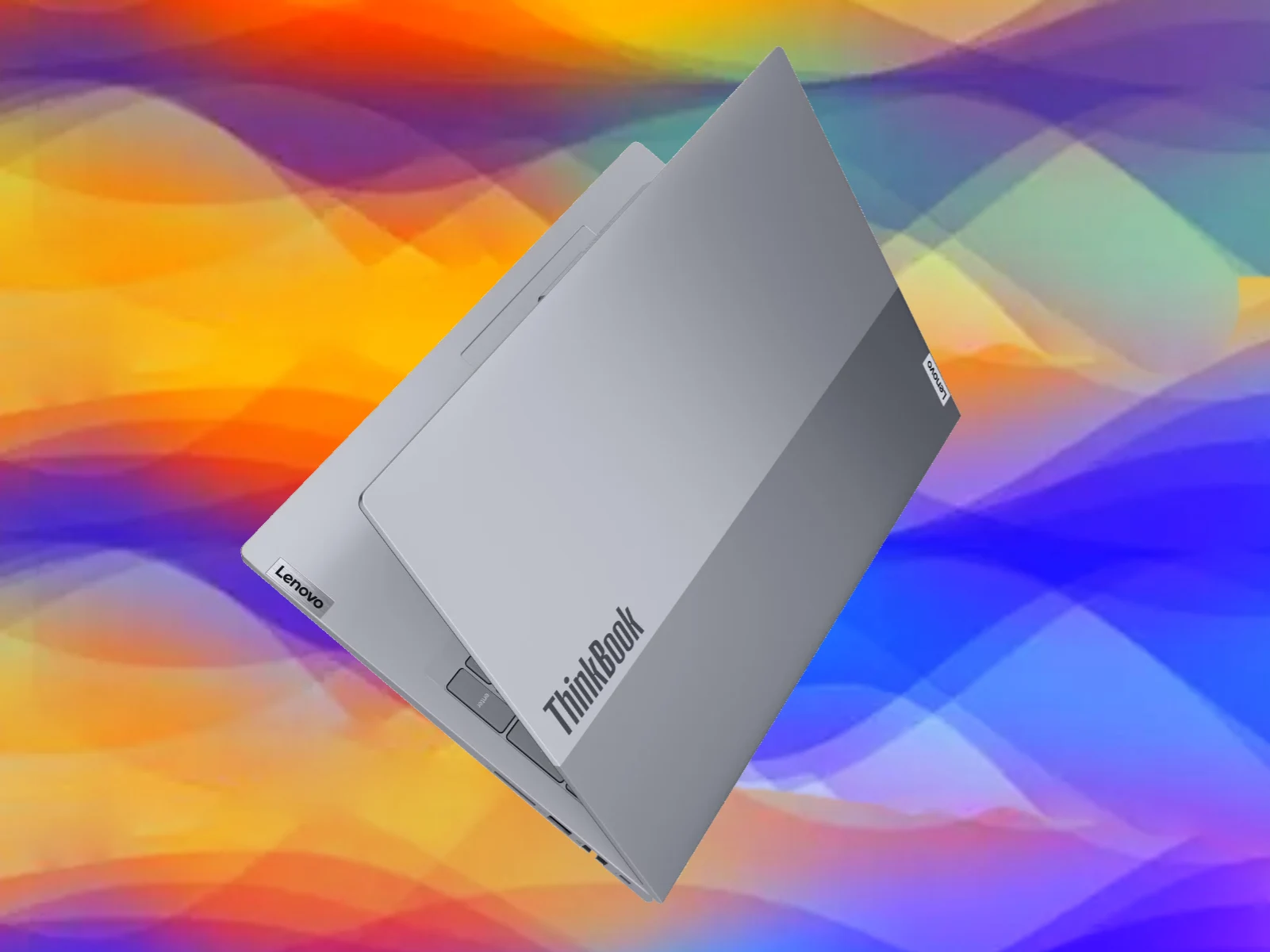
        Lenovo has finally started selling a new version of the ThinkBook 16 Gen 9. To recap, the company has already launched AMD Hawk Point and Intel Raptor Lake-powered versions of its 16-inch ThinkBook. Then in February, we noticed that the ThinkBook 16 Gen 9 IPL had been added to Lenovo’s PSREF website with newer Panther Lake processors.

        ThinkBook 16 Gen 9 IPL performance and configuration options

        Despite the name, the ThinkBook 16 Gen 9 IPL actually trails older Gen 8 models with Arrow Lake processors (curr. $1,199 on Amazon). In fact, the Core Ultra 5 325 and Core Ultra 7 355 perform worse in our benchmarks than the Core 7 240H with which the ThinkBook 16 Gen 9 IRL is available. Setting that aside, the new ThinkBook 16 can also be configured with 16 GB or 32 GB of DDR5-5600 RAM. This RAM is user-upgradeable, as is storage thanks to the inclusion of M.2 2242 and M.2 2280 slots.

        Hardware choices and display options

        Additionally, Lenovo offers the laptop with 48 Wh or 71 Wh batteries, Wi-Fi 6 or Wi-Fi 7 connectivity and an optional fingerprint reader. The ThinkBook 16 Gen 9 IPL features a 5 MP webcam by default too, although Lenovo allows this to be swapped out for a 1080p equivalent for a small surcharge with infrared for Windows Hello login purposes. Moreover, the 60 Hz, 400 nit and 45% NTSC IPS display can be swapped for a 120 Hz, 400 nit and 100% sRGB equivalent. Both are 1200p and 16:10 IPS panels, though.

        Pricing and availability

        The ThinkBook 16 Gen 9 IPL starts at £1,099.99 in the UK with a Core Ultra 5 325 processor, 16 GB of RAM and 256 GB of storage. Meanwhile, the same configuration retails for between €1,288 and €1,458 in the Eurozone, with pricing set at AUD 1,690 in Australia. Lenovo has not yet revealed when it will begin selling its new 16-inch ThinkBook in North America, nor for how much.


      • Chuwi Neo vs MacBook: Affordable Intel Wildcat Lake Laptop

        Chuwi Neo vs MacBook: Affordable Intel Wildcat Lake Laptop

        Key Takeaway

        – Competitively priced starting at around $449 with the UniBook, aiming to undercut MacBook Neo on cost.
        – Core specs: Intel Core 3 304 (Wildcat Lake) with 5-core CPU and 1-core Xe iGPU, 8GB LPDDR5X RAM, 256GB PCIe 3.0 SSD.
        – Display and ports: 14-inch 1920×1200, likely 60Hz, full set of ports (2x USB-C, 3x USB-A, SD, HDMI, RJ45) with Wi-Fi 6 and Bluetooth 5.2.
        – Battery and OS: 53.38Wh容量, Windows 11 Pro preinstalled (user may opt for debloated Windows or Linux).
        – Unknowns: Real-world performance, display refresh rate specifics, and runtime efficiency remain to be confirmed as launch details unfold.

        Chuwi has introduced its first Intel Wildcat Lake laptop, the UniBook, and as the brand shares, it’s expected to start at around $449, meaning it will be more affordable than the MacBook Neo. Of course, it’s still unclear how well it will compare in terms of performance.

        Overview and pricing

        The UniBook is powered by the Intel Core 3 304, the starting option from the Wildcat Lake lineup with a 5-core CPU and 1-core Xe3 iGPU. Chuwi pairs the processor with 8GB of LPDDR5X RAM, and the starting configuration is expected to sport a 256GB PCIe 3.0 SSD.

        Display and graphics

        On the front, the Chuwi UniBook features a 14-inch display with 1920×1200 pixels resolution and 100% sRGB coverage. The company doesn’t mention the refresh rate, meaning that it’s likely a 60Hz panel. These specs make the display inferior to the 13-inch Liquid Retina display found on the MacBook Neo (available on Amazon).

        Ports and wireless

        Of course, the port configuration appears to be a bit better, with the Chuwi UniBook featuring two USB-C, three USB-A, an SD card slot, one HDMI, and one RJ45 Ethernet. For wireless connectivity, the laptop features WiFi 6 and Bluetooth 5.2. A 53.38Wh battery powers the internals, which can be seen as an improvement over the Neo, but it’s still unclear how good the runtime will be.

        Software and launch details

        While Chuwi shared the core specs, the company hasn’t revealed any detailed images yet. However, the brand mentions that there will be a 180° hinge, and the only picture shared shows it in a sleek grey colorway. It’s set to ship with Windows 11 Pro installed, which can be an issue for the 8GB system RAM, but the good part is that users will have the freedom to install a debloated version of Windows or simply shift to Linux. The company is expected to share more details on the launch and availability soon.


        Sources