Tag: RTX 3060 Ti

  • Forza Horizon 6 RTX 3060 Ti Review: Japan OK, Ray Tracing Not Supported

    Forza Horizon 6 RTX 3060 Ti Review: Japan OK, Ray Tracing Not Supported

    Key Takeaway

    – 1080p: 95 FPS with Medium (best balance); Extreme without RT ~49 FPS; Extreme with RT ~36 FPS (0.1% lows ~22 FPS) — RT markedly hurts performance.
    – 1440p: Medium ~83 FPS; Extreme without RT ~35 FPS; Extreme with RT ~16 FPS (unplayable); High preset recommended for smooth 1440p (~75 FPS, 0.1% lows ~65 FPS).
    – Recommendation: For RTX 3060 Ti, use 1080p Medium/High or 1440p Medium/High; avoid RT if aiming for playable frame rates.


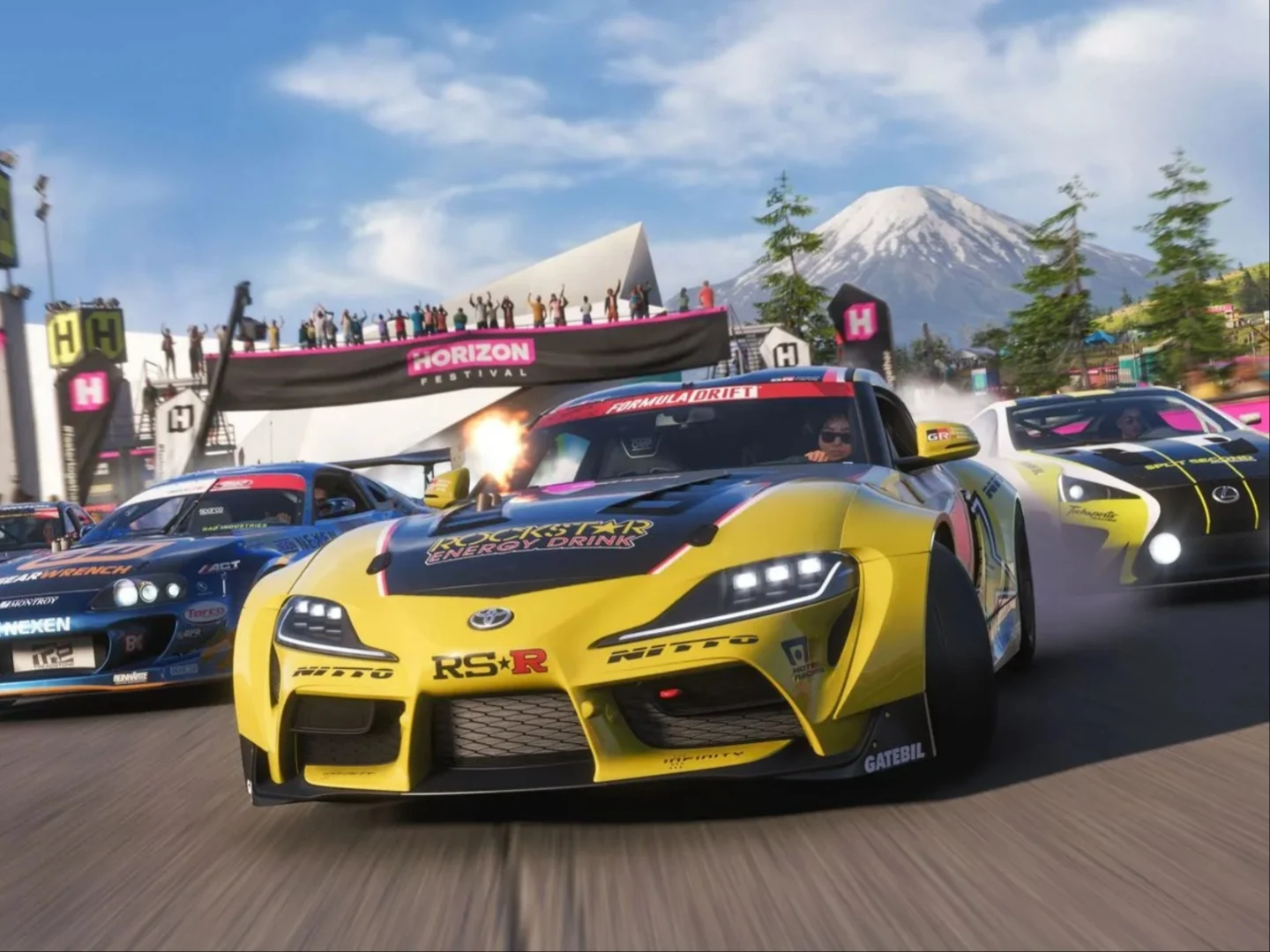
    Forza Horizon 6 launched today and brings a new open-world racing festival set in Japan

    Following the release, we took a close look at how the RTX 3060 Ti performs when paired with a Ryzen 7 5800X, testing both 1080p and 1440p scenarios to see where this mid-range setup sits. The goal was to understand how Nvidia’s mid-range card handles the latest Playground Games title on a modern CPU and at common display resolutions, while also noting any notable changes in the game’s recommended presets for this hardware pairing. The benchmark data is presented below with specific numbers and settings preserved from the testing run.

    1080p performance highlights and what settings matter most

    At 1080p, the 3060 Ti shines best when the right balance of settings is chosen. In Medium preset, the game runs at an average of 95 FPS with very solid 0.1% lows around 88.7 FPS, marking the sweet spot for this CPU-GPU pairing. If you push to Extreme without Ray Tracing, you see the frame rate drop to about 49 FPS, which is generally playable but noticeably less fluid. Turning Ray Tracing on top of that causes the average to fall to 36 FPS, with 0.1% lows dipping to 22 FPS, which can be felt during aggressive driving or high-speed sections.

    1440p results show how resolution changes the equation

    When you upscale to 1440p, the Medium setting still delivers a respectable 83 FPS average, suggesting 1440p monitors can enjoy a smooth experience without too much compromise. However, Extreme without RT collapses to 35 FPS, and Extreme with RT drops to a problematic 16 FPS average. The game’s own recommendation for this hardware is the High preset, which holds up fairly well and provides a smooth 75 FPS average at 1440p with 0.1% lows around 65 FPS, showing better consistency than Extreme options.

    Bottom line for 3060 Ti users and practical guidance

    The key takeaway is straightforward: at 1080p, Medium or High settings at this resolution or at 1440p with Medium/High are the most balanced choices for this card. Ray tracing, although supported, imposes a significant performance hit on the 3060 Ti that this tier of GPU typically cannot absorb without sacrificing fluidity. Those aiming for the best possible experience without RT should stick to the Medium/High range, depending on resolution, to preserve smoother frame pacing and more reliable 0.1% lows across play sessions.


    Sources

    • Forza Horizon 6 PC Requirements: Optimized for Budget Builds

      Forza Horizon 6 PC Requirements: Optimized for Budget Builds

      Key Takeaways

      1. Game Setting and Release: Forza Horizon 6 is set in Japan and will be released on May 19, 2026.

      2. PC Specifications: Recommended specifications for high settings at 1440p include a Core i5 12th gen or Ryzen 5 5600X processor and a GPU like RTX 3060 Ti or Radeon RX 6700XT.

      3. Extreme Settings Requirements: To achieve Extreme settings with 4K resolution at 60+ FPS, players need an RTX 5070 Ti or Radeon RX 9070 XT and 32 GB of RAM.

      4. Wide Device Support: The game will run smoothly on high-performance PCs, gaming laptops, and handheld consoles, featuring 4K HDR graphics and ray tracing capabilities.

      5. User-Friendly Features: Players can apply PC render settings without restarting the game, and it will include a benchmark mode and real-time memory usage stats.


      The upcoming title in the Forza Horizon franchise is set in Japan and is called Forza Horizon 6. It was first revealed in September of last year, with a release date set for May 19, 2026, which was confirmed earlier this year. Playground Games, the studio behind the game, has now released the PC specifications needed to run the game at various settings, showing that it has been well optimized.

      Recommended Specifications

      For players aiming for High settings at 1440p, the recommended setup includes a Core i5 12th gen or Ryzen 5 5600X processor, alongside a GPU like the RTX 3060 Ti, Radeon RX 6700XT, or Intel Arc A580. These requirements are fairly moderate, making it promising that the game can perform well on more affordable hardware. The minimum requirements are a GTX 1650 or Radeon RX 6500 XT or Arc A380, which is fantastic news for those with entry-level PCs.

      Extreme Settings Requirements

      At the Extreme settings level, players will need either an RTX 5070 Ti or Radeon RX 9070 XT to achieve those demanding Extreme RT settings. The game will run at an upscaled 4K resolution, aiming for 60+ FPS. It’s worth noting that the Extreme RT setting requires a hefty 32 GB of RAM, which is to be expected.

      Playground Games assures players that Forza Horizon 6 will function smoothly across various devices, including high-performance PCs, gaming laptops, and handheld consoles. The game will feature 4K HDR graphics, ray tracing capabilities, uncapped framerates, and will support ultrawide monitor resolutions. Additionally, it will include DLSS 4 with Multi-frame generation for RTX 50 series cards, frame generation for RTX 40 series and above, DLSS Super Resolution for all GeForce RTX cards, along with DLAA and NVIDIA Reflex. Furthermore, AMD FSR 4/3 will also be supported, and Intel Arc GPU users can take advantage of XeSS 2.1, unlike what’s available in Crimson Desert.

      Additional Features

      Another notable feature is that players won’t have to restart the game to apply PC render settings. Forza Horizon 6 will include a benchmark mode and real-time memory usage stats, allowing players to keep track of their VRAM consumption.

      Forza.net

      Source:
      Link


    • Star Wars Outlaws Performs Well on Switch 2, Leaked Gameplay Revealed

      Star Wars Outlaws Performs Well on Switch 2, Leaked Gameplay Revealed

      Key Takeaways

      1. Star Wars Outlaws is set to release on September 4 for the Switch 2, generating mixed opinions from gamers.
      2. The game requires an RTX 3060 Ti for optimal performance at 60 FPS and 1080p, but needs optimization for the Switch 2.
      3. Leaked gameplay footage shows the game running at around 30 FPS below 1080p on the Switch 2 in docked mode, with some frame drops.
      4. The GVG YouTube channel reported poor performance during their hands-on experience at PAX West, with inconsistent frame rates below 30 FPS.
      5. The true performance of Star Wars Outlaws on the Switch 2, especially in handheld versus docked mode, will be revealed soon after the release.


      The highly anticipated upcoming third-party release for the Switch 2, Star Wars Outlaws, is set to launch on September 4. This game has received a mix of opinions from PC and console gamers, and it isn’t particularly demanding, suggesting a minimum requirement of an RTX 3060 Ti for achieving 60 FPS at 1080p. However, it does require a significant amount of optimization to perform well on the Nintendo Switch 2. Luckily, recently leaked gameplay footage indicates that the game is running quite smoothly and reliably on the handheld device when docked.

      Gameplay Footage Leak

      A user by the name of mataleao has posted about 40 minutes of gameplay from Star Wars Outlaws (linked below) on the Switch 2 in docked mode prior to its official release. It remains uncertain how they gained early access to the game, but their gameplay showcases them continuing from a previously saved game. As for the game’s resolution and frame rate, it appears to be running below 1080p at approximately 30 FPS, although this is difficult to verify.

      Frame Rates and Performance

      The gameplay mostly consisted of indoor scenes, with some open-world exploration towards the end. While there were occasional frame drops and stutters, the overall performance was generally stable. Experiencing frequent drops in frame rates can ruin the gaming experience more than having a consistently lower FPS, which seems to be the situation with Star Wars Outlaws on the Switch 2. It appears that DLSS is functioning, at least in docked mode.

      Contrasting Views from PAX West

      In contrast, the team from the GVG YouTube channel had a hands-on experience with the game at PAX West and reported that it runs “really poorly” on the Switch 2. The section they played took place on a Star Destroyer, with plenty of action sequences and space battles. Specifically, the Star Destroyer segment felt unstable, exhibiting inconsistent frame rates. They noted frame rate drops below 30 FPS, indicating that some moments might have reached 40 to 45 FPS or more, which is puzzling when compared to the leaked footage.

      In short, we won’t have to wait long to find out how the game truly performs on the Switch 2, especially in terms of handheld mode versus docked.

      Source:
      Link


    • Battlefield 6 Runs Over 45 FPS on Ryzen 5 5600G iGPU

      Battlefield 6 Runs Over 45 FPS on Ryzen 5 5600G iGPU

      Key Takeaways

      1. Positive Feedback on Battlefield 6: Early impressions show that Battlefield 6 captures the essence of the series, with promising gameplay and design updates.

      2. Optimized Performance: The game runs smoothly, achieving over 70 FPS at 1440p/medium settings on capable hardware. Lowering to 1080p can boost FPS to nearly 100.

      3. Good Performance on Lower-End Hardware: Battlefield 6 performs well even on weaker integrated graphics, reaching high 40s to mid-50s FPS at 1080p on low settings.

      4. Frame Generation Techniques: Using FSR on “Ultra Performance” can allow the game to run steadily at around 60 FPS, even with some visual trade-offs.

      5. Accessibility for Various PCs: Players with recent iGPUs or portable PCs can enjoy Battlefield 6, making it accessible even without high-end GPUs.


      After the somewhat unsatisfying Battlefield 2046, Dice appears to have successfully captured the spirit of Battlefield 6, as the early feedback on the game has been encouraging. We also tried out Battlefield 6’s Open Beta and were pleasantly surprised. While you can check out our detailed review here, the main takeaway is that, thanks to some clever design updates, Battlefield 6 feels like a genuine Battlefield title with a distinct character.

      Optimization Success

      Dice has also excelled in optimizing Battlefield 6. We were able to play the game at over 70 FPS at 1440p/medium settings with FSR using a Ryzen 7 5800X and an RTX 3060 Ti. Lowering the resolution to 1080p would likely push our frame rates to nearly 100 FPS.

      Impressive Performance on Weak Hardware

      What’s even more remarkable is that Battlefield 6 reportedly runs well on a less powerful iGPU. AMD APU Gaming’s examination of the Battlefield 6 Open Beta on a Ryzen 5 5600G with a Vega 7 iGPU showed the game consistently achieving FPS in the high 40s, occasionally reaching the mid-to-high 50s. This was all performed at a 1080p resolution, on low settings, with FSR set to “Quality”.

      Frame Generation Techniques

      Moreover, with FSR adjusted to “Ultra Performance”, the Battlefield 6 Open Beta seems to reliably operate in the mid-to-high 50 FPS area. If you’re okay with some visual compromises that come with Frame Generation methods, AMD APU Gaming indicates you can even enjoy Battlefield 6 at a steady 60 FPS with Frame Gen enabled and FSR set to “Quality”.

      In simple terms, if you’re looking to play Battlefield 6 but don’t own an entry-level GPU like the RTX 3060, the latest iGPUs in Intel’s Lunar Lake CPUs or AMD’s Ryzen APUs should meet your needs, provided you’re willing to give up some visuals. For those with portable PCs such as the ROG Ally with Z1 Extreme, the MSI Claw, and the Lenovo Legion Go, the experience should be even more enjoyable.

      Source:
      Link


    • One-Eyed Likho: A Mesmeric Folk Horror Experience Reviewed

      Key Takeaways

      1. Performance and Graphics: One-Eyed Likho runs smoothly on high settings with a polished but occasionally awkward animation style.

      2. Visual Style and Environment: The game features a striking monochrome color scheme that enhances its mythical and ominous settings, using minimalism for effective environmental storytelling.

      3. Sound Design and Immersion: Audio plays a crucial role in creating tension, with well-timed jump scares and a focus on environmental sounds that enhance the overall atmosphere.

      4. Gameplay Mechanics and Exploration: Emphasizing exploration and puzzle-solving over combat, the game includes a unique unlimited matchstick mechanic to heighten tension and support its folklore theme.

      5. Storytelling and Dialogue: Rooted in Slavic mythology, the narrative is compelling, though the dialogue and early choices may feel trivial, leaving potential for deeper engagement later in the game.


      I’m not really into horror games, but one upcoming title caught my eye when it was first announced last year. With a review key in hand, I dove into the first few hours of One-Eyed Likho, coming in as someone who’s somewhat familiar with classic horror games like Outlast and Phasmophobia, yet completely new to the folk horror subgenre. My expectations were influenced by the eerie black-and-white visuals shown in trailers and the promise of a story rooted in Eastern European myths. For context, I played the game on a Ryzen 7 5800X CPU, RTX 3060 Ti GPU, 64GB RAM (3200MHz), and Windows 11.

      Performance and Graphics

      Running on maximum graphics settings at 2560×1440 resolution, One-Eyed Likho performed smoothly without any crashes or significant bugs. It’s not very demanding by today’s standards and maintained steady performance throughout. However, I did notice that some animations and character movements, particularly on uneven ground or when going up stairs, seemed a bit awkward. While the game is polished enough for an immersive experience, there are still a few noticeable rough spots.

      By the way, if you’re interested, there’s a demo of One-Eyed Likho available on Steam, allowing you to test it out before making a purchase.

      Visual Style and Environment

      The first thing that struck me was the monochrome color scheme, which is a bold choice and crucial to the game’s character. The art transforms familiar settings—like pine forests under starry skies, abandoned chapels, and dilapidated ferry docks—into places that feel both mythical and ominous. Shadows are deep, and light sources seem rare. The washed-out blacks and greys actually work better than the stark blacks seen in other horror games.

      Throughout One-Eyed Likho, visual minimalism is employed to enhance environmental storytelling. There’s little on-screen clutter, allowing me to focus on contextual clues, with lighting, debris, and architecture contributing to the narrative.

      Sound Design and Immersion

      Audio plays a significant role in immersion, and it’s handled with great attention. Sparse and sometimes harsh Russian dialogue, environmental sounds, and occasional folk tunes are used effectively. I believe that silence is almost weaponized in One-Eyed Likho, making every creak and rustle deeply unsettling—similar to other horror games.

      Jump scares are uncommon but well-timed, aligning with story moments instead of using cheap tricks on players. The game opts for building tension gradually rather than maintaining a constant threat. Whether it’s the rustling leaves (which sound fantastic, by the way) or the calls of ravens echoing off the walls, the game cleverly uses audio as a tool for creating dread and enriching the world.

      Gameplay Mechanics and Exploration

      At its core, One-Eyed Likho is focused on exploration, with various puzzles sprinkled throughout. There’s no combat (at least in the initial hours) as the emphasis lies on navigating and deciphering mysterious locales. The controls are intuitive and reminiscent of traditional first-person adventure games, never feeling intrusive.

      One standout feature is the unlimited matchstick system. Matches can illuminate your surroundings, ignite dry brush, or uncover hints in the dark. However, each match quickly burns out, forcing you to endure brief moments of darkness. This not only heightens tension but also thematically reinforces the fragility of knowledge and safety, in line with the game’s Slavic folklore theme. The use of matchsticks is one of the more unique and effective design ideas, akin to the night vision camera in Outlast.

      Puzzles and Narrative

      Regarding puzzles, they are straightforward and mainly environmental, rarely interrupting the flow of the story. Many early puzzle segments serve as pathways for narrative exploration rather than independent challenges. Some players might be put off by the ease of these puzzles, but I found they enhanced immersion rather than hindering it.

      The game shines brightest in its storytelling, deeply rooted in Slavic myth. The main character, Smith, has a fascinating motivation—he seeks out evil and misfortune simply because he hasn’t encountered them yet. It’s an unusual but compelling premise, placing the player against both natural and supernatural dangers.

      Dialogue and Voice Acting

      The dialogue is decent—clear but nothing particularly remarkable. The voice acting stands out more, injecting raw energy into the narration. Interactions with your companion (the tailor) early in the game effectively add emotional depth, although some animation glitches, such as the tailor’s shoes not aligning with stairs, remind you that this is a mid-budget project.

      Branching choices emerge more clearly through dialogue, but early decisions felt quite trivial. Whether these choices will matter more later on remains to be seen; this is one area where I think there’s potential waiting to be tapped.

      Visuals and Atmosphere

      Visuals are striking, especially the contrast of darkness and light, like in the ruined chapel illuminated by candles. Some visuals, like starry night skies or deserted graveyards, do a fantastic job of blending the grotesque with the beautiful.

      The atmosphere is consistently heavy and often breathtaking. Even in quieter moments, the underlying sense of danger is ever-present.

      Scares and Polish

      The game prioritizes building tension over jump scares. When scares do happen, they feel earned as they’re linked to changes in the environment rather than just loud noises (although the moving statues before you enter the coffin was a memorable exception).

      Overall performance is strong, but polish issues are noticeable—like clipping, slightly stiff animations, and dialogue selection quirks—detracting a bit from the overall experience. To be fair, these issues rarely “break” the immersion but are still worth noting for potential players.

      One-Eyed Likho is a more contemplative and art-focused entry in the horror genre. Based on my initial impressions, it excels in atmosphere, visual storytelling, and folk mythology, prioritizing these elements over constant action or difficulty. This makes it a great option for genre enthusiasts looking for a fresh experience—one that finds beauty in darkness, even if its imperfections and occasionally shallow choices prevent it from achieving greatness.

      While One-Eyed Likho shares some core horror traits with games like Outlast, it carves out its own niche through its folk horror roots and impressive art direction over sheer terror. A more fitting comparison might actually be with Return of the Obra Dinn or other experimental narrative horror games, rather than the survival style of more mainstream titles. The emphasis is on exploring a storyline and a world that is as stunning as it is threatening, which may very well be One-Eyed Likho’s greatest strength.

      Source:
      Link