Category: Computers

  • Acer TravelMate P6: Smart Features for Daily Use Revealed

    Acer TravelMate P6: Smart Features for Daily Use Revealed

    Key Takeaways

    1. Easy Access to Settings: The TravelMate P6 features a specialized key for quick access to the “TravelMateSense” app, consolidating vital settings in one location.

    2. Smart Maintenance Features: A service access point allows users to clean the fan easily, and a “reverse airflow” function helps keep the cooling system dust-free.

    3. Enhanced Webcam Quality: The laptop includes a QHD resolution (2560 x 1440 pixels) webcam, providing sharper and clearer images for professional video calls.

    4. Impressive Sound Quality: The TravelMate P6 offers surprisingly clear and robust audio quality, suitable for meetings and casual viewing without headphones.

    5. User Experience Focus: Beyond technical specs, the laptop includes clever features that significantly enhance the overall user experience.


    A good laptop is more than just its components. While technical specifications like processor speed and RAM are important, it’s often the small, clever features that truly enhance the user experience at work. The new Acer TravelMate P6 exemplifies this well. Beyond the buzz surrounding the “Lunar Lake” platform and its impressive battery life, Acer has incorporated several practical details that merit further exploration.

    Easy Access to Settings

    Instead of navigating through numerous Windows settings, Acer has equipped the TravelMate P6 with a specialized key. A quick press brings up the “TravelMateSense” app, which serves as a straightforward command hub for the entire machine. Here, users can find the usual performance modes—“Silent,” “Balanced,” and “Performance”—as well as controls for battery management, webcam settings, and the fan’s built-in dust protection system. There’s even more to uncover, making this a smart solution that consolidates all vital settings in one convenient location.

    Smart Maintenance Features

    A particularly clever aspect of the laptop is Acer’s maintenance strategy. On the bottom of the device, there’s a small service access point. This feature allows users to clean the fan with compressed air without needing to disassemble the laptop. Additionally, the software prompts the fan to reverse its direction briefly every six hours. This “reverse airflow” function helps dislodge dust from the cooling fins, ensuring optimal cooling performance over time.

    Enhanced Webcam Quality

    In today’s world of video calls, the quality of the webcam is essential. While many rivals, such as the Lenovo ThinkPad X1 Carbon, still utilize older 720p or 1080p cameras, the TravelMate P6 boasts a QHD resolution (2560 x 1440 pixels) webcam. This upgrade results in a noticeably sharper and clearer image, elevating the professional appearance of video calls—a minor detail that can make a significant difference in a digital workspace.

    Impressive Sound Quality

    Typically, the speakers on a slim business laptop are not very impressive. However, the TravelMate P6 stands out in this area. The audio quality is surprisingly clear and robust, especially for voice clarity during calls or videos. This means that the speakers are not only adequate for occasional meetings but also suitable for unwinding with a TV show after a long day without the immediate need for headphones.
     

  • AMD Ryzen 9 9950X3D Price Drops to €649 in Germany

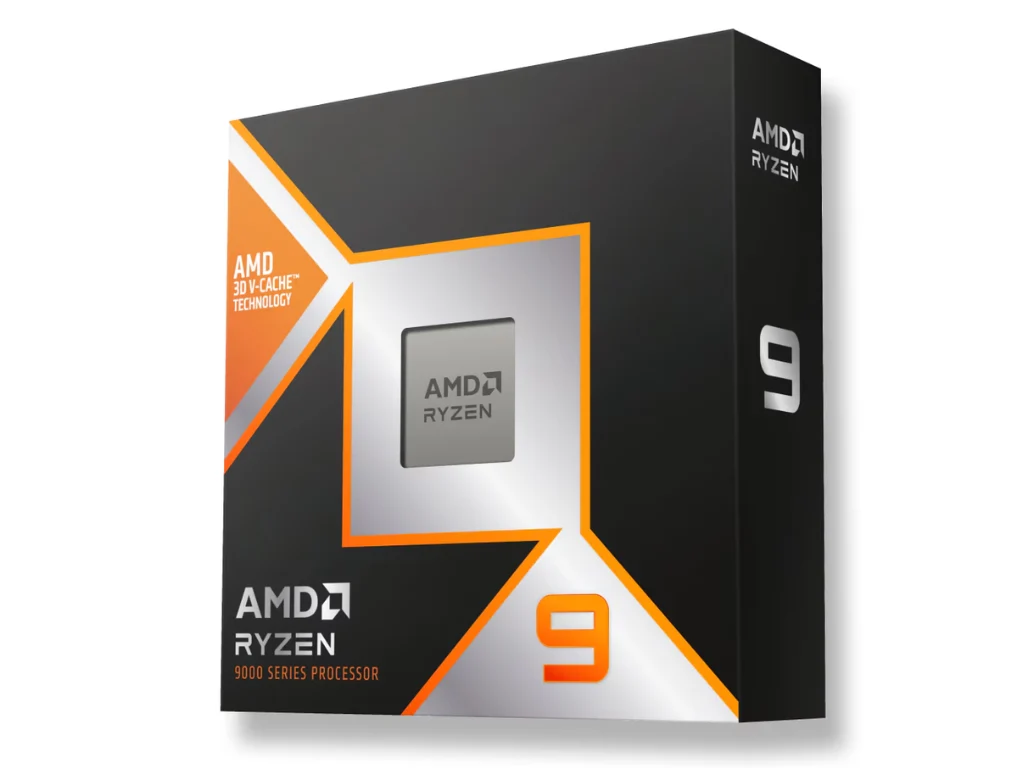
    AMD Ryzen 9 9950X3D Price Drops to €649 in Germany

    Key Takeaways

    1. AMD’s Ryzen 9 9950X3D processor is currently discounted to €649 in Germany, a nearly 20% reduction from its original price of €800.
    2. The price drop is part of a broader trend in discounts for AMD’s Zen 5 CPUs with 3D V-Cache, enhancing gaming performance.
    3. The Ryzen 9 9950X3D features 16 cores, 32 threads, a base clock of 4.3GHz, and a boost clock of 5.7GHz, making it suitable for high-demand tasks like gaming and video editing.
    4. Benchmark tests suggest that the Ryzen 7 9800X3D may be a better choice for gamers due to its lower price and fewer core parking issues.
    5. The price cut may indicate AMD’s plans to clear stock ahead of new product launches, coinciding with similar price reductions in the U.S. market.


    PC lovers in the European Union on the hunt for a new CPU can take advantage of a limited-time offer on Amazon.de. AMD’s top-of-the-line Ryzen 9 9950X3D processor has hit a record low price of €649 in Germany, marking a nearly 20% discount from its original price of €800.

    Pricing Trends

    This price reduction, which took place on August 23, is part of a larger trend of discounts for AMD’s Zen 5 CPUs that come with 3D V-Cache, designed to enhance gaming performance by adding an extra cache layer.

    The Ryzen 9 9950X3D features 16 cores and 32 threads, with a base clock speed of 4.3GHz that can boost to 5.7GHz. It also includes a total of 144MB cache, which is made up of 128MB of L3 cache (split between two 8-core CCDs in a 96MB and 32MB setup, thanks to 64MB of 3D V-Cache on the first). This setup makes the processor perfect for demanding gaming tasks as well as professional work like rendering and video editing because of its superior core count.

    Performance Comparison

    Benchmark tests show that its gaming performance may, in some instances, be slightly outperformed by the Ryzen 7 9800X3D, which is often a better choice for gamers due to its lower price and fewer issues related to core parking, a problem some users encountered since the earlier Ryzen 9 7950X3D.

    This price cut suggests that AMD may be gearing up to clear out stock in anticipation of new products and is taking advantage of the typical consumer upgrade trend that happens at the end of the year. A similar situation has been noted in the U.S. with the Ryzen 7 9800X3D’s price dropping to $449, a 6% decrease from its original price of $479, indicating that CPU prices are leveling off as the year comes to a close.

    Consumer Opportunities

    For those living in Germany, this discount presents a rare chance to purchase one of the fastest processors available, which has mostly remained at or above its original price in the past. The CPU has a TDP of 170W and does not come with a cooler, so buyers need to also consider the cost of a good cooling solution like the Noctua D15 G2 or a 360mm AIO cooler.

    This price drop coincides with discounts on data center processors in the U.S., where AMD’s EPYC 9005 series CPUs and Intel’s Xeon 6 Performance-series CPUs have seen reductions of around 50% off their original prices.

    This includes older model SKUs, which are now being offered well below their original prices to direct customers at retail. While AMD and Intel have made these moves quietly, they have not provided a specific reason for the price reductions.

    Source:
    Link


  • Geekom A9 Max Mini PC Launches with Discount Offer

    Geekom A9 Max Mini PC Launches with Discount Offer

    Key Takeaways

    – Geekom A9 Max mini PC launched earlier than expected, now available with a promotional discount.
    – Priced at $999 during the promotional period, with a standard price of $1,199 after the promotion ends.
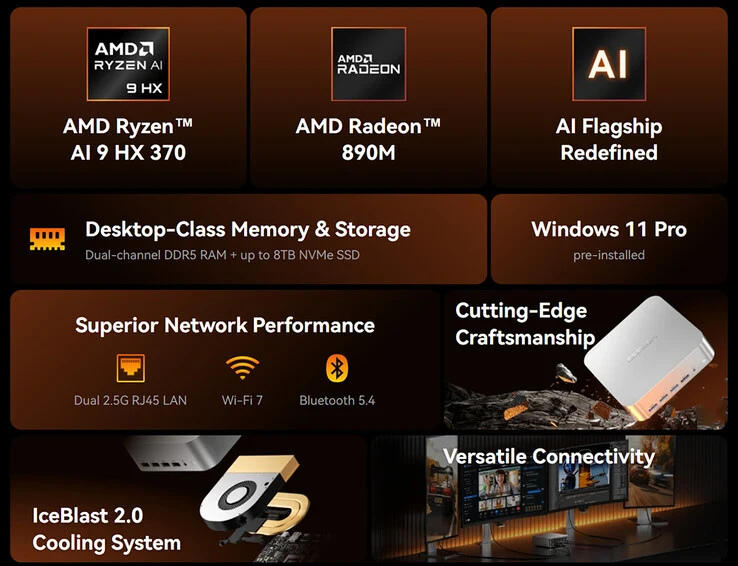
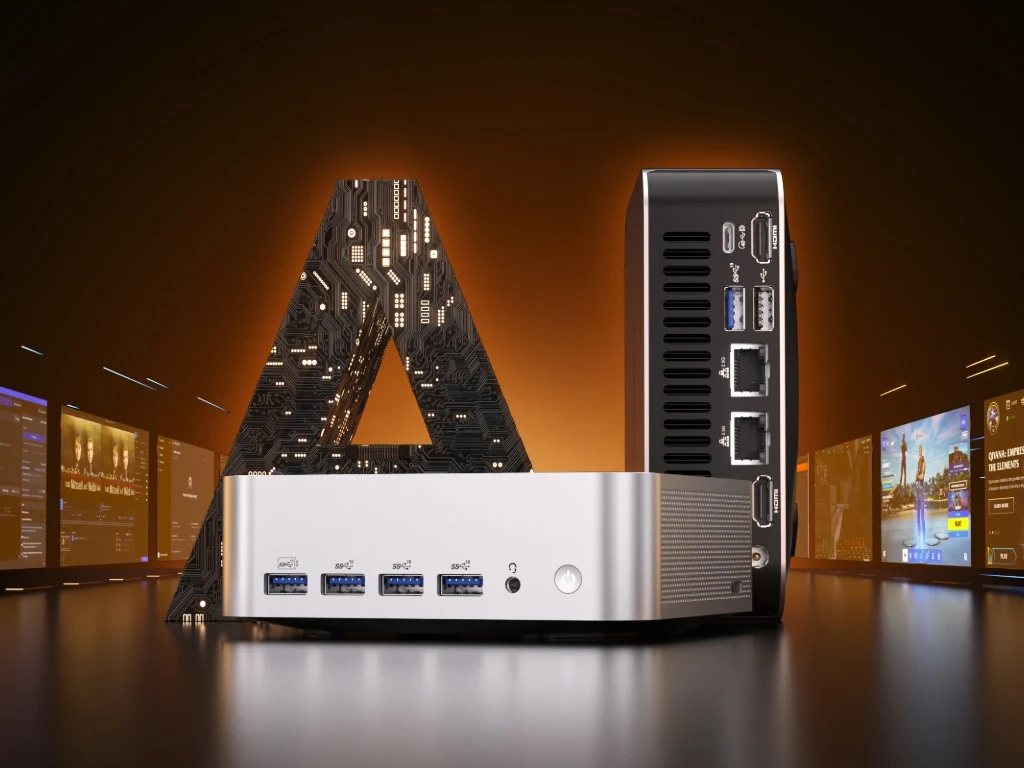
    – Features a Ryzen AI 9 HX 370 APU with Radeon 890M graphics, capable of running modern AAA games at 1080p.
    – Expandable RAM up to 128 GB and storage up to 8 TB using two M.2 slots.
    – Includes advanced features such as IceBlast 2.0 cooling, WiFi 7, Bluetooth 5.4, and a stylish design.


    Geekom has released the A9 Max sooner than anticipated, with the mini PC already available prior to the official launch date of August 21, 2025. Now, the company has officially introduced the system to the global audience, and it is currently benefiting from a promotional discount for its launch.

    Pricing and Availability

    On both Amazon and its official website, the new Strix Point mini PC, equipped with 32 GB of RAM and 2 TB of NVMe storage, is priced at $999. It’s not clear how long this promotional price will be available, but once it ends, the standard price of $1,199 for the Geekom A9 Max will apply again.

    Performance Specs

    The Geekom A9 Max features the Ryzen AI 9 HX 370 APU, which includes the Radeon 890M graphics. Our analysis has shown that this Strix Point integrated GPU can manage modern AAA games quite well at 1080p resolution with graphics settings adjusted to medium or high.

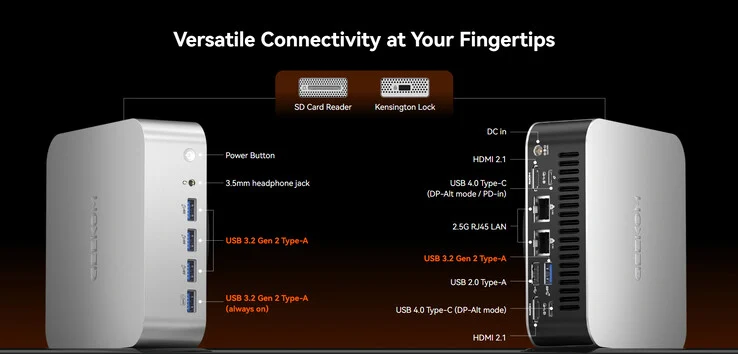
    Although the A9 Max lacks an OCuLink port, it provides two USB4 ports for eGPU support. In addition to these, the mini PC offers a variety of other ports:

    Expandability and Features

    The company points out that users can upgrade the RAM to a maximum of 128 GB and storage can be increased to a total of 8 TB, utilizing a 4 TB SSD in each of its two M.2 slots. Other notable features include the IceBlast 2.0 cooling system, WiFi 7, Bluetooth 5.4, and a stylish design.

    Source:
    Link


  • NASA Delays Launch Indefinitely for the Sixth Time

    NASA Delays Launch Indefinitely for the Sixth Time

    Key Takeaways

    1. The TOMEX+ mission has faced six launch delays since its initial planned date of August 18.
    2. NASA is working on setting a new launch date within the mission’s launch window, which ends on September 3.
    3. The mission involves three rockets: two for deploying vapor tracers to analyze wind patterns and one with a lidar instrument.
    4. The lidar-equipped rocket will launch approximately 5 minutes after the first two rockets.
    5. Sounding rocket missions are short, lasting 2 to 20 minutes, and are essential for studying the mesopause, an area of the atmosphere inaccessible to satellites and weather balloons.


    The TOMEX+ mission was first planned to launch on August 18, but it has faced multiple delays, totaling 6 reschedulings for various reasons. Below is a detailed look at each of these postponements.

    New Launch Date Coming Soon

    NASA is currently working on setting a new launch date this week. The mission’s launch window began on August 18 and will end on September 3. The TOMEX+ mission involves three rockets; two of them will deploy vapor tracers, which are similar to colorful smoke, allowing scientists to analyze wind patterns. The third rocket, set to launch approximately 5 minutes after the first two, will be equipped with a lidar instrument designed to monitor atmospheric density and movement over time.

    Importance of Sounding Rockets

    Sounding rocket missions are brief, typically lasting anywhere from 2 to 20 minutes. They play a crucial role in exploring the mesopause, a section of Earth’s atmosphere that satellites and weather balloons cannot reach.

    Source:
    Link


  • FugakuNEXT: Japan’s $740M Supercomputer Targets Zetta-Scale with Nvidia

    FugakuNEXT: Japan’s $740M Supercomputer Targets Zetta-Scale with Nvidia

    Key Takeaways

    1. FugakuNEXT will be Japan’s first flagship supercomputer to use GPUs as accelerators, aiming for 600 exaFLOPS performance by 2030.
    2. The supercomputer will have a development budget of approximately JP¥110 billion ($740 million) and is set to be operational at RIKEN’s Kobe campus.
    3. It aims for over a hundred times the application performance of the existing Fugaku, leveraging a five-fold hardware enhancement and significant software optimizations.
    4. Powered by Fujitsu’s FUJITSU-MONAKA-X CPUs and Nvidia-designed GPU accelerators, it will utilize advanced memory technologies for efficient CPU-GPU interconnectivity.
    5. FugakuNEXT will support research in earthquake simulation, manufacturing optimization, and climate modeling, promoting Japan’s semiconductor independence and international collaboration.


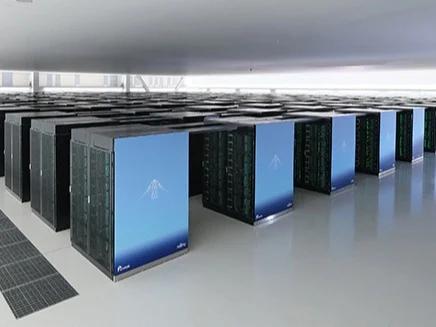
    RIKEN, Fujitsu, and Nvidia have teamed up to create the FugakuNEXT supercomputer, marking the first time a Japanese flagship system will use GPUs as accelerators. This new machine is intended to succeed Japan’s current Fugaku supercomputer, which is ranked 7th in the world. The development budget for FugakuNEXT is about JP¥110 billion, which is roughly $740 million based on current currency rates. It is planned to be operational at RIKEN’s Kobe campus by 2030.

    Performance Goals

    The FugakuNEXT aims for a remarkable 600 exaFLOPS in FP8 precision (sparse) and is projected to be the first supercomputer to achieve “zetta-scale” performance, boasting an application performance increase of over a hundred times compared to the existing Fugaku. This significant boost is expected to come from a five-fold enhancement in hardware and ten to twenty times improvement through software optimizations. The system is also planned to maintain its efficiency within a power envelope of 40MW.

    Cutting-Edge Technology

    Fujitsu’s upcoming FUJITSU-MONAKA-X CPUs, which will follow the still-in-development MONAKA CPU, will power the new supercomputer. Nvidia will be responsible for designing the GPU accelerators, incorporating high-bandwidth integration and NVLink Fusion technology for efficient CPU-GPU interconnectivity. A mix of advanced memory technologies and modern connection systems will be used to create a Hybrid AI-HPC platform that merges simulation and AI functionalities.

    Future Applications

    FugakuNEXT will operate on an “AI for Science” platform aimed at automating research processes, with applications in areas like earthquake simulation, manufacturing optimization, and climate modeling. This project showcases Japan’s strategic move towards semiconductor independence, promoting international collaboration with the US Department of Energy, while also working to cultivate a global AI-HPC ecosystem.

    The foundational design for the supercomputer is anticipated to be finalized by 2025, with the detailed design stage commencing in 2026. System operations are projected to kick off around 2030. To assist in early software development, a virtual cloud environment known as ‘Virtual Fugaku’ will be made available, which may include future integration of quantum computing to enhance QC-HPC capabilities.

    Source:
    Link


  • Banana Pi BPI-M4: New Raspberry Pi 5 Rival with PCIe and 8GB RAM

    Banana Pi BPI-M4: New Raspberry Pi 5 Rival with PCIe and 8GB RAM

    Key Takeaways

    1. Banana Pi has launched the BPI-M4 Super, a new single-board computer aimed at various projects, especially in smart home technology.
    2. The BPI-M4 Super runs on a Rockchip RK3568B2 SoC with four Cortex-A55 cores at 2GHz and offers memory options of 2, 4, or 8GB.
    3. It features multiple ports, including two Ethernet ports (one supporting up to 2.5 Gbps), HDMI 2.0 for 4K output, and two USB 2.0 ports.
    4. The device supports WiFi 6, Bluetooth 5.3, and has an M.2 slot for SSDs, along with a microSD slot for additional storage.
    5. Pricing and release date for the BPI-M4 Super have not yet been announced.


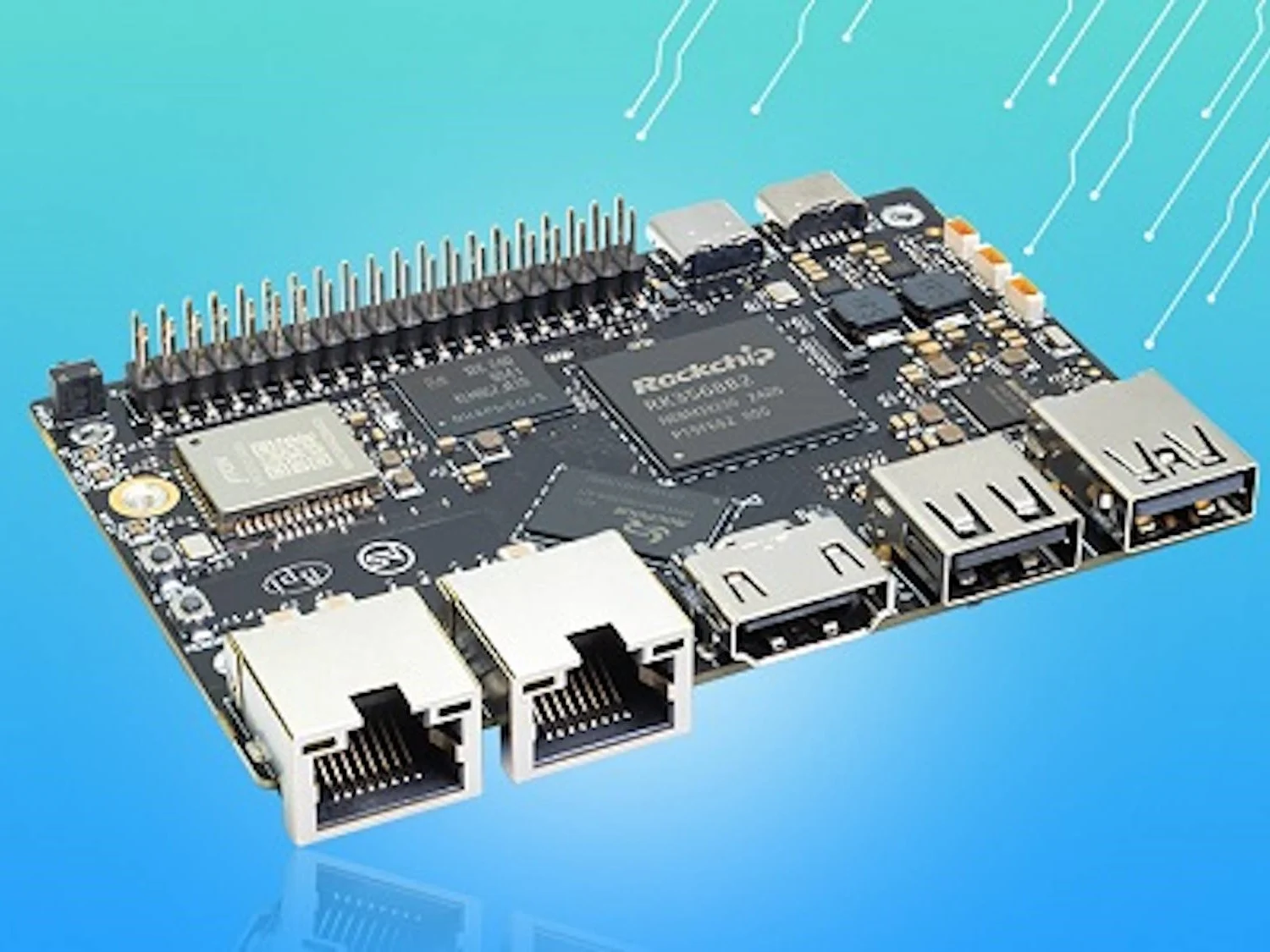
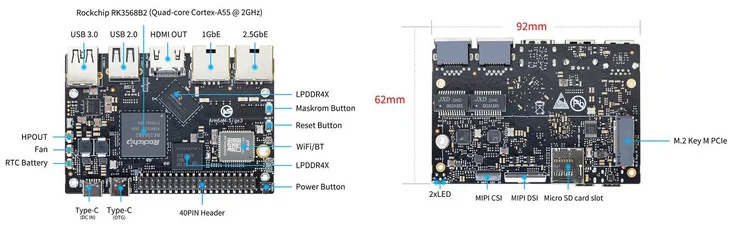
    Banana Pi has introduced a new single-board computer named the BPI-M4 Super. While the company isn’t revolutionizing the category, this device is expected to deliver strong performance for various projects, especially those involving smart home technology. Additionally, the BPI-M4 Super can serve as a traditional desktop computer, offering a variety of ports and connections. Competing with the Raspberry Pi 5, the BPI-M4 Super runs on a Rockchip RK3568B2 SoC, featuring four Cortex-A55 cores clocked at 2GHz. Depending on how it’s configured, the SBC comes with either 2, 4, or 8GB of LPDDR4x memory. Plus, it includes 32GB of eMMC storage, with future versions anticipated to offer 8, 16, or even 64GB.

    Specifications Overview

    The dimensions of the SBC are 3.62 x 2.44 x 0.57 inches, and it includes two Ethernet ports, one of which can handle speeds up to 2.5 Gbps. The HDMI 2.0 port allows for video output at 4K resolution with a refresh rate of 60Hz. There are also two USB 2.0 ports available, which can be utilized to connect various accessories. In addition, the M.2 slot supports full-sized SSDs and connects through a single PCIe 3.0 lane. Storage can further be expanded with a microSD slot. The device supports WiFi 6 and Bluetooth 5.3, and its 40-pin header is compatible with expansion boards made for the Raspberry Pi 5, although compatibility with the BPI-M4 Super is not guaranteed. However, as of now, Banana Pi has not disclosed any pricing or a specific release date.

    Conclusion

    Banana Pi’s new offering, the BPI-M4 Super, is positioned to be a versatile tool for both hobbyists and professionals. Even though the device does not have groundbreaking features, its performance and expandability make it a solid choice for those looking to dive into projects involving smart technology or simply wanting a reliable desktop solution.

    Source:
    Link


  • U.S. Excludes Equity Stakes in TSMC and Micron Under CHIPS Act

    U.S. Excludes Equity Stakes in TSMC and Micron Under CHIPS Act

    Key Takeaways

    1. The Trump administration is considering equity stakes in companies receiving CHIPS Act funding but will not require shares from those increasing U.S. investments.
    2. Commerce Secretary Howard Lutnick mentioned aiming for a 10% stake in Intel as part of an $8 billion funding arrangement, emphasizing a return for taxpayers.
    3. TSMC executives are contemplating returning subsidies if required to sell shares, despite not heavily relying on U.S. assistance.
    4. TSMC plans to invest $165 billion in the U.S. and build three more factories, while Micron announced a $200 billion plan and a new factory expected in 2027.
    5. The administration’s strategy combines financial aid with pressure, including tariffs on imported semiconductors and a 15% share from Nvidia and AMD’s sales to China.


    The Trump administration is looking at the possibility of taking equity stakes related to the CHIPS Act funding, but it has made its strategy clear based on what companies are doing. It indicated that it won’t ask for shares from firms that are boosting U.S. investments. A representative from the government mentioned that the Commerce Department is “not looking to take equity from TSMC and Micron,” making it clear that the policy on equity stakes varies among different recipients. This reduced worries that the government would require ownership from all companies.

    Interview Insights

    In a live talk on CNBC, Commerce Secretary Howard Lutnick discussed that the administration aims to secure about a 10 percent stake in Intel, pointing out a different equity-for-funding strategy. The arrangement would involve nearly $8 billion in CHIPS funding. He emphasized that this method would provide a return for taxpayers instead of simply handing out grants. A source from the government revealed that similar agreements have been contemplated for other firms, marking a clear difference between these equity discussions and just grant-based awards.

    TSMC’s Considerations

    Reports indicate that TSMC executives have talked about potentially giving back subsidies if the U.S. government mandates them to sell their shares. The firm has received as much as $6.6 billion for its plant in Arizona, which started producing advanced chips in late 2024. Nevertheless, TSMC has not heavily relied on U.S. assistance. A U.S. official later pointed out that companies that are increasing their investments won’t be forced to give up equity.

    Company Growth

    This news aligns with recent expansions announced by companies. TSMC has ramped up its U.S. investments to $165 billion and plans to construct three more factories in Arizona. Meanwhile, Micron, which secured $6 billion in funding, has unveiled a plan for $200 billion and a new factory in the U.S. expected to open in 2027. Officials clarified that these companies are excluded from the equity-for-grants program.

    The overall strategy merges financial aid with additional pressure. President Donald Trump imposed a 100 percent tariff on imported semiconductors but allowed exceptions for companies manufacturing chips in the U.S. Additionally, the administration is taking a 15 percent share from Nvidia and AMD’s sales to China. Transforming parts of Intel’s package into equity might still encounter legal challenges due to prior deal terms and profit-sharing conditions embedded in the law.

    Source:
    Link


  • Washington Invests $8.9B in Intel Under CHIPS Act to Boost Chipmaking

    Washington Invests $8.9B in Intel Under CHIPS Act to Boost Chipmaking

    Key Takeaways

    1. The U.S. government is buying $8.9 billion worth of Intel stock, acquiring a 9.9% stake as a long-term investment in chip manufacturing.
    2. Funding for the purchase comes from $5.7 billion in unspent CHIPS Act grants and $3.2 billion from the Secure Enclave program.
    3. The government will have a passive stake in Intel, not taking a board seat, and will vote with Intel’s directors.
    4. Intel plans significant domestic expansion, with over $100 billion investment in facilities and $79 billion in research and development over five years.
    5. Major tech companies support Intel’s strategy, highlighting its importance for artificial intelligence and supply chain security.


    The U.S. government has decided to purchase $8.9 billion worth of newly issued common stock from Intel, acquiring a stake of about 9.9 percent. Officials have called this move a long-term investment in American chip manufacturing. Washington will buy 433.3 million shares at a price of $20.47 each, which is lower than the current market rate, according to Intel.

    Funding the Purchase

    The funding for this acquisition will come from $5.7 billion in unspent CHIPS and Science Act grants, along with $3.2 billion from the Secure Enclave program. Intel has already obtained $2.2 billion through the CHIPS initiative. This latest investment raises the total public funding related to Intel to $11.1 billion.

    Passive Stake

    The government will maintain a passive stake and will not take a seat on Intel’s board. It will generally vote along with Intel’s directors. Additionally, the government has the option for a five-year warrant at $20 per share for an extra five percent of Intel’s common stock, but this can only be exercised if Intel’s ownership of its foundry unit falls below 51 percent. The officials also plan to eliminate claw-back and profit-sharing clauses linked to previously allocated CHIPS funds.

    Intel has framed this agreement as a validation of its strategy for U.S. manufacturing. CEO Lip-Bu Tan stated, “As the only semiconductor company that does leading-edge logic R&D and manufacturing in the U.S., Intel is deeply committed to ensuring the world’s most advanced technologies are American made.” Earlier in the day, President Donald Trump hinted at the deal. Commerce Secretary Howard Lutnick supported the decision, mentioning the conversion of some CHIPS funding into equity. The Wall Street Journal noted that the administration isn’t pursuing similar stake acquisitions in other companies like TSMC or Micron.

    Domestic Expansion Plans

    Intel has emphasized the scale of its domestic expansion efforts, citing capital expenditures of $108 billion and $79 billion in research and development over the last five years. The company also plans to invest over $100 billion in expanding its domestic facilities. They announced that their new fabs in Arizona will start high-volume production later this year, utilizing the most advanced technological processes available in the U.S. Executives from companies like Microsoft, Dell, HP, and Amazon Web Services have publicly supported Intel’s strategy, noting its relevance to artificial intelligence and supply chain security.

    Source:
    Link


  • AMD Medusa Halo APUs Leak: 26x Zen 6 Cores & RDNA 5 iGPUs

    AMD Medusa Halo APUs Leak: 26x Zen 6 Cores & RDNA 5 iGPUs

    Key Takeaways

    1. AMD is set to release the Medusa Halo laptop APU in late 2027, featuring a powerful Zen 6 CPU and RDNA 5 iGPU.
    2. The Medusa Halo APU may include up to 24 high-performance cores and 2 low-energy cores, built on advanced 2nm and 3nm processes.
    3. Memory options might consist of either a 384-bit LPDDR6 or a 256-bit LPDDR5X memory controller.
    4. The iGPU is expected to have 48 Compute Units and could be based on the same chip used in AMD’s discrete RDNA 5 desktop GPUs.
    5. A smaller variant, the Medusa Halo Mini, will have a 14-core CPU and a 128-bit LPDDR5X memory controller, with a possible 192-bit LPDDR6 option.


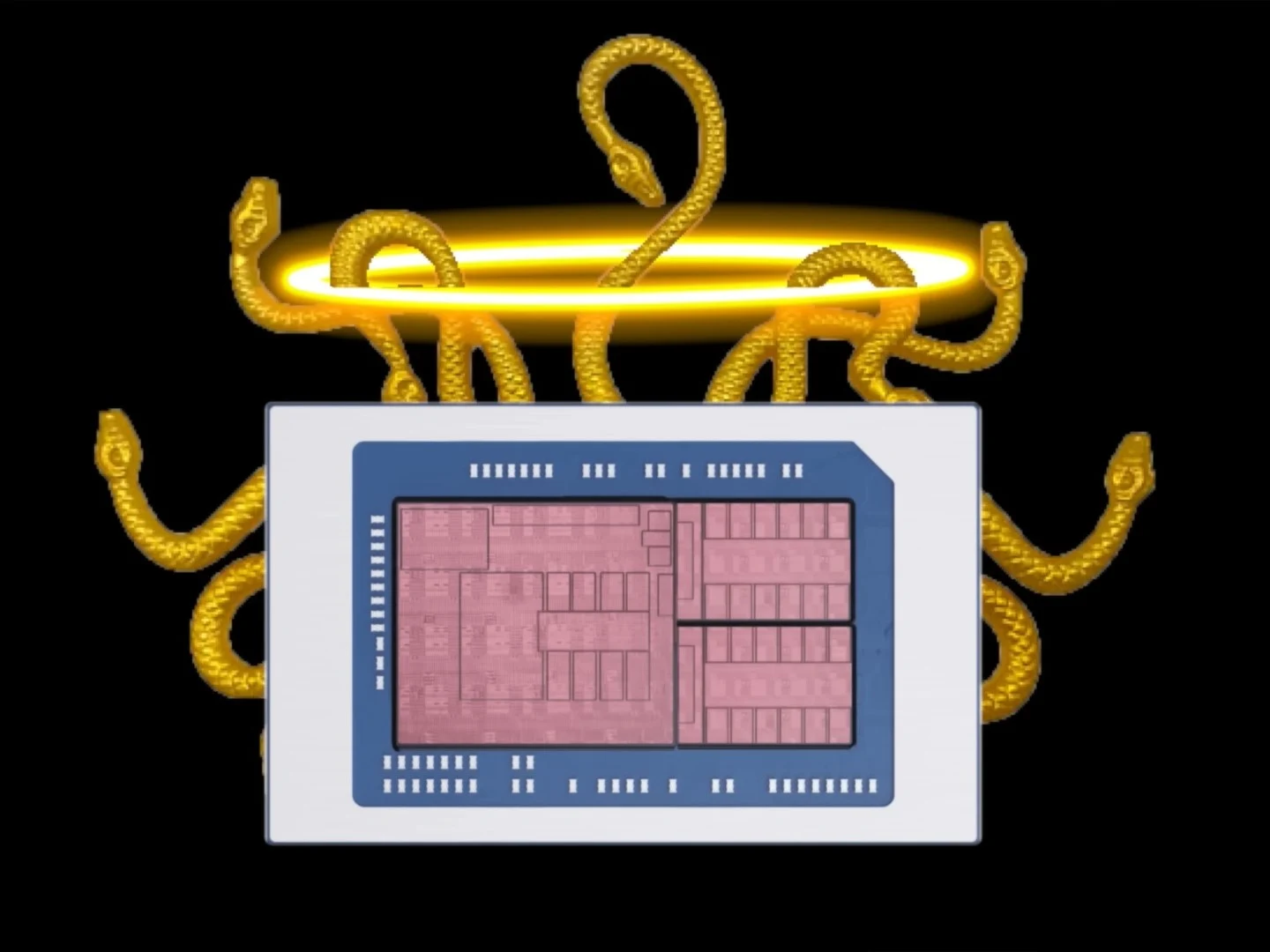
    After the release of the next-gen Zen 6 CPUs and RDNA 5 GPUs in late 2026, AMD is anticipated to unveil the Medusa Halo laptop APU in the second half of 2027. Similar to the Strix Halo design, the Medusa Halo APU is said to feature a robust Zen 6 CPU and a strong RDNA iGPU. According to Moore’s Law Is Dead, the iGPU in the Medusa Halo might utilize the upcoming RDNA 5/UDNA graphics framework, boasting up to 48 Compute Units and a 384-bit bus.

    New Specifications Unveiled

    The leaker has now shared further specifications about the Medusa Halo. In addition, the leaker has confirmed the existence of the Medusa Halo Mini, a smaller variant of the Halo model with fewer cores for CPU and GPU.

    Focusing on the more potent Medusa Halo APU, MLID has stated that the APU consists of 12 Zen 6 cores and 2 low-power Zen 6 cores. There is a chance that it could also include an extra 12-core Zen 6 CCD, bringing the total to 24 high-performance cores and 2 low-energy cores. It is expected that the 12-core CCD(s) will be built on TSMC’s state-of-the-art 2nm N2P process, while the IOD housing the low-power cores is reported to use the 3 nm N3P technology.

    Memory Features

    For the memory subsystem, MLID claims it might come equipped with either a 384-bit LPDDR6 or a 256-bit LPDDR5X memory controller. This aligns with the previous insights shared by the leaker.

    The Medusa Halo’s iGPU is arguably the most captivating aspect of the entire setup. This iGPU is suggested to be based on the RDNA 5 architecture with 48 Compute Units and possibly around 20 MB of L2 cache. However, it is possible that this 48-CU iGPU is actually the same one AMD intends to implement in the discrete RDNA5 “AT3” desktop GPU.

    Desktop GPU Integration

    AMD appears to be planning to utilize the same GPU chiplet die from a discrete RDNA 5 card, likely the 1060XT. While details about the discrete RDNA 5 board remain unknown, MLID has shared a wealth of information about the GPU, which we have detailed in another article.

    Additionally, AMD is thought to adopt a similar tactic of integrating a desktop GPU die within a mobile APU for the Xbox Magnus APU.

    For the Medusa Halo Mini APU, AMD is reportedly designing a 14-core CPU that comprises 4 Zen 6 cores, 8 Zen 6c cores, and 2 low-power Zen 6 cores. This CPU is matched with a 128-bit LPDDR5X memory controller. The leaker suggests there’s a possibility that a broader 192-bit LPDDR6 might also be included.

    Performance Expectations

    In conclusion, the Medusa Halo Mini, much like its larger counterpart, is said to feature the “AT4” RDNA 5 desktop GPU chiplet as its iGPU. This iGPU is claimed to have 28 CUs and 10 MB of L2 cache.

    Unfortunately, MLID has not provided any performance metrics for the Medusa Halo and the Medusa Halo Mini APUs yet. However, the leaker has given some performance forecasts for the discrete AT3 and AT4 RDNA 5 GPUs, which could hint at the graphics prowess of these Zen 6 APUs.

    The Medusa Halo and Medusa Halo Mini are speculated to be launched in 2027 at the earliest. Therefore, it’s important to approach these leaked specifications with a healthy amount of caution.

    Source:
    Link


  • Aokzoe Mini PC with Ryzen AI Max+ 395 Launches Globally

    Aokzoe Mini PC with Ryzen AI Max+ 395 Launches Globally

    Key Takeaways

    1. Aokzoe is developing a mini-PC featuring the AMD Ryzen AI Max+ 395 processor, popular for high-performance gaming.
    2. The company plans to launch the mini-PC globally but has not provided specific details about the release date or pricing.
    3. The mini-PC will likely be named the Aokzoe Mini PC.
    4. It will include various ports such as Ethernet, DisplayPort, HDMI, an SD card reader, a 3.5 mm audio jack, and USB Type-C ports.
    5. Aokzoe recently introduced the A1X gaming handheld, featuring advanced specs and priced at $1,749.


    Almost three months ago, Aokzoe hinted at the development of a mini-PC. At that point, they released some product images, but all were taken from the same angle. They also mentioned that this unnamed device would come with the AMD Ryzen AI Max+ 395, which is quickly becoming the favored processor for high-performance gaming mini-PCs, similar to the GMKtec EVO-X2.

    Global Release Plans

    About six weeks later, Aokzoe announced plans to launch its gaming mini-PC worldwide. However, they chose not to provide more details in their Weibo post. Instead, they introduced the A1X gaming handheld, showcasing OCuLink connectivity, an 8-inch VRR display, a 72.7 Wh battery, a Ryzen AI 9 HX 370 APU, and 64 GB RAM, currently priced at $1,749 on Amazon.

    Name and Features

    It appears that Aokzoe has finally decided on a name for its inaugural mini-PC. The device will likely be called the Aokzoe Mini PC, rather than opting for something more creative. Nevertheless, this mini-PC is still expected to launch globally with the Ryzen AI Max+ 395 APU. Furthermore, the company has confirmed that the Aokzoe Mini PC will include rear-facing ports like Ethernet, DisplayPort, and HDMI, along with an SD card reader, a 3.5 mm audio jack, and USB Type-C ports located on the front panel. Sadly, Aokzoe has yet to reveal any details regarding the price or release date for its first mini-PC.

    Awaiting More Information

    Fans are still left wondering about the specifics of when the Aokzoe Mini PC will become available and how much it will cost.

    Source:
    Link