Category: Computers

  • Nvidia Launches Photonics Switches for Scalable AI Networks

    Nvidia Launches Photonics Switches for Scalable AI Networks

    Key Takeaways

    1. Nvidia launched Spectrum-X Photonics Ethernet and Quantum-X Photonics InfiniBand switches to enhance data center connectivity using light technology, targeting AI factories and reducing energy consumption.

    2. Scaling up data center performance is challenging due to signal loss in copper connections, which can reach around 22 decibels, increasing power requirements and failure risks.

    3. Co-packaged optics (CPO) improve efficiency by placing optical engines next to switch chips, reducing electrical loss to about four decibels and power usage per port to around nine watts, leading to significant gains in energy efficiency and signal quality.

    4. Spectrum-X Photonics offers high bandwidth for Ethernet networks, achieving up to 400 Tb/s in large configurations, while Quantum-X Photonics focuses on 800 Gb/s InfiniBand connections, featuring liquid cooling and in-network computing capabilities.

    5. Nvidia’s future plans include advancing optical technology through stages, aiming for higher speeds and lower latencies, and collaborating with various companies to streamline manufacturing and enable scalable networks with millions of GPUs.


    Nvidia is on a mission to change how data centers connect by using light technology. In March 2025, they launched the Spectrum-X Photonics Ethernet and Quantum-X Photonics InfiniBand switches. These devices are made to link extensive “AI factories” located in various areas and support millions of GPUs while cutting down energy consumption and expenses. The main goal is to combine optical engines with switch chips, which helps in removing unnecessary electrical components.

    The Challenge of Scaling Up

    Scaling up is quite a big challenge. Once speeds reach 800 gigabits per second or higher, copper connections between servers and switches start to hinder performance. Signals weaken as they make their way through boards and connectors. This loss occurs even before the signal gets to the optical module. Nvidia mentions that this loss is around 22 decibels on 200-gigabit channels. As a result, more power is required, with each port consuming roughly 30 watts. Additional components also heighten the chances of failures.

    Innovations with Co-packaged Optics

    Co-packaged optics, or CPO, transforms this arrangement. By positioning the optical engine right next to the switch chip, signals are sent to the fiber almost instantly. This setup minimizes electrical loss to about four decibels and cuts down power use per port to around nine watts. Nvidia claims that, when scaled up, this method delivers roughly 3.5 times better energy efficiency, over 60 times improved signal quality, 10 times greater resilience due to fewer active components, and around 30 percent quicker setup time, since there’s less to construct and keep running.

    Spectrum-X Photonics for Ethernet

    For Ethernet applications, Spectrum-X Photonics is targeted at large, multi-tenant networks. Nvidia states it provides about 1.6 times more bandwidth per area than traditional Ethernet. The options include configurations such as 128 ports at 800 Gb/s or 512 ports at 200 Gb/s, achieving a total of 100 Tb/s. Larger configurations can expand to 512 ports at 800 Gb/s or up to 2,048 ports at 200 Gb/s, reaching a total of 400 Tb/s.

    Quantum-X Photonics for InfiniBand

    Focusing on InfiniBand, Quantum-X Photonics centers around 800 Gb/s connections and employs liquid cooling, which uses liquid coolant to dissipate heat. Its leading switch features 144 ports and can manage 115 Tb/s of data. It also incorporates in-network computing, allowing data processing within the network, rated at 14.4 trillion floating-point operations per second. The system utilizes Nvidia’s latest SHARP (Scalable Hierarchical Aggregation and Reduction Protocol) technology to speed up group tasks across the network.

    Future Plans and Partnerships

    Nvidia asserts that this new generation is twice as fast and five times more scalable for AI networks compared to the last one. The scalability improvement is closely tied to TSMC’s COUPE platform and modern packaging techniques. In the first stage, optical engines in OSFP modules will achieve 1.6 Tb/s. The second stage will introduce co-packaged optics on the motherboard, with capabilities of 6.4 Tb/s. The third stage aims for 12.8 Tb/s within processor packages, which will further minimize latency and energy usage. Nvidia plans to roll out CPO-based Quantum-X switches in early 2026 and Spectrum-X Photonics later that year, both featuring liquid cooling.

    Nvidia is collaborating with several companies, including TSMC, Coherent, Corning, Fabrinet, Foxconn, Lumentum, SENKO, SPIL, Sumitomo Electric, TFC, and others for manufacturing, optics, and assembly. The aim is to eliminate thousands of individual components from large clusters, accelerate setup, and enable networks with a million GPUs without excessive power usage.

    Source:
    Link


  • EcoFlow Rapid Pro X: High-Capacity Power Bank with Accessory Support

    EcoFlow Rapid Pro X: High-Capacity Power Bank with Accessory Support

    Key Takeaways

    1. The EcoFlow Rapid Pro X power bank allows customization with compatible accessories, including a Magnetic Block for fast charging.
    2. It has a large 27,650 mAh capacity and supports multiple charging protocols for various devices.
    3. The device features three USB-C ports with a maximum output of 140 W, allowing simultaneous charging of four devices at a total output of 300 W.
    4. It can recharge to 80% in just 20 minutes using the EcoFlow Rapid Pro Desktop Charger, with a maximum input power of 320 W.
    5. The power bank includes app integration, safety features, air travel certification, and is priced at $299.99 in the US and €239.99 in the EU.


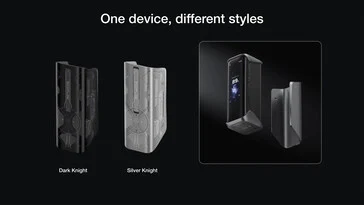
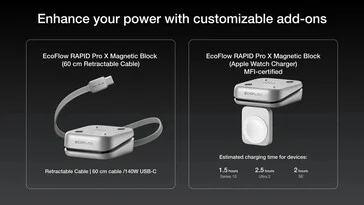
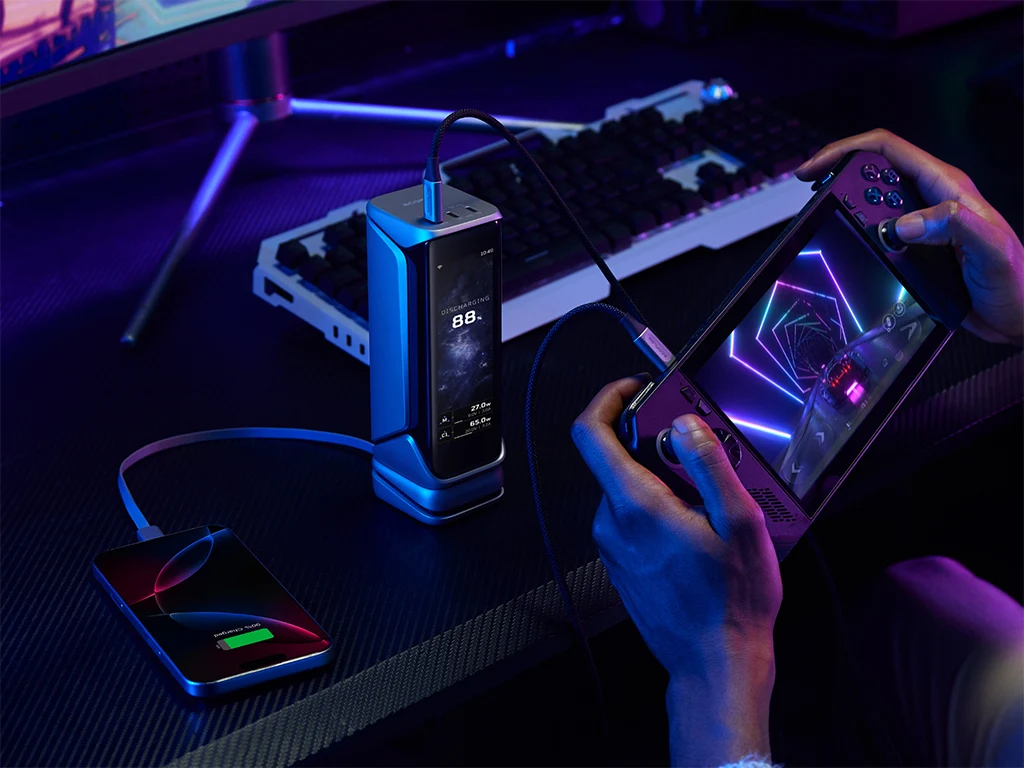
    EcoFlow has launched a new series of power banks, and one of the standout models is the Rapid Pro X. This device is notable for its ability to be customized, enabling users to add compatible accessories that enhance the functionality of this portable charger. One such accessory is the Magnetic Block, which includes a 60 cm retractable charging cable that supports fast charging at 140 W.

    Additional Accessories

    Another accessory that EcoFlow has put a spotlight on is the wireless charging block designed for smartwatches. Users are also given the option to modify the appearance of the power bank by attaching detachable cases, with two styles currently available for selection.

    Impressive Specifications

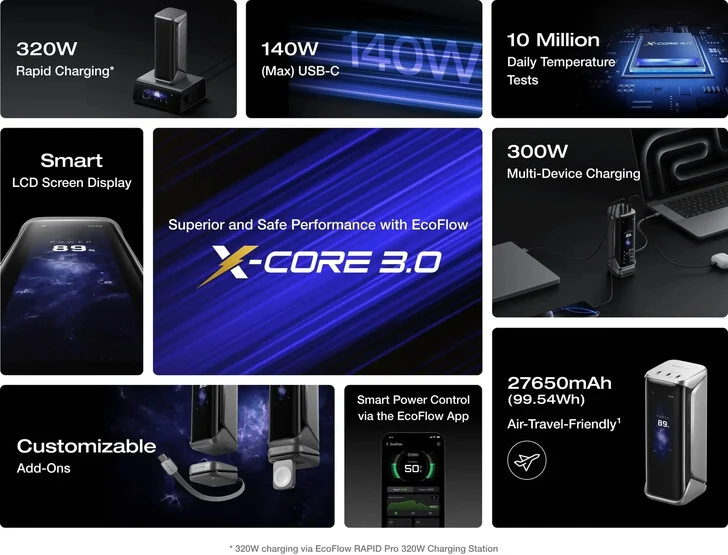
    Talking about the power bank itself, the EcoFlow Rapid Pro X is equipped with a substantial 27,650 mAh capacity. It supports a variety of charging protocols, making it capable of charging numerous devices, from laptops to lower-power gadgets like smartwatches and earbuds.

    The portable charger is fitted with three USB-C ports, with the C1 port reaching a maximum output of 140 W (currently, a 6.6-feet Ugreen 240 W Type-C cable is priced at $8.99 on Amazon). The other two ports can handle fast charging up to 65 W. Thanks to the retractable cable block, the Rapid Pro X is able to charge four devices simultaneously, boasting a total power output of 300 W.

    When recharged using the EcoFlow Rapid Pro Desktop Charger, the power bank can be powered up at a rate of 320 W, which reportedly gets the batteries to 80% capacity in only 20 minutes. It also features a sizable 3.9-inch built-in screen that provides essential information like the power status quickly.

    Key Features

    Among other impressive features of the EcoFlow Rapid Pro X power bank are app integration, various protective measures, and certification for air travel. The portable charger is currently priced at $299.99 in the US and €239.99 in the EU on the official website, but there’s no update on when it will become available for purchase.


  • Qualcomm’s Edge in Budget Laptops: Intel and AMD’s Weaknesses

    Qualcomm’s Edge in Budget Laptops: Intel and AMD’s Weaknesses

    Key Takeaways

    1. AMD Ryzen 200 and Intel Core 200 are based on 2023 technology, but budget laptops often use outdated processors.
    2. Qualcomm’s Oryon processors introduce competitive ARM technology to the laptop market, featuring eight to twelve cores.
    3. Qualcomm targets affordable laptops with the Snapdragon X series, offering options below $1,000 while using the latest technology.
    4. The Snapdragon X processor provides impressive performance and over 19 hours of battery life, outperforming some Intel options.
    5. Competition in the market drives innovation, with expectations for Qualcomm to further impact the sub-$1,000 laptop segment.


    AMD Ryzen 200 is built on 2023 technology, while the Intel Core 200 utilizes Intel’s Raptor Lake, also from the same year. It’s unfortunate that budget laptops often get neglected by chip makers, who equip them with processors that may have trendy names but are, in fact, outdated. These processors aren’t slow, but their performance can’t match the efficiency of the latest CPU designs that take advantage of newer manufacturing processes. It seems like the time when you could find a Core i3 or Ryzen 3 using cutting-edge technology is a thing of the past.

    Qualcomm’s Impact on the Market

    Amidst this landscape, Qualcomm emerges as a refreshing change for consumers. As a relatively new player in the PC sector—especially concerning competitive System on Chips (SoCs)—Qualcomm’s entry with its Oryon processors featuring eight to twelve cores has shaken up the laptop market. The Snapdragon X CPUs are pioneering competitive ARM processors designed for Windows laptops, marking a significant development.

    Targeting Affordable Laptops

    To expand its influence, Qualcomm appears to be focusing on a specific niche: affordable laptops. The Snapdragon X Elite and Snapdragon X Pro are clearly aimed at the higher-end market, priced above $1,000, while the Snapdragon X is designed for those looking for options below this key price point. For instance, the Lenovo IdeaPad Slim 3 15Q8X10, which we thoroughly reviewed, starts at about $600. What’s unique about the Snapdragon X is that it’s essentially a scaled-down version of the X Elite and X Pro, utilizing the latest technology, unlike the budget options from Intel and AMD.

    Impressive Performance and Battery Life

    In exchange, customers receive a robust eight-core processor that operates efficiently, allowing the IdeaPad Slim 3 (available on Amazon) to boast over 19 hours of battery life. The Lenovo device remains remarkably cool even during stress tests, outperforming its Intel counterpart, the Intel Core 5 210H. AMD is also feeling the heat, as to compete with the Snapdragon X’s performance, it must offer at least an AMD Ryzen 7 250 or Ryzen 7 8840U.

    In summary, it can be concluded that competition invigorates the market! We are eager to see if Qualcomm will introduce its latest technology into the sub-$1,000 bracket with its next generation of Oryon processors.

    Source:
    Link


  • Why Intel’s Arrow Lake Processor Is Bad for Lenovo ThinkPad T14s

    Why Intel’s Arrow Lake Processor Is Bad for Lenovo ThinkPad T14s

    Key Takeaways

    1. Lenovo is the leading manufacturer of convertible laptops, with a variety of models for everyday users and businesses, including the new ThinkPad T14s 2-in-1.

    2. The ThinkPad T14s 2-in-1 features Intel’s Arrow Lake processors, which allows for onboard memory up to 64 GB, but performance improvements are minimal.

    3. Arrow Lake CPUs show inferior single-core performance and graphics capabilities compared to Lunar Lake processors, despite some slight improvements in multi-core performance.

    4. The test model with Core Ultra 7 255U has limited performance due to its two cores and one of the slowest integrated graphics processors available.

    5. The decision to use Arrow Lake in the T14s 2-in-1 is questioned, as the Lunar Lake version of the standard T14s received positive reviews and could have improved the convertible model.


    Lenovo stands out as the top maker of convertibles. They have a wide range of models available for both everyday users and corporate clients, with the ThinkPad T14s 2-in-1 being the newest high-end addition to their business series. While the standard ThinkPad T14s Gen6 comes with Intel’s Lunar Lake processors (or AMD Strix Point or Qualcomm Snapdragon), Lenovo has opted to use Intel’s Arrow Lake for this convertible version.

    Arrow Lake Features

    One benefit of Arrow Lake is that it allows the combination of CPUs with standard SO-DIMM memory, yet Lenovo chose to implement onboard memory instead. You can get up to 64 GB, which is double the capacity of what Lunar Lake offers, but we don’t believe this will matter for most business professionals. The performance of the Arrow Lake CPU is also rather lacking. While the multi-core performance shows a slight improvement, the maximum power consumption is greater. However, both single-core performance and notably the graphics capabilities are inferior. Additionally, the Arrow Lake processor does not hold the Copilot+ certification.

    Review Insights

    Our test model came with the Core Ultra 7 255U, which only has two performance cores and is equipped with the Intel Graphics iGPU—currently one of the slowest integrated graphics processors available. There are H-series CPU options with faster iGPUs, but overall cooling efficiency is quite poor, and the processor’s thermal design power (TDP) has dropped to merely 24 Watts under continuous workloads.

    In summary, it’s difficult to grasp why Lenovo made this choice. The Lunar Lake version of the standard ThinkPad T14s made a strong impression, and we are convinced it would have enhanced the T14s 2-in-1 as well. For more details, including extensive benchmarks and measurements, please refer to our review of the new ThinkPad T14s 2-in-1.


  • Geekom A9 Mega: AMD Strix Halo, 128GB RAM, Ryzen AI Max+ 395

    Geekom A9 Mega: AMD Strix Halo, 128GB RAM, Ryzen AI Max+ 395

    Key Takeaways

    1. Geekom A9 Mega is a mini PC powered by an AMD Stix Halo APU with a sleek design and durable aluminum construction.
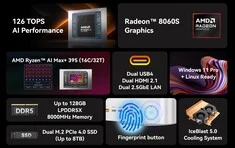
    2. It features the AMD Ryzen AI Max+ 395 with up to 16 cores and 32 threads, supporting up to 128 GB LPDDR5X RAM for strong performance.
    3. The device excels in AI tasks with up to 126 TOPS performance, capable of running large models like Stable Diffusion locally.
    4. It offers extensive connectivity options, including USB4, HDMI 2.1, dual 2.5 GB LAN, Wi-Fi 7, and up to 8 TB of SSD storage.
    5. Priced at around $1,899, it comes with Windows 11 Pro, targets power users, and will be showcased at IFA later this year.


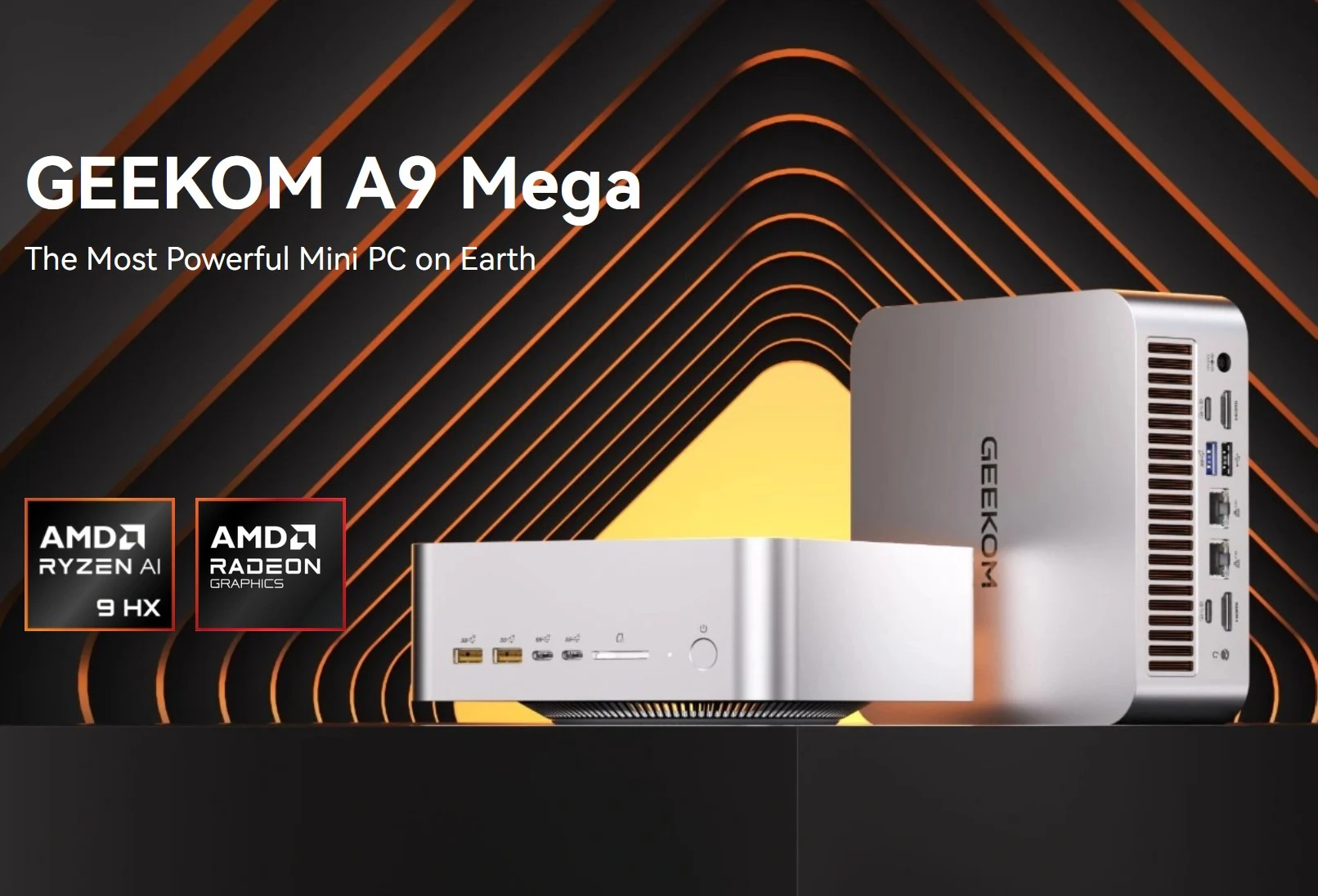
    Geekom has unveiled the A9 Mega, a robust mini PC powered by an AMD Stix Halo APU. This device integrates the capabilities of a high-end desktop into a sleek and compact design. Constructed from durable aluminum and featuring intricate CNC details, it merges top-notch aesthetics with exceptional computing strength. At its core lies the cutting-edge AMD Ryzen AI Max+ 395, which boasts up to 16 cores and 32 threads, along with the option for up to 128 GB LPDDR5X RAM that can be flexibly allocated to the powerful integrated GPU.

    AI Performance Highlights

    One standout feature is its AI capabilities: leveraging the XDNA 2 NPU and achieving a maximum performance of up to 126 TOPS, it can efficiently run large models like Stable Diffusion or LLaMA locally—this is a significant benefit for developers and those engaged in creative tasks.

    Extensive Connectivity Options

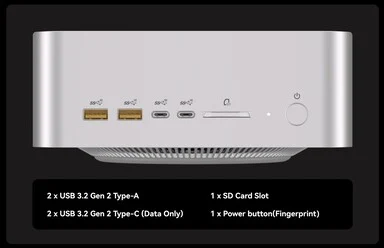
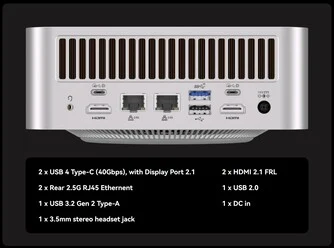
    The connectivity options are remarkably diverse. It includes multiple USB ports, two of which support speedy USB4, HDMI 2.1, dual 2.5 GB LAN, and Wi-Fi 7 with Bluetooth 5.4, catering to nearly every use case. Additionally, it supports up to 8 TB of SSD storage and is equipped with a reliable cooling system to maintain stable performance even under heavy load. The cooling unit is specified to handle 120 watts of power dissipation from the AMD Ryzen AI Max+ 395.

    With Windows 11 Pro already installed and compatibility with Linux, the A9 Mega targets power users who desire a compact yet visually striking system. The starting price is around $1,899 USD, which is considerably lower than similar workstations, Mac Studio setups, or the HP Z2 Mini G1a.

    Availability and Viewing Options

    The device will be showcased at IFA, although it is not anticipated to be available until the latter part of the year.

    Source:
    Link


  • ASRock L-Shaped PCIe 12V-2×6 Cable with NTC Sensor Prevents Melting

    ASRock L-Shaped PCIe 12V-2×6 Cable with NTC Sensor Prevents Melting

    Key Takeaways

    1. Incidents of damage to Nvidia’s RTX 50 series GPUs are linked to the new 12VHPWR power cable design.
    2. ASRock has introduced a new 12V-2×6 power cable with an L-shaped connector and built-in NTC sensor for better protection.
    3. AMD continues to use the traditional 8-pin connector for its reference model, while some partners have adopted the newer 12VHPWR design.
    4. The new ASRock cable can handle up to 600W and is designed to prevent sharp bends at the GPU end.
    5. The NTC sensor in the cable only works with ASRock power supply units, limiting its functionality with other brands.


    There have been a number of incidents involving damage to Nvidia’s RTX 50 series GPUs, often linked to either the PSU or the GPU itself, with the new 12VHPWR design being blamed. After the power cable for the Radeon RX 9070 XT GPU melted, ASRock took action and introduced a new cable designed to enhance protection against such issues. This new 12V-2×6 cable features an L-shaped connector along with a built-in NTC sensor.

    AMD’s Design Choices

    AMD has opted not to adopt this new design, sticking to the traditional 8-pin connector for its reference model. However, some partners, like ASRock, have embraced the newer 12VHPWR connector. While this connector simplifies the setup by combining three cables into one, it has also faced similar issues, affecting certain Nvidia RTX 50 series GPUs. Recently, a Reddit user reported that the power cable connector for their ASRock Radeon RX 9070 XT Taichi OC card melted at the GPU end, but thankfully, the connector on the card itself remained intact.

    ASRock’s New Solution

    It seems ASRock was already preparing for this situation, as they have launched the 12V-2×6 power cable featuring a NTC sensor and an L-shaped design. The NTC sensor tracks the temperature and relays information to the PSU for safe functioning. However, this feature is exclusively compatible with ASRock Taichi and Phantom Gaming PSUs. The new cable is also compatible with 12VHPWR connectors and can handle up to 600W.

    The L-shaped design helps prevent the cable from bending at sharp angles at the GPU end, while also lending a neater appearance to the overall build. The connectors are colored green and utilize 16 AWG (American Wire Gauge) size, along with HCS (High-Current System) terminals made from 94V-0 plastic. ASRock provides a 2-year limited warranty, assuming there are no user mistakes, such as inserting the connector incorrectly. The green pins should aid in visibility, helping to ensure they are fully inserted.

    Compatibility and Limitations

    Though the cable is compatible with all PSUs, the interaction between the NTC sensor and the PSU is restricted to ASRock models only.

    Source:
    Link


  • Milky Way May Host Over 10 Billion Life-Supporting Exoplanets

    Milky Way May Host Over 10 Billion Life-Supporting Exoplanets

    Key Takeaways

    1. New studies suggest that white dwarfs, previously overlooked, may host planets capable of supporting life.
    2. White dwarfs emit heat despite lacking nuclear activity, potentially allowing for habitable environments.
    3. Computer simulations indicate that rocky planets around white dwarfs could have more habitable surface area than previously believed.
    4. There are over 10 billion white dwarfs in the Milky Way, increasing the chances of finding life elsewhere.
    5. Research on these potential planets will take time, and initial findings may be underwhelming, but the possibility of discovering life remains.


    For many years, humans have pondered if they are the only ones in the universe and whether other civilizations exist beyond the Milky Way, as well as within it. Although there is currently no concrete proof of life outside our planet, new studies indicate that astronomers may have overlooked numerous planets that could support life.

    New Discoveries in Astronomy

    A recent publication in The Astrophysical Journal highlights that a dead star, known as a white dwarf, might be able to host several planets where life could potentially arise. This is a significant shift in research focus, as scientists have mostly concentrated on stars that are active and generate heat through nuclear processes, similar to our Sun.

    Consequently, while white dwarfs lack nuclear activity, they still emit heat. Aomawa Shields, a professor at the University of California at Irvine, shared insights with the US National Science Foundation:

    “Our computer simulations suggest that if rocky planets exist in their orbits, these planets could have more habitable real estate on their surfaces than previously thought.”

    The Vast Potential of the Milky Way

    According to the researchers behind the study, there are over 10 billion white dwarfs in our galaxy, the Milky Way. Considering that each star usually has multiple planets orbiting it, the likelihood of life emerging elsewhere is significantly heightened.

    However, the sheer number of potential planets means that research will take a long time. Initial findings might also be underwhelming, though unexpected revelations could arise later. In essence, while the chances of finding another form of life are becoming more promising, uncertainty still remains.

    Source:
    Link


  • Acemagic F5A Mini PC Launch: Limited-Time Discount Available

    Acemagic F5A Mini PC Launch: Limited-Time Discount Available

    Key Takeaways

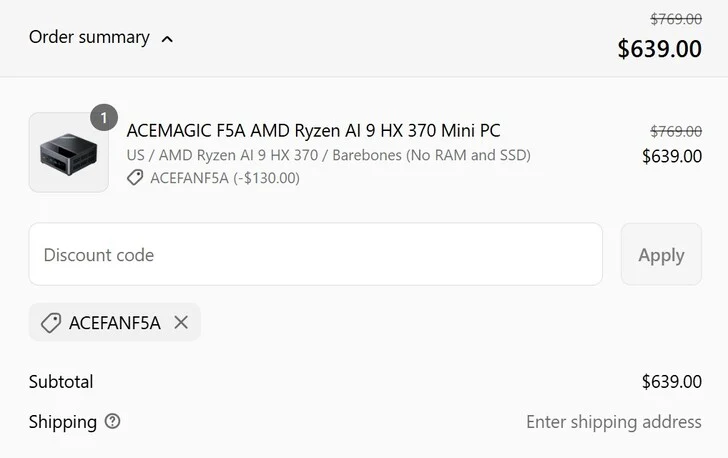
    1. The Acemagic F5A mini PC will launch in September 2025, with pre-orders available now and a $130 discount for early buyers using the code ACEFANF5A.
    2. The base model is priced at $639, making it competitively priced compared to other AMD Strix Point options.
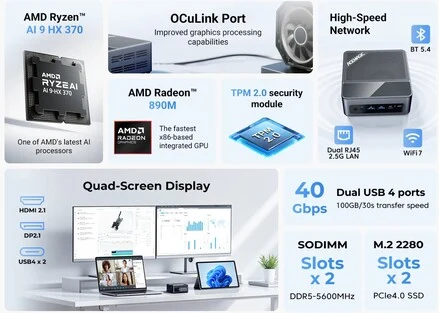
    3. The F5A features an OCuLink port, allowing users to connect an external GPU, enhancing its gaming capabilities.
    4. It can run current AAA games at around 60 FPS at 1080p with some visual adjustments, thanks to the Radeon 890M iGPU.
    5. The F5A includes an upgraded cooling system with dual fans, heat sinks for SSDs, and supports WiFi 7 and Bluetooth 5.4.


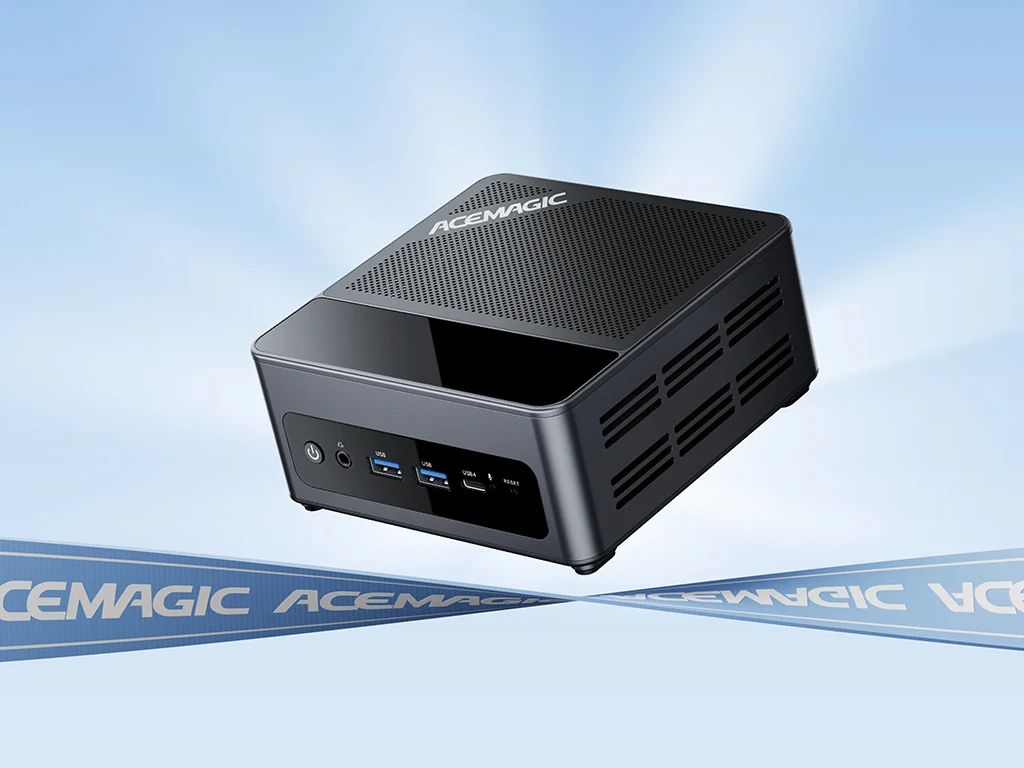
    Acemagic has announced that the F5A will launch in September 2025. Before the official release, the company is accepting pre-orders for this new AMD Strix Point mini PC. Customers who order before August 31 can receive a significant discount of $130 off the already reduced pre-sale price by using the code ACEFANF5A.

    Special Pricing Details

    With the promotional code, the base model of the F5A is priced at $639, making it more affordable than several other AMD Strix Point alternatives on the market. Additionally, there are two other configurations for this system powered by the Ryzen AI 9 HX 370, which are outlined below:

    Upgrades from Previous Model

    As mentioned in previous articles, the Acemagic F5A is a slightly enhanced version of the F3A, which performed quite well in our thorough review. The primary upgrade is the inclusion of the OCuLink port, making this mini PC a more appealing choice for users looking to utilize an eGPU, such as the Minisforum DEG1 dock, currently available for $99.90 on Amazon.

    The F5A itself is more than capable of running current AAA games smoothly. With the Radeon 890M iGPU, it can achieve around 60 FPS on most demanding titles with some adjustments to visual settings and a resolution of 1080p.

    Enhanced Features

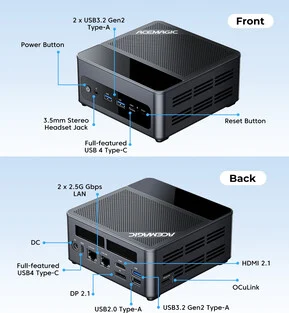
    Acemagic points out that the F5A includes an upgraded cooling system, featuring two fans and heat sinks specifically for the SSDs. It also offers a good variety of connectivity options, along with WiFi 7 and Bluetooth 5.4 support. For more information, take a look at the images provided below.


  • Iqunix Launches Magi95 and Magi75: Sleek Wireless Keyboards

    Iqunix Launches Magi95 and Magi75: Sleek Wireless Keyboards

    Key Takeaways

    1. New Layout Options: Iqunix has launched the Magi75 with a 75% layout and the Magi96 with a standard 96% layout, providing more practical sizes compared to the 65% Magi65 Pro.

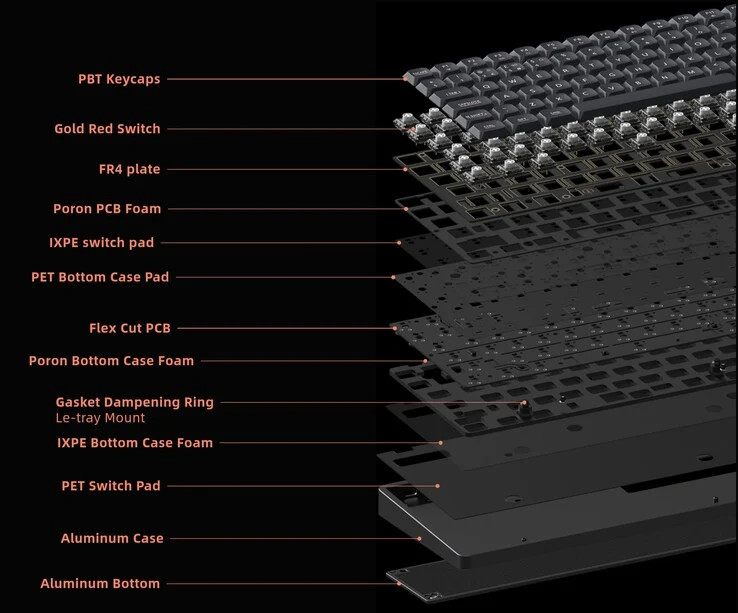
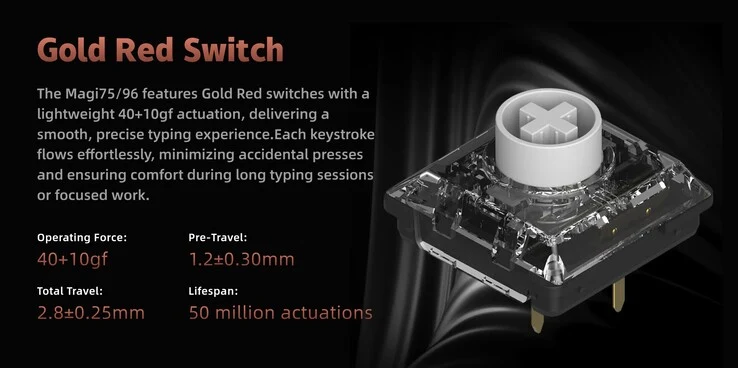
    2. Quality Features: Both new models feature Gold Red switches, PBT keycaps, aluminum casing, FR4 plate, and case foam for an enhanced typing experience.

    3. Pro Model Customization: The Pro versions of Magi75 and Magi96 include a media control panel and scroll wheel, which can be customized using the VIA app.

    4. Battery Life Concerns: Like the Magi65 Pro, the Magi75 and Magi96 experience reduced battery life with backlighting, lasting about 10 hours at full brightness.

    5. Availability and Pricing: The Magi75 and Magi96 are available only on Iqunix’s website, with pricing details yet to be specified compared to the $139.99 starting price for the Magi65 models.


    When we looked at the Iqunix Magi65 Pro earlier this year, we noted how the wireless mechanical keyboard exceeded expectations, providing a fantastic typing experience despite its slim design. Now, Iqunix has launched two fresh models in the Magi series: the 75% Magi75 and the 96% Magi96. Both of these keyboards carry many features that made the Magi65 Pro special, but they offer more practical layouts for those who find the 65% size too small.

    Layout Options

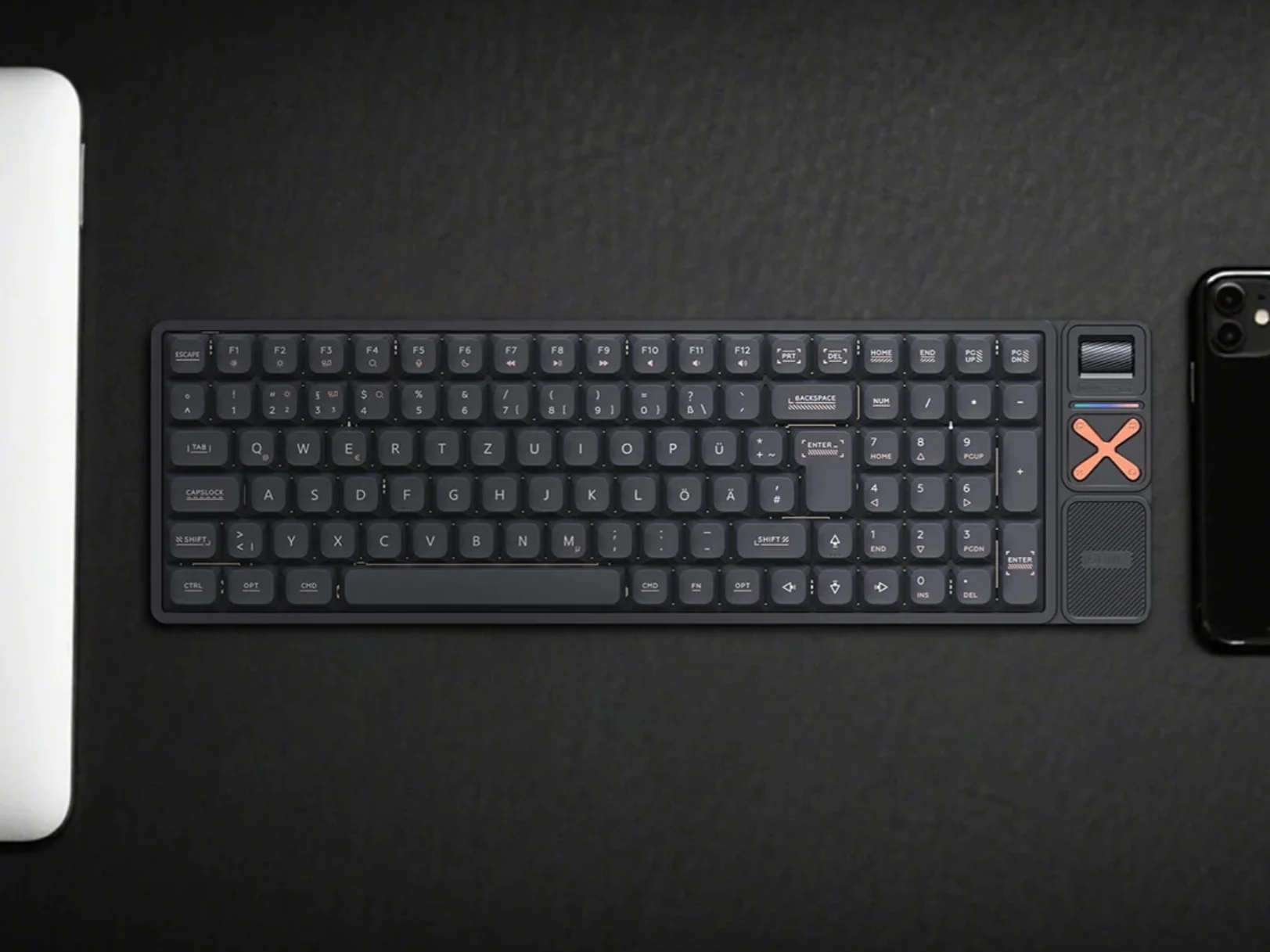
    The Magi75 comes with a compact 75% layout, whereas the Magi96 follows the standard 96% layout, including a num pad along with the usual alphanumeric keys. The Gold Red switches found in both the Magi75 and Magi96 utilize materials that create a nice, though slightly soft typing sound and feel. This is further enhanced by the PBT keycaps, aluminum casing, FR4 plate, and plenty of case foam. Additionally, both keyboards come with a fantastic accessory kit that consists of extra keycaps for macOS/Windows compatibility, a braided USB-C cable, a premium carrying case, and an adaptor that serves to extend the 2.4 GHz dongle when used with the cable.

    Pro Models and Features

    Both the Magi75 and Magi96 are offered in standard and Pro versions, with the Pro models including the same media control panel and scroll wheel on the right side of the keyboard. You can customize this small panel using VIA, which is an open-source app for keyboard configuration. The horizontally mounted volume dial can also be configured in the same way. This media panel can serve as a nice macro pad, since many functions it offers are also available in the function row shortcuts.

    One significant complaint we had regarding the Magi65 Pro in our review was the battery life drastically drops when the backlighting is activated. Without backlighting, we estimated the battery life to be around 250–330 hours, depending on usage, but the keyboard struggles to last more than seven hours at full brightness. The same issue is seen with the Magi75 and Magi96, where the battery life can plummet to about 10 hours with all lighting activated on the Magi75 Pro. Both the Magi96 and Magi75 also feature the same instant-wake capability that impressed us in our Magi65 Pro review, making it the fastest keyboard we’ve seen wake from sleep while connected over Bluetooth or 2.4 GHz.

    Availability and Pricing

    While the Magi65 and Magi65 Pro can be found on Amazon starting at $139.99, the Iqunix Magi75 and Magi96 wireless mechanical keyboards are currently available only through Iqunix’s own website.

    Pricing:

    The Magi75 and Magi96 keyboards are also offered in ISO-UK and ISO-DE layouts, in addition to the standard ANSI-US, which is a great feature for international users and those who prefer larger enter keys.

    Source:
    Link


  • Nvidia’s Rubin Architecture Taped Out with Six Chips at TSMC

    Nvidia’s Rubin Architecture Taped Out with Six Chips at TSMC

    Key Takeaways

    1. Nvidia has taped out six unique Rubin architecture chips, currently being tested at TSMC for trial production.
    2. The redesign includes CPUs, various GPU versions, an upgraded NVLink switch, networking silicon, and a silicon-photonics processor, marking a significant architectural overhaul.
    3. The Rubin R100 GPUs will feature next-generation HBM4 stacks, improving bandwidth and power delivery compared to HBM3E.
    4. The Rubin platform is designed to meet the growing demands of large data centers for AI workloads, with enhanced software tools for developers.
    5. Nvidia plans to launch the Rubin chip family around 2026, with Rubin Ultra following in the next year, depending on TSMC’s production readiness.


    Nvidia’s chief executive, Jensen Huang, shared exciting news during his recent trip to Taiwan. He announced that the company has successfully taped out six unique Rubin architecture chips. Currently, these chips are at TSMC, where they are being tested and getting ready for trial production.

    Major Architecture Changes

    This development signifies a complete redesign of the architecture, moving beyond the usual small GPU updates. Instead of merely enhancing the GPU, this overhaul includes CPUs, various GPU versions, an upgraded NVLink switch, networking silicon, and a silicon-photonics processor to allow for optical connections at the rack level. For the first time, Nvidia will use a chiplet design, taking advantage of TSMC’s cutting-edge 3nm N3P process node with CoWos-L packaging. The architecture is designed with a larger 4x reticle, which is an increase from the Blackwell’s 3.3x reticle size.

    Advanced Features and Performance

    The new Rubin R100 GPUs are set to feature next-generation HBM4 stacks, with specially designed base dies to support enhanced bandwidth and power delivery at larger scales compared to the current HBM3E. This new platform is anticipated to be a significant advancement, similar to the leap Hopper made in computational power. Testing for thermal performance, power usage, and interconnect efficiency has already begun.

    Future Plans and Launch Timeline

    The Rubin platform is aimed at satisfying the increasing demands of large data centers as AI workloads continue to grow. Nvidia is also enhancing its software tools, enabling developers to utilize the new features and connections immediately.

    Nvidia is targeting a launch for the Rubin chip family around 2026, with Rubin Ultra following in the subsequent year. However, this timeline is contingent on TSMC’s production capabilities and readiness. During his visit, Huang expressed gratitude towards TSMC staff for their critical contribution to the Rubin project.

    Source:
    Link