Author: GizNews

  • Cordless Phones: Enhancing Disaster Relief Efforts

    Cordless Phones: Enhancing Disaster Relief Efforts

    Key Takeaways

    1. Cordless landlines are considered outdated, but their regulated frequencies are still relevant and under consideration by the FCC.
    2. A petition was submitted to the FCC to reclassify neglected VHF Low Band frequencies (46 MHz and 49 MHz) for public use.
    3. The FCC has removed the 46 MHz frequency from its current classification, marking a potential change in access to these frequencies.
    4. VHF radio waves can penetrate obstacles like forests and hills, making them useful for personal and emergency communications during disasters.
    5. The petition is being revised to include the 49 MHz frequency, which is still used in older baby monitors, for potential public access.


    Cordless landlines used to be seen as old-fashioned technology, replaced mainly by cell phones for both work and personal communication. Yet, the frequencies that the FCC assigned to these outdated devices are still regulated by the government. A petition was submitted to the FCC last year to highlight this issue, and recent filings from the FCC indicate that there may be a chance to reclassify these neglected frequencies. At the moment, the main public two-way radio spectrum in the US is located in the UHF (Ultra High Frequency) band, specifically between 462.5500 MHz and 467.7250 MHz. In contrast, the VHF (Very High Frequency) Low Band frequencies, which were used by old cordless phones—46 MHz and 49 MHz—are hardly utilized at all.

    A Step Forward

    Recently, the FCC has taken a significant step by adopting a Direct Final Rule that removes the 46 MHz frequency from its current classification. Although this change does not guarantee availability for GMRS and FRS use, it marks the initial move towards making it accessible to the public. The petition argues that these VHF Low Band frequencies could greatly improve personal and emergency communications. Because VHF radio waves are longer, they can easily penetrate thick forests and navigate over hills, which would be essential during natural disasters. However, since the 49 MHz frequency, which is also frequently used in older baby monitors, hasn’t been reclassified yet, the petition is being revised to urge the FCC to consider making both frequencies available for public use.

  • Quectel Launches 5G RedCap Modules with GNSS for Mid-Range IoT

    Quectel Launches 5G RedCap Modules with GNSS for Mid-Range IoT

    Key Takeaways

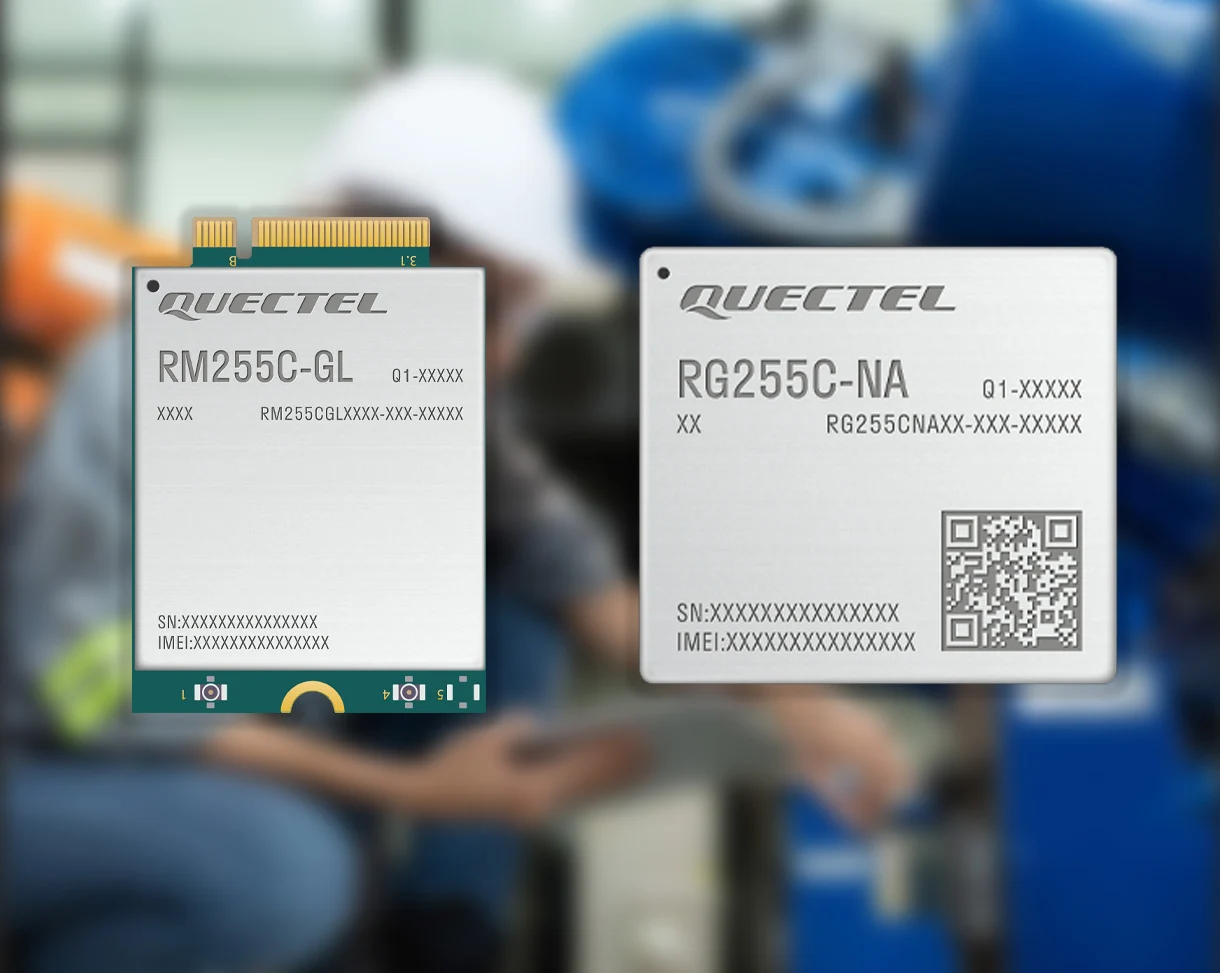
    1. Quectel has launched two new 5G Reduced Capability (RedCap) modules: RM255C-GL for global use and RG255C-NA for North America.
    2. Both modules support 5G Sub-6 GHz SA mode, LTE Cat 4 fallback, and are optimized for mid-tier IoT applications with low power consumption.
    3. The RM255C-GL measures 30.0 x 42.0 x 2.3 mm, while the RG255C-NA measures 32.0 x 29.0 x 2.4 mm, with weights of approximately 6 grams and 5.2 grams, respectively.
    4. Both modules are compatible with standard interfaces like USB 2.0 and PCIe 2.0, and have partial compatibility with Quectel’s previous 4G modules.
    5. The RM255C-GL is priced at $143.85 at Mouser, with a minimum order of 150 units, while the RG255C-NA is currently unavailable for purchase.


    Quectel has just introduced the RM255C-GL and RG255C-NA, adding to its lineup of 5G Reduced Capability (RedCap) products. The RM255C-GL is tailored for worldwide use and comes with an M.2 interface for easy connectivity. It measures 30.0 x 42.0 x 2.3 mm and weighs about 6 grams. Conversely, the RG255C-NA is intended for the North American market, features an LGA package, measures 32.0 x 29.0 x 2.4 mm, and weighs roughly 5.2 grams. Both of these modules are equipped with 5G Reduced Capability (RedCap) technology, adhering to the 3GPP Rel-17 standard, targeting mid-tier industrial and commercial IoT applications.

    Connectivity Features

    When it comes to connectivity options, both modules are compatible with 5G Sub-6 GHz SA mode and offer LTE Cat 4 fallback, while also ensuring backward compatibility with Rel-15 and Rel-16 networks. The RG255C-NA further provides support for 5G LAN, URLLC, and Slicing features. The firm highlights that power efficiency is optimized for mid-tier applications, as the RM255C-GL consumes about 2.83 mA in sleep mode and 21.97 mA while idle. In contrast, the RG255C-NA typically uses 2.5 mA during sleep and 27 mA when idle. For global applications, the RM255C-GL boasts various regulatory certifications, including CE, RCM, FCC, IC, GCF, and PTCRB, while the RG255C-NA has received PTCRB, FCC, and IC approvals.

    Interface and Compatibility

    Both modules are designed to support standard interfaces like USB 2.0 and PCIe 2.0. The RG255C-NA adds additional support for PCM, UART, SGMII, and SPI. Additionally, the company mentions that these modules are pin-to-pin compatible with Quectel’s previous 4G modules, and they have partial compatibility with the smaller 4G EG2x series, facilitating an easy upgrade path.

    In addition to their features, both modules come equipped with an integrated GNSS/location engine that utilizes Qualcomm’s IZat Gen 9VT technology. This technology supports multi-constellation GNSS (GPS, GLONASS, Galileo, BDS, QZSS, NavIC), providing quicker and more precise positioning compared to using a single-constellation GPS.

    At the moment, the RM255C-GL global version can be found at Mouser for approximately $143.85, with a minimum order quantity of 150 units. Unfortunately, the RG255C-NA variant is unavailable for purchase as of this writing.

    Source:
    Link


  • Oreon 10-2603 Launches Centrio Installer and Btrfs Support

    Oreon 10-2603 Launches Centrio Installer and Btrfs Support

    Key Takeaways

    1. Red Hat Enterprise Linux has led to various distributions, including AlmaLinux, Oracle Linux, and NethServer.
    2. CentOS is a well-known distribution that is now outdated, while AlmaLinux has already inspired new offshoots.
    3. Oreon is a new live distribution that has received an update promising ten years of support.
    4. Oreon 10-2603 is tailored for desktop users and offers two versions for different processor architectures: x86_64 and aarch64.
    5. Users can download Oreon from its official website.


    Red Hat Enterprise Linux has given rise to many different versions over time. Among the most well-known are AlmaLinux, Oracle Linux, and NethServer, all of which are currently still in use. Some distributions that have stopped being produced or are now considered outdated were quite famous in their time, with CentOS being one of the most recognizable names on that list. Even though it has been less than five years since its launch, AlmaLinux has already inspired several offshoots. Today, we’re looking at Oreon, a live distribution developed by members of the Linux/FOSS community, which just received a new update that promises a whole decade of support.

    Significant Changes in Oreon

    If we put aside the long support period, Oreon 10-2603 brings several other significant updates. Here are some of the key points from the changelog for this release:

    Oreon 10 is designed with desktop users in mind and comes in two versions: x86_64 for Intel and AMD processors (1671 MB), and aarch64 for ARM64 systems (1362 MB). Users with Intel and AMD hardware can also try out Oreon Lime (R2); however, it’s important to note that this older stable version, while based on AlmaLinux 9 and still receiving updates, is not recommended for fresh installations.

    Source:
    Link


  • First Image of Comet 3I/ATLAS Revealed by Juice Probe

    First Image of Comet 3I/ATLAS Revealed by Juice Probe

    Key Takeaways

    1. The Juice probe, launched in 2023, captured images of interstellar comet 3I/ATLAS during its mission to Jupiter.
    2. Initial speculations included the idea that the comet could be an alien spacecraft, due to its unusual behavior and origin.
    3. Detailed analysis confirmed that 3I/ATLAS is a comet with an icy core, surrounded by a gas and dust halo, and a visible tail.
    4. The probe took over 120 pictures, revealing features like uneven edges and the comet’s tail, using a camera called Janus.
    5. ESA’s findings aim to deepen our understanding of comets and their significance in the universe.


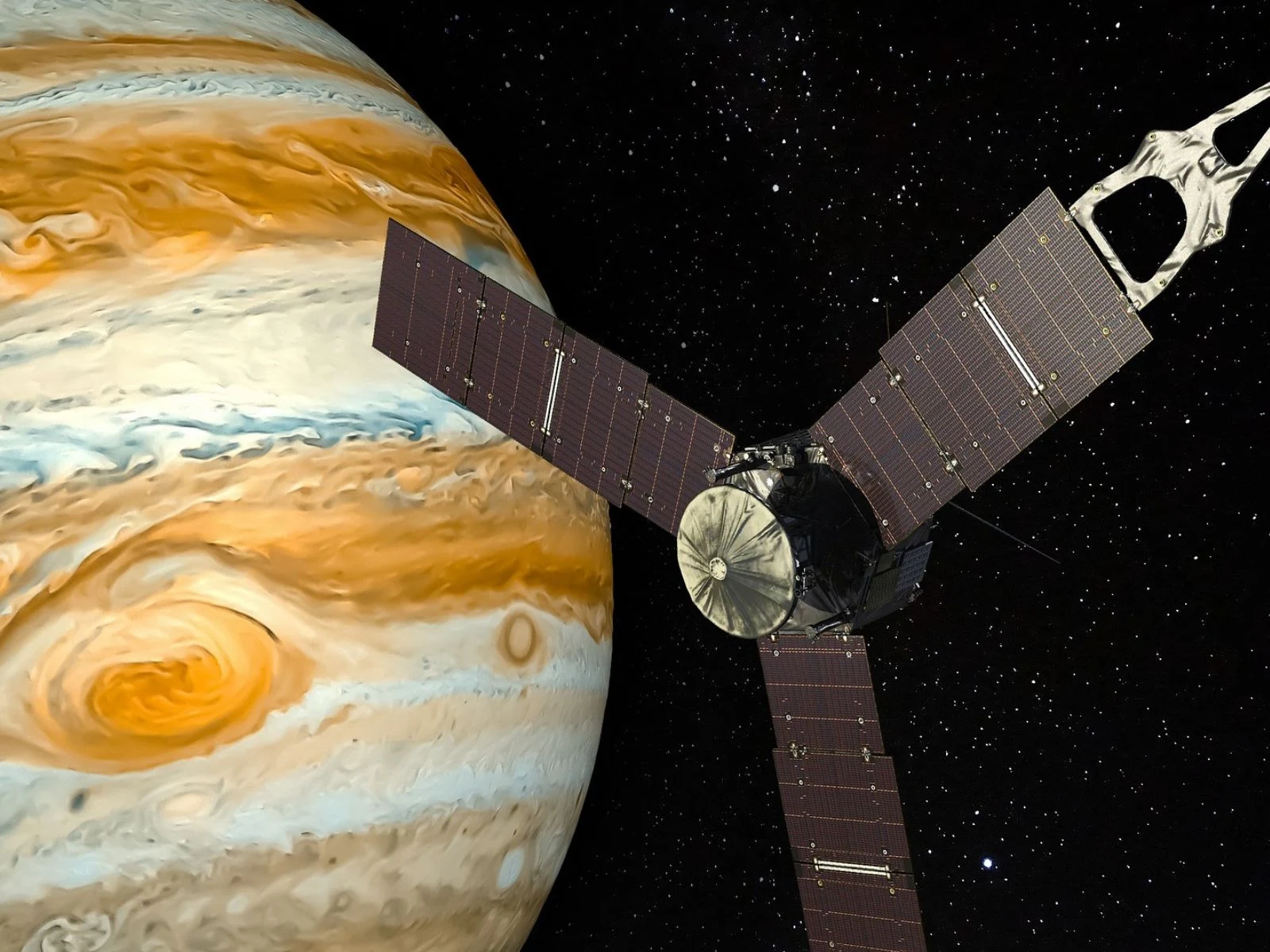
    During its mission to Jupiter, the Juice probe, which was launched in 2023, has captured photos of the interstellar comet 3I/ATLAS, and ESA has recently shared an initial look. This enables us to view this cosmic entity in a new light and challenge some existing theories.

    Speculations and Discoveries

    When it was first detected, there was a lot of guesswork surrounding it. Certain astronomers, such as Avi Loeb, posited that it could be an alien spacecraft moving through our solar system. While this idea might be unexpected, the find was especially important due to its strange behavior and unique origin.

    Understanding the Comet

    After conducting multiple analyses, we now understand that this interstellar object is a comet, characterized by an icy core, encircled by a gas and dust halo, along with a tail. All of these features are visible in the images captured by the Juice probe.

    Situated approximately 66 million kilometers from comet 3I/ATLAS, the probe has taken over 120 pictures using its camera, known as Janus. In one of the images, the comet appears as a small white dot at the center, with its tail also observable. Another photo captures the object with uneven edges. Furthermore, the probe utilized its five instruments to examine this celestial body in greater detail, aiming to uncover more about its composition. Currently, scientists are analyzing these images to gain new insights.

    ESA’s findings from this mission are expected to enhance our understanding of comets and their role in the universe.

    Source:
    Link


  • Motorola Unveils FIFA World Cup 26 Razr Fold and Edge 70 Fusion

    Motorola Unveils FIFA World Cup 26 Razr Fold and Edge 70 Fusion

    Key Takeaways

    1. Motorola has launched the FIFA World Cup 26 Collection, featuring the Razr FIFA World Cup 26 Edition, Razr Fold FIFA World Cup 26 Edition, and Edge 70 Fusion special editions.

    2. The Razr Fold variant features a black design with a textured back inspired by football materials, while the Razr edition is green with glossy “26” lettering.

    3. Both foldable devices include 24K gold-plated FIFA World Cup 26 logos, adding elegance to the design.

    4. Unique software for the devices includes custom wallpapers, ringtones, a watermark for photos, and access to the FIFA World Cup app and mobile arcade game FIFA Heroes.

    5. The Edge 70 Fusion FIFA World Cup 26 Edition is priced at €529 and comes with a free Moto Sound Flow speaker, while the pricing for the Razr Fold edition is yet to be announced.


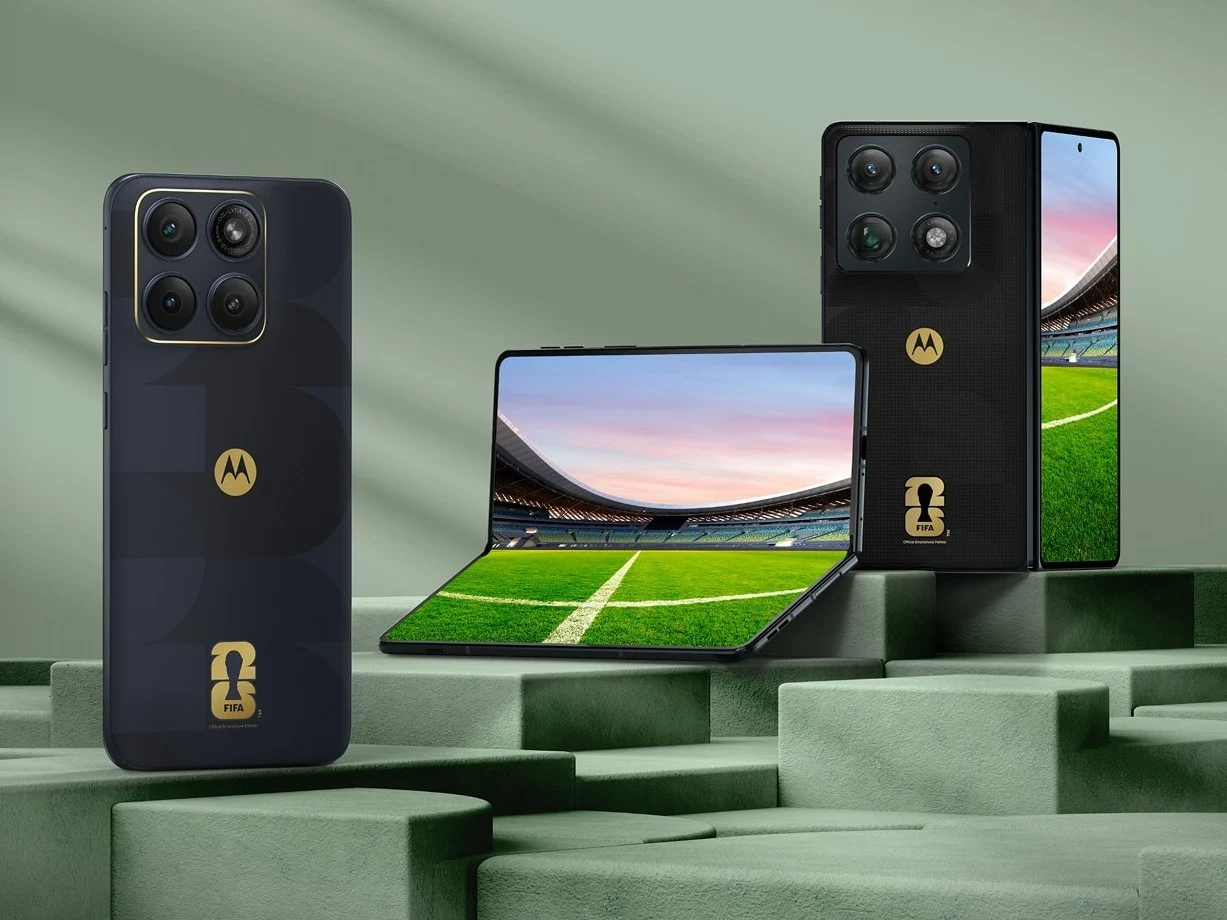
    Following the reveal of the Razr FIFA World Cup 26 Edition, Motorola has shared news that the Razr Fold and Edge 70 Fusion will also have special limited editions related to the upcoming football event. These three devices are grouped together as the FIFA World Cup 26 Collection.

    Design Differences

    While the Razr FIFA World Cup 26 Edition sports a green color, the Razr Fold FIFA World Cup 26 Edition comes in black with a unique raised-dot design. Motorola claims this design draws inspiration from the textures and materials used in football. The textured back enhances grip for this book-style foldable device. However, not the entire back is textured; the “26” lettering has a glossy finish.

    Special Features

    Additionally, Motorola has included an official FIFA World Cup 26 logo that features 24K gold plating. This gold detail is also found on the Motorola batwing logo, adding a touch of elegance to the design.

    The new Motorola Edge 70 Fusion is also set to have its own FIFA special edition. This variant showcases a leather-like finish that replicates the feel of a football. Similar to the Razr Fold, it has 24K gold-plated logos for both Motorola and the FIFA World Cup 26. The gold accents are also visible around the camera island’s edges.

    Extra Fun

    Both devices come with unique software that revolves around the tournament, including custom wallpapers, ringtones, and a watermark for photos. They are preloaded with access to the FIFA World Cup app and a new mobile arcade game called FIFA Heroes.

    The Motorola Edge 70 Fusion FIFA World Cup 26 Edition is currently available in regions like Spain, where it’s set at a price of €529. As a bonus, Motorola is offering its new speaker, the Moto Sound Flow, for free. The speaker has a price tag of €199 and is available for pre-order on Amazon.de, ahead of its release on March 31.

    There is currently no information on the pricing for the Razr Fold FIFA World Cup 26 Edition. However, Motorola has indicated that the entire collection will be launched in select markets next month.

    Source:
    Link


  • Lenovo Confirms Ongoing Support for Legion Go Gaming Device

    Lenovo Confirms Ongoing Support for Legion Go Gaming Device

    Key Takeaways

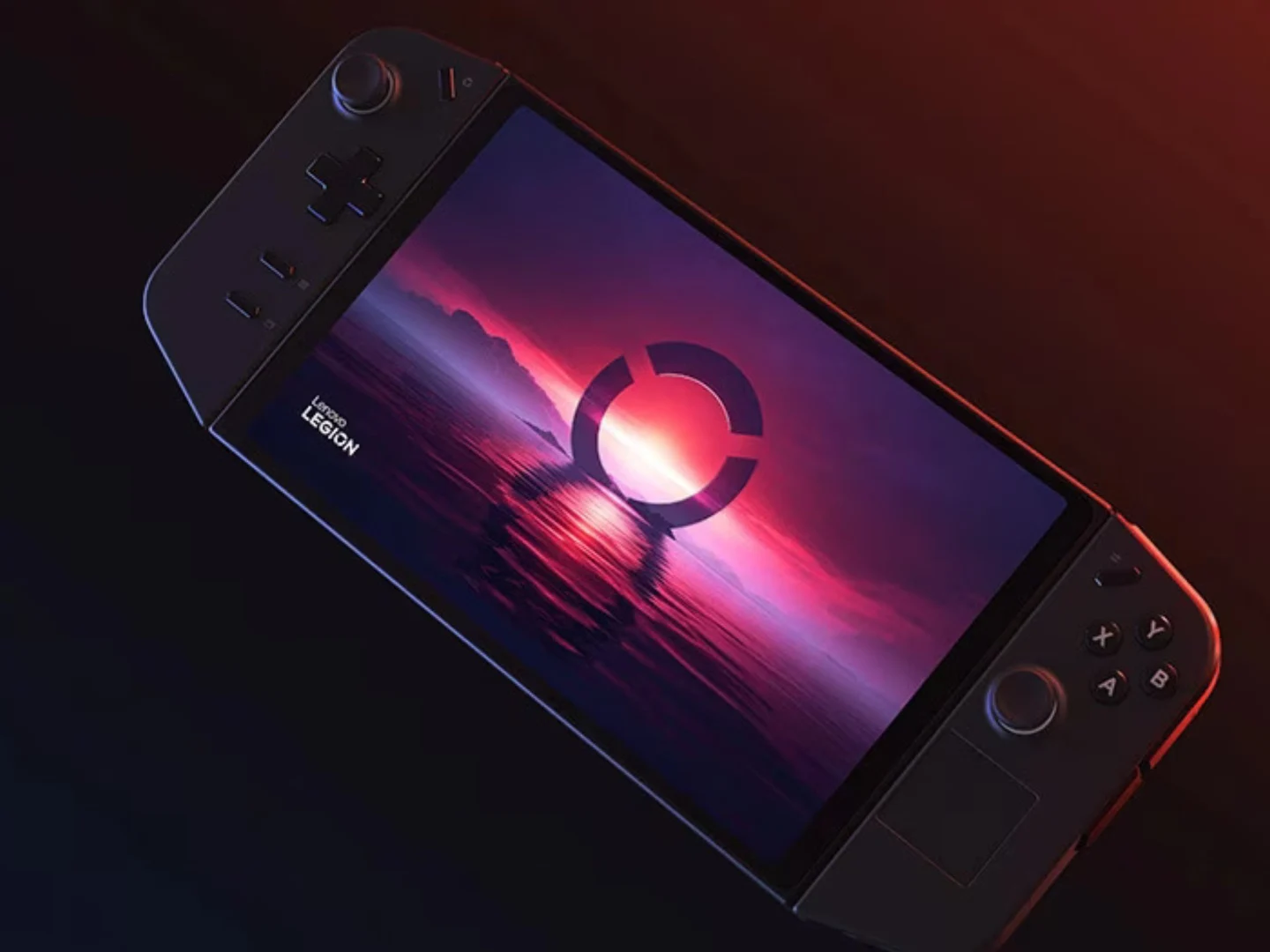
    1. Lenovo will support the Legion Go handheld until October 2029, providing updates for six years.
    2. The rumors about Lenovo stopping support originated from a translated comment by a South Korean customer support representative.
    3. Lenovo clarified that the previous statement was unofficial and confirmed ongoing support for essential driver and BIOS updates.
    4. Lenovo is collaborating with AMD for the schedule of driver updates, which will undergo a strict review process before release.
    5. Concerns remain about the frequency and significance of updates for the Legion Go, especially regarding day-one game compatibility.


    Rumors about Lenovo and Asus stopping support for their AMD Z1 Extreme gaming handhelds spread rapidly online last week. It all began with a translated comment from a customer support person in South Korea indicating that the Legion Go would no longer receive support. Thankfully, Lenovo has since, as reported, clarified the matter and provided some positive news for early users.

    Support Extended Until 2029

    As per Adam Patrick Murray from PCWorld, who cohosts The Full Nerd Network podcast, Lenovo plans to keep supporting the original Legion Go until October 2029. The handheld was launched in October 2023, which means it will receive updates for six years. Even though updates have been infrequent so far and this new information doesn’t clarify when updates will happen, it’s reassuring to know that Lenovo is not leaving its early users behind.

    Official Response from Lenovo

    During the podcast, Adam mentioned that when he contacted Lenovo US, a representative indicated that the earlier statement from the South Korean support team appeared to be unofficial and that they would provide an official response soon. They later confirmed the following:

    Support for the Lenovo Legion Go (8.8”, 1) has not been stopped. Lenovo is actively providing support for the Legion Go (8.8”, 1) with essential driver and BIOS updates, which will continue until October 2029. Lenovo is collaborating with AMD to manage the schedule of driver updates, and new updates will be rolled out after they have gone through Lenovo’s strict review processes.

    Questions Remain About Updates

    Interestingly, soon after the rumors gained traction, Asus issued an update for the ROG Ally handheld, introducing a new firmware version, but it was still part of the older branch. This raises concerns about the significance of updates for the Legion Go and how often they will be available. Updates for day-one games still seem unlikely.

    Source:
    Link


  • Xiaomi BE19000 Pro: Global Launch of WiFi 7 Router with NAS

    Xiaomi BE19000 Pro: Global Launch of WiFi 7 Router with NAS

    Key Takeaways

    1. Xiaomi introduced several products including the Xiaomi 17, Xiaomi 17 Ultra, Leica Leitzphone, Xiaomi Pad 8, and Xiaomi Pad 8 Pro at a recent international launch event.
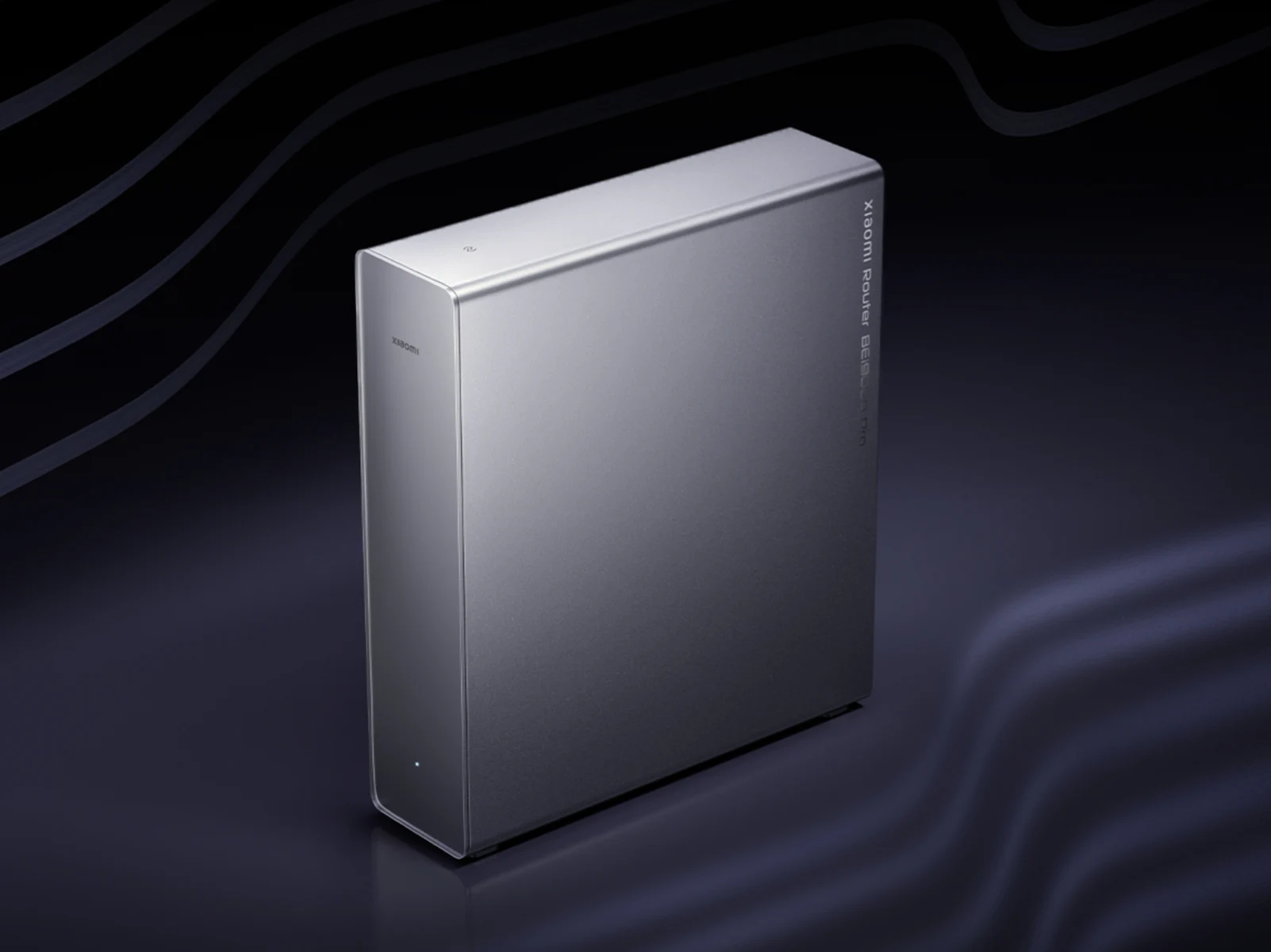
    2. The Router BE19000 Pro was added to Xiaomi’s global website, representing the global version of the previously launched BE10000 Pro in China.
    3. The Router BE19000 Pro features twelve antennas, amplifiers, and WiFi 7 connectivity, promising peak transfer speeds of up to 18,656 Mbps.
    4. It includes dual 10 Gigabit Ethernet ports and an M.2 2280 slot for network-attached storage (NAS) functionality, along with a USB 3.0 port for file sharing.
    5. Pricing and availability for the Router BE19000 Pro have not yet been announced by Xiaomi.


    Xiaomi held a large international launch event over the weekend. Leading up to MWC 2026 this week in Barcelona, the event highlighted the Xiaomi 17, Xiaomi 17 Ultra, Leica Leitzphone, Xiaomi Pad 8, and Xiaomi Pad 8 Pro, among various other gadgets. To note, these products are already available for purchase in several countries.

    New Product Announcement

    But the company isn’t stopping with just these launches. Now, it has added the Router BE19000 Pro to its global website. This router appears to be the global version of the BE10000 Pro that was introduced last September in China.

    Router Features

    As illustrated in the graphic below, the Router BE19000 Pro is equipped with twelve antennas and amplifiers and features WiFi 7 connectivity. Competing with other Wi-Fi 7 routers like the Netgear Orbi 970 series (curr. $799 on Amazon), the Router BE19000 Pro is capable of delivering peak transfer speeds of up to 18,656 Mbps across dedicated 2.4 GHz, 5 GHz, and 6 GHz bands.

    Additionally, Xiaomi has incorporated dual 10 Gigabit Ethernet ports and an M.2 2280 slot in the Router BE19000 Pro, enabling it to function as network-attached storage (NAS). Alternatively, there’s also a USB 3.0 port for file sharing through a thumb drive. More information can be found on Xiaomi’s global website. However, the company has yet to announce pricing or when it will be available.

    Source:
    Link


  • CheckMag: Aramid Fiber Phone Cases for Protection and Comfort

    CheckMag: Aramid Fiber Phone Cases for Protection and Comfort

    Key Takeaways

    1. Many phone users prefer to protect their devices with cases, despite the aesthetic appeal of the phones.
    2. Aramid cases offer a balance between strong protection and minimal bulk, making them a popular choice.
    3. Aramid fiber, similar to Kevlar, provides excellent impact resistance compared to carbon fiber.
    4. Thickness of cases varies, with some aramid options being as thin as 1mm, ideal for maintaining a phone’s sleek design.
    5. Personal comfort and protection level are key factors in choosing the right phone case, with aramid cases providing a feeling of safety without excessive bulk.


    Phone brands invest lots of money into developing appealing gadgets that are meant to look stunning. However, many of us tend to hide our beautiful pieces of engineering under plain black rubber and plastic covers.

    The Need for Protection

    While some folks are perfectly fine with carrying their phones without any protection, those who wish to safeguard their devices, or might be a bit clumsy, often require some kind of shield. This protection could be a D-Brand skin or a case that’s as hefty as a military tank, depending on how clumsy you consider yourself.

    For a lot of people, just a skin isn’t sufficient to guard against whatever life throws your way. Nevertheless, no one buys an iPhone Air just to wrap it in a thick piece of plastic, making it as bulky as a standard iPhone.

    Why Choose Aramid Cases?

    Fortunately, aramid cases appear to offer a nice compromise between solid drop protection and unwanted heft. Even though they may seem quite alike, carbon fiber is tough and durable but can break easily. On the other hand, aramid fiber, known as “aromatic polyamide” fiber, is excellent at resisting impacts. Aramid is quite similar to Kevlar, which is used in things like bulletproof vests. Both are types of aramid fibers, but Kevlar is a brand name for a specific kind called para-aramid.

    Several brands, such as Mous, Pitaka, Latercase, and Thinborne, provide aramid cases, and you can also find comparable items on platforms like Amazon or Aliexpress.

    Thickness Matters

    Some aramid fiber cases might be as thick as standard plastic options, opting for protection over low-profile design. However, others can add only about a millimeter to your device’s overall thickness. When you’re buying a foldable phone, every millimeter counts, especially if you want to maintain the iPhone Air’s unique selling points; a slim case is crucial.

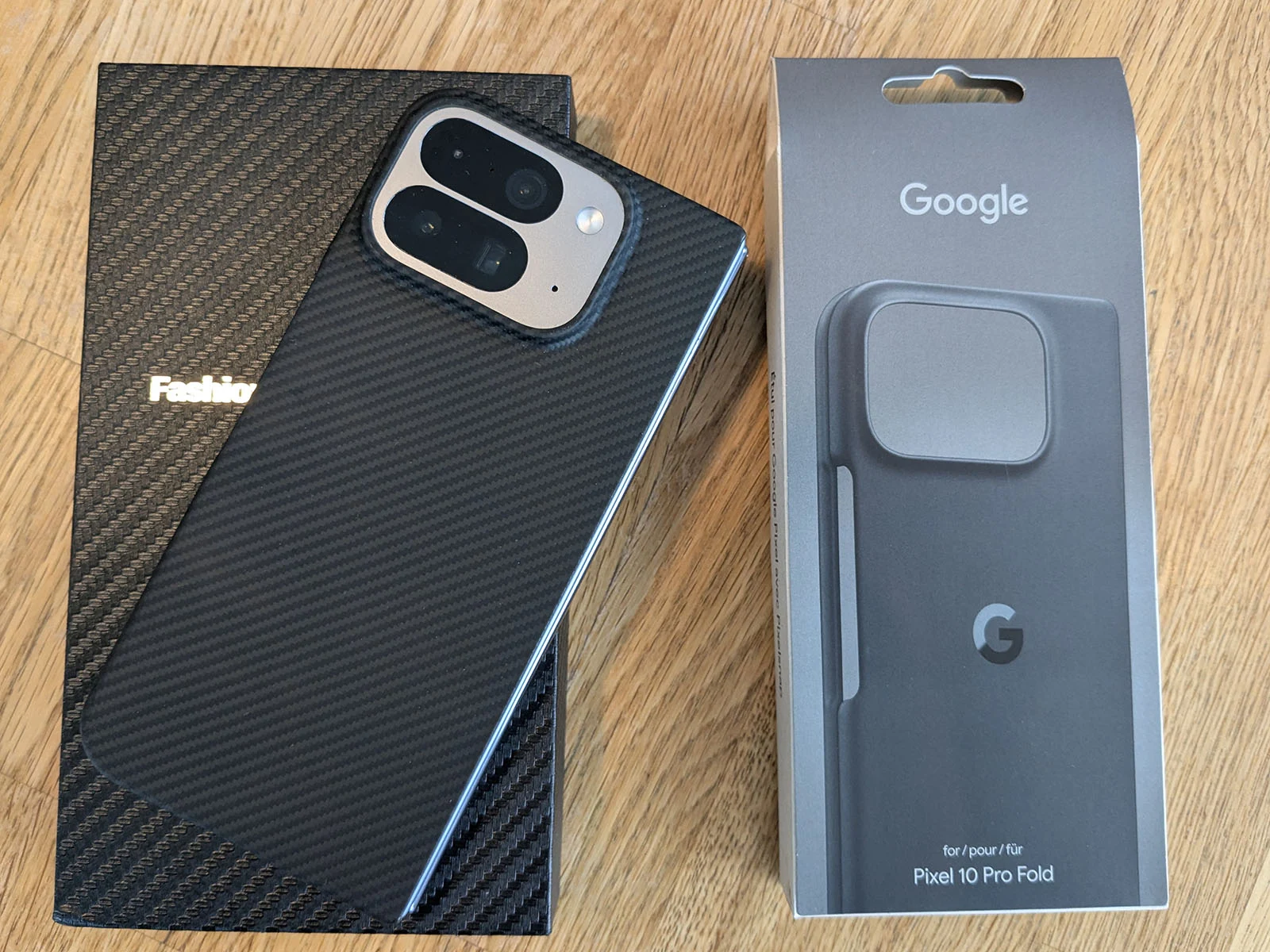
    When I bought my Pixel 10 Pro Fold (which you can find on Amazon), my first thought was to grab the official Google case. But after a few weeks, I quickly realized how much extra thickness the case was adding to an already bulky phone.

    At that time, Thinborne was the only brand offering aramid cases at roughly 1mm thickness. Not wanting to spend $89.98 on a phone case, I decided to search elsewhere and eventually found one on Aliexpress for about half the price.

    My Experience with the Case

    After a surprisingly fast delivery with no problems, the case arrived. The contrast between the two cases was notable. Keep in mind the bulk of the official Pixel case wraps around the device, adding nearly 5mm to the overall height. The aramid case felt as close to a naked device as I was willing to go while still feeling solid and sturdy despite its ultra-thin design.

    Have I put it through its paces? Not really in any significant way, though I’ve had a few small drops on soft surfaces. The case doesn’t cover the hinge, and I’m not eager to risk a substantial amount of money by dropping it from a height onto concrete. However, the aramid case boosts my confidence that my device will be safer if an accident happens, much more so than a skin would.

    There are debates about whether aramid provides enough cushioning, potentially transferring the shock of a fall directly to the phone. Ultimately, a case comes down to personal comfort. I’m not a fan of unprotected phones (even with insurance), and the pricey official Pixel case made me feel like I was lugging around a brick in my pocket.

    Aramid can be crafted much thinner than any other cases I’ve tried before, and at the very least, it gives the impression of decent protection.

    Source:
    Link


  • New Apple iPad Air Launch: More RAM and Performance Boost

    New Apple iPad Air Launch: More RAM and Performance Boost

    Key Takeaways

    1. The new iPad Air lineup includes 11-inch and 13-inch models powered by the Apple M4 chipset, offering 30% better performance than the previous version and 2.3 times better than the M1 models.
    2. The devices feature an 8-core CPU, a 9-core GPU, 12 GB of RAM, and storage options ranging from 128 GB to 1 TB.
    3. A C1X 5G modem is included to reduce power consumption, while display specs remain unchanged with 60 Hz IPS panels.
    4. The starting price for the new iPad Air is $599 for the 11-inch model and $799 for the 13-inch model, with prices reaching up to $1,449 for the 1 TB cellular variant.
    5. Sales for the new iPad Air models will begin on March 4 at 14:15 UTC, and more product announcements from Apple are expected before this date.


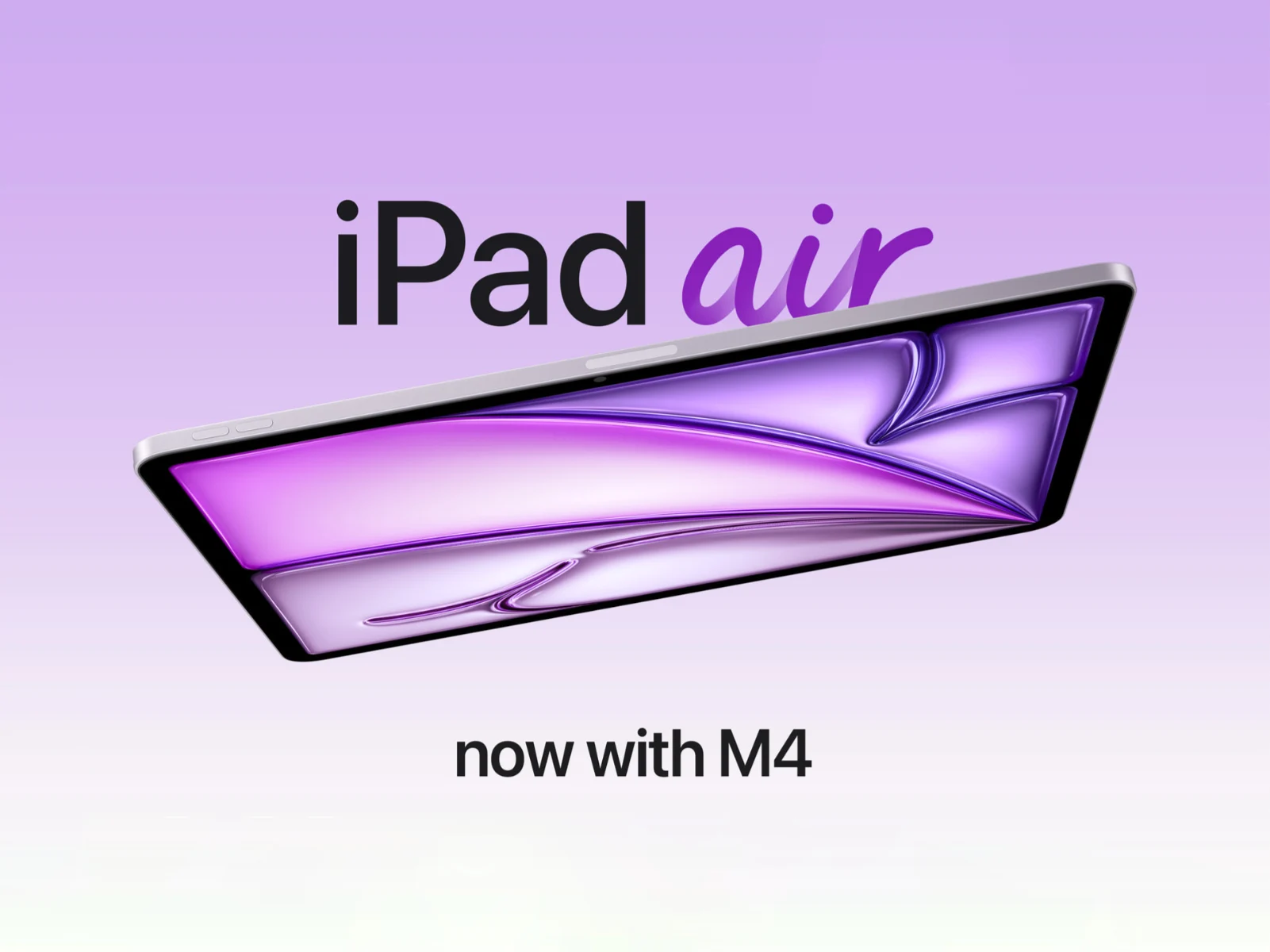
    Apple has refreshed the iPad Air lineup, which now comes in both 11-inch and 13-inch sizes. The new models replace the previous versions that featured the Apple M3 chip (currently priced at $799 on Amazon). Today, alongside the iPhone 17e, they represent two of the latest devices launched by Apple. Tim Cook hinted in a recent tweet that there are more product announcements expected before March 4.

    Key Upgrades in Performance

    The standout improvement for this year’s iPad Air is the inclusion of Apple’s M4 chipset. This model features an 8-core CPU and a 9-core GPU. Although this isn’t the most powerful version of the M4, it is anticipated to boost the iPad Air’s performance by about 30% compared to the previous model and provide a 2.3 times enhancement over the earlier Apple M1 models.

    Additional Features and Specs

    Moreover, Apple has integrated a C1X 5G modem, which aims to lower power usage. The new iPad Air also boasts 12 GB of RAM and storage options ranging from 128 GB to 1 TB. However, display specs remain unchanged, maintaining the 60 Hz IPS panels with a brightness of 500 nits for the 11-inch model and 600 nits for the 13-inch one. The devices continue to offer stereo speakers, dual 12 MP cameras, and Wi-Fi 7 support.

    The pricing for the new iPad Air starts at $599 for the 11-inch model with 128 GB of storage. The 13-inch versions have a starting price of $799 and come in four different colors. The price can go as high as $1,449 for the 1 TB variant with cellular capabilities. Sales for these new devices will commence on March 4 at 14:15 UTC.

    Source:
    Link


  • Nvidia GeForce Now India Showcase: Impressive but Unanswered Questions

    Nvidia GeForce Now India Showcase: Impressive but Unanswered Questions

    Key Takeaways

    1. Nvidia is launching its GeForce Now service in India soon, after delays due to backend infrastructure needs.
    2. GeForce Now features advanced streaming capabilities with RTX 5080 GPUs, supporting resolutions up to 5K and 120 fps, along with new Cinematic Quality Streaming (CQS) mode.
    3. The service allows streaming of over 4,000 games from various platforms, backed by Nvidia’s global network of data centers, including new ones in India.
    4. Initial testing showed positive performance with low latency, but concerns remain about service reliability in remote areas and data center capacity for a growing user base.
    5. Pricing for GeForce Now in India is expected to range from free to around ₹1,900 per month, with questions about persistent storage and competition from services like Microsoft Xbox Cloud Gaming.


    Nvidia has been considering launching its GeForce Now (GFN) service in India since CES 2025, but the need for a solid backend to handle a large number of users has caused delays.

    Now, Nvidia is set to introduce GeForce Now to India in the next few weeks. We got a brief early experience, which was quite positive but also raised several questions.

    Launch and Upgrades

    Nvidia first made GeForce Now available to the public in February 2020. The service has since been enhanced to feature Blackwell RTX 5080-class GPUs that can stream games at resolutions up to 5K and 120 fps, with support for DLSS 4 multi-frame generation (MFG).

    The new Cinematic Quality Streaming (CQS) mode from GeForce Now includes YUV 4:4:4 chroma subsampling, 10-bit HDR, AV1 streams, support for high DPI displays, and bitrates reaching 100 Mbps.

    Data Centers and Titles

    Nvidia claims to have over 30 data centers dedicated to GeForce Now across more than 100 countries. The data centers in North America, Western Europe, and now India are fully owned by Nvidia.

    While GeForce Now itself does not publish games, it currently allows users to stream over 4,000 popular titles from platforms like Steam, GOG, Epic, EA, Battle.net, Xbox, and Ubisoft Connect.

    According to Nvidia, the global network of “SuperPods” — essentially RTX 5080-powered data centers — can achieve sub-30 ms network latency in supported areas.

    Hardware Specifications

    These RTX 5080 SuperPods utilize AMD Threadripper Pro CPUs running at 4.5 GHz, with each instance featuring eight cores and 16 threads.

    The SuperPods also use Nvidia’s ConnectX 7 smart NICs and Rivermax hardware packet pacing to lower latency on the server end.

    On the networking side, GeForce Now supports Low Latency Low Loss and Scalable Throughput (L4S) networks. However, it hasn’t been confirmed if Indian ISPs support L4S, and only a few ISPs in the US have adopted it so far.

    We were able to test GeForce Now at an exclusive media preview in Mumbai, India. Our initial thoughts: it was impressive! At least in the controlled environment we experienced it.

    Impressions from Testing

    Nvidia mentioned that its SuperPods are located in Mumbai — likely close to our testing venue. This proximity contributed to very low latency and minimal input lag while playing titles like Arc Raiders and Doom: The Dark Ages.

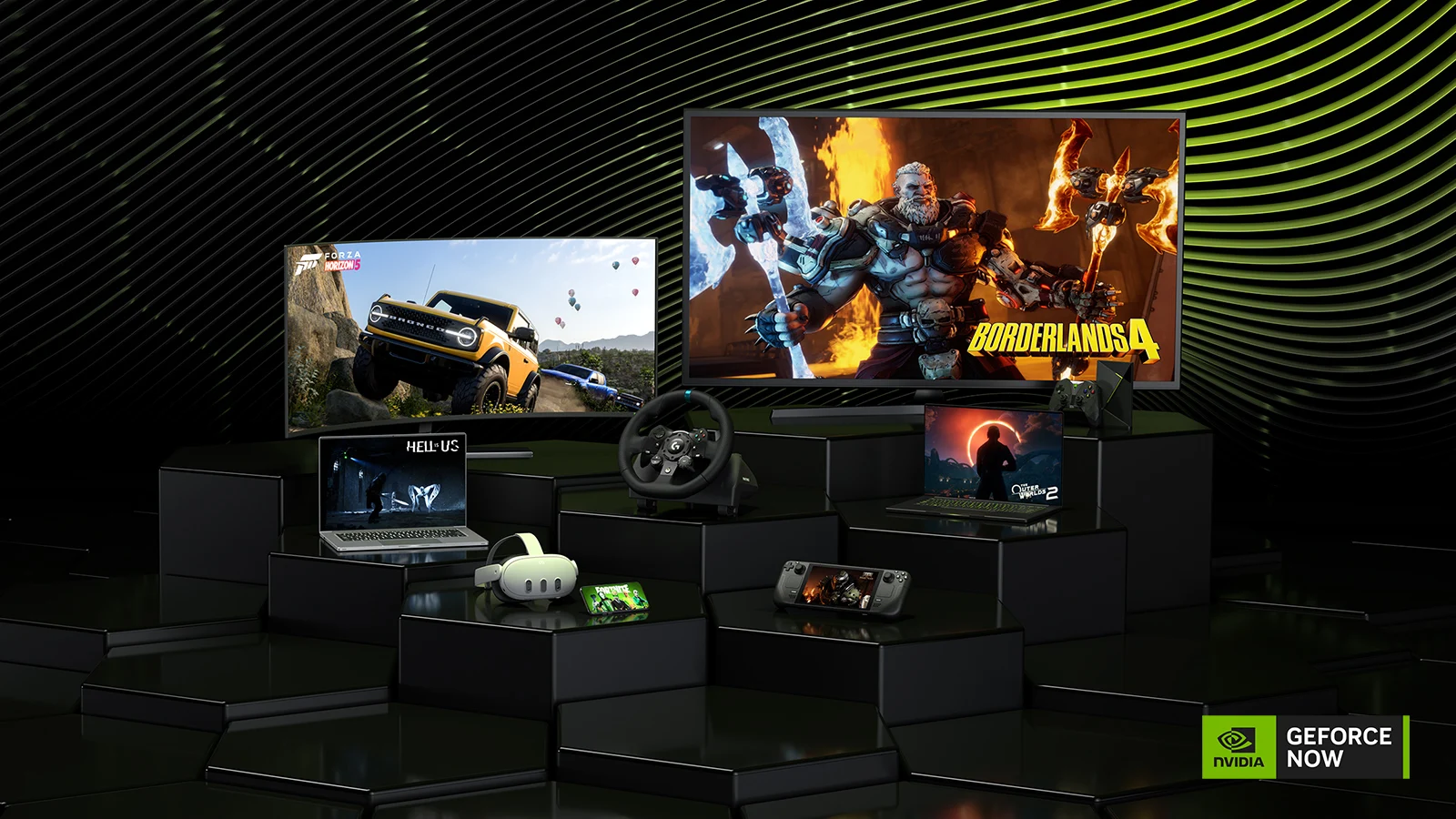
    The demo area had various devices ready, including Linux ultrabooks, an iPhone 13, an older OnePlus 10T, and a Steam Deck, along with several gaming PCs.

    One notable demonstration featured two identical RTX 5080 gaming PCs playing Warhammer 40,000: Space Marine 2. One PC ran the game natively while the other streamed it via GeForce Now with the same settings, making it hard to distinguish between the two.

    Unfortunately, we weren’t shown how to set up the service, and the test systems were already connected to Steam and other game stores.

    Game Performance

    We had a brief hands-on experience running Doom: The Dark Ages on a Meteor Lake-powered ultrabook using Ubuntu.

    Doom is a fast-paced shooter known for its impressive graphics, making it a suitable test candidate for streaming services. The performance metrics overlay gives insights into the server hardware running the game.

    The game launched through the new GeForce Now app for Linux. It wasn’t the quickest experience, and it took a while for the game to start up.

    As shown in the video below, once the game loaded, it provided a nearly seamless experience. With all settings set to Ultra, including path tracing, DLSS 3.5 ray reconstruction, and DLSS 4 Quality settings with MFG 4x, the game performed surprisingly well for a streamed title.

    There was slight input lag, which might be partly due to MFG 4x. However, Nvidia insists that server-side optimizations can help reduce potential input lag on the client side.

    We also tried Arc Raiders at 1080p and 360 fps on a 360 Hz Asus gaming monitor. This did require lowering some in-game quality settings and switching chroma subsampling to YUV 4:2:0.

    It’s worth noting that 4K gaming is limited to 120 fps even if higher frame rates are achievable. For frame rates above 120 fps, you’ll need to reduce the resolution to either 1440p or 1080p.

    Storage Options and Concerns

    Nvidia didn’t go into much detail, but GeForce Now offers an install-to-play feature that allows for 100 GB of temporary, single-session storage powered by NVMesh. This lets you install Steam games onto GeForce Now servers, even if the game isn’t available for streaming yet.

    If you want to upgrade to persistent storage, you can get up to 1 TB for $8 per month.

    While we left with good impressions, many questions linger. Nvidia hasn’t revealed pricing or availability details for GeForce Now in India, aside from a vague timeframe of Q1 2026 for closed and open betas.

    Another major issue is performance. The event showcased the best-case scenario, but that was with servers located nearby.

    How will the service hold up in remote areas, especially in a country with various internet providers in every state and district, each facing their own challenges? Nvidia claims that a 50 Mbps connection with less than 80 ms ping should suffice for 4K 120 fps gameplay.

    Is the current data center capacity sufficient to accommodate a large gaming community without issues? Will Nvidia enhance its infrastructure if demand increases, or rely on a third-party provider?

    We will gain insights into real-world performance and challenges once Nvidia begins beta testing in the upcoming weeks.

    Pricing Expectations

    Nvidia has been quite vague about pricing and availability thus far. Based on US pricing, GeForce Now plans are expected to range from free to $19.99 (~₹1,900) per month for the Ultimate tier, which grants access to RTX 5080 SuperPods.

    The free tier offers RTX 3050-class performance, which should be adequate for casual gamers without needing to spend any money on PC hardware, although users might face long wait times and a one-hour play limit.

    There’s also a lack of clarity regarding add-ons like persistent storage and 24-hour day passes.

    Then we have Microsoft Xbox Cloud Gaming (Project xCloud), which recently launched in India. Microsoft’s approach differs as there’s no free tier, requiring a Game Pass Ultimate subscription ($29.99 per month or ₹1,389 per month on Amazon) to access the complete console library and stream games at 1440p.

    GeForce Now has an advantage here, allowing streaming of PC versions of games with full graphics settings, alongside the ability to stream in resolutions up to 5K at 120 fps, with support for technologies like Reflex and DLSS.

    With rising supply constraints and hardware prices affecting budget-conscious consumers, combined with a massive increase in mobile device usage, India presents a huge opportunity for online game streaming services.

    A price point for the entry-level Performance tier around ₹500, scaling up to around ₹1,500 per month for the Ultimate tier, could attract many gamers to GeForce Now, provided Nvidia can deliver a consistent and reliable experience throughout the country.

    Source:
    Link