
Key Takeaways
1. The Juice probe, launched in 2023, captured images of interstellar comet 3I/ATLAS during its mission to Jupiter.
2. Initial speculations included the idea that the comet could be an alien spacecraft, due to its unusual behavior and origin.
3. Detailed analysis confirmed that 3I/ATLAS is a comet with an icy core, surrounded by a gas and dust halo, and a visible tail.
4. The probe took over 120 pictures, revealing features like uneven edges and the comet’s tail, using a camera called Janus.
5. ESA’s findings aim to deepen our understanding of comets and their significance in the universe.
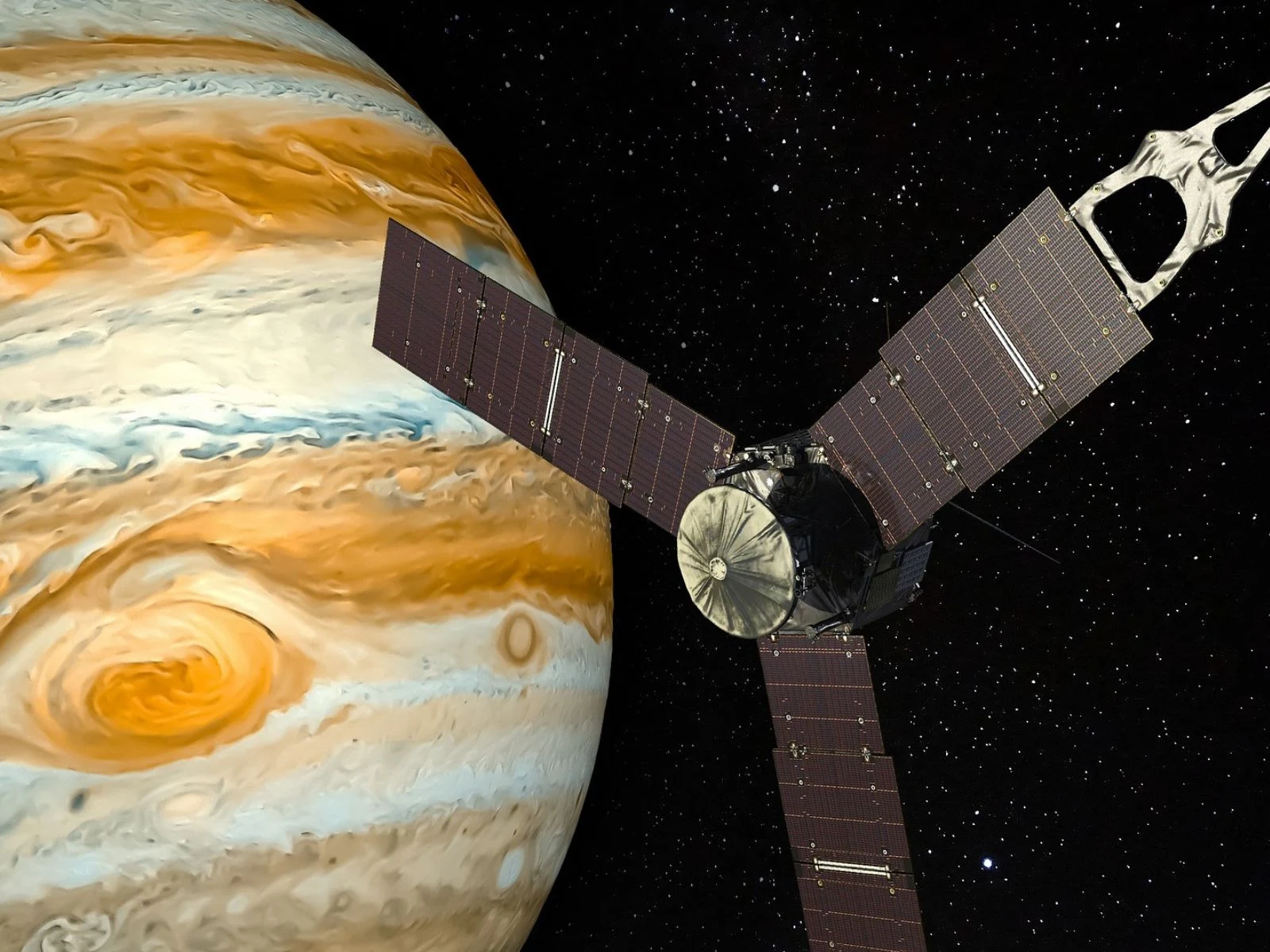
During its mission to Jupiter, the Juice probe, which was launched in 2023, has captured photos of the interstellar comet 3I/ATLAS, and ESA has recently shared an initial look. This enables us to view this cosmic entity in a new light and challenge some existing theories.
Speculations and Discoveries
When it was first detected, there was a lot of guesswork surrounding it. Certain astronomers, such as Avi Loeb, posited that it could be an alien spacecraft moving through our solar system. While this idea might be unexpected, the find was especially important due to its strange behavior and unique origin.
Understanding the Comet
After conducting multiple analyses, we now understand that this interstellar object is a comet, characterized by an icy core, encircled by a gas and dust halo, along with a tail. All of these features are visible in the images captured by the Juice probe.
Situated approximately 66 million kilometers from comet 3I/ATLAS, the probe has taken over 120 pictures using its camera, known as Janus. In one of the images, the comet appears as a small white dot at the center, with its tail also observable. Another photo captures the object with uneven edges. Furthermore, the probe utilized its five instruments to examine this celestial body in greater detail, aiming to uncover more about its composition. Currently, scientists are analyzing these images to gain new insights.
ESA’s findings from this mission are expected to enhance our understanding of comets and their role in the universe.
Source:
Link