Tag: comet 3I/ATLAS

  • New Study Reveals Interstellar Comet 3I/ATLAS Contains Alcohol

    New Study Reveals Interstellar Comet 3I/ATLAS Contains Alcohol

    Key Takeaways

    1. Comet 3I/ATLAS is an interstellar comet that originated from a different planetary system, unlike most comets in our solar system.
    2. When comets approach the Sun, their icy exterior warms up, creating a coma as gases escape into space.
    3. Advanced technology, such as the Atacama Large Millimeter/submillimeter Array (ALMA), was used to observe and identify molecular compositions in comets.
    4. Comet 3I/ATLAS has a unique chemical makeup, with significantly higher levels of methanol compared to hydrogen cyanide, indicating it formed under different conditions.
    5. The study of gas emissions from the comet, including extended outgassing, helps scientists understand the chemistry of other solar systems compared to our own.


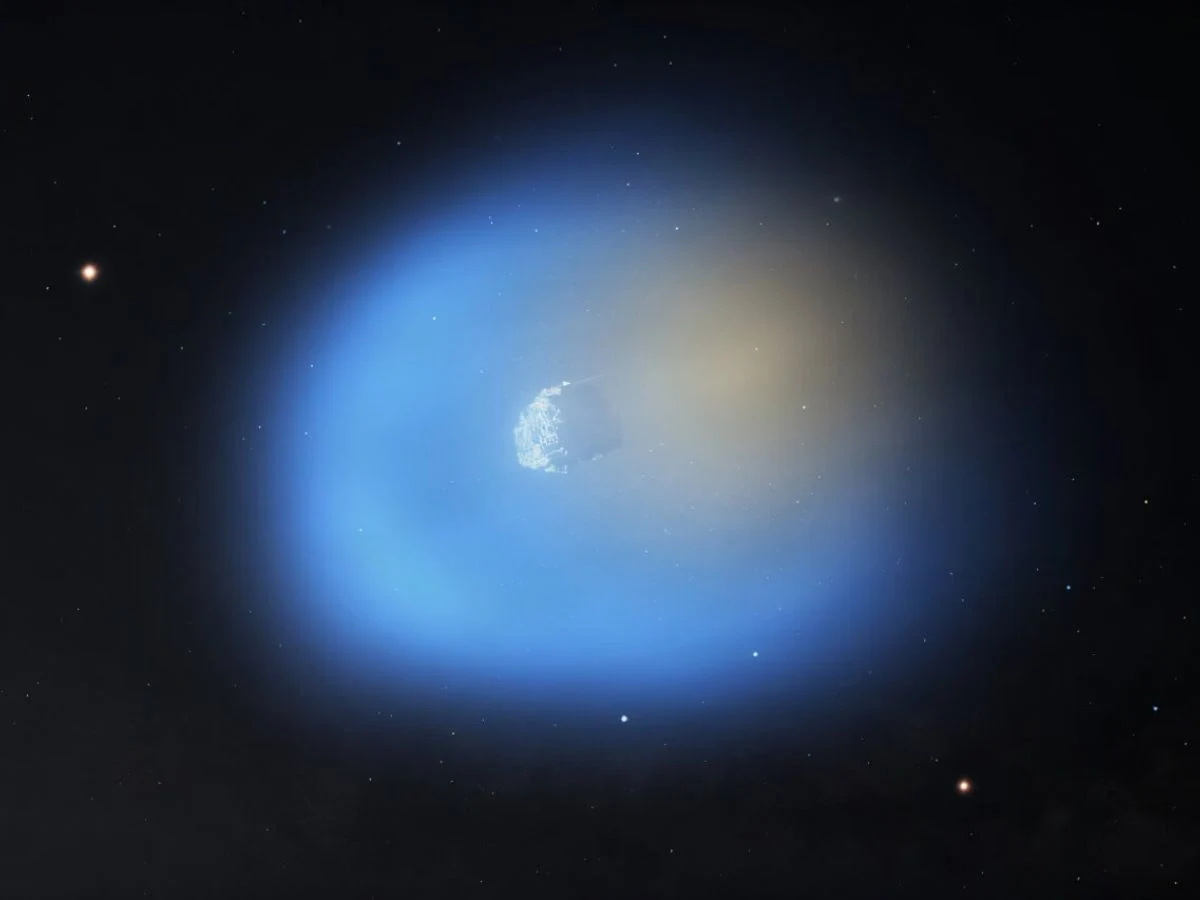
    Most of the comets we examine originated in the early solar system. In contrast, Comet 3I/ATLAS is unique because it was created in a different planetary system and drifted into ours, classifying it as an interstellar comet. When a comet approaches the Sun, the heat warms its icy exterior, turning the ice into gas that escapes into space. This process creates a luminous cloud around the comet, known as a coma.

    Observations Made with Advanced Technology

    The Atacama Large Millimeter/submillimeter Array (ALMA), which includes many radio telescopes, was used by astronomers to conduct these observations. They detected spectral fingerprints of certain molecules at specific wavelengths and were able to identify them. The molecules that were measured include methanol and hydrogen cyanide, both of which are commonly found in comets. Typically, the ratio of methanol to hydrogen cyanide in other comets is considerably lower. However, Comet 3I/ATLAS shows an astonishing 70–120 times more methanol than hydrogen cyanide, making it one of the richest in methanol ever studied. This strange chemical makeup indicates that this comet must have formed under distinct physical conditions.

    Gases Escaping the Comet

    ALMA also examined how various gases escape from the comet. Hydrogen cyanide is emitted directly from the comet’s nucleus. In contrast, methanol is released from both the nucleus and tiny icy particles in the coma, which behave like mini-comets. Solid methanol ice sublimates into gas, which leads to additional molecule release in a process referred to as extended outgassing. This finding has enabled scientists to delve deeper into the chemistry of other solar systems and make comparisons to our own.

    Source:
    Link


  • First Image of Comet 3I/ATLAS Revealed by Juice Probe

    First Image of Comet 3I/ATLAS Revealed by Juice Probe

    Key Takeaways

    1. The Juice probe, launched in 2023, captured images of interstellar comet 3I/ATLAS during its mission to Jupiter.
    2. Initial speculations included the idea that the comet could be an alien spacecraft, due to its unusual behavior and origin.
    3. Detailed analysis confirmed that 3I/ATLAS is a comet with an icy core, surrounded by a gas and dust halo, and a visible tail.
    4. The probe took over 120 pictures, revealing features like uneven edges and the comet’s tail, using a camera called Janus.
    5. ESA’s findings aim to deepen our understanding of comets and their significance in the universe.


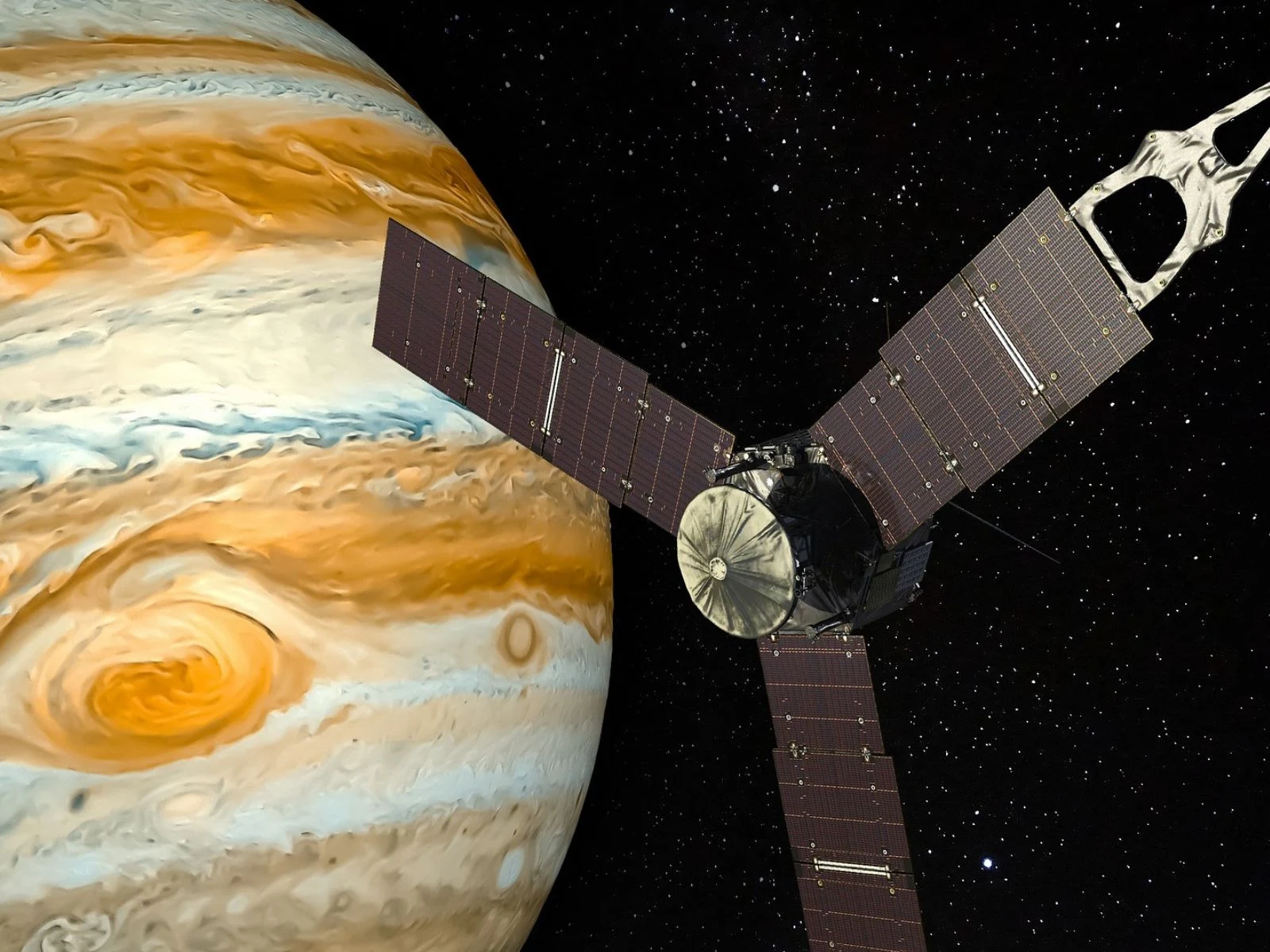
    During its mission to Jupiter, the Juice probe, which was launched in 2023, has captured photos of the interstellar comet 3I/ATLAS, and ESA has recently shared an initial look. This enables us to view this cosmic entity in a new light and challenge some existing theories.

    Speculations and Discoveries

    When it was first detected, there was a lot of guesswork surrounding it. Certain astronomers, such as Avi Loeb, posited that it could be an alien spacecraft moving through our solar system. While this idea might be unexpected, the find was especially important due to its strange behavior and unique origin.

    Understanding the Comet

    After conducting multiple analyses, we now understand that this interstellar object is a comet, characterized by an icy core, encircled by a gas and dust halo, along with a tail. All of these features are visible in the images captured by the Juice probe.

    Situated approximately 66 million kilometers from comet 3I/ATLAS, the probe has taken over 120 pictures using its camera, known as Janus. In one of the images, the comet appears as a small white dot at the center, with its tail also observable. Another photo captures the object with uneven edges. Furthermore, the probe utilized its five instruments to examine this celestial body in greater detail, aiming to uncover more about its composition. Currently, scientists are analyzing these images to gain new insights.

    ESA’s findings from this mission are expected to enhance our understanding of comets and their role in the universe.

    Source:
    Link


  • Hubble Space Telescope Reveals Stunning Image of Comet 3I/ATLAS

    Hubble Space Telescope Reveals Stunning Image of Comet 3I/ATLAS

    Key Takeaways

    1. Hubble Space Telescope has been operational for 35 years since its launch on April 25, 1990, significantly advancing our understanding of the universe.
    2. Despite being outperformed by the James Webb Space Telescope, Hubble continues to be used for important astronomical observations.
    3. Hubble captured a stunning image of comet 3I/ATLAS on November 30, 2025, showcasing its capabilities even in the age of newer technology.
    4. The image of comet 3I/ATLAS reveals it was 228 million kilometers away from Earth, with visible stars trailing behind it.
    5. Many mysteries surround comet 3I/ATLAS, and astronomers are eager to study it further, even as it moves away from our solar system.


    In service for 35 years, the Hubble Space Telescope has allowed astronomers and scientists globally to make many discoveries. While the JWST is now more powerful and offers better results, Hubble recently captured an amazing image of comet 3I/ATLAS, which is simply stunning.

    Hubble’s Impact on Astronomy

    Since it was launched on April 25, 1990, Hubble has been crucial in observing and understanding the universe. It has helped astronomers estimate the universe’s size and age, as well as its expansion rate. Additionally, it famously observed the collision of comet Shoemaker-Levy 9 with Jupiter from July 16 to 22 in 1994.

    Continued Observations

    Even though its technology has been outdone by devices like the James Webb Space Telescope, NASA continues to utilize Hubble for observations. On November 30, 2025, it captured a remarkable image of comet 3I/ATLAS as it moved through our solar system, with some speculating it could be an alien probe.

    In the picture taken by Hubble’s Wide Field Camera 3 (WFCC3), a bright spot in the center represents the interstellar comet. At that time, it was 228 million kilometers away from Earth, and the white streaks visible are stars, as the telescope tracked its path across the sky. NASA has more observations planned, which may involve this telescope.

    Mysteries of the Comet

    Many questions still surround this comet, and astronomers are eager to solve them. However, it is drifting further away from our solar system, making future observations increasingly difficult.

    NASA science

    Source:
    Link