
Key Takeaways
1. Comet 3I/ATLAS is an interstellar comet that originated from a different planetary system, unlike most comets in our solar system.
2. When comets approach the Sun, their icy exterior warms up, creating a coma as gases escape into space.
3. Advanced technology, such as the Atacama Large Millimeter/submillimeter Array (ALMA), was used to observe and identify molecular compositions in comets.
4. Comet 3I/ATLAS has a unique chemical makeup, with significantly higher levels of methanol compared to hydrogen cyanide, indicating it formed under different conditions.
5. The study of gas emissions from the comet, including extended outgassing, helps scientists understand the chemistry of other solar systems compared to our own.
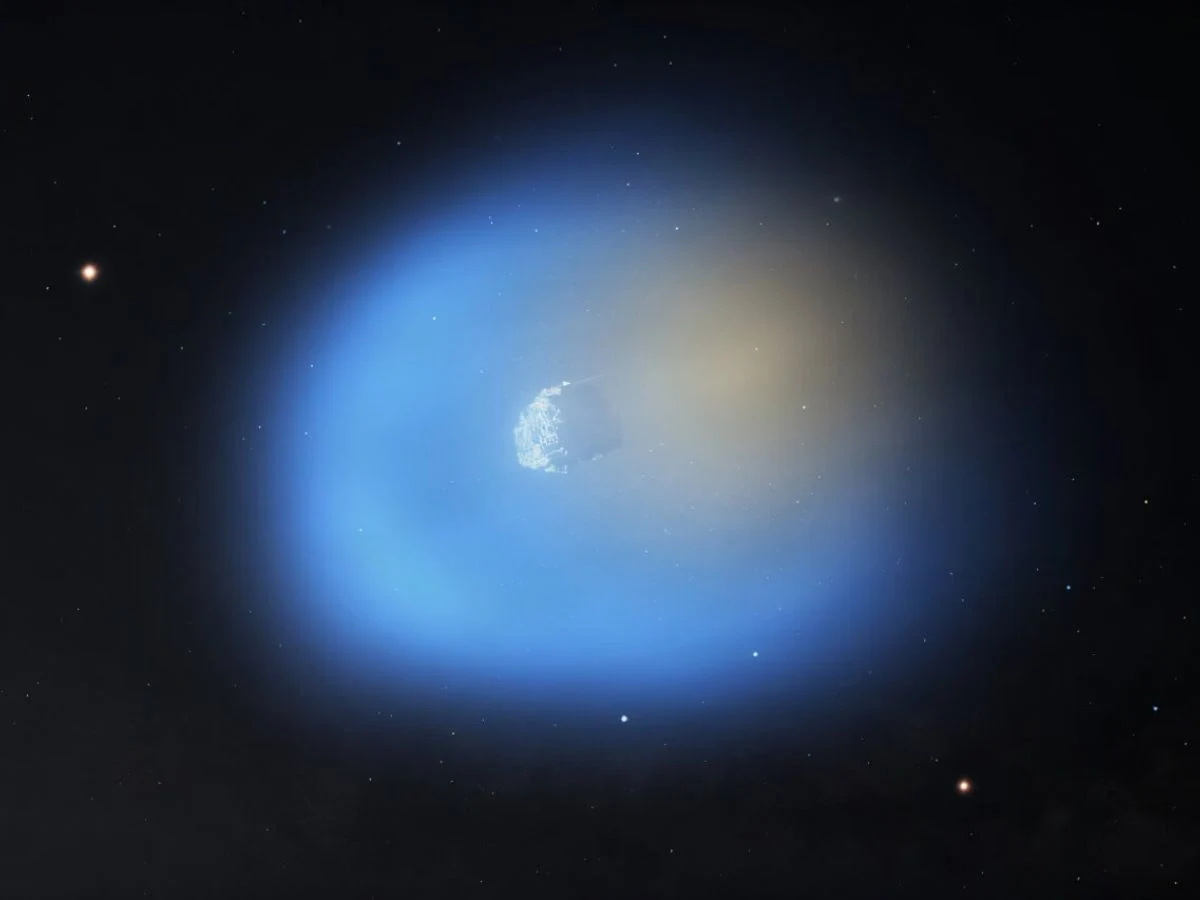
Most of the comets we examine originated in the early solar system. In contrast, Comet 3I/ATLAS is unique because it was created in a different planetary system and drifted into ours, classifying it as an interstellar comet. When a comet approaches the Sun, the heat warms its icy exterior, turning the ice into gas that escapes into space. This process creates a luminous cloud around the comet, known as a coma.
Observations Made with Advanced Technology
The Atacama Large Millimeter/submillimeter Array (ALMA), which includes many radio telescopes, was used by astronomers to conduct these observations. They detected spectral fingerprints of certain molecules at specific wavelengths and were able to identify them. The molecules that were measured include methanol and hydrogen cyanide, both of which are commonly found in comets. Typically, the ratio of methanol to hydrogen cyanide in other comets is considerably lower. However, Comet 3I/ATLAS shows an astonishing 70–120 times more methanol than hydrogen cyanide, making it one of the richest in methanol ever studied. This strange chemical makeup indicates that this comet must have formed under distinct physical conditions.
Gases Escaping the Comet
ALMA also examined how various gases escape from the comet. Hydrogen cyanide is emitted directly from the comet’s nucleus. In contrast, methanol is released from both the nucleus and tiny icy particles in the coma, which behave like mini-comets. Solid methanol ice sublimates into gas, which leads to additional molecule release in a process referred to as extended outgassing. This finding has enabled scientists to delve deeper into the chemistry of other solar systems and make comparisons to our own.
Source:
Link
Leave a Reply