Tag: ALMA

  • New Study Reveals Interstellar Comet 3I/ATLAS Contains Alcohol

    New Study Reveals Interstellar Comet 3I/ATLAS Contains Alcohol

    Key Takeaways

    1. Comet 3I/ATLAS is an interstellar comet that originated from a different planetary system, unlike most comets in our solar system.
    2. When comets approach the Sun, their icy exterior warms up, creating a coma as gases escape into space.
    3. Advanced technology, such as the Atacama Large Millimeter/submillimeter Array (ALMA), was used to observe and identify molecular compositions in comets.
    4. Comet 3I/ATLAS has a unique chemical makeup, with significantly higher levels of methanol compared to hydrogen cyanide, indicating it formed under different conditions.
    5. The study of gas emissions from the comet, including extended outgassing, helps scientists understand the chemistry of other solar systems compared to our own.


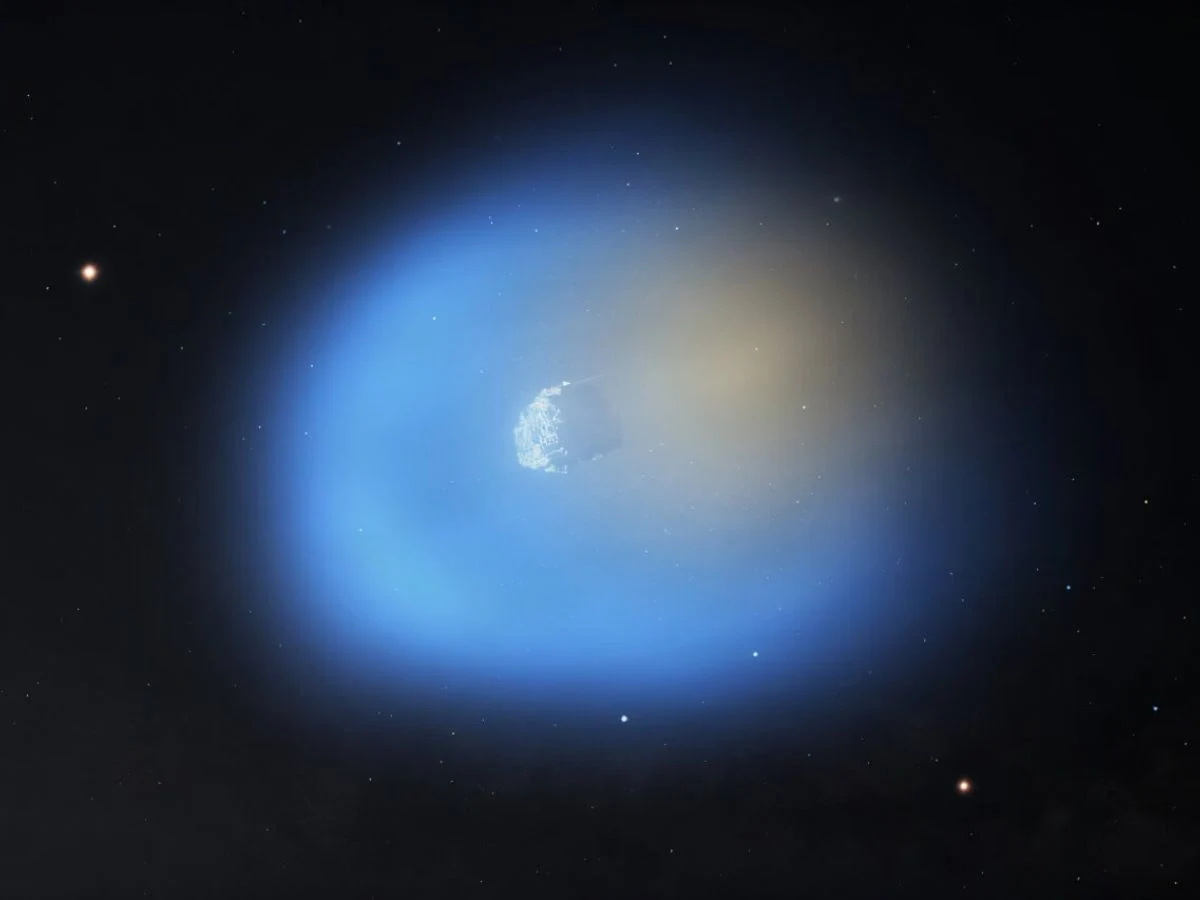
    Most of the comets we examine originated in the early solar system. In contrast, Comet 3I/ATLAS is unique because it was created in a different planetary system and drifted into ours, classifying it as an interstellar comet. When a comet approaches the Sun, the heat warms its icy exterior, turning the ice into gas that escapes into space. This process creates a luminous cloud around the comet, known as a coma.

    Observations Made with Advanced Technology

    The Atacama Large Millimeter/submillimeter Array (ALMA), which includes many radio telescopes, was used by astronomers to conduct these observations. They detected spectral fingerprints of certain molecules at specific wavelengths and were able to identify them. The molecules that were measured include methanol and hydrogen cyanide, both of which are commonly found in comets. Typically, the ratio of methanol to hydrogen cyanide in other comets is considerably lower. However, Comet 3I/ATLAS shows an astonishing 70–120 times more methanol than hydrogen cyanide, making it one of the richest in methanol ever studied. This strange chemical makeup indicates that this comet must have formed under distinct physical conditions.

    Gases Escaping the Comet

    ALMA also examined how various gases escape from the comet. Hydrogen cyanide is emitted directly from the comet’s nucleus. In contrast, methanol is released from both the nucleus and tiny icy particles in the coma, which behave like mini-comets. Solid methanol ice sublimates into gas, which leads to additional molecule release in a process referred to as extended outgassing. This finding has enabled scientists to delve deeper into the chemistry of other solar systems and make comparisons to our own.

    Source:
    Link


  • New Companion Disrupts Evolution of Red Giant Star

    New Companion Disrupts Evolution of Red Giant Star

    Key Takeaways

    1. Astronomers discovered a new companion to the red giant star Pi1 Gruis, located 590 light-years from Earth.
    2. The discovery was made using the ALMA radio telescope array, confirming the star’s companion through data comparison.
    3. The companion star exhibits unusual orbital behavior, having a circular orbit rather than an elliptical one.
    4. This atypical orbit may disrupt the evolution of Pi1 Gruis, potentially leading to the companion being engulfed or torn apart.
    5. Understanding these dynamics can help predict the future of our sun and the fate of planets in our solar system as it evolves into a red giant.


    The universe is full of mysteries, and each year brings new findings. A recent discovery by a group of astronomers has revealed a new companion to a red giant star. While this is exciting news for the scientific community, it may lead to significant disruptions.

    Discovery of Pi1 Gruis

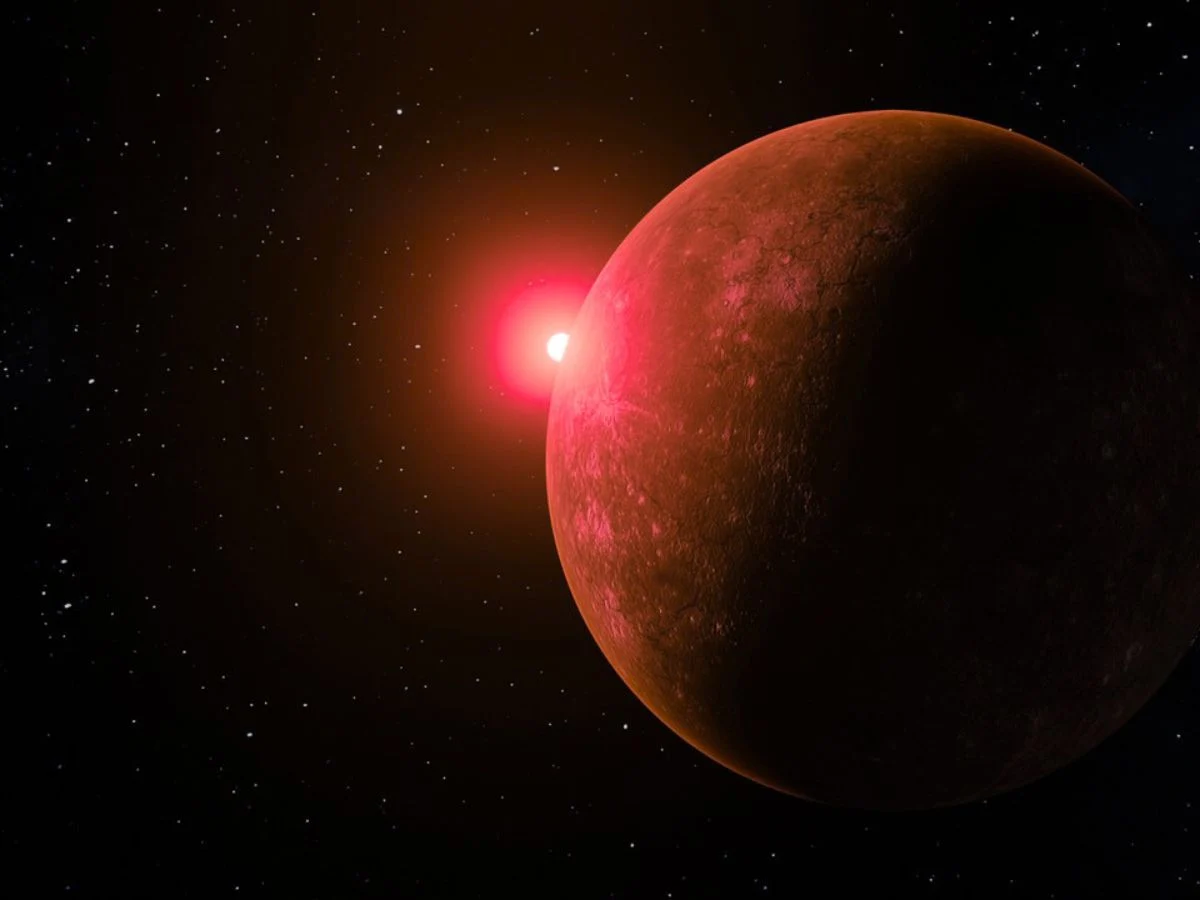
    To understand this, we look at Pi1 Gruis, a semiregular variable star found in 1756, positioned in the Grus constellation, approximately 590 light-years away from Earth. This star is quite fascinating; if it matches the sun’s mass, it’s around 350 to 400 times bigger than the sun.

    The Role of ALMA

    Astronomers were curious if this red giant had a partner. They utilized an array of 66 radio telescopes known as ALMA. By comparing data from Pi1 Gruis and ALMA with various research models, they concluded, based on findings published in the journal Nature Astronomy, that this star does indeed have a companion.

    Unusual Orbital Behavior

    Nevertheless, this companion does not behave in a typical manner. Its orbit around the red giant is not elliptical. Scientists suggest that it has a circular orbit, which might disturb the star’s evolution in the future. Essentially, this could lead to the companion being engulfed or torn apart by the red giant.

    This finding may provide insights into the future of our sun and the planets in our solar system, as noted by Mats Esseldeurs:

    “Understanding how close companions behave under these conditions helps us better predict what will happen to the planets around the sun, and how the companion influences the evolution of the giant star itself.”

    Implications for the Future

    It’s worth remembering that in five billion years, the sun will deplete its energy reserves and become a red giant, consuming the nearby planets. Therefore, it’s crucial to conduct further studies to enhance our understanding of such stars.


    Source:
    Link


  • Galaxy 13 Billion Light-Years Away Creates Stars 180 Times Faster

    Galaxy 13 Billion Light-Years Away Creates Stars 180 Times Faster

    Key Takeaways

    1. The Y1 galaxy, located over 13 billion light-years away, offers insights into the early universe and its star formation rates.

    2. A study published in the Monthly Notices of the Royal Astronomical Society revealed the temperature of dust in the Y1 galaxy to be around -356 °F (-180 °C).

    3. Despite its cold temperature, the Y1 galaxy’s dust is warmer compared to other similar galaxies, indicating it is an extreme star factory.

    4. The Y1 galaxy produces stars at a rate 180 times faster than the Milky Way, suggesting that such galaxies were common in the universe’s early days.

    5. Further studies are needed to better understand the characteristics and significance of the Y1 galaxy and similar star-producing galaxies.


    Although the universe is frequently observed and analyzed, each year brings new findings. This has recently happened when astronomers found a galaxy from the early cosmos that can create stars faster than the Milky Way.

    Discovering Y1 Galaxy

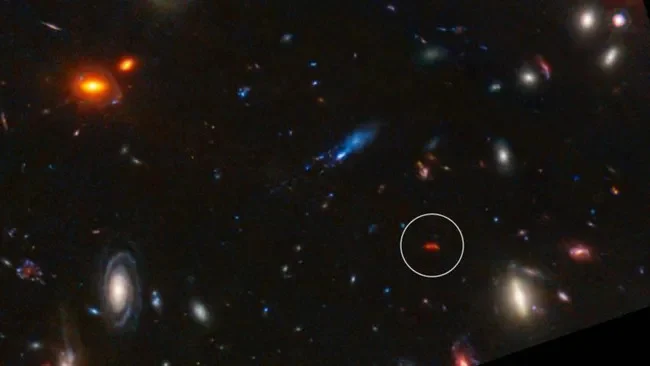
    Situated over 13 billion light-years away from Earth, the Y1 galaxy gives us a glimpse into the very early universe. Interestingly, this was also a time when stars formed at a rate much higher than what we see today.

    A study detailing this discovery was published in the Monthly Notices of the Royal Astronomical Society. With the help of the ALMA (Atacama Large Millimeter/submillimeter Array) in Chile, scientists managed to measure the temperature of dust within this galaxy. The result is quite astonishing, showing a temperature of around -356 °F (-180 °C).

    The Surprising Temperature

    However, if you think that’s really cold, you might be surprised. Yoichi Tamura, a researcher from Nagoya University in Japan, highlights:

    “While the temperature is definitely cooler than the dust found in homes on Earth, it’s actually much warmer than any other similar galaxies we’ve observed. This confirms that it is indeed an extreme star factory. Even though it’s the first time we’ve encountered a galaxy like this, we believe many more could exist. Star factories like Y1 might have been quite common in the universe’s early days.”

    Y1’s Star Production Rate

    In terms of star-making ability, the Y1 galaxy produces stars at a rate 180 times greater than the Milky Way. Researchers suggest that such galaxies were prevalent during the universe’s formative years. Nevertheless, further studies need to be conducted in the near future to gain a better understanding of this fascinating galaxy.

    Source:
    Link