
Tag: red giant

  • Star Orbiting Black Hole Surprises Scientists with Its Composition

    Star Orbiting Black Hole Surprises Scientists with Its Composition

    Key Takeaways

    1. Gaia BH2 is a binary system discovered in 2023, consisting of a red giant and an unseen black hole.
    2. The star is composed of alpha elements, indicating it formed about 10 billion years ago, but it is actually around 5 billion years old based on recent research.
    3. Gaia BH2 completes a full revolution in just 398 days, which is unusually fast for a red giant.
    4. Two theories explain its unique characteristics: it may have merged with another star or absorbed material from the nearby black hole.
    5. Further research is required to fully understand the star and its mysterious black hole companion.


    Many stars exist in the universe, each with unique traits. Recently, astronomers have focused on a star that seems impossible due to its unusual makeup. To add to the intrigue, this star orbits a black hole, making the discovery even more fascinating.

    Discovery of Gaia BH2

    Gaia BH2 is a binary system found in 2023, consisting of a red giant and a black hole. Research shows that this star is made up of alpha elements, suggesting it formed around 10 billion years ago. However, researchers from the University of Hawaii have examined the vibrations within this star using the TESS satellite and found it to actually be about 5 billion years old.

    Unique Characteristics

    Moreover, this star completes a full revolution in just 398 days. This is significantly quicker than many other red giants in the cosmos. Typically, as stars age and exhaust their energy, they tend to rotate more slowly. In this case, an external influence might have sped up its rotation, as noted by Daniel Hey, the lead author of the research:

    “Young, alpha-rich stars are rare and confusing. The mix of youth and ancient elements indicates that this star didn’t evolve by itself.”

    Possible Explanations

    To clarify this phenomenon, scientists have proposed two theories. The first suggests that Gaia BH2 might have merged with another star, which could have added mass and increased its rotation speed. The second theory posits that the star absorbed material while the nearby black hole formed. However, this black hole remains unseen and shrouded in mystery. Therefore, additional research is needed to gain a deeper understanding of this star.

    Source:
    Link


  • New Companion Disrupts Evolution of Red Giant Star

    New Companion Disrupts Evolution of Red Giant Star

    Key Takeaways

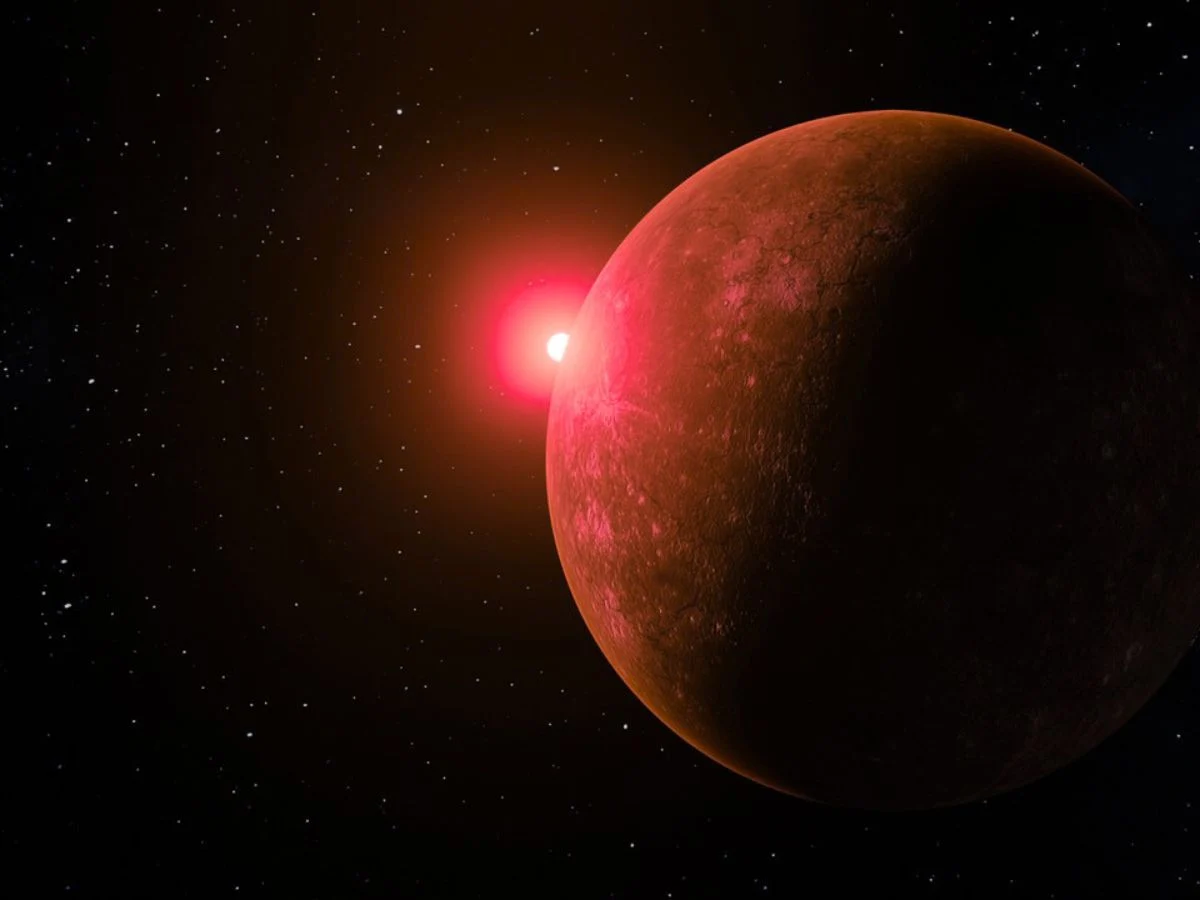
    1. Astronomers discovered a new companion to the red giant star Pi1 Gruis, located 590 light-years from Earth.
    2. The discovery was made using the ALMA radio telescope array, confirming the star’s companion through data comparison.
    3. The companion star exhibits unusual orbital behavior, having a circular orbit rather than an elliptical one.
    4. This atypical orbit may disrupt the evolution of Pi1 Gruis, potentially leading to the companion being engulfed or torn apart.
    5. Understanding these dynamics can help predict the future of our sun and the fate of planets in our solar system as it evolves into a red giant.


    The universe is full of mysteries, and each year brings new findings. A recent discovery by a group of astronomers has revealed a new companion to a red giant star. While this is exciting news for the scientific community, it may lead to significant disruptions.

    Discovery of Pi1 Gruis

    To understand this, we look at Pi1 Gruis, a semiregular variable star found in 1756, positioned in the Grus constellation, approximately 590 light-years away from Earth. This star is quite fascinating; if it matches the sun’s mass, it’s around 350 to 400 times bigger than the sun.

    The Role of ALMA

    Astronomers were curious if this red giant had a partner. They utilized an array of 66 radio telescopes known as ALMA. By comparing data from Pi1 Gruis and ALMA with various research models, they concluded, based on findings published in the journal Nature Astronomy, that this star does indeed have a companion.

    Unusual Orbital Behavior

    Nevertheless, this companion does not behave in a typical manner. Its orbit around the red giant is not elliptical. Scientists suggest that it has a circular orbit, which might disturb the star’s evolution in the future. Essentially, this could lead to the companion being engulfed or torn apart by the red giant.

    This finding may provide insights into the future of our sun and the planets in our solar system, as noted by Mats Esseldeurs:

    “Understanding how close companions behave under these conditions helps us better predict what will happen to the planets around the sun, and how the companion influences the evolution of the giant star itself.”

    Implications for the Future

    It’s worth remembering that in five billion years, the sun will deplete its energy reserves and become a red giant, consuming the nearby planets. Therefore, it’s crucial to conduct further studies to enhance our understanding of such stars.


    Source:
    Link