Tag: star formation

  • Protocostar Discovery Shows Unusual Behavior by Astronomers

    Protocostar Discovery Shows Unusual Behavior by Astronomers

    Key Takeaway

    1. Astronomers have observed one of the youngest stars, MC 27, located in the Taurus molecular cloud, revealing new insights into early star formation.
    2. A massive, warmer gas ring around MC 27 suggests magnetic field interactions with the protostellar disk, possibly causing shock waves that heat the gas.
    3. The formation of the gas ring is still a hypothesis requiring further research to better understand the processes of star formation.

    Despite the many stars astronomers see and find each year, they still don’t fully understand how stars are born. They do know these stars usually form in places filled with dense gas and dust, but what happens after that is really hard to see because young stars are shrouded in disk’s that block the light coming from them.

    Discovery of a Young Star: MC 27

    Thanks to the ALMA Telescope situated in Chile, researchers have made an interesting discovery: a very young star called MC 27 in the Taurus molecular cloud, about 430 light-years away. This is a big achievement because it’s one of the youngest stars that we have managed to observe in detail so far.

    Unusual Gas Ring Around the Star

    Surrounding this star, scientists also found a large ring of gas, really big at about 1,000 astronomical units. Kazuki Tokuda said, “Our observations revealed that the ring is a little warmer than the gas around it. We think this warmth comes from magnetic fields that run through the young star’s disk, like the star’s version of a sneeze, but much larger.”

    Theories Behind The Ring Formation

    Scientists believe this big gas ring was formed when magnetic forces interacted with the star’s disk. This contact possibly resulted in shock waves, which heated the nearby gas. While this idea is currently just a theory, it helps scientists imagine how such features develop around young stars. Still, they need to do more research to really understand everything about how stars are born and what causes such rings.

    Further Aspects of Stellar Formation

    This discovery offers new clues but also raises questions that need more investigation. As astronomers continue to study stars like MC 27, they hope to uncover more secrets about the complex process of star formation, which remains one of the most intriguing mysteries in space science.

    Sources

  • New Discoveries Reveal the Sun’s Origin by Astronomers

    New Discoveries Reveal the Sun’s Origin by Astronomers

    Key Takeaways

    1. The Sun’s origins are not fully understood, despite its importance for life on Earth.
    2. Scientists studied 6,594 stars similar to the Sun to learn more about its formation and history.
    3. Many of these stars are between 4 and 6 billion years old, suggesting the Sun’s age aligns with them.
    4. The Sun likely migrated a significant distance from the center of the Milky Way galaxy.
    5. The research highlights the need for further studies on star formation and the galactic structure, particularly the corotation barrier.


    Although the Sun plays a crucial role in sustaining life on Earth, its beginnings are still not fully understood. To help answer some of these lingering questions, scientists have compiled and examined a catalog of stars by utilizing data gathered from the Gaia satellite.

    Research on Similar Stars

    It’s known that our star emerged roughly 4.6 billion years ago in a region close to the center of our galaxy, yet some details are still unclear. To address this, Daisuke Taniguchi from Tokyo Metropolitan University and Takuji Tsujimoto from the National Astronomical Observatory of Japan have carried out a study focusing on stars that are alike to the Sun in terms of composition, mass, and temperature.

    They compiled a total of 6,594 stars and organized them based on their ages. This effort led to the identification of many stars that are between 4 and 6 billion years old, aligning with the age of the Sun. As a result of these similarities, the researchers suspect that the Sun has journeyed a considerable distance away from the central areas of our galaxy.

    Insights on Galactic Structure

    This finding also provides insights into the corotation barrier present in the Milky Way. This elongated structure within our galaxy restricts the movement of stars, and astronomers believe this migration took place before the barrier was established. However, while these discoveries offer some clarity, they also highlight the need for more research. The process of star formation in the Milky Way remains inadequately understood, leaving many questions unanswered.

    Source:
    Link


  • NASA Reveals Hubble’s Ghostly Image of the Universe

    NASA Reveals Hubble’s Ghostly Image of the Universe

    Key Takeaways

    1. Hubble focused on the star-forming area known as Lupus 3, located about 500 light-years away in the Scorpius constellation.
    2. The bright mist in the image is interstellar gas illuminated by nearby stars, with dark dust visible in the lower left.
    3. T Tauri stars, which are under 10 million years old and not yet stable, are prominent in the image.
    4. The brightness of T Tauri stars varies due to radiation and stellar winds clearing surrounding gas and dust.
    5. Brightness changes may result from instabilities in the accretion disk around the stars and the presence of rotating sunspots.


    Hubble has focused on a star-forming area known as Lupus 3, which is situated roughly 500 light-years away in the Scorpius constellation. The bright mist captured in the image is created by interstellar gas that is lit up by nearby stars. Additionally, dark dust can be seen on the lower left part of the image.

    T Tauri Stars Shine Bright

    In this image, a cluster of stars called T Tauri stars are particularly prominent. These stars are located at the left, bottom right, and upper center of the image. T Tauri stars are quite young, at under 10 million years old, and they haven’t yet reached the stable hydrogen fusion stage necessary to become main-sequence stars.

    Understanding Their Brightness

    The visibility of the T Tauri stars in this image is due to their current phase, where radiation and stellar winds are clearing away the surrounding gas and dust. They exhibit variability in brightness, which can change both randomly and in a periodic manner.

    What Causes Brightness Changes?

    The randomness in the brightness of these stars might stem from instabilities within the dust and gas disk around them, known as an accretion disk. As material from this disk falls onto the stars, it may be consumed or cause flares on the star’s surface, adding to the fluctuations. The periodic changes in brightness could be linked to large sunspots that rotate in and out of sight.

    This image, along with similar ones, provides a valuable chance for researchers to gain a deeper understanding of how stars are formed.

    Source:
    Link


  • Galaxy 13 Billion Light-Years Away Creates Stars 180 Times Faster

    Galaxy 13 Billion Light-Years Away Creates Stars 180 Times Faster

    Key Takeaways

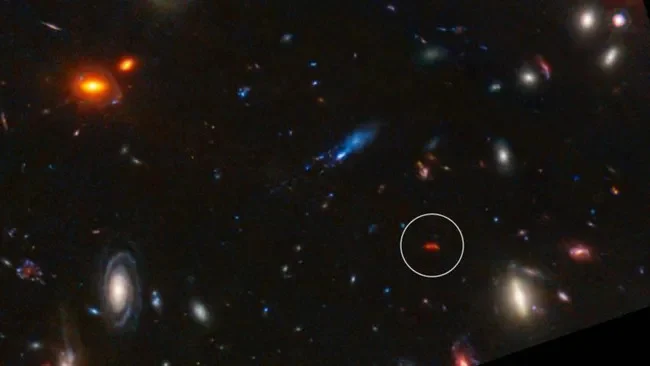
    1. The Y1 galaxy, located over 13 billion light-years away, offers insights into the early universe and its star formation rates.

    2. A study published in the Monthly Notices of the Royal Astronomical Society revealed the temperature of dust in the Y1 galaxy to be around -356 °F (-180 °C).

    3. Despite its cold temperature, the Y1 galaxy’s dust is warmer compared to other similar galaxies, indicating it is an extreme star factory.

    4. The Y1 galaxy produces stars at a rate 180 times faster than the Milky Way, suggesting that such galaxies were common in the universe’s early days.

    5. Further studies are needed to better understand the characteristics and significance of the Y1 galaxy and similar star-producing galaxies.


    Although the universe is frequently observed and analyzed, each year brings new findings. This has recently happened when astronomers found a galaxy from the early cosmos that can create stars faster than the Milky Way.

    Discovering Y1 Galaxy

    Situated over 13 billion light-years away from Earth, the Y1 galaxy gives us a glimpse into the very early universe. Interestingly, this was also a time when stars formed at a rate much higher than what we see today.

    A study detailing this discovery was published in the Monthly Notices of the Royal Astronomical Society. With the help of the ALMA (Atacama Large Millimeter/submillimeter Array) in Chile, scientists managed to measure the temperature of dust within this galaxy. The result is quite astonishing, showing a temperature of around -356 °F (-180 °C).

    The Surprising Temperature

    However, if you think that’s really cold, you might be surprised. Yoichi Tamura, a researcher from Nagoya University in Japan, highlights:

    “While the temperature is definitely cooler than the dust found in homes on Earth, it’s actually much warmer than any other similar galaxies we’ve observed. This confirms that it is indeed an extreme star factory. Even though it’s the first time we’ve encountered a galaxy like this, we believe many more could exist. Star factories like Y1 might have been quite common in the universe’s early days.”

    Y1’s Star Production Rate

    In terms of star-making ability, the Y1 galaxy produces stars at a rate 180 times greater than the Milky Way. Researchers suggest that such galaxies were prevalent during the universe’s formative years. Nevertheless, further studies need to be conducted in the near future to gain a better understanding of this fascinating galaxy.

    Source:
    Link


  • Stunning Hubble Image of Star-Studded Galaxy – Picture of the Week

    Stunning Hubble Image of Star-Studded Galaxy – Picture of the Week

    Key Takeaways

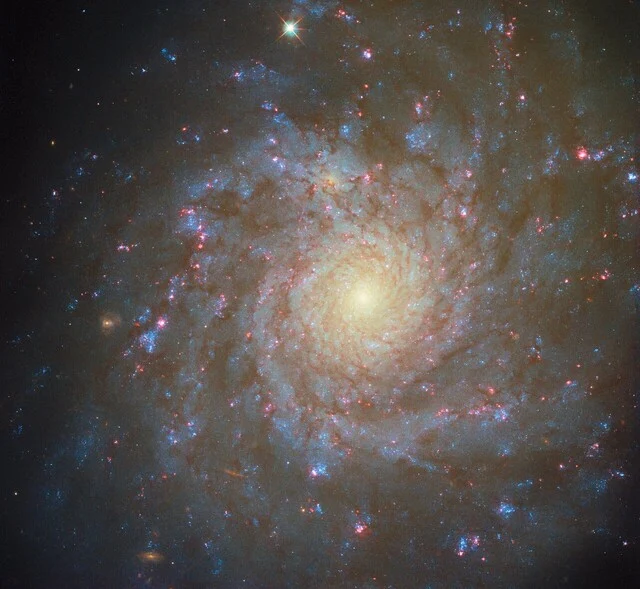
    1. NGC 4571 is a spiral galaxy located about 60 million light-years away in the constellation Berenices, captured in detail by the Hubble telescope.
    2. The image highlights star clusters made of young, massive stars that appear blue, alongside pink regions indicating active star formation.
    3. The pink glow in star-forming regions is due to young stars emitting ultraviolet light, which ionizes nearby hydrogen gas, leading to H-alpha light emission.
    4. Star formation begins with cold gas clouds that collapse under gravity, heating up and eventually forming new stars.
    5. The latest image of NGC 4571 builds on previous observations and aids astronomers in studying the effects of dust on the visibility of young stars.


    NGC 4571 is a spiral galaxy that sits roughly 60 million light-years away in the constellation Berenices. The Hubble telescope captured an image showing the galaxy’s spiral arms and the many star clusters that surround it. These clusters are made up of young, massive stars that shine blue in the photo.

    Star Formation Revealed

    The image also features regions glowing pink. These areas are where new stars are being formed. The young, hot stars emit a lot of ultraviolet light, which ionizes the hydrogen gas nearby. This ionization leads to the emission of H-alpha light, giving these star-forming regions their distinct pink hue.

    The Process Behind It

    Observations like this one emphasize the fascinating nature of star formation. It’s even more captivating when you think about how the hot stars seen in the image originated from gas that was at freezing temperatures.

    Before stars come into existence, gas clouds at such low temperatures are drawn in by gravity. This gravitational force causes the gas to collapse inward. As it collapses, the center starts to heat up gradually, eventually leading to the stars shining.

    A prior image of NGC 4571 was shared in 2022, which was part of a broad observation program. This latest image provides additional data.

    It incorporates findings from a project focused on how dust impacts the visibility of young stars that are still hidden within their birth clouds. Astronomers rely on Hubble images like this to unravel the mysteries surrounding star formation.

    Source:
    Link


  • Webb Image Unveils Stunning Details of Milky Way’s Star-Forming Region

    Webb Image Unveils Stunning Details of Milky Way’s Star-Forming Region

    Key Takeaways

    1. Sagittarius B2 is located a few hundred light-years from the Milky Way’s central black hole, Sagittarius A.
    2. Half of the star formation in the galactic core occurs in Sagittarius B2, despite it having only 10% of the gas compared to other areas.
    3. The James Webb Space Telescope (JWST) is studying Sagittarius B2 using its Near-Infrared Camera (NIRCam) and Mid-Infrared Instrument (MIRI).
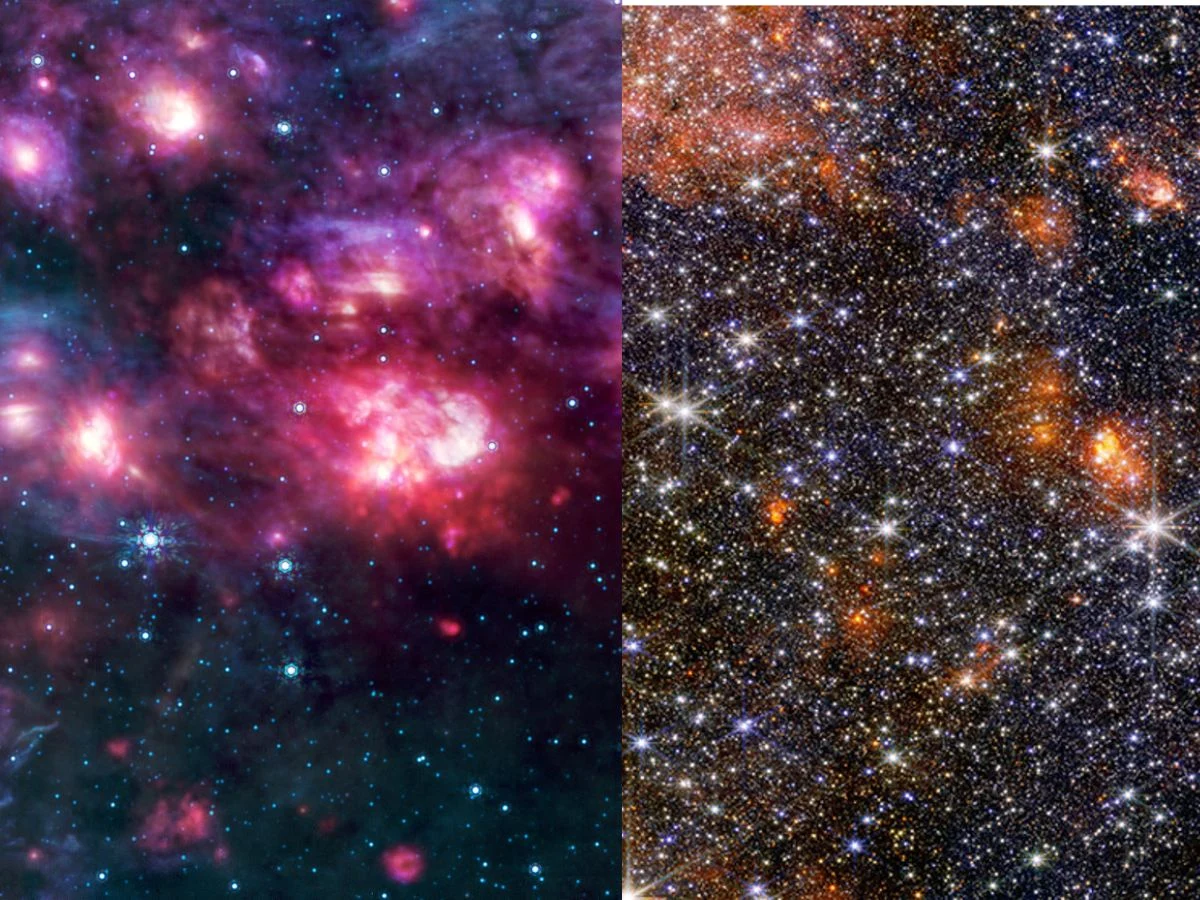
    4. NIRCam images reveal numerous stars and bright gas clouds, while dark patches may indicate areas that could form new stars in the future.
    5. The images from NIRCam and MIRI are credited to various institutions and researchers, highlighting collaborative efforts in this research.


    Sagittarius B2 is situated just a few hundred light-years from Sagittarius A, which is the massive black hole found at the center of the Milky Way galaxy. The entire core of the Milky Way is rich in gas, an environment that typically supports the creation of stars.

    Surprising Star Formation

    Interestingly, about half of the star formation occurs in Sagittarius B2, even though this area contains just 10 percent of the gas relative to the rest of the region. This uneven distribution of star creation in the galactic core is still not fully understood.

    To get to the bottom of this enigma, a closer look at Sagittarius B2 is necessary. The James Webb Space Telescope (JWST) studied this region using its Near-Infrared Camera (NIRCam) and Mid-Infrared Instrument (MIRI).

    Captivating Images

    The NIRCam images show a multitude of stars accompanied by bright clouds of gas and dust surrounding them. There are also several dark patches visible in the images. These dark areas are filled with dense clouds that Webb cannot penetrate. Although they seem like empty voids now, these clouds could eventually lead to the formation of new stars.

    In the images produced by MIRI, glowing gas and dust are at the forefront. Only the most luminous stars show up as blue dots in the images. Researchers plan to conduct additional studies in this area to gather more information about these stars, such as their age and mass.

    Collaborative Efforts

    NIRCam and MIRI image credits go to NASA, ESA, CSA, STScI, Adam Ginsburg (University of Florida), Nazar Budaiev (University of Florida), Taehwa Yoo (University of Florida), and Alyssa Pagan (STScI).

    Source:
    Link


  • ESA Reveals Image of Brightest Galaxy in M96 Group – POTW 34

    ESA Reveals Image of Brightest Galaxy in M96 Group – POTW 34

    Key Takeaways

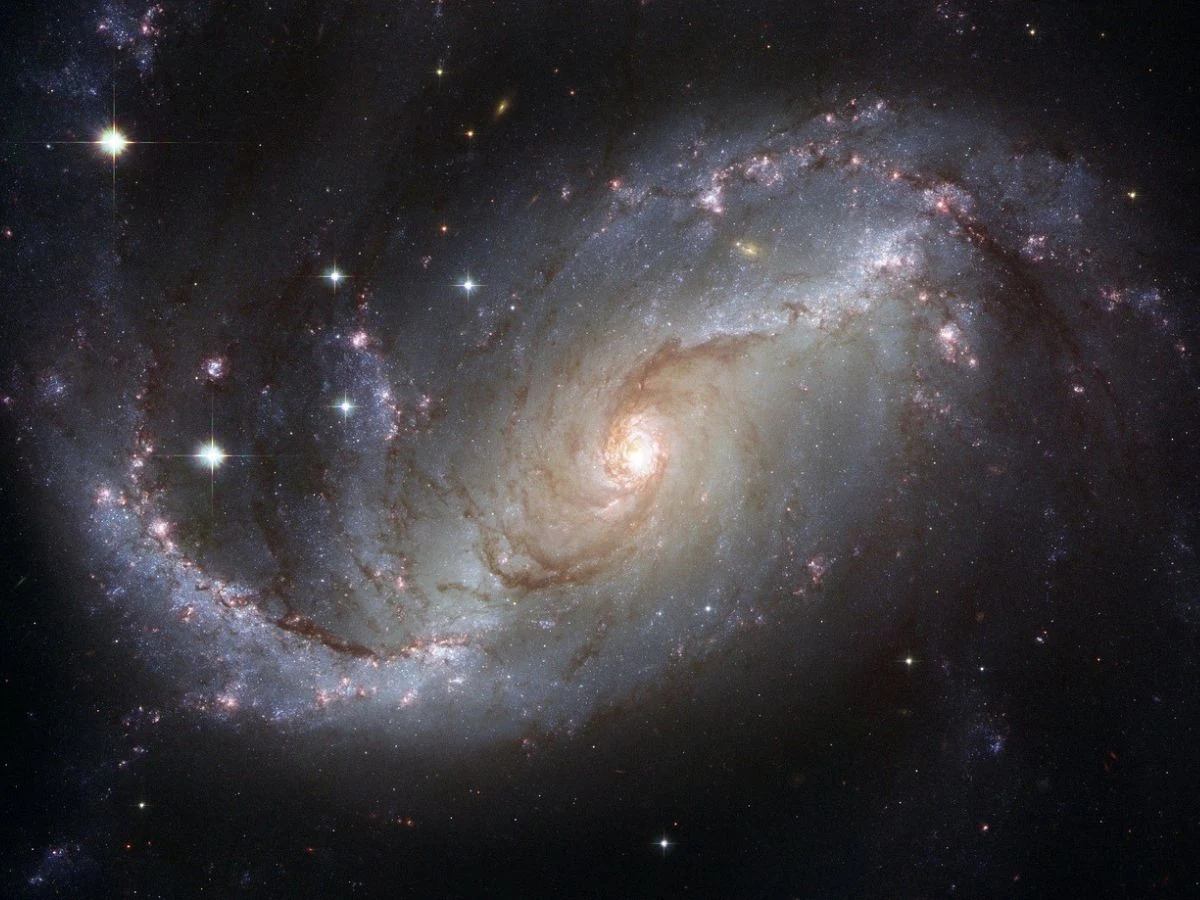
    1. Messier 96 is a spiral galaxy located 35 million light-years away in the Leo constellation, comparable in size and mass to the Milky Way.
    2. Hubble’s latest image reveals new star formation in pink regions along the galaxy’s spiral arms, where young stars interact with hydrogen gas.
    3. The galaxy exhibits an irregular shape and uneven gas and dust distribution, influenced by gravitational interactions with nearby galaxies.
    4. The core of Messier 96 glows milky white due to the light from many stars, with dark red dust strands partially obscuring it.
    5. This new image enhances scientific understanding of star formation in dusty gas clouds and the interactions between dust and starlight.


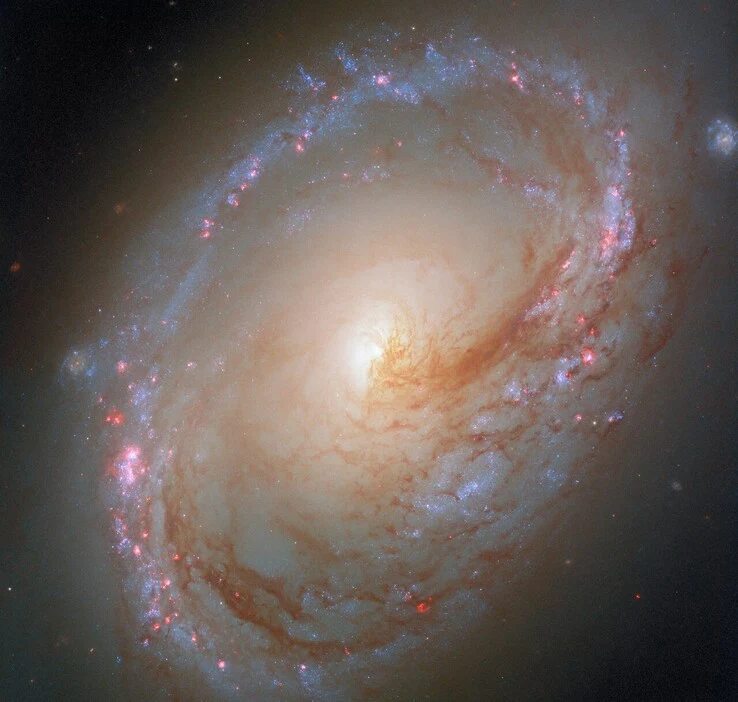
    The NASA/ESA Hubble Space Telescope has taken another look at a galaxy known as Messier 96. This spiral galaxy is situated 35 million light-years away in the Leo constellation, also known as The Lion. Its size and mass are roughly comparable to that of our own Milky Way galaxy, making it the most luminous galaxy within its group.

    New Insights on Star Formation

    Previously, Hubble shared images of this galaxy in 2015 and 2018. However, the latest image provides deeper understanding of star formation occurring within Messier 96. The image highlights pink areas along the galaxy’s spiral arms, which are regions where new stars are being born.

    In these star-forming regions, young stars emit light that interacts with the surrounding hydrogen gas. Additionally, the blue areas visible in the spiral arms represent the light emitted by existing stars.

    Unique Features of Messier 96

    One notable aspect of this galaxy, as depicted in the image, is its irregular shape and the uneven spread of gas and dust. Furthermore, the galaxy contains a core that is not centered properly. These characteristics may be due to what ESA refers to as a “galactic tug of war.” It is believed that the gravitational influence from nearby galaxies is impacting the distorted shape of Messier 96.

    The core of the galaxy is seen as a milky white glow, which results from the combined light of countless stars. In the image, dark red dust strands weave around the spiral arms, partially obscuring the central glow.

    Contribution to Scientific Understanding

    This new image will assist scientists in comprehending star formation within large, dusty gas clouds. Additionally, it will aid in investigating how dust interacts with starlight and the relationships between these stars and their surrounding environments.

    Source:
    Link


  • NASA Reveals Stunning New Details of the Cat’s Paw Nebula

    NASA Reveals Stunning New Details of the Cat’s Paw Nebula

    Key Takeaways

    1. NASA celebrates the third anniversary of the James Webb Space Telescope with a new image of the Cat’s Paw Nebula (NGC 6334), located 4,000 light-years from Earth.
    2. Webb’s Near-Infrared Camera (NIRCam) captured a star-forming region, highlighting the chaotic creation of new stars and their effect on surrounding gas and dust clouds.
    3. The intense light from these young stars creates a vibrant glow in various shades of blue, showcasing dynamic star formation processes.
    4. Webb’s high-resolution imaging provides unprecedented insights into the structure of star formation, revealing details never seen before.
    5. The findings from Webb not only answer important questions about the universe but also pave the way for future research with upcoming telescopes like the Nancy Grace Roman Space Telescope.


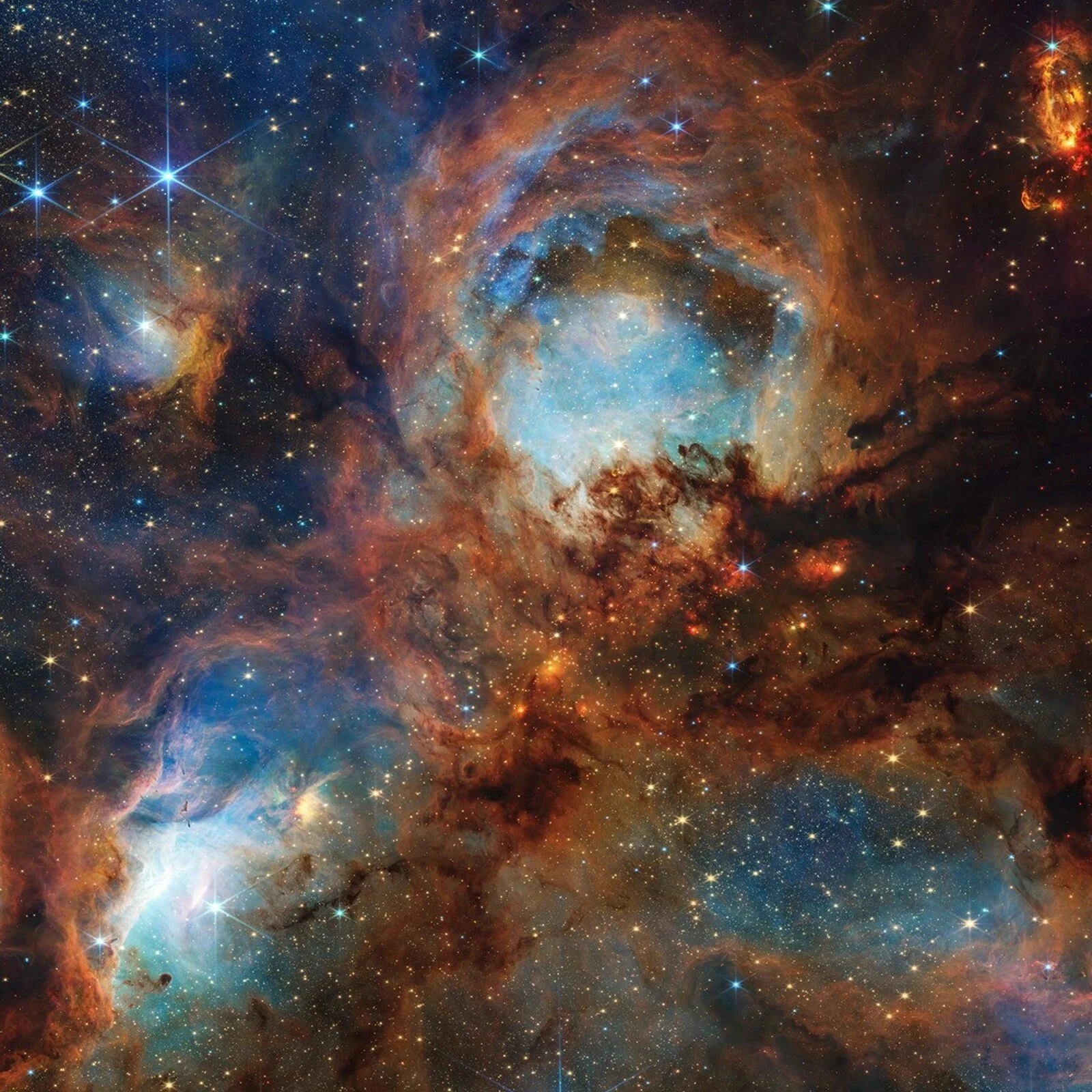
    NASA is marking the third year of its James Webb Space Telescope with the release of an amazing new image that showcases a star-forming area inside the Cat’s Paw Nebula. This nebula, which is also referred to as NGC 6334, is situated in the Scorpius constellation, approximately 4,000 light-years from Earth.

    A Closer Look at the Nebula

    Webb’s Near-Infrared Camera (NIRCam) zoomed in on a specific part of the nebula, exposing a chaotic nursery where new stars are emerging. The image illustrates how these stars are actively shaping the surrounding gas and dust clouds. Their intense light brightens the region, creating a stunning, nebulous glow in various shades of blue. However, this vibrant activity is not permanent — the actions of these young stars will ultimately stop star formation in the area.

    Insights into Star Formation

    The recent observation allows scientists to delve into the intricate process of how stars are formed. Webb’s high-resolution imaging has brought to light structural details of this region that have never been seen before.

    Three years into its mission, Webb is proving its worth by uncovering aspects of the universe that were previously concealed, ranging from star formation to some of the earliest galaxies. — Shawn Domagal-Goldman, who is the acting director of the Astrophysics Division at NASA Headquarters.

    He emphasized that the intriguing questions raised by Webb are just as thrilling as the answers it has uncovered, setting the stage for future research with the Nancy Grace Roman Space Telescope and the Habitable Worlds Observatory.

    Source:
    Link