
Key Takeaways
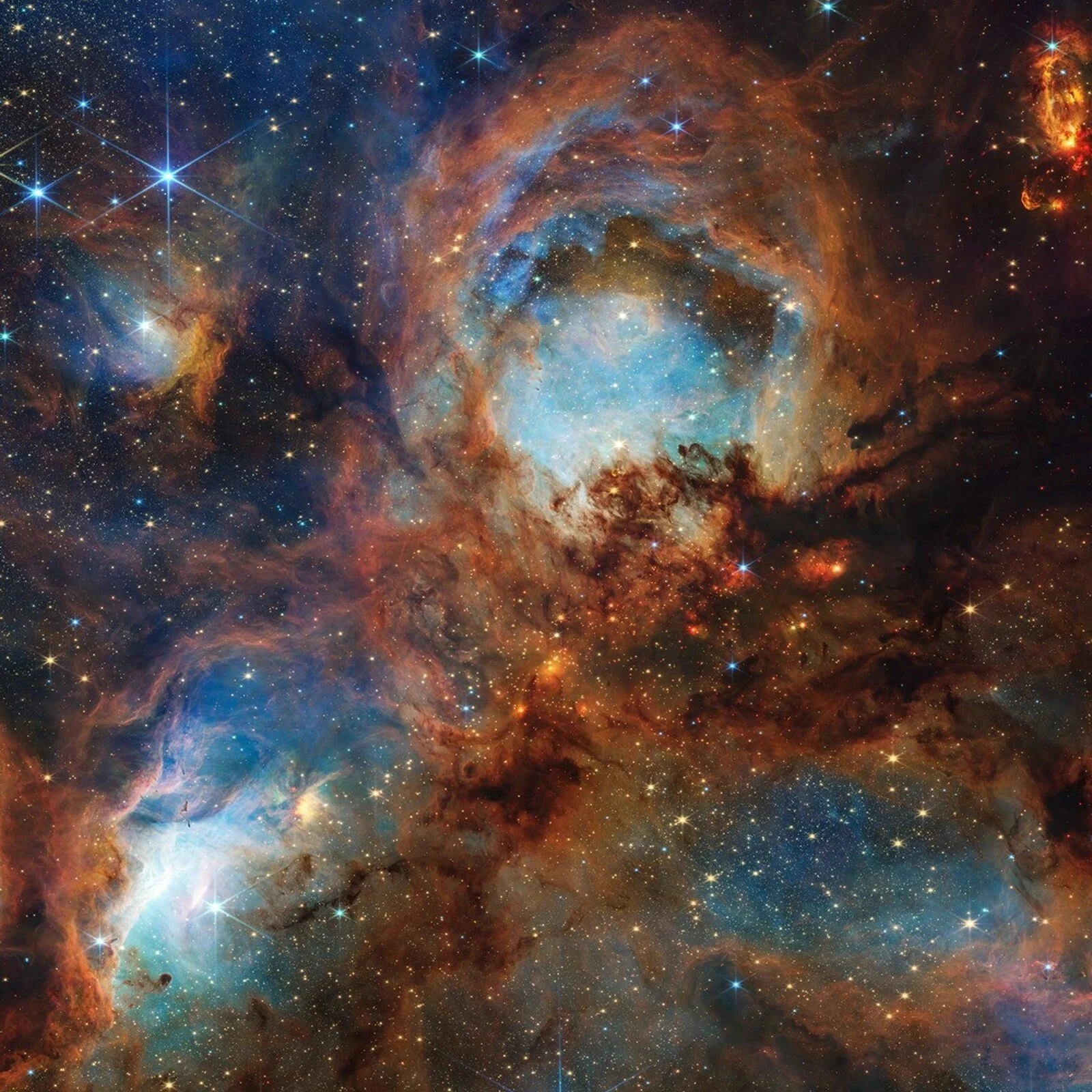
1. NASA celebrates the third anniversary of the James Webb Space Telescope with a new image of the Cat’s Paw Nebula (NGC 6334), located 4,000 light-years from Earth.
2. Webb’s Near-Infrared Camera (NIRCam) captured a star-forming region, highlighting the chaotic creation of new stars and their effect on surrounding gas and dust clouds.
3. The intense light from these young stars creates a vibrant glow in various shades of blue, showcasing dynamic star formation processes.
4. Webb’s high-resolution imaging provides unprecedented insights into the structure of star formation, revealing details never seen before.
5. The findings from Webb not only answer important questions about the universe but also pave the way for future research with upcoming telescopes like the Nancy Grace Roman Space Telescope.
NASA is marking the third year of its James Webb Space Telescope with the release of an amazing new image that showcases a star-forming area inside the Cat’s Paw Nebula. This nebula, which is also referred to as NGC 6334, is situated in the Scorpius constellation, approximately 4,000 light-years from Earth.
A Closer Look at the Nebula
Webb’s Near-Infrared Camera (NIRCam) zoomed in on a specific part of the nebula, exposing a chaotic nursery where new stars are emerging. The image illustrates how these stars are actively shaping the surrounding gas and dust clouds. Their intense light brightens the region, creating a stunning, nebulous glow in various shades of blue. However, this vibrant activity is not permanent — the actions of these young stars will ultimately stop star formation in the area.
Insights into Star Formation
The recent observation allows scientists to delve into the intricate process of how stars are formed. Webb’s high-resolution imaging has brought to light structural details of this region that have never been seen before.
Three years into its mission, Webb is proving its worth by uncovering aspects of the universe that were previously concealed, ranging from star formation to some of the earliest galaxies. — Shawn Domagal-Goldman, who is the acting director of the Astrophysics Division at NASA Headquarters.
He emphasized that the intriguing questions raised by Webb are just as thrilling as the answers it has uncovered, setting the stage for future research with the Nancy Grace Roman Space Telescope and the Habitable Worlds Observatory.
Source:
Link
Leave a Reply