Tag: Hubble Space Telescope

  • Hubble Captures Stunning Spiral Galaxy M88 Image

    Hubble Captures Stunning Spiral Galaxy M88 Image

    Key Takeaway

    – M88 is a 121,000-light-year-wide spiral galaxy in the Virgo Cluster.
    – Its bright center contains a supermassive black hole 100 million times the Sun’s mass.
    – Symmetrical spiral arms contain pink and blue star clusters and dust clouds.
    – M88 will approach the much larger M87 in 200–300 million years.
    – This encounter will eject gas and reshape M88, affecting star formation.


    Observing the Details of Galaxy M88

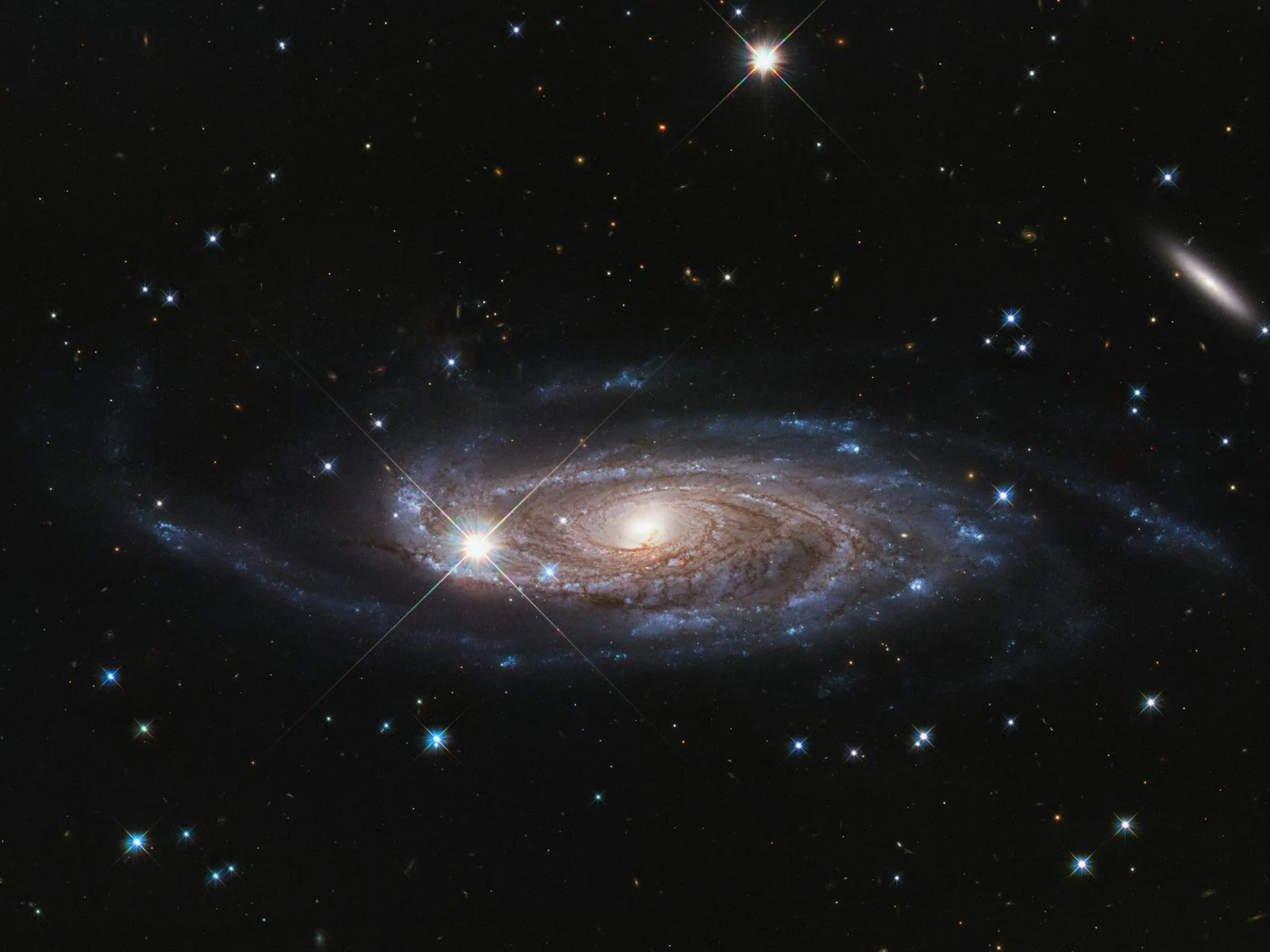
    The universe contain many galaxies, and some are more interesting than others due to there shape and composition. This is the case for M88, a spiral galaxy located about 63 million light-years from Earth that was recently observed by the Hubble Space Telescope. It measures about 121,000 light-years in diameter and belongs to the Virgo Cluster, a region containing more than a thousand galaxies held together by gravity.

    What the Image Reveals

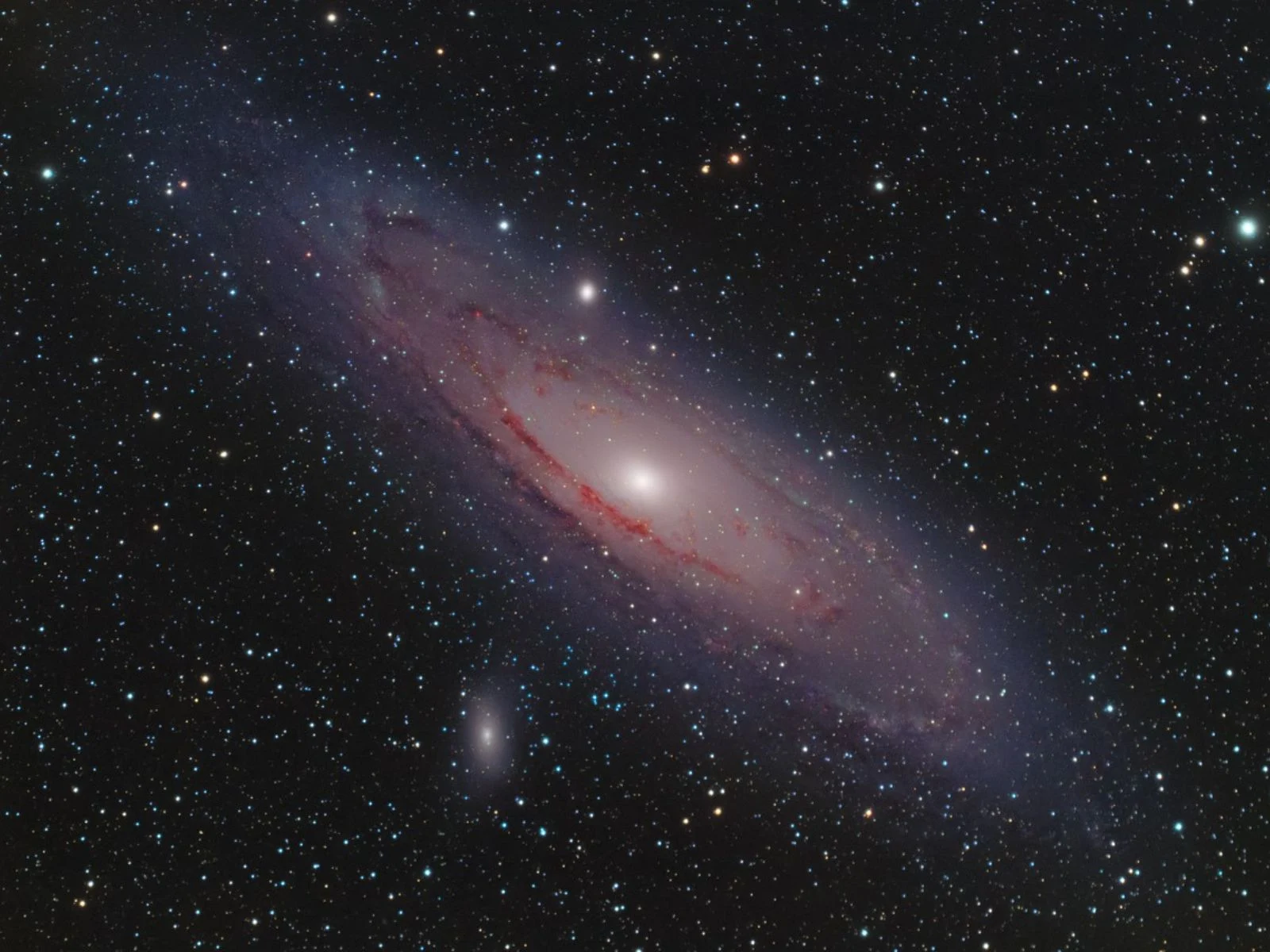
    In this image recently released by NASA, a bright light can be seen at its center. This glow is caused by a group of reddish stars orbiting a supermassive black hole with a mass estimated at 100 million times that of the Sun. It is also possible to observe symmetrical spiral arms composed of several clusters of pink and blue stars and dust clouds. However, although this image is remarkable, this galaxy may be headed for a tragic fate.

    The Future Trajectory

    Indeed, the galaxies located in the Virgo Cluster orbit the clusters center. According to astronomers, in 200 to 300 million years, M88 will be very close to M87, an elliptical galaxy with a supermassive black hole about 6.5 billion times more massive than the Sun. During this event, gas will be ejected from M88 and its shape will change considerably, which could alter its composition and its ability to form new stars.

    • Distance: 63 million light-years
    • Diameter: 121,000 light-years
    • Black hole mass: 100 million solar masses
    • M87 black hole mass: 6.5 billion solar masses
    • Predicted close approach: 200-300 million years

    Sources

  • 50 Billion Solar Mass Black Hole: One of the Largest Ever Found

    50 Billion Solar Mass Black Hole: One of the Largest Ever Found

    Key Takeaway

    – A402-BCG, a galaxy about 4.4 billion light-years away in the Abell 402 cluster, hosts an ultramassive black hole estimated at ~50 billion solar masses.
    – JWST and Hubble observations reveal a bright central source with a kiloparsec-wide dark region nearby, signaling the black hole’s presence.
    – At ~50 billion solar masses, it ranks among the most massive black holes known, about 25× the mass of all stars in the Large Magellanic Cloud; the Milky Way is 100–400 billion solar masses for scale.
    – A large cavity in the galaxy suggests the possible existence of a second supermassive black hole at its center.

    Black holes are among the most puzzling cosmic objects, known for extreme gravity and strange behaviors. A team led by Michael McDonald at the Massachusetts Institute of Technology has announced the discovery of a black hole tucked away in a galaxy, a finding that challenges ideas about how objects grow.

    Discovery in a distant galaxy

    Named A402-BCG, the galaxy sits 4.4 billion light-years from Earth and belongs to the Abell 402 cluster. In discussing the outcome, researchers point to two features: a bright, pointlike glow at the core and a wide, kiloparsec-scale dark region lying to its east, hinting at powerful processes within the cluster.

    Central features and interpretation

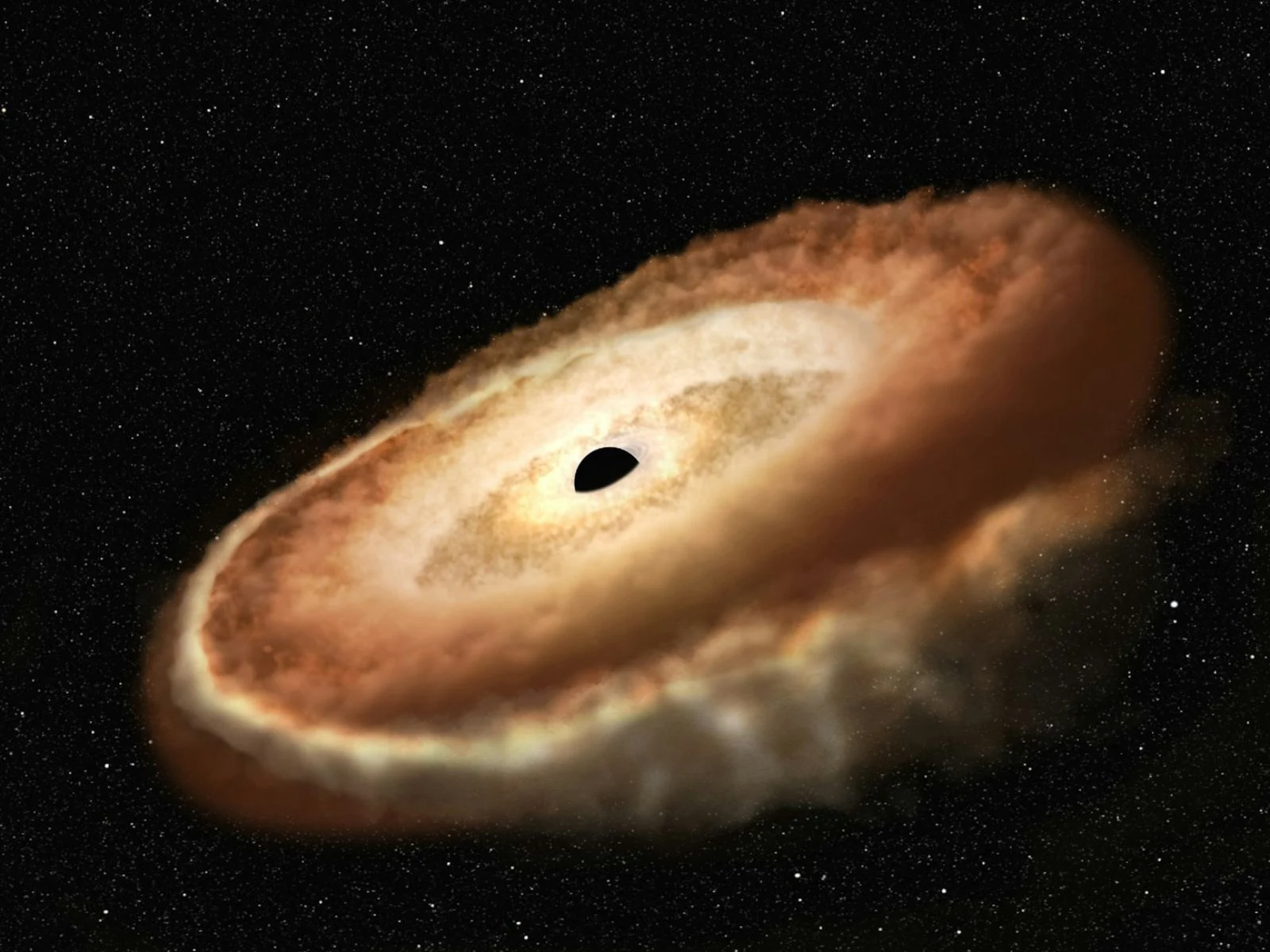
    Team used the James Webb Space Telescope and the Hubble Space Telescope to study the light from its center, concluding that the glow signals an ultramassive black hole. Its mass is estimated at about 50 billion solar masses, a value that places it among the most massive known black holes.

    Observational evidence

    This finding matters because it ranks among the largest black holes. It is about 25 times bigger than all the stars in the Large Magellanic Cloud, located 158,000 light-years away, while the Milky Way weighs in at about 100 to 400 billion solar masses, illustrating the power of such objects.

    Scale and significance

    Observers also note a large cavity in the host galaxy that hints at a second supermassive black hole at its center, a possibility that remains speculative until more data comes in. The discovery continues to spark discussion about how multiple gargantuan holes might shape their galaxies over cosmic time together.


    Sources

  • Hubble Captures Stunning Image of Spiral Galaxy 53 Million Light-Years Away

    Hubble Captures Stunning Image of Spiral Galaxy 53 Million Light-Years Away

    Key Takeaway

    1. The Hubble Space Telescope captured detailed images of galaxy NGC 3137, illustrating its spiral structure and star clusters.
    2. NGC 3137 is part of a galaxy group, including the Milky Way and over 500 dwarf galaxies, aiding astronomers’ understanding of our own galaxy.
    3. The image reveals young stars in blue clusters and red gas clouds, with a supermassive black hole at its center, about 60 million times the Sun’s mass.

    Exploring Space Telescopes and Their Discoveries

    There are a plenty of galaxies out there in the universe, giving scientists and astronomers a chance to understand more about our cosmos. Sometimes, space telescopes are able to snap really cool pics of these galaxies, helping us see details that we can barely imagine. The James Webb Space Telescope is one such device that shows us incredible details through its powerful instruments.

    Ancient Telescopes Still Make Big Contributions

    Even with the new tech, older telescopes like the Hubble are still very useful. Launched way back in 1990, this telescope recently took a picture of a galaxy far, far away—about 53 million light-years from where we are. The image reveals som mesmerizing details, like clusters of stars and clouds of gas, showing us how vibrant and dynamic these cosmic structures are.

    NGC 3137 and Its Cosmic Neighborhood

    NGC 3137 is a spiral galaxy that get a lot of attention from astronomers because of its interesting features. It’s not alone though, it moves through space along with a whole group of galaxies including our own, the Milky Way, as well as NGC 3175 and over 500 tiny dwarf galaxies. Studying this galaxy helps us get a better idea of what our own galaxy might look like or how it has evolved over millions of years.

    Colors, Stars, and Hidden Mysteries

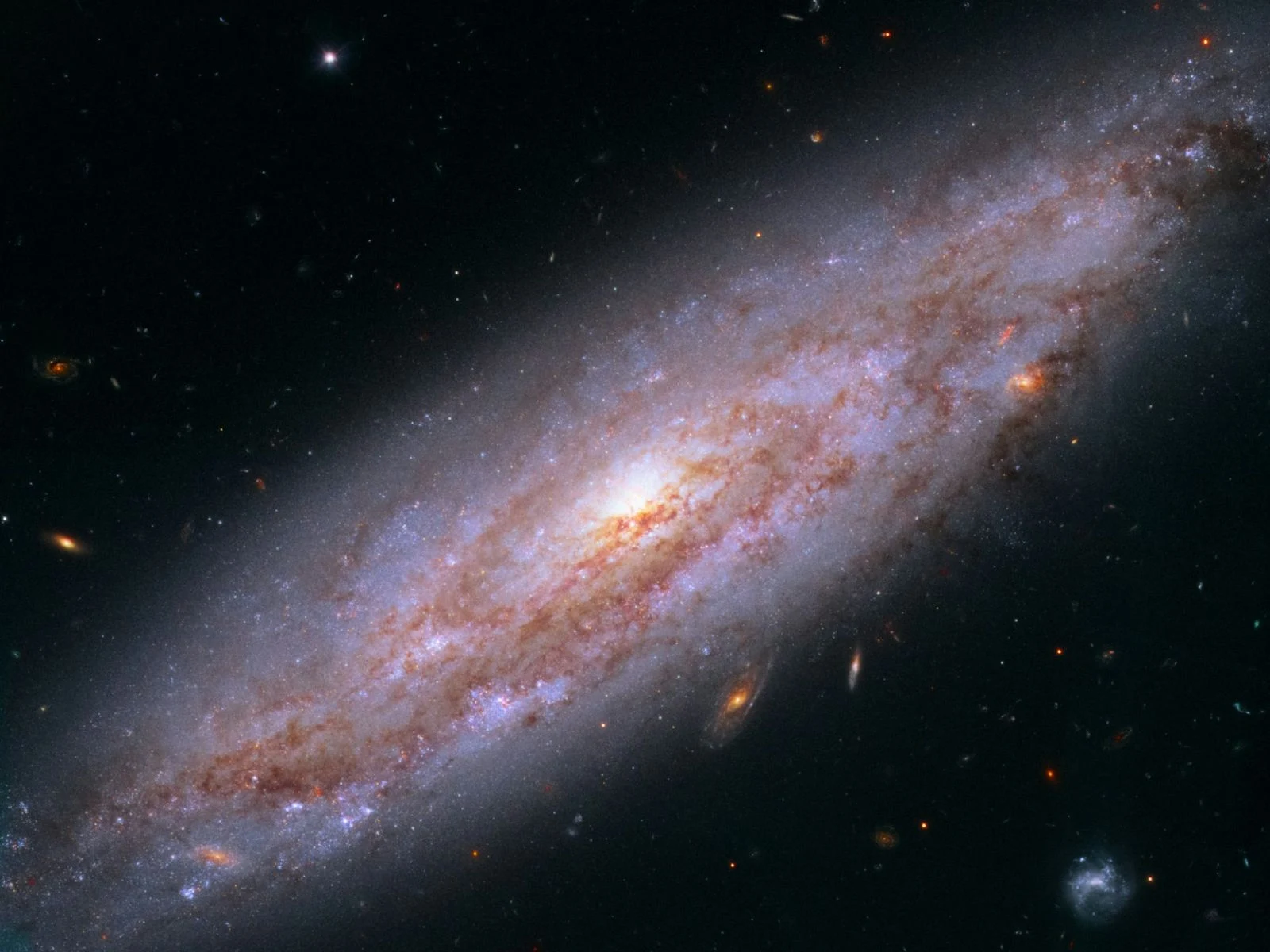
    This specific image shows several different colors across six bands, especially bright blue star clusters and red clouds of gas. This indicates that new stars are forming within these nebulae right now. The galaxy’s stunning spiral arms are clear, and at its very heart, a supermassive black hole lurks with a mass about 60 million times that of the Sun—pretty massive, huh? Also, stars from the Milky Way and other distant galaxies are scattered throughout this view, giving it a lively, bustling scene.


    Sources

  • James Webb Telescope Discovers Possible 12 Billion-Year-Old Comet

    James Webb Telescope Discovers Possible 12 Billion-Year-Old Comet

    Key Takeaways

    1. Comet 3I/ATLAS was initially thought to be an alien spaceship, but new data shows it has normal cosmic origins.
    2. It is estimated to be 10 to 12 billion years old, making it older than both Earth and the solar system.
    3. The comet likely originated in a cold region of the Milky Way galaxy, close in age to the galaxy itself.
    4. The James Webb Space Telescope (JWST) provided new insights into the comet’s gas composition, confirming its ancient origins.
    5. 3I/ATLAS measures about 1,400 ft (440 m) in size and entered the solar system at a speed of approximately 137,000 mph (221,000 km/h).


    The comet 3I/ATLAS was found last year, moving through the solar system, with some folks suggesting it was a spaceship from aliens. Recent observations by the JWST, however, have provided evidence that this space object has more normal origins.

    Age and Origins of 3I/ATLAS

    The results indicate that 3I/ATLAS originated in a chilly, distant region of the Milky Way galaxy. With estimates ranging from 10 to 12 billion years old, this comet’s age is more than twice that of both Earth and the solar system. Furthermore, 3I/ATLAS is quite close in age to the Milky Way, which is around 13.6 billion years old, and to the universe itself, at approximately 13.8 billion years.

    New Data from JWST

    The advanced JWST collected new data while it was passing by the comet in late 2025. It analyzed the gas composition that formed on the comet as the sun warmed it up, leading to the sublimation of the ice on its surface.

    Earlier assessments had estimated the age of 3I/ATLAS to be between 3 billion and 11 billion years. However, research scientist Romain Maggiolo stated, “They show that 3I/ATLAS isotopic composition is very different from solar system comets and suggest that it likely formed 10-12 billion years ago.”

    Size and Speed Details

    The comet is thought to measure 1,400 ft (440 m) and stretch about 3.5 miles (5.6 km) wide. Observations from the Hubble Space Telescope indicate it entered the solar system at a speed of around 137,000 mph (221,000 km/h). The nearest point of approach to Earth was at a distance of 168 million miles (270 million km), which was recorded on December 19, 2025.

    Source:
    Link


  • New Detailed Images of Cat’s Eye Nebula from Euclid and Hubble

    New Detailed Images of Cat’s Eye Nebula from Euclid and Hubble

    Key Takeaways

    1. Nebulae, like the Cat’s Eye Nebula, are fascinating cosmic formations linked to the final phases of stars.
    2. The Cat’s Eye Nebula is located about 4,400 light-years from Earth and was first identified in 1864.
    3. Advanced telescopes, including Hubble and Euclid, have provided new images that reveal the intricate structure of the Cat’s Eye Nebula.
    4. Euclid’s images highlight a vibrant halo of gas, while Hubble’s focus on the core shows high-speed jets of gas.
    5. These discoveries enhance our understanding of planetary nebulae and the materials they contain.


    Nebulae are remarkable formations in the cosmos that captivate astronomers due to their unique material. When a star reaches its final phase, it undergoes multiple stages, some of which remain a mystery.

    Cat’s Eye Nebula Exploration

    This is true for the Cat’s Eye Nebula, or NGC 6543, which is situated about 4,400 light-years from our planet. It was first identified in 1864, and early observations provided insights that the rounded shape of these nebulae comes from gas that is expanding around the star. Later, in 1995, the Hubble Space Telescope examined this nebula, enhancing our understanding of planetary nebulae.

    New Discoveries with Advanced Telescopes

    Recently, both the Hubble and Euclid telescopes have captured fresh images of this nebula, showcasing its intricate nature and presenting a stunning display. The first image, taken by Euclid, shows a vibrant halo of gas that appears to be drifting away from the star.

    Hubble, on the other hand, focused on the core of this nebula, uncovering high-speed jets of gas. Observers can almost sense the turmoil present in this area by looking at the star at the center. While these visuals are exceptionally beautiful, the violent nature of the event is just as impressive. These findings will help astronomers gain a deeper understanding of the phenomenon, as well as the materials that make up these planetary nebulae.

    Source:
    Link


  • Hubble Telescope Discovers Galaxy with 99% Dark Matter and Few Stars

    Hubble Telescope Discovers Galaxy with 99% Dark Matter and Few Stars

    Key Takeaways

    1. CDG-2 is a dark galaxy with very little visible light and few stars, primarily composed of dark matter.
    2. About 99% of CDG-2’s mass is believed to be dark matter, making it difficult to detect using traditional methods.
    3. CDG-2 is located in the Perseus Cluster, which strips away gases and inhibits star formation due to its harsh environment.
    4. The galaxy was confirmed through observations from three telescopes: Hubble Space Telescope, Euclid, and Subaru Telescope.
    5. The discovery of CDG-2 contributes to the understanding of dark matter and its role in galaxy formation and structure.


    Galaxies are typically seen by their light, gas emissions, and structure. Yet, CDG-2 stands apart as a dark galaxy that emits very little visible light and has hardly any stars, making it tough to spot. Its composition consists mainly of dark matter, which is undetectable by traditional means as it doesn’t absorb, reflect, or emit light. The only way to observe it is through its gravitational influences. Remarkably, about 99% of CDG-2’s mass is thought to be dark matter, and it falls into the category of low-surface-brightness galaxies due to its dim light. It was recognized exclusively because of the close formation of its globular clusters, which adds to its scientific importance.

    Location and Environmental Factors

    CDG-2 resides in the Perseus Cluster, a massive galaxy cluster roughly 300 million light-years from Earth. This cluster is known for its powerful gravitational interactions that strip away gases like hydrogen. Ram-pressure stripping plays a role here too, disrupting smaller galaxies and hindering star formation. Hydrogen plays a critical role in the birth of stars, and this hostile environment may explain why CDG-2 has so few stars.

    Astronomical Observations

    In the process of confirming CDG-2’s existence, astronomers called upon three observatories. The first one was the Hubble Space Telescope, which offered clear identification of four globular clusters through high-resolution images. The second, Euclid, is particularly adept at spotting low-surface-brightness galaxies and confirmed the existence of faint diffuse light through wide-field imaging. Lastly, the Subaru Telescope provided additional confirmation with ground-based deep imaging.

    These observatories collectively validated that the globular clusters were situated within a faint diffuse glow, serving as evidence of a hidden galaxy. Dark matter remains one of the most puzzling enigmas in physics, and this finding marks a significant advancement in unraveling and comprehending the mysteries that lie beyond our perception.

    Source:
    Link


  • NASA Space Technology Now Enhancing Everyday Life

    NASA Space Technology Now Enhancing Everyday Life

    Key Takeaways

    1. CCD sensors were traditionally used for space observation but had limitations such as radiation sensitivity and high costs.
    2. Eric Fossum shifted focus from CCDs to CMOS image sensor technology to enhance space imaging.
    3. The method of intra-pixel charge transfer with correlated double sampling improved image quality by reducing background noise.
    4. The breakthrough led to the creation of the CMOS Active Pixel Sensor, known as the ‘camera-on-a-chip.’
    5. CMOS sensors are now widely used in everyday devices like smartphones, vehicles, and digital cameras, influencing both space exploration and consumer technology.


    For many years, observing space was mainly done with CCD (charge-coupled device) sensors, like the ones used in the Hubble Space Telescope. These sensors work by transforming incoming light into an electrical charge in their pixels. The charge builds up and moves across the chip to an output node, where it gets converted into a voltage signal that creates an image. Despite their use, CCDs had limitations due to their radiation sensitivity, high price, and significant energy use.

    Advancements in Image Technology

    Eric Fossum began his work at the NASA Jet Propulsion Laboratory with the goal of enhancing CCDs for space applications. Rather than sticking to CCDs, he focused on improving a different type of technology known as CMOS (complementary metal-oxide semiconductor) image sensor technology. He employed a method from CCD technology called intra-pixel charge transfer with correlated double sampling. This method effectively eliminated background noise, leading to sharper images and an improved signal-to-noise ratio. This breakthrough led to the creation of the CMOS Active Pixel Sensor (APS), commonly referred to as the ‘camera-on-a-chip.’

    Everyday Applications of CMOS Sensors

    Eventually, companies began collaborating with NASA, allowing the technology to be fine-tuned and integrated into various consumer devices. Nowadays, CMOS sensors can be found in smartphones, vehicles, swallowable pill cameras, webcams, digital cameras, and much more. This development not only propelled advancements in space exploration but also revolutionized the technology we use in our everyday lives.

    Source:
    Link


  • Hubble Sees Stunning Light Show from Dying Star

    Hubble Sees Stunning Light Show from Dying Star

    Key Takeaways

    1. The Egg Nebula is located about 1,000 light-years away in the constellation Cygnus and gets its name from its egg-like shape.
    2. Light beams are emitted from the central star through openings in dense dust, creating a unique visual effect.
    3. The symmetrical arcs of the beams indicate a planned gas and dust ejection, possibly influenced by hidden companion stars.
    4. The Egg Nebula is in a pre-planetary phase, which lasts a few thousand years and has not yet become a planetary nebula.
    5. Research on the Egg Nebula, aided by the Hubble Space Telescope, is crucial for understanding stellar evolution.


    The Egg Nebula is found roughly 1,000 light-years away in the constellation Cygnus. The name comes from its shape. It features a central star whose brightness is hidden by a thick layer of dust, resembling how egg white covers the yolk.

    Light Beams and Polar Openings

    In this picture, you can see two beams of light shooting out from either side of the central star. This phenomenon likely occurs because light is filtering through openings in the dense dust at the center.

    Symmetrical Arcs and Gas Ejection

    The beams also display arcs that look like ripples. This suggests that the star released gas and dust in a planned way, not through a chaotic explosion. Scientists still don’t completely grasp how this organized ejection works. The shapes and movements of the beams hint at gravitational effects from one or more hidden companion stars that are concealed within the thick dust.

    Pre-planetary Phase

    The Egg Nebula is currently in a pre-planetary stage, which lasts only a few thousand years. It has not yet transformed into a planetary nebula with a visible hot core. Thus, it cannot make the surrounding gas glow through ionization. The gas and dust merely reflect the light from the fading star. Monitoring this phase is important for understanding the later stages of stellar evolution, and the Hubble Space Telescope is contributing significantly to this research.

    Source:
    Link


  • Astronomers Witness Star Transforming into Black Hole in Andromeda

    Astronomers Witness Star Transforming into Black Hole in Andromeda

    Key Takeaways

    1. The star M31-2014-DS1, located in the Andromeda galaxy, is 13 times more massive than the Sun and can become a black hole after its life cycle.
    2. A research team discovered that M31-2014-DS1 became extremely bright over a decade ago but suddenly vanished in 2023.
    3. Unlike typical massive stars that explode as supernovae, M31-2014-DS1’s core collapsed quickly without an observable explosion.
    4. The faint glow detected in the infrared spectrum suggests a black hole formed, but it is difficult to detect due to its small size.
    5. This discovery could lead to new methods for finding other black holes and deepen our understanding of stellar life cycles and the universe.


    The destiny of stars is often sad, because after billions of years, they can explode as supernovae. However, the biggest stars can become black holes, like M31-2014-DS1, one of the brightest stars in the Andromeda galaxy, which is more than 2.5 million light-years away and has a mass 13 times that of the Sun.

    Discovery of a Bright Star

    By examining data from NASA’s Neowise mission, a group led by Kishalay De from Columbia University found that this star became much brighter over a decade ago, reaching brightness levels 100,000 times that of the sun, before it suddenly vanished in 2023. To verify this finding, they used the Hubble Space Telescope for observations. Kishalay De remarked:

    “That’s when it clicked. Stars that are this bright, this massive, do not just randomly disappear into darkness.”

    The Mystery of M31-2014-DS1

    Astronomers note that such huge stars generally evolve into supernovae and then can become neutron stars or black holes. In the case of M31-2014-DS1, however, no such explosion seems to have happened. Kishalay De mentioned that the core of this star collapsed in merely a few hours, and a faint glow in the infrared spectrum remain visible. Yet, this newly formed black hole is hard to detect because of its small size. Additionally, this finding might help in finding other black holes in the universe, especially by monitoring stars that have disappeared.

    Future Implications

    This discovery opens up new avenues for research in the astronomical field. The importance of studying these massive stars cannot be understated, as they may hold key information about the life cycles of stars and the formation of black holes. As scientists continue to explore the cosmos, findings like these will help deepen our understanding of the universe and its many mysteries.

    Source:
    Link


  • Remnants of a Comet May Still Exist in Our Solar System

    Remnants of a Comet May Still Exist in Our Solar System

    Key Takeaways

    1. Comet C/2019 Y4 ATLAS broke apart into many pieces after its discovery in 2020.
    2. Scientists are currently searching for a specific fragment known as fragment B using advanced telescopes.
    3. The search for fragment B has been challenging due to its likely small size, less than one kilometer across.
    4. Observations from the Hubble Space Telescope revealed multiple fragments still orbiting in the solar system.
    5. The breakup of the comet raises questions about the presence of other comets in our solar system that may be difficult to detect.


    In 2020, scientists found comet C/2019 Y4 ATLAS and they thought it would be a spectacular sight from Earth. Unfortunately, it broke apart into many pieces, and some scientists think that the pieces might still be floating around in the solar system.

    Search for Fragment B

    A recent study published in The Astronomical Journal, led by Salvatore A. Cordova Quijano from Boston University, aimed to locate a piece known as fragment B. They used the Lowell Discovery Telescope along with images from the Zwicky Transient Facility to assist in their search. After the comet’s breakup, observations were conducted using the Hubble Space Telescope, which revealed multiple fragments that could still be orbiting in our solar system.

    Size Matters

    Despite their efforts, no success was found, indicating that this fragment is likely smaller than a kilometer across. This size makes it hard to spot with today’s technology.

    Additionally, when comet C/2019 Y4 ATLAS fell apart, astronomers could not observe the event closely, which hindered their understanding of the situation. Ultimately, the destiny of this space object brings up more questions, especially about how many other comets might be lurking in our solar system.

    Source:
    Link