
Tag: black hole

  • Hubble Captures Stunning Image of Spiral Galaxy 53 Million Light-Years Away

    Hubble Captures Stunning Image of Spiral Galaxy 53 Million Light-Years Away

    Key Takeaway

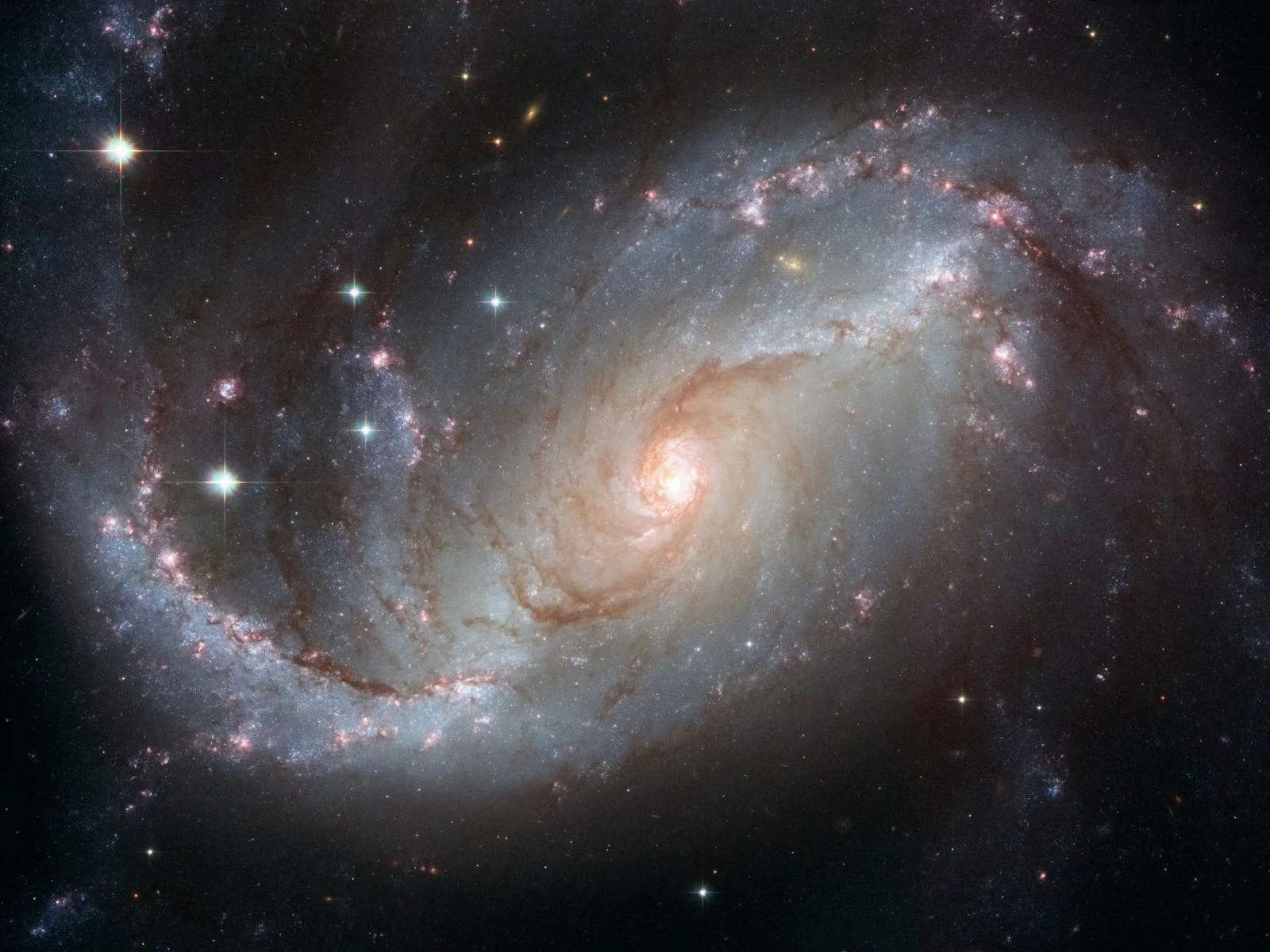
    1. The Hubble Space Telescope captured detailed images of galaxy NGC 3137, illustrating its spiral structure and star clusters.
    2. NGC 3137 is part of a galaxy group, including the Milky Way and over 500 dwarf galaxies, aiding astronomers’ understanding of our own galaxy.
    3. The image reveals young stars in blue clusters and red gas clouds, with a supermassive black hole at its center, about 60 million times the Sun’s mass.

    Exploring Space Telescopes and Their Discoveries

    There are a plenty of galaxies out there in the universe, giving scientists and astronomers a chance to understand more about our cosmos. Sometimes, space telescopes are able to snap really cool pics of these galaxies, helping us see details that we can barely imagine. The James Webb Space Telescope is one such device that shows us incredible details through its powerful instruments.

    Ancient Telescopes Still Make Big Contributions

    Even with the new tech, older telescopes like the Hubble are still very useful. Launched way back in 1990, this telescope recently took a picture of a galaxy far, far away—about 53 million light-years from where we are. The image reveals som mesmerizing details, like clusters of stars and clouds of gas, showing us how vibrant and dynamic these cosmic structures are.

    NGC 3137 and Its Cosmic Neighborhood

    NGC 3137 is a spiral galaxy that get a lot of attention from astronomers because of its interesting features. It’s not alone though, it moves through space along with a whole group of galaxies including our own, the Milky Way, as well as NGC 3175 and over 500 tiny dwarf galaxies. Studying this galaxy helps us get a better idea of what our own galaxy might look like or how it has evolved over millions of years.

    Colors, Stars, and Hidden Mysteries

    This specific image shows several different colors across six bands, especially bright blue star clusters and red clouds of gas. This indicates that new stars are forming within these nebulae right now. The galaxy’s stunning spiral arms are clear, and at its very heart, a supermassive black hole lurks with a mass about 60 million times that of the Sun—pretty massive, huh? Also, stars from the Milky Way and other distant galaxies are scattered throughout this view, giving it a lively, bustling scene.
    Sources

  • Distant Galaxy Lost 95% Brightness in Under 20 Years

    Distant Galaxy Lost 95% Brightness in Under 20 Years

    Key Takeaway

    1. A galaxy located 10 billion light-years away is rapidly fading, losing 95% of its brightness in less than 20 years.
    2. The decline in brightness is attributed to the black hole at its center no longer being fed by gas and dust.
    3. This rapid change challenges existing understanding of active galactic nuclei and indicates recent, significant alterations in the black hole’s accretion activity.

    Discovery of a Dimming Galaxy

    The universe in the endless cosmos still got many surprises for astronomers. Recently, they found a galaxy that is moving away from us, approximately 10 billion light-years far. This galaxy, known as J0218−0036, is suddenly starting to fade, and its light is diminishing quickly. This is a rare phenomenon and makes scientists want to uncover why things like this happen in space.

    Black Holes and Accretion Disks

    Most galaxies, including ours, host a supermassive black hole at their center. When the black hole is surrounded by gases and dust, it forms a bright accretion disk because of strong gravity pulling everything inward. These disks glow brightly because of high-energy processes taking place right around the black hole.

    An Unexpected Reaction

    But the case of J0218−0036 is different. What the researchers observe is that this galaxy has lost about 95% of its brightness within less than two decades. And the decrease in light started way back in the early 2000s. This rapid change shocks the scientists as it’s unusual for such massive objects to fade so suddenly.

    Black Hole’s Fuel Supply Disappears

    Scientists believe the reason behind this sudden fade is that the black hole no longer gets gas or dust to feed on. Without fuel, it can’t produce its usual bright accretion disk, causing the galaxy’s brightness to fade significantly. Tomoki Morokuma from the Chiba Institute of Technology described this as an extraordinary event, noting that the black hole’s activity changed very quickly over just a few years.

    Alternative Theories and Ongoing Research

    Initially, some astronomers thought that a large gas cloud might have temporarily blocked light from the galaxy, making it appear dimmer. However, new findings suggest otherwise. They are now planning further research to really understand what caused this galaxy to disappear so fast, as the current mystery leaves many questions unanswered.

    Observational Tools and Collaborations

    • The Subaru Telescope, which captures deep images of the universe, was crucial in this discovery.
    • Data from SDSS and HSC-SSP, along with NASA’s Hubble Space Telescope, helped astronomers analyze the galaxy’s light over time.


    Sources

  • NASA Detects Record-Breaking Explosion 420 Times Longer Than Normal

    NASA Detects Record-Breaking Explosion 420 Times Longer Than Normal

    Key Takeaways

    1. GRB 250702B was a unique gamma-ray burst that lasted up to 7 hours, much longer than the typical duration of about 1 minute.

    2. This event is believed to be caused by a black hole consuming a star, differing from the usual causes of neutron star mergers or massive star collapses.

    3. One theory suggests the involvement of an intermediate-mass black hole, while another proposes a smaller black hole interacting with a helium star.

    4. Ongoing research aims to understand the details of GRB 250702B, as conflicting evidence complicates the findings.

    5. The energy output of this GRB is comparable to that of a thousand Suns shining for 10 billion years, highlighting its extraordinary scale.


    Astronomers spotted a cosmic explosion on July 2, naming it GRB 250702B. This discovery isn’t unique, as around 15,000 gamma-ray bursts (GRBs) have been identified since the first one in 1973. Typically, these bursts are the result of two neutron stars merging, or a massive star collapsing into a black hole.

    Unusual Duration

    However, GRB 250702B was different from most. While most GRBs last only a minute, this one lasted up to 7 hours. Scientists agree that this extraordinary GRB was caused by a black hole consuming a star. The key questions are how this occurred and why it had such a significant effect.

    Theories on the Cause

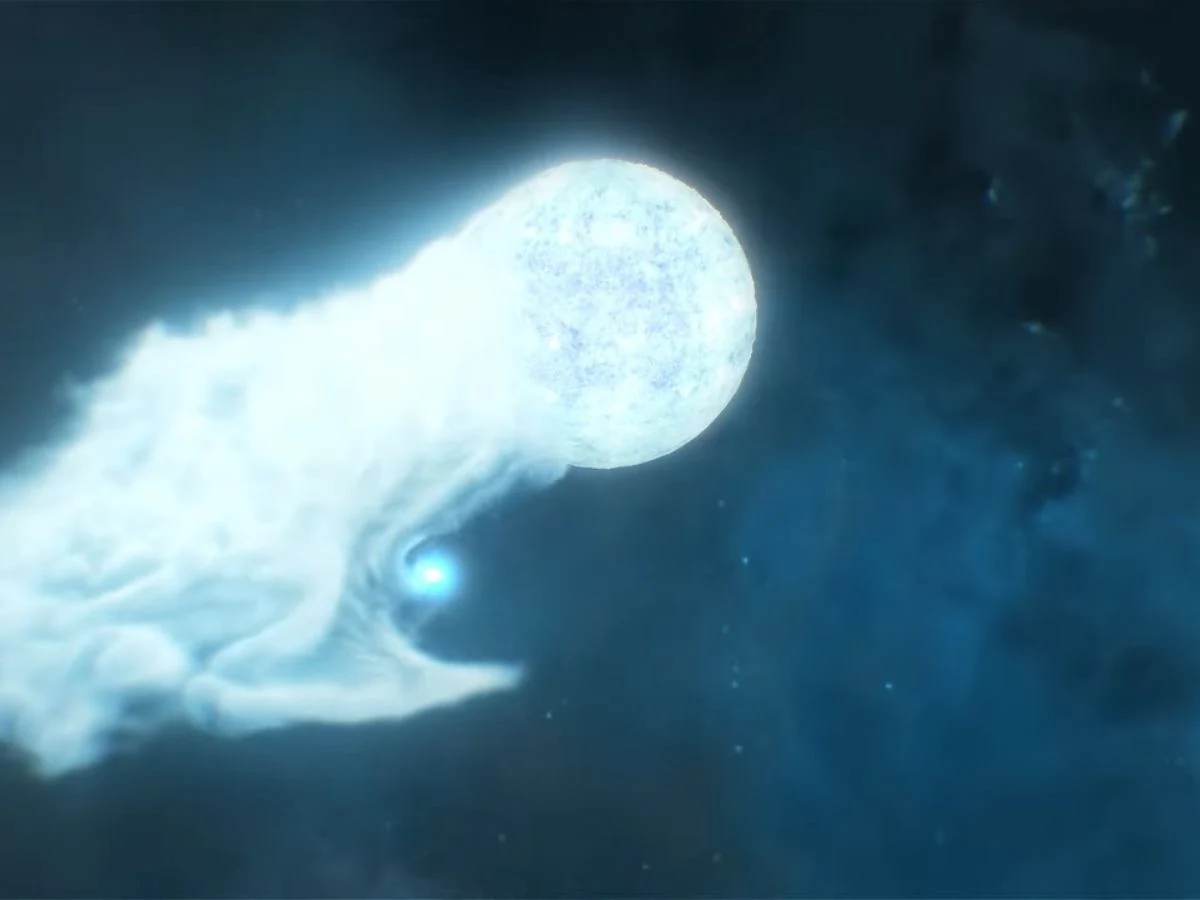
    One theory suggests that this GRB resulted from the interaction between a star and a unique intermediate-mass black hole, which is a few thousand times heavier than the Sun. According to this view, a star ventured too close, and the black hole quickly began to devour it.

    Alternatively, another theory proposes that a smaller black hole, approximately three times the mass of the Sun, was behind the event. In this case, the black hole may have been orbiting a helium star—one that has lost its hydrogen atmosphere—and was gradually siphoning gas from it. Eventually, it dove into the star and consumed it.

    Ongoing Research

    No definitive conclusions have been reached yet. The conflicting evidence adds to the complexity of the data. For instance, astronomers observed that the host galaxy is quite large, which is atypical for GRB galaxies. Nevertheless, scientists are committed to analyzing the information gathered from this GRB, whose energy output is comparable to that of a thousand Suns shining for an impressive 10 billion years.

    Source:
    Link