1. A galaxy located 10 billion light-years away is rapidly fading, losing 95% of its brightness in less than 20 years.
2. The decline in brightness is attributed to the black hole at its center no longer being fed by gas and dust.
3. This rapid change challenges existing understanding of active galactic nuclei and indicates recent, significant alterations in the black hole’s accretion activity.
Discovery of a Dimming Galaxy
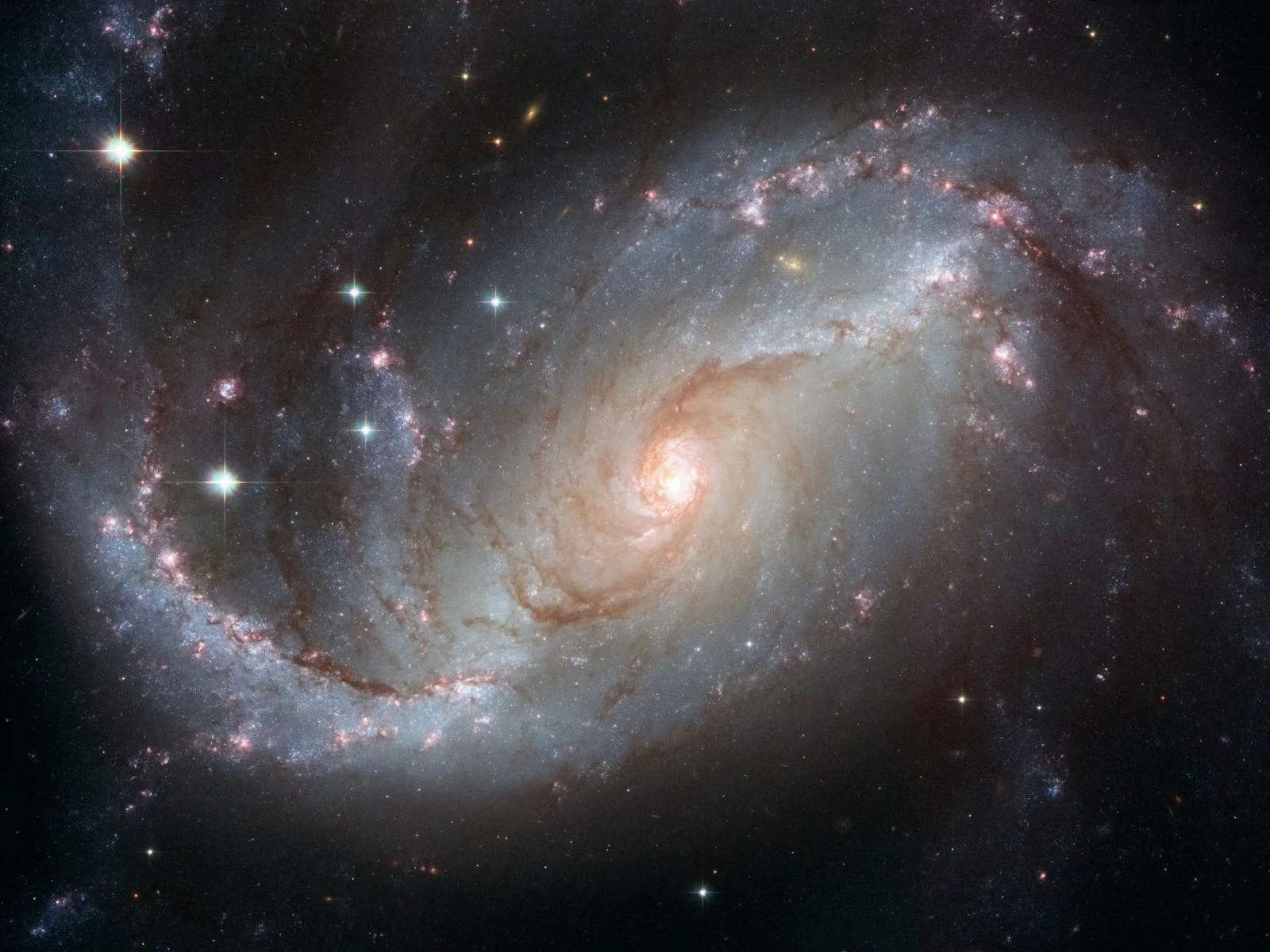
The universe in the endless cosmos still got many surprises for astronomers. Recently, they found a galaxy that is moving away from us, approximately 10 billion light-years far. This galaxy, known as J0218−0036, is suddenly starting to fade, and its light is diminishing quickly. This is a rare phenomenon and makes scientists want to uncover why things like this happen in space.
Black Holes and Accretion Disks
Most galaxies, including ours, host a supermassive black hole at their center. When the black hole is surrounded by gases and dust, it forms a bright accretion disk because of strong gravity pulling everything inward. These disks glow brightly because of high-energy processes taking place right around the black hole.
An Unexpected Reaction
But the case of J0218−0036 is different. What the researchers observe is that this galaxy has lost about 95% of its brightness within less than two decades. And the decrease in light started way back in the early 2000s. This rapid change shocks the scientists as it’s unusual for such massive objects to fade so suddenly.
Black Hole’s Fuel Supply Disappears
Scientists believe the reason behind this sudden fade is that the black hole no longer gets gas or dust to feed on. Without fuel, it can’t produce its usual bright accretion disk, causing the galaxy’s brightness to fade significantly. Tomoki Morokuma from the Chiba Institute of Technology described this as an extraordinary event, noting that the black hole’s activity changed very quickly over just a few years.
Alternative Theories and Ongoing Research
Initially, some astronomers thought that a large gas cloud might have temporarily blocked light from the galaxy, making it appear dimmer. However, new findings suggest otherwise. They are now planning further research to really understand what caused this galaxy to disappear so fast, as the current mystery leaves many questions unanswered.
Observational Tools and Collaborations
- The Subaru Telescope, which captures deep images of the universe, was crucial in this discovery.
- Data from SDSS and HSC-SSP, along with NASA’s Hubble Space Telescope, helped astronomers analyze the galaxy’s light over time.