Tag: neutron stars

  • Astronomers Find Collision of Two Exoplanets 11,000 Light-Years Away

    Astronomers Find Collision of Two Exoplanets 11,000 Light-Years Away

    Key Takeaways

    1. Astronomers found evidence of a collision between two exoplanets in a distant star system, indicated by unusual brightness changes of the star Gaia20ehk.

    2. The brightness of Gaia20ehk, located about 11,000 light-years away, remained steady until 2016, when it dimmed and became erratic by 2021.

    3. The changes in brightness were caused by rock and dust debris blocking the star’s light, rather than changes in the star itself.

    4. Collisions between celestial bodies are common during the early development of solar systems and play a significant role in shaping them.

    5. This discovery may provide important insights into the dynamics and evolution of solar systems over time.


    When looking at the universe, astronomers make remarkable finds. After the discovery of the merger between two neutron stars and a pulsar at the center of our galaxy, they have now found signs of a clash between two exoplanets in a far-off star system.

    Evidence of a Collision

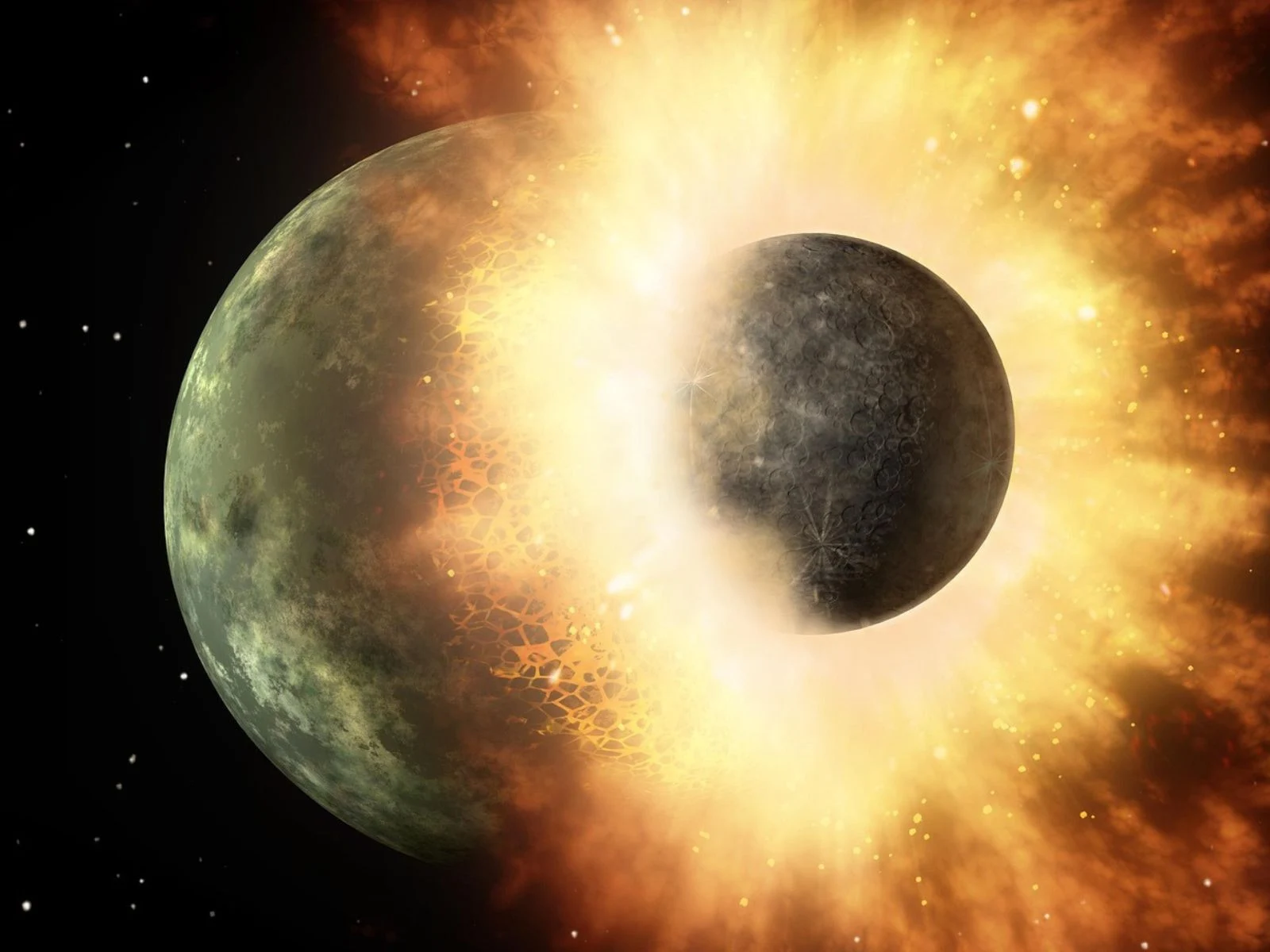
    Actually, they didn’t witness this collision as it happened but found clues that showed it happened. By studying Gaia20ehk, a star that is around 11,000 light-years away from Earth, they saw something unusual. Its brightness was steady until 2016, when it dimmed three times. However, in 2021, it became completely erratic, which is not typical for stars like it.

    Unraveling the Mystery

    Through careful examination and monitoring of the star’s behavior, scientists concluded that these brightness changes weren’t due to the star itself. Instead, they were caused by massive amounts of rock and dust blocking the view of this celestial body. And it gets better, as this was a result of a collision between two exoplanets that produced these debris.

    Understanding Planetary Formation

    In fact, during the early development of a solar or planetary system, collisions happen often and play a key role in shaping these systems. So, it’s not surprising that crashes between exoplanets occur regularly. Yet, as time goes on and conditions stabilize, these types of events become less frequent. Thus, this finding is a significant milestone and could also shed light on the workings of solar systems.

    Source:
    Link


  • Astronomers Discover Neutron Star Collision in Small Galaxy

    Astronomers Discover Neutron Star Collision in Small Galaxy

    Key Takeaways

    1. Neutron stars are small but incredibly dense, with a mass 1.5 times that of the Sun and a diameter of about 15 kilometers.
    2. A significant discovery involving the collision of two neutron stars, named GRB 230906A, occurred in a small galaxy 4.7 billion light-years away.
    3. This event was detected using the Chandra X-ray Observatory and further studied with the Swift and Hubble telescopes.
    4. The collision may help answer questions about gamma-ray bursts that are not visible in their host galaxies and the distribution of heavy metals like gold and platinum.
    5. Further research is needed to confirm the theory that neutron star collisions create heavy metals that contribute to the formation of new stars.


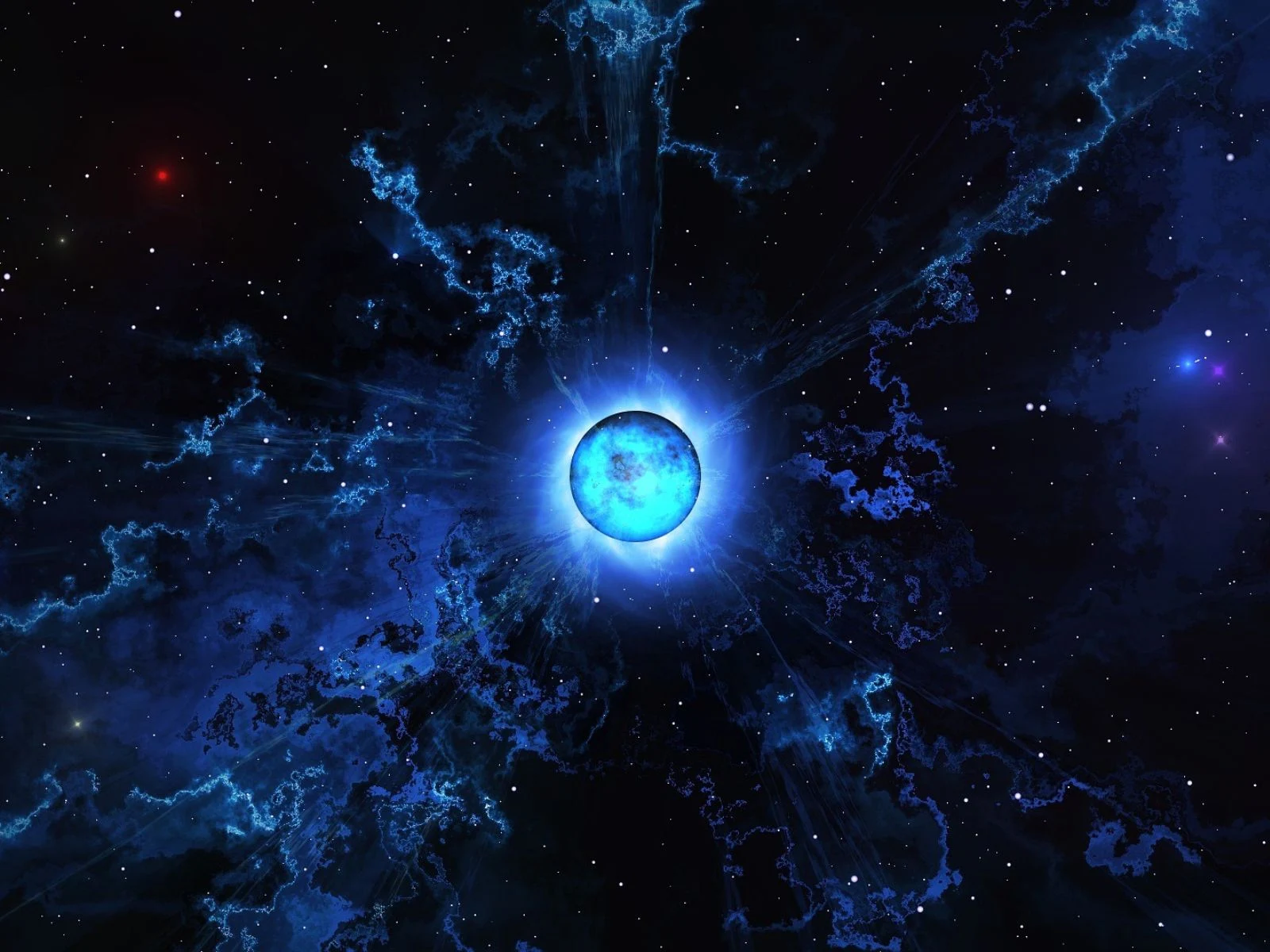
    Neutron stars are tiny celestial bodies, measuring around 15 kilometers in diameter and possessing a mass 1.5 times that of our Sun. These stars form when a massive star collapses, leading to incredibly high density. Recently, researchers published a significant finding in The Astrophysical Journal Letters regarding these extreme objects in the universe.

    Exciting Discovery of Neutron Star Collision

    They found a collision between two neutron stars within a small galaxy. While this might not sound very remarkable at first, it is indeed a groundbreaking event, as such collisions are typically seen in medium to large galaxies. The event, called GRB 230906A, was identified using the Chandra X-ray Observatory, which pinpointed the exact site of the collision. Following that, scientists employed the Swift and Hubble telescopes to capture images of the area, uncovering a small galaxy that is located 4.7 billion light-years away.

    Implications of the Findings

    Simone Dichiara, a researcher from Pennsylvania State University and the study’s lead, mentioned that this discovery might help resolve two significant questions in astronomy. Some gamma-ray bursts from these events often don’t show up in the host galaxy or in nearby ones, likely due to the small size of their host. Furthermore, this could explain the presence of heavy metals like gold and platinum found well outside the centers of galaxies. Astronomers think that collisions between neutron stars can create these metals, which eventually end up in new stars. However, additional research is necessary to validate this theory.

    Image source: NASA/CXC/Penn State Univ./S. Dichiara; IR: NASA/ESA/STScI; Illustration: ERC BHianca 2026 / Fortuna and Dichiara, CC BY-NC-SA 4.0; Image Processing: NASA/CXC/SAO/P. Edmonds

    Source:
    Link


  • NASA Detects Record-Breaking Explosion 420 Times Longer Than Normal

    NASA Detects Record-Breaking Explosion 420 Times Longer Than Normal

    Key Takeaways

    1. GRB 250702B was a unique gamma-ray burst that lasted up to 7 hours, much longer than the typical duration of about 1 minute.

    2. This event is believed to be caused by a black hole consuming a star, differing from the usual causes of neutron star mergers or massive star collapses.

    3. One theory suggests the involvement of an intermediate-mass black hole, while another proposes a smaller black hole interacting with a helium star.

    4. Ongoing research aims to understand the details of GRB 250702B, as conflicting evidence complicates the findings.

    5. The energy output of this GRB is comparable to that of a thousand Suns shining for 10 billion years, highlighting its extraordinary scale.


    Astronomers spotted a cosmic explosion on July 2, naming it GRB 250702B. This discovery isn’t unique, as around 15,000 gamma-ray bursts (GRBs) have been identified since the first one in 1973. Typically, these bursts are the result of two neutron stars merging, or a massive star collapsing into a black hole.

    Unusual Duration

    However, GRB 250702B was different from most. While most GRBs last only a minute, this one lasted up to 7 hours. Scientists agree that this extraordinary GRB was caused by a black hole consuming a star. The key questions are how this occurred and why it had such a significant effect.

    Theories on the Cause

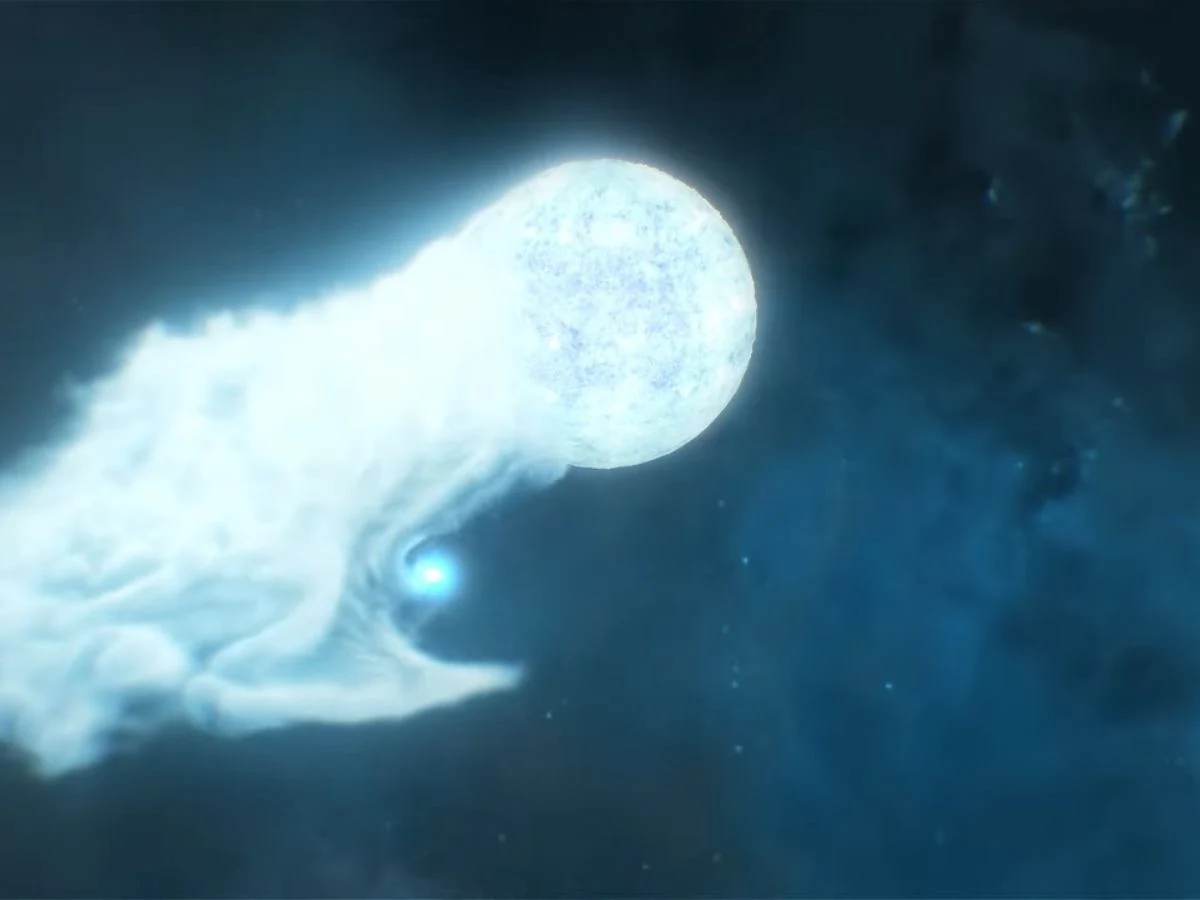
    One theory suggests that this GRB resulted from the interaction between a star and a unique intermediate-mass black hole, which is a few thousand times heavier than the Sun. According to this view, a star ventured too close, and the black hole quickly began to devour it.

    Alternatively, another theory proposes that a smaller black hole, approximately three times the mass of the Sun, was behind the event. In this case, the black hole may have been orbiting a helium star—one that has lost its hydrogen atmosphere—and was gradually siphoning gas from it. Eventually, it dove into the star and consumed it.

    Ongoing Research

    No definitive conclusions have been reached yet. The conflicting evidence adds to the complexity of the data. For instance, astronomers observed that the host galaxy is quite large, which is atypical for GRB galaxies. Nevertheless, scientists are committed to analyzing the information gathered from this GRB, whose energy output is comparable to that of a thousand Suns shining for an impressive 10 billion years.

    Source:
    Link