Tag: Exoplanets

  • 27 Potential Exoplanets Found in Binary Star Systems

    27 Potential Exoplanets Found in Binary Star Systems

    Key Takeaway

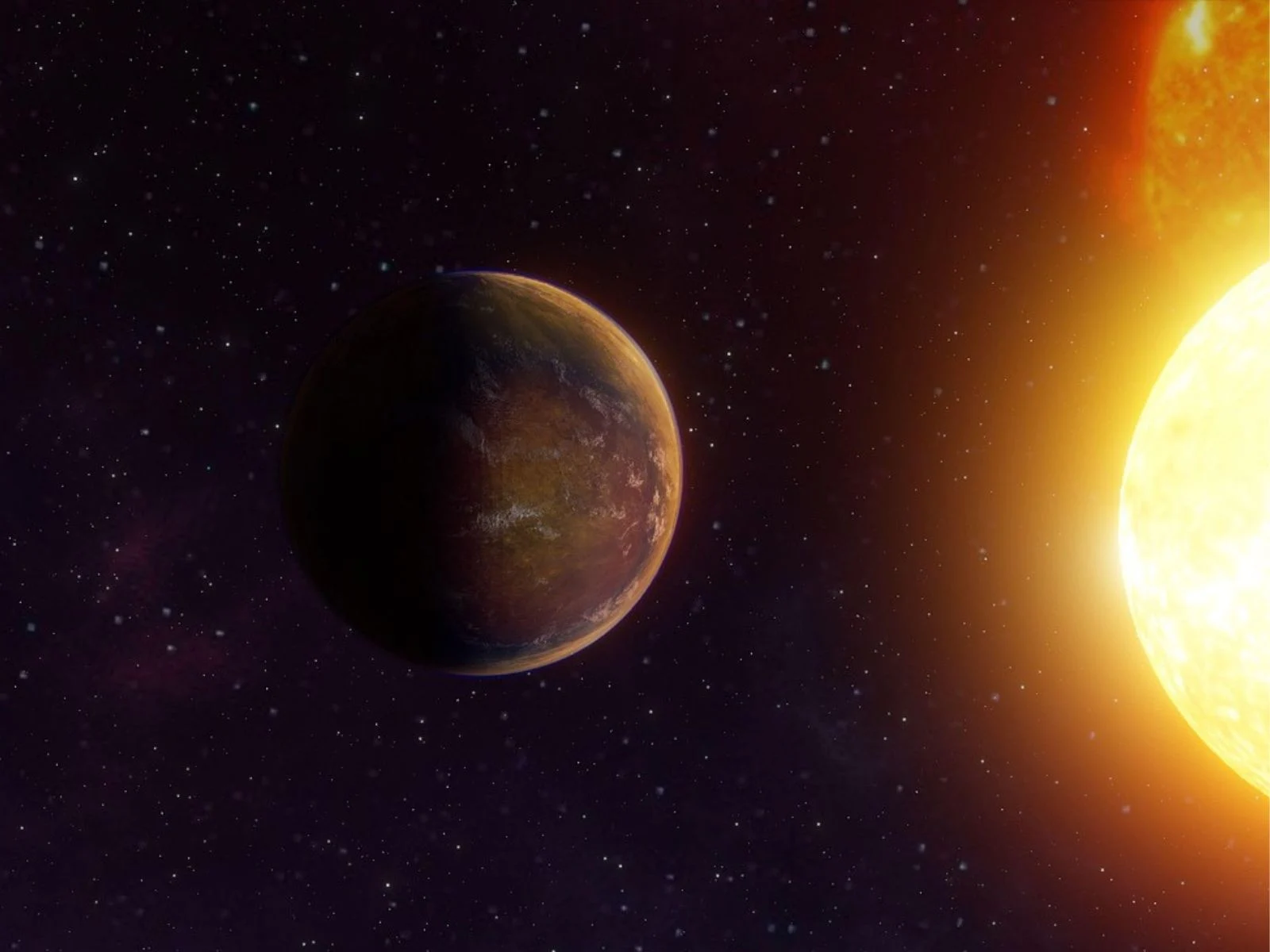
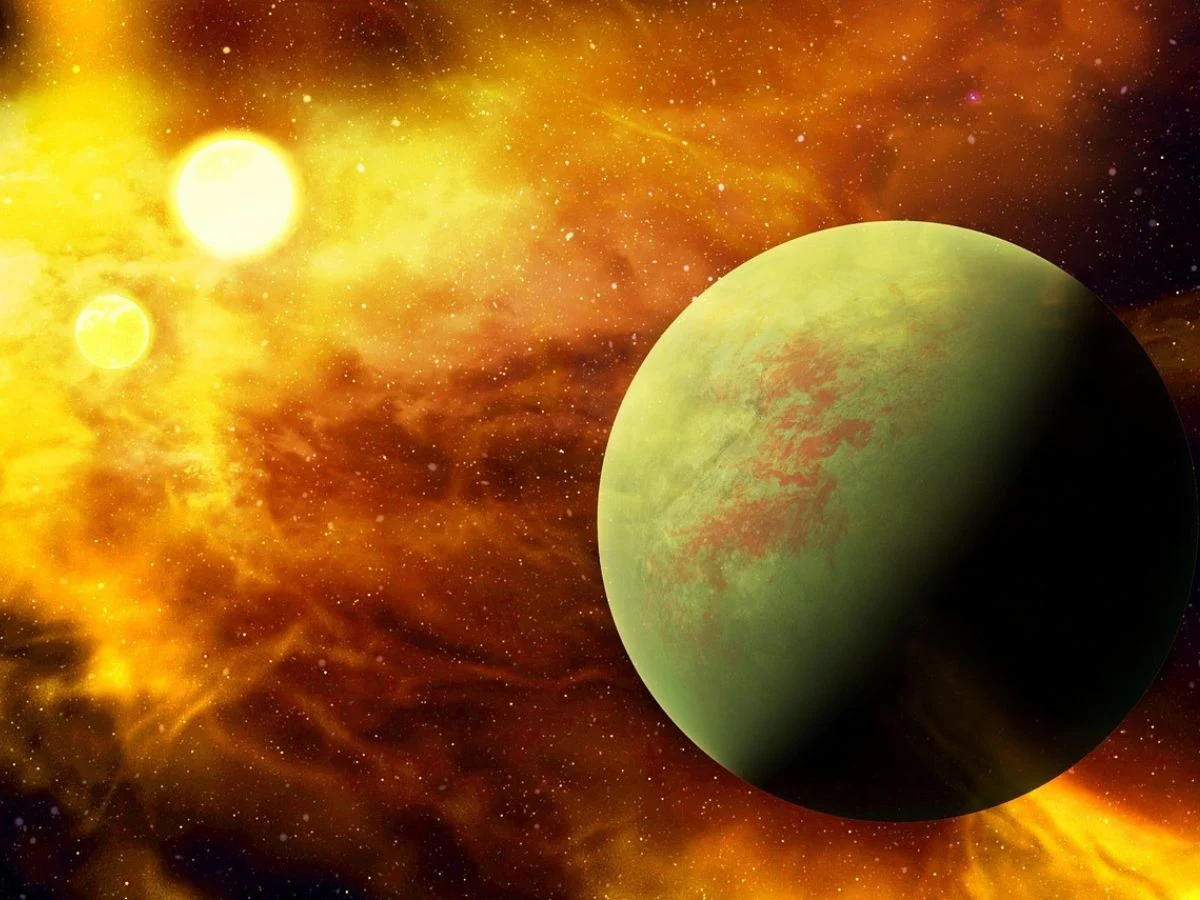
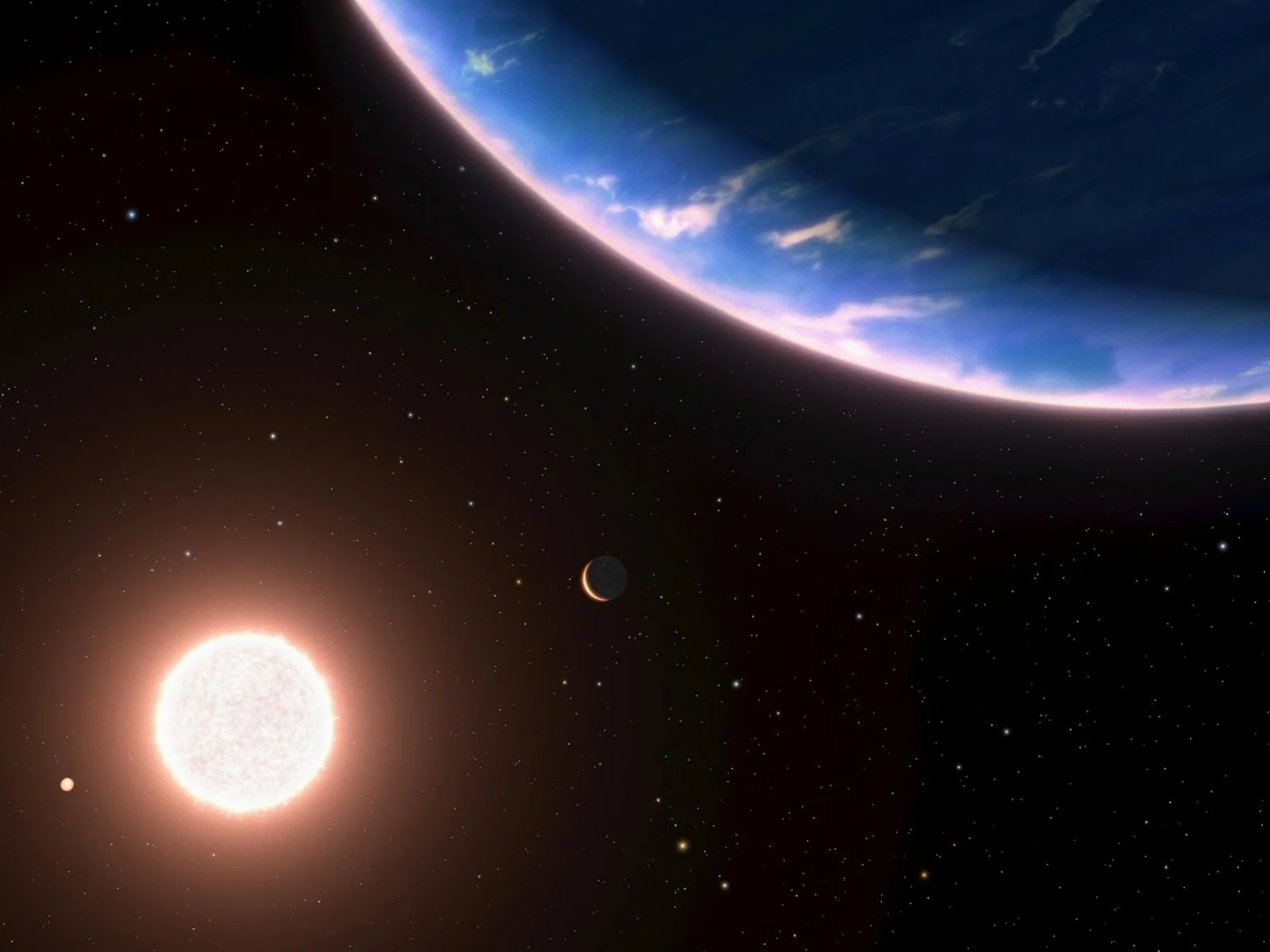
    – 27 potential exoplanets detected in binary star systems among 1,590 studied binaries using TESS data and apsidal precession.
    – Exoplanets in these systems may orbit two stars, with estimated masses from ~12 Earth masses to ~10 Jupiter masses.
    – Discovery relies on transit/eclipse methods not constrained by orbital orientation, aided by TESS’s rapid three-minute imaging cadence; further studies needed to confirm existence and assess composition, distance, and habitability.


    Launched on April 18, 2018, TESS is a satellite designed to observe 200,000 stars across the universe in search of exoplanets.

    Launched on april 18, 2018, tess is a satelite created to watch two hundred thousand stars all through the universe to find exoplanets. Recently, a study by astronomers led to discovery of 27 potential exoplanets in binary star systems. In other words, each of these exoplanets orbits two stars.

    To find these new worlds, researchers used a method known as apsidal precession, as explained by Margo Thornton, a doctoral candidate at the University of New South Wales in Sydney and lead author of the study:

    To locate these worlds new researchers used a trick called apsidal precession, as explained by Margo Thornton, who is a doctor candidate at the University of New South Wales in Sydney and the lead writer of the study.

    “We developed a survey to search for planets using stellar eclipses that is not limited to the orientation of the planet’s orbit.”

    “We made a survey to search planets using eclipses of stars that is not limited by how the planet orbits.”

    As a result, thanks to the cameras aboard the TESS satellite, which capture images of space every three minutes, researchers were able to detect new celestial objects.

    As a result, because the cameras on board tess take space images every three minutes, researchers could spot new celestial items.

    Indeed, among the 1,590 binary systems, 27 appear to contain exoplanets.

    In truth, inside the 1,590 binary systems, 27 seems to have exoplanets.

    According to scientists’ estimates, the smallest could be 12 times more massive than Earth, while the largest could have a mass of about 10 times that of Jupiter.

    According to scientist estimates, the smallest might be twelve times heavier than earth, while the biggest could weigh around ten times Jupiter.

    However, these estimates could change.

    Yet, these numbers could alter later.

    It must be said that astronomers do not know the composition of these planets or their distance from their stars.

    It must be said that space researchers dont know what these worlds are made of or how far they sit from their stars.

    In other words, no one knows if any of these new worlds could potentially harbor life.

    In other words, nobody knows if any of these new worlds could possibly hold life.

    Therefore, further studies must be conducted to confirm their existence, but also to better understand them.

    So, more studies have to be done to prove they exist, but also to learn more about them.

    Sources

  • TESS Maps Nearly 6,000 Exoplanets Across the Universe

    TESS Maps Nearly 6,000 Exoplanets Across the Universe

    Key Takeaway

    – TESS detects exoplanets by monitoring brightness changes of stars over roughly month-long sky observations.
    – A set of 96 observations (2018–2025) has yielded nearly 6,000 exoplanets, with about 700 confirmed (blue) and over 5,000 candidates (orange).
    – The mission has found a wide range of planets, from Mercury-sized to larger than Jupiter, including some in the habitable zone.
    – This work advances the search for life beyond Earth, though further studies are needed to confirm and understand these worlds.

    If life exists on Earth, no one know if it exists elsewhere in the universe. To answer this question, several missions have been launched over the years, like NASA’s TESS satellite, which recently released an image showing nearly 6,000 exoplanets.

    Mission scope

    This satellite has powerful instruments, and to detect these new worlds, it observes large regions of space for about a month, letting astronomers detect changes in the brightness of various stars.

    Observation cadence

    As a result, astronomers combined 96 observations made by this satellite between April 2018 and September 2025, allowing them to discover nearly 6,000 new worlds. Thus, in this image, the blue dots represent approximately 700 confirmed exoplanets. Each of these worlds is unique, and some even orbit two stars. As for the orange dots, they represent more than 5,000 potential exoplanets. In addition, the Milky Way is also visible at the center of this image.

    Attribution and numbers

    Therefore, the work of TESS is very important, as Rebekah Hounsell, a TESS associate project scientist at the University of Maryland Baltimore County, notes.

    Expert perspective

    Over the last eight years, TESS has become a fire hose of exoplanet science. It has helped us find planets of all different sizes, from Mercury-like ones to those larger than Jupiter. Some of them are in the habitable zone, where liquid water might be possible on the surface, an important factor in our search for life beyond Earth.

    Impact and outlook

    Thus, the discovery of these new worlds could shed light on an important mystery. However, further studies will be needed to find answers.

    NASA Science

    Image source: NASA Hubble Space Telescope, Unsplash, NASA/MIT/TESS and Veselin Kostov (University of Maryland College Park)


    Sources

  • Astronomers Find 118 New Exoplanets with AI and TESS Satellite

    Astronomers Find 118 New Exoplanets with AI and TESS Satellite

    Key Takeaways

    1. RAVEN is an AI system that helps identify new exoplanets using data from the TESS satellite.
    2. The RAVEN pipeline has confirmed 118 new planets and identified over 2,000 potential candidates.
    3. The system is limited to detecting exoplanets with orbital periods of less than 16 days.
    4. RAVEN can distinguish between exoplanets and other objects that may cause similar light dimming effects.
    5. The ongoing discovery of exoplanets may help answer the question of whether we are alone in the universe.


    AI serves as a strong ally for astronomers, especially in the hunt for new planets in space. One notable example is RAVEN, an AI system that can sift through data from the TESS satellite to identify new exoplanets.

    Promising Results

    A study featured in the Monthly Notices of the Royal Astronomical Society showcases encouraging outcomes. Dr. Marina Lafarga Magro, a researcher at the University of Warwick, mentions that they have confirmed over 100 exoplanets:

    “With our newly created RAVEN pipeline, we validated 118 new planets and more than 2,000 high-quality candidates, nearly 1,000 of which are completely new.”

    Limitations of the System

    Nonetheless, this system is limited to detecting exoplanets with orbital periods less than 16 days. It has discovered various types, such as multi-planet systems, Neptunian desert planets, and ultra-short-period planets.

    This AI distinguishes between an exoplanet that dims its star’s light and a distant object that produces a similar effect. Furthermore, it can undertake several tasks at once, which significantly aids in the discovery of new planets. Dr. David Armstrong, an associate professor at the University of Warwick, elaborates:

    “RAVEN enables us to evaluate massive datasets consistently and without bias. Since the pipeline is rigorously tested and validated, this isn’t just a simple list of potential planets; it’s also reliable enough to serve as a sample to understand the distribution of various types of planets around sun-like stars.”

    Unraveling Cosmic Mysteries

    In conclusion, this AI may also play a crucial role in answering one of humanity’s biggest questions: Are we alone in the universe? As we continue to uncover more exoplanets, some could be situated in their stars’ habitable zones, like these 45 exoplanets.

    Monthly Notices of the Royal Astronomical Society.

    Source:
    Link


  • 45 Exoplanets Likely to Support Life: Top Candidates for Discovery

    45 Exoplanets Likely to Support Life: Top Candidates for Discovery

    Key Takeaways

    1. Over 6,000 exoplanets have been discovered, but only a few are in habitable zones suitable for life.
    2. A recent study identified 45 rocky exoplanets that may support life, including Proxima Centauri b and TRAPPIST-1f.
    3. TRAPPIST-1 d, e, f, and g are particularly promising candidates due to their potential for liquid water.
    4. Some exoplanets receive similar light as Earth, enhancing their chances of being habitable.
    5. Research findings could improve our understanding of habitable zones and aid in future exoplanet discoveries.


    For a long time, finding life beyond Earth has been a major aim for astronomers. There are actually billions of planets out there in the universe that go around different stars.

    The Discovery of Exoplanets

    So far, more than 6,000 exoplanets have been found thanks to various tools, like the TESS satellite. However, only a few of these are situated in the habitable zones of their suns, which is crucial for life to develop.

    Promising Candidates for Life

    In a recent study featured in the Monthly Notices of the Royal Astronomical Society, researchers have pinpointed 45 rocky exoplanets that might be able to support life. Some of these planets are already well-known, such as Proxima Centauri b, which is roughly 4 light-years away, and TRAPPIST-1f.

    Astronomers believe that certain exoplanets are particularly intriguing, especially TRAPPIST-1 d, e, f, and g. Located about 40 light-years from our planet, these could possibly have liquid water on them. Moreover, other planets receive a similar amount of light as Earth does, making them strong candidates for harboring life. This could lead to better insights into the habitable zones around stars and help improve future explorations. Lastly, this may also assist in uncovering new exoplanets in the universe, potentially shedding light on this ongoing mystery.

    Insights from Research

    The Monthly Notices of the Royal Astronomical Society has shared these findings, which could pave the way for exciting discoveries in the quest for extraterrestrial life.

    Source:
    Link


  • Astronomers Find Collision of Two Exoplanets 11,000 Light-Years Away

    Astronomers Find Collision of Two Exoplanets 11,000 Light-Years Away

    Key Takeaways

    1. Astronomers found evidence of a collision between two exoplanets in a distant star system, indicated by unusual brightness changes of the star Gaia20ehk.

    2. The brightness of Gaia20ehk, located about 11,000 light-years away, remained steady until 2016, when it dimmed and became erratic by 2021.

    3. The changes in brightness were caused by rock and dust debris blocking the star’s light, rather than changes in the star itself.

    4. Collisions between celestial bodies are common during the early development of solar systems and play a significant role in shaping them.

    5. This discovery may provide important insights into the dynamics and evolution of solar systems over time.


    When looking at the universe, astronomers make remarkable finds. After the discovery of the merger between two neutron stars and a pulsar at the center of our galaxy, they have now found signs of a clash between two exoplanets in a far-off star system.

    Evidence of a Collision

    Actually, they didn’t witness this collision as it happened but found clues that showed it happened. By studying Gaia20ehk, a star that is around 11,000 light-years away from Earth, they saw something unusual. Its brightness was steady until 2016, when it dimmed three times. However, in 2021, it became completely erratic, which is not typical for stars like it.

    Unraveling the Mystery

    Through careful examination and monitoring of the star’s behavior, scientists concluded that these brightness changes weren’t due to the star itself. Instead, they were caused by massive amounts of rock and dust blocking the view of this celestial body. And it gets better, as this was a result of a collision between two exoplanets that produced these debris.

    Understanding Planetary Formation

    In fact, during the early development of a solar or planetary system, collisions happen often and play a key role in shaping these systems. So, it’s not surprising that crashes between exoplanets occur regularly. Yet, as time goes on and conditions stabilize, these types of events become less frequent. Thus, this finding is a significant milestone and could also shed light on the workings of solar systems.

    Source:
    Link


  • New Exoplanet Found in Star’s Habitable Zone by Astronomers

    New Exoplanet Found in Star’s Habitable Zone by Astronomers

    Key Takeaways

    1. Two new exoplanets have been confirmed orbiting the red dwarf star GJ 887, bringing the total known exoplanets around this star to five.
    2. GJ 887 is located approximately 10.7 light-years from Earth.
    3. The newly discovered planet, GJ 887 d, has an orbital period of 50.8 days and is classified as a super-Earth due to its estimated mass being six times that of Earth.
    4. GJ 887 d is situated in the habitable zone, raising interest in its potential for supporting life.
    5. Further research and observations are needed to confirm these findings and explore the characteristics of this planetary system.


    Astronomers have been studying stars for a long time to learn more about what they are made of and to find new exoplanets. Recently, a research paper in Astronomy & Astrophysics confirmed that two new exoplanets are orbiting GJ 887, with one of them sitting in the habitable zone.

    The Nature of GJ 887

    GJ 887 is a red dwarf star located around 10.7 light-years away from our planet. While it still holds many secrets, various studies have been done on it before that showed three exoplanets already. Now, with the help of data from HARPS and ESPRESSO spectrographs, astronomers have confirmed the existence of two more planets revolving around this star.

    Discoveries from Data

    By merging these findings with photometric data from the Transiting Exoplanet Survey Satellite (TESS) and the All-Sky Automated Survey, they found that the newly identified planet, known as GJ 887 d, has an orbital period of 50.8 days. Even more exciting, this planet is situated in the habitable zone. Its mass is estimated to be six times that of Earth, which classifies it as a super-Earth. Scientists speculate that it might either be a rocky planet or one that is entirely covered by water.

    In conclusion, more research and observations are necessary to verify these findings and gain further insight into this planetary system. This could also help in answering some questions regarding the possibility of life beyond our own planet.

    Source:
    Link


  • Astronomers Discover Lava Tsunamis on Super-Earth Planet

    Astronomers Discover Lava Tsunamis on Super-Earth Planet

    Key Takeaways

    1. Researchers discovered a super-Earth, 55 Cancri Ae, located 40 light-years from Earth.
    2. The exoplanet has an extremely high surface temperature, reaching up to 2,000 degrees Celsius.
    3. There exists a vast ocean of lava on 55 Cancri Ae, with tsunamis that can be several meters tall.
    4. Tides on the exoplanet are influenced by the gravity of its host star, 55 Cancri A, not by a moon.
    5. This discovery highlights the diversity of exoplanets and enhances understanding of different worlds in the universe.


    The quest for exoplanets has intrigued researchers for many years now. Numerous findings have emerged, like this Earth-like exoplanet that shares traits with our own planet. Recently, however, scientists have uncovered a super-Earth where lava tsunamis can be found.

    Exciting Discoveries

    This finding was brought to light in a study available on arXiv, authored by Mohammad Farhat and Eugene Chiang. They examined 55 Cancri Ae, an exoplanet situated 40 light-years from Earth. What’s interesting is that it orbits extremely close to its host star, a yellow dwarf called 55 Cancri A, completing an orbit in only 18 hours. Because of this close distance, the surface temperature of this exoplanet is incredibly high, reaching up to 2,000 degrees Celsius.

    Unique Characteristics

    The calculations performed by these astronomers suggest there exists a vast ocean of lava with tsunamis present. These tsunamis could measure several meters tall and travel at relatively swift speeds. It’s important to note that the tides on this exoplanet aren’t influenced by a moon’s gravitational pull; instead, they are driven by the gravity of the host star. This proximity not only accounts for the existence of such a lava ocean but also for the significant gravitational effects of this celestial body.

    The Bigger Picture

    This remarkable discovery emphasizes the variety of worlds in our universe and may assist astronomers in gaining a deeper insight into them. The ongoing search for exoplanets continues to evolve, suggesting that more exciting discoveries are on the horizon.

    arXiv

    Source:
    Link


  • Astronomers Discover Earth-Like Exoplanet 146 Light-Years Away

    Astronomers Discover Earth-Like Exoplanet 146 Light-Years Away

    Key Takeaways

    1. An Earth-like exoplanet, HD 137010 b, has been discovered 146 light-years away, potentially changing our understanding of life beyond Earth.
    2. HD 137010 b is in the habitable zone of its star, an orange dwarf, and has a 355-day orbit, making it similar in some ways to Earth.
    3. The planet is slightly larger than Earth (6% bigger) but has a much colder surface temperature of about -68 degrees Celsius (-90 degrees Fahrenheit).
    4. A thick carbon dioxide-rich atmosphere could warm HD 137010 b, potentially making it more hospitable than current conditions suggest.
    5. This finding may shift exoplanet research priorities, emphasizing the need for more studies on planets that may support life rather than focusing on gas giants or planets too close to their stars.


    For many years, scientists have been looking for exoplanets to find out if there is life beyond Earth. Recently, a new finding may change everything we know. An exoplanet that resembles Earth has been discovered in data from the Kepler space telescope, located about 146 light-years from our planet.

    Exciting Similarities

    This finding, published in The Astrophysical Journal Letters, shows some unusual similarities to Earth. The exoplanet, called HD 137010 b, is estimated to be in the habitable zone of its star, which happens to be an orange dwarf. Astronomers believe that it takes around 355 days for this planet to complete one orbit around its star, and it is just 6% larger than Earth. However, the star itself is not as bright as the Sun, which leads to a surface temperature on HD 137010 b of minus 68 degrees Celsius (around minus 90 degrees Fahrenheit), resembling Martian conditions. Yet, if the atmosphere is thick and rich in carbon dioxide, it might warm the planet’s surface.

    Impact on Exoplanet Research

    This discovery, brought to light by the Planet Hunters project, could significantly influence the way we search for exoplanets. Currently, over 6,000 exoplanets have been identified, but most of them are gas giants or are too close to their star to support life. Additionally, some of the newly found planets are located too far away for detailed studies. Therefore, more research is essential to gather additional information about this intriguing celestial body.

    Source:
    Link


  • Webb Discovers Mysterious Planet That Defies Explanation

    Webb Discovers Mysterious Planet That Defies Explanation

    Key Takeaways

    1. Astronomers have identified nearly 6,000 exoplanets in the search for signs of life beyond our solar system.
    2. PSR J2322-2650b is a unique exoplanet resembling a hot Jupiter that orbits a pulsar, a rapidly rotating neutron star.
    3. The planet has a lemon-like shape due to the gravitational forces from its pulsar.
    4. PSR J2322-2650b is located just one million miles from its pulsar, allowing it to receive intense radiation.
    5. Its atmosphere is rich in helium and molecular carbon, making it the only known planet with molecular carbon detected at such high temperatures.


    Astronomers are on a quest to find signs of life beyond our own solar system. This effort has resulted in the identification of nearly 6,000 exoplanets. Among these, PSR J2322-2650b is particularly remarkable, as it is the only exoplanet resembling a hot Jupiter that orbits a pulsar, which is a quickly rotating neutron star.

    Unique Shape of PSR J2322-2650b

    One of the most peculiar traits of PSR J2322-2650b is its lemon-like shape. This unusual form is a result of the gravitational forces exerted by the pulsar it circles.

    Proximity to Its Pulsar

    When it comes to its distance from its host star, PSR J2322-2650b is fascinatingly near to its pulsar, located just about one million miles away. For comparison, our Earth sits approximately 100 million miles from the Sun. This close proximity allows the pulsar’s radiation to shine brightly on the exoplanet, bathing it in intense light.

    Atmospheric Composition

    The most distinguishing feature of PSR J2322-2650b is the makeup of its atmosphere, which is rich in helium and molecular carbon. The presence of molecular carbon is quite strange, especially given the exoplanet’s extremely high temperatures, ranging from 1,200 to 3,700 °F. At these high temperatures, one would expect molecular carbon to bond with other elements.

    Astronomers have examined the atmospheric chemical makeup of around 150 planets, both in our solar system and beyond. Notably, PSR J2322-2650b stands alone as the only planet where molecular carbon has been detected. This unusual atmospheric configuration has sparked curiosity among scientists about the planet’s formation. As it appears, the planet does not fit any existing formation theories. The findings of this research were published in the Astrophysical Journal Letters.

    Source:
    Link


  • Astronomers Reveal Rare Tatooine-like Exoplanet Orbiting Two Stars

    Astronomers Reveal Rare Tatooine-like Exoplanet Orbiting Two Stars

    Key Takeaways

    1. Astronomers discovered an exoplanet called HD 143811 AB b that resembles Tatooine from Star Wars.
    2. The exoplanet is located about 446 light-years away and orbits a double star every 320 years.
    3. Only a small percentage of known exoplanets orbit binary stars, making this discovery significant.
    4. The exoplanet was found in the archives of the Gemini South telescope using the GPI tool.
    5. Future upgrades to the Gemini Planet Imager may provide more insights into this unique planetary system.


    Star Wars has captured the imaginations of countless individuals globally, largely due to its distinct settings. Recently, astronomers have revealed photos of an exoplanet that resembles Tatooine, which emerged just 50 million years following the dinosaurs’ extinction.

    A Young Exoplanet

    This young exoplanet, identified by astronomers in 2025, is called HD 143811 AB b. It’s situated approximately 446 light-years away from our planet and completes an orbit around a double star every 320 years. In simpler terms, if we could travel to this world, its surroundings would mirror those of Tatooine from Star Wars. Jason Wang from Northwestern University commented on the significance of these images:

    “Among the 6,000 exoplanets we are aware of, a mere small percentage orbit binary stars. From those, we have only direct visuals of a few, which allows us to see both the binary and the planet itself. Capturing images of both the planet and its binary star is fascinating as it represents the only kind of planetary system where we can simultaneously track the orbit of both the binary star and the planet in the sky.”

    Observations Over the Years

    While these images are recent, the study of this system dates back several years. Astronomers actually found this exoplanet hidden in the archives of the Gemini South telescope, utilizing its GPI (Gemini Planet Imager) tool. This instrument operated from 2014 until 2022 before it was taken offline for upgrades. The next iteration of this device may assist scientists in gaining a deeper understanding of this system and allow for fresh observations of this remarkable exoplanet.

    Northwestern Now News

    Source:
    Link