
Tag: Habitable Zone

  • Astronomers Find Super-Earth with Possible Atmosphere Around Red Dwarf

    Astronomers Find Super-Earth with Possible Atmosphere Around Red Dwarf

    Key Takeaway

    – Discovery of exoplanet Ross 318 b orbiting the red dwarf Ross 318, about 28 light-years away, with a 51.5-day period and 0.16 AU distance.
    – PlanetMass ~6.21 Earth masses and radius ~1.74 Earth radii, suggesting a substantial atmosphere.
    – Located in the star’s conservative habitable zone, making it a significant target for future studies and SETI/astrobiology research.


    Overview of the discovery

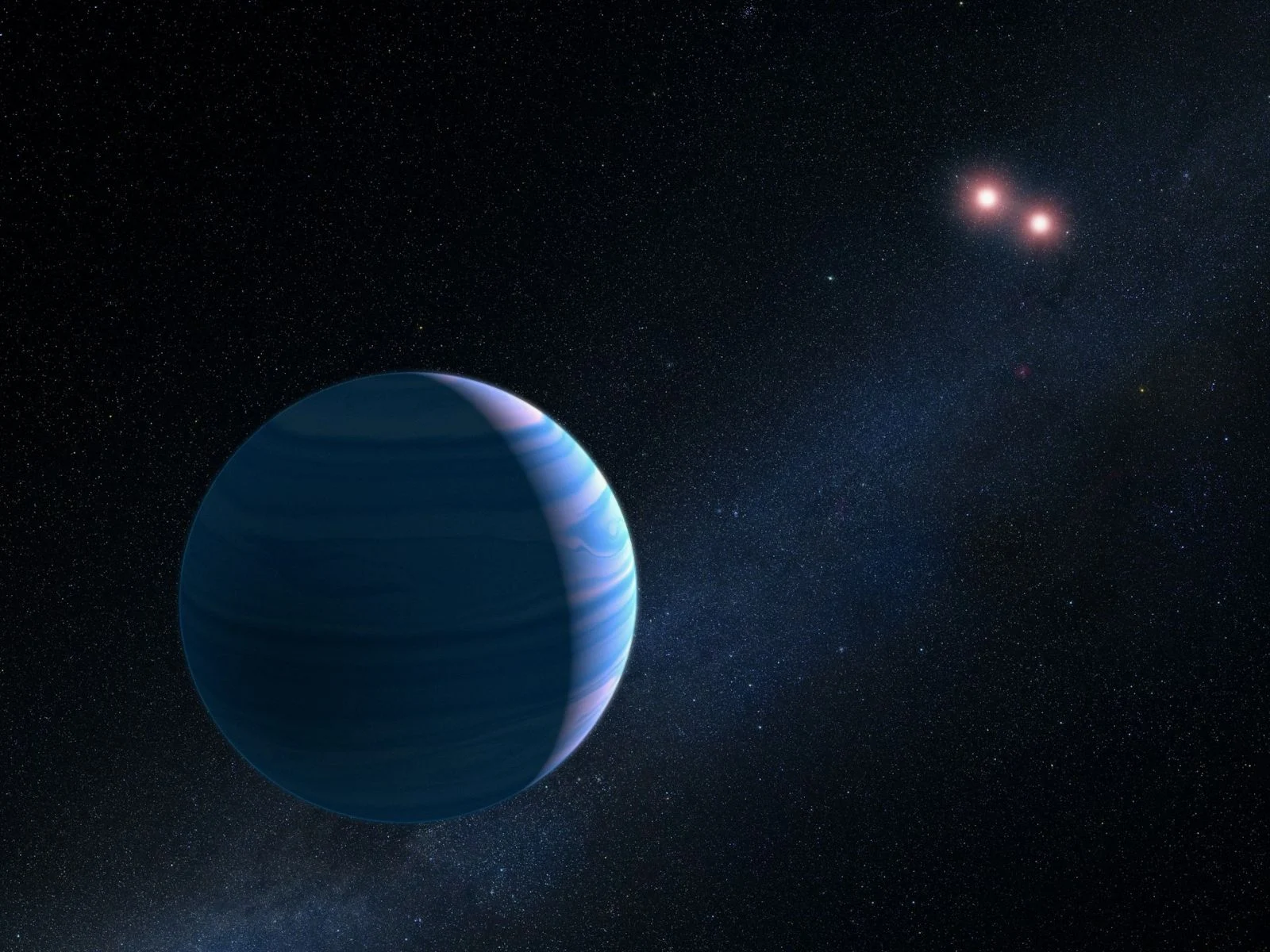
    The study of the universe allows astronomers to answer many questions. But one of the biggest mysteries is whether life exists elsewhere in the universe. And to answer this question, scientists observe space in order to discover new exoplanets. This is what a team of astronomers led by Giuseppe Conzo from the amateur astronomy association Gruppo Astrofili Palidoro (GAP) did by studying Ross 318. This star is a red dwarf located just 28 light-years from Earth and has an orbital period of about 51.5 days.

    Data sources and methods

    However, its magnetic activity is very high, and astronomers analyzed data from the Carmenes spectrograph, the High Resolution Echelle Spectrometer (HIRES), and data provided by the TESS satellite. As a result, they discovered an exoplanet named Ross 318 b, which is located just 0.16 AU from its star. The team triangulated multiple datasets to confirm periodic signals consistent with an orbiting world, while accounting for stellar noise and jitter.

    Planetary characteristics

    The astronomers also revealed several details about this exoplanet. Indeed, it has a mass of about 6.21 times that of Earth and a radius about 1.74 times that of our planet. In addition, by studying its mass, they believe that this exoplanet has a substantial atmosphere and lies in the star’s conservative habitable zone. These values were derived through modeling that combined radial velocity measurements with transit constraints where available, though the system’s activity required careful interpretation.

    Implications for habitability and future work

    In other words, this new world could be an important target for future studies. This would allow astronomers to better understand exoplanets, but also to conduct further studies to find signs of life elsewhere in the universe. The finding adds to the growing catalog of nearby M-dwarf planets and highlights the need for precise stellar activity correction in the hunt for biosignatures. Researchers emphasize follow-up observations and atmospheric characterization with next generation telescopes.

    Sources

  • TESS Maps Nearly 6,000 Exoplanets Across the Universe

    TESS Maps Nearly 6,000 Exoplanets Across the Universe

    Key Takeaway

    – TESS detects exoplanets by monitoring brightness changes of stars over roughly month-long sky observations.
    – A set of 96 observations (2018–2025) has yielded nearly 6,000 exoplanets, with about 700 confirmed (blue) and over 5,000 candidates (orange).
    – The mission has found a wide range of planets, from Mercury-sized to larger than Jupiter, including some in the habitable zone.
    – This work advances the search for life beyond Earth, though further studies are needed to confirm and understand these worlds.

    If life exists on Earth, no one know if it exists elsewhere in the universe. To answer this question, several missions have been launched over the years, like NASA’s TESS satellite, which recently released an image showing nearly 6,000 exoplanets.

    Mission scope

    This satellite has powerful instruments, and to detect these new worlds, it observes large regions of space for about a month, letting astronomers detect changes in the brightness of various stars.

    Observation cadence

    As a result, astronomers combined 96 observations made by this satellite between April 2018 and September 2025, allowing them to discover nearly 6,000 new worlds. Thus, in this image, the blue dots represent approximately 700 confirmed exoplanets. Each of these worlds is unique, and some even orbit two stars. As for the orange dots, they represent more than 5,000 potential exoplanets. In addition, the Milky Way is also visible at the center of this image.

    Attribution and numbers

    Therefore, the work of TESS is very important, as Rebekah Hounsell, a TESS associate project scientist at the University of Maryland Baltimore County, notes.

    Expert perspective

    Over the last eight years, TESS has become a fire hose of exoplanet science. It has helped us find planets of all different sizes, from Mercury-like ones to those larger than Jupiter. Some of them are in the habitable zone, where liquid water might be possible on the surface, an important factor in our search for life beyond Earth.

    Impact and outlook

    Thus, the discovery of these new worlds could shed light on an important mystery. However, further studies will be needed to find answers.

    NASA Science

    Image source: NASA Hubble Space Telescope, Unsplash, NASA/MIT/TESS and Veselin Kostov (University of Maryland College Park)


    Sources