
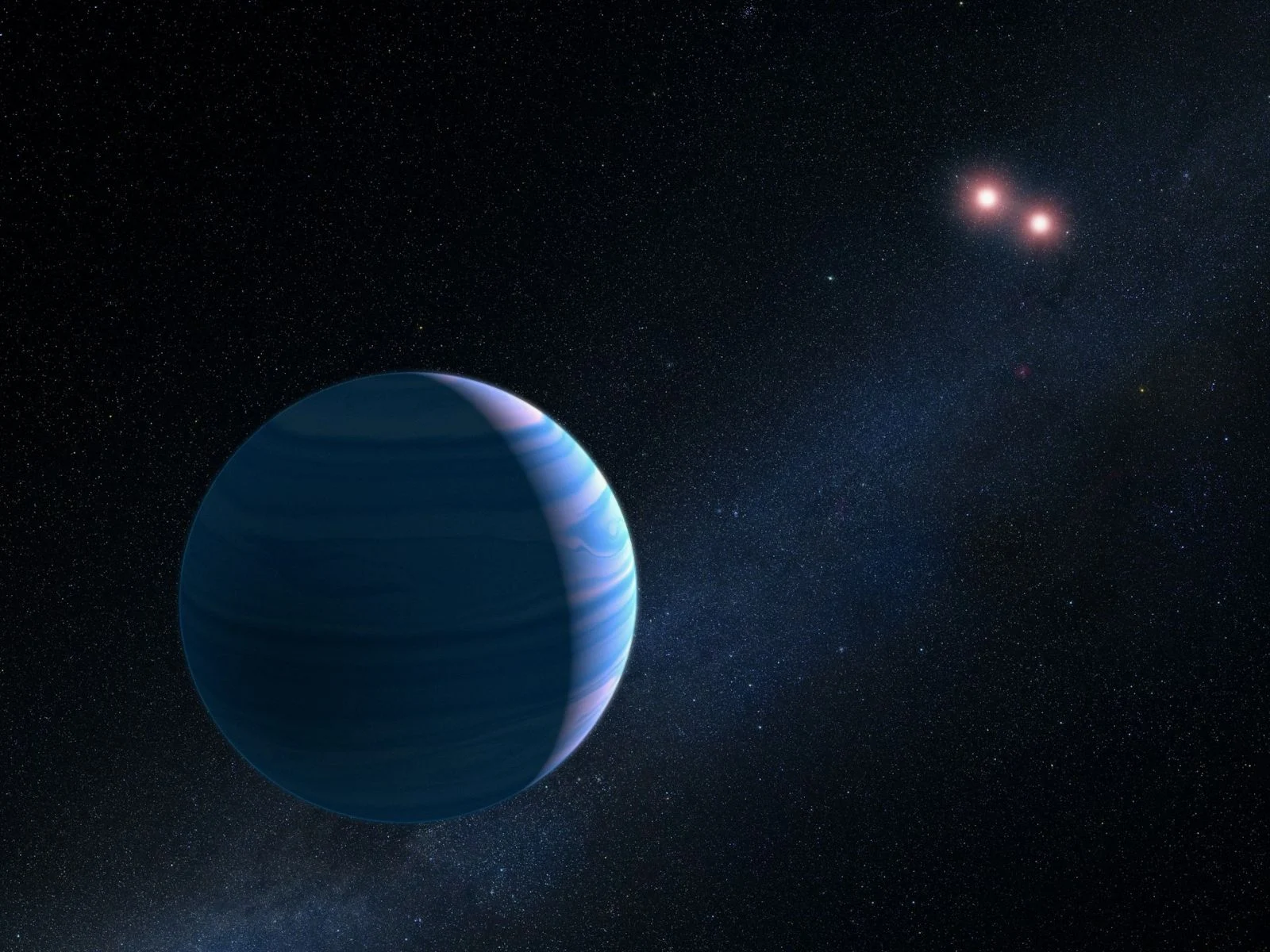
– Discovery of exoplanet Ross 318 b orbiting the red dwarf Ross 318, about 28 light-years away, with a 51.5-day period and 0.16 AU distance.
– PlanetMass ~6.21 Earth masses and radius ~1.74 Earth radii, suggesting a substantial atmosphere.
– Located in the star’s conservative habitable zone, making it a significant target for future studies and SETI/astrobiology research.
Overview of the discovery
The study of the universe allows astronomers to answer many questions. But one of the biggest mysteries is whether life exists elsewhere in the universe. And to answer this question, scientists observe space in order to discover new exoplanets. This is what a team of astronomers led by Giuseppe Conzo from the amateur astronomy association Gruppo Astrofili Palidoro (GAP) did by studying Ross 318. This star is a red dwarf located just 28 light-years from Earth and has an orbital period of about 51.5 days.
Data sources and methods
However, its magnetic activity is very high, and astronomers analyzed data from the Carmenes spectrograph, the High Resolution Echelle Spectrometer (HIRES), and data provided by the TESS satellite. As a result, they discovered an exoplanet named Ross 318 b, which is located just 0.16 AU from its star. The team triangulated multiple datasets to confirm periodic signals consistent with an orbiting world, while accounting for stellar noise and jitter.
Planetary characteristics
The astronomers also revealed several details about this exoplanet. Indeed, it has a mass of about 6.21 times that of Earth and a radius about 1.74 times that of our planet. In addition, by studying its mass, they believe that this exoplanet has a substantial atmosphere and lies in the star’s conservative habitable zone. These values were derived through modeling that combined radial velocity measurements with transit constraints where available, though the system’s activity required careful interpretation.
Implications for habitability and future work
In other words, this new world could be an important target for future studies. This would allow astronomers to better understand exoplanets, but also to conduct further studies to find signs of life elsewhere in the universe. The finding adds to the growing catalog of nearby M-dwarf planets and highlights the need for precise stellar activity correction in the hunt for biosignatures. Researchers emphasize follow-up observations and atmospheric characterization with next generation telescopes.