
Key Takeaways
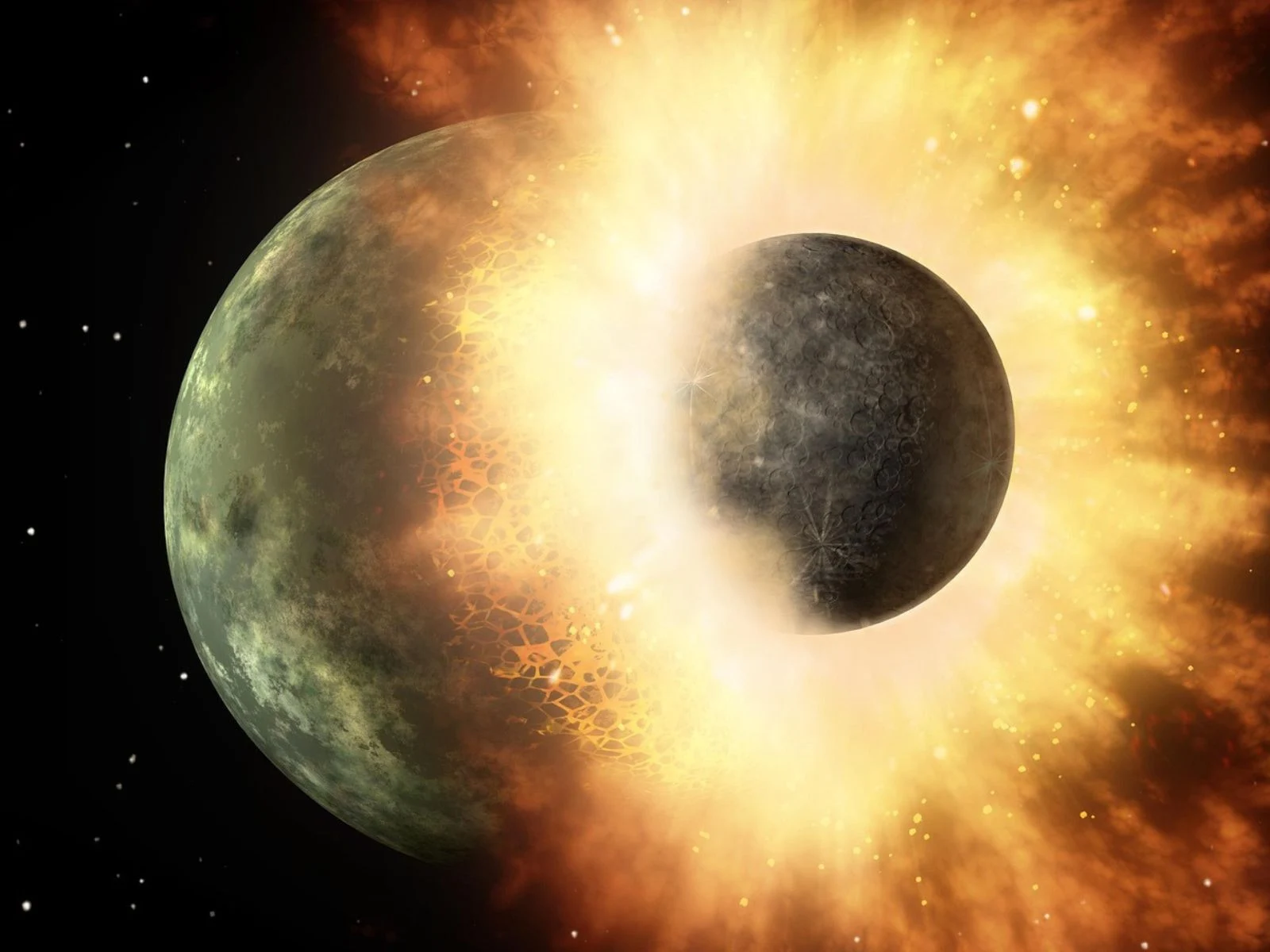
1. Astronomers found evidence of a collision between two exoplanets in a distant star system, indicated by unusual brightness changes of the star Gaia20ehk.
2. The brightness of Gaia20ehk, located about 11,000 light-years away, remained steady until 2016, when it dimmed and became erratic by 2021.
3. The changes in brightness were caused by rock and dust debris blocking the star’s light, rather than changes in the star itself.
4. Collisions between celestial bodies are common during the early development of solar systems and play a significant role in shaping them.
5. This discovery may provide important insights into the dynamics and evolution of solar systems over time.
When looking at the universe, astronomers make remarkable finds. After the discovery of the merger between two neutron stars and a pulsar at the center of our galaxy, they have now found signs of a clash between two exoplanets in a far-off star system.
Evidence of a Collision
Actually, they didn’t witness this collision as it happened but found clues that showed it happened. By studying Gaia20ehk, a star that is around 11,000 light-years away from Earth, they saw something unusual. Its brightness was steady until 2016, when it dimmed three times. However, in 2021, it became completely erratic, which is not typical for stars like it.
Unraveling the Mystery
Through careful examination and monitoring of the star’s behavior, scientists concluded that these brightness changes weren’t due to the star itself. Instead, they were caused by massive amounts of rock and dust blocking the view of this celestial body. And it gets better, as this was a result of a collision between two exoplanets that produced these debris.
Understanding Planetary Formation
In fact, during the early development of a solar or planetary system, collisions happen often and play a key role in shaping these systems. So, it’s not surprising that crashes between exoplanets occur regularly. Yet, as time goes on and conditions stabilize, these types of events become less frequent. Thus, this finding is a significant milestone and could also shed light on the workings of solar systems.
Source:
Link
Leave a Reply