Tag: Exoplanets

  • Planetary System Found with Two Stars and Three Earth-like Exoplanets

    Planetary System Found with Two Stars and Three Earth-like Exoplanets

    Key Takeaways

    1. The TOI-2267 system features two chilly stars located 1.2 billion kilometers apart, creating significant instability due to their proximity in the vast universe.

    2. Researchers discovered two Earth-like exoplanets in the TOI-2267 system, with potential evidence of a third similar-sized planet.

    3. The system’s unique configuration includes two planets orbiting one star and a third orbiting the second star, reminiscent of the fictional Tatooine from Star Wars.

    4. TOI-2267 is noted as the most compact star pair with planets and the coldest system of its kind known to date.

    5. Further research is essential to understand the formation of the TOI-2267 system and its potential as a space laboratory for gaining insights into the universe.


    Space keeps on amazing many scientists, and this was recently true for a system that goes against some established ideas. As you might guess, it could remind you of a famous sci-fi series.

    The TOI-2267 System

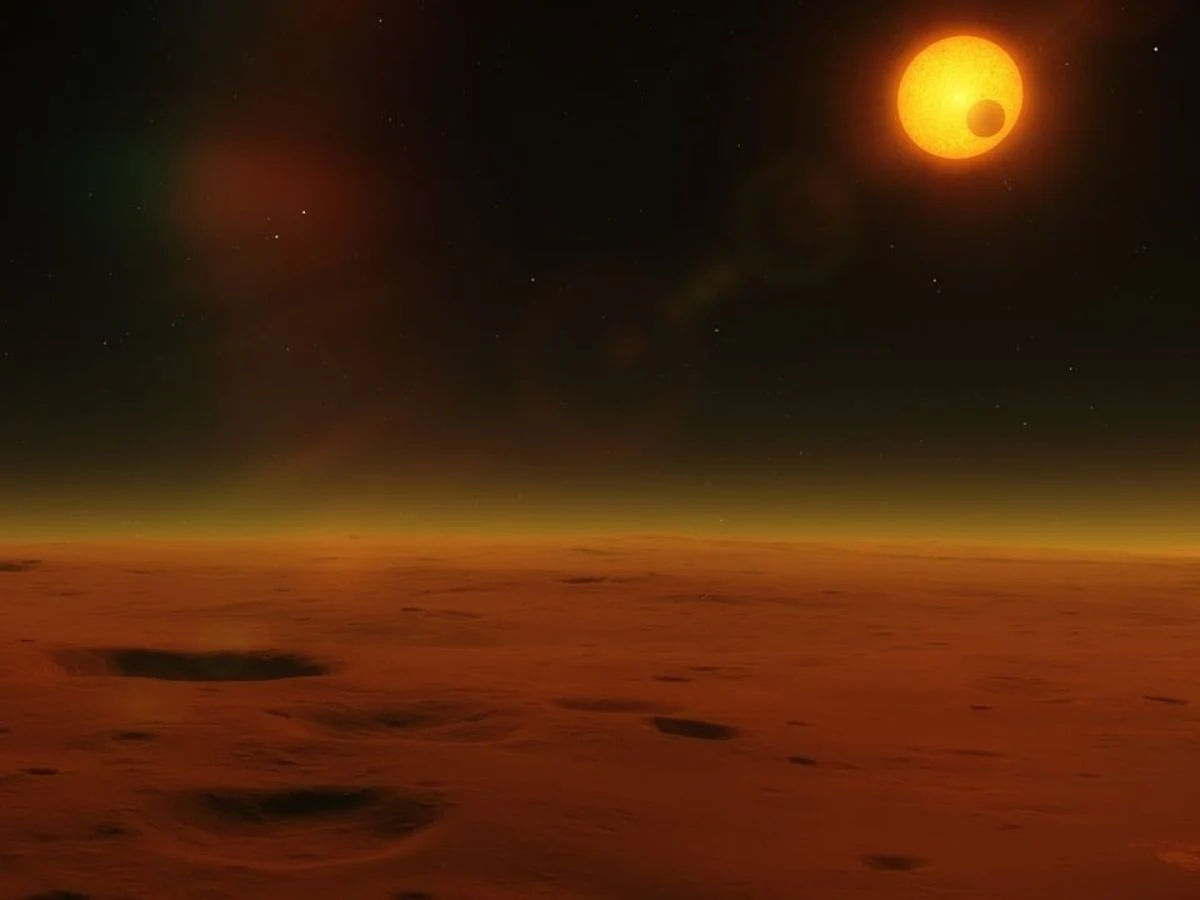
    We should look at the TOI-2267 system, which is home to two chilly stars that are about 1.2 billion kilometers apart. While this distance might seem huge, it’s actually quite small when you think about the vastness of the universe, leading to significant instability.

    Discoveries of Earth-like Exoplanets

    But that’s not all! Sebastián Zúñiga-Fernández, a researcher with the ExoTIC group at the University of Liege, along with his team, has found two exoplanets that are similar to Earth in this system. Some evidence even hints that there could be a third exoplanet of similar size.

    Unique Configuration and Records

    The setup of this system is quite astonishing. Their estimates show that two planets revolve around the first star, while the third orbits the second star, which is similar to Tatooine from Star Wars. Additionally, this system holds a few records; it’s the most compact star pair with planets and the coldest as well. Yet, many questions still linger, even though these discoveries came from observing the transit of these planets around their stars.

    In spite of being a world first, more research will be needed, especially to comprehend how this system formed. If we dig deeper, it may turn into a space laboratory that helps us gain more insights into our universe.

    Source:
    Link



  • China’s Radio Telescope Targets Trappist-1 in Alien Life Search

    China’s Radio Telescope Targets Trappist-1 in Alien Life Search

    Key Takeaways

    1. Chinese scientists used the Fast Radio Telescope to search for signs of life in the Trappist-1 star system.
    2. Trappist-1 is 40 light-years away and has seven rocky planets potentially capable of holding liquid water.
    3. Initial findings showed no signs of life, but researchers plan to continue searching for artificial signals.
    4. Red dwarfs have long lifespans, which may allow life to develop, but they can also emit harmful radiation.
    5. Over 10 billion exoplanets in the Milky Way may be affected by conditions suitable for life, prompting further study of white dwarfs.


    For hundreds of years, people have pondered if they are the only ones in the universe and have consistently looked for clues of life beyond Earth, particularly on Mars. Recently, however, a group of Chinese scientists took on a more intricate challenge.

    Searching for Signals

    These researchers turned the Fast Radio Telescope towards Trappist-1, aiming to find evidence of life. They spent almost two hours examining radio frequencies that might indicate artificial activity in this particular star system.

    The Fascinating Trappist-1

    Trappist-1 is a fascinating star located just 40 light-years from our home planet. It has seven rocky planets that are similar in size to Earth, and notably, these planets could potentially hold liquid water.

    Even though the initial findings did not show any signs of life, the scientists are undeterred. They plan to continue their search for various signals, whether they are periodic or transient, to detect any artificial activities in this system. Finding such evidence could confirm that life and advanced technologies exist elsewhere in the cosmos.

    The Longevity of Red Dwarfs

    Red dwarfs are notable for their long lifespans, which may help life to develop around them. However, caution is needed because these stars can be quite unstable and may emit harmful radiation to planets lacking an atmosphere.

    Additionally, astronomers are keen on studying white dwarfs that might also support life in the universe. A recent study suggests there are over 10 billion exoplanets in the Milky Way that could be influenced by these conditions.

    Source:
    Link


  • James Webb Space Telescope Finds First Exoplanet Near Earth

    James Webb Space Telescope Finds First Exoplanet Near Earth

    Key Takeaways

    1. The James Webb Telescope, launched on December 25, 2021, is revolutionizing our understanding of space by capturing images of previously unseen exoplanets.
    2. Its location 1.5 million kilometers from Earth enhances its ability to observe distant and faint stars, aided by advanced tools like the coronagraph and MIRI spectrograph.
    3. The telescope’s recent focus on the star TWA 7 has revealed a cold gas planet named TWA 7b, which is similar in mass to Saturn but uninhabitable.
    4. TWA 7 is a young star, only 6.4 million years old, allowing for the development of planetary disks and surrounding rings, which were previously observed by other telescopes.
    5. Future observations, including those with the Extremely Large Telescope in 2028, may lead to new discoveries and the potential for finding life on other rocky planets.


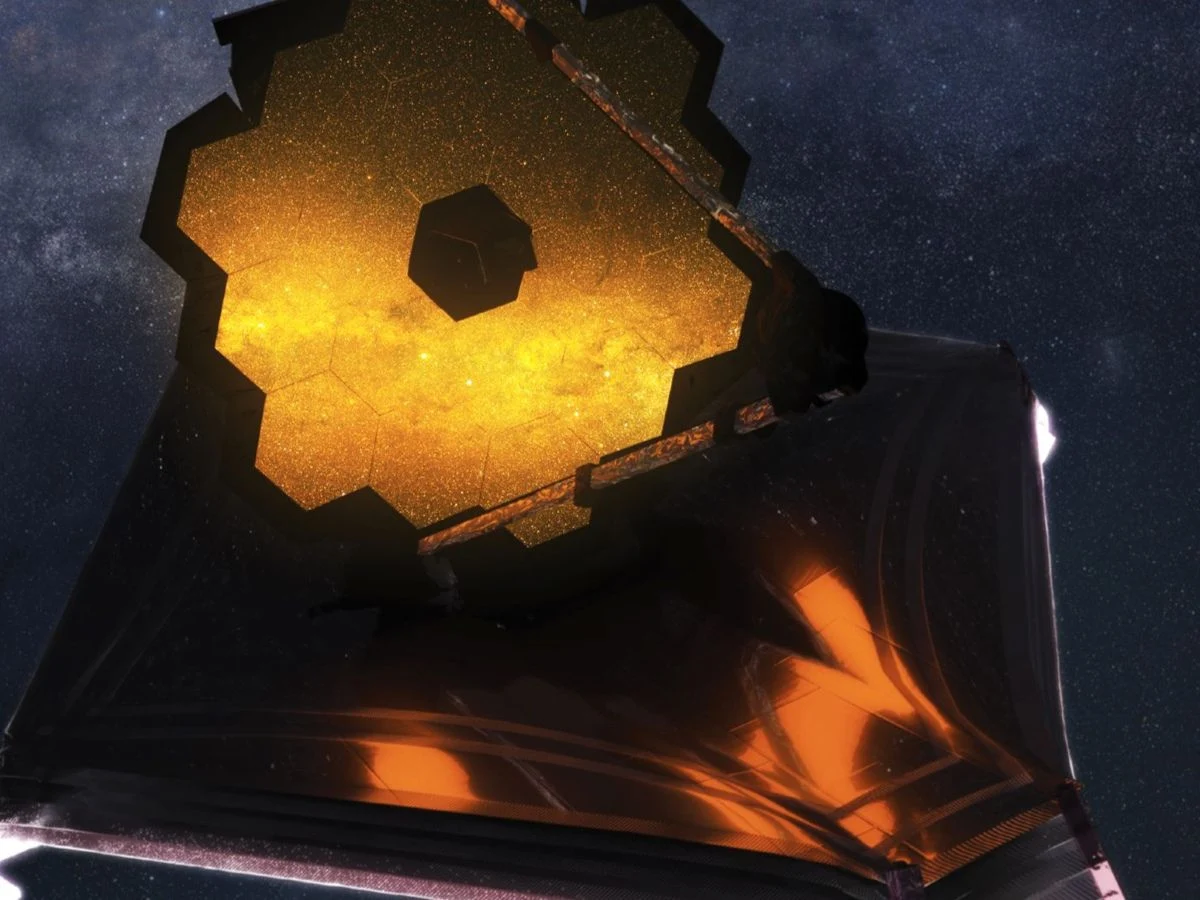
    Launched on December 25, 2021, the James Webb Telescope is changing the way we look at space. It’s not just that; it has helped scientists uncover incredible findings, like an exoplanet close to our planet that seems to be in a difficult stage of its life.

    Amazing Distance

    Since it started its mission, sitting 1.5 million kilometers away from Earth, the telescope has successfully captured images of many exoplanets. Astrophysicist Anne-Marie Lagrange shared in the journal Nature, “It has spent a great deal of time observing planets that have never been imaged before.” This highlights the significance of its work.

    Challenges of Observation

    While this might not sound very impressive, it’s crucial to realize that watching such distant stars is a tough job. These stars are faint because they have low heat at their center. On top of that, they revolve around a bright star, which makes it hard for astronomers to spot them.

    The James Webb Telescope has a strong edge: its coronagraph, which is designed based on the effects seen during a solar eclipse. This tool blocks the light from the star, allowing researchers to locate the stars that move around it. Additionally, its MIRI spectrograph can capture images of stars that are nearly invisible by using infrared technology.

    A New Discovery

    Researchers decided to focus this powerful device on TWA 7, a star in our galaxy that is “only” a hundred light-years away. This star is of particular interest because of its age, being 6.4 million years old, which has enabled planetary disks to develop in its vicinity. Moreover, observations from the Sphere instrument at the Very Large Telescope (VLT) in Chile uncovered three large rings surrounding it.

    In the second ring, the James Webb Space Telescope detected a light source named TWA 7b. This celestial body has been classified as a cold planet, with a mass similar to Saturn’s. However, it appears that life could not exist there since it’s made entirely of gas. In other words, it’s composed of various gases.

    Future Possibilities

    Nonetheless, this planetary system holds promise, and upcoming observations, like those scheduled with the Extremely Large Telescope (ELT) in 2028, could yield more exciting discoveries. Who knows, we might even find signs of life on another rocky planet apart from Earth?

    Source:
    Link

  • In Two Years, China’s New Telescope JUST to Seek Exoplanets Across the Universe

    In Two Years, China’s New Telescope JUST to Seek Exoplanets Across the Universe

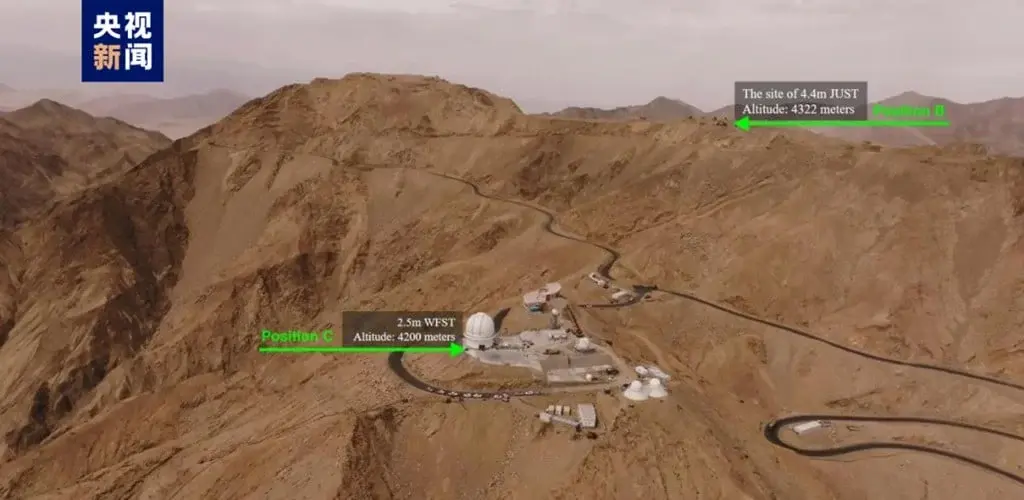
    Imagine peering into the depths of space, not just to see, but to truly understand. That’s the mission of the Jiaotong University Spectroscopic Telescope (JUST), a powerful new tool set to become China‘s leading eye on the cosmos, opening its gaze in 2026. Nestled atop Saishiteng Mountain, JUST isn’t your average stargazer. With a gaping maw of 4.4 meters, it can quickly switch between targets. This agility allows it to capture fleeting moments in the universe, like the birth of newborn stars.

    This telescope can provide more information about Exoplanets orbiting distant stars

    But JUST isn’t just about sight; it’s about understanding. Equipped with a super-sensitive spectrometer, it can break down light from distant objects, revealing their secrets. Think of it like reading celestial fingerprints, each line telling a story about the object’s composition and history.

    This ability makes JUST a champion exoplanet hunter. These elusive worlds, orbiting distant stars, often hide in the glare of their suns. But JUST can sniff them out by analyzing their starlight, searching for tiny chemical clues that betray their presence.

    While telescopes like JUST come with a hefty price tag, the potential payoff could be astronomical. Research like this pushes the boundaries of human knowledge, unveiling the secrets of our universe and our place within it. Every discovery fuels further exploration, potentially leading to groundbreaking advancements in fields like medicine, materials science, and even space travel. Moreover, understanding our cosmic neighborhood helps us prepare for potential threats like asteroids and solar storms. Ultimately, research like this isn’t just about satisfying our curiosity; it’s an investment in the future, paving the way for a deeper understanding of ourselves and the universe we inhabit.

    In 2026, keep your eyes peeled (metaphorically, of course). With JUST and JWST (James Webb Space Telescope) scanning the heavens, we might just be on the cusp of unlocking some of the universe’s greatest mysteries.