Tag: James Webb Telescope

  • NASA Plans Nuclear Blast on Asteroid Before It Reaches Moon

    NASA Plans Nuclear Blast on Asteroid Before It Reaches Moon

    Key Takeaways

    1. Asteroid 2024 YR4 poses a potential threat to the Moon, with a low impact risk of about 4%.
    2. NASA plans to use a nuclear device to destroy the asteroid if necessary, to prevent any fragments from reaching Earth.
    3. Collaborative teams at various space organizations are exploring different scenarios to address the threat from 2024 YR4.
    4. A one-megaton device could break apart the asteroid, reducing the risk of impacts with the Moon and Earth.
    5. Technology for this nuclear solution may be ready between 2029 and 2031, just before the potential collision date.


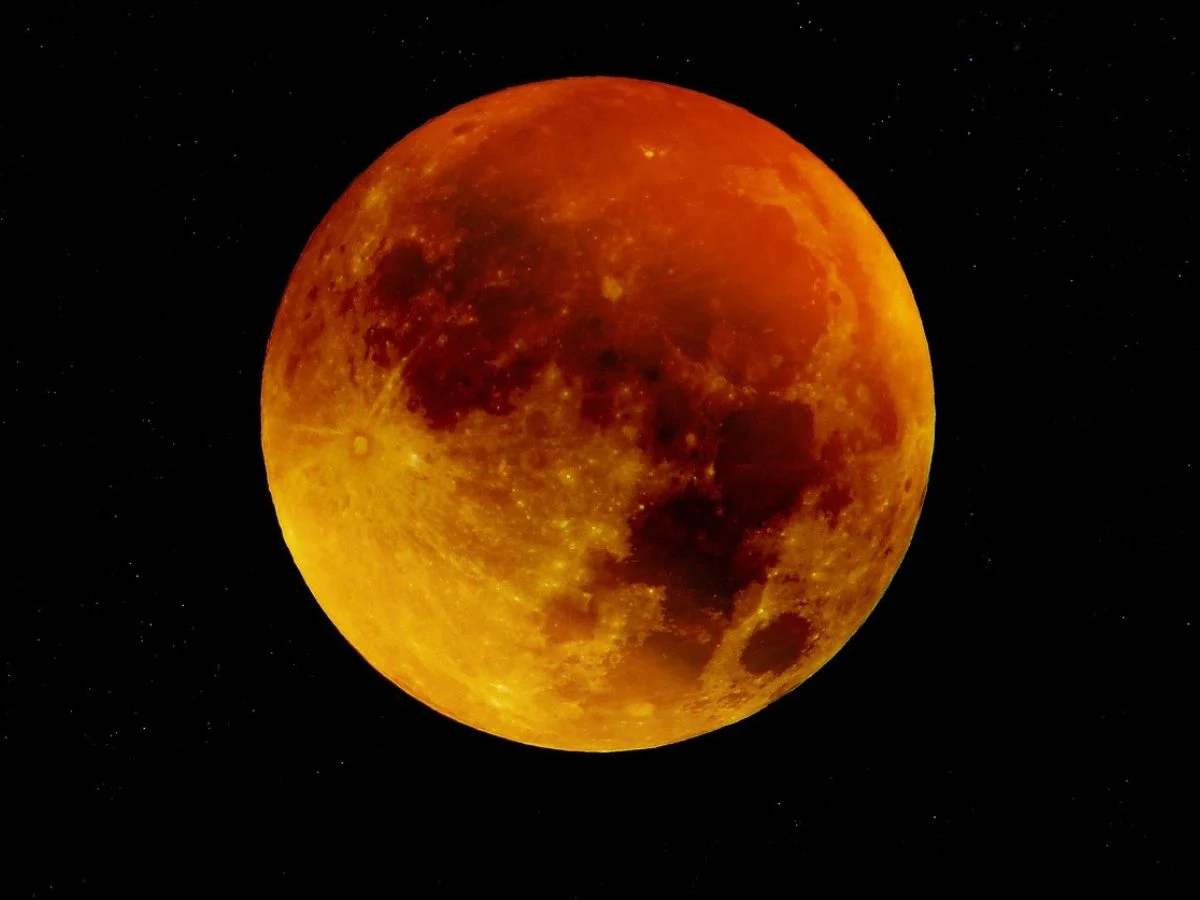
    Many objects in space move around our solar system, and sometimes they can be a big threat to Earth and the Moon. One such object is asteroid 2024 YR4, which might collide with our Moon. In light of this, NASA plans to use a nuclear device to destroy it before it reaches its target.

    A Low Risk Scenario

    While this may sound like something from a sci-fi film, the likelihood of an impact is actually quite low, currently thought to be around 4%. However, if it does happen, a number of fragments could come towards Earth, putting orbiting satellites at risk of damage.

    Collaborative Efforts

    In response to this potential threat, teams at the Goddard Space Flight Center, JPL, Johns Hopkins, and National Laboratories have started to explore different scenarios to prevent this from taking place. Because there are uncertainties regarding the size and mass of 2024 YR4, they are looking at two possible solutions, one being the use of a nuclear device.

    Potential Solutions

    If they go with this approach, a device weighing in at one megaton could break apart this asteroid, sending pieces flying in various directions and reducing the chances of impacts with both the Moon and Earth.

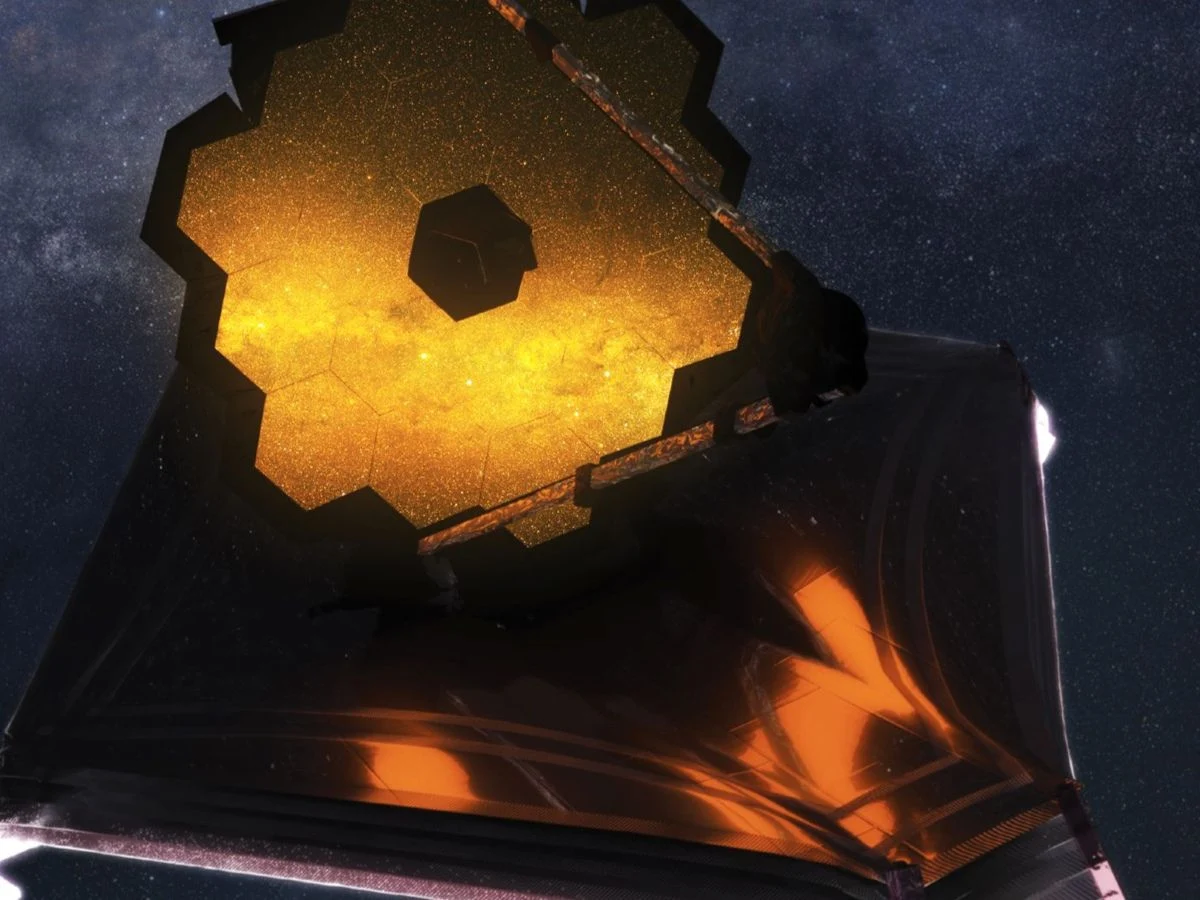
    Moreover, estimates from engineers using data from the James Webb Telescope suggest that this technology could be ready for use between 2029 and 2031, which is just a year before the possible collision of 2024 YR4 with the Moon.

    However, it’s worth mentioning that the likelihood of impact remains at 4% and the chance of this asteroid striking the Moon is quite low. Besides, its path is being closely watched to prevent any dangers.

    Source:
    Link


  • Amateur Astronomers Discover New Gas Giant Planet

    Amateur Astronomers Discover New Gas Giant Planet

    Key Takeaways

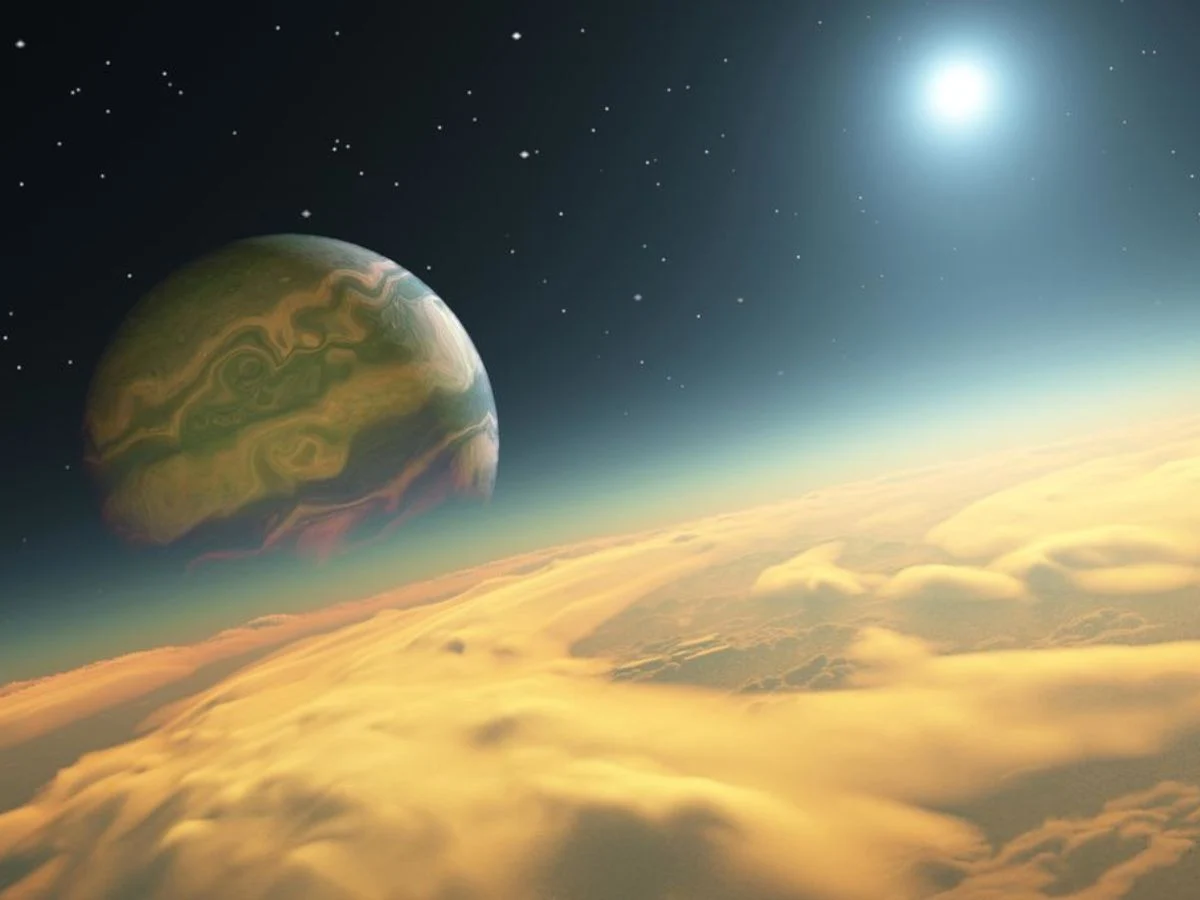
    1. TOI-4465 b is a newly discovered gas giant located over 400 light-years from Earth, with a mass six times that of Jupiter.
    2. The planet orbits its star in about 102 days and maintains temperatures between 93°C and 204°C.
    3. The discovery was made using the TESS telescope, which detects brightness changes when planets transit in front of their stars.
    4. Thousands of amateur astronomers contributed by using personal telescopes to confirm the planet’s existence, often from locations inaccessible to professional instruments.
    5. Exoplanets like TOI-4465 b are still largely unexplored, and findings like this could lead to further studies using advanced tools like the James Webb Telescope.


    The universe is full of wonders, and while scientists have unveiled many secrets, a recent discovery was made by amateur astronomers instead of experts. They found a new gas giant planet.

    Discovering TOI-4465 b

    This exoplanet, named TOI-4465 b, is situated over 400 light-years away from Earth and boasts a mass that is six times heavier than Jupiter. Additionally, it takes about 102 days to complete its orbit around its star, following an elliptical path while keeping its distance stable.

    Unique Characteristics

    Considering these factors, TOI-4465 b maintains its temperature between 93°C and 204°C. This makes it a significant target for astronomers and scientists for various research purposes.

    The discovery of this gas giant was achieved with the TESS telescope, which is specially built to spot decreases in brightness when a planet transits in front of its star. However, to verify its existence, a large number of people were required to contribute.

    Community Efforts in Astronomy

    As a result, thousands of astronomers from all corners of the globe utilized their personal telescopes to carry out observations. Though it may sound surprising, it’s crucial to note that these telescopes are often set up in locations that professional instruments cannot reach, such as backyards or rural settings. By staying fixed for extended periods, they can notice light variations linked to a star, showing that a celestial object is crossing in front of it. If this happens repeatedly, it becomes possible to confirm that a planet is orbiting.

    Nonetheless, exoplanets like TOI-4465 b remain largely unexplored by scientists. In fact, only a handful have been found in the past. Such findings could enable astronomers to study these celestial wonders more thoroughly with various tools, including the renowned James Webb Telescope, which has successfully observed its first exoplanet.

    Source:
    Link

  • James Webb Reveals Surprising New Discoveries About Pluto

    James Webb Reveals Surprising New Discoveries About Pluto

    Key Takeaways

    1. Pluto, once considered uninteresting, has revealed a complex landscape with water ice mountains and a significant atmosphere.
    2. The bluish haze on Pluto may help manage its climate by absorbing sunlight and releasing energy at night.
    3. The James Webb Telescope has successfully confirmed theories about Pluto’s atmosphere that were difficult to validate before.
    4. Discoveries about Pluto’s atmosphere could have implications for other celestial bodies like Triton and Titan.
    5. There is speculation that Earth may have had a similar haze in its past, which could have influenced temperature regulation and the emergence of life.


    Long seen as an uninteresting celestial object, Pluto has surprised many with its secrets. This dwarf planet is not well understood, and recent findings from the James Webb telescope have uncovered astonishing information.

    New Horizons’ Flyby

    Back in 2015, the New Horizons spacecraft made its pass by Pluto. Rather than finding an icy, unimportant world, scientists discovered a landscape filled with water ice mountains and nitrogen ice hills. Additionally, Pluto has an atmosphere that extends up to 300 kilometers, featuring a bluish haze on top.

    The Mystery of Blue Haze

    The bluish haze is quite enigmatic, especially since microorganisms appear when sunlight reaches the planet. A 2017 study led by planetary scientist Xi Zhang, published in Nature Astronomy, proposed that this blue haze helps manage Pluto’s climate. The team suggested that the particles suspended in the haze could soak up sunlight during the day and then release that energy as infrared radiation at night, cooling the atmosphere.

    Breakthrough with James Webb

    However, validating this theory was challenging due to Charon, Pluto’s natural satellite, which obstructed observations. Everything changed with the James Webb Telescope, which allowed scientists to observe the infrared emissions from Pluto and confirm the 2017 theory.

    This remarkable discovery may have implications for other celestial objects in our solar system. Notably, some natural satellites, like Triton around Neptune and Titan around Saturn, have similar atmospheres. It’s possible that these lesser-known worlds are also influenced by their atmospheres and the fog that exists there.

    Implications for Earth’s Past

    Scientists are not stopping at Pluto; they speculate that Earth may have once been covered in a similar haze before the rise of oxygen. If this idea is validated, it could indicate that such a fog played a significant role in regulating temperatures, which may have aided the emergence of life.

    Source:
    Link

  • James Webb Space Telescope Finds First Exoplanet Near Earth

    James Webb Space Telescope Finds First Exoplanet Near Earth

    Key Takeaways

    1. The James Webb Telescope, launched on December 25, 2021, is revolutionizing our understanding of space by capturing images of previously unseen exoplanets.
    2. Its location 1.5 million kilometers from Earth enhances its ability to observe distant and faint stars, aided by advanced tools like the coronagraph and MIRI spectrograph.
    3. The telescope’s recent focus on the star TWA 7 has revealed a cold gas planet named TWA 7b, which is similar in mass to Saturn but uninhabitable.
    4. TWA 7 is a young star, only 6.4 million years old, allowing for the development of planetary disks and surrounding rings, which were previously observed by other telescopes.
    5. Future observations, including those with the Extremely Large Telescope in 2028, may lead to new discoveries and the potential for finding life on other rocky planets.


    Launched on December 25, 2021, the James Webb Telescope is changing the way we look at space. It’s not just that; it has helped scientists uncover incredible findings, like an exoplanet close to our planet that seems to be in a difficult stage of its life.

    Amazing Distance

    Since it started its mission, sitting 1.5 million kilometers away from Earth, the telescope has successfully captured images of many exoplanets. Astrophysicist Anne-Marie Lagrange shared in the journal Nature, “It has spent a great deal of time observing planets that have never been imaged before.” This highlights the significance of its work.

    Challenges of Observation

    While this might not sound very impressive, it’s crucial to realize that watching such distant stars is a tough job. These stars are faint because they have low heat at their center. On top of that, they revolve around a bright star, which makes it hard for astronomers to spot them.

    The James Webb Telescope has a strong edge: its coronagraph, which is designed based on the effects seen during a solar eclipse. This tool blocks the light from the star, allowing researchers to locate the stars that move around it. Additionally, its MIRI spectrograph can capture images of stars that are nearly invisible by using infrared technology.

    A New Discovery

    Researchers decided to focus this powerful device on TWA 7, a star in our galaxy that is “only” a hundred light-years away. This star is of particular interest because of its age, being 6.4 million years old, which has enabled planetary disks to develop in its vicinity. Moreover, observations from the Sphere instrument at the Very Large Telescope (VLT) in Chile uncovered three large rings surrounding it.

    In the second ring, the James Webb Space Telescope detected a light source named TWA 7b. This celestial body has been classified as a cold planet, with a mass similar to Saturn’s. However, it appears that life could not exist there since it’s made entirely of gas. In other words, it’s composed of various gases.

    Future Possibilities

    Nonetheless, this planetary system holds promise, and upcoming observations, like those scheduled with the Extremely Large Telescope (ELT) in 2028, could yield more exciting discoveries. Who knows, we might even find signs of life on another rocky planet apart from Earth?

    Source:
    Link