
Key Takeaways
1. Astronomers have identified nearly 6,000 exoplanets in the search for signs of life beyond our solar system.
2. PSR J2322-2650b is a unique exoplanet resembling a hot Jupiter that orbits a pulsar, a rapidly rotating neutron star.
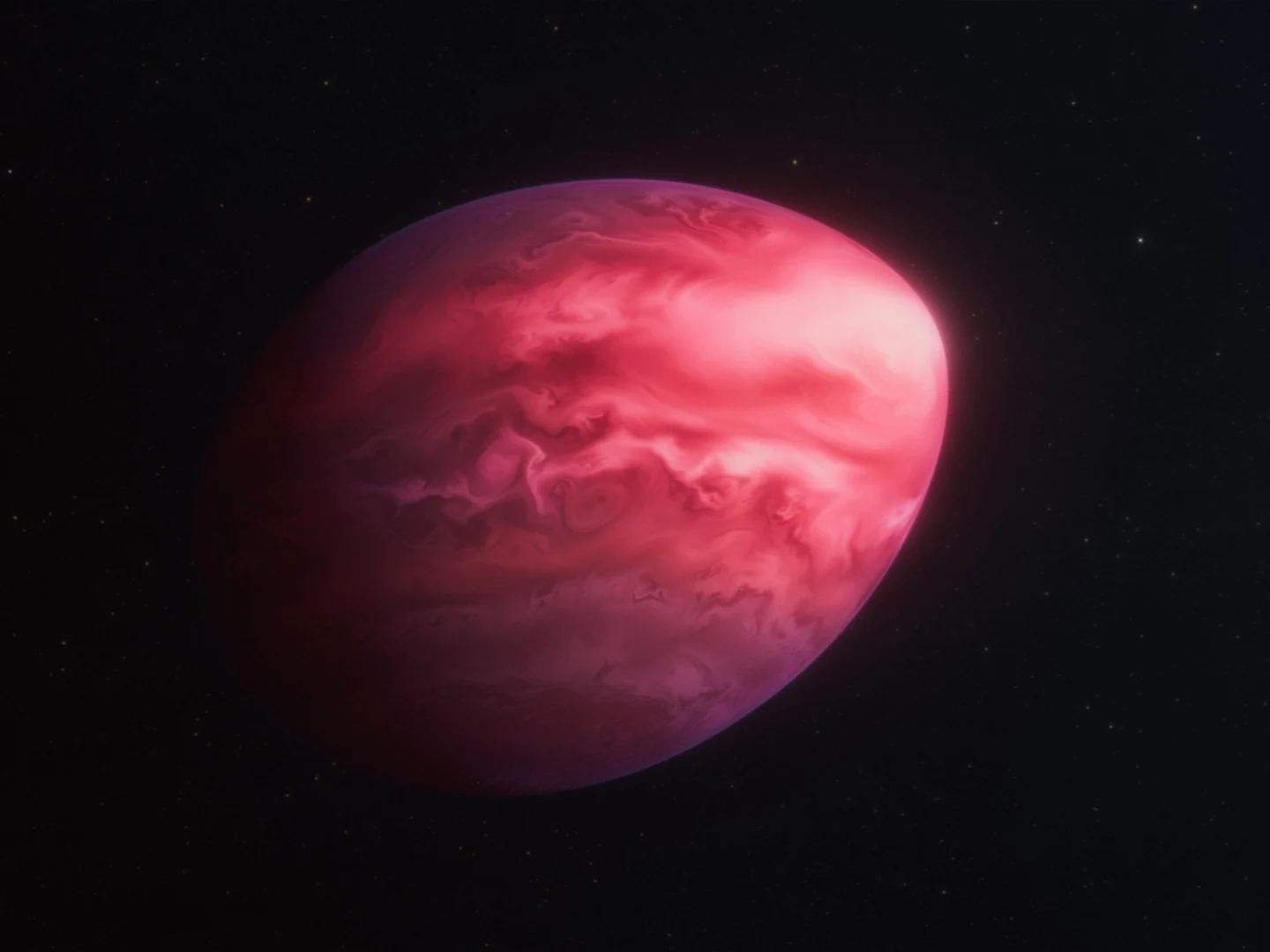
3. The planet has a lemon-like shape due to the gravitational forces from its pulsar.
4. PSR J2322-2650b is located just one million miles from its pulsar, allowing it to receive intense radiation.
5. Its atmosphere is rich in helium and molecular carbon, making it the only known planet with molecular carbon detected at such high temperatures.
Astronomers are on a quest to find signs of life beyond our own solar system. This effort has resulted in the identification of nearly 6,000 exoplanets. Among these, PSR J2322-2650b is particularly remarkable, as it is the only exoplanet resembling a hot Jupiter that orbits a pulsar, which is a quickly rotating neutron star.
Unique Shape of PSR J2322-2650b
One of the most peculiar traits of PSR J2322-2650b is its lemon-like shape. This unusual form is a result of the gravitational forces exerted by the pulsar it circles.
Proximity to Its Pulsar
When it comes to its distance from its host star, PSR J2322-2650b is fascinatingly near to its pulsar, located just about one million miles away. For comparison, our Earth sits approximately 100 million miles from the Sun. This close proximity allows the pulsar’s radiation to shine brightly on the exoplanet, bathing it in intense light.
Atmospheric Composition
The most distinguishing feature of PSR J2322-2650b is the makeup of its atmosphere, which is rich in helium and molecular carbon. The presence of molecular carbon is quite strange, especially given the exoplanet’s extremely high temperatures, ranging from 1,200 to 3,700 °F. At these high temperatures, one would expect molecular carbon to bond with other elements.
Astronomers have examined the atmospheric chemical makeup of around 150 planets, both in our solar system and beyond. Notably, PSR J2322-2650b stands alone as the only planet where molecular carbon has been detected. This unusual atmospheric configuration has sparked curiosity among scientists about the planet’s formation. As it appears, the planet does not fit any existing formation theories. The findings of this research were published in the Astrophysical Journal Letters.
Source:
Link