
Key Takeaways
1. Nebulae, like the Cat’s Eye Nebula, are fascinating cosmic formations linked to the final phases of stars.
2. The Cat’s Eye Nebula is located about 4,400 light-years from Earth and was first identified in 1864.
3. Advanced telescopes, including Hubble and Euclid, have provided new images that reveal the intricate structure of the Cat’s Eye Nebula.
4. Euclid’s images highlight a vibrant halo of gas, while Hubble’s focus on the core shows high-speed jets of gas.
5. These discoveries enhance our understanding of planetary nebulae and the materials they contain.
Nebulae are remarkable formations in the cosmos that captivate astronomers due to their unique material. When a star reaches its final phase, it undergoes multiple stages, some of which remain a mystery.
Cat’s Eye Nebula Exploration
This is true for the Cat’s Eye Nebula, or NGC 6543, which is situated about 4,400 light-years from our planet. It was first identified in 1864, and early observations provided insights that the rounded shape of these nebulae comes from gas that is expanding around the star. Later, in 1995, the Hubble Space Telescope examined this nebula, enhancing our understanding of planetary nebulae.
New Discoveries with Advanced Telescopes
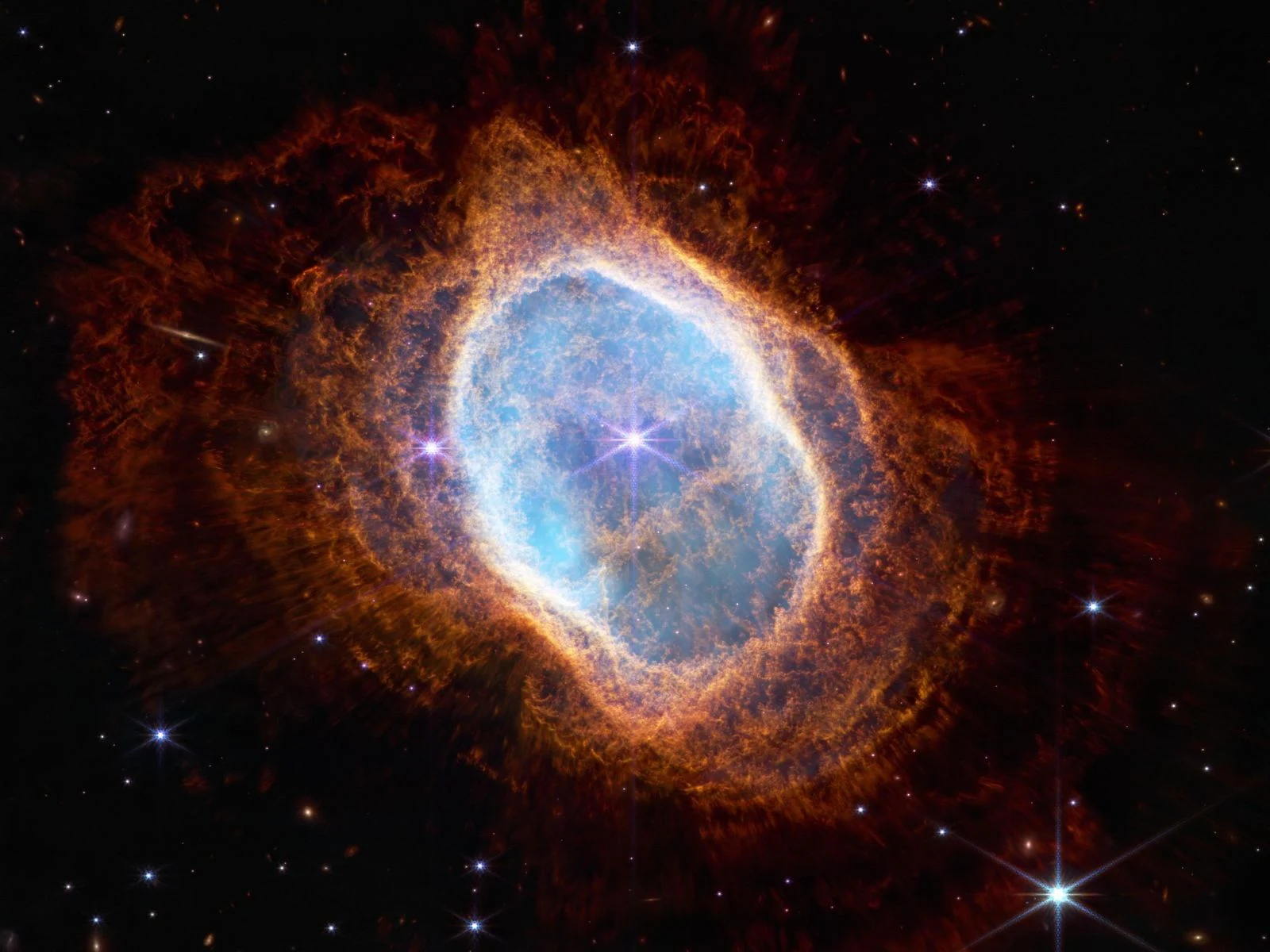
Recently, both the Hubble and Euclid telescopes have captured fresh images of this nebula, showcasing its intricate nature and presenting a stunning display. The first image, taken by Euclid, shows a vibrant halo of gas that appears to be drifting away from the star.
Hubble, on the other hand, focused on the core of this nebula, uncovering high-speed jets of gas. Observers can almost sense the turmoil present in this area by looking at the star at the center. While these visuals are exceptionally beautiful, the violent nature of the event is just as impressive. These findings will help astronomers gain a deeper understanding of the phenomenon, as well as the materials that make up these planetary nebulae.
Source:
Link