
Tag: dark matter

  • New Galaxy Discovered Near Andromeda Galaxy

    New Galaxy Discovered Near Andromeda Galaxy

    Key Takeaway

    1. Astronomers confirmed the existence of a new ultra-faint dwarf galaxy, Andromeda XXXVI, near the Andromeda Galaxy.
    2. Andromeda XXXVI is approximately 2.53 million light-years from the Milky Way and 388,000 light-years from its host galaxy.
    3. The discovery provides insights into the early universe and highlights the difficulty of detecting dark matter-rich, faint dwarf satellite galaxies.
    4. Over a hundred satellite galaxies are believed to orbit Andromeda, warranting further research.

    New Findings About The Andromeda Galaxy’s Satellites

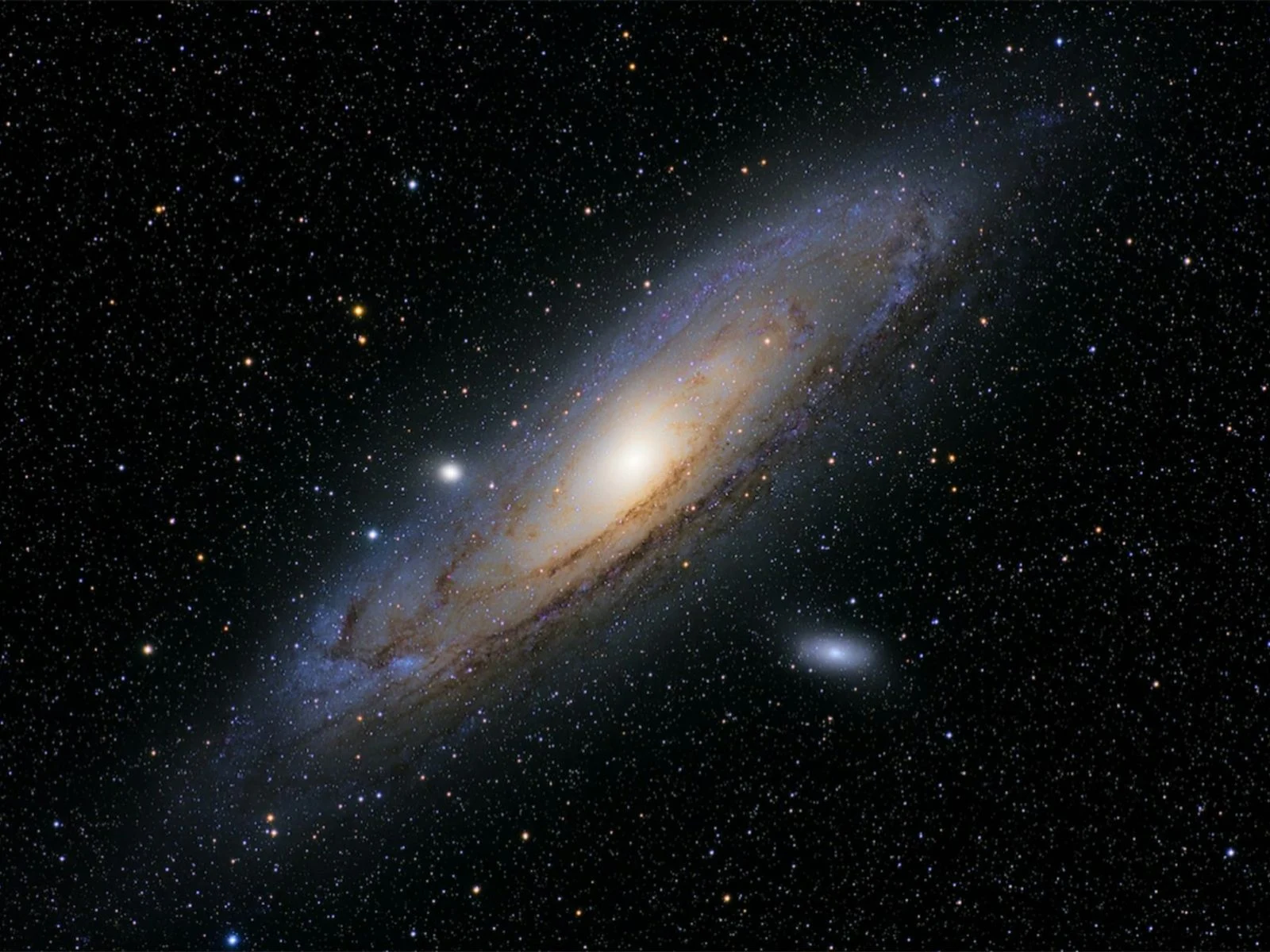
    The Andromeda galaxy with its neighboring cosmic companions, are always drawing the attention of astronomers. Recently, scientists stumbled upon a minute galaxy known as Andromeda XXXVI, lurking close by. Its a tiny, faint dwarf galaxy, packed with dark matter, and so faint that it’s almost impossible to see without special telescopes. This tiny galaxy was uncovered thanks to a big survey called the Pan-Andromeda Archaeological Survey. Led by Joanna D. Sakowska and her team from the Institute of Astrophysics of Andalusia, this finding adds another piece to the cosmic puzzle.

    Distance and Size of the New Galaxy

    By calculations, Andromeda XXXVI is sitting roughly 2.53 million light-years away from our galaxy, the Milky Way. The main galaxy, Andromeda, is about 2.5 million light-years away, making the new dwarf galaxy about 388,000 light-years from it. Astronomers estimates that the galaxy has a brightness magnitude of -6.0 and stretches about 208 light-years across. Researchers also believe that this tiny galaxy is approximately 12.5 billion years old, making it a relic from the early universe.

    Why Is This Discovery Significant

    This new discovery is so important because it helps scientists look back in time and understand how the universe started and evolved. But it’s not only about the past because these dwarf satellite galaxies are super hard to find and study. Andromeda, for example, has over a hundred satellite galaxies orbiting it. Each new find can provide more clues about cosmic formation and the dark matter that makes up most of the universe. Eventually, additional investigations could reveal more hidden structures around Andromeda and other galaxies.

    Note on the Study’s Reliability

    It’s worth mentioning, though, that this study hasn’t been fully checked by independent scientists yet. The findings are in a preprint stage, which means they are preliminary and awaiting peer review. Future research might confirm or refine what this team has discovered about Andromeda XXXVI and its cosmic neighborhood.
    Sources

  • Hubble Telescope Discovers Galaxy with 99% Dark Matter and Few Stars

    Hubble Telescope Discovers Galaxy with 99% Dark Matter and Few Stars

    Key Takeaways

    1. CDG-2 is a dark galaxy with very little visible light and few stars, primarily composed of dark matter.
    2. About 99% of CDG-2’s mass is believed to be dark matter, making it difficult to detect using traditional methods.
    3. CDG-2 is located in the Perseus Cluster, which strips away gases and inhibits star formation due to its harsh environment.
    4. The galaxy was confirmed through observations from three telescopes: Hubble Space Telescope, Euclid, and Subaru Telescope.
    5. The discovery of CDG-2 contributes to the understanding of dark matter and its role in galaxy formation and structure.


    Galaxies are typically seen by their light, gas emissions, and structure. Yet, CDG-2 stands apart as a dark galaxy that emits very little visible light and has hardly any stars, making it tough to spot. Its composition consists mainly of dark matter, which is undetectable by traditional means as it doesn’t absorb, reflect, or emit light. The only way to observe it is through its gravitational influences. Remarkably, about 99% of CDG-2’s mass is thought to be dark matter, and it falls into the category of low-surface-brightness galaxies due to its dim light. It was recognized exclusively because of the close formation of its globular clusters, which adds to its scientific importance.

    Location and Environmental Factors

    CDG-2 resides in the Perseus Cluster, a massive galaxy cluster roughly 300 million light-years from Earth. This cluster is known for its powerful gravitational interactions that strip away gases like hydrogen. Ram-pressure stripping plays a role here too, disrupting smaller galaxies and hindering star formation. Hydrogen plays a critical role in the birth of stars, and this hostile environment may explain why CDG-2 has so few stars.

    Astronomical Observations

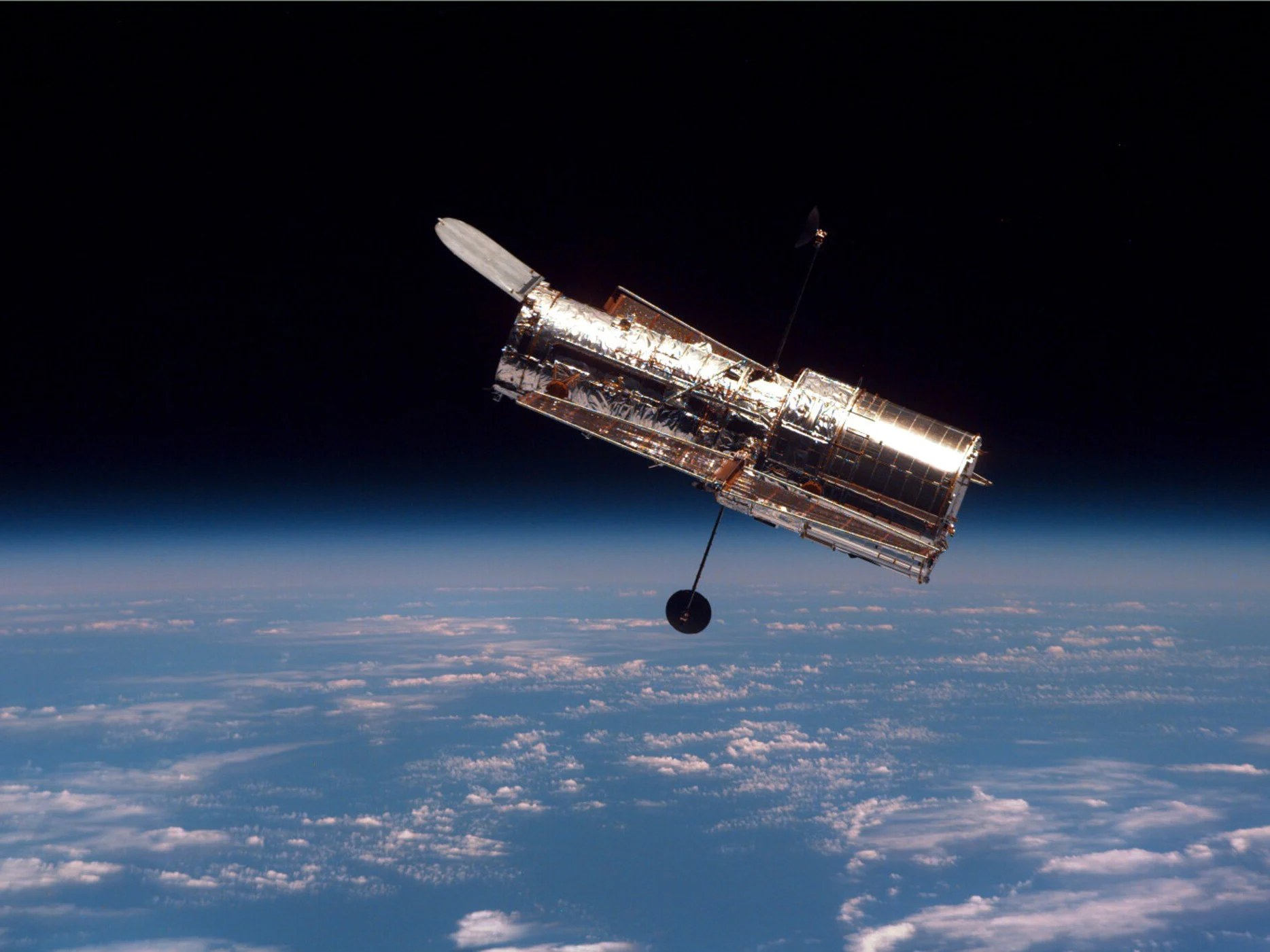
    In the process of confirming CDG-2’s existence, astronomers called upon three observatories. The first one was the Hubble Space Telescope, which offered clear identification of four globular clusters through high-resolution images. The second, Euclid, is particularly adept at spotting low-surface-brightness galaxies and confirmed the existence of faint diffuse light through wide-field imaging. Lastly, the Subaru Telescope provided additional confirmation with ground-based deep imaging.

    These observatories collectively validated that the globular clusters were situated within a faint diffuse glow, serving as evidence of a hidden galaxy. Dark matter remains one of the most puzzling enigmas in physics, and this finding marks a significant advancement in unraveling and comprehending the mysteries that lie beyond our perception.

    Source:
    Link


  • Webb’s 255-Hour Study Maps Dark Matter in 800,000 Galaxies

    Webb’s 255-Hour Study Maps Dark Matter in 800,000 Galaxies

    Key Takeaways

    1. The James Webb Space Telescope (JWST) captured images of a section of the sky in the Sextans constellation, displaying nearly 800,000 galaxies and a dark matter map.
    2. Dark matter is invisible and doesn’t interact with light, but its presence is inferred through gravitational effects on visible matter, specifically via gravitational lensing.
    3. There are two types of gravitational lensing: strong (noticeable bending of light) and weak (subtle light distortion), with Webb’s dark matter map relying on weak gravitational lensing techniques.
    4. Webb’s findings reveal additional clumps of dark matter compared to Hubble’s 2007 map, showing twice as many galaxies and providing a clearer view.
    5. The COSMOS project involves collaboration with various telescopes to enhance understanding of galaxy formation and the influence of dark matter on their growth.


    As part of the Cosmic Evolution Survey (COSMOS) initiative, Webb has taken images of a section of the sky found in the Sextans constellation. This area spans 0.54 square degrees, which is roughly two and a half times larger than a Full Moon. The image displays nearly 800,000 galaxies, and it also overlays a map that highlights dark matter.

    Understanding Dark Matter

    Dark matter is something we can’t see directly, neither with our eyes nor with traditional telescopes. This is because it doesn’t give off, reflect, absorb, or block light. Still, we can find dark matter since it interacts with the universe via gravity. Big clusters of dark matter can bend space-time. As the light from nearby galaxies travels to Earth, this bending occurs, which is known as gravitational lensing.

    Types of Gravitational Lensing

    There are two main kinds of gravitational lensing: strong and weak. Strong gravitational lensing creates a noticeable bending of light in images. Weak gravitational lensing, on the other hand, causes a much subtler distortion of the light. Astronomers carefully examine thousands of galaxies to spot these patterns. The dark matter map created by Webb relies on weak gravitational lensing techniques.

    In the image produced, dark matter is shown in blue. The areas that are a brighter blue signify a higher concentration of dark matter. Although Hubble mapped this region in 2007, Webb’s findings show additional clumps of dark matter, as it features around twice as many galaxies compared to Hubble’s map. Moreover, Webb provides a clearer and more detailed view.

    Collaboration with Other Telescopes

    Many other telescopes have contributed to the COSMOS project. Researchers are using these varied perspectives to better comprehend how galaxies develop and how dark matter affects their growth.

    Source:
    Link


  • Unexplained Radio Signals Detected Beneath Antarctica’s Ice

    Unexplained Radio Signals Detected Beneath Antarctica’s Ice

    Key Takeaways

    1. Intriguing signals have been detected beneath Antarctic ice, challenging current physics laws.
    2. The signals arrived at a 30° angle below the horizon, which is unusual without power loss.
    3. Neutrinos, known as ghost particles, are a leading suspect but do not match the characteristics of the unknown signals.
    4. A fictional hypothesis suggests the signals might come from dark matter, which is mostly undetectable.
    5. Further research is needed with a new detector called PUEO to identify the source of these signals.


    Recently, intriguing signals have been found beneath the Antarctic ice. They seem to have traveled through matter as if it wasn’t even there, challenging the established laws of physics today.

    Signals and Physics

    It’s important to highlight that, based on current understanding of physics, if a radio signal moves through thousands of kilometers of rock, it should lose strength when checked with advanced tools. Essentially, it would be nearly undetectable. Yet, in this instance, these signals arrived distinctly at a 30° angle below the horizon, which usually wouldn’t happen without some power loss.

    A Prime Suspect

    As a result, a leading suspect has been identified, potentially helping to explain what these signals are. These are neutrinos, often called ghost particles. They are unique because they can travel through matter without any impact, and catching them is quite rare, despite the ANITA program – which operates at an altitude of 40 km – being specifically aimed at detecting them.

    Nevertheless, while this could offer a solid lead, it’s not so straightforward. Researchers from Penn State University have noted that the characteristics of these unknown signals do not match those of neutrinos. The same goes for their location and the energy they emit.

    A Fictional Hypothesis

    Yet, another theory has come up, albeit somewhat imaginative. This theory posits that the signals could stem from a form of dark matter, which is unseen and constitutes 85% of the universe.

    On this matter, scientists think dark matter is made up of particles that hardly interact with one another, rendering them nearly undetectable. If these signals are indeed from such a source, the finding would be extraordinary and could open up fresh avenues for scientific exploration.

    In any case, further studies and observations are needed to uncover the source of these signals. This will involve a more advanced detector called PUEO, which is still in the works.

    Source:
    Link

  • Vera C. Rubin Observatory Captures Stars with 3,200-Megapixel Camera

    Vera C. Rubin Observatory Captures Stars with 3,200-Megapixel Camera

    Key Takeaways

    1. The Vera C. Rubin Observatory has begun operations with the world’s largest 3,200-megapixel LSST CCD camera, located in Chile.
    2. The project is funded by the U.S. National Science Foundation and the U.S. Department of Energy and honors astronomer Dr. Vera C. Rubin.
    3. The LSST camera, weighing 2800 kg, captures images with a 64 cm wide focal plane, allowing it to photograph an area equivalent to 45 moons every two seconds.
    4. The telescope can quickly change targets in just five seconds using linear motors, and it captures a wide spectrum of light from ultraviolet to near-infrared.
    5. The observatory generates 20 TB of imaging data each night, which is processed at multiple global locations before being made public.


    The NSF-DOE Vera C. Rubin Observatory has started its operations with the biggest 3,200-megapixel LSST CCD camera, which is attached to the Simonyi Survey Telescope. This setup is used to capture images of the night sky from Cerro Pachón in Chile.

    Funding and Background

    This project is financed by the U.S. National Science Foundation and the U.S. Department of Energy’s Office of Science. It carries the name of Dr. Vera C. Rubin, an American astronomer who was instrumental in the development of the dark matter concept.

    Camera Specifications

    The LSST is about the size of a car and employs a grid of 201 CCD sensors, each featuring 10 micron pixels. Out of these, 189 are dedicated for imaging and the rest for control functions. This setup creates a focal plane that is 64 cm wide, allowing it to capture an area equivalent to that of 45 moons (10 sq. deg.) with every two-second exposure. The focal plane is maintained at a frigid -100 °C (-148 °F) to minimize background noise in the 10 micron pixels.

    The camera itself weighs around 2800 kg (6000 lbs) and is attached to the 220-ton Simonyi Survey telescope, which has a total weight of 199,580 kg. An innovative 8.4-meter mirror serves the dual purpose of primary and tertiary mirrors by utilizing two distinct reflective curves. Light bounces between this mirror and a 3.4 m secondary mirror before reaching the LSST camera.

    Slewing and Imaging

    Thanks to linear motors powered by energy from capacitors, the entire telescope can be slewed to a new target in just five seconds, as the system recaptures energy to halt the telescope’s motion.

    In front of the sensors, light travels through three lenses that range from 5.1 ft. (1.57 m) to 27 in. (0.69 m) in size before it reaches six interchangeable filters that measure 75 cm (30 in). This allows the camera to capture light from the ultraviolet to the near-infrared spectrum (320 to 1050 nm). The shutter aperture opens in 0.9 seconds, with an impressive precision of 1/1000th of a second.

    Data Handling

    To show each 3,200 MP image at a 1-to-1 ratio, a grid of 400 4K monitors is required. Each night, the Rubin Observatory generates a whopping 20 TB of imaging data. This data is sent over fiber optic cables from Chile to several locations, including the SLAC National Accelerator Laboratory in Menlo Park, California, CC-IN2P3 in Lyon, France, and the Iris Network in the UK for processing before it’s made public.

    Source:
    Link