
Key Takeaways
1. CDG-2 is a dark galaxy with very little visible light and few stars, primarily composed of dark matter.
2. About 99% of CDG-2’s mass is believed to be dark matter, making it difficult to detect using traditional methods.
3. CDG-2 is located in the Perseus Cluster, which strips away gases and inhibits star formation due to its harsh environment.
4. The galaxy was confirmed through observations from three telescopes: Hubble Space Telescope, Euclid, and Subaru Telescope.
5. The discovery of CDG-2 contributes to the understanding of dark matter and its role in galaxy formation and structure.
Galaxies are typically seen by their light, gas emissions, and structure. Yet, CDG-2 stands apart as a dark galaxy that emits very little visible light and has hardly any stars, making it tough to spot. Its composition consists mainly of dark matter, which is undetectable by traditional means as it doesn’t absorb, reflect, or emit light. The only way to observe it is through its gravitational influences. Remarkably, about 99% of CDG-2’s mass is thought to be dark matter, and it falls into the category of low-surface-brightness galaxies due to its dim light. It was recognized exclusively because of the close formation of its globular clusters, which adds to its scientific importance.
Location and Environmental Factors
CDG-2 resides in the Perseus Cluster, a massive galaxy cluster roughly 300 million light-years from Earth. This cluster is known for its powerful gravitational interactions that strip away gases like hydrogen. Ram-pressure stripping plays a role here too, disrupting smaller galaxies and hindering star formation. Hydrogen plays a critical role in the birth of stars, and this hostile environment may explain why CDG-2 has so few stars.
Astronomical Observations
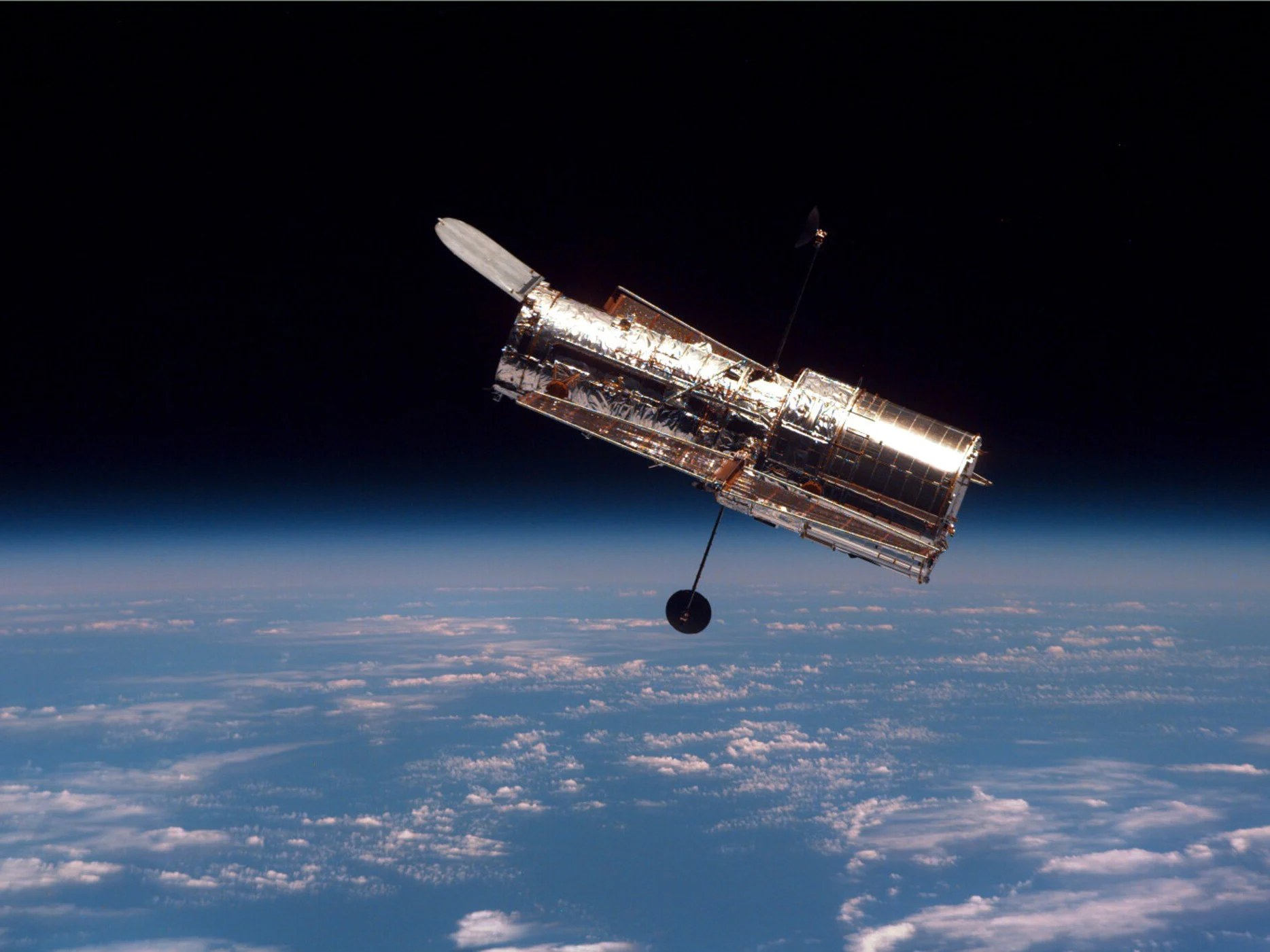
In the process of confirming CDG-2’s existence, astronomers called upon three observatories. The first one was the Hubble Space Telescope, which offered clear identification of four globular clusters through high-resolution images. The second, Euclid, is particularly adept at spotting low-surface-brightness galaxies and confirmed the existence of faint diffuse light through wide-field imaging. Lastly, the Subaru Telescope provided additional confirmation with ground-based deep imaging.
These observatories collectively validated that the globular clusters were situated within a faint diffuse glow, serving as evidence of a hidden galaxy. Dark matter remains one of the most puzzling enigmas in physics, and this finding marks a significant advancement in unraveling and comprehending the mysteries that lie beyond our perception.
Source:
Link