Tag: JWST

  • James Webb Telescope Discovers Possible 12 Billion-Year-Old Comet

    James Webb Telescope Discovers Possible 12 Billion-Year-Old Comet

    Key Takeaways

    1. Comet 3I/ATLAS was initially thought to be an alien spaceship, but new data shows it has normal cosmic origins.
    2. It is estimated to be 10 to 12 billion years old, making it older than both Earth and the solar system.
    3. The comet likely originated in a cold region of the Milky Way galaxy, close in age to the galaxy itself.
    4. The James Webb Space Telescope (JWST) provided new insights into the comet’s gas composition, confirming its ancient origins.
    5. 3I/ATLAS measures about 1,400 ft (440 m) in size and entered the solar system at a speed of approximately 137,000 mph (221,000 km/h).


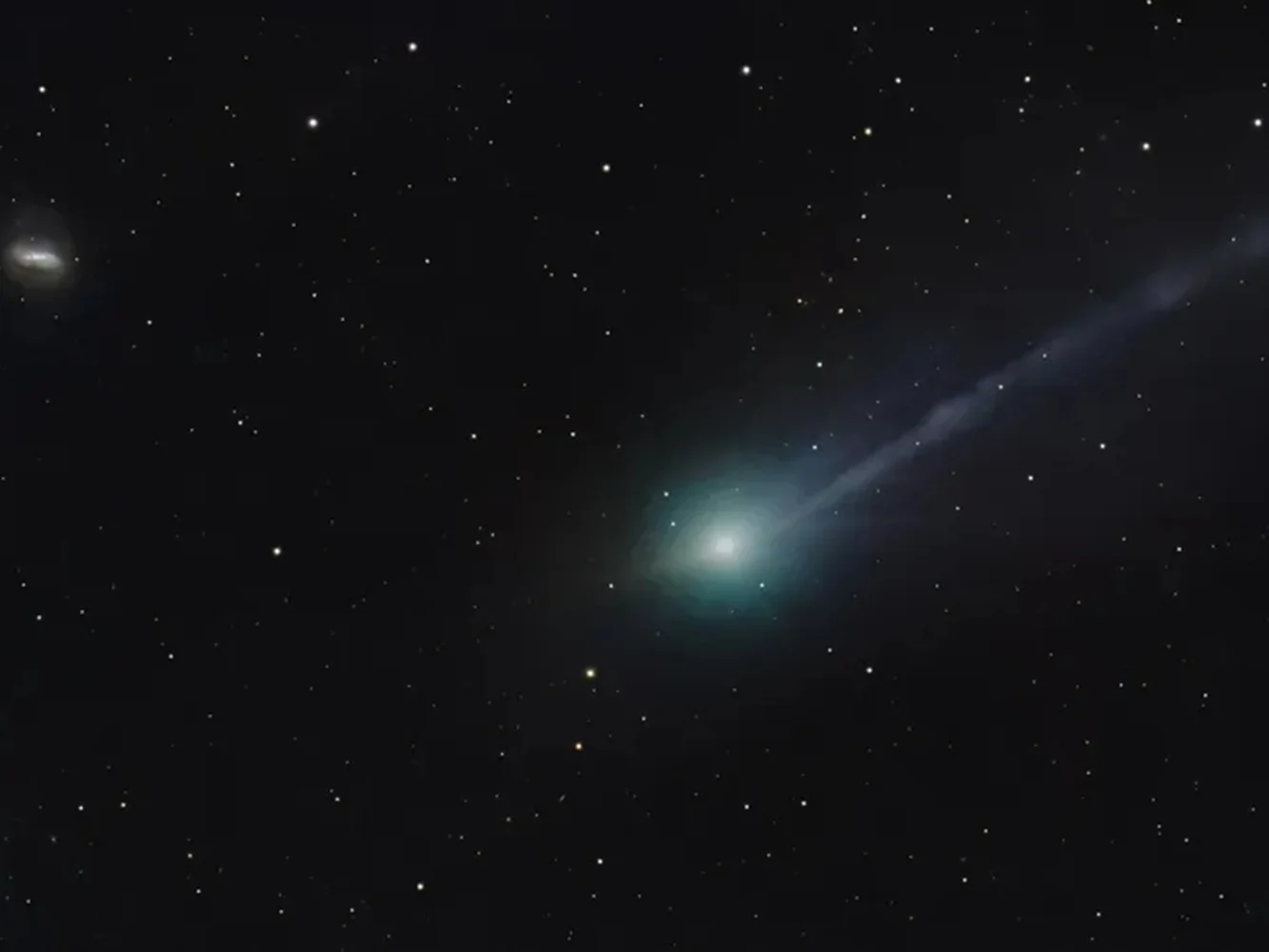
    The comet 3I/ATLAS was found last year, moving through the solar system, with some folks suggesting it was a spaceship from aliens. Recent observations by the JWST, however, have provided evidence that this space object has more normal origins.

    Age and Origins of 3I/ATLAS

    The results indicate that 3I/ATLAS originated in a chilly, distant region of the Milky Way galaxy. With estimates ranging from 10 to 12 billion years old, this comet’s age is more than twice that of both Earth and the solar system. Furthermore, 3I/ATLAS is quite close in age to the Milky Way, which is around 13.6 billion years old, and to the universe itself, at approximately 13.8 billion years.

    New Data from JWST

    The advanced JWST collected new data while it was passing by the comet in late 2025. It analyzed the gas composition that formed on the comet as the sun warmed it up, leading to the sublimation of the ice on its surface.

    Earlier assessments had estimated the age of 3I/ATLAS to be between 3 billion and 11 billion years. However, research scientist Romain Maggiolo stated, “They show that 3I/ATLAS isotopic composition is very different from solar system comets and suggest that it likely formed 10-12 billion years ago.”

    Size and Speed Details

    The comet is thought to measure 1,400 ft (440 m) and stretch about 3.5 miles (5.6 km) wide. Observations from the Hubble Space Telescope indicate it entered the solar system at a speed of around 137,000 mph (221,000 km/h). The nearest point of approach to Earth was at a distance of 168 million miles (270 million km), which was recorded on December 19, 2025.

    Source:
    Link


  • Hubble Space Telescope Reveals Stunning Image of Comet 3I/ATLAS

    Hubble Space Telescope Reveals Stunning Image of Comet 3I/ATLAS

    Key Takeaways

    1. Hubble Space Telescope has been operational for 35 years since its launch on April 25, 1990, significantly advancing our understanding of the universe.
    2. Despite being outperformed by the James Webb Space Telescope, Hubble continues to be used for important astronomical observations.
    3. Hubble captured a stunning image of comet 3I/ATLAS on November 30, 2025, showcasing its capabilities even in the age of newer technology.
    4. The image of comet 3I/ATLAS reveals it was 228 million kilometers away from Earth, with visible stars trailing behind it.
    5. Many mysteries surround comet 3I/ATLAS, and astronomers are eager to study it further, even as it moves away from our solar system.


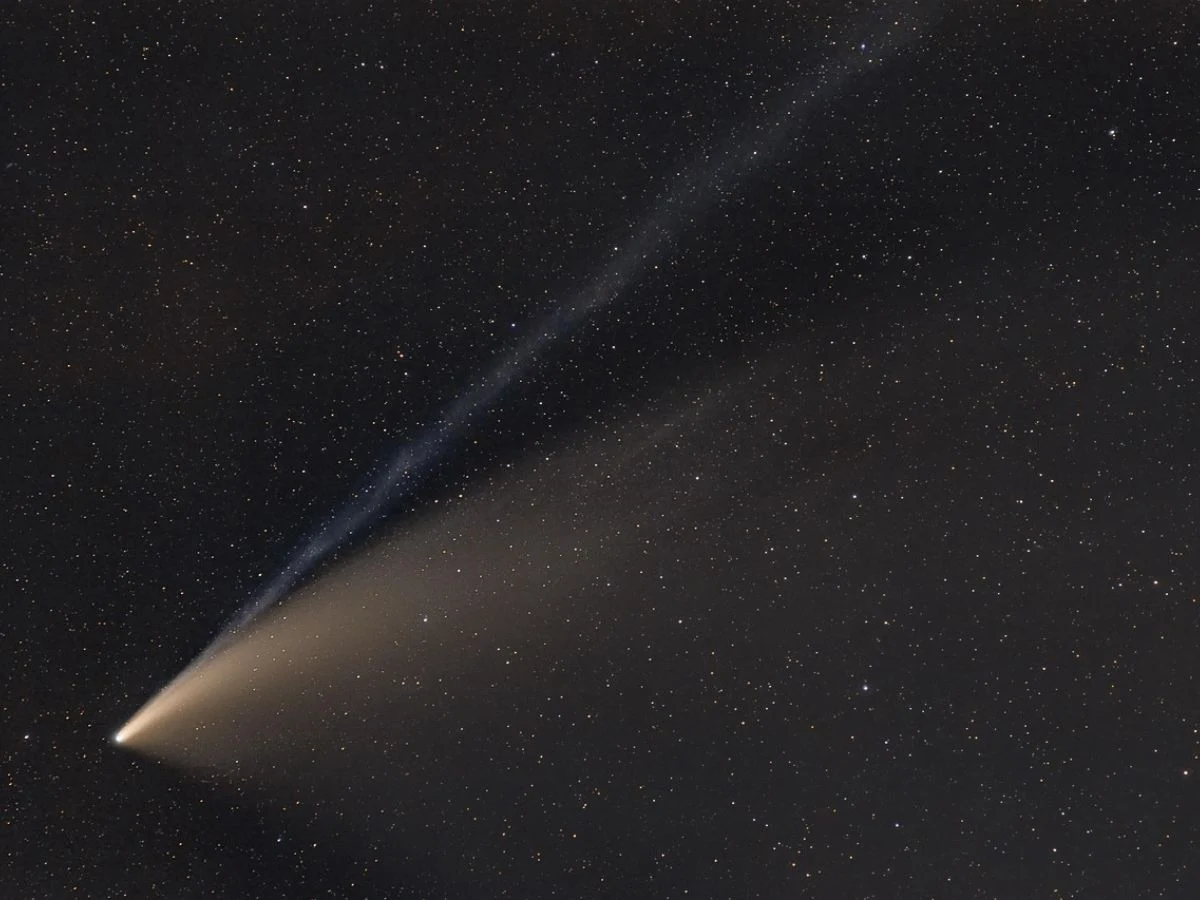
    In service for 35 years, the Hubble Space Telescope has allowed astronomers and scientists globally to make many discoveries. While the JWST is now more powerful and offers better results, Hubble recently captured an amazing image of comet 3I/ATLAS, which is simply stunning.

    Hubble’s Impact on Astronomy

    Since it was launched on April 25, 1990, Hubble has been crucial in observing and understanding the universe. It has helped astronomers estimate the universe’s size and age, as well as its expansion rate. Additionally, it famously observed the collision of comet Shoemaker-Levy 9 with Jupiter from July 16 to 22 in 1994.

    Continued Observations

    Even though its technology has been outdone by devices like the James Webb Space Telescope, NASA continues to utilize Hubble for observations. On November 30, 2025, it captured a remarkable image of comet 3I/ATLAS as it moved through our solar system, with some speculating it could be an alien probe.

    In the picture taken by Hubble’s Wide Field Camera 3 (WFCC3), a bright spot in the center represents the interstellar comet. At that time, it was 228 million kilometers away from Earth, and the white streaks visible are stars, as the telescope tracked its path across the sky. NASA has more observations planned, which may involve this telescope.

    Mysteries of the Comet

    Many questions still surround this comet, and astronomers are eager to solve them. However, it is drifting further away from our solar system, making future observations increasingly difficult.

    NASA science

    Source:
    Link


  • James Webb Discovers ‘Super-Puff’ Planet with Escaping Atmosphere

    James Webb Discovers ‘Super-Puff’ Planet with Escaping Atmosphere

    Key Takeaways

    1. JWST observed helium escaping the atmosphere of WASP-107b, providing insights into how high temperatures can lead to atmospheric loss.
    2. WASP-107b orbits a star 210 light-years away, with an orbit seven times smaller than Mercury, resulting in extreme heat exposure.
    3. Discovered in 2017, WASP-107b is a “super-puff” planet, similar in size to Jupiter but with much lower mass.
    4. The atmosphere of WASP-107b contains water, oxygen, carbon monoxide, carbon dioxide, and ammonia, but lacks methane, contrary to predictions.
    5. Observations of WASP-107b help scientists understand atmospheric erosion, potentially offering insights into the evolution of planets like Venus.


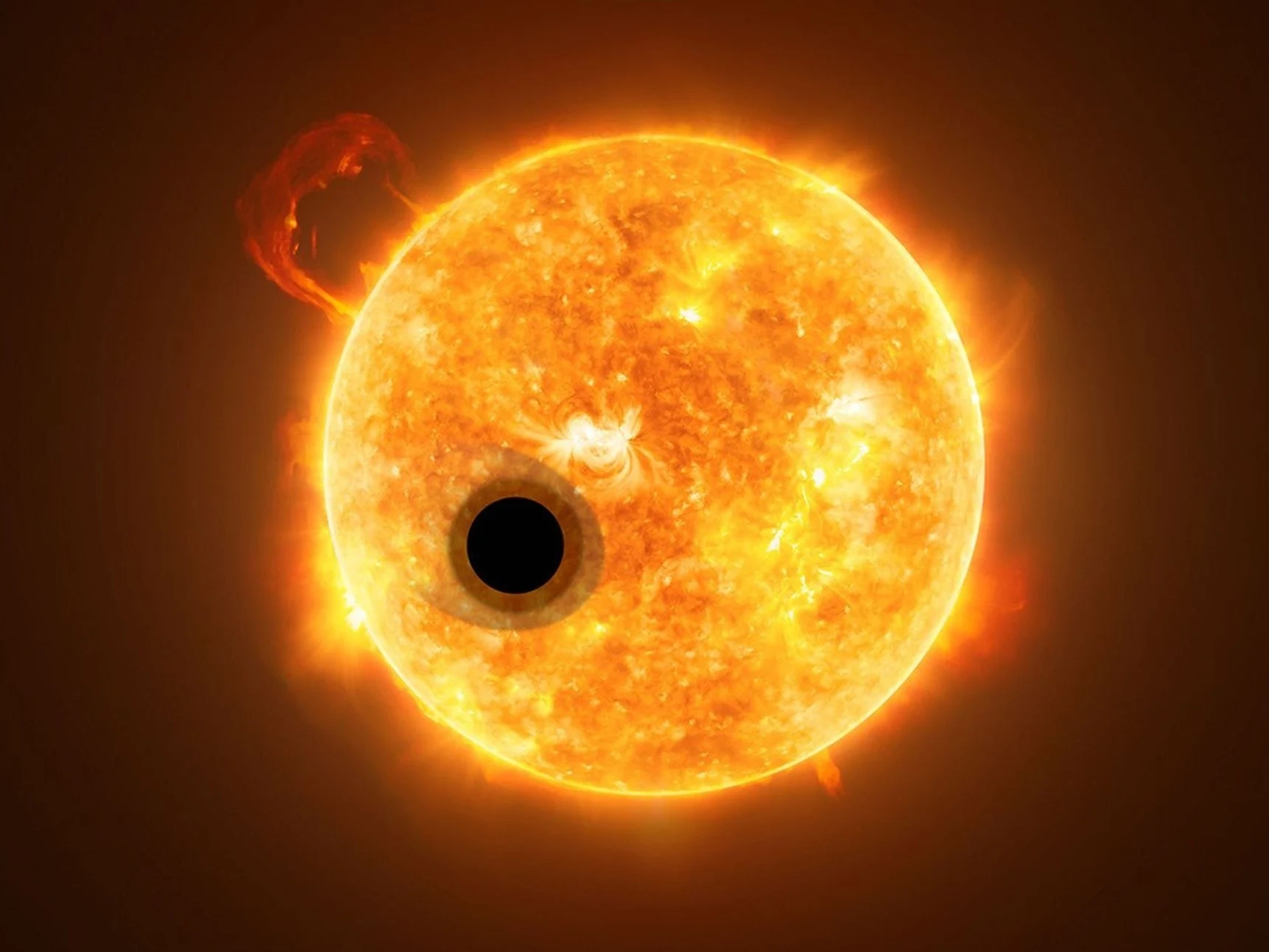
    According to a study released in Nature Astronomy, the JWST has observed that helium from WASP-107b is escaping its atmosphere. This gas is moving ahead of the planet, giving scientists a chance to explore in more depth how a planet can lose its outer layers because of very high temperatures.

    A Unique Orbit

    WASP-107b revolves around a star situated 210 light-years from our planet. The orbit of this exoplanet is about seven times smaller than that of Mercury, exposing it to an immense amount of heat, which seems to be fueling the fast outflow of its atmosphere into space.

    Characteristics of WASP-107b

    Discovered in 2017, WASP-107b is about the same size as Jupiter but has a mass that’s roughly 88 percent less, categorizing it as a “super-puff” low-density planet. Scientists think it originally formed farther from its star but was pulled into its current orbit, possibly influenced by another planet, WASP-107c.

    Atmospheric Composition

    The JWST has also verified the existence of water, oxygen, carbon monoxide, carbon dioxide, and ammonia in the atmosphere. However, unlike what chemical models predicted, methane was not found. The researchers theorize that the planet’s high temperatures are causing gases from deeper layers to rise to the upper atmosphere, which lack significant amounts of methane, leading to an atmosphere that differs from expectations.

    The observations of WASP-107b are aiding astronomers in comprehending the erosion of planetary atmospheres. Even though the situation with this exoplanet is quite unique, the insights gathered by the JWST could shed light on the development of planets like Venus.

    Source:
    Link


  • James Webb Telescope Maps Distant Planet, Revealing Extreme Heat

    James Webb Telescope Maps Distant Planet, Revealing Extreme Heat

    Key Takeaways

    1. The James Webb Space Telescope (JWST) has produced the first 3D thermal map of the exoplanet WASP-18b, located 400 light-years away.
    2. WASP-18b is an ultra-hot Jupiter, with extreme temperature differences between its sunlit and dark sides.
    3. The JWST used a technique called spectroscopic eclipse mapping to analyze the planet’s atmosphere during its transit behind its star.
    4. The mapping revealed a hot central area on WASP-18b reaching temperatures close to 2,760 °C (5,000 °F) and signs of water vapor loss.
    5. This groundbreaking study marks the first 3D mapping of an exoplanet’s atmosphere, enhancing our understanding of heat distribution on distant planets.


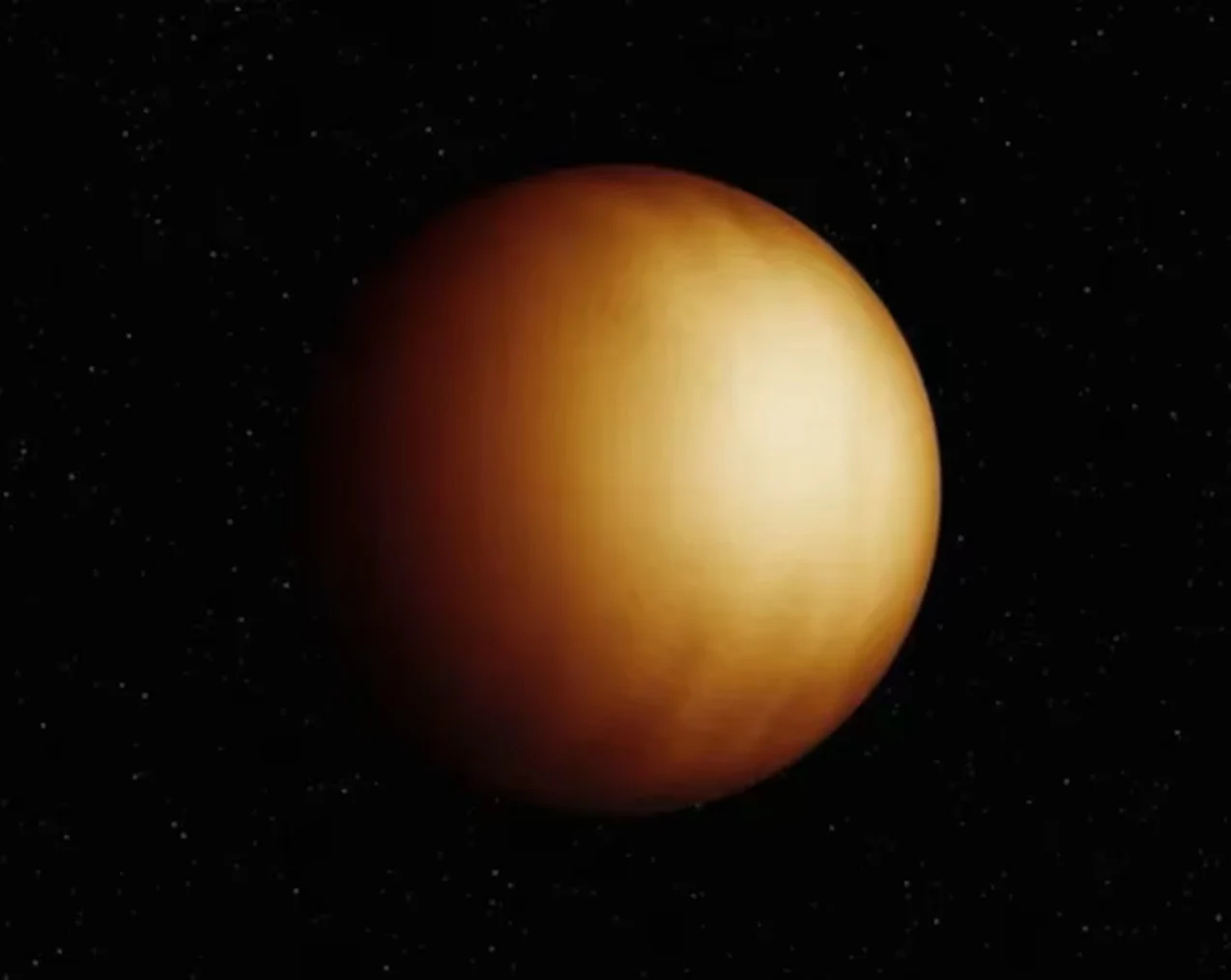
    The James Webb Space Telescope (JWST) continues to amaze with its remarkable contributions. Recently, NASA has unveiled the very first 3D thermal map of an exoplanet located beyond our solar system, specifically the WASP-18b, which is situated 400 light-years away from Earth.

    Characteristics of WASP-18b

    WASP-18b is classified as an ultra-hot Jupiter, a type of exoplanet that has one side constantly exposed to its star. This situation leads to extreme temperature differences between the illuminated side and the dark side, resulting in conditions that are quite unique.

    With the advanced infrared features of the JWST, scientists can now delve deeper into the study of such tidal planets.

    The Mapping Process

    The JWST employed its Near-Infrared Imager and Slitless Spectrograph (NIRISS) to carry out a technique called spectroscopic eclipse mapping. This method allowed researchers to observe drops in infrared light across various wavelengths while the WASP-18b exoplanet completely passed behind the star it orbits in a span of 24 hours.

    By analyzing different wavelengths, which penetrated distinct layers of WASP-18b’s atmosphere, the JWST was able to create a comprehensive 3D model of the planet’s temperature and composition.

    This approach proves advantageous for studying exoplanets that cannot be directly seen, as they are often outshone by their parent stars.

    New Discoveries

    From the 3D mapping, astronomers found that the exoplanet has an extremely hot central area on the sunlit side, reaching temperatures close to 2,760 °C (5,000 °F). Surrounding this hot spot is a cooler region that still has the potential to vaporize metals.

    One of the most intriguing findings is that the hotter area shows signs of a significant loss of water vapor. This observation has led scientists to speculate that WASP-18b is breaking down water molecules, a phenomenon that has not been extensively studied before.

    These groundbreaking results mark the first instance of mapping an exoplanet’s atmosphere in 3D. This advances our understanding of heat distribution on distant planets. The techniques developed here will be applied to explore other exoplanets in the future.

    Nature.

    Source:
    Link