Tag: supermassive black hole

  • Astronomers Detect Black Hole Winds at 30% Light Speed

    Astronomers Detect Black Hole Winds at 30% Light Speed

    Key Takeaway

    – Black hole winds in quasar J2318 reach 30% of light speed (201.2 million mph).
    – Quasar J2318 is 3 billion light-years away with a mass of 1.7 billion Suns.
    – The wind speed is equivalent to a “Category 79 hurricane” — vastly beyond Earthly storms.
    – Winds consist of high-speed matter, not atmospheric air.
    – Discovery used Sloan Digital Sky Survey data, improving understanding of black holes.


    Mysterious cosmic winds break records

    In the universe, many objects remain mysterious and poorly understood by astronomers, such as black holes. But recently, astronomers have discovered a black hole with winds reaching up to 30% of the speed of light, or about 201.2 million miles per hour. This finding realy challanges our understanding of extreme physics.

    The quasar J2318 and its supermassive black hole

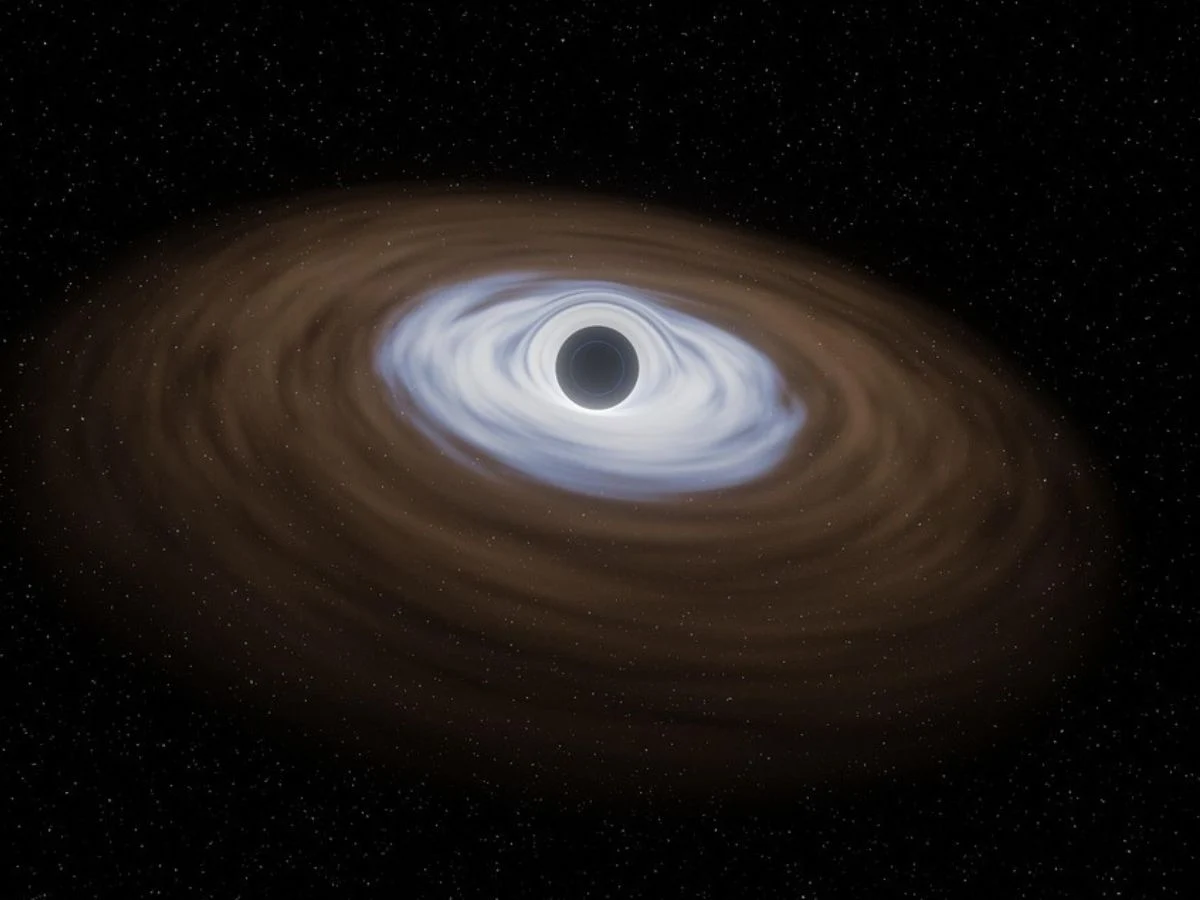
    These winds were detected in a quasar, which is a bright core of a galaxy fed by a supermassive black hole. Thus, this quasar, named J2318, is located about 3 billion light-years from Earth, and according to astronomers, its mass is estimated to be about 1.7 billion times that of the Sun. That is an absolutly colossal size.

    Category 79 hurricane? Not quite

    However, while its mass is already remarkable, the speed of its winds is also impressive, as Lucas Seaton explains: “In terms of its speed, this quasar’s wind could be called a category 79 hurricane. Every category of hurricane is about 20% faster than the category below it. Calling it Category 79 gives an idea of just how fast it is, but of course this wind is unlike anything on Earth.”

    Indeed, these are not winds like those found on Earth, as they are composed of matter propelled at high speeds. And that’s not all, because in order to detect this phenomenon, astronomers used data from the Sloan Digital Sky Survey (SDSS). These measurments required high-precision instruments.

    What this means for science

    As a result, while this discovery highlights the power of black holes, it also allows researchers to better understand these celestial objects, which remain mysterious and poorly understood. And there is no doubt that further studies will be conducted in the near future. The data continues to inspire awe.
    Sources

  • Hubble Captures Stunning Spiral Galaxy M88 Image

    Hubble Captures Stunning Spiral Galaxy M88 Image

    Key Takeaway

    – M88 is a 121,000-light-year-wide spiral galaxy in the Virgo Cluster.
    – Its bright center contains a supermassive black hole 100 million times the Sun’s mass.
    – Symmetrical spiral arms contain pink and blue star clusters and dust clouds.
    – M88 will approach the much larger M87 in 200–300 million years.
    – This encounter will eject gas and reshape M88, affecting star formation.


    Observing the Details of Galaxy M88

    The universe contain many galaxies, and some are more interesting than others due to there shape and composition. This is the case for M88, a spiral galaxy located about 63 million light-years from Earth that was recently observed by the Hubble Space Telescope. It measures about 121,000 light-years in diameter and belongs to the Virgo Cluster, a region containing more than a thousand galaxies held together by gravity.

    What the Image Reveals

    In this image recently released by NASA, a bright light can be seen at its center. This glow is caused by a group of reddish stars orbiting a supermassive black hole with a mass estimated at 100 million times that of the Sun. It is also possible to observe symmetrical spiral arms composed of several clusters of pink and blue stars and dust clouds. However, although this image is remarkable, this galaxy may be headed for a tragic fate.

    The Future Trajectory

    Indeed, the galaxies located in the Virgo Cluster orbit the clusters center. According to astronomers, in 200 to 300 million years, M88 will be very close to M87, an elliptical galaxy with a supermassive black hole about 6.5 billion times more massive than the Sun. During this event, gas will be ejected from M88 and its shape will change considerably, which could alter its composition and its ability to form new stars.

    • Distance: 63 million light-years
    • Diameter: 121,000 light-years
    • Black hole mass: 100 million solar masses
    • M87 black hole mass: 6.5 billion solar masses
    • Predicted close approach: 200-300 million years


    Sources

  • Black Hole Surprises Astronomers by Brightening After Five Years

    Black Hole Surprises Astronomers by Brightening After Five Years

    Key Takeaways

    1. Supermassive black holes have strong gravitational pulls that can rip apart stars and create accretion disks.
    2. The black hole AT2018hyz is unusual because its brightness has continually increased since a star vanished in 2018.
    3. By 2019, AT2018hyz became 50 times brighter, rivaling gamma-ray bursts, making it one of the brightest cosmic events recorded.
    4. This prolonged brightness challenges existing astronomical theories and poses questions about the nature of such events.
    5. Ongoing research is necessary to understand the unique behavior of AT2018hyz and its implications for our understanding of the universe.


    Supermassive black holes are incredibly strong celestial bodies that can pull in stars with their intense gravitational pull. However, the aftermath for these stars is often swift and dramatic, as their material gets ripped apart and creates an accretion disk around the black hole. Although this kind of event is not rare in the cosmos, astronomers have encountered a black hole displaying unexpected behavior.

    An Unusual Discovery

    This black hole, known as AT2018hyz, has captured the attention of astronomers and scientists alike because its brightness has been rising since a star vanished in 2018. Typically, when such a phenomenon occurs, brightness spikes for a limited time before it begins to fade. Yet, in this instance, the brightness continued to increase into 2019.

    A Bright Phenomenon

    Recent radio observations reveal that it is currently 50 times brighter than it was in 2019, with energy output that rivals gamma-ray bursts. This makes it one of the brightest events seen in the universe, which has left researchers like Yvette Cendes, an astrophysicist from the University of Oregon and lead author of the study, quite astonished. She noted,

    “This is really unusual. I’d be hard-pressed to think of anything rising like this over such a long period of time. If you have an explosion, why would you expect there to be something years after the explosion happened when you didn’t see something before?”

    Ongoing Mysteries

    Astronomers are still grappling with this question, as this occurrence is unique in its extended duration and it challenges their existing theories about the universe. Consequently, more research is essential to unravel the mysteries surrounding its unusual behavior.

    Source:
    Link


  • NASA Probe Uncovers Violent History of Milky Way’s Black Hole

    NASA Probe Uncovers Violent History of Milky Way’s Black Hole

    Key Takeaways

    1. The Milky Way contains a supermassive black hole that is still not fully understood.
    2. Black holes have strong gravitational pulls that capture everything, even light, but powerful outbursts from orbiting material can occur.
    3. The XRISM telescope has provided new insights into the black hole’s history by studying a molecular cloud near the galaxy’s center.
    4. Researchers detected intense X-ray eruptions from the black hole that happened in the last millennium.
    5. Future research will focus on discovering new elements and further understanding the cosmic environment around the black hole.


    At the heart of our galaxy, known as the Milky Way, lies a supermassive black hole that remains shrouded in mystery. Numerous studies are underway, and NASA’s X-ray space probe has recently uncovered significant insights regarding its tumultuous history.

    The Nature of Black Holes

    It’s important to understand that black holes possess such strong gravitational pulls that they trap everything within their reach, including light. Yet, the material that orbits these enormous entities responds to this gravity, leading to the potential for powerful outbursts, although current instruments have not detected any related to Sgr A*.

    New Discoveries with XRISM

    Recently, researchers have utilized the XRISM telescope to delve into the history of this supermassive black hole. In their exploration, they examined a molecular cloud situated near the galaxy’s center. They successfully captured a reflection of the X-rays emitted by the black hole, revealing intense eruptions that occurred in the last millennium.

    Stephen DiKerby, the project leader from Michigan State University, expressed his astonishment at this finding in a press release, stating,

    “Nothing in my professional training as an X-ray astronomer had prepared me for something like this. This is an exciting new capability and a brand-new toolbox for developing these techniques.”

    Future Research Avenues

    Looking ahead, further research may be conducted in the upcoming months to identify new elements. There is no doubt that these investigations will enhance our understanding of the cosmos surrounding us.

    EurekAlert! Science News Releases

    Source:
    Link


  • Hubble’s Stunning Galaxy with Unusual Glowing Gas Revealed

    Hubble’s Stunning Galaxy with Unusual Glowing Gas Revealed

    Key Takeaways

    1. NGC 4388 is a spiral galaxy located about 60 million light-years away in the Virgo constellation.
    2. A new image of NGC 4388 reveals a plume of bright gas being ejected from the galaxy’s disc.
    3. The gas outflow is caused by interactions with the hot intracluster medium as NGC 4388 moves through it.
    4. The glow observed may be related to the supermassive black hole at the galaxy’s core, which ionizes nearby gas.
    5. The Hubble image is a result of various observing programs aimed at studying galaxies with active black holes.


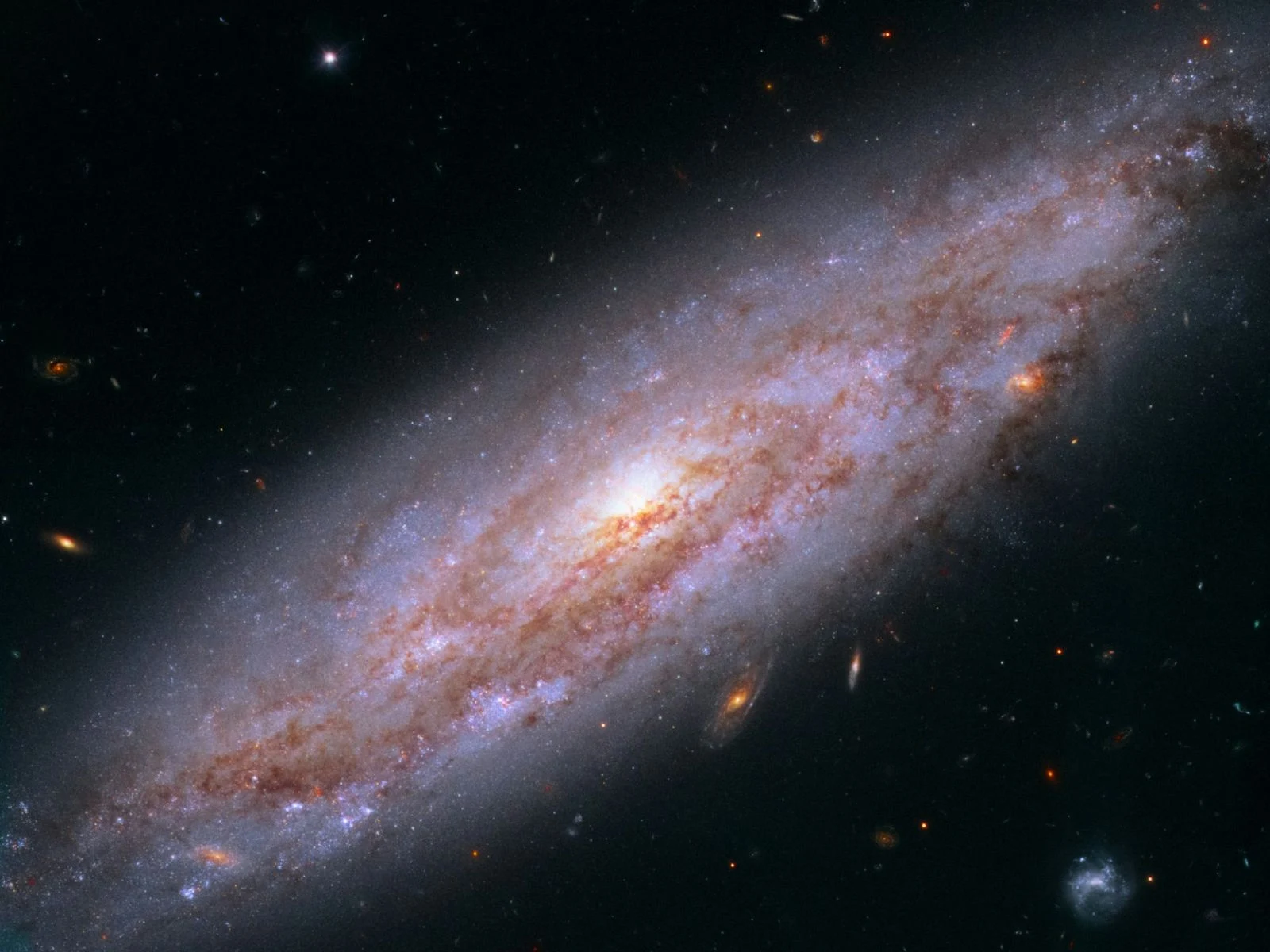
    NGC 4388 is a spiral galaxy situated roughly 60 million light-years away in the Virgo constellation, also known as The Maiden. This galaxy is familiar to Hubble, which had previously captured an image of it in 2016. The latest image, however, offers more detailed data, showcasing a plume of bright gas that is ejecting from the galaxy’s disc.

    Reasons Behind the Gas Outflow

    Researchers have put forth plausible explanations for the gas outflow. NGC 4388 is a member of the Virgo galaxy cluster, where galaxies are spaced apart by regions filled with hot gas, referred to as the intracluster medium. As NGC 4388 traverses through this medium, it encounters pressure from the surrounding gas. This interaction leads to some of its own gas being stripped away, which is what we observe as the gas outflow emerging from NGC 4388’s disc towards the lower right side of the image.

    The Mystery of the Glow

    The origin of the glow remains largely uncertain. Nevertheless, scientists propose that it might be linked to the supermassive black hole situated at the galaxy’s core. This black hole spins the gas around it, creating a superheated disc. This disc then ionizes the nearby gas, resulting in the glowing effect. The distant gas likely emits light due to shock waves created in the process.

    This image from Hubble was made possible through contributions from various observing programs. These programs are designed to enhance our understanding of galaxies that have active black holes at their centers.

    Source:
    Link


  • Celestial Objects That Survive Milky Way’s Supermassive Black Hole

    Celestial Objects That Survive Milky Way’s Supermassive Black Hole

    Key Takeaways

    1. The Milky Way’s supermassive black hole is about 4 million times the mass of the Sun, yet some celestial bodies can survive its influence.
    2. Astronomers used the ERIS instrument at the Very Large Telescope in Chile to challenge previous beliefs about the fate of certain celestial entities near the black hole.
    3. The gas and dust cloud G2 was observed to safely pass the black hole without being destroyed, suggesting a star within it helps maintain its stability.
    4. Other celestial objects, like the binary star system D9 and the moving formations X7 and X3, are also showing unexpected behaviors in their interactions with the black hole.
    5. These findings indicate a surprisingly peaceful environment around the supermassive black hole, contrasting with its known destructive power.


    At the core of our Milky Way galaxy, there lies a supermassive black hole that is roughly 4 million times heavier than our Sun. Despite its incredible strength, scientists have found that some celestial bodies can endure its influence. This is quite unexpected, as the force from such a structure can rip apart numerous stars, planets, and clouds in space.

    Discovering the Unexpected

    Using the ERIS instrument from the Very Large Telescope located in Chile, astronomers were able to make this fascinating discovery. They also found that previous research, which suggested these celestial entities would vanish into the black hole, was incorrect.

    The Case of G2

    Years back, researchers looked at G2, a cloud comprising gas and dust, which was situated in a dangerous area that could lead to its destruction. However, the outcome was quite the opposite; astronomers observed that this formation simply moved past the black hole, steering clear of the event horizon without any alterations. Dr. Florian Peißker proposed a theory to account for this phenomenon, suggesting that a star exists within the gas and dust cloud, enabling it to keep a stable orbit.

    Observations of Other Objects

    Other celestial phenomena have also been examined, like D9, a binary star system that has yet to merge. Moreover, X7 seems to be continuing its path northward, while X3 has sped up by approximately 100 km/s. This indicates that the environment surrounding this cosmic giant is relatively peaceful, which is quite a contrast to its formidable destructive capability.

    In summary, the findings from Astronomy & Astrophysics reveal a complex relationship between these celestial entities and the supermassive black hole at the heart of our galaxy.

    Source:
    Link


  • Supermassive Black Hole Discovered Growing Fast in Early Universe

    Supermassive Black Hole Discovered Growing Fast in Early Universe

    Key Takeaways

    1. Scientists studied the galaxy CANUCS-LRD-z8.6 and its massive black hole using data from the James Webb Space Telescope, focusing on a time just 570 million years after the Big Bang.

    2. The Near-Infrared Spectrograph (NIRSpec) on the Webb telescope helped isolate the faint light from the galaxy and identify elements indicating an actively consuming black hole.

    3. The supermassive black hole in CANUCS-LRD-z8.6 is unusually large for such an early stage in the universe’s history.

    4. The mass of the supermassive black hole does not align with the mass of the stars in the galaxy, challenging existing theories about the relationship between black holes and their host galaxies.

    5. The findings enhance understanding of black holes and their formation, with plans for further observations using ALMA and the Webb telescope.


    A group of scientists utilized information from the James Webb Space Telescope to investigate the galaxy CANUCS-LRD-z8.6 and its massive black hole. They managed to examine this galaxy during a very early phase of the universe, just 570 million years following the Big Bang.

    Advanced Observations

    Employing Webb’s Near-Infrared Spectrograph (NIRSpec), the researchers were able to isolate the dim light coming from this remote galaxy. The telescope’s features also allowed them to identify crucial spectral elements that hinted at the existence of a black hole that was actively consuming material.

    Surprising Findings

    Through their observations, the team found that the supermassive black hole located in CANUCS-LRD-z8.6 was remarkably large. It’s unusual to see such a massive black hole formed at such an early point in the universe’s history.

    The Webb telescope also played a significant role in uncovering the characteristics of the galaxy itself. They managed to calculate the total mass of the stars within the galaxy. Oddly, the mass of the supermassive black hole didn’t correspond with the mass of the stars in the galaxy.

    Challenging Existing Theories

    Earlier research has indicated a connection between the size of supermassive black holes and their host galaxies. However, the black hole in CANUCS-LRD-z8.6 seemed to challenge this idea, as it was expanding at a quicker rate than its surrounding galaxy.

    This discovery is enhancing the present comprehension of black holes and their formation processes. The findings were shared in Nature Communications. The research team intends to explore their findings further and plans to conduct more observations of the galaxy with the Atacama Large Millimeter/submillimeter Array (ALMA) and the Webb telescope.

    Source:
    Link


  • NASA Discovers Record-Breaking Fastest Growing Black Hole

    NASA Discovers Record-Breaking Fastest Growing Black Hole

    Key Takeaways

    1. The Chandra X-ray Observatory discovered a supermassive black hole approximately a billion times the mass of the Sun, located 12.8 billion light-years away, indicating it existed early in the universe’s history.

    2. Black holes attract matter, forming an accretion disk that heats up and emits radiation, which can create incredibly bright objects known as quasars.

    3. The black hole in question powers a quasar named RACS J0320-35 and is growing at an extraordinary rate, potentially exceeding the Eddington limit.

    4. Researchers propose two theories about the black hole’s rapid growth: it may be expanding at 2.4 times the Eddington limit or may have started with a mass of about 10,000 Suns or more.

    5. The unusual growth rate of RACS J0320-35 and its particle jets raise questions about the formation of the universe’s first black holes, with findings published in the Astrophysical Journal.


    The Chandra X-ray Observatory has spotted a supermassive black hole that weighs in at roughly a billion times the mass of the Sun. This celestial giant is positioned around 12.8 billion light-years away from our planet. Consequently, astronomers are observing it from a time just 920 million years after the universe’s inception, indicating that it existed very early in the universe’s timeline.

    Matter and Radiation

    Black holes have a tendency to attract significant amounts of matter. This matter forms a swirling disk around the black hole, known as an accretion disk, and reaches incredibly high temperatures as it spirals inward. As this matter heats up, it releases radiation.

    Quasars and Rapid Growth

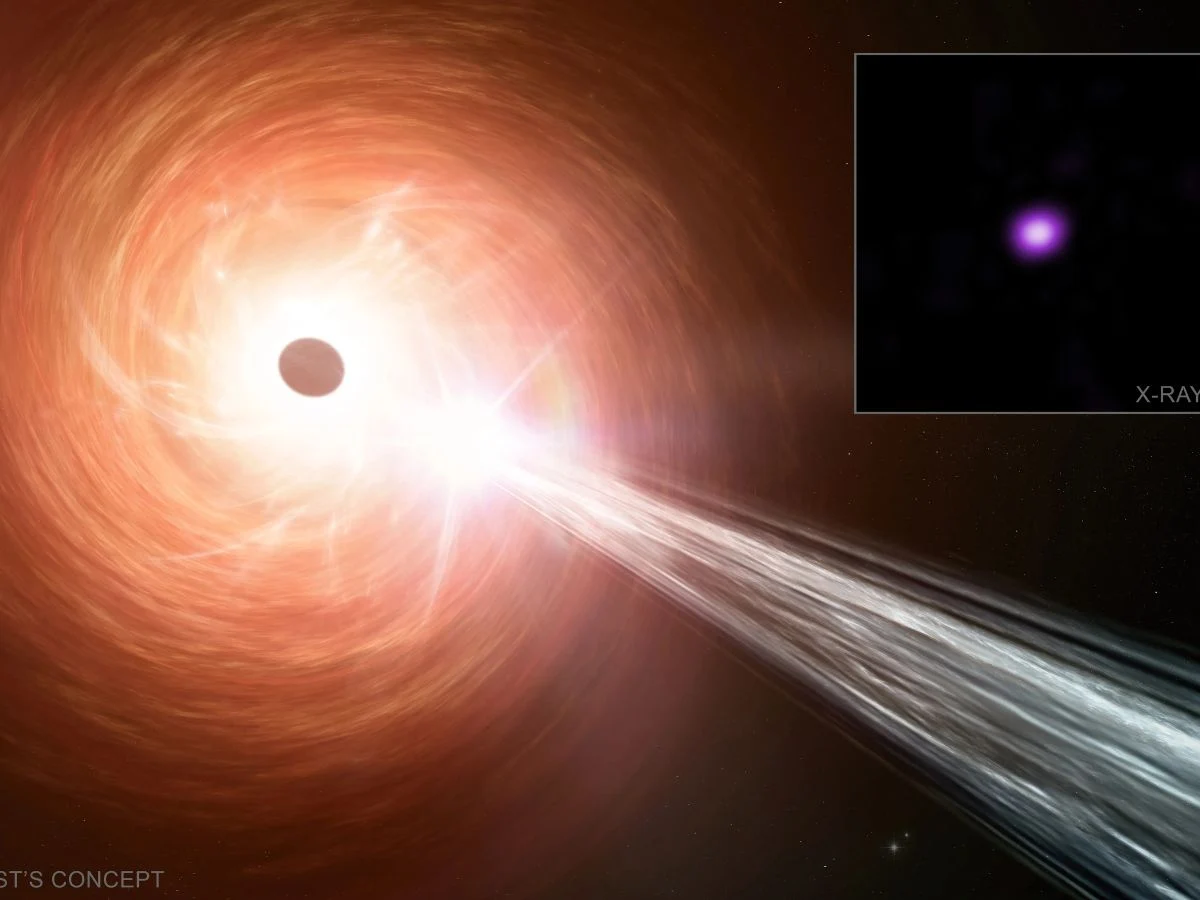
    In the case of supermassive black holes, the radiation from the heated matter can outshine the entire galaxy it resides in. The bright object resulting from this phenomenon is termed a quasar. The black hole under discussion powers a quasar identified as RACS J0320-35.

    Researchers have determined that the black hole fueling RACS J0320-35 is expanding at an unprecedented speed. As black holes consume matter, there comes a moment when the gravitational pull inwards and the radiation pressure outwards reach an equilibrium, known as the Eddington limit.

    The Eddington Limit and Theories

    Considering the mass of this black hole, the researchers proposed two theories: it could either be growing at 2.4 times the Eddington limit or may have originated with a mass equivalent to about 10,000 Suns or more. Typically, black holes start out with a mass of less than a hundred Suns.

    Upon comparing the data from RACS J0320-35 with theoretical models, the evidence suggests that this quasar might indeed be expanding faster than the Eddington limit allows. Additionally, the jets of particles that shoot away from RACS J0320-35 have sparked further inquiries. The unusual growth rate of the black hole might explain the existence of these rare jets.

    The results of this research were recently shared in the Astrophysical Journal. These findings could offer valuable insights into a long-standing question: “How did the Universe form the very first black holes?”

    Source:
    Link


  • Astromers Discover 2 Galaxies with 3 Black Holes for First Time

    Astromers Discover 2 Galaxies with 3 Black Holes for First Time

    Key Takeaways

    1. Researchers discovered the Infinity Galaxy, formed from the collision of two galaxies, using data from the James Webb Space Telescope.
    2. An active supermassive black hole was found floating between the two galaxies, rather than at their centers.
    3. This black hole supports the heavy seed theory of black hole formation, suggesting massive gas clouds can collapse directly into giant black holes.
    4. Observations show the black hole’s speed matches the gas cloud’s speed, indicating it likely formed in its current location rather than being expelled from another galaxy.
    5. The Infinity Galaxy is unique as it hosts three active supermassive black holes, including those in both original galactic nuclei.


    Researchers who are looking at public data from the James Webb Space Telescope have stumbled upon a peculiar object called the Infinity Galaxy. It seems to be the outcome of a direct collision between two galaxies. An even more astonishing find was made — an active, supermassive black hole that’s not located in the center of either galaxy, but instead floating in the large volume of gas that lies between them.

    New Insights on Black Hole Formation

    This black hole, which is not at the center, could be the strongest evidence for the heavy seed theory regarding the formation of black holes. This idea suggests that a huge cloud of gas can collapse directly into a giant black hole. This process might explain how the massive black holes spotted by Webb in the early universe became so large at such a rapid pace.

    “We believe we are observing the creation of a supermassive black hole – something never seen before,” says Pieter van Dokkum from Yale University, who is the main author of a paper discussing this discovery.

    Confirming the Findings

    The research team utilized Webb to carry out additional observations to verify their theory. The fresh data indicated that the speed of the black hole aligns perfectly with the speed of the gas cloud around it. This crucial finding makes it very unlikely that the black hole is a runaway object that was expelled from another galaxy; rather, it strongly hints that it formed right there from the collapsing gas.

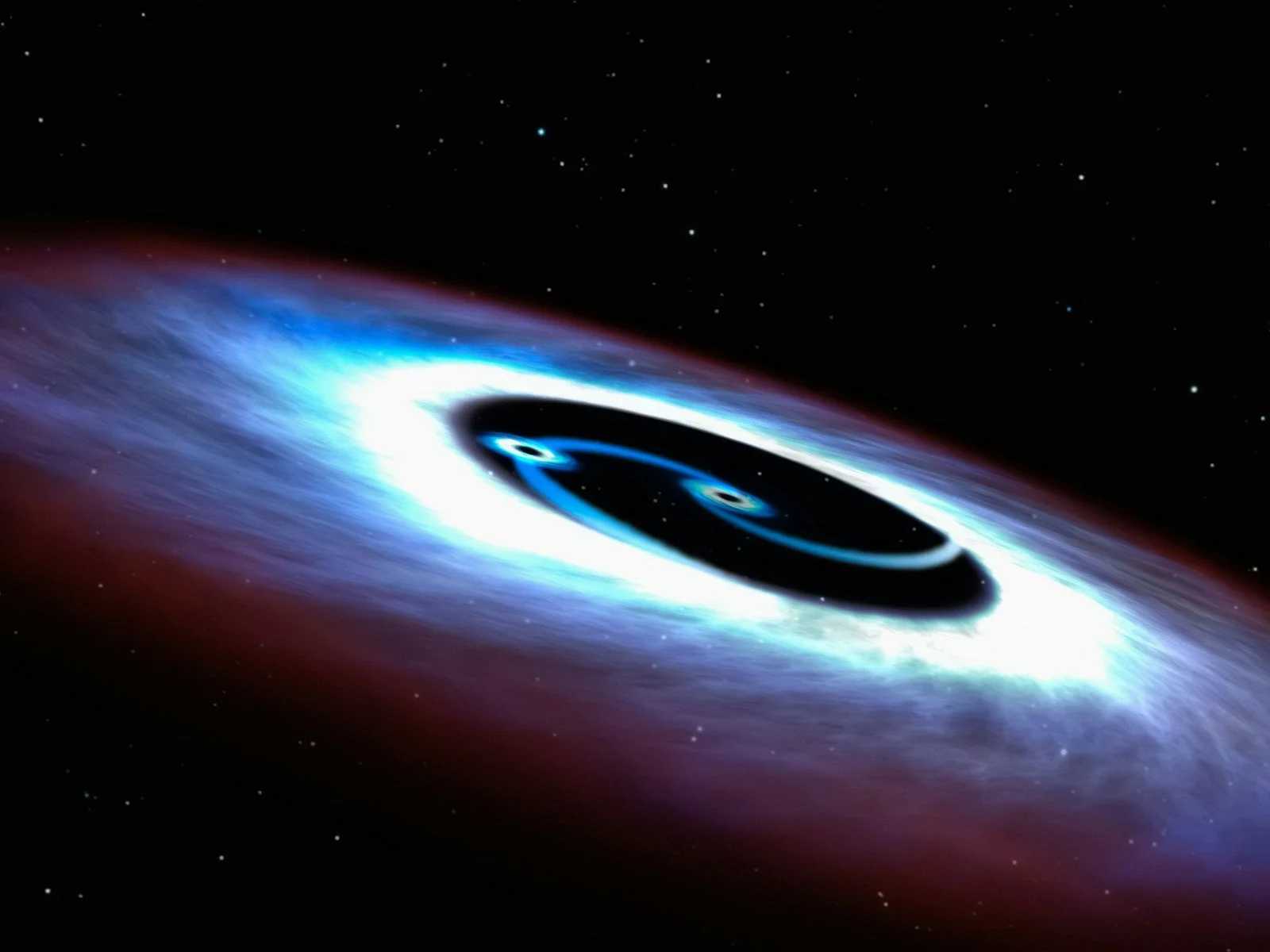
    To make this discovery even more remarkable, the researchers also found out that both of the initial galactic nuclei have their own active supermassive black holes. This makes the Infinity Galaxy a unique system, hosting three such black holes. While the team notes that they cannot definitively assert they have found a black hole formed by direct collapse, they mention that the new data bolsters their argument while ruling out other possible explanations.

    Source:
    Link