Tag: Hubble Telescope

  • Hubble Space Telescope Captures Clear Image of Egg Nebula

    Hubble Space Telescope Captures Clear Image of Egg Nebula

    Key Takeaways

    1. The Hubble Telescope, despite the rise of the James Webb Space Telescope, continues to play a key role in astronomical research.
    2. The Egg Nebula is the youngest and nearest nebula discovered, located about 1,000 light-years from Earth.
    3. Hubble has captured its clearest image of the Egg Nebula, merging data from observations made in 1997, 2003, 2012, and recent times.
    4. The latest image reveals twin beams moving in circular arcs, suggesting gravitational interactions with hidden companion stars.
    5. The Egg Nebula is in a pre-planetary stage, providing a unique opportunity for astronomers to study its early life cycle and related nebulae questions.


    Since it first appeared in 1990, the Hubble Telescope has helped astronomers to uncover numerous secrets of the universe. Although the James Webb Space Telescope is considered to be more effective, Hubble still plays a significant role in research. Recently, it has captured the clearest image yet of the Egg Nebula.

    Unique Location of the Egg Nebula

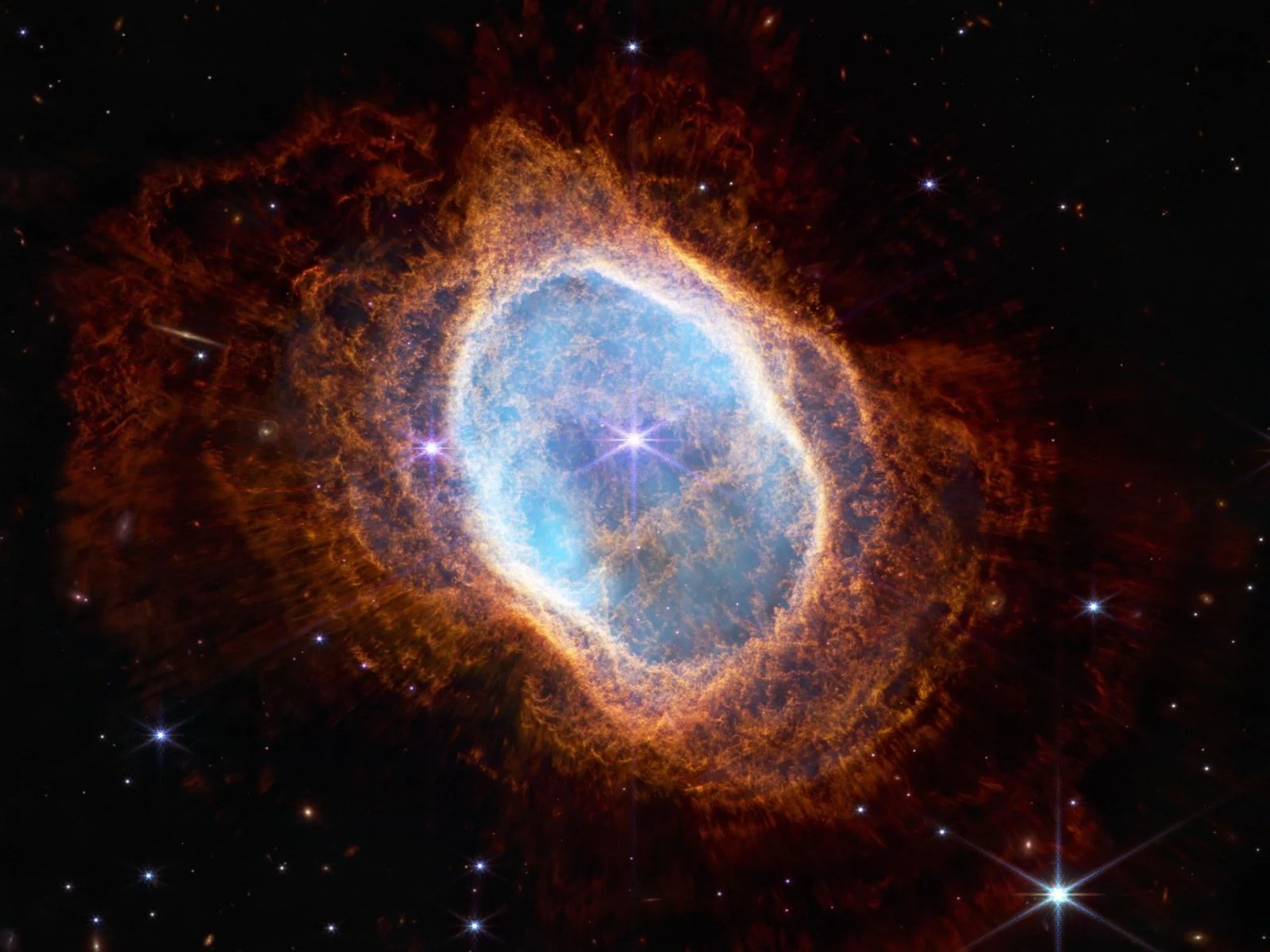
    Situated around 1,000 light-years away from our planet, the Egg Nebula is recognized as the youngest and nearest nebula that has ever been found. A key aspect of this formation is that it exists in the early stages of its life cycle. To get such a clear image, it’s worth mentioning that Hubble previously observed this nebula in 1997, 2003, and again in 2012. The latest results came from merging the 2012 image with more recent observations.

    Astonishing Details Revealed

    Looking closely at this latest image, which is the most detailed we’ve seen, we can spot twin beams on either side of the star, moving through circular arcs. Moreover, astronomers suggest that the shapes and motions of these beams indicate gravitational interactions with companion stars that remain hidden within the nebula.

    Thus, the Egg Nebula is currently in a transitional phase known as the pre-planetary stage, which only lasts a few thousand years. This unique opportunity may allow astronomers to gain a deeper understanding of this phase and also to explore certain questions related to nebulae.

    Source:
    Link


  • Hubble Space Telescope’s Stunning Picture of the Week

    Hubble Space Telescope’s Stunning Picture of the Week

    Key Takeaways

    1. N159 is one of the largest star-forming regions in the Large Magellanic Cloud, located about 160,000 light-years away in the constellation Dorado.

    2. A new Hubble Space Telescope image reveals bubble-like formations created by young stars in gas clouds, highlighting the presence of cold hydrogen gas.

    3. The hydrogen gas forms an intricate web with ridges and glowing threads, while young blue stars produce stellar winds and radiation that shape the surrounding gas.

    4. The intense radiation from these stars ionizes nearby hydrogen gas, causing it to glow in a deep red hue.

    5. The Hubble image showcases the relationship between stars and their environments, aiding astronomers in understanding star formation processes.


    N159 is recognized as one of the largest star-forming regions found within the Large Magellanic Cloud. Positioned approximately 160,000 light-years away, it can be seen in the constellation Dorado. The Large Magellanic Cloud is known as a dwarf galaxy that orbits our Milky Way, and it holds the title of the biggest among the smaller galaxies that circle around our galaxy.

    Hubble’s Latest Discovery

    A new image taken by the Hubble Space Telescope has revealed a portion of N159, showcasing the bubble-like formations produced by young stars within the gas clouds. This latest image presents a similar sight, but it shows that cold hydrogen gas is even more prevalent in this area.

    The Beauty of Hydrogen Gas

    The hydrogen gas creates an intricate web of ridges, cavities, and glowing threads. The bubble-like shapes are still visible in this new capture. Young, massive hot blue stars generate powerful stellar winds and intense radiation that carve out spaces in the surrounding gas. These processes lead to the formation of the bubble-like structures. Moreover, the intense radiation from these youthful stars also ionize the nearby hydrogen gas, causing it to glow in a deep red hue, as depicted in the image.

    Dark Dust and Stellar Relationships

    At the center of the photograph, there is a prominent presence of thick dark dust that obscures light from stars in that area.

    This Hubble image illustrates the intricate connection between stars and their surroundings. It has the potential to assist astronomers in deepening their understanding of the processes of star creation and the transformation of their environments.

    Source:
    Link


  • Hubble’s Stunning Galaxy with Unusual Glowing Gas Revealed

    Hubble’s Stunning Galaxy with Unusual Glowing Gas Revealed

    Key Takeaways

    1. NGC 4388 is a spiral galaxy located about 60 million light-years away in the Virgo constellation.
    2. A new image of NGC 4388 reveals a plume of bright gas being ejected from the galaxy’s disc.
    3. The gas outflow is caused by interactions with the hot intracluster medium as NGC 4388 moves through it.
    4. The glow observed may be related to the supermassive black hole at the galaxy’s core, which ionizes nearby gas.
    5. The Hubble image is a result of various observing programs aimed at studying galaxies with active black holes.


    NGC 4388 is a spiral galaxy situated roughly 60 million light-years away in the Virgo constellation, also known as The Maiden. This galaxy is familiar to Hubble, which had previously captured an image of it in 2016. The latest image, however, offers more detailed data, showcasing a plume of bright gas that is ejecting from the galaxy’s disc.

    Reasons Behind the Gas Outflow

    Researchers have put forth plausible explanations for the gas outflow. NGC 4388 is a member of the Virgo galaxy cluster, where galaxies are spaced apart by regions filled with hot gas, referred to as the intracluster medium. As NGC 4388 traverses through this medium, it encounters pressure from the surrounding gas. This interaction leads to some of its own gas being stripped away, which is what we observe as the gas outflow emerging from NGC 4388’s disc towards the lower right side of the image.

    The Mystery of the Glow

    The origin of the glow remains largely uncertain. Nevertheless, scientists propose that it might be linked to the supermassive black hole situated at the galaxy’s core. This black hole spins the gas around it, creating a superheated disc. This disc then ionizes the nearby gas, resulting in the glowing effect. The distant gas likely emits light due to shock waves created in the process.

    This image from Hubble was made possible through contributions from various observing programs. These programs are designed to enhance our understanding of galaxies that have active black holes at their centers.

    Source:
    Link


  • Stunning Hubble Image of Star-Forming Complex Named Image of the Week

    Stunning Hubble Image of Star-Forming Complex Named Image of the Week

    Key Takeaways

    1. N159 is an H II region located about 160,000 light-years away in the constellation Dorado, consisting of ionized hydrogen gas from young, massive stars.
    2. Young stars emit strong ultraviolet rays that ionize hydrogen atoms, leading to the release of light in the H-alpha spectrum, which gives N159 its reddish appearance.
    3. N159 is one of the largest star-forming clouds in the Large Magellanic Cloud, spanning over 150 light-years.
    4. Hubble’s images of N159 highlight the hot gases involved in star formation, showcasing bright red clouds and sparkling stars in different areas of the region.
    5. N159 is described as a “turbulent cauldron of star birth,” illustrating the intense activities of star formation occurring within it.


    N159 is a well-known H II region situated approximately 160,000 light-years away in the constellation Dorado. An H II region consists of hydrogen gas that has been ionized due to the intense heat emitted by young, massive stars.

    These young stars produce strong ultraviolet rays that cause hydrogen atoms to lose their electrons — a process referred to as ionization. As the electrons and protons in the hydrogen atoms recombine, they eventually release light, especially in the H-alpha spectrum. H-alpha light emits a red hue, which gives star-forming areas like N159 their distinct reddish look.

    A Massive Star-Forming Cloud

    N159 ranks among the largest star-forming clouds within the Large Magellanic Cloud, which is a smaller galaxy that orbits our Milky Way. The image here represents only a small fraction of N159, which spans over 150 light-years—almost 10 million times the distance from the Earth to the Sun.

    In 2016, Hubble shared an image showcasing the entire N159 star-forming cloud. However, that particular image didn’t emphasize the hot gases responsible for star formation. In the current image, this crucial aspect is clearly shown. The bright red clouds dominate the left and center sections, while the right side reveals sparkling stars due to the scarcity of gas there.

    A Turbulent Cauldron of Star Birth

    N159 has been referred to as a “turbulent cauldron of star birth.” The capability of Hubble to produce such images allows us to grasp the intense activities of star formation taking place in N159 much better.

    Source:
    Link