Tag: Nvidia RTX 5080

  • Nvidia GeForce Now India Showcase: Impressive but Unanswered Questions

    Nvidia GeForce Now India Showcase: Impressive but Unanswered Questions

    Key Takeaways

    1. Nvidia is launching its GeForce Now service in India soon, after delays due to backend infrastructure needs.
    2. GeForce Now features advanced streaming capabilities with RTX 5080 GPUs, supporting resolutions up to 5K and 120 fps, along with new Cinematic Quality Streaming (CQS) mode.
    3. The service allows streaming of over 4,000 games from various platforms, backed by Nvidia’s global network of data centers, including new ones in India.
    4. Initial testing showed positive performance with low latency, but concerns remain about service reliability in remote areas and data center capacity for a growing user base.
    5. Pricing for GeForce Now in India is expected to range from free to around ₹1,900 per month, with questions about persistent storage and competition from services like Microsoft Xbox Cloud Gaming.


    Nvidia has been considering launching its GeForce Now (GFN) service in India since CES 2025, but the need for a solid backend to handle a large number of users has caused delays.

    Now, Nvidia is set to introduce GeForce Now to India in the next few weeks. We got a brief early experience, which was quite positive but also raised several questions.

    Launch and Upgrades

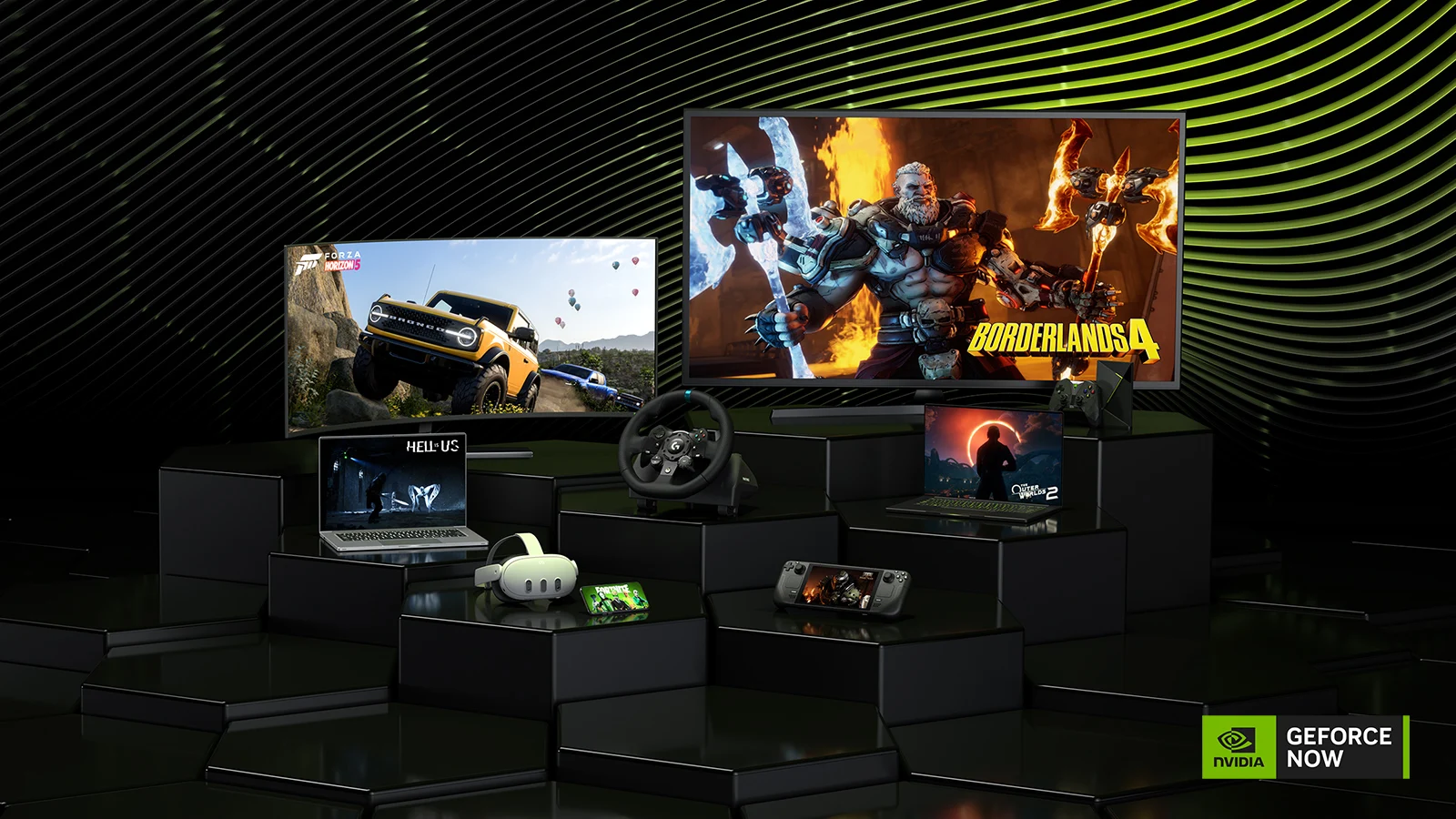
    Nvidia first made GeForce Now available to the public in February 2020. The service has since been enhanced to feature Blackwell RTX 5080-class GPUs that can stream games at resolutions up to 5K and 120 fps, with support for DLSS 4 multi-frame generation (MFG).

    The new Cinematic Quality Streaming (CQS) mode from GeForce Now includes YUV 4:4:4 chroma subsampling, 10-bit HDR, AV1 streams, support for high DPI displays, and bitrates reaching 100 Mbps.

    Data Centers and Titles

    Nvidia claims to have over 30 data centers dedicated to GeForce Now across more than 100 countries. The data centers in North America, Western Europe, and now India are fully owned by Nvidia.

    While GeForce Now itself does not publish games, it currently allows users to stream over 4,000 popular titles from platforms like Steam, GOG, Epic, EA, Battle.net, Xbox, and Ubisoft Connect.

    According to Nvidia, the global network of “SuperPods” — essentially RTX 5080-powered data centers — can achieve sub-30 ms network latency in supported areas.

    Hardware Specifications

    These RTX 5080 SuperPods utilize AMD Threadripper Pro CPUs running at 4.5 GHz, with each instance featuring eight cores and 16 threads.

    The SuperPods also use Nvidia’s ConnectX 7 smart NICs and Rivermax hardware packet pacing to lower latency on the server end.

    On the networking side, GeForce Now supports Low Latency Low Loss and Scalable Throughput (L4S) networks. However, it hasn’t been confirmed if Indian ISPs support L4S, and only a few ISPs in the US have adopted it so far.

    We were able to test GeForce Now at an exclusive media preview in Mumbai, India. Our initial thoughts: it was impressive! At least in the controlled environment we experienced it.

    Impressions from Testing

    Nvidia mentioned that its SuperPods are located in Mumbai — likely close to our testing venue. This proximity contributed to very low latency and minimal input lag while playing titles like Arc Raiders and Doom: The Dark Ages.

    The demo area had various devices ready, including Linux ultrabooks, an iPhone 13, an older OnePlus 10T, and a Steam Deck, along with several gaming PCs.

    One notable demonstration featured two identical RTX 5080 gaming PCs playing Warhammer 40,000: Space Marine 2. One PC ran the game natively while the other streamed it via GeForce Now with the same settings, making it hard to distinguish between the two.

    Unfortunately, we weren’t shown how to set up the service, and the test systems were already connected to Steam and other game stores.

    Game Performance

    We had a brief hands-on experience running Doom: The Dark Ages on a Meteor Lake-powered ultrabook using Ubuntu.

    Doom is a fast-paced shooter known for its impressive graphics, making it a suitable test candidate for streaming services. The performance metrics overlay gives insights into the server hardware running the game.

    The game launched through the new GeForce Now app for Linux. It wasn’t the quickest experience, and it took a while for the game to start up.

    As shown in the video below, once the game loaded, it provided a nearly seamless experience. With all settings set to Ultra, including path tracing, DLSS 3.5 ray reconstruction, and DLSS 4 Quality settings with MFG 4x, the game performed surprisingly well for a streamed title.

    There was slight input lag, which might be partly due to MFG 4x. However, Nvidia insists that server-side optimizations can help reduce potential input lag on the client side.

    We also tried Arc Raiders at 1080p and 360 fps on a 360 Hz Asus gaming monitor. This did require lowering some in-game quality settings and switching chroma subsampling to YUV 4:2:0.

    It’s worth noting that 4K gaming is limited to 120 fps even if higher frame rates are achievable. For frame rates above 120 fps, you’ll need to reduce the resolution to either 1440p or 1080p.

    Storage Options and Concerns

    Nvidia didn’t go into much detail, but GeForce Now offers an install-to-play feature that allows for 100 GB of temporary, single-session storage powered by NVMesh. This lets you install Steam games onto GeForce Now servers, even if the game isn’t available for streaming yet.

    If you want to upgrade to persistent storage, you can get up to 1 TB for $8 per month.

    While we left with good impressions, many questions linger. Nvidia hasn’t revealed pricing or availability details for GeForce Now in India, aside from a vague timeframe of Q1 2026 for closed and open betas.

    Another major issue is performance. The event showcased the best-case scenario, but that was with servers located nearby.

    How will the service hold up in remote areas, especially in a country with various internet providers in every state and district, each facing their own challenges? Nvidia claims that a 50 Mbps connection with less than 80 ms ping should suffice for 4K 120 fps gameplay.

    Is the current data center capacity sufficient to accommodate a large gaming community without issues? Will Nvidia enhance its infrastructure if demand increases, or rely on a third-party provider?

    We will gain insights into real-world performance and challenges once Nvidia begins beta testing in the upcoming weeks.

    Pricing Expectations

    Nvidia has been quite vague about pricing and availability thus far. Based on US pricing, GeForce Now plans are expected to range from free to $19.99 (~₹1,900) per month for the Ultimate tier, which grants access to RTX 5080 SuperPods.

    The free tier offers RTX 3050-class performance, which should be adequate for casual gamers without needing to spend any money on PC hardware, although users might face long wait times and a one-hour play limit.

    There’s also a lack of clarity regarding add-ons like persistent storage and 24-hour day passes.

    Then we have Microsoft Xbox Cloud Gaming (Project xCloud), which recently launched in India. Microsoft’s approach differs as there’s no free tier, requiring a Game Pass Ultimate subscription ($29.99 per month or ₹1,389 per month on Amazon) to access the complete console library and stream games at 1440p.

    GeForce Now has an advantage here, allowing streaming of PC versions of games with full graphics settings, alongside the ability to stream in resolutions up to 5K at 120 fps, with support for technologies like Reflex and DLSS.

    With rising supply constraints and hardware prices affecting budget-conscious consumers, combined with a massive increase in mobile device usage, India presents a huge opportunity for online game streaming services.

    A price point for the entry-level Performance tier around ₹500, scaling up to around ₹1,500 per month for the Ultimate tier, could attract many gamers to GeForce Now, provided Nvidia can deliver a consistent and reliable experience throughout the country.

    Source:
    Link


  • Nvidia Launches Beta of Native GeForce NOW App for Linux

    Nvidia Launches Beta of Native GeForce NOW App for Linux

    Key Takeaways

    1. Nvidia has launched a native GeForce NOW app for Linux, currently in beta for Ubuntu 24.04 and newer.
    2. The app allows streaming up to 5K resolution at 120 FPS or 1080p at 360 FPS, utilizing GeForce RTX 5080 performance from the cloud.
    3. The installation requires a .bin installer and is provided as a Flatpak, with a potential runtime download of around 2 GB.
    4. Recommended bandwidth is at least 65 Mbps for optimal streaming quality, with a target latency of below 80 ms.
    5. Current limitations include the absence of HDR, AV1 support, Cloud G-Sync, and VRR on Linux.


    Nvidia has introduced a native GeForce NOW application for Linux computers, currently in beta, starting with Ubuntu 24.04 and newer versions. The company mentions that this desktop-oriented app aims to provide a user experience similar to its Windows and macOS applications, unlike the prior Linux version, which was tailored for Steam Deck users.

    Streaming Capabilities

    For setups that meet the requirements, Nvidia is advertising streaming possibilities of up to 5K resolution at 120 frames per second or 1080p at a maximum of 360 frames per second, which varies based on your specific configuration. Additionally, Nvidia emphasizes that the experience utilizes “GeForce RTX 5080 performance from the cloud,” featuring RTX capabilities such as ray tracing and DLSS, depending on what the game or service supports.

    Installation and Requirements

    The Linux beta can be obtained from Nvidia’s download page as a .bin installer (you need to run chmod +x before executing the installer), and according to Nvidia’s support documentation, the app is provided as a Flatpak, which may come with a runtime download of around 2 GB in many scenarios.

    Performance Guidelines

    Nvidia’s Linux setup guide offers bandwidth recommendations, indicating that you’ll need at least 65 Mbps for streaming at 5K and 120 FPS. The company also highlights that they aim for latency to be below 80 ms to reach an Nvidia data center, with a preference for it to be under 40 ms. Currently, Nvidia lists some feature limitations on Linux, such as the absence of HDR, no AV1 support, and no Cloud G-Sync or VRR, among other missing features.

  • Customer Receives Rocks Instead of RTX 5080, No Retailer Solution

    Customer Receives Rocks Instead of RTX 5080, No Retailer Solution

    Key Takeaways

    1. A customer ordered a high-end Nvidia GPU from Best Buy but received rocks instead of the actual product.
    2. Best Buy initially promised a replacement but later stated they would not issue a refund or replacement for the order.
    3. The incident highlights a growing trend of GPU and CPU scams where customers receive incorrect or defective items.
    4. Customers are advised to consider filing chargebacks with their credit card companies for fraudulent transactions.
    5. Previous similar scams included receiving unrelated items like backpacks, rice, and defective components in place of ordered hardware.


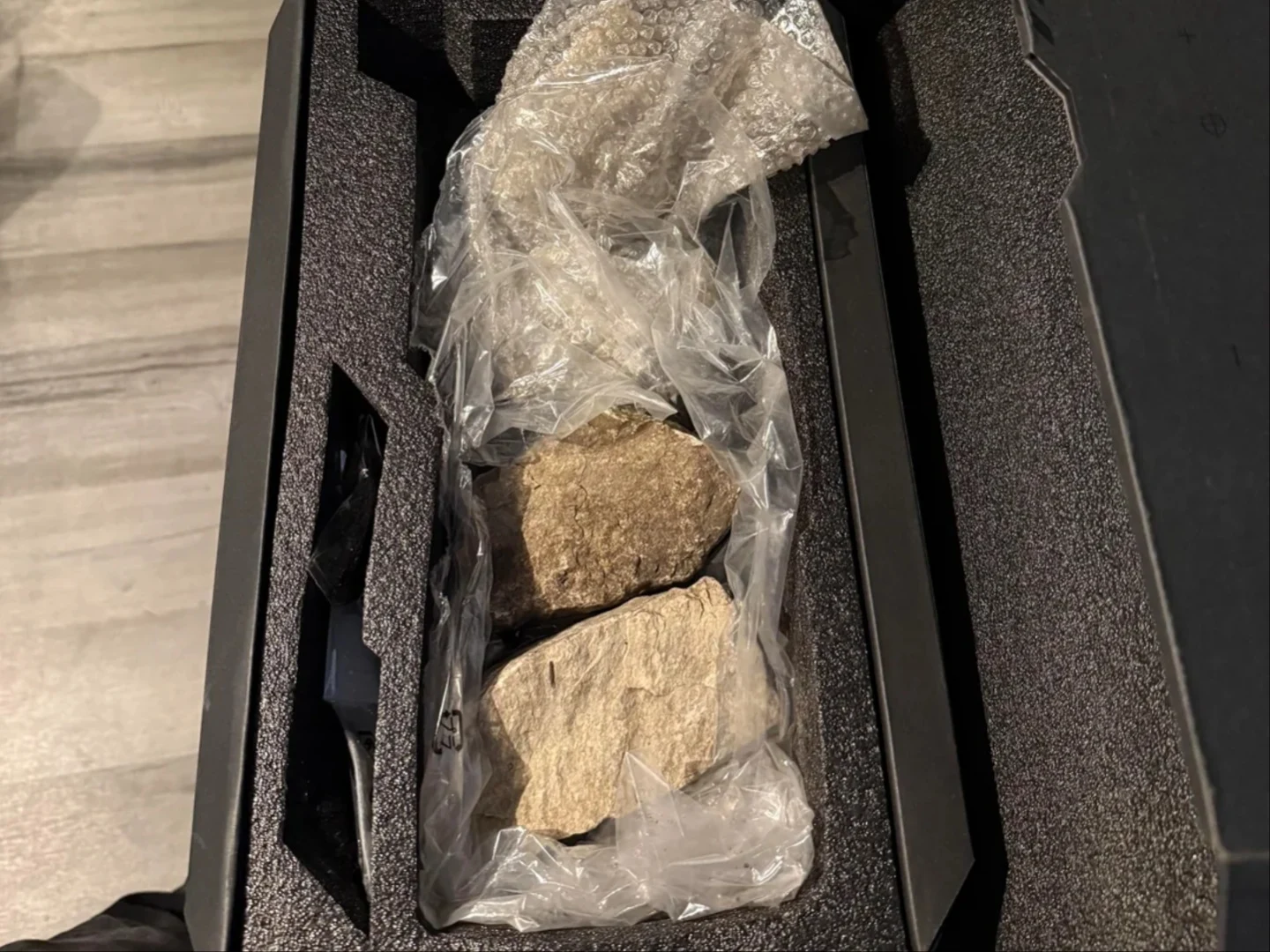
    Another day brings yet another GPU scam. The most recent troubling incident involves a customer who decided to purchase a new top-tier Nvidia GPU from Best Buy. Instead of receiving the actual GPU, they got sent rocks, and now the retailer claims there is nothing they can do about it. This incident adds to the growing list of GPU and CPU scams, where customers have received incorrect products or dead-on-arrival cards, but this case seems to be particularly bizarre.

    Details of the Incident

    The unfortunate story was shared by a user named GnarDead on the pcmasterrace subreddit. They placed an order for a $1,200 Asus TUF Gaming RTX 5080 at their local Best Buy on November 25 and got it delivered on November 28. Upon opening the oddly handled package, which lacked any standard brown box, they discovered rocks instead of a shiny new GPU. Images posted by the user showed that the rocks were stuffed into the GPU cutout, wrapped in plastic and bubble wrap.

    Best Buy’s Response

    Even more disheartening is that Best Buy seems to have distanced itself from the issue. The user quickly filed a complaint, and Best Buy initially replied saying a replacement was being sent. However, on December 2, the user got another message stating that after looking into the matter, Best Buy would not be issuing a replacement or refund.

    Sympathy has poured in from commenters who suggested that the user should attempt to initiate a chargeback through their credit card company. Since the original poster hasn’t replied, it remains unknown whether they managed to take this step or if they even made the purchase using a credit card.

    A Growing Problem

    This incident adds to a troubling record of scams within the GPU and CPU market. Just last June, one user received their RTX 5090 GPU order only to find crossbody backpacks packed inside the box, while another received rice, macaroni, and an old, random GPU. Additionally, a different user bought an RTX 5090 for $2,000, only to later discover that the GPU core and GDDR7 memory chips were missing. More recently, a reviewer ordered a Ryzen 7 9800X3D CPU from Amazon but ended up with an AMD FX 4100 that had a sticker slapped on top. Thankfully, most of these customers managed to get replacements or refunds, and hopefully, GnarDead will find a way to recover their money too.

    Source:
    Link


  • Lenovo Legion Pro 7 Gaming Laptop: Ryzen 9 9955HX3D & RTX 5080

    Lenovo Legion Pro 7 Gaming Laptop: Ryzen 9 9955HX3D & RTX 5080

    Key Takeaways

    1. Lenovo introduced the Legion Pro 7 16AFR10H gaming laptop at IFA 2025, featuring AMD Ryzen 9000 HX processors and Nvidia RTX 50 series graphics cards.
    2. The AMD Ryzen 9 9955HX3D CPU outperforms its Intel counterpart by an average of 5%, while the RTX 5080 Laptop GPU offers strong performance at a good price-to-performance ratio.
    3. The laptop supports up to 32 GB of DDR5 RAM and includes a 2 TB PCIe Gen 5 SSD, providing ample storage and speed.
    4. It features a 16-inch OLED display with a resolution of 2560 x 1600 pixels, a 240 Hz refresh rate, and full DCI-P3 color coverage, compatible with Dolby Vision and Nvidia G-Sync.
    5. The Legion Pro 7 16AFR10H offers extensive connectivity options, including two USB Type-C ports, WiFi 7, Bluetooth 5.4, and is expected to launch in November 2025 starting at $2,399.


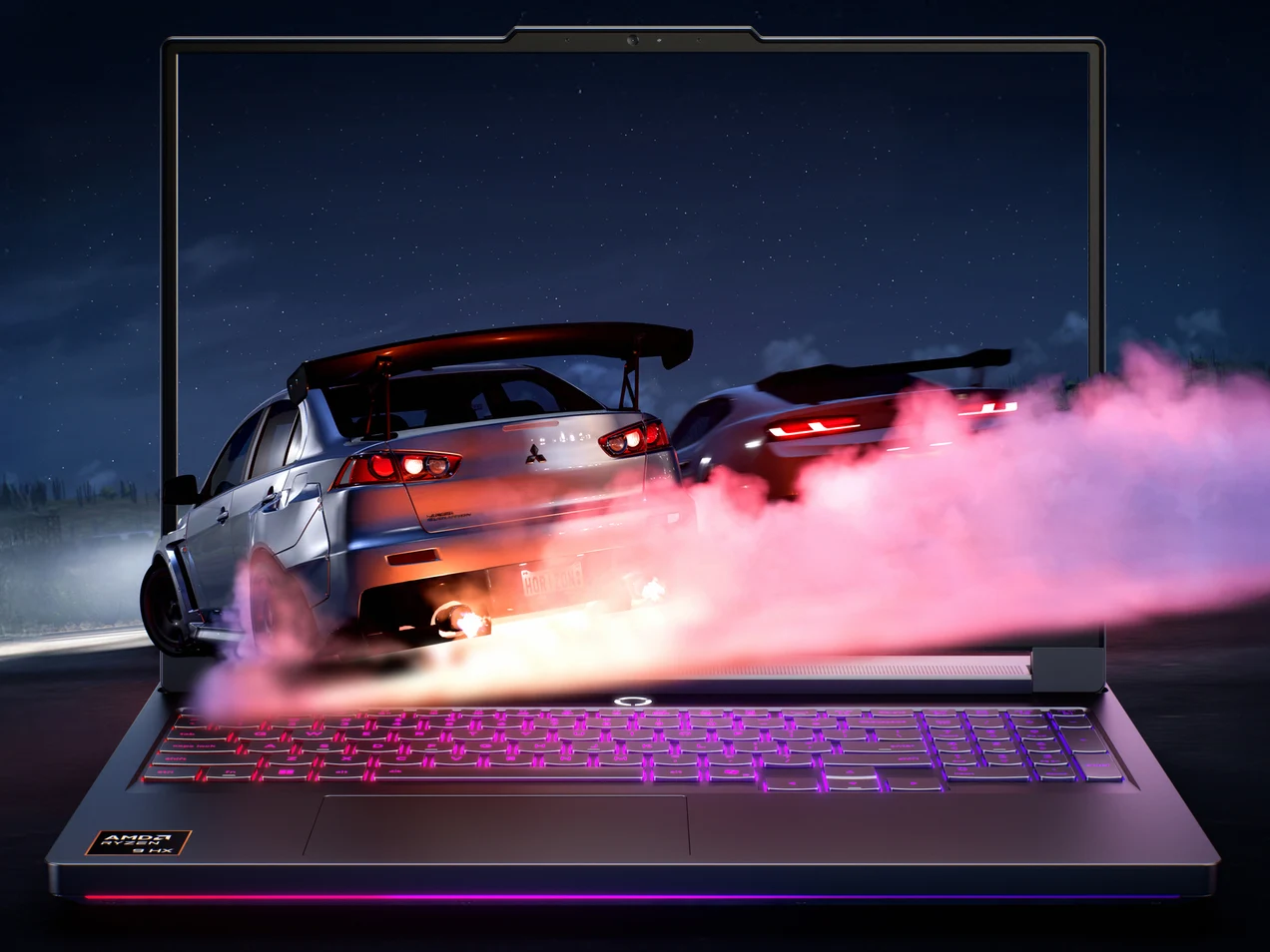
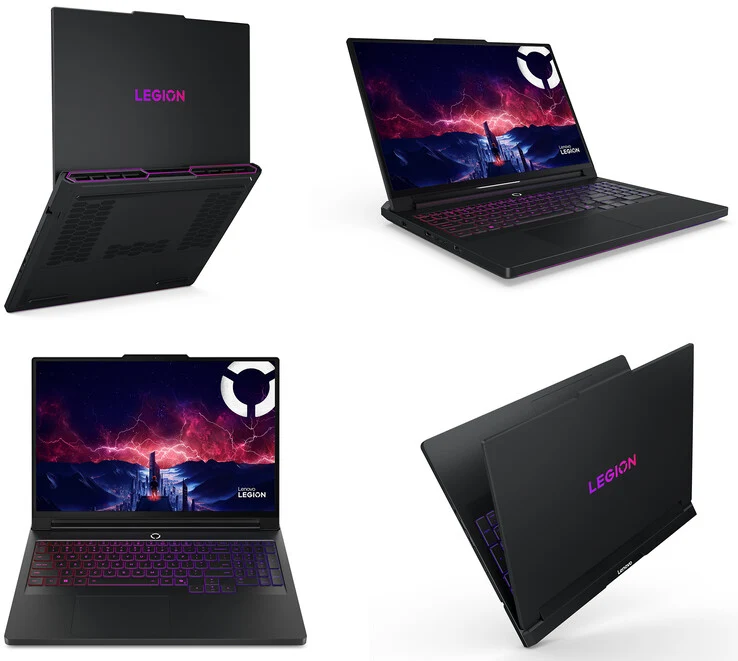
    Lenovo has introduced a new gaming laptop aimed at performance enthusiasts at IFA 2025, known as the Legion Pro 7 16AFR10H. This device features AMD Ryzen 9000 HX series processors and Nvidia RTX 50 series graphics cards. The highest-end variant combines the AMD Ryzen 9 9955HX3D chip with the RTX 5080 Laptop GPU.

    Performance Insights

    In our evaluations, the AMD Ryzen 9 9955HX3D emerged as the top gaming CPU, outperforming the Intel Core Ultra 9 275HX by an average of 5%. The Nvidia RTX 5080 Laptop GPU also impressed, showing performance that closely rivals the laptop version of the RTX 5090, making it a commendable option in terms of price-to-performance ratio.

    Specifications and Features

    Lenovo emphasizes that the GPU in this gaming laptop can deliver up to 175 W of power. The Legion Pro 7 16AFR10H also supports up to 32 GB of DDR5 RAM operating at 5600 MT/s and features a 2 TB PCIe Gen 5 SSD (the 2 TB Samsung 990 Pro is currently priced at $159.99 on Amazon).

    The laptop showcases a 16-inch OLED display with a resolution of 2560 x 1600 pixels and a refresh rate of 240 Hz. According to Lenovo, this screen achieves 100% DCI-P3 color coverage and is compatible with Dolby Vision, Nvidia G-Sync, and VESA TrueBlack 1000.

    Connectivity Options

    As a gaming-focused device, the Lenovo Legion Pro 7 16AFR10H comes with an extensive array of ports. The configuration includes two USB Type-C ports, one of which supports PD 3.0, while both are compatible with DisplayPort 2.1. Additional features of this gaming laptop include a 4-speaker audio system, WiFi 7, Bluetooth 5.4, as well as an E-Shutter button. The Lenovo Legion Pro 7 16AFR10H is anticipated to launch in November 2025, starting at a price of $2,399.


  • Nvidia GPU Shipments Rise 27% in Q2 2025 Ahead of Tariffs

    Nvidia GPU Shipments Rise 27% in Q2 2025 Ahead of Tariffs

    Key Takeaways

    1. Surge in Shipments: Graphics card shipments rose by 27% and desktop CPUs by 21.6% in Q2 2025, defying typical seasonal declines.

    2. Attach Rate: The attach rate of 1.54 GPUs per CPU indicates many systems are being built or upgraded simultaneously.

    3. Pricing and Supply Issues: Price changes and supply limitations drove increased shipments, with midrange prices stabilizing after initial decreases.

    4. Market Share Changes: Nvidia’s AIB market share increased to 94%, while AMD’s dropped to 6%, with Intel’s share remaining minimal.

    5. Future Projections: The AIB market is expected to decline by 5.4% annually from 2024 to 2028, with a temporary spike in Q2 attributed to tariff concerns.


    Desktop graphics shipments during Q2 2025 diverged from the usual seasonal trends. AIB volumes reached 11.6 million units, with desktop CPUs sitting at 21.7 million units. This quarter exceeded the normal slow period seen in Q2. According to Jon Peddie Research, the attach rate stood at 1.54 GPUs for each CPU, suggesting that many systems are being built and upgraded at the same time.

    Surge in Shipments

    Shipments of graphics cards surged by 27 percent compared to the previous quarter, while desktop CPUs saw an increase of 21.6 percent. However, CPU volumes were still 4.4 percent lower compared to the previous year. Generally, Q2 experiences a decline, but this period outperformed the 10-year average gain of 5.7 percent.

    Pricing and Supply Issues

    The increase in shipments can be attributed to pricing changes and supply limitations. Prices for midrange and entry-level AIBs decreased, while high-end models saw price hikes. Retailers experienced quick sellouts, which is not commonly seen in Q2. JPR noted that consumers sped up their purchases due to concerns about possible tariffs. These shortages have been observed extending into early Q3 2025, with midrange prices just now beginning to stabilize. Such patterns indicate a shift in demand and distribution.

    Nvidia has increased its AIB market share to around 94 percent, a rise of 2.1 points. In contrast, AMD’s share has fallen to roughly 6 percent, and Intel remains close to zero. In the midrange area, AMD introduced the Radeon RX 9070 XT and RX 9070 using RDNA 4 technology, while Nvidia brought out the GeForce RTX 5070. On the high-end side, Nvidia released the RTX 5080 and also announced the RTX 500 workstation card. There are rumors of two new Intel boards, including one with dual-GPU support, but these remain unverified.

    Future Market Projections

    Jon Peddie Research predicts that the AIB market will decline by about 5.4 percent annually from 2024 to 2028. The total number of installed units is expected to reach 163 million by 2028, with desktops making up nearly 87 percent of that number. The spike in Q2 appears to be a temporary reaction to tariffs rather than an indication of a long-term trend.

    Source:
    Link


  • Asus ROG NUC 2025 with RTX 5080 Now Available for Purchase

    Asus ROG NUC 2025 with RTX 5080 Now Available for Purchase

    Key Takeaways

    1. Asus has launched the 2025 ROG NUC in China and is now accepting pre-orders in the US, priced at $2,849.
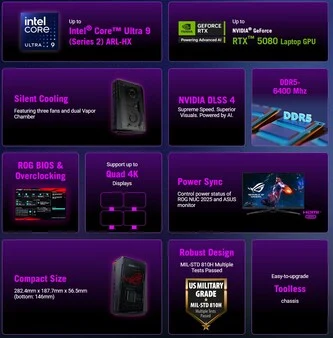
    2. The current configuration includes the Nvidia RTX 5080 Laptop GPU and Intel Core Ultra 9 275HX with 32 GB of DDR5 RAM and a 2 TB PCIe 4.0 SSD.
    3. Future configurations will include models with RTX 5060, RTX 5070, and RTX 5070 Ti, but release dates and pricing are not yet announced.
    4. The 2025 ROG NUC can support up to 96 GB of DDR5 RAM and allows upgrades to PCIe 5.0 SSDs.
    5. Notable features include WiFi 7, Bluetooth 5.4, a compact design, quiet cooling, and support for five 4K displays.


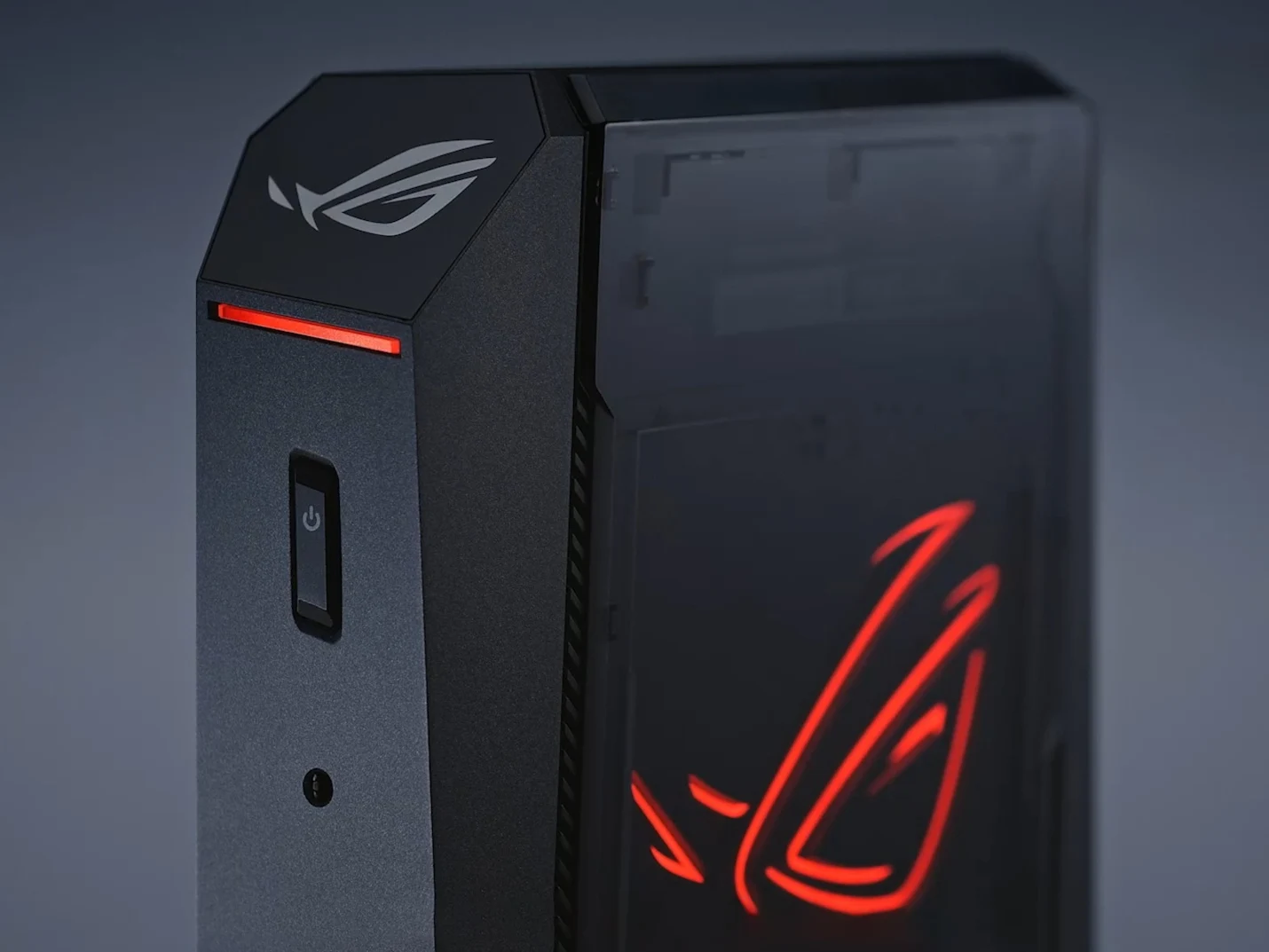
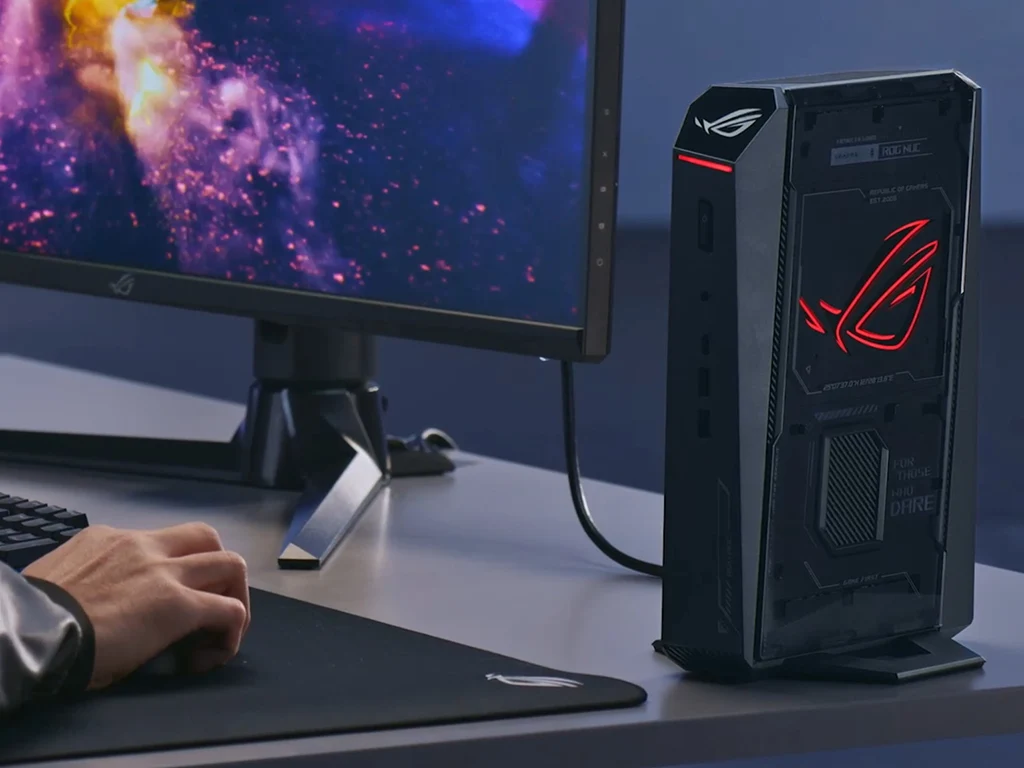
    Asus has launched the 2025 ROG NUC in China in late May 2025, and now they are accepting pre-orders for this gaming mini PC in the United States. Currently, there is just one configuration available, which features the Nvidia RTX 5080 Laptop GPU alongside the Intel Core Ultra 9 275HX.

    Pricing Details

    Similar to its price in China, the cost of the mini PC in the US is quite high, with the available configuration priced at $2,849 for pre-orders. Asus has indicated that additional configurations for the 2025 ROG NUC will be released, starting with a base model that includes the RTX 5060 and Intel Core Ultra 7 255HX.

    Future Configurations

    There are also two more models planned that will come with Nvidia’s RTX 5070 and RTX 5070 Ti. However, the exact release dates and pricing for these versions remain unknown. Focusing on the currently available configuration, it combines the Arrow Lake HX Core Ultra 9 CPU with 32 GB of DRR5 RAM and a 2 TB PCIe 4.0 SSD.

    Specifications Overview

    During the launch, Asus mentioned that the 2025 ROG NUC can support up to 96 GB of DDR5 RAM. While the storage is limited to 2 TB, users have the option to upgrade to a PCIe 5.0 SSD, such as the 2 TB Corsair MP700 Elite, which is currently priced at $189.99 on Amazon. In terms of connectivity, the mini PC features:

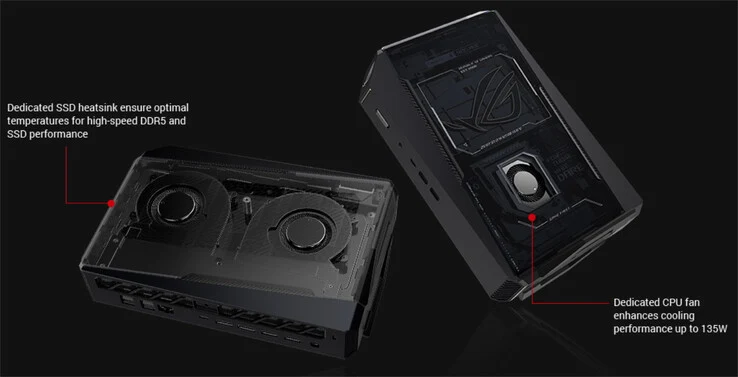
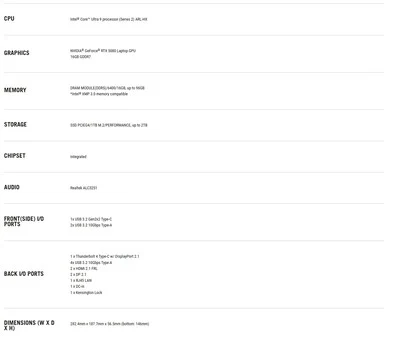
    For wireless, it offers WiFi 7 and Bluetooth 5.4. Other notable features include a compact design, a quiet cooling system, and the capability to support five 4K displays. For more information, check out the spec sheet provided below.

    Source:
    Link


  • Asus ROG NUC 2025 Mini-PC: Intel Core Ultra 9 & RTX 5080

    Asus ROG NUC 2025 Mini-PC: Intel Core Ultra 9 & RTX 5080

    Key Takeaways

    1. Launch Details: Asus has launched the ROG NUC 2025 more than a year after the 2024 version.
    2. Enhanced Performance: The ROG NUC 2025 features an Intel Core Ultra 9 275HX, offering a 50% increase in CPU performance, and comes with an Nvidia RTX 5080 GPU.
    3. Compact Design: The mini-PC has a size of 282.4 x 187.7 x 56.5 mm and weighs 3.12 kg, making it portable.
    4. Memory and Storage: It includes two CSO-DIMM and M.2 2280 slots, with a model offering 32 GB of RAM and a 2 TB SSD.
    5. Availability: The ROG NUC 2025’s release date in North America and Europe is still unknown; it is currently available in China for CNY 24,999 (approximately $3,475).


    Asus has finally launched the ROG NUC 2025, more than a year after it began selling its 2024 version. To summarize, the first ROG NUC features up to an Intel Core Ultra 9 185H and an Nvidia GeForce RTX 4070 GPU, which is currently priced at $1,693 on Amazon. In contrast, the ROG NUC 2025 replaces these components with much more powerful options.

    Improved Performance

    The latest mini-PC utilizes the Core Ultra 9 275HX, providing a 50% increase in CPU performance. Additionally, the inclusion of an RTX 5080 is expected to deliver even greater enhancements in GPU performance. Furthermore, the ROG NUC 2025 comes equipped with two CSO-DIMM and M.2 2280 slots each, along with a variety of ports, all housed in a compact design measuring 282.4 x 187.7 x 56.5 mm and weighing 3.12 kg.

    Availability Issues

    Sadly, Asus has yet to announce when the ROG NUC 2025 will be available in North America, Europe, and other regions. At present, the mini-PC can only be purchased as the RNUC15JNK9X28AA6, which includes 32 GB of RAM and a 2 TB SSD for CNY 24,999 (around $3,475) on JD.com. For more information, please check Asus’ official website.

    Source:
    Link


  • Asus Launches RTX 5080 ROG NUC 2025 Gaming Mini PC Soon

    Asus Launches RTX 5080 ROG NUC 2025 Gaming Mini PC Soon

    Key Takeaways

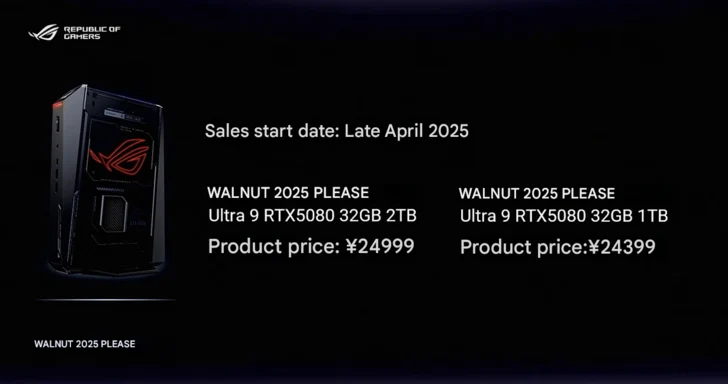
    1. The Asus ROG NUC 2025 will be available in China by late April 2025, featuring an Nvidia RTX 5080 GPU.
    2. Two versions of the ROG NUC 2025 will be sold, both including the Intel Core Ultra 9 275HX CPU.
    3. The pricing for the mini PC is set at CNY 24,399 (approximately $3,336) for the base model and CNY 24,999 (around $3,418) for the variant with 2 TB of storage.
    4. The gaming mini PC is positioned in the higher end of the market, comparable to premium gaming laptops.
    5. Asus has not yet shared information on global pricing or availability for the ROG NUC 2025.


    Asus has rolled out the ROG NUC 2025 at CES 2025, but previously, they didn’t mention the pricing or when it would be available. Now, they have revealed that this gaming mini PC, featuring an Nvidia RTX 5080, will hit the market in China by late April 2025.

    Configurations and Specifications

    Following the release of the NUC 15 Pro series, Asus has confirmed that two versions of the ROG NUC 2025 will be purchasable in China. However, they haven’t disclosed which CPU will be included. Earlier at CES 2025, Asus did mention that the mini PC would be equipped with Intel Core Ultra series 2 CPUs, and their promotional material for China hints at a non-specific Core Ultra 9 CPU.

    According to VideoCardz, the two models of the mini PC set to launch in China will both include the Core Ultra 9 275HX, which is among the top-tier offerings from the Arrow Lake series.

    Pricing Details

    The price for the gaming mini PC, which includes the Nvidia RTX 5080 Laptop GPU, Intel Core Ultra 9, 32 GB of DDR5 RAM, and a 1 TB PCIe Gen 4 SSD, is set at CNY 24,399 in China. This translates to approximately $3,336. There will also be a variant with 2 TB of storage (the 2 TB Samsung 990 EVO Plus currently costs $139.99 on Amazon), priced at CNY 24,999, equating to about $3,418.

    It’s clear that these prices place the ROG NUC 2025 in the higher end of the market, comparable to premium gaming laptops. Nevertheless, the Core Ultra 7 option may be slightly less pricey. Asus has not yet provided information on global pricing or availability for the new RTX 5080-powered mini PC.

    Source:
    Link


  • Buyer Shocked by Nvidia RTX 5080 Mislabelled as RTX 5090

    Buyer Shocked by Nvidia RTX 5080 Mislabelled as RTX 5090

    Locating a scarce Nvidia RTX 50 series GPU can be quite frustrating for many enthusiasts. A Reddit user named EssDee3D experienced a surprising twist after buying an RTX 5080 Founders Edition. Although the packaging clearly stated it was the right graphics card, Nvidia had labeled the housing as an RTX 5090. Unfortunately, tests later revealed that the GPU inside was indeed an RTX 5080.

    Initial Reactions to the Discovery

    When EssDee3D shared a photo of the incorrectly labeled GPU in the LinusTechTips subreddit, it was met with some doubt. Since his account was new, some users thought he was just looking for attention. However, a few hopeful commenters speculated that Nvidia may have mistakenly sent an RTX 5090 in the wrong box. After promising to investigate further, EssDee3D eventually uploaded a video showing the GPU installed in his PC. Sadly for him, the tests confirmed it was just an RTX 5080 FE, which is priced at half of the RTX 5090 FE.

    Quality Control Concerns

    So far, Nvidia’s new GPUs have not faced the melted power connector problems that affected the RTX 4090. However, some users have reported crashing issues with games and isolated cases of bricked RTX 5090s. This raises some worries about quality control, but EssDee3D’s post remains the first well-documented case of a mislabeled graphics card.

    Similarities in Design

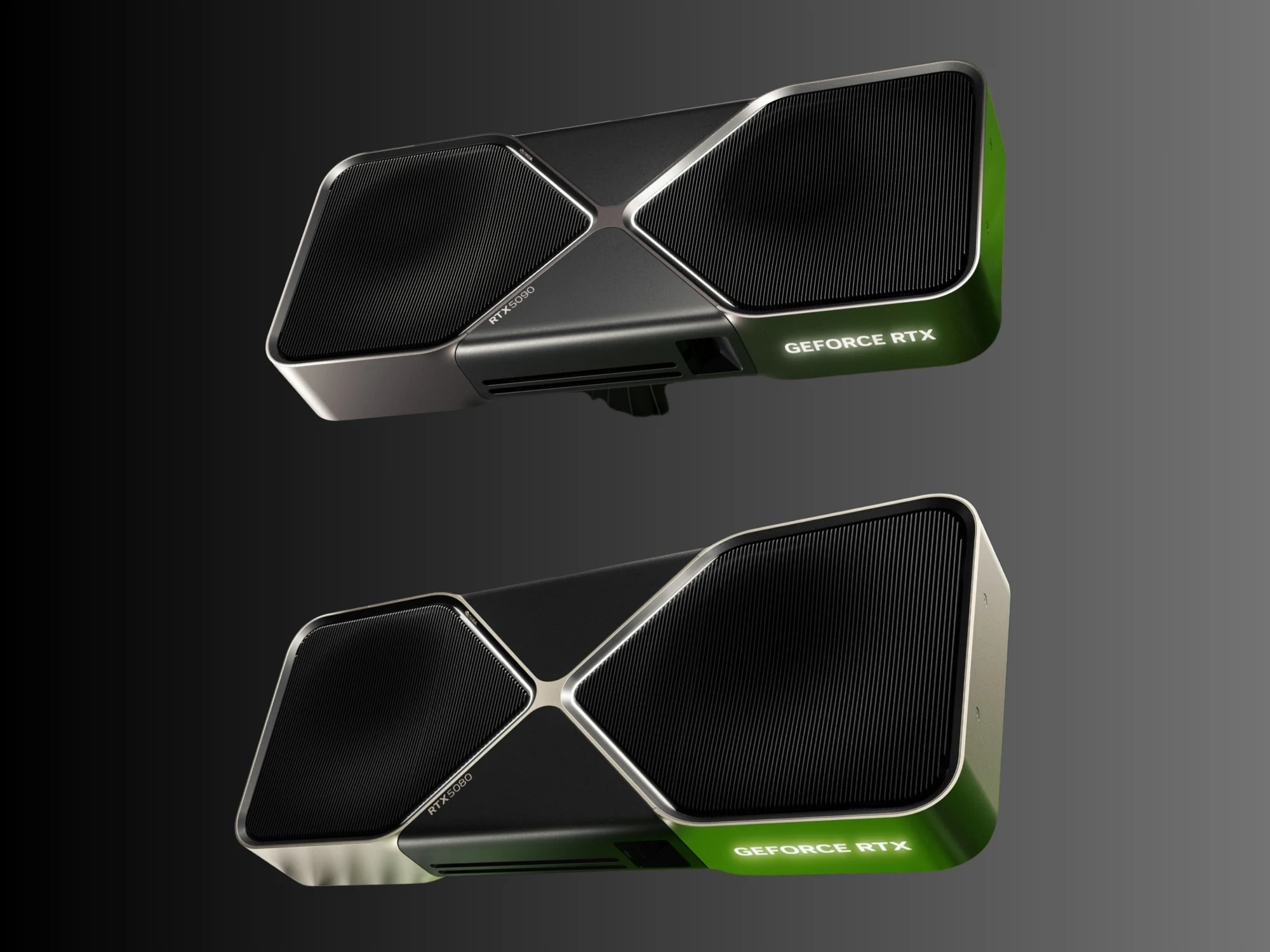
    Despite the RTX 5080 having more CUDA cores and memory, the designs of the RTX 5080 and RTX 5090 are almost indistinguishable. Both Nvidia Founders Edition GPUs are dual-slot cards with identical dimensions in width, length, and thickness. This makes it plausible that a mix-up could occur during the assembly process.

    Even though EssDee3D can expect the performance he originally paid for, he still mentioned the possibility of returning the card in his video. If he decides to sell the RTX 5080 or his PC in the future, any potential buyer will likely need a detailed explanation of the situation.

    Source:
    Link


  • UK Retailer Warns of Four-Month Delay for RTX 5090 and 5080

    UK Retailer Warns of Four-Month Delay for RTX 5090 and 5080

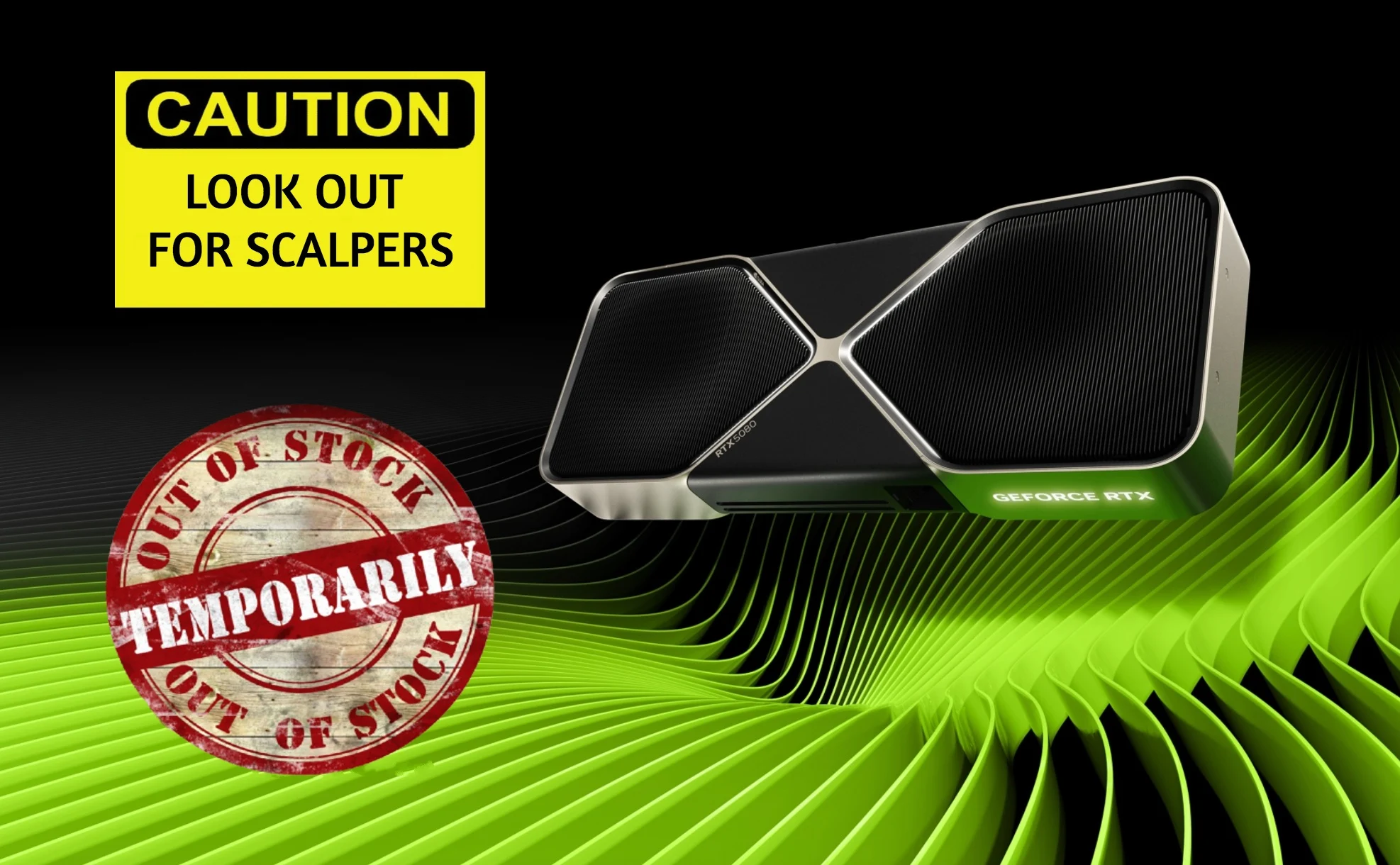
    Scoring an Nvidia RTX 5090 or RTX 5080 right now feels like trying to catch a ghost in a silicon wasteland. The reasons? The usual suspects: limited stock, huge demand, and scalpers. We shared an update about the situation in Europe, and a recent note from a well-known UK retailer presents a similarly bleak picture. It looks like those eagerly awaiting a new RTX 5090 GPU might have to hang on for as much as four months.

    Stock Updates

    Overclockers UK, in a recent statement, disclosed that they have completely run out of the Nvidia RTX 5090 and RTX 5080 – not shocking at all – and have paused pre-orders for now. Furthermore, the retailer mentioned that the RTX 5090 is anticipated to be available again sometime in the next 3 to 16 weeks, while the RTX 5080 should be back on shelves within 2 to 6 weeks. Basically, anyone in the UK hoping for a new GeForce RTX 50 GPU may need to exercise patience for several months.

    Scalper Advantage

    Given that the Nvidia RTX 5080 and RTX 5090 have been selling for thousands of dollars, it’s clear that scalpers are making huge profits from the shortages. The RTX 5090 has received mostly favorable reviews, even if its improvements over the previous generation are somewhat slight. However, the RTX 5080’s performance upgrade compared to the RTX 4080 Super was not that impressive. Yet, this lack of a significant boost doesn’t seem to dampen the excitement surrounding the cards, as evidenced by the stock issues and Overclockers’ assertion of “incredibly high demand.”

    Conclusion

    Overclockers UK, highlighted by Wccftech, continues to show the struggle consumers face in obtaining these coveted GPUs.

    Source:
    Link