Author: GizNews

  • 007 First Light reviews raise concerns; codes sent days before release

    007 First Light reviews raise concerns; codes sent days before release

    Key Takeaway

    – Review embargo and late-code releases create pressure for journalists to finish and publish ahead of the May 26 early access, reducing time for thorough write-ups.
    – The holiday weekend and possible final-build debugging contribute to a rushed review cycle and potential hardware- or performance-related concerns.
    – Denuvo DRM on PC and last-minute polishing (graphics optimizations, stability) may impact performance and complicate early impressions.
    – Mixed early previews despite generally positive hands-on impressions suggest potential variances in frame rates and performance across platforms (60 fps target on consoles; possible PC trade-offs).
    – Piracy-related leak risks persist, with Steam/Valve activity potentially enabling pre-release access and complicating embargo enforcement.


    Indecisive buyers may need to wait longer than expected for 007 First Light reviews.

    Indecisive buyers may need to wait longer than expected for 007 First Light reviews. Word has spread that IO Interactive didn’t begin sending codes to journalists until May 22nd. These writers will have to scramble to complete the roughly 20-hour-long James Bond adventure before its May 26th early access release date.

    Timeline and Crunch

    Wccftech editor KaiPow leaked the rushed timeline on the ResetEra forums. To make matters worse, it’s a holiday weekend in the U.K., U.S., and several other countries. A Monday bank holiday and Memorial Day only add to the crunch. For Steam, Xbox, and PS5 gamers who haven’t pre-ordered, the launch is set for March 27th.

    Why the Publisher Hesitated

    Fans are debating why the publisher hesitated to provide websites with copies of the spy-adventure. The most pessimistic followers worry that there are technical issues in the final build. Originally slated for March, IO Interactive postponed the 007 First Light release date. The polishing process likely included optimizing graphics.

    Hands-on Previews

    What’s puzzling is that hands-on previews for the title have been largely positive. Players noted that, despite inconsistent frame rates in initial footage, the smooth visuals alleviated those concerns. With performance mode on the Xbox Series X and PS5, developers are targeting 60 fps.

    PC Performance and DRM

    For PC users, the controversial late addition of Denuvo DRM may slightly compromise performance. It’s also possible that there were other bugs not addressed until recently, or that won’t be eliminated until after May 26th.

    Potential Motivations

    Piracy could also be a motivating factor for the publisher. Recently, playable Steam builds of Forza Horizon 6 and Subnautica 2 appeared several days before their official debuts. SteamDB, which keeps tabs on Valve’s marketplace, believes that reviewers were the culprits. That said, there is still a window of opportunity to leak First Light, and Denuvo is now less of an obstacle for hackers.

    embargo and Deadlines

    Regardless of the reason, the last-minute 007 First Light review embargo puts websites in a difficult position. Even if journalists sacrifice their holiday plans and finish the campaign, it leaves little time for the often tedious writing process. James Bond fans may gain more insight from Steam impressions on its release date.


    Sources

  • Casio MTG-B4000 Carbon-Fiber Watchs First IRL Images

    Casio MTG-B4000 Carbon-Fiber Watchs First IRL Images

    Key Takeaway

    – Dark IP finish on bezel/case provides a cohesive, premium look, with the BD-1A’s monochrome all-dark aesthetic standing out.
    – BD-1A’s Layer Composite Band features angular, faceted links with alternating brushed/mirror surfaces for a strong industrial vibe; contrasts with the red-accent B-1A band.
    – B-1A band’s bold red diagonal stripe and matching red accents on the dial/second hand enhance visibility against the dark carbon frame; exposed screw-lock crown is notable.


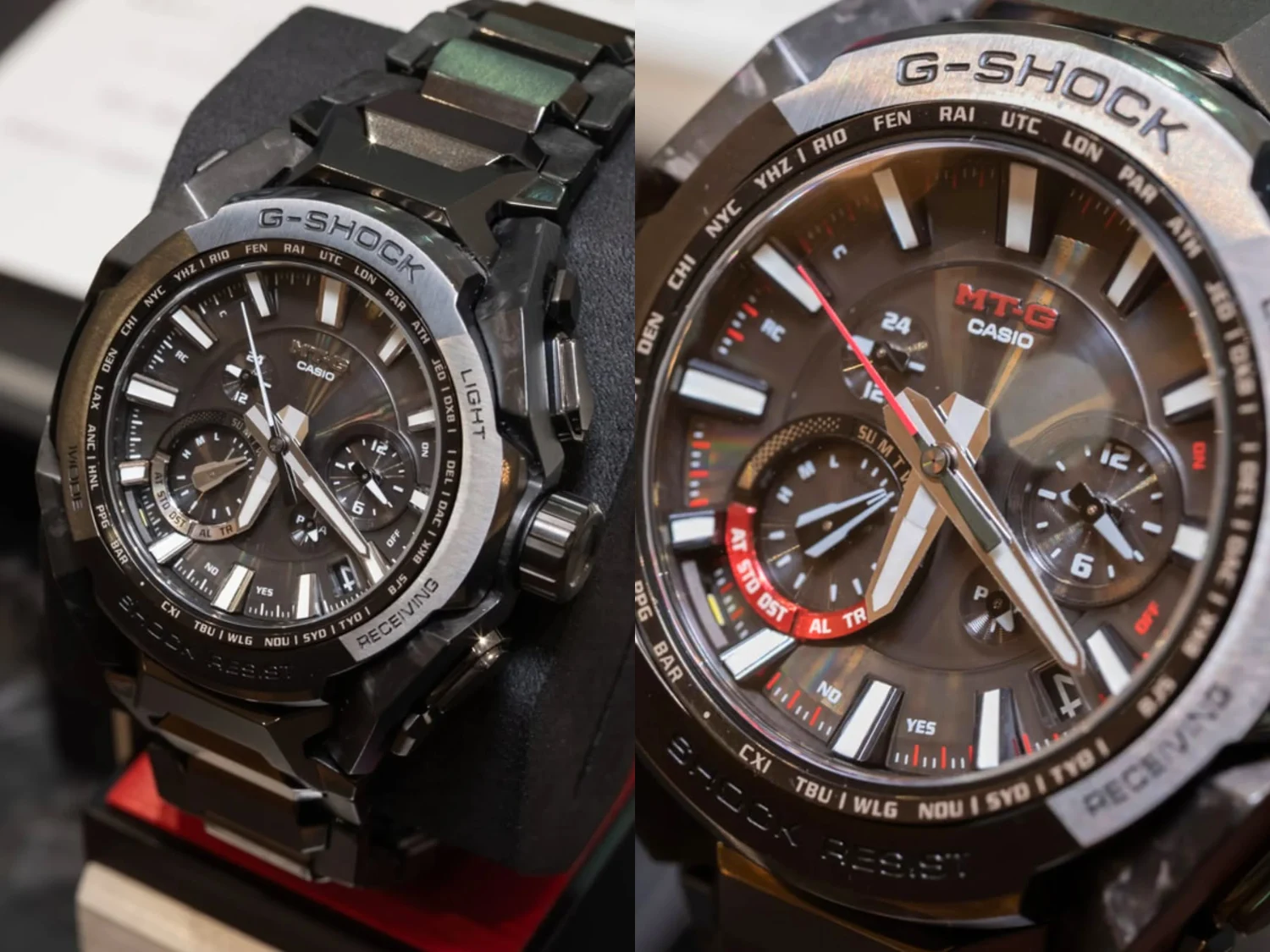
    the casio mt-g mtg-b4000 series — which launched in japan on may 15 — has now shown up in its first real-world images, courtesy of instagram account @geesgshock, who describes them as “great looking models.” the images offer the clearest look yet at how these watches carry themselves outside of casio’s controlled press photography, and a few things definitely stand out.

    the dark finish and the bd-1a

    the dark finish — achieved through black ip treatment on the stainless-steel bezel and case components — looks significantly more cohesive in person than official renders conveyed. on the bd-1a in particular, the all-dark presentation across the dial, bezel, and layer composite band creates a strong monochromatic character. the bd-1a’s band itself is a highlight: close-up shots reveal deeply angular, faceted links with alternating brushed and mirror-polished surfaces. all that gives it a premium, industrial quality that renders of the full watch didn’t exactly capture.

    the b-1a details and commentary

    the b-1a tells a different story. the vivid red diagonal stripe pattern woven through the resin band is way bolder in person than in casio’s promotional material — it lends a sharp contrast against the dark case and carbon frame, and the same red accent carries through to the second hand and mt-g dial logo. the carbon laminate frame’s three-dimensional complexity is also more apparent from the side-profile shots than in front-facing renders. someone in the comments explicitly highlighted the large, exposed screw-lock crown, which sits without a crown guard.

    specs, weights and pricing

    as a reminder, the mtg-b4000b-1a uses a resin band with red accents and weighs 112g, while the bd-1a upgrades to the layer composite band (alternating stainless-steel and carbon fiber reinforced resin) at 178g. both feature triple g resist, multiplied band 6, bluetooth via the casio watches app, tough solar, and 20 bar water resistance. pricing is ¥176,000 (~$1,110) and ¥203,500 (~$1,284) respectively.

    note on availability and alternatives

    the imagery here show cases that seem to align with casio’s mt-g lineup, though buyers should be mindful of regional availability and official channels for purchase and warranty specifics. avoid promotional links and ensure you verify current models and prices through the official casio site or authorized retailers in your region.


    Sources

  • T-Deck Max: $110 E-Ink Smartphone Connects for Free

    T-Deck Max: $110 E-Ink Smartphone Connects for Free

    Key Takeaway

    – ESP32-S3-based, hobbyist-friendly device aimed at tinkering rather than a ready-to-use smartphone experience.
    – Supports LoRa for long-range, low-data transmission (with optional 4G) and includes GPS for location sharing.
    – 3.1″ e-ink display, built-in microphone/speaker, keyboard, microSD slot; Arduino/PlatformIO development supported.
    – Suitable for use cases like personal emergency signaling on large sites, with LoRa repeaters extending range.
    – Detachable/expandable with additional sensors/actuators; typical street price around $110.


    Overview and Target Audience

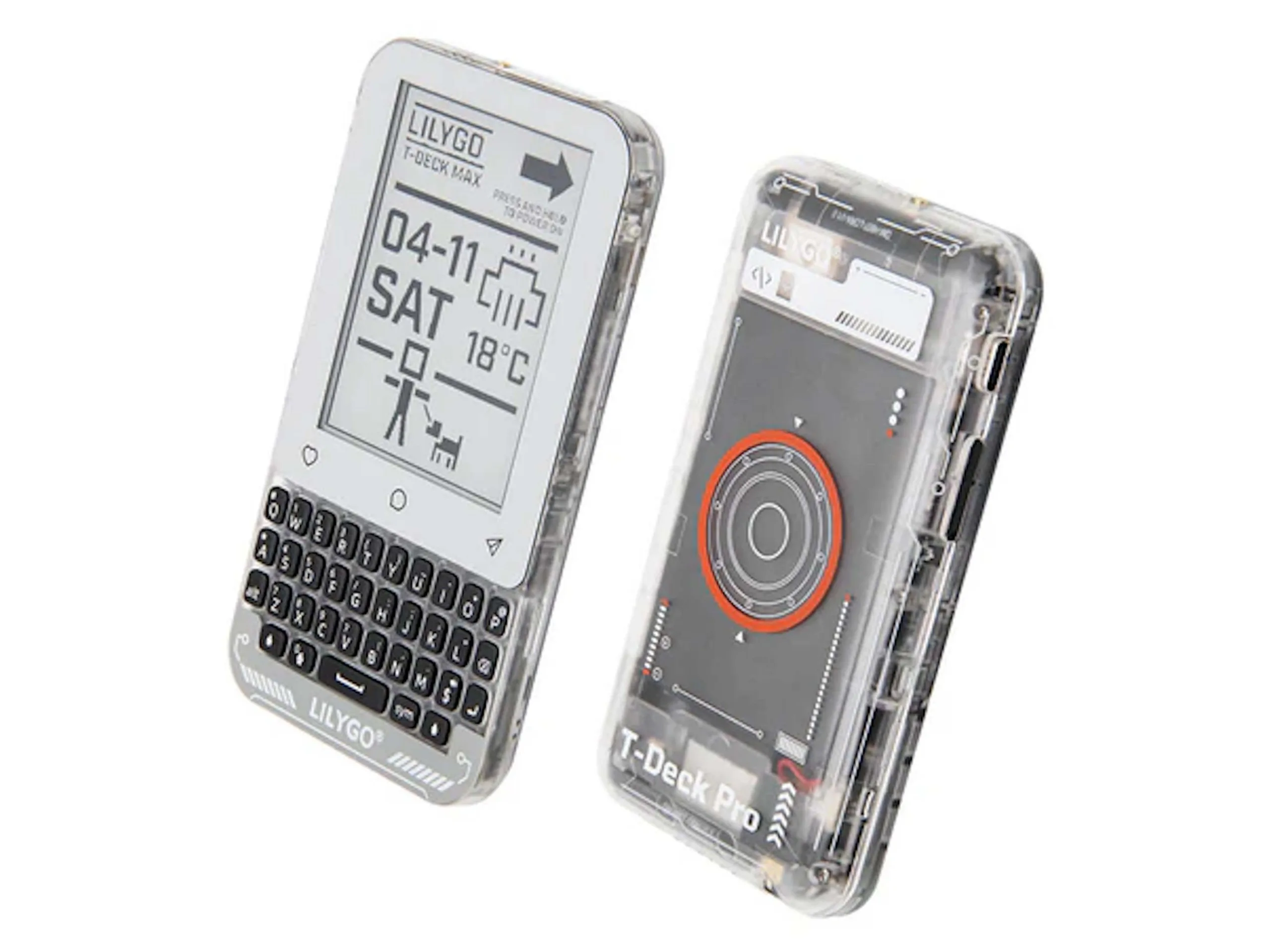
    The T-Deck Max is described as a new mobile device, or at least a new version of LilyGo’s T-Deck. It can broadly be approached like a smartphone, although the system does not run Android and is not necessarily a fully preconfigured product that is ready for end users out of the box. Instead, the model is likely aimed more at tinkerers. An ESP32-S3 is used as the main board, which limits performance. In practical terms, the system could be used to exchange data or messages.

    Unique Capabilities

    This opens up possibilities that a regular smartphone does not offer. The LilyGo T-Deck Max supports LoRa, which can be used to transmit relatively small amounts of data entirely independently of a cellular network. A GPS module is included, so location data can also be transmitted. This means the T-Deck Max could potentially be used on a large factory site as a personal emergency signaling device, for example. LoRa repeaters can then extend the effective range between such handhelds. A 4G connection is optionally available.

    Hardware and Display

    It uses a 3.1-inch display with a resolution of 320 x 240 pixels. The screen is based on an e-ink panel and should not consume much power. Additional sensors and actuators can be connected, and there is a microSD card slot. A microphone and speaker are already included, and programming can also be done using the Arduino or PlatformIO IDE. A keyboard is included, which should make it relatively easy to enter text directly. The T-Deck Max is listed by the manufacturer for around $110, and previous T-Deck models have also become available at some specialized retailers.

    Pricing and Compatibility

    The article notes that the T-Deck Max is listed by the manufacturer for around $110, and mentions that earlier T-Deck models have appeared at some specialized retailers. It also highlights compatibility with Arduino or PlatformIO IDEs for development, suggesting a flexible ecosystem despite the device not being a full consumer-ready smartphone.


    Sources

  • Insta360 Luna Ultra Gimbal Camera Pre-Orders Open: Specs & Images

    Insta360 Luna Ultra Gimbal Camera Pre-Orders Open: Specs & Images

    Key Takeaway

    – Luna Ultra is nearing official release with a German retailer’s pre-order deposit campaign (€50 credit toward final price).
    – Images and spec hints suggest a dual-cam gimbal design to compete with Osmo Pocket 4/4P.
    – Estimated US price rumors range up to $780–$960; waiting period around 1 month per retailer, subject to change.


    After months of leaks and rumors, the anticipation for Insta360’s major Luna Ultra camera release is (almost) over.

    Wallet and Waiting: The Preorder Situation

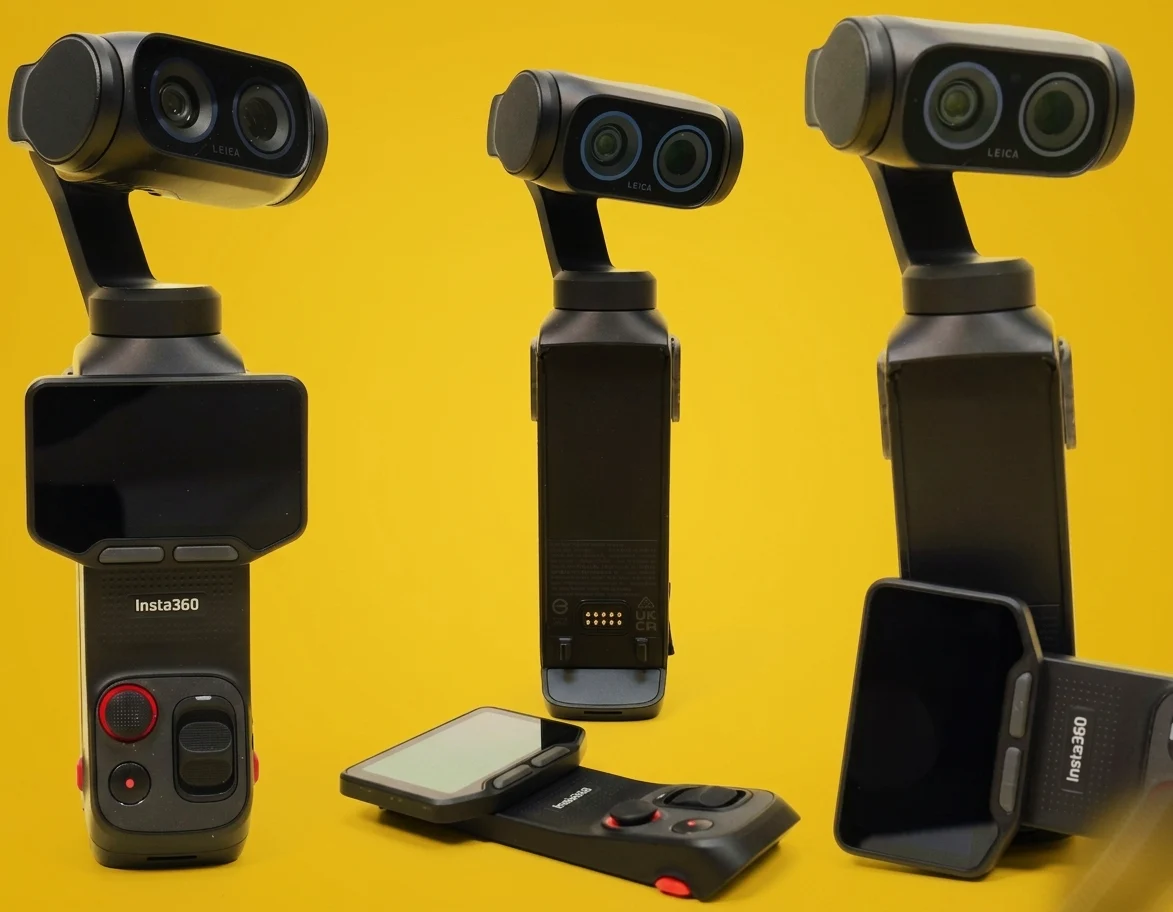
    ronically, Insta360 still hasn’t officially announced the gimbal camera. However, German retailer Foto Erhardt has launched a pre-order deposit campaign for the Luna Ultra, which means that the dual-cam gimbal is nearing its global debut. The store is offering a €50 deposit scheme to secure a place in the delivery queue, and the deposit will be credited toward the final price once the Luna is officially unveiled.

    Pricing Hints and Market Position

    While the full official details from Insta360 remain under wraps, the retailer’s listing has provided a few images and concise breakdown of the Luna Ultra’s specs and capabilities, which gives us a glimpse of how Insta360 intends to compete with the single-cam DJI Osmo Pocket 4 and dual-cam Osmo Pocket 4P. The price discussion circulating online, according to Insta360’s CEO, suggests the dual-cam Luna Ultra might reach a US price tag as high as $780-960, a range that would position it in a premium segment and reflect the dual-lens capability benefiting stabilized footage.

    Delivery Timelines and Deposit Redemption

    Users who opt for the €50 deposit are told that there is an estimated 1-month waiting period, but that timeline is based on Foto Erhardt’s prior experience with pre-orders rather than official Insta360 timing. In practice, once the Luna Ultra is announced, the deposit will be automatically credited toward the final sales price, helping customers feel prioritized in the eventual shipping queue.

    Retailer Details and Availability

    For those tracking the Luna Ultra, Foto Erhardt (Germany) is actively promoting the pre-order option on their websites, including foto-erhardt.com and fotoerhardt.de. The listings include images and a brief specs snapshot, but customers should be mindful that details may change once Insta360 confirms the official specifications, pricing, and release schedule for the Luna Ultra.


    Sources

  • Is 3,500 Nits Brightness Too Bright for Daily Use?

    Is 3,500 Nits Brightness Too Bright for Daily Use?

    Key Takeaway

    – Industry-leading brightness for a mid-range display, excelling in direct sunlight and extreme lighting conditions.
    – Noticeable balance issues: high peak brightness drains battery and reduces continuous brightness, causing more frequent charging.
    – Eye comfort and usability trade-offs: indoors the panel can feel too intense; automatic brightness can be sluggish, leading to abrupt brightness jumps.
    – Color accuracy and viewing angles remain competitive vs. rivals, but overall energy efficiency and automatic brightness limits temper daily use.


    Motorola Moto G87 review highlights

    The Moto G87 stands out in the mid-range arena with its 6.78-inch extreme AMOLED panel, boasting a peak brightness that tops around 3,500 nits in our testing and claims up to 5,000 nits per the manufacturer. It sports a 1.5K resolution and a 120 Hz refresh rate, aiming to outshine many rivals while staying near the 450 US$ price point. This section preserves the original pricing and spec details as requested, though the exact currency and price may vary over time.

    Display performance in real life

    In everyday use, the screen provides exceptional brightness that can ensure readability even under direct sunlight according to laboratory measurements. Yet indoors, the same panel can feel too intense, potentially tiring the eyes after longer sessions. The best brightness is not constant; it only appears under certain conditions, while the sustained brightness is notably lower, affecting how the display looks during extended use. The high energy draw also impacts battery life, resulting in more frequent charges during heavy tasks.

    Brightness comparisons

    When directly compared to the Samsung Galaxy A57, the Moto G87 demonstrates superior brightness, making it easier to read in bright environments. The Samsung, however, keeps a solid edge in color accuracy and viewing angle stability. For everyday users, this means the Moto G87 can excel in bright outdoor situations but may require dimming indoors or under artificial lighting. Automatic brightness responds with a slight delay at times, which can cause abrupt changes in screen intensity.

    Energy efficiency and overall balance

    Overall, the phone delivers a display that sits near the top of mid-range brightness. Yet the trade-offs include energy efficiency concerns and imperfect automatic adjustments. These drawbacks detract from its otherwise strong display performance, and they weigh into the overall recommendation. You can explore these factors in our complete test report to understand why a cautious verdict is warranted despite the standout brightness.

    Conclusion

    The Motorola Moto G87 offers a display that pushes the mid-range envelope in brightness, but its high energy requirements and imperfect automatic brightness adjustments create a mixed picture. With 6.78 inches of extreme AMOLED, it keeps pace with competitors in some aspects while lagging in others, pushing buyers to weigh the importance of brightness against battery longevity and ease of use in varied lighting.

    Sources
    • Moss: The Forgotten Relic Arrives on Console and PC This Summer

      Moss: The Forgotten Relic Arrives on Console and PC This Summer

      Key Takeaway

      – Moss: The Forgotten Relic brings the VR franchise to flat-screen PC and consoles (PS5, Xbox Series X|S, Xbox One, Nintendo Switch) with enhanced visuals, new cutscenes, redesigned camera, and a full reimagining rather than a direct port.
      – Includes Moss and Moss: Book II plus Twilight Garden DLC at no extra cost; adds an optional skip-combat accessibility feature for puzzle/exploration play.
      – Features the core “Twofold” mechanic across both Quill (direct interaction) and the Reader (external puzzle-solving), redesigned for non-VR play.
      – Wide cross-gen rollout brings the series to Xbox and Nintendo players for the first time, expanding reach beyond VR-focused roots.


      Moss: The Forgotten Relic is coming to flat-screen PCs and consoles

      Polyarc has officially announced Moss: The Forgotten Relic, bringing the critically acclaimed VR franchise to flat-screen PC and consoles for the first time this summer. The game launches on PC via Steam, PlayStation 5, Xbox Series X|S, Xbox One, and Nintendo Switch 1 and 2, with no exact release date or pricing confirmed yet.

      A reimagined collection with added content

      Moss: The Forgotten Relic combines the original Moss, Moss: Book II, and the Twilight Garden DLC into a single definitive adventure. Both previous entries required a VR headset to play. Xbox and Nintendo players are getting their first chance at Quill’s story, while PC players who skipped the SteamVR versions can now experience it on a flat screen for the first time. Polyarc describes the release as a full reimagining rather than a straight port, with enhanced visuals and performance, new handcrafted cutscenes, and a redesigned smart follow camera built for flat screens.

      Twilight Garden bonus and accessibility options

      The Twilight Garden DLC is included at no additional cost. An optional skip-combat accessibility feature is also new to this version, letting players who prefer puzzles and exploration bypass combat encounters entirely. Jason Graves, who composed the orchestral soundtracks for both original games, returns for the score.

      Twofold gameplay and camera redesign

      The core mechanic Polyarc calls “Twofold” puts players in two roles simultaneously. They control Quill directly through a fallen kingdom being reclaimed by nature, solving diorama-style environmental puzzles and fighting enemies, while also interacting with the world as the Reader, Quill’s unseen guardian who can move objects and clear paths from outside the storybook frame. The VR originals built that second layer of presence through the headset itself. Polyarc has redesigned the camera and interaction systems to make it work without one.

      Cross-gen release broadens audience

      The cross-gen Nintendo release means the game reaches both Switch and Switch 2 owners in the same window, broadening the audience considerably beyond what a Switch 2 exclusive would reach. For a series that earned its reputation almost entirely within the VR space, landing on Xbox and both Nintendo platforms simultaneously is a notable expansion.


      Sources
    • Acemagic Teases Compact PC with Dual-Slot GPU and Desktop CPU Support

      Acemagic Teases Compact PC with Dual-Slot GPU and Desktop CPU Support

      Key Takeaway

      – Compact LGA 1700 mini PC (G3A) with support for Intel 13th/14th gen CPUs and configurable dGPU (including professional GPUs) in a half-height, dual-slot form factor.
      – User-upgradable RAM uses SO-DIMM DDR5 slots; storage includes two M.2 PCIe Gen4x4 slots and one 2.5″ SATA slot.
      – Chassis around 3.46 liters with robust cooling (up to 135W sustained performance) and strong connectivity, including WiFi 6E.
      – Release set for May 30, 2026 in China; price not disclosed.


      Acemagic’s G3A: A compact LGA 1700 rig with dGPU potential

      Acemagic has teased a new compact PC that’s based on the LGA 1700 platform, the G3A. That means it has support for the desktop Intel 13th and 14th generation processors, and the company has further confirmed that there’s dGPU support. The information comes with a hint of ambition, but the exact pricing remains unshared, leaving tech enthusiasts curious and speculative about the final package and performance targets.

      GPU options and expansion

      Users will have the option to equip the computer with a half-height, dual-slot GPU. Acemagic notes support for professional GPUs, such as the RTX Pro 4000 Blackwell SFF and the RTX 2000 Ada. However, consumer-grade options like the low-profile RTX 5060 should also work (Gigabyte OC curr. $417.54 on Amazon). This suggests a flexible upgrade path, albeit with some caveats about size, power, and cooling that typical compact desktops face in keeping throttling at bay during sustained loads.

      RAM and storage peculiarities

      Now, while the mini PC features a LGA 1700 motherboard, weirdly, there are SO-DIMM DDR5 RAM slots instead of the regular ones. For storage, the Acemagic G3A brings two M.2 slots that can hold PCIe Gen 4×4 SSDs, and there’s one SATA III slot available for a 2.5-inch drive. This hybrid approach could appeal to builders who value upgrade paths and space efficiency, though it requires careful planning around memory configuration and boot drive placement.

      Chassis size and connectivity

      The chassis of the PC is said to be around 3.46 liters in volume, and for the size, there are a good number of connectivity ports. Specifically, the port configuration is as follows: There’s WiFi 6E for wireless internet, and Acemagic highlights that the cooling setup of the PC allows it to offer up to 135W of performance. The company hasn’t shared anything on the price yet, but it’s set to launch in China on May 30, 2026, which is around the corner.

      • WiFi 6E connectivity
      • Cooling system designed to sustain up to 135W
      • Two M.2 PCIe Gen 4×4 slots
      • One 2.5-inch SATA drive bay


      Sources

    • HP unveils 15-inch compact gaming laptop with 180 Hz display

      HP unveils 15-inch compact gaming laptop with 180 Hz display

      Key Takeaway

      – Omen 15 launch is limited to North America with three SKUs and shippingStarting July 3 for Core Ultra 7 356H/Ryzen 7 8745HX; Core Ultra 9 386H stock expected May 27–June 1.
      – Configurations center on RTX 5070 (8 GB) GPU, 15.3″ 2.5K 1600p IPS 16:10 display, 70 Wh battery; OLED 2.8K option at 120 Hz with higher brightness.
      – CPU options include Ryzen 7 8745HX (Zen 4) and Core Ultra 7 356H; Core Ultra 9 386H expected later but currently unclear beyond initial claim.


      HP’s New 15-Inch Gaming Laptop Has Arrived In Limited Markets

      HP has finally started selling its latest 15-inch gaming laptop in some capacity. To recap, the company announced the HyperX Omen 15 over four months ago during CES 2026 in Las Vegas. A smaller alternative to the Omen 16 (curr. $1,679 on Amazon), the Omen 15 appears to be exclusive to North America for now.

      Processor Options And Clarifications

      In January, HP claimed that the Omen 15 would be available with the Core Ultra 9 386H alongside other ‘next-gen’ AMD Ryzen and Intel processors. Now, the company has clarified that these are the Ryzen 7 8745HX with Zen 4 cores and the Core Ultra 7 356H featuring Cougar Cove and Darkmont cores. According to our benchmarks, the Ryzen 7 8745HX sits at the bottom of the pile. Whether newer AMD options will be available remains to be seen at this stage.

      Display, Battery, And Graphics Details

      Setting that aside, the Omen 15 currently features a GeForce RTX 5070 (8 GB) laptop GPU and a 70 Wh battery. Also, includes a 15.3-inch IPS display that outputs at 1600p (2.5K) with a 16:10 aspect ratio, 500 nits peak brightness and a 180 Hz refresh rate. However, a 1800p (2.8K) OLED alternative will be available with a 120 Hz refresh rate and 500 nits SDR/1,100 nits HDR peak brightness.

      Launch Timeline And Availability

      HyperX Omen 15 orders with the Core Ultra 7 356H and Ryzen 7 8745HX should start shipping on July 3. Meanwhile, HP anticipates having stock of Core Ultra 9 386H variants between May 27 and June 1. Please see the company’s website and our launch article for more details.


    • AGM G3 Pro Rugged Phone: Pros, Cons, Review

      AGM G3 Pro Rugged Phone: Pros, Cons, Review

      Key Takeaway

      – Built for durability with MIL-STD-810H rating, extreme temperature tolerance, and long battery life, but at the expense of sophisticated multimedia and modern features.
      – Thermal imaging camera provides point measurement and hot/cold area detection, though temperature readings are only approximate.
      – Camera system is a major weak point (poor rear image quality, no stabilization, digital zoom, subpar videos; front camera only mediocre), while other strengths include an extremely loud speaker and a programmable function key.
      – Hybrid SIM/microSD slot offers flexible storage/connection options but lacks DRM certification and overall connectivity is average (single-band GNSS, Wi‑Fi 5, limited noise cancellation in calls).
      – Display is bright but basic (TFT-LCD with cool color tone; no OLED), and the device uses a mid-range MediaTek Dimensity 7300 with solid everyday performance but not flagship power.


      Overview of the AGM G3 Pro

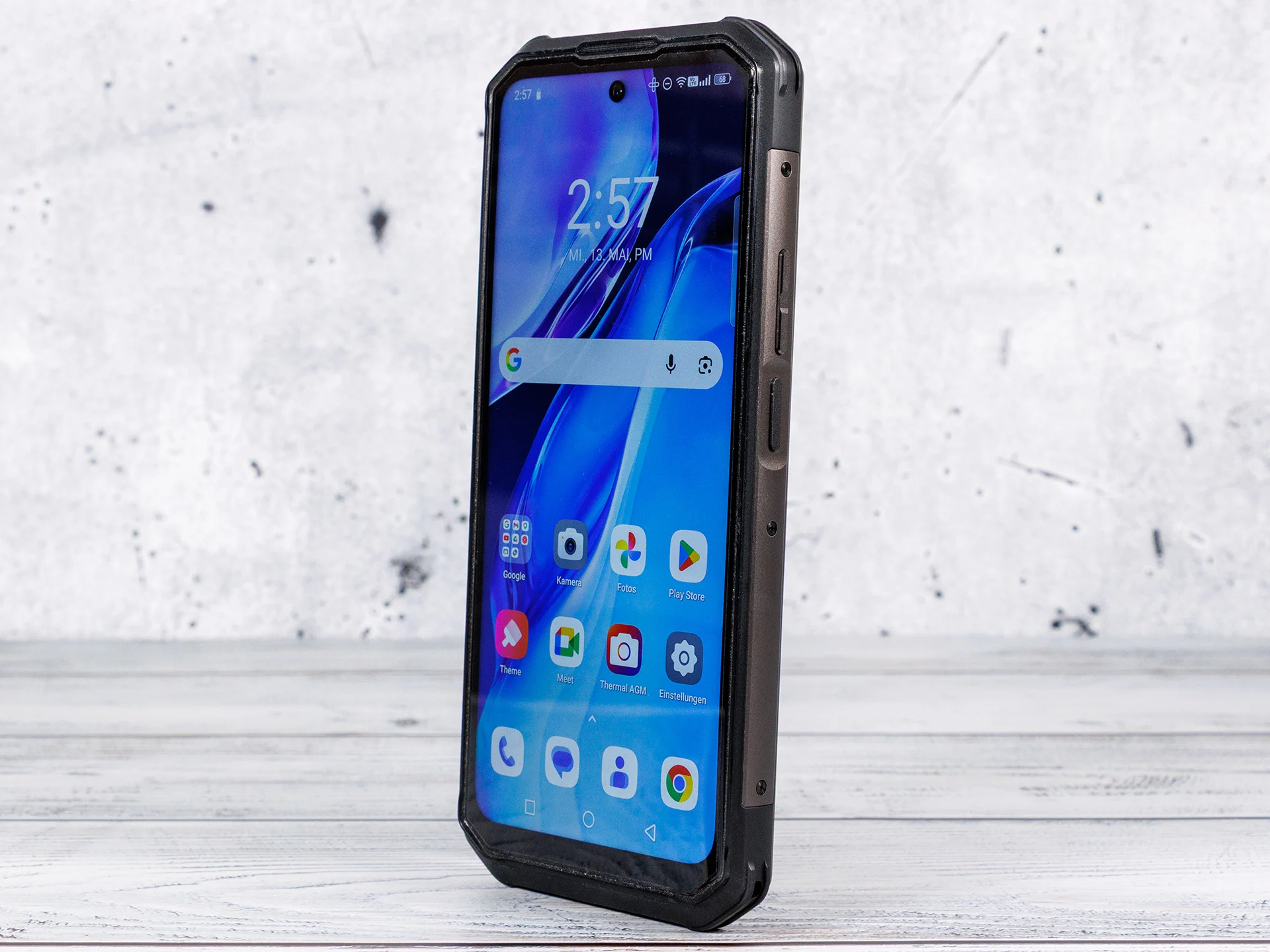
      The AGM G3 Pro is a rugged smartphone built primarily for durability rather than sleek style, and it really shows in its construction. Its MIL-STD-810H certification suggests it can handle drops from up to 1.5 meters, dust and water resistance, and it even tolerates temperatures from -20 °C to +60 °C, making it a tough pick for outdoor use and demanding work environments. The device feels solid in the hand, and the design choices emphasize resilience over polish, which might appeal to users who need reliability in harsh conditions.

      Key rugged features and unusual capabilities

      Among its standout traits are a very bright camping light on the back and an integrated thermal imaging camera. This camera can mark individual measurement points and automatically highlight the hottest and coldest spots in a scene. In real-world use, though, temperature readings tend to be only approximate, often running a bit higher than reference measurements. A programmable function key and an built-in FM radio round out some of the practical extras, adding convenience for field work and outdoor activities.

      Storage, connectivity, and performance notes

      The device includes a hybrid SIM/microSD slot that supports either two SIMs or one SIM plus memory expansion, which is a handy flexibility feature. However, DRM certification is absent, which could limit higher-quality streaming on certain services. Connectivity is middle-of-the-road: single-band GNSS can affect location accuracy, Wi‑Fi 5 has limited performance, and voice quality is decent but lacks strong noise cancellation. The vibration motor falls short of expectations as well, contributing to a less premium-feeling tactile experience.

      Camera and display impressions

      Camera performance is a notable weakness. The front camera is passable but images tend to look overly sharpened, while the rear cameras disappoint with poor detail, no stabilization, and digital zoom-only capabilities. Video recording tops out at 30 FPS. The TFT-LCD display is sufficiently bright but cannot rival OLEDs and skew toward a cooler color temperature, impacting overall image quality and viewing comfort.

      Performance, battery, and long-term durability

      Under the hood sits a MediaTek Dimensity 7300 that provides solid everyday performance without venturing into high-end territory. The speaker is exceptionally loud, and the large battery supports lengthy use between charges, which are strong points for outdoor work or prolonged field sessions. On the downside, the manufacturer estimates the battery life may endure around 800 charge cycles, which could influence long-term durability expectations and total cost of ownership.

      Bottom line and target audience

      The AGM G3 Pro stands as a specialized outdoor device prioritizing ruggedness, extended battery life, and thermal imaging over camera quality, multimedia capabilities, and some modern features. If your needs lean toward harsh environments, durability, and functions like thermal imaging or long-lasting battery life, this model could be a fit, albeit with clear trade-offs in camera performance and streaming capabilities.

      Sources
      • Is 3500 nits too bright for daily smartphone use?

        Is 3500 nits too bright for daily smartphone use?

        Key Takeaway

        – Extremely bright display for direct sunlight, with superior peak brightness versus competitors like the Samsung Galaxy A57.
        – High energy demand leads to shorter battery life and more frequent charging under intensive use.
        – Indoor/ shaded use can feel excessively intense, and automatic brightness reacts sluggishly, causing brightness jumps.
        – Continuous (average) brightness is notably lower than peak specs, affecting consistency in real-world viewing.
        – Overall, while the display is top-tier for mid-range, energy efficiency and auto-adjustment drawbacks temper everyday appeal.


        The Motorola Moto G87 sets standards in the mid-range with its 6.78-inch extreme AMOLED display: With a peak brightness of up to 3,500 nits in our test (up to 5,000 nits according to the manufacturer) and a 1.5K resolution at 120 Hz refresh rate, it outperforms many competitors at a price of around 450 US$.

        Introduction

        However, this technical superiority also comes with challenges that are noticeable in everyday life. The lab measurements confirm an exceptional brightness that guarantees perfect readability even in direct sunlight. Indoors, however, the panel sometimes appears too intense, which can quickly tire the eyes. The high peak brightness is only achieved under certain conditions, while the continuous brightness is significantly lower. The battery life suffers from this high energy requirement, which leads to more frequent charging cycles during intensive use.

        Real-World Performance

        In a direct comparison with the Samsung Galaxy A57, the Moto G87 shows superior brightness, while the competitor’s display loses legibility in the same lighting conditions. Nevertheless, the Samsung device remains competitive in terms of color accuracy and viewing angle stability. For everyday use, this means that the Moto G87 shines in extreme lighting conditions, but often has to be dimmed in the shade or under artificial lighting. The automatic brightness control reacts somewhat sluggishly from time to time, which can lead to unpleasant jumps.

        Display and Efficiency

        The Moto G87 offers a display that is at the forefront of the mid-range in terms of brightness. However, there are drawbacks in terms of energy efficiency and automatic adjustment. You can find out why we cannot recommend the phone without hesitation despite its great display in our detailed test report.