
Tag: Motorola

  • Motorola comments on hijacked shopping apps debacle

    Motorola comments on hijacked shopping apps debacle

    Key Takeaway

    – The Smart Feed app was silently injecting affiliate links by routing shopping apps through a web/affiliate flow, generating commissions for Motorola.
    – Motorola says the behavior was unintentional and caused inconsistencies in user experience; they have corrected the routing to launch apps directly without detours or affiliate codes.
    – Motorola claims it will monitor privacy, user experience, and platform integrity going forward, with updates to prevent recurrence.


    Motorola’s App Routing Issue Explained

    As we reported on Tuesday, Motorola has used the Smart Feed app pre-installed on many Motorola smartphones to insert an affiliate link when opening popular shopping apps such as Amazon. To make this possible, the app had to monitor the network traffic; when a corresponding shopping app was opened, it was first redirected to the browser, which then redirected to the app via a link with an affiliate code.

    What Happened and Motorola’s Response

    As a result, Motorola received a commission every time a purchase was made via the shopping app. Motorola has now commented on this incident to Android Authority. According to the statement, this behavior was “unintentional” and would lead to an “inconsistent user experience”. Motorola has adjusted the routing configuration of the Smart Feed app so that shopping apps can now be opened without a detour and without an affiliate code.

    Privacy, User Experience, and Future Steps

    Motorola claims they take the protection of privacy and the user experience seriously and will continue to monitor the situation. Following this update, smartphones such as the Motorola Razr Ultra 2025 ($799 on Amazon) should no longer hijack shopping apps, but Motorola has yet to explain how this incident could have occurred. A bug in Motorola’s “app search and recommendations”, as the manufacturer calls it, does not explain why affiliate codes were inserted before the apps were opened. Here is the full statement from Motorola:

    Official Statements and What They Imply

    Recently, Motorola acted quickly to resolve an issue that was identified, which caused some users in the US launching the Amazon Shopping app to be routed through a web tracking link before opening the app. This behavior was unintended and resulted in an inconsistent user experience.

    Upon identifying the issue, we promptly corrected the routing configuration. Users can now expect all installed apps to launch directly as intended.

    Motorola takes user experience, privacy, and platform integrity seriously and will continue to closely monitor the system to ensure expected behavior across devices.
    Sources
  • Is 3,500 Nits Brightness Too Bright for Daily Use?

    Is 3,500 Nits Brightness Too Bright for Daily Use?

    Key Takeaway

    – Industry-leading brightness for a mid-range display, excelling in direct sunlight and extreme lighting conditions.
    – Noticeable balance issues: high peak brightness drains battery and reduces continuous brightness, causing more frequent charging.
    – Eye comfort and usability trade-offs: indoors the panel can feel too intense; automatic brightness can be sluggish, leading to abrupt brightness jumps.
    – Color accuracy and viewing angles remain competitive vs. rivals, but overall energy efficiency and automatic brightness limits temper daily use.


    Motorola Moto G87 review highlights

    The Moto G87 stands out in the mid-range arena with its 6.78-inch extreme AMOLED panel, boasting a peak brightness that tops around 3,500 nits in our testing and claims up to 5,000 nits per the manufacturer. It sports a 1.5K resolution and a 120 Hz refresh rate, aiming to outshine many rivals while staying near the 450 US$ price point. This section preserves the original pricing and spec details as requested, though the exact currency and price may vary over time.

    Display performance in real life

    In everyday use, the screen provides exceptional brightness that can ensure readability even under direct sunlight according to laboratory measurements. Yet indoors, the same panel can feel too intense, potentially tiring the eyes after longer sessions. The best brightness is not constant; it only appears under certain conditions, while the sustained brightness is notably lower, affecting how the display looks during extended use. The high energy draw also impacts battery life, resulting in more frequent charges during heavy tasks.

    Brightness comparisons

    When directly compared to the Samsung Galaxy A57, the Moto G87 demonstrates superior brightness, making it easier to read in bright environments. The Samsung, however, keeps a solid edge in color accuracy and viewing angle stability. For everyday users, this means the Moto G87 can excel in bright outdoor situations but may require dimming indoors or under artificial lighting. Automatic brightness responds with a slight delay at times, which can cause abrupt changes in screen intensity.

    Energy efficiency and overall balance

    Overall, the phone delivers a display that sits near the top of mid-range brightness. Yet the trade-offs include energy efficiency concerns and imperfect automatic adjustments. These drawbacks detract from its otherwise strong display performance, and they weigh into the overall recommendation. You can explore these factors in our complete test report to understand why a cautious verdict is warranted despite the standout brightness.

    Conclusion

    The Motorola Moto G87 offers a display that pushes the mid-range envelope in brightness, but its high energy requirements and imperfect automatic brightness adjustments create a mixed picture. With 6.78 inches of extreme AMOLED, it keeps pace with competitors in some aspects while lagging in others, pushing buyers to weigh the importance of brightness against battery longevity and ease of use in varied lighting.

    Sources
    • Is 3500 nits too bright for daily smartphone use?

      Is 3500 nits too bright for daily smartphone use?

      Key Takeaway

      – Extremely bright display for direct sunlight, with superior peak brightness versus competitors like the Samsung Galaxy A57.
      – High energy demand leads to shorter battery life and more frequent charging under intensive use.
      – Indoor/ shaded use can feel excessively intense, and automatic brightness reacts sluggishly, causing brightness jumps.
      – Continuous (average) brightness is notably lower than peak specs, affecting consistency in real-world viewing.
      – Overall, while the display is top-tier for mid-range, energy efficiency and auto-adjustment drawbacks temper everyday appeal.


      The Motorola Moto G87 sets standards in the mid-range with its 6.78-inch extreme AMOLED display: With a peak brightness of up to 3,500 nits in our test (up to 5,000 nits according to the manufacturer) and a 1.5K resolution at 120 Hz refresh rate, it outperforms many competitors at a price of around 450 US$.

      Introduction

      However, this technical superiority also comes with challenges that are noticeable in everyday life. The lab measurements confirm an exceptional brightness that guarantees perfect readability even in direct sunlight. Indoors, however, the panel sometimes appears too intense, which can quickly tire the eyes. The high peak brightness is only achieved under certain conditions, while the continuous brightness is significantly lower. The battery life suffers from this high energy requirement, which leads to more frequent charging cycles during intensive use.

      Real-World Performance

      In a direct comparison with the Samsung Galaxy A57, the Moto G87 shows superior brightness, while the competitor’s display loses legibility in the same lighting conditions. Nevertheless, the Samsung device remains competitive in terms of color accuracy and viewing angle stability. For everyday use, this means that the Moto G87 shines in extreme lighting conditions, but often has to be dimmed in the shade or under artificial lighting. The automatic brightness control reacts somewhat sluggishly from time to time, which can lead to unpleasant jumps.

      Display and Efficiency

      The Moto G87 offers a display that is at the forefront of the mid-range in terms of brightness. However, there are drawbacks in terms of energy efficiency and automatic adjustment. You can find out why we cannot recommend the phone without hesitation despite its great display in our detailed test report.

    • Motorola to launch two new affordable smartphones in new markets

      Motorola to launch two new affordable smartphones in new markets

      Key Takeaway

      – Moto G37 and Moto G37 Power are set to launch in India on 19 May, following a Europe debut last month.
      – G37 specs: 6.67″ FHD+ LCD with 120 Hz, MediaTek Dimensity 6300, 4 GB RAM, up to 256 GB storage (expandable to 1 TB), 5,200 mAh battery, Android 16, 50 MP + 2-in-1 light sensor dual rear cameras, plus stereo speakers, Gorilla Glass 7i, MIL-STD-810H, 3.5 mm jack, and Pantone color options.
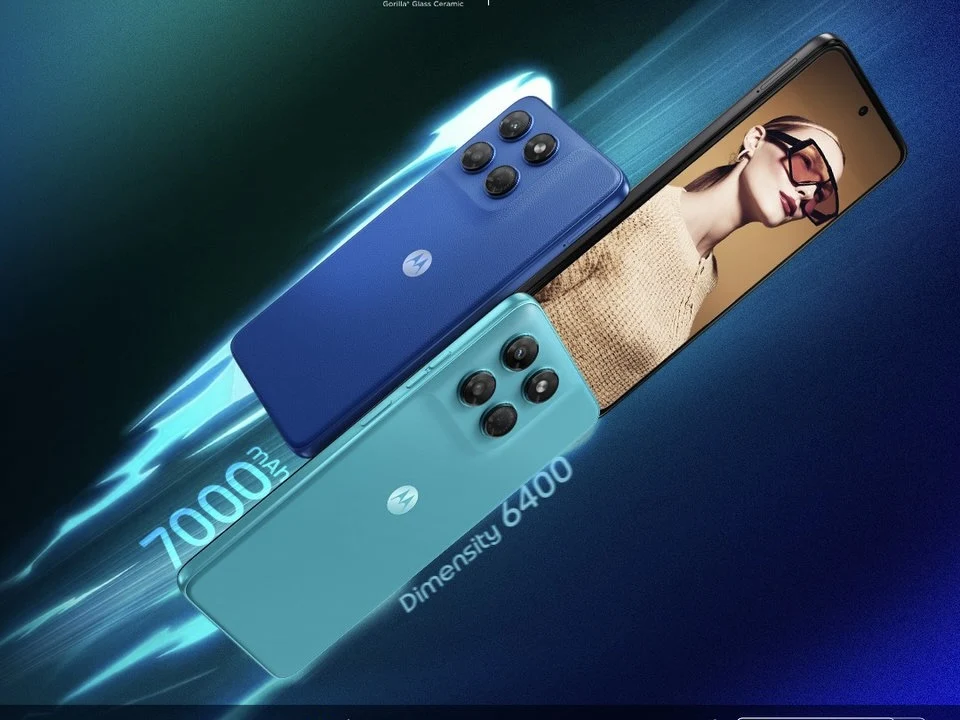
      – G37 Power mirrors G37 but with a larger 7,000 mAh battery and 30 W wired charging.
      – Pricing is not yet disclosed; devices will be available via Motorola India official store, Flipkart, and authorized retailers.

      Following a successful Europe launch last month, Motorola is now on its way to introducing its latest G-series smartphones to the Indian market. To be precise, Motorola is all set to launch the Moto G37 Power and the Moto G37 smartphones on 19th May in India. To recall, Motorola launched its first-ever book-style Razr Fold smartphone in India. We already covered it and you can read about it here.

      Launch details

      While the Indian variants keep most of the specs of their global siblings, the latest offerings ain’t an exception. The Moto G37 will feature a 6.67-inch LCD panel with FHD+ resolution and a 120 Hz refresh rate. Speaking of powered things, the affordable smartphone will be equipped with a MediaTek Dimensity 6300 processor paired with 4 GB of RAM and up to 256 GB of internal storage, which is further expandable up to 1 TB via a micro SD card.

      Specification highlights

      • 6.67-inch LCD panel with FHD+ resolution and 120 Hz refresh rate
      • MediaTek Dimensity 6300
      • 4 GB RAM, up to 256 GB storage, expandable to 1 TB via micro SD
      • 5,200 mAh battery
      • Android 16 out of the box
      • Dual rear cameras: 50 MP primary sensor + 2-in-1 light sensor
      • stereo speakers
      • Gorilla Glass 7i protection
      • MIL-STD-810H certification
      • 3.5 mm headphone jack
      • Pantone-curated color options (three)

      There’s more, the Moto G37 Power will also boast the same specifications as the G37 but will feature a larger 7,000 mAh battery capacity, which is said to support 30 W wired charging. A Ugreen Nexode 30 W charger is listed around $13.81.

      Motorola hasn’t yet revealed pricing details of both smartphones. However, what we know is that both devices will be available for purchase through Motorola India’s official store, Flipkart, and other authorized retailers.


      Sources

    • Moto Tag 2 Now Available with Regional Discounts

      Moto Tag 2 Now Available with Regional Discounts

      Key Takeaway

      1. The Moto Tag 2 is now available in select markets, including the UK, Germany, France, and Ireland, with varying prices and purchasing options.
      2. It features Bluetooth 6.0, UWB for precise tracking, an integrated loudspeaker, and IP68 water and dust resistance, with a battery life of over 600 days.
      3. The device works with Android, connects via the Google Find Hub network, and offers functionalities such as locating items, finding phones, and potentially remote camera shutter (though some features may require software updates).

      Availability and Pricing in Different Markets

      Since Motorola’s announcement of the Moto Tag 2 during CES, many folks were eager to get their hands on it. Initially, Motorola said it was going to be available in a few markets like Europe, Middle East, Africa, Latin America, and Asia-Pacific, but North America was left hanging with no specific date. It took quite some time, but now, finally, the Moto Tag 2 is available for sale in some of these regions, including the UK.

      UK and European Market

      In the UK, the Moto Tag 2 costs around £29.99 each, with options for two color variants, Pantone Laurel Oak or Pantone Arabesque. Customers can also buy a pack of four (two in each color) for about £130. Interestingly, the first-gen Moto Tag still costs the same at £29.99, while a four-pack is priced at £100. That’s quite a difference in price for newer versions!

      Germany, France, and Ireland

      For folks in Germany, the price for a single Moto Tag 2 is €40, and for four tags, it’s €130 directly from Motorola’s website. But on Amazon.de, you’ll find the same four-pack cheaper at €109.50, and a single tag for €32.99. Meanwhile, in France, the cost is €39 each or €129 when buying four. Irish buyers will pay about €39.99 for a single and nearly €130 for a pack of four. Not too far off, right?

      North American Market

      Over in North America, the Moto Tag 2 is not directly available on Motorola’s site yet. However, they do sell the first-generation Tag at a discount — a four-pack for only $69.99, down from $99.99. Meanwhile, on Amazon, you can find a pack of four Moto Tag 2 units for about $119.98. Since it ships from Amazon directly, customers can feel secure about the purchase, although the newer model is slightly more expensive.

      Technical Specifications and Features

      The Moto Tag 2 is compatible with Android devices and utilizes the Google Find Hub network, making tracking easier. It features Bluetooth 6.0, Ultra-Wideband (UWB) technology for doing pinpoint location tracking, and also has an integrated speaker capable of emitting notifications as loud as 77dB. Motorola claims it can help you find your phone or act as a remote camera shutter, although a UK Reddit user mentioned the last feature seems not to work right now. It might just be a bug or maybe a feature that’s coming via an update.

      Design and Battery Life

      Designed with durability in mind, the Moto Tag 2 is rated IP68 for dust and water resistance. It runs on a replaceable CR2032 battery that is said to last over 600 days—more than a year and a half—before you need a new one. There’s also a companion app for customization; you can change ringtones, control volume, view battery status, and share your location with friends and family you trust. Pretty handy for keeping track of your belongings!

      Sources
    • Motorola Moto G37 Launches in Europe with Large Battery and Rugged Design

      Motorola Moto G37 Launches in Europe with Large Battery and Rugged Design

      Key Takeaway

      1. The moto g37 is an affordable 5G smartphone with a 6.67-inch LCD, 120 Hz refresh rate, and Gorilla Glass 7i, offering durable and smooth display performance.
      2. Powered by MediaTek Dimensity 6300 with 4 GB RAM (expandable virtual RAM) and up to 256 GB UFS 2.2 storage, it features a simplified camera setup with a 50 MP rear and 8 MP selfie camera.
      3. The device includes a large 5,200 mAh battery, IP64 splash resistance, MIL-STD-810H certification, and runs on Android 16 with Motorola’s custom UI, targeting budget-conscious consumers.
      4. Connectivity options encompass 5G, Wi-Fi 5, Bluetooth 5.4, NFC, FM radio, and USB-C; it is priced at €249 (~$290) with availability details limited to Europe.

      Introduction to the Moto G37

      Motorola have announced a new budget smart phone called the moto g37, which is part of the line-up of three new models they unveiled today, alongside the moto g47 and the moto g37 power. This phone is positioned at the lower end of the price spectrum and sports a familiar design and features, including 5G capability, a 120Hz display, a generous battery, and some basic durability qualities.

      Design and Display Features

      The device boasts a 6.67-inch LCD screen, which offers Full HD+ resolution and refreshes at 120 Hz. The display is protected by Corning Gorilla Glass 7i, providing some resistance against scratches and minor impacts. The audio system is catered to with stereo speakers tuned for Dolby Atmos and wired Hi-Res Audio, complemented by a 3.5mm headphone jack, which is increasingly uncommon in phones in 2026.

      Performance and Storage

      The moto g37 is powered by the MediaTek Dimensity 6300, a 6 nm octa-core processor that runs at 2.4 GHz, with an Arm Mali-G57 MP2 graphics card. The device only comes with 4 GB of LPDDR4X RAM, with no option for 8 GB, though Motorola states it can boost RAM virtual memory up to 12 GB, which takes advantage of internal storage. Storage options include 64 GB, 128 GB, and 256 GB of UFS 2.2, expandable via microSD cards up to 1 TB.

      Camera and Software

      The main rear camera setup features a 50 MP f/1.8 sensor with PDAF and quad-pixel binning, reducing to a 12.5 MP image, alongside a 2-in-1 ambient and flicker sensor. The front-facing camera is an 8 MP f/2.0 unit with fixed focus. Both cameras support recording at 2K resolution at 30 fps. The device runs on Android 16, layered with Motorola’s custom Hello UX, and includes new Google features like Gemini and Circle to Search.

      Battery and Durability

      The battery capacity is 5200 mAh, with Motorola rating it at a minimum of 5100 mAh, suitable for EU energy classification standards. Dimensions measure 166.23 x 76.50 x 7.85 mm, and it weighs 191 grams. It offers an IP64 rating, meaning it is splash resistant but not waterproof, and has MIL-STD-810H certification for build toughness. Charging is supported through a USB Type-C 2.0 port.

      Connectivity and Pricing

      Connectivity options include 5G sub-6 GHz, Wi-Fi 5, Bluetooth 5.4, NFC, FM radio, and a USB Type-C port. The phone is priced at €249, approximately $290, and its color options are Pantone Impenetrable, Nautical Blue, and Fuchsia Red. The release date and whether it will be available outside Europe haven’t been announced yet.


      Sources

    • Motorola’s Affordable New Smartphone Now Available in US and Canada

      Motorola’s Affordable New Smartphone Now Available in US and Canada

      Key Takeaway

      1. The Moto G Stylus (2026) is available in the US and Canada, starting at $499 for the base model and up to $599.99 for the 256 GB variant, with free Moto accessories offered with certain purchases.
      2. It is powered by a Snapdragon 6 Gen 3 processor, with up to 8 GB RAM, 256 GB storage (expandable to 1 TB), and features a stylus, 5,200 mAh battery with fast and wireless charging.
      3. The device has a dual rear camera (50 MP + 13 MP ultrawide), a 32 MP front camera, and supports IP68/IP69 ingress protection.

      Latest Budget Smartphone Launch by Motorola

      Motorola’ve unveiled the Moto G Stylus (2026) just last week. Now, this newest model is ready for purchase across the US and Canada marketplaces. The starting price for the most affordable 8 GB + 128 GB version is about $499 (€425), while the 8 GB + 256 GB variant costs around $599.99 (€510). Interestingly, customers who buy the 256 GB model on the Motorola US website get some free accessories, like the Moto Watch, Moto Tag, and a pair of Moto Buds Loops earphones. Pretty cool deal, huh?

      Availability and Color Options

      Besides Motorola’s official website, this device can also be bought through several carriers in the US, including Cricket Wireless, AT&T, Xfinity Mobile, Spectrum Mobile, and Optimum Mobile. Over in Canada, the phone is priced at CAD 699.99 (€435) for the basic options. Buyers get to pick between Pantone lavender mist and Pantone coal smoke, which adds a splash of style to their purchase.

      Technical Specs and Performance Details

      The Moto G Stylus (2026) comes with a Snapdragon 6 Gen 3 chip, which is considered an in-budget choice. It can handle up to 8 GB of RAM, and there’s ample storage of up to 256 GB, expandable by microSD card up to 1 TB to fulfill larger data needs. The device keeps up with stylus supporter, aligning with its name. Powering it is a beefy 5,200 mAh battery, that supports 68 W wired quick charging—using, for example, an Anker 140 W charger, which is priced around $64.99. Wireless charging is also available at 15 W, providing some convenience for users.

      Camera and Additional Features

      Photography-wise, you get a dual-camera setup on the back featuring a 50 MP primary sensor and a 13 MP ultrawide lens. For selfies and video calls, there’s a 32 MP front camera. Additional traits include an in-display fingerprint sensor for security, the latest Android 16 OS, and also IP68/IP69 rated ingress protection for resistance against dust and water—making it a quite versatile device for everyday use.


      Sources

    • Phone Maker Sues 300+ Influencers Over Negative Brand Image Leak

      Phone Maker Sues 300+ Influencers Over Negative Brand Image Leak

      Key Takeaway

      1. A major smartphone brand, possibly Motorola, has filed lawsuits against over 300 social media accounts and influencers in India for posting negative content.
      2. The move has sparked debate about whether such legal actions suppress genuine feedback or serve as protection against paid campaigns.
      3. No official court filings or statements have been released, making the case’s impact on brand reputation and online speech potentially precedent-setting.

      Major Brand Takes Legal Action Against Social Media Influencers in India

      In a remarkable move that might be a first in the smartphone industry, a leading brand has taken legal action against over 300 social media accounts and influencers in India. They claim these accounts are spreading “negative content” that damages their reputation, which is a highly unusual step in the tech world. This shows how seriously the brand is taking its online image, especially in a rapidly growing market like India.

      Details Emerge Through a Prominent Tipster

      The news was first shared on April 14, 2026, by Yogesh Brar, a well-known figure who often shares insights about smartphones. His post gained a lot of attention, but interestingly, he did not specify the brand involved. Many comments, however, suggest it’s Motorola, a company owned by Lenovo, based on clues like their recent “AI+” marketing campaign and plans for rapid expansion in India. It’s clear that people are closely watching how brands handle online criticism.

      Controversy and Public Debate

      This situation has caused quite a stir in Indian tech communities. Some critics say the lawsuits might be used as a way to silence honest feedback about product quality or customer service, rather than fixing actual issues. On the flip side, others argue that protecting the brand’s image from paid or false information is necessary. The debate highlights the delicate balance between free speech and corporate reputation management online.

      Legal Actions and Future Implications

      As of now, neither Motorola nor any other company involved has made any official statements or filed publicly accessible court documents. Still, this case could influence how companies deal with online criticism in India’s highly competitive smartphone race. The outcome may set a new standard for managing social media disputes and protecting brand integrity in the future.

      Sources
    • Motorola Edge 70 Fusion Plus: New 5G Mid-Range Phone with 3x Telephoto

      Motorola Edge 70 Fusion Plus: New 5G Mid-Range Phone with 3x Telephoto

      Key Takeaways

      1. Motorola has launched the Edge 70 Fusion Plus, also known as the Edge 70 Fusion+ 5G, initially available only in Brazil.
      2. The Edge 70 Fusion Plus features a 5,200 mAh battery and supports 68 W wired charging, similar to the Edge 70 Fusion.
      3. It is powered by the Snapdragon 7s Gen 4 chip, which is also used in other models like the Poco M8 Pro 5G.
      4. The device has a 6.8-inch AMOLED display with a 144 Hz refresh rate and an updated camera setup including a 3x telephoto camera and a 50 MP main camera.
      5. The Edge 70 Fusion is priced at BRL 2,969 (approximately $570) and is available in Pantone Blue Surf and Orient Blue colors, with 12 GB of RAM and 256 GB of storage.


      Motorola has made some updates to the Edge 70 series after the recent launch of the Edge 70 Fusion at the beginning of this month. Following the reveal of the Edge 70 in October 2025, they are now introducing the Edge 70 Fusion Plus. This new model is marketed as the Edge 70 Fusion+ 5G, and currently, it is only available in Brazil.

      Expansion Expected

      It is likely that Motorola will soon make the Edge 70 Fusion Plus available in other regions, potentially expanding into South America. Meanwhile, Motorola Brazil has pointed out some key distinctions that set the Edge 70 Fusion Plus apart from the existing Edge 70 Fusion. It’s worth noting that the hardware specifications of the Fusion vary in India compared to other markets.

      Key Features

      The Edge 70 Fusion Plus comes with a robust 5,200 mAh battery and supports 68 W wired charging, features carried over from the global Edge 70 Fusion. In contrast to its predecessor, the new model utilizes the Snapdragon 7s Gen 4 chip, which is also found in the Poco M8 Pro 5G and the Redmi Note 15 Pro Plus (currently priced at $409.99 on Amazon).

      Display and Camera

      Additionally, the Edge 70 Fusion Plus boasts a 6.8-inch AMOLED display with a refresh rate of 144 Hz, identical to that of the Edge 70 Fusion. The camera setup has also been updated; it replaces the previous hardware with a 3x telephoto camera (10 MP), a 50 MP main camera (Lytia 710), and ultra-wide-angle and front-facing cameras. For those interested, the Edge 70 Fusion is available in Pantone Blue Surf and Orient Blue colors and retails for BRL 2,969 (approximately $570) with 12 GB of RAM and 256 GB of storage.

      Source:
      Link


    • New Razr 70 Foldable Design Leaked Before Release

      New Razr 70 Foldable Design Leaked Before Release

      Key Takeaways

      1. Motorola is expected to launch new foldable phones, the Razr 70 and Razr 70 Ultra, soon.
      2. The Razr 70 and Razr 70 Ultra have passed through regulatory agencies, indicating a global release is imminent.
      3. The design of the Razr 70 closely resembles the Razr 60, featuring a dual outer camera setup and a cover display.
      4. Significant upgrades include a 3x and 50 MP telephoto camera and a new 8-core chipset.
      5. Recently launched models include the Razr 60, Razr 60 Ultra, and Razr Plus 2025, with the latter priced at $419.97 (renewed).


      Motorola is likely to unveil new foldable phones shortly. Just to remind, the company kept quiet during last week’s MWC 2026 in Barcelona. Back in April, they introduced the Razr 60 and Razr 60 Ultra, alongside a third model known as the Razr Plus 2025, which is available in North America for $419.97 (renewed on Amazon).

      Regulatory Approvals

      Recently, the Razr 70 and Razr 70 Ultra have been seen passing through multiple regulatory agencies. These leaks suggested that we might see global launches soon, but they didn’t share any hardware details. However, the TENAA has disclosed these details for the Razr 70 and has also shown off the new foldable’s design. The images embedded above and below indicate that the device could easily be confused with the Razr 60 at first sight.

      Design Features

      In line with this, Motorola has stuck to a dual outer camera setup along with an LED flash neatly positioned on a cover display of a decent size. The light purple hue makes it clear that this is indeed a new model. It is anticipated that the major updates from the Razr 60 will include the addition of a 3x and 50 MP telephoto camera, plus a fresh 8-core chipset.