Tag: Microsoft

  • Xbox Layoffs Incoming: Insider Tips Major ‘Reset the Business’ Move

    Xbox Layoffs Incoming: Insider Tips Major ‘Reset the Business’ Move

    Key Takeaway

    – Microsoft’s Xbox division is expected to undergo major layoffs after the fiscal year ends on June 30.
    – Xbox will also “significantly” cut its marketing budget and other areas.
    – CEO Asha Sharma stated Xbox revenue has dropped nearly half a billion dollars over the past five years.
    – The exact scale of the layoffs and which areas will be deprioritized remains unclear.


    Another Day, Another Layoff News

    This time, it’s Microsoft employees who are on the chopping block, or so it seems, according to insider information. Specifically, the Xbox division is said to be heading towards mass layoffs, a first under the new leadership of CEO Asha Sharma. Blooomberg’s Jason Schreier has recieved information from people familiar with Microsoft’s strategy, pertaining to upcoming layoffs in the Xbox division. He claims that while the exact scale is unclear, the closing of Microsoft’s fiscal year on June 30 will be followed by major layoffs.

    Xbox Marketing Budget Cuts

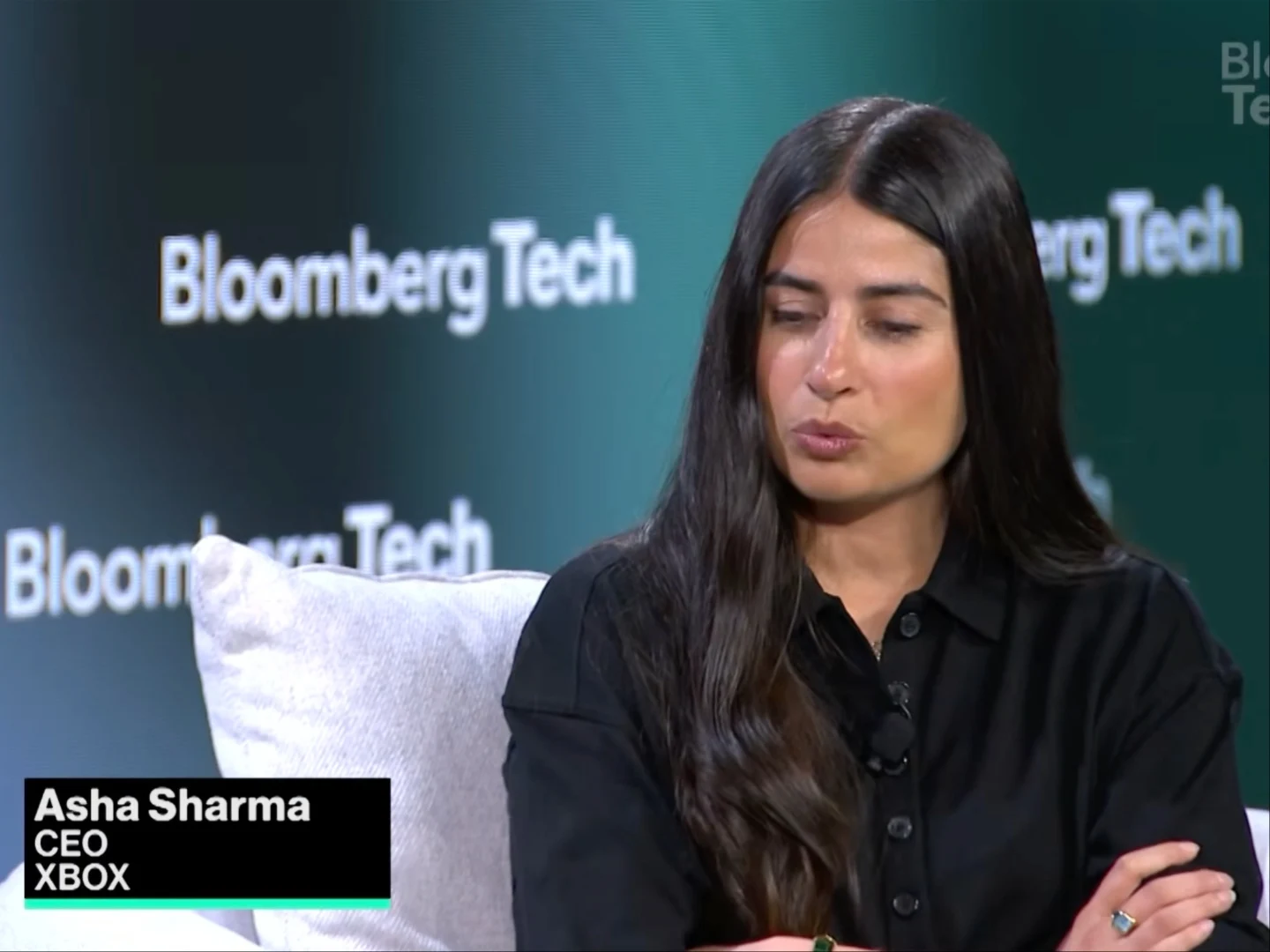
    Furthermore, Xbox is also said to “significantly” slash its marketing budget, along with cuts in some other areas as well. This comes shortly after Asha Sharma’s Bloomberg Tech interview, where she candidly spoke about the Xbox business not being in a healthy spot. She mentioned that some changes will have to be made, but did not talk about any restructuring. The Bloomberg report, however, does cite an email sent by her to employees outlining some revenue numbers. It said, “…our annual revenue has declined nearly half a billion during that time (the past five years). Going forward, this cannot continue.”

    Revenue Decline and Future Investments

    It further talks about how things have grown over the past five years and that making the right investments moving forward is crucial. As mentioned earlier, it is unclear what the scale of the layoffs will be and what will get deprioritized. The news follows Ubisoft’s major shakeup, wherein two more studios have been shut down, and another has gone through layoffs, affecting around 380 employees. Blooomberg, Insider Gaming

    Sources
  • Leaked: Microsoft Surface Laptop 8 & Surface Pro Prices Higher

    Key Takeaway

    – Snapdragon X2 Elite upgrade for Surface Laptop 8 and Surface Pro.
    – Price increase expected, with Surface Pro and 13.8″ Laptop 8 set at €1,699.
    – Surface Pro features OLED display and up to 32 GB RAM / 1 TB SSD.
    – Surface Laptop 8 uses LCD, offers up to 32 GB RAM / 2 TB SSD.
    – Battery life rated at 20 hours (13.8″) and 19 hours (15″).


    New Microsoft Surface Models Spotted Before Launch

    The next gen Surface Laptop 8 and the Surface Pro could already be seen in many images at the begining of June, the launch is expected on June 16, 2026. Both product lines are set to be upgraded to the Qualcomm Snapdragon X2 Elite, but a price increase is also to be expected according to reports.

    Pricing Details for the Upcoming Devices

    According to the latest information from Roland Quandt the next-generation Surface Pro will cost €1,699, just like the 13.8-inch Surface Laptop 8, while the Surface Laptop 8 with a 15-inch display will cost €2,299. As it is not yet known which processor and memory configurations these prices apply to, they cannot be directly compared with last years models.

    Comparing Costs With Previous Generation Models

    To put things in perspective: The 13-inch Microsoft Surface Pro with Snapdragon X, LCD, 16 GB RAM and 256 GB SSD was offered for a list price of €1,399, while the Surface Laptop 7 was offered at prices starting at €1,669 and €1,769, depending on the screen size. The next-generation Surface Pro is said to combine a Snapdragon X2 Elite with twelve CPU cores with a maximum of 32 GB RAM and a 1 TB SSD. Microsoft is reportedly installing a 120 Hz OLED display, two USB-C ports with support for USB 4 and is offering a keyboard case with space for the Surface Slim Pen 2.

    New Specifications for the Surface Pro and Laptop 8

    The Surface Laptop 8 offers similar features with a Snapdragon X2 Elite and a maximum of 32 GB RAM as well as an SSD with up to 2 TB of storage, although both the 13.8-inch and 15-inch models are said to rely on an LCD instead of an OLED display. The smaller model is expected to achieve a battery life of 20 hours with a 54 Wh battery, while the larger Surface Laptop 8 will achieve 19 hours with a 66 Wh battery. The base model is said to be equipped with a Snapdragon X2 Plus and only 256 GB of SSD storage.


  • Microsoft June 2026 Patch Tuesday: High Stakes & Hidden Features

    Microsoft June 2026 Patch Tuesday: High Stakes & Hidden Features

    Key Takeaway

    – June 2026 Patch Tuesday is a critical compliance milestone due to June 24 expiration of legacy UEFI Secure Boot certificates.
    – Unpatched devices will lose the ability to receive future boot security updates, including Windows Boot Manager and revocation list updates.
    – CVE-2026-42897, a high-severity XSS vulnerability in Outlook Web Access for on-premises Exchange, is now permanently patched.
    – Major Windows 11 features include NPU monitoring in Task Manager, Shared Audio via Bluetooth LE, and Multi-App Camera support.
    – Users can now set custom local user folder names during clean Windows 11 installations.


    Rollout of June 2026 Security Bundle Begins

    Microsoft has officially begun rolling out its June 2026 Patch Tuesday update bundle, turning a routine monthly security deployment into an essential compliance milestone for enterprise networks. Because legacy 2011-era Third-Party UEFI Secure Boot certificates begin their scheduled expiration cycle on June 24, IT departments are using this update window to finalize validation across their device fleets.

    New Features for Everyday Users

    While enterprise administrators are focused on long-term boot compliance, everyday Windows 11 users will receive a collection of new, officially documented features. Rather than holding quality-of-life upgrades back for a traditional annual operating system version milestone, Microsoft is using this mandatory quality update to deliver sweeping platform improvements to general system performance, hardware diagnostics, and peripheral management.

    Critical Checkpoint for Corporate Environments

    For corporate environments, the June 9 rollout represents a critical checkpoint in a multi-stage infrastructure transition. According to official Microsoft lifecycle documentation, devices that do not migrate to the newer Windows UEFI CA 2023 certificates ahead of the summer expiration timeline will continue to boot and operate normally under standard conditions. However, Microsoft warns that these non-updated endpoints will lose the ability to receive new security protections for the early boot process, effectively halting future updates to the Windows Boot Manager, Secure Boot databases, and critical vulnerability revocation lists.

    Security Vulnerability and Patch Details

    On the security front, administrators are closely monitoring CVE-2026-42897, a high-profile cross-site scripting vulnerability affecting Outlook Web Access in on-premises Exchange Server deployments. With today’s security updates officially delivering the permanent patch to resolve this vulnerability, administrators can finally transition away from temporary blocks previously managed by the Exchange Emergency Mitigation Service. Today’s quality update bundle also addresses associated system bugs, including a fix for installation failures on devices with limited space of 10 MB or less on their EFI System Partition.

    Major Feature Updates for Performance

    Beyond security patches, the deployment introduces a series of major feature updates directly to the Windows 11 client ecosystem under the general performance umbrella. For core system performance, this update officially accelerates app launch behaviors and enhances responsiveness across core shell experiences, specifically targeting micro-stuttering within the Start menu, Search, and Action Center.

    Task Manager and NPU Monitoring

    To accommodate modern hardware requirements, Task Manager now provides significantly improved visibility into local AI workloads by introducing optional columns to actively track Neural Processing Unit utilization, active NPU engines, and dedicated or shared NPU memory allocations.

    Media Management and Sharing Upgrades

    Media management receives a substantial upgrade through the launch of the Shared Audio feature, which utilizes Bluetooth LE Audio broadcast technology to allow two individuals to listen to the same audio stream from a single Windows 11 PC simultaneously using separate connected devices. Capturing and streaming video is also more flexible with the introduction of the Multi-App Camera feature, allowing a single physical webcam feed to be shared across multiple communication applications at the same time alongside a new Basic Camera mode intended to simplify device troubleshooting.

    Custom User Folder Name Option

    Finally, addressing a long-standing infrastructure request, the updated Windows setup experience now allows users to choose an exact custom name for their local user folder directly on the Device Name page during clean system installations, cleanly bypassing automated account abbreviations.

    Global Rollout and Enterprise Monitoring

    The mandatory quality update is rolling out globally via Windows Update. Enterprise deployment teams are advised to monitor local system event logs for firmware completion markers to ensure complete fleet readiness ahead of the absolute June certificate cutoff.

    Systemic Pressure on Corporate Networks

    Beyond the routine security fixes and the critical firmware validation deadlines, today’s deployment cycle underscores the broader systemic pressure facing corporate defense networks. While these automated cumulative updates resolve several active operational exploits, the long-term fallout from recent uncoordinated disclosure waves remains an escalating challenge for enterprise administrators as they brace for the threatened mid-July mass disclosure drop by researcher “Nightmare Eclipse.”

  • Gears of War: E-Day PS5 Reportedly Done Before Xbox Shift

    Gears of War: E-Day PS5 Reportedly Done Before Xbox Shift

    Key Takeaway

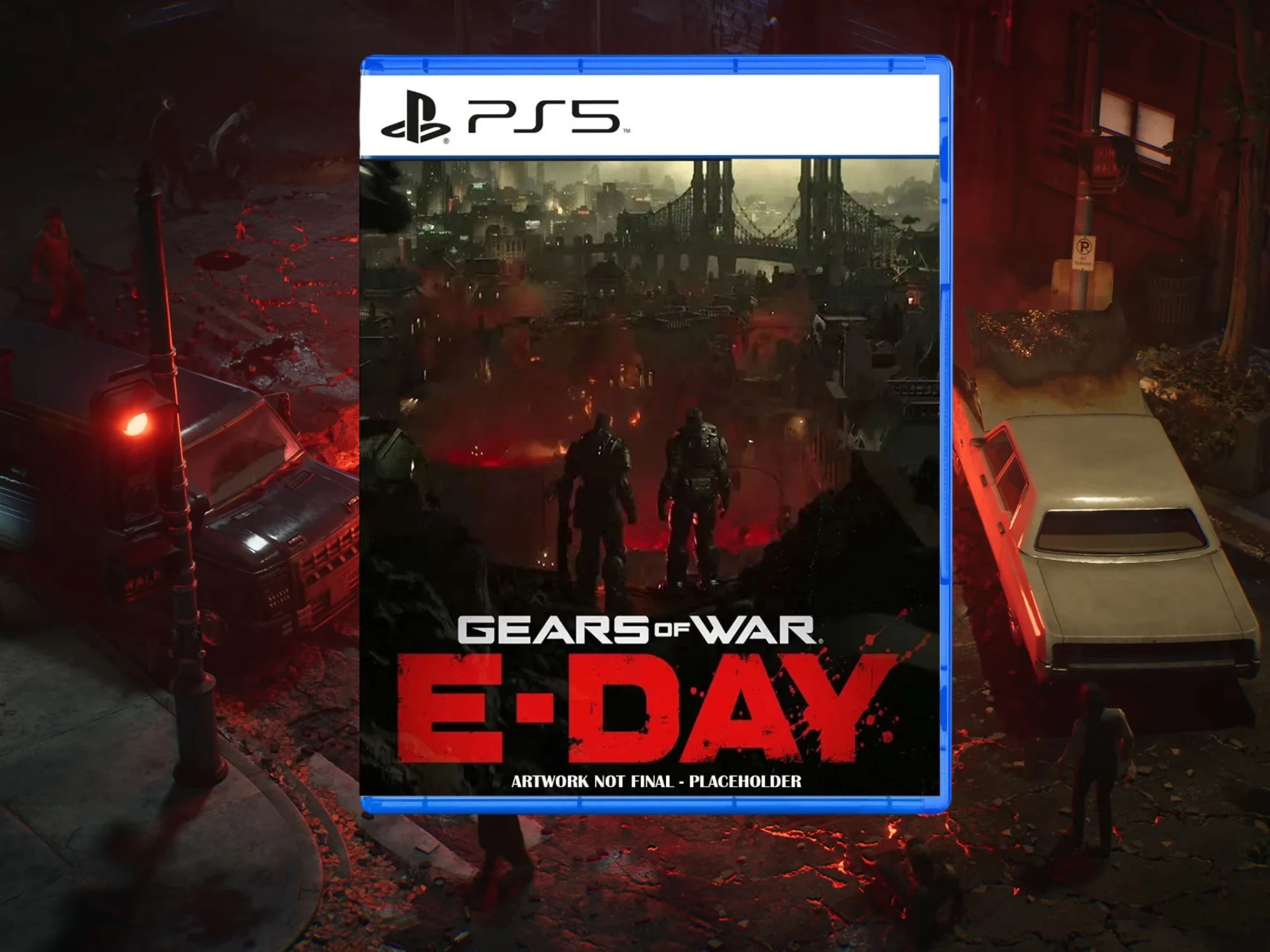
    – Gears of War: E-Day was announced as an Xbox exclusive at the last minute, despite a reportedly finished PS5 build.
    – Microsoft reversed course on a multi-platform release, surprising retailers who had already listed pre-orders.
    – The decision reflects a shift back toward Xbox exclusivity, though it does not apply to all previously announced multi-platform titles.
    – Analysts warn that selective exclusivity could confuse consumers and hurt Xbox’s market position.
    – The game is scheduled for release on Xbox and PC on October 6th.


    Microsoft’s Surprise Announcement Confuses Everyone

    Microsoft surprised Games Showcase viewers by introducing Gears of War: E-Day as an Xbox exclusive game. The move confused retailers, who were readying pre-orders for the third-person shooter. Confirming that the decision was very last-minute, insider Jeff Grubb believes a PS5 port was complete.

    Insider Reveals Last-Minute Reversal

    Veteran journalist Grubb was the first to cast doubt on a Gears of War: E-Day PS5 version. Hours after pre-order listings leaked on Walmart, he revealed that the publisher reversed course. At the start of Xbox Games Showcase 2026, CEO Asha Sharma said the game would not ship for PlayStation consoles.

    Storefronts had to pivot, with Canadian Video Games Plus advertising a box shot of the canceled port on social media. According to the insider, The Coalition studio may also have received word of the change late. His latest Bluesky update reads, “So yeah, there’s a basically finished version of Gears for PlayStation sitting on a drive.”

    Release Date and Development Status

    The Gears of War: E-Day release date for Xbox consoles and PC is October 6th. While the project could need more development time, the Xbox Games Showcase Direct provided an extensive look at the title. Apparently, there was enough progress made to compile a PS5 build.

    Historical Context for PlayStation Versions

    Notably, a playable version of Gears of War 3 for the PS3 existed in 2011, but never shipped. However, Epic Games was testing Unreal Engine 3 on PlayStation hardware, rather than preparing retail copies.

    After many fans lobbied for Xbox exclusive games to return, the tactical shooter is fulfilling their wishes. In a new blog post, Microsoft explained that Clockwork Revolution would also be confined to PCs and their consoles. Yet the new strategy does not apply to already-announced multi-platform titles.

    Analysts Question the New Strategy

    Some analysts aren’t convinced that this approach benefits the company. Microsoft has to hope that Series X and S sales continue to rebound. In addition, selective exclusivity could also confuse buyers interested in its ecosystem. First-party candidates like Halo: Campaign Evolved, Fable, and State of Decay 3 will still debut on the PS5.

    • Jeff Grubb@Bluesky
    • Video Games Plus X account
    • Xbox Wire
    • Gears of War: E-Day Xbox Games Showcase trailer


  • Microsoft & Nvidia Use AI to Optimize Windows Apps on RTX Spark PCs

    Microsoft & Nvidia Use AI to Optimize Windows Apps on RTX Spark PCs

    Key Takeaway

    – Microsoft and Nvidia are betting on AI to optimize and run legacy x86 apps on Arm-based Windows PCs.
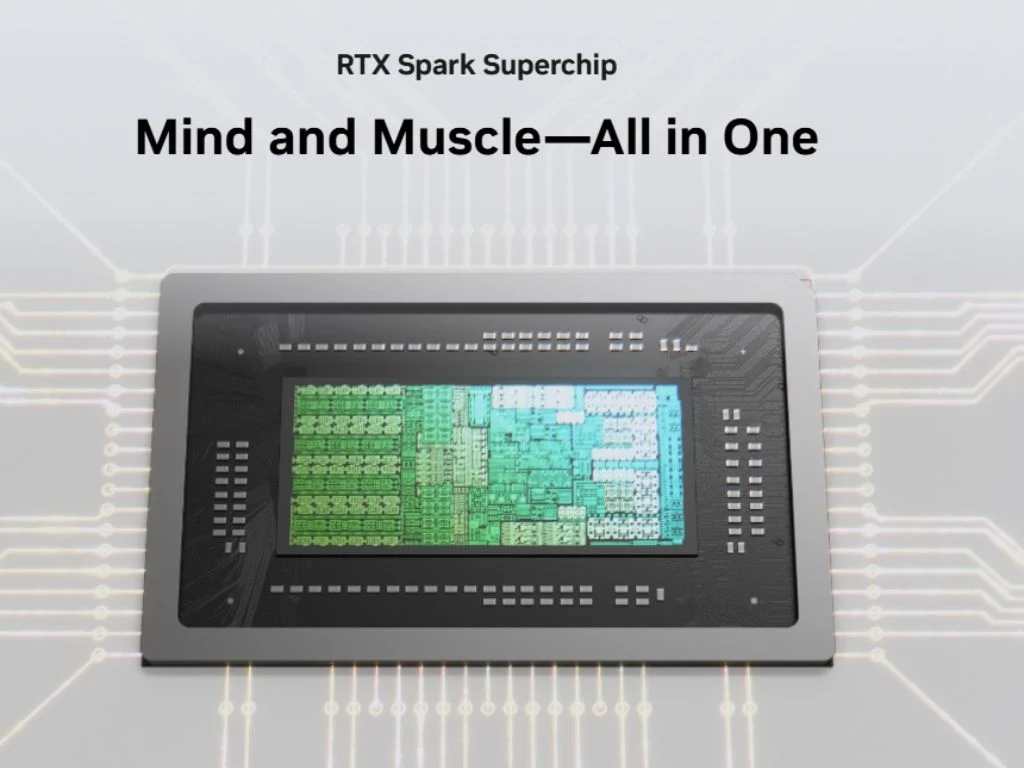
    – Nvidia unveiled the RTX Spark Superchip SoC, a slimmed-down Arm-based chip for laptops and compact desktops.
    – AI agents can help convert and validate x86 applications for improved speed, compatibility, and scale on Arm systems.
    – 90% of time on Windows on Arm PCs is spent on native apps, but some legacy apps and games still require manual code rework.
    – Complex apps with tight security (e.g., anti-cheat systems) will still need human oversight, despite Nvidia’s compatibility promises.


    Microsoft and Nvidia is currently making a calculated bet that AI can handle much of the heavy lifting in running older, unoptimized apps on the latest Windows on Arm and x86 hardware, including Nvidia’s powerful new RTX Spark chips and Qualcomm’s Snapdragon X processors.

    Nvidia announces new RTX Spark superchip

    At Computex on June 1, 2026, Nvidia announced that its Arm-based Grace Blackwell platform had been slimmed down for laptops and compact desktops, dubbing the new configuration the Nvidia RTX Spark Superchip SoC. This new chip promise to bring significant performance improvements for Windows on Arm devices while maintaining power efficiency. The superchip is designed to handle both AI workloads and traditional computing task with ease.

    Microsoft showcases agentic AI at Build 2026

    At its Build 2026 developer conference, Microsoft showcased how “agentic AI” could help convert and validate x86 apps for improved speed and better compatibility, and scale them more effectively on Arm-based systems. The session description read, “See where Arm performance gains are real today, and how agentic AI can help convert and validate x86 applications for speed, compatibility, and scale.” Microsoft’s demos showed AI agents automatically identifying bottleneck in x86 code running under emulation.

    NVIDIA’s Jensen Huang also stepped into the limelight, framed the bigger picture more clearly, and stated, “The PC is being reinvented. For forty years, you launched apps. Click. Type. With RTX Spark and Microsoft Windows, you ask, and the PC does the work.” Huang emphasized that this represents a fundamental shift in how users will interact with their computers going forward. Microsoft’s Satya Nadella stated that RTX Spark has been a “real breakthrough” for delivering “unmetered intelligence to every home and every desk with Windows.”

    Native application performance and emulation challenges

    Microsoft says that currently, 90 percent of the time people spend on their Windows on Arm PCs is inside applications that run natively without any translation layer. Some tools, such as the Prism emulator and related translation technologies, allow a range of older x86 programs to run on Snapdragon X laptops and upcoming RTX Spark machines. There are a few setbacks: some legacy business apps and certain games don’t perform well under emulation or don’t run at all. As a result, developers often have to manually rework parts of the code to achieve optimal performance on Arm hardware.

    AI agents reduce cloud dependency

    That’s where Nvidia and Microsoft step into the picture with their new generation of Arm-based Windows PCs built around AI agents, which are designed to handle real work across apps without constantly communicating with the cloud. These AI agents can automatically detect when an application is struggling under emulation and apply optimization patch in real-time. This local processing capability means users don’t need to rely on internet connectivity for better app performance.

    All in all, Microsoft isn’t claiming that AI agents will magically fix everything overnight. Complex applications with tight security features, such as anti-cheat systems, will still require extensive human oversight, but Nvidia has promised at least some level of compatibility with existing anti-cheat software to placate gamers, a key demographic for the GPU designer, even as it pushes more dedicated hardware, such as the DGX Spark, for users looking to have more agency over their local AI inference.

    Sources
  • Microsoft reverses policy after rogue researcher Nightmare Eclipse

    Microsoft reverses policy after rogue researcher Nightmare Eclipse

    Key Takeaway

    – Microsoft reversed its aggressive legal stance against security researcher “Nightmare Eclipse” after industry backlash.
    – The company abandoned the term “responsible disclosure” and returned to its “Coordinated Vulnerability Disclosure” framework.
    – Microsoft admitted automated platform crackdowns fell short of professional standards and promised good-faith engagement.
    – Despite the policy retreat, the core threat remains: exploit developers are bypassing corporate reporting channels.
    – Nightmare Eclipse plans a June exploit targeting Secure Boot and BitLocker encryption on virtual machines.


    Microsoft Reverses Course on Security Researcher Threats

    Microsoft has officially backpedaled on its aggressive legal stance against the independent security researcher operating under the alias “Nightmare Eclipse.” Following severe industry backlash from the global cybersecurity community, the tech giant quietly scrubbed its recent corporate rhetoric that equated uncoordinated bug disclosures with malicious behavior. The sudden shift represents a major damage-control effort by Redmond to patch over rapidly deteriorating relations with external threat analysts and security professionals who form the backbone of modern software defense ecosystems.

    The Original Dispute and Escalation

    The dispute originally ignited after Nightmare Eclipse bypassed traditional corporate reporting channels to publish functional proof-of-concept code for several high-severity Windows flaws. The campaign successfully weaponized zero-day vulnerabilities in foundational defensive systems, deploying local privilege escalation chains such as BlueHammer (CVE-2026-33825) and the RedSun tool designed to blind Microsoft Defender. Microsoft’s initial retaliation—which included aggressive legal threats from its Digital Crimes Unit and sweeping account bans across code-hosting platforms such as GitHub and GitLab—drew widespread condemnation from enterprise security leaders, who warned that heavy-handed corporate bullying would stifle defensive research and leave active networks exposed to malicious actors.

    Policy Update and Lingering Threats

    In its latest policy update, Microsoft explicitly clarified that it has no intention of pursuing legal actions against individuals engaged in legitimate vulnerability identification. Notably, the software giant has completely abandoned the controversial term “responsible disclosure” from its official messaging channels. The company has instead pivoted back to its classic “Coordinated Vulnerability Disclosure” framework, admitting that some of its recent automated platform crackdowns fell short of professional community standards and promising a good-faith engagement strategy for reporting going forward.

    Unresolved Vulnerabilities and Future Exploits

    Despite Microsoft’s structural policy retreat, the underlying architectural threat vector remains unresolved. Nightmare Eclipse has ignored the corporate olive branch, confirming that multiple independent exploit developers are now funneling unpatched security bugs directly to them to avoid corporate reporting pipelines entirely. The pseudonymous developer has already teased an imminent June exploit payload targeting legacy Secure Boot lifecycle vulnerabilities, claiming the upcoming code drop will completely bypass BitLocker hardware encryption on operational virtual machines ahead of a forecasted mid-summer retribution deadline.

    Sources
  • Microsoft Majorana 2: Quantum Computing Goal of 2029

    Microsoft Majorana 2: Quantum Computing Goal of 2029

    Key Takeaway

    – Majorana 2 qubits are significantly more reliable, with a mean lifetime of 20 seconds (up to a minute), compared to microseconds in conventional systems.
    – The chip operates at microsecond speeds and is small enough for large-scale deployment.
    – Microsoft claims these advances put it on track for a commercially useful quantum computer by 2029.
    – Practical applications include new medicines, advanced materials, battery tech, and logistics optimization.
    – The announcement follows prior scrutiny of Microsoft’s topological qubit evidence for Majorana 1.


    New Quantum Chip Details Emerge

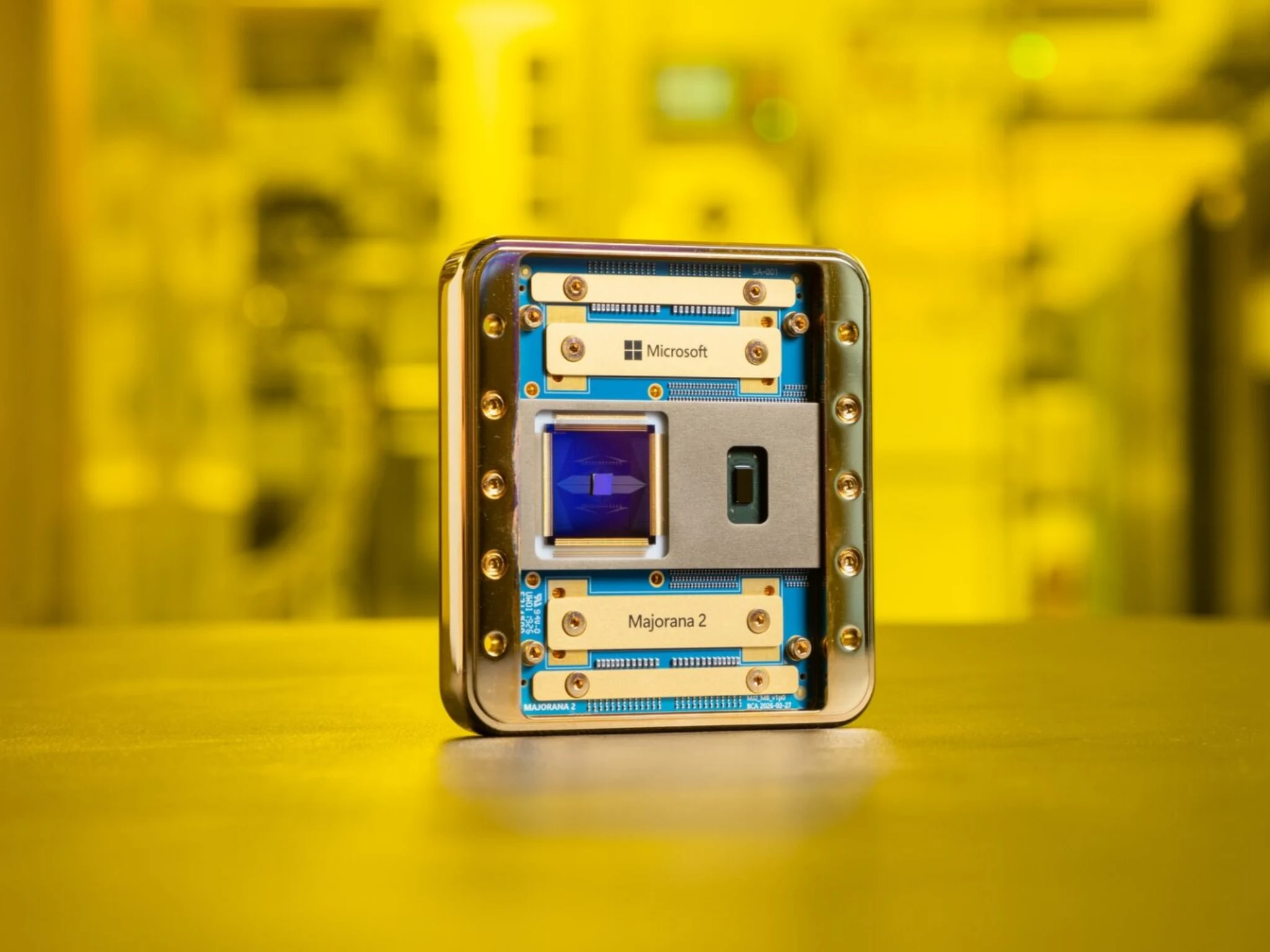
    Microsoft has unveiled Majorana 2, the latest iteration of its topological quantum computing chip, claiming a dramatic leap in reliability that could accelerate its roadmap toward a commercially useful quantum computer by 2029. The company says the new chip’s qubits are more reliable than those used previously, and maintain their quantum state for up to a minute in some cases, and operate at microsecond speeds while remaining small enough for large-scale deployment.

    Key Specifications and Performance

    According to Microsoft, Majorana 2 delivers a mean qubit lifetime of 20 seconds, sometimes going up to a minute. This is a substantial improvement over conventional quantum systems that often measure qubit stability in microseconds. The company believes these gains in reliability, speed, and size put it on track to solve practical problems spanning healthcare, energy, sustainability, and food production within the decade.

    Understanding Qubit Reliability

    For more context, a qubit, or quantum bit, is the quantum equivalent of a traditional computer bit. Unlike conventional bits that can only be either 0 or 1, qubits can exist in multiple states simultaneously, allowing quantum computers to tackle certain calculations far more efficiently. The challenge is that qubits are extremely fragile and can lose their quantum state almost instantly due to environmental interference. So, that remains the biggest hurdle in the way of corporations working with these sub-micro compute technologies.

    Practical Applications and Limitations

    Majorana 2 will not make smartphones or laptops faster anytime soon. Instead, it represents progress toward practical quantum computers that could help develop new medicines, discover advanced materials, improve battery technology, optimise logistics networks, and solve scientific problems beyond the reach of today’s supercomputers.

    Industry Scrutiny and Verification Concerns

    The announcement arrives amid ongoing scrutiny surrounding Microsoft’s topological quantum computing efforts. Previously, several researchers questioned the evidence behind Microsoft’s claims surrounding Majorana 1 and its topological qubit architecture, arguing that published research lacked sufficient proof of the elusive Majorana particle.

    Additional Platform Launch

    Alongside the hardware announcement, Microsoft also launched the general availability of Microsoft Discovery, an AI-powered research platform that the company says is helping scientists analyse data, automate measurements, optimise fabrication processes, identify hidden faults, and accelerate scientific discovery.

    Sources
  • Microsoft enters advanced AI reasoning race with from-scratch model

    Microsoft enters advanced AI reasoning race with from-scratch model

    Key Takeaway

    – Microsoft claims MAI-Thinking-1 surpasses Claude Sonnet 4.6 in reasoning, but this is based on internal, not independent, evaluations.
    – The model is part of a seven-model ecosystem covering reasoning, image, voice, transcription, and code.
    – “Frontier Tuning” allows models to be customized with a company’s own data and workflows in a secure environment.
    – A tuned MAI model for Excel matches GPT 5.4 and is up to 10 times more efficient.
    – Microsoft’s ultimate goal is “Humanist Superintelligence”—AI designed to serve, not replace, people.


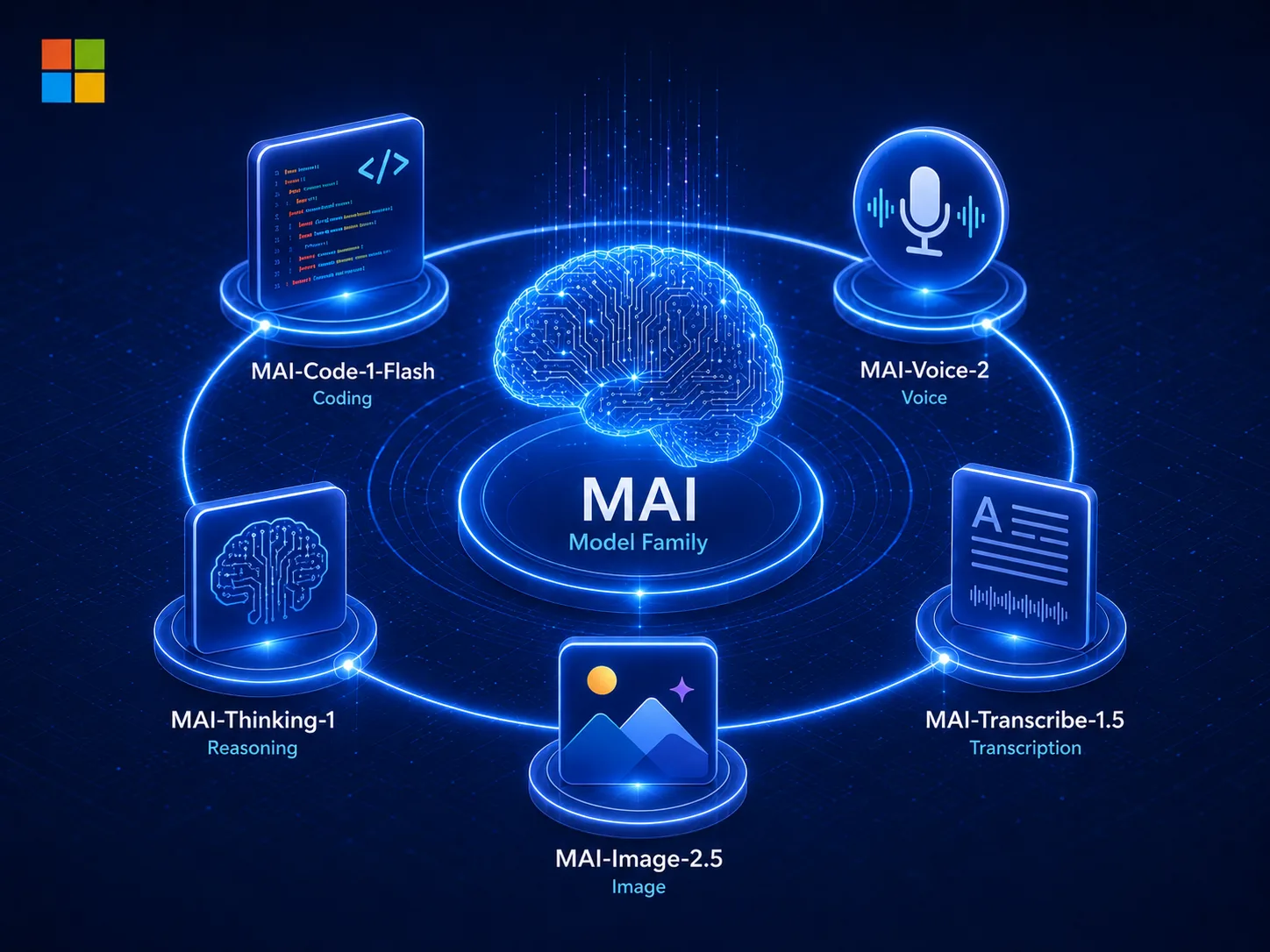
    The Microsoft AI (MAI) team has just announced MAI-Thinking-1, its first advanced reasoning model developed in its own laboratories. Microsoft claims that the AI model possesses reasoning capabilities superior to those of Claude’s Sonnet 4.6, citing blind human side-by-side evaluations. However, this statement comes directly from Microsoft and not from an independent third-party tester, so some scepticism is warranted. MAI-Thinking-1 is part of a family of seven AI models, marking a milestone in Microsoft’s AI strategy.

    New Models and Ecosystem Features

    The new models not only cover reasoning, but also image, voice, transcription and code, forming an interconnected ecosystem designed to work on real-world tasks. These are:

    • MAI-Thinking-1 for advanced reasoning
    • Image generation and processing
    • Voice recognition and synthesis
    • Transcription capabilities
    • Code generation and analysis

    Frontier Tuning and Business Integration

    One of the most notable aspects of the announcement is the “Frontier Tuning”, through which AI models are adapted to the specific needs of each company, using their own information and workflows in a secure environment. This way, business data is incorporated into the model and remains under the customer’s control. As a preliminary result, Microsoft reports that the MAI model tuned for Excel matches GPT 5.4 and is up to 10 times more efficient.

    Vision for Humanist Superintelligence

    MAI concludes its announcement by indicating that the ultimate objective is to achieve “Humanist Superintelligence”, namely advanced AI systems designed to serve people and organizations, not to replace them. More information can be found in Microsoft’s announcement here. The company is clearly betting big on their own research and development, moving away from relying entirely on partnerships with other AI labs. This shift could change how businesses integrate artificial intelligence into there daily operations, though the actual performance of these models in real-world scenarios still remains to be fully validated by the broader tech community and independent researchers. The claim of superior reasoning to Claude’s Sonnet 4.6 is a bold one, but without third-party benchmarks, it is difficult to take at face value right now.

    Sources
  • Surface Laptop Ultra specs, upgrades officially revealed

    Surface Laptop Ultra specs, upgrades officially revealed

    Key Takeaway

    – Nvidia RTX Spark platform with 1 petaflop of AI compute and up to 128GB unified memory for intensive local AI processing
    – Significantly improved thermal system with 2.5x the capacity of the 15-inch Surface Laptop 7th Edition
    – 15-inch mini-LED PixelSense Ultra display with 2,000 nits peak HDR brightness and 262 ppi
    – User-replaceable SSD and larger trackpad, distinguishing it from competitors like the MacBook Pro
    – Slim, lightweight design (under 18mm thick, under 4.5 lbs) with port selection including USB-C, USB-A, HDMI, and SD card reader


    Microsoft Just Dropped New Details About the Surface Laptop Ultra

    Microsoft has just revealed everything we didn’t know about the new Nvidia RTX Spark-powered Surface Laptop Ultra, providing a comprehensive look at the hardware and design elements that set its new premium laptop apart from its predecessor and the competition. Based on the specs the company shared, the Laptop Ultra appears to prioritize localized AI processing and modular maintenance, moving away from the more restrictive design language of previous Surface models.

    Core Hardware and the Nvidia RTX Spark Platform

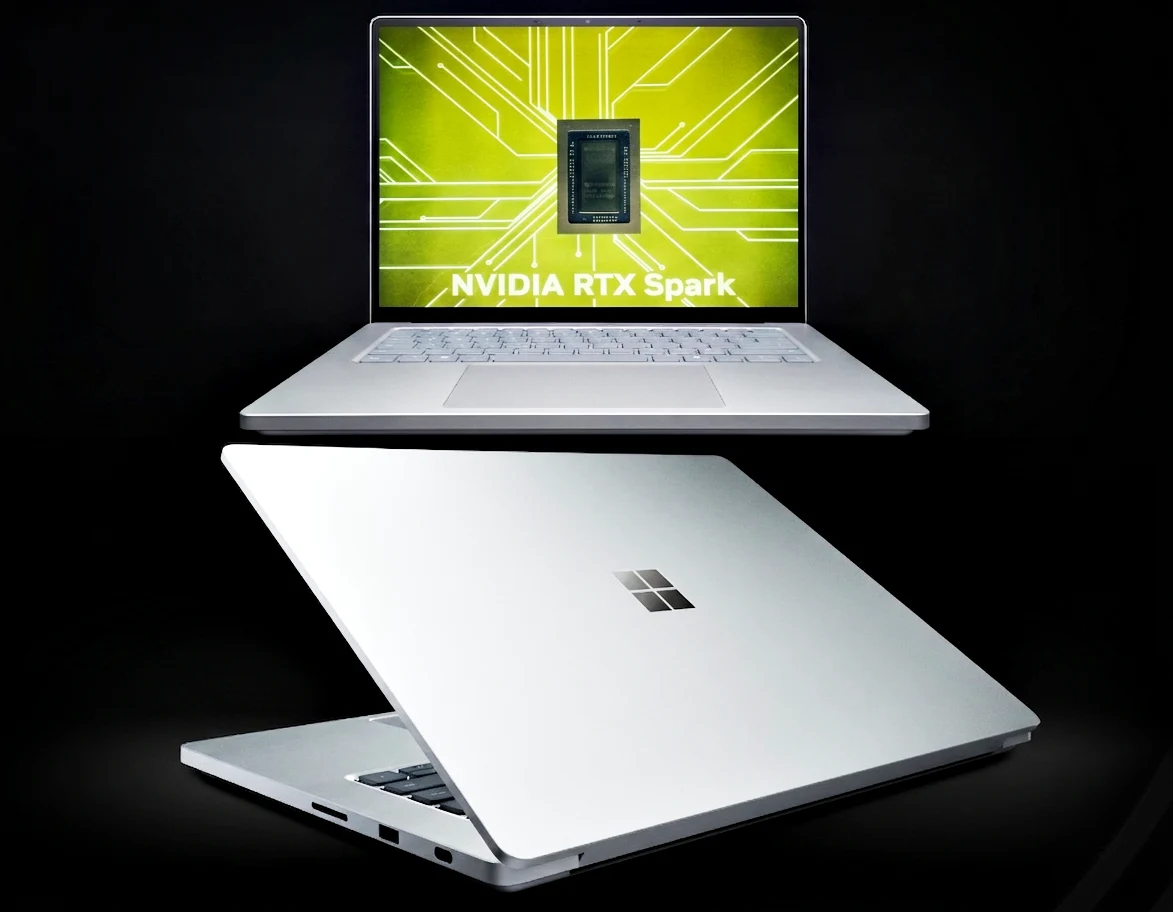
    Of course, at the heart of the laptop is the new Nvidia RTX Spark platform, which aims to handle intensive local workloads by pairing an efficient CPU with an RTX GPU capable of delivering one petaflop of AI compute. To support these demands, the system utilizes up to 128GB of unified memory, enabling users to run larger models directly on-device, which aims to reduce reliance on cloud computing and lower latency.

    Thermal Performance and Display Specifications

    Speaking of performance, thermals have been a frequent point of critique for the Surface line, and Microsoft claims this new model incorporates a thermal system providing up to 2.5 times the capacity of the 15-inch Surface Laptop 7th Edition, likely necessary to manage the higher power of the RTX Spark. As far as the display is concerned, you are looking at a 15-inch mini-LED PixelSense Ultra touchscreen with a 3:2 aspect ratio. It offers a pixel density of 262 ppi and a peak HDR brightness of 2,000 nits, clearly aiming to appeal to pro content creators.

    • 15-inch mini-LED PixelSense Ultra touchscreen
    • 3:2 aspect ratio
    • 262 ppi pixel density
    • 2,000 nits peak HDR brightness

    Design, Ports, and User Replaceable SSD

    You get a choice of two colors (Platinum and Nightfall), while the chassis is less than 18mm thick, weighing under 4.5 pounds, which is in line with Apple’s MacBook Pro 16. To make the whole package lighter, apparently, you get a compact charger designed for easy portability, which Microsoft refuses to show. This might have something to do with the mysterious new USB-C port on the right side of the laptop, which might or might not be magnetic. Speaking of ports, you get three USB-C ports, one USB-A port, HDMI, a headphone jack, and a full-size SD card reader. However, the big news here is something we can’t be taking for granted. The Surface Laptop Ultra has a user-replaceable SSD, which is something you can’t find in competing laptops like Apple’s MacBook Pro. Meanwhile, the trackpad is over 30% larger than previous iterations.

    Market Positioning and Release Window

    All in all, it’s not hard to tell that Microsoft is positioning the Surface Laptop Ultra as the MacBook Pro running Windows 11. From the design, down to the Nvidia chip, the similarities are undeniable. Therefore, the Laptop Ultra is likely going to be judged based on how well it stacks up against the current industry standard in the prosumer laptop market. Pricing, availability, and details on the different SKUs for the Nvidia RTX Spark-powered Surface Laptop Ultra are expected to be announced at a later date. Meanwhile, the actual release is likely to take place in the fall. That said, it won’t be a surprise if reviews of the Surface Laptop Ultra start popping up earlier.

    Stay tuned!

    Sources
  • Xbox Game Pass: 7 New Games Arriving This Month

    Xbox Game Pass: 7 New Games Arriving This Month

    Key Takeaway

    – Seven new games are joining Xbox Game Pass in the first half of June 2026.
    – Two existing Game Pass titles are being added to the Xbox Game Pass Ultimate catalog.
    – Key releases include *Persona 5 Royal* (June 9) and *Undisputed* (June 8).
    – Games are available across Cloud, Console, PC, and Handheld platforms.


    Xbox Game Pass June 2026 First Wave Announced

    May turned out to be a busy month for Xbox Game Pass members. Throughout the month, Microsoft expanded the service with a total of 23 new games, giving subscribers plenty of new titles to download and play across console, PC, and cloud platforms. And now that June has started, Microsoft has officially revealed the first wave of games coming to Xbox Game Pass this month.

    New Titles and Expanded Access

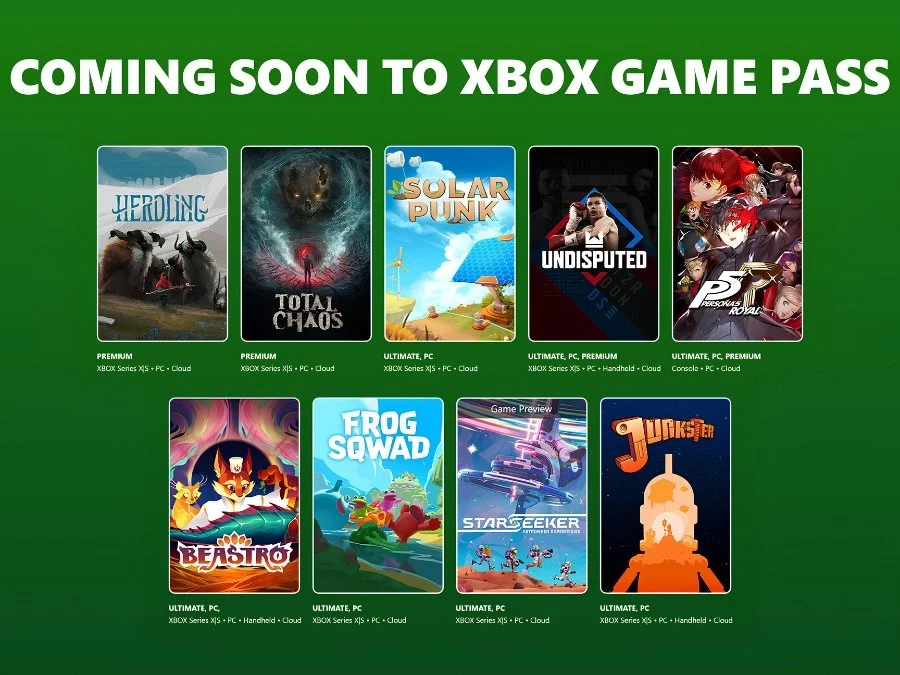
    According to the official announcement, a total of seven new games will be joining Xbox Game Pass during the first half of June 2026. These titles will become available across different Game Pass tiers during the coming days. On top of that, Microsoft is also expanding access for two existing Game Pass titles. While both games were already available through the service, they are now being added to the Xbox Game Pass Ultimate catalog.

    Full List of June Games, Availability Dates, and Plans

    In any case, here’s a complete list of games coming to Game Pass in June 2026, along with their availability dates.

    • Herdling – June 4 – Now with Game Pass Premium; joining Game Pass Ultimate and PC Game Pass – Cloud, Xbox Series X|S, and PC
    • Total Chaos – June 4 – Now with Game Pass Premium; joining Game Pass Ultimate and PC Game Pass – Cloud, Xbox Series X|S, and PC
    • Solarpunk – June 8 – Game Pass Ultimate, PC Game Pass – Cloud, Xbox Series X|S, and PC
    • Undisputed – June 8 – Game Pass Ultimate, Game Pass Premium, PC Game Pass – Cloud, Xbox Series X|S, Handheld, and PC
    • Persona 5 Royal – June 9 – Game Pass Ultimate, Game Pass Premium, PC Game Pass – Cloud, Console, and PC
    • Beastro – June 11 – Game Pass Ultimate, PC Game Pass – Cloud, Xbox Series X|S, Handheld, and PC
    • Frog Sqwad – June 11 – Game Pass Ultimate, PC Game Pass – Cloud, Xbox Series X|S, and PC
    • Starseeker: Astroneer Expeditions – June 11 – Game Pass Ultimate, PC Game Pass – Cloud, Xbox Series X|S, and PC
    • Junkster – June 16 – Game Pass Ultimate, PC Game Pass – Cloud, Xbox Series X|S, Handheld, and PC
    Sources