Tag: Quantum Computing

  • Microsoft Majorana 2: Quantum Computing Goal of 2029

    Microsoft Majorana 2: Quantum Computing Goal of 2029

    Key Takeaway

    – Majorana 2 qubits are significantly more reliable, with a mean lifetime of 20 seconds (up to a minute), compared to microseconds in conventional systems.
    – The chip operates at microsecond speeds and is small enough for large-scale deployment.
    – Microsoft claims these advances put it on track for a commercially useful quantum computer by 2029.
    – Practical applications include new medicines, advanced materials, battery tech, and logistics optimization.
    – The announcement follows prior scrutiny of Microsoft’s topological qubit evidence for Majorana 1.


    New Quantum Chip Details Emerge

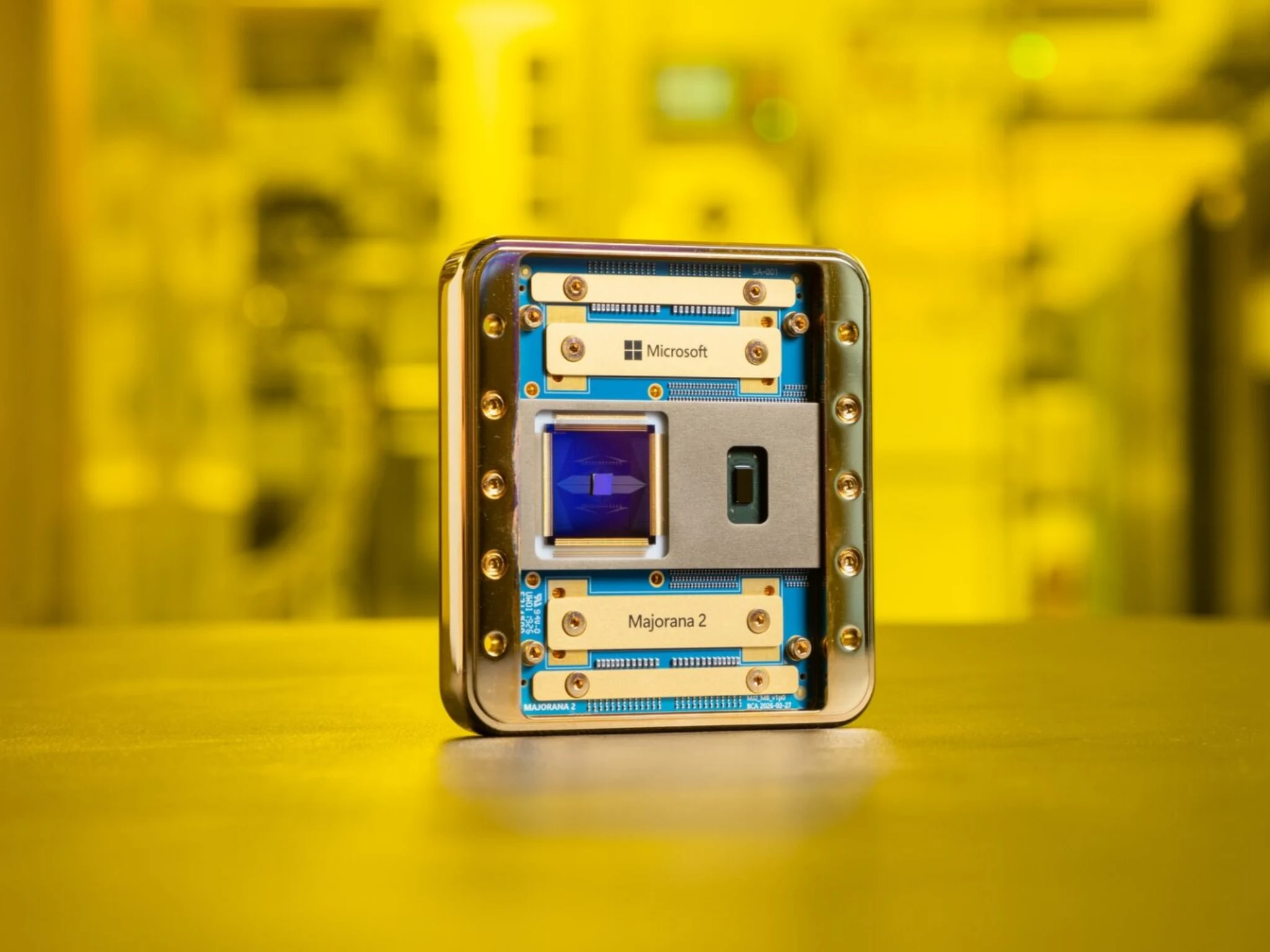
    Microsoft has unveiled Majorana 2, the latest iteration of its topological quantum computing chip, claiming a dramatic leap in reliability that could accelerate its roadmap toward a commercially useful quantum computer by 2029. The company says the new chip’s qubits are more reliable than those used previously, and maintain their quantum state for up to a minute in some cases, and operate at microsecond speeds while remaining small enough for large-scale deployment.

    Key Specifications and Performance

    According to Microsoft, Majorana 2 delivers a mean qubit lifetime of 20 seconds, sometimes going up to a minute. This is a substantial improvement over conventional quantum systems that often measure qubit stability in microseconds. The company believes these gains in reliability, speed, and size put it on track to solve practical problems spanning healthcare, energy, sustainability, and food production within the decade.

    Understanding Qubit Reliability

    For more context, a qubit, or quantum bit, is the quantum equivalent of a traditional computer bit. Unlike conventional bits that can only be either 0 or 1, qubits can exist in multiple states simultaneously, allowing quantum computers to tackle certain calculations far more efficiently. The challenge is that qubits are extremely fragile and can lose their quantum state almost instantly due to environmental interference. So, that remains the biggest hurdle in the way of corporations working with these sub-micro compute technologies.

    Practical Applications and Limitations

    Majorana 2 will not make smartphones or laptops faster anytime soon. Instead, it represents progress toward practical quantum computers that could help develop new medicines, discover advanced materials, improve battery technology, optimise logistics networks, and solve scientific problems beyond the reach of today’s supercomputers.

    Industry Scrutiny and Verification Concerns

    The announcement arrives amid ongoing scrutiny surrounding Microsoft’s topological quantum computing efforts. Previously, several researchers questioned the evidence behind Microsoft’s claims surrounding Majorana 1 and its topological qubit architecture, arguing that published research lacked sufficient proof of the elusive Majorana particle.

    Additional Platform Launch

    Alongside the hardware announcement, Microsoft also launched the general availability of Microsoft Discovery, an AI-powered research platform that the company says is helping scientists analyse data, automate measurements, optimise fabrication processes, identify hidden faults, and accelerate scientific discovery.
    Sources
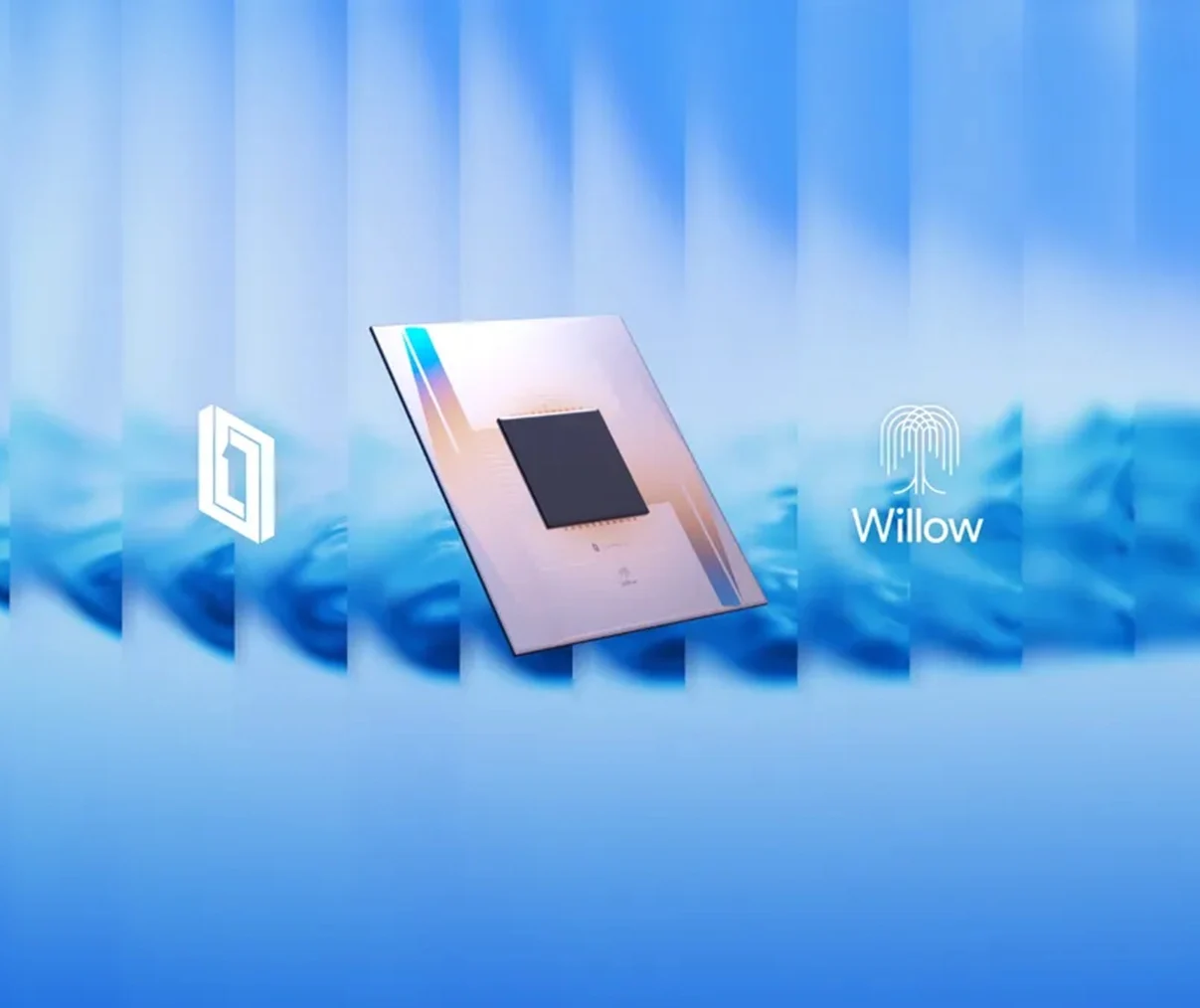
  • Google’s Willow Chip: 13,000x Faster Quantum Computing Explained

    Google’s Willow Chip: 13,000x Faster Quantum Computing Explained

    Key Takeaways

    1. Google’s Willow processor executes the Quantum Echoes algorithm 13,000 times faster than the fastest classical supercomputers.
    2. The Willow chip utilizes 105 superconducting qubits, allowing for complex computations through superposition and entanglement.
    3. Designed to operate at nearly absolute zero, Willow minimizes heat and vibrational interference to maintain stability in quantum states.
    4. The reproducibility of results from the Quantum Echoes algorithm confirms quantum superiority and enhances the modeling of molecular behavior.
    5. Willow has potential applications in AI development, chemical modeling, and the design of new materials, pushing quantum computing toward practical solutions.


    Google has made a significant announcement regarding its advancements in quantum computing. The company’s Willow processor has successfully executed a complex Quantum Echoes algorithm approximately 13,000 times quicker than the fastest classical supercomputers available today.

    A New Era of Quantum Computing

    Willow marks a distinct progress from Google’s earlier success with the Sycamore chip back in 2019. In contrast to the latter, this new superconducting chip has tangible benefits in real-world applications. It has shown promise in areas such as AI development, chemical modeling, and research into advanced materials, as noted in findings published in Nature.

    Understanding the Technology

    The Willow chip utilizes 105 superconducting qubits (a qubit is the quantum equivalent of a classical bit, serving as the fundamental unit of information in quantum computing). Each qubit acts like a simulated atom, capable of storing information in superposition or in various states at the same time.

    When these qubits become entangled (which is a condition where two or more qubits influence each other regardless of the distance), they can transmit quantum information instantly. This allows the processor to assess numerous solutions at once.

    Stability is Key

    For quantum systems to function predictably over time, they must maintain stability in their quantum states. Therefore, Google has engineered Willow to work at nearly absolute zero, effectively minimizing heat and vibrational interference.

    The design of the chip prioritizes speed and accuracy, with reported single-qubit gate fidelities of 99.97 percent and entangling gates achieving 99.88 percent. Such specifications make Willow exceptionally well-suited for executing large-scale quantum algorithms.

    (Gate fidelity refers to how well a quantum gate operates in comparison to its perfect, error-free counterpart. The closer the fidelity is to 100 percent, the more accurately it functions as intended.)

    Verifiability and Practical Application

    The Willow project stands out primarily due to its verifiability. By validating the results of the Quantum Echoes algorithm across various machines or lab conditions, Google has fulfilled crucial criteria for asserting quantum superiority.

    The Quantum Echoes algorithm allows scientists to model molecular behavior, chemical bonds, and electronic structures with greater precision than classical simulations. The chip drove a supercomputer that completed the algorithm, yielding results in one-thirteenth-thousandth of the time required by a classical supercomputer.

    As Google researcher Tom O’Brien pointed out, the reproducibility of Willow distinguishes true breakthroughs from theoretical ones. He remarked, “If we can’t prove the data is correct, we can’t do anything with it.”

    Insights from the Experts

    Another key figure in the project, Nobel laureate Michel H. Devoret, who served as the lead physicist, stated, “We demonstrated that electrical circuits can mimic atoms. Now we are revealing what these artificial atoms are capable of.”

    The Willow superconductor chip has the potential to significantly decrease the time needed for scientists to simulate biological systems. Additionally, it could tackle scenarios where classical computing struggles to produce accurate data.

    Google’s processor is also applicable in the design of new materials and in training data-efficient AI systems. If further confirmed, the Willow breakthrough might bring quantum computation closer to practical and scalable solutions for industrial challenges.


  • Nvidia Eyes Investment in Photonic Quantum Startup PsiQuantum

    Nvidia Eyes Investment in Photonic Quantum Startup PsiQuantum

    Key Takeaways

    1. Nvidia is in talks to invest in PsiQuantum, a start-up focusing on photonic quantum computers, but details of the deal are unclear.
    2. PsiQuantum seeks at least $750 million in funding, with a pre-money valuation of around $6 billion, and BlackRock is already involved.
    3. Nvidia’s strategy is evolving, as indicated by the establishment of a quantum-research lab in collaboration with Harvard and MIT.
    4. PsiQuantum uses a unique method of creating photonic qubits with standard semiconductor processes, facilitating easier mass production.
    5. Even if the investment happens, PsiQuantum’s technology is still experimental, and commercial quantum computers are not expected to be available immediately.


    Nvidia is said to be deep in talks about investing in PsiQuantum, a start-up in Silicon Valley that’s working on big photonic quantum computers. The Information reports that discussions are going well, but neither Nvidia nor PsiQuantum has made any comments, leaving the specifics like size, structure, and timing of the potential deal unclear.

    Investment Insights

    This potential investment comes after a report from March, which stated that PsiQuantum is looking for at least $750 million, with a pre-money valuation around $6 billion, and that BlackRock is already involved. If Nvidia joins in, it would not only enhance the funds for the start-up but also connect it to Nvidia’s growing ecosystem in quantum software.

    Nvidia’s Evolving Strategy

    Nvidia’s attitude seems to be changing. Back in late 2024, CEO Jensen Huang launched a quantum-research lab in Boston with Harvard and MIT, even after saying that practical quantum computers were likely two decades away. These simultaneous initiatives imply that Nvidia might be preparing for a different timeline.

    PsiQuantum takes a unique path compared to its competitors, who usually depend on superconducting or trapped-ion technology. The company creates photonic qubits using standard semiconductor processes, which could make mass production easier. They are already working with both federal and state agencies to set up two demonstration systems—one in Brisbane, Australia, and another in Chicago, Illinois.

    Future Prospects

    Even if the deal goes through, it won’t lead to a commercially viable quantum computer right away; PsiQuantum doesn’t have any products available, and the technology is still in the experimental phase. However, Nvidia’s interest highlights the strategic importance that major chip manufacturers now attribute to quantum computing as a potential next step or addition to traditional AI accelerators. All information is still tentative until an official announcement is made by the companies.

    Source:
    Link

  • Microsoft to Provide More Evidence for Quantum Technology Claims

    Microsoft to Provide More Evidence for Quantum Technology Claims

    Key Takeaways

    1. Microsoft introduced Majorana 1, claiming it to be the first topological quantum bit (qubit) using a new architecture.
    2. Researchers are skeptical of Microsoft’s claims due to the difficulty in capturing Majorana particles and concerns over a lack of supporting details in their publication.
    3. Critics highlight that previous issues, such as a retracted 2018 paper, have led to doubts about Microsoft’s current assertions.
    4. Some scientists suspect the announcement may be exaggerated or even fraudulent, as it lacks evidence from peer-reviewed research.
    5. Microsoft plans to present more definitive research on their findings at the Global Physics Summit in March 2024.


    Scientists appear skeptical of Microsoft’s ambitious statements regarding Quantum computing. The tech giant from Redmond recently introduced Majorana 1, a quantum processor designed with a “Topological Core architecture,” making the strong assertion that it represents the first topological quantum bit (qubit).

    Theoretical Potential

    Microsoft claims this technology could potentially support future advancements with as many as a million qubits. However, researchers are not so sure. Majorana particles have proven to be quite difficult to capture, with their existence first being proposed in 1937.

    Scientific Community’s Concerns

    The assertion that Microsoft has not only detected the particle but also integrated it into a chip has raised eyebrows in the scientific community. Critics argue that the company’s publication on the subject lacks crucial details and, due to a prior incident where a 2018 paper was retracted, doubts persist about their current claims.

    “This is a piece of alleged technology that is based on basic physics that has not been established. So this is a pretty big problem,” said Sergey Frolov, a physics and astronomy professor at the University of Pittsburgh, in a conversation with The Register.

    Doubts About the Announcement

    Frolov noted that the announcement was so “dramatic” that it led to suspicions of it possibly being “a fraudulent project.” Winfried Hensinger, a physicist from the University of Sussex, expressed in Physics Magazine that there is no evidence backing “topological qubits” in Microsoft’s recent paper.

    He pointed out that Microsoft’s press release suggests they have discovered the particle when, in fact, the paper does not provide any supporting evidence.

    “You shouldn’t make claims that are not supported by a peer-reviewed publication,” Hensinger remarked.

    Upcoming Presentations

    Chetan Nayak, who leads the Azure Quantum team at Microsoft, told Physics Magazine that the evidence for the qubit particle was gathered during the submission in March 2024. He mentioned that he plans to share more definitive research at the Global Physics Summit in California, set for March 16.

    In a statement to The Register, a representative from Microsoft said, “There is a lot of science to explain when it comes to quantum computing, and in the coming weeks and months, we look forward to sharing our results along with additional data behind the science that is turning our 20 plus year vision for quantum computing into a tangible reality.”

    Source:
    Link

  • Future Galaxy Flagships May Include First Post-Quantum Security Chip

    Future Galaxy Flagships May Include First Post-Quantum Security Chip

    Key Takeaways

    1. Smartphones are essential in daily life, making security measures increasingly important.
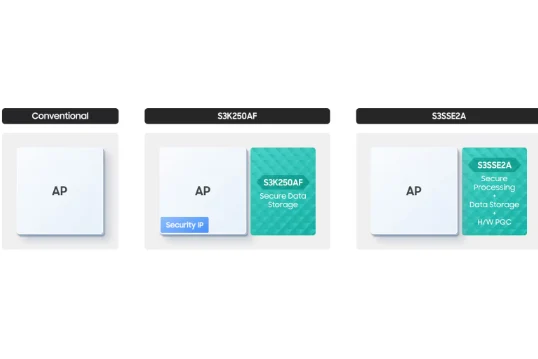
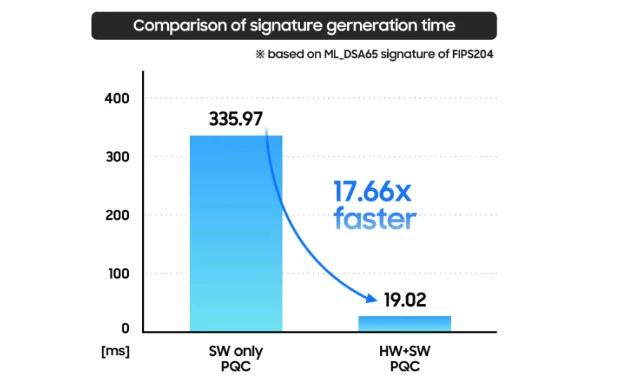
    2. Samsung is developing the S3SSE2A chip, which includes hardware post-quantum cryptography (PQC) to combat future quantum computing threats.
    3. Quantum computers could potentially undermine current security systems, prompting the need for advanced security solutions.
    4. The S3SSE2A chip is expected to protect devices against quantum threats as early as 2028 and may be featured in future Galaxy flagship models.
    5. The integration of the S3SSE2A chip with existing security features, like Secure Folder, remains to be fully detailed.


    Smartphones are now a vital part of everyday life, and the security measures in these devices are more crucial than ever. We recently shared information about a security issue with Samsung’s Secure Folder feature. While the company is still working on fixing that, they are also focused on a significant project: the first security chip in the industry that includes “hardware post-quantum cryptography,” known as PQC.

    S3SSE2A: A Special Chip for Future Galaxy Devices

    The new chip, called S3SSE2A, was created by Samsung System LSI, which is also the team behind Exynos development. This chip aims to tackle the growing threat posed by quantum computers.

    Quantum computing is expected to be available for commercial use after 2030, and it may endanger current security systems. Many might know that these advanced machines have the potential to decrypt current public-key cryptography, making traditional security methods suddenly ineffective. It’s reassuring to see Samsung dedicating resources to protect its future Galaxy devices.

    Futureproofing Against Quantum Risks

    Samsung asserts that the S3SSE2A chip can guard against quantum computing threats as soon as 2028, which is ahead of when these systems are expected to become prevalent. However, which smartphones will actually gain from this innovation? The announcement didn’t provide much clarity.

    When Samsung introduced the Galaxy S25 series earlier this year, they mentioned that these devices come with PQC capabilities, courtesy of the Snapdragon 8 Elite chip. Given the connection to Samsung’s System LSI (which is unrelated to the Snapdragon 8 Elite), we believe that upcoming Galaxy flagship models (featuring the S3SSE2A chip) will be among the most secure devices ever produced. Additionally, Samsung might incorporate this chip into its own flagship Exynos chips, like the Exynos 2600, for future S and Z series devices.

    Integration with Existing Security Features

    Despite this exciting development, there’s still a lot to discover regarding how this chip will work with Samsung’s current security features, such as Secure Folder.

    Source:
    Link


  • Amazon Ocelot Advances Quantum Computing Technology

    Amazon Ocelot Advances Quantum Computing Technology

    Key Takeaways

    1. Amazon Ocelot is a prototype quantum chip developed at the California Institute of Technology, not related to the .NET API Gateway.
    2. The chip aims to reduce quantum error correction costs by 90%, potentially making quantum computing more accessible.
    3. Ocelot is designed to compete with chips like Microsoft’s Majorana 1 and Google’s Willow in the quantum computing race.
    4. The chip features two silicon microchips with 14 components, including data and error detection qubits.
    5. Amazon recently launched Alexa+, a more advanced version of its voice assistant, while its stock is rated as a “strong buy” with a potential price increase.


    While many may associate the name with the open-source .NET API Gateway, Amazon’s Ocelot is not related to software at all. This technology hails from the California Institute of Technology, where a group at the AWS Center for Quantum Computing has developed it. Amazon Ocelot is a prototype chip that claims to drastically reduce quantum error correction expenses by an impressive 90%.

    Competing in Quantum Computing

    Amazon Ocelot is poised to rival chips like Microsoft’s Majorana 1 and Google’s Willow as it seeks to establish itself in the race towards mainstream quantum computing. The field of quantum computing, although still in its infancy, holds the potential to drive significant advancements across various sectors, including medicine and traditional computing. Oskar Painter, the AWS director of Quantum Hardware, stated,

    “In the future, quantum chips designed following the Ocelot model could be priced at just one-fifth of what is currently available, thanks to the significantly lesser resources needed for error correction. We genuinely believe this could speed up our journey to a usable quantum computer by as much as five years.”

    Technical Specifications

    When it comes to the technical aspects of Amazon Ocelot, it features two integrated silicon microchips, each covering an area of about one square centimeter, stacked together in a connected manner. Each chip’s surface is layered with a thin coating of superconductors. The chip contains 14 essential components, comprising five data qubits and four error detection qubits. The last five are buffer circuits that help in stabilizing the data qubits. For further specifications, you can visit the Amazon Science website.

    This week, Amazon also launched Alexa+ (available for free to Amazon Prime users or for $19.99/month for those without Prime), an enhanced version of its well-liked voice assistant. Thanks to advancements in artificial intelligence, Alexa+ can perform a wider array of tasks and engage in more sophisticated conversations compared to its earlier version. Currently, Amazon stock is rated as a “strong buy,” with a 12-month price prediction ranging from $203 to $306, averaging around $262. This average indicates a 22% rise from its current level of about $215.

    Source:
    Link

  • Microsoft Unveils Majorana 1: A Breakthrough Quantum Processor

    Microsoft Unveils Majorana 1: A Breakthrough Quantum Processor

    Key Takeaways

    1. Microsoft has introduced a new quantum processor called “Majorana 1,” utilizing topological qubits for potential advancements in scalable quantum computing.

    2. Majorana 1 employs a novel material, a “topoconductor,” to create a unique state of matter that enhances qubit stability and resistance to disruptions.

    3. The current prototype of Majorana 1 has only eight qubits, much fewer than competitors like IBM and Google, highlighting the early stage of development.

    4. Transitioning from prototype to practical application will require extensive testing and validation of Microsoft’s claims, emphasizing the need for cautious optimism.

    5. If successful, Microsoft’s strategy could address scalability challenges in quantum computing through enhanced stability and a structured approach to error correction.


    Microsoft has recently unveiled its new quantum processor called “Majorana 1,” which has sparked a lot of excitement within the technology sector. The company asserts that this innovative chip, which utilizes a “topological qubit,” signifies a notable advancement towards achieving scalable and practical quantum computing. Microsoft suggests that Majorana 1 may pave the way for the creation of a single chip capable of housing a million qubits—an objective that has been seen as a far-off dream for some time.

    New Material Innovations

    This breakthrough is especially fascinating since Majorana 1 incorporates a novel substance referred to as a “topoconductor” to establish a unique state of matter that supports topological qubits. These qubits, derived from Majorana particles, are believed to exhibit greater stability and resistance to environmental disruptions, which have posed significant hurdles in current quantum computing designs. If these assertions are validated, enhanced stability could facilitate the increase in qubit quantities and achieve fault tolerance, a vital necessity for practical quantum applications.

    Cautious Optimism Required

    Nevertheless, while the announcement is exciting, it is crucial to remain realistic about expectations. The existing prototype of Majorana 1 consists of merely eight qubits—significantly less than the quantum processors produced by IBM and Google, which already incorporate hundreds or even thousands of qubits using different technologies. Although Microsoft’s aspiration of a million-qubit chip is indeed ambitious, it is essential to recognize that this represents the early stages of development rather than a polished final product.

    Path to Practical Use

    Transforming a prototype into a usable application is a challenging and lengthy endeavor. Validating Microsoft’s claims will necessitate comprehensive testing, and the capabilities of Majorana 1 must be showcased through concrete benchmarks and practical assessments. The history of quantum computing is rife with instances where overzealous predictions failed to materialize, underscoring the importance of approaching such announcements with caution and prioritizing verifiable outcomes.

    That being said, if Microsoft’s strategy proves effective, it could greatly influence the field. The advantages in stability and error correction provided by topological qubits might help resolve longstanding scalability challenges in quantum computing. Microsoft’s strategic plan, which features a “tetron” architecture along with gradual scaling methods, presents a well-structured route toward achieving error detection and ultimately, fault-tolerant quantum computing.

    Source:
    Link

  • Google’s Willow Quantum Chip Completes 10-Septillion-Year Task in Minutes

    Google’s Willow Quantum Chip Completes 10-Septillion-Year Task in Minutes

    Google’s latest quantum processor, Willow, is creating a buzz due to its revolutionary error correction capabilities. It’s able to handle calculations that would take traditional supercomputers billions of years to complete. This 105-qubit chip represents a significant advancement in quantum computing, particularly in addressing the critical issue of quantum error rates.

    Advancements in Error Correction

    Willow effectively minimizes error rates by expanding its qubit grids from 3×3 to 7×7, achieving a 50% reduction in errors with each increase. This is the first instance where quantum systems have reached “below threshold” performance since Peter Shor introduced the idea of quantum error correction back in 1995.

    Incredible Performance

    In testing, Willow accomplished tasks in less than five minutes that would take roughly ten septillion years (10^25 years) on Frontier, one of the fastest supercomputers globally. The test utilized Random Circuit Sampling (RCS), known to be one of the most challenging benchmarks for quantum computers.

    Another impressive feature of Willow is its T1 times, which indicate how long qubits can maintain their state — now nearly 100 microseconds. This is five times better than earlier versions. Willow was developed at Google’s advanced quantum facility in Santa Barbara, one of the rare locations globally designed specifically for creating quantum chips.

    Aiming for Practicality

    However, Google’s efforts with Willow are not merely about showcasing impressive figures. They are also striving to transform quantum computing into a practical tool, seeking to evolve quantum supremacy into a solution for real-world challenges. Currently, Willow is employed in areas like scientific simulations and quantum system modeling, with future potential applications in enhancing AI training, drug discovery, and energy efficiency.

    Despite Willow representing a significant move toward commercially viable quantum computing, the technology remains in the experimental phase. Google is persistently refining it, concentrating not only on increasing the number of qubits but also ensuring that the technology is dependable and applicable for practical use.

    Source: Link


    Image 1
    Image 1
  • New Tech Cools GTA VI Processors Colder Than Outer Space

    New Tech Cools GTA VI Processors Colder Than Outer Space

    The ongoing revolution in artificial intelligence underscores the essential need for enhanced processing power. Fortunately, quantum computers, which are far more advanced than traditional ones, are becoming crucial in this landscape.

    Quantum computers operate on the principles of quantum mechanics, unlike classical computers. Classical computers utilize bits (0 or 1) for data processing, whereas quantum computers employ quantum bits (qubits).

    While this addresses the processing power dilemma, it introduces new challenges such as heat management. However, scientists have tackled this issue with an innovative cooling system that is colder than space itself. Here are the details…

    Researchers Develop Ultra-Cold Cooling System

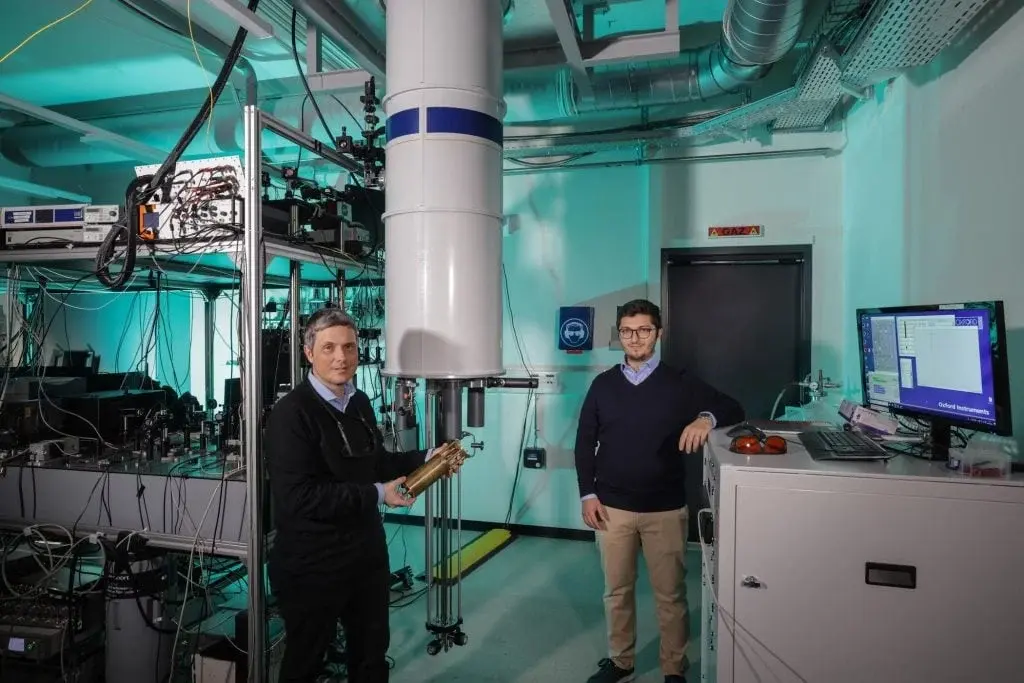
    Scientists at the Swiss Federal Institute of Technology, who have been exploring new methods to cool quantum computers for a while, have succeeded in developing a cooling system that creates an environment colder than the depths of space for these systems.

    In their experiment, they managed to cool a quantum computer processor to -273°C. This temperature is even colder than the average space temperature, which is about -270°C. But why do researchers need to cool the system so drastically?

    As you may know, unlike current computers, quantum computers must be constantly cooled. However, you can’t simply attach a regular computer cooler and switch it on. The components performing quantum calculations, known as “qubits,” need to be kept as close to zero degrees as possible to prevent heat interference.

    Practical Implications and Future Prospects

    Considerable effort has been dedicated to ensuring quantum computers operate with maximum accuracy and efficiency. Interestingly, this revolutionary cooling system is constructed using standard computer parts.

    This means the development did not cost millions of dollars, indicating that there are no significant barriers to its potential use in consumer electronics. As you know, while modern hardware is incredibly powerful, heat often prevents it from achieving its full capabilities.

    Who knows, this system might soon be integrated into gaming consoles, PCs, and laptops. This could mean even my 1 kg MateBook X Pro could run GTA VI smoothly.

  • China’s Origin Wukong Quantum Computer Completes 225,000+ Tasks

    China’s Origin Wukong Quantum Computer Completes 225,000+ Tasks

    Young minds in China are in for an exciting experience! On June 1st, the Anhui Provincial Committee of Children and the Anhui Provincial Quantum Computing Engineering Research Center are organizing a groundbreaking event: the inaugural “China’s Independent Quantum Computer Cluster Open Teaching Activity.”

    The supercomputer was launched in January earlier this year

    This thrilling program is set in the heart of Benyuan Quantum, China’s trailblazing quantum computing firm. Children will have the opportunity to learn about and engage with five independent superconducting quantum computer clusters, including the famed “Benyuan Wukong.”

    Benyuan Wukong: A Technological Marvel

    Benyuan Wukong, China’s third-generation standalone superconducting quantum computer, is a marvel of technology. Introduced in January 2024, it is recognized as the most advanced programmable and deliverable superconducting quantum computer in the world. Named after the legendary Sun Wukong, known for his ability to transform into 72 forms, the computer features a 72-bit autonomous superconducting quantum chip, aptly called the “Wukong Core.”

    Independent Chinese Technology

    What truly distinguishes Benyuan Wukong is its high degree of independent Chinese technology. It includes:

    • Homegrown quantum chips, developed entirely within China.
    • Independent quantum computing measurement and control systems.
    • An independent quantum computer operating system.
    • Independent quantum computer application software.

    This results in an impressive 80% localization rate, with the remaining components currently under self-development.

    Global Impact

    The influence of Benyuan Wukong is significant. As of May 27th, it has completed an astonishing 225,000 computing tasks for users in 124 countries and regions. It has also attracted over 9.38 million remote access attempts worldwide, with a particularly high number of users from the United States.