Tag: Gaming Performance

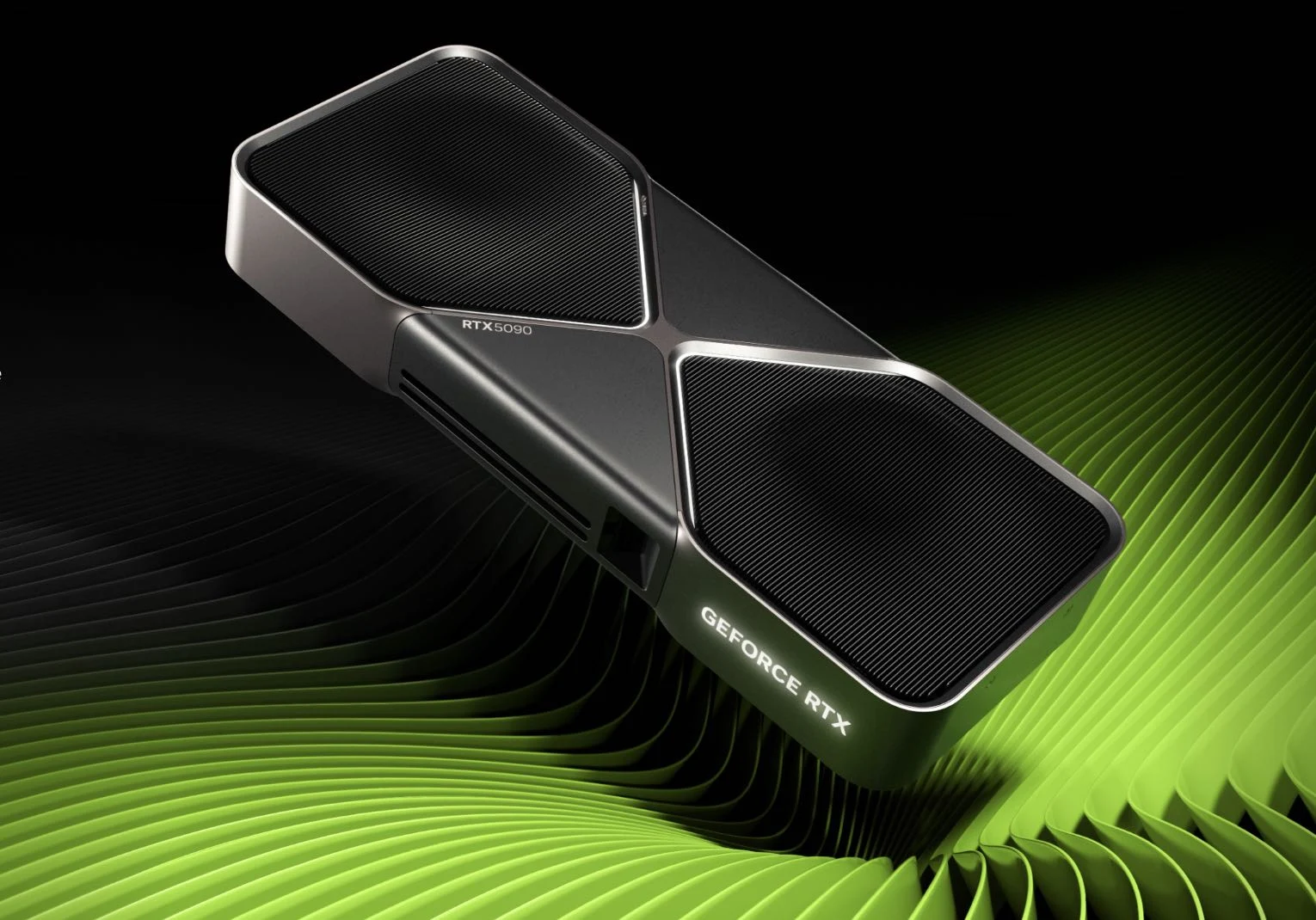
  • Nvidia RTX 5090D vs RTX 4090: 20% Gaming Performance Boost

    Nvidia RTX 5090D vs RTX 4090: 20% Gaming Performance Boost

    It seems that Nvidia has not pleased the gaming community with its reliance on AI-powered frame generation to boost the performance of its new RTX 5090, RTX 5080, and RTX 5070 GPUs. The question of whether DLSS 4 can win over gamers is still open, but it’s evident that the actual performance gains from the Blackwell architecture are not as impressive as first expected.

    Performance Insights

    We have some preliminary insights into how the GeForce RTX 5090 performs in Cyberpunk 2077, both with and without DLSS 4 and MFG. However, analyzing just one game does not provide a complete picture. Thanks to discussions on Chiphell’s forums, a reviewer has managed to test the RTX 5090D, which is a variant tailored for the Chinese market, and has shared key details from their review. For those unfamiliar, the RTX 5090D is like the standard RTX 5090, but has lower AI TOPS and a 3-second limit for AI and crypto workloads.

    Modest Gains

    The reviewer found that the performance boost with this generation is, as expected, quite modest. With DLSS and ray tracing disabled, the Nvidia GeForce RTX 5090D outperformed the previous model by about 20%. While this isn’t terrible for a new generation, many in the gaming community anticipated a more significant improvement. However, when DLSS 4 and MFG were set to their highest settings, the reviewer reported that the RTX 5090D performed nearly as well as Nvidia had claimed.

    Overclocking Details

    Additionally, the Nvidia GeForce RTX 5090D appears to lack adjustable power limits. While there could be possibilities for such adjustments in the future, they seem slim. The reviewer also managed to overclock the card to 2600 MHz, while reducing the memory speed, leading to a memory bandwidth of 896 GB/s that effectively negated the advantages of GDDR7. In comparison, the RTX 4090 was overclocked to about 2610 MHz with a memory bandwidth of 912 GB/s. The testing setup featured a Ryzen 7 9800X3D CPU with memory running at 6000 MHz. Although the exact FPS numbers in-game were not disclosed, this omission is disappointing yet understandable.

    Source:
    Link


  • AMD’s Frank Azor Criticizes Intel Arrow Lake-S, Blames Ryzen Shortages

    AMD’s Frank Azor Criticizes Intel Arrow Lake-S, Blames Ryzen Shortages

    There’s no question that Intel’s Arrow Lake-S series, particularly the Core Ultra 9 285K, has left many gamers feeling let down, despite some gains in efficiency and productivity. This disappointment, as noted by AMD’s Frank Azor in a chat with Tom’s Hardware, has resulted in an unexpected surge in interest for AMD’s new Ryzen 7 9800X3D Zen 5 chip.

    Criticism of Intel’s Performance

    Frank Azor didn’t hold back in his criticism. He called the Arrow Lake-S products “horrible,” clearly expressing his dissatisfaction with Intel’s lack of competitive offerings. “We knew we built a great part. We didn’t know the competitor had built a horrible one,” he said. He went on to explain that this situation contributed to the supply issues faced by AMD’s Ryzen 7 9800X3D.

    Intel’s Promises vs. Reality

    Intel had previously assured users that microcode updates would improve the poor gaming performance that didn’t meet their expectations. However, it seems that many users feel the updates have, in some instances, worsened performance, offering only slight improvements that still don’t rival even the previous generation’s products. While Intel has achieved notable efficiency and productivity advancements, these do not compensate for its lackluster gaming capabilities, which could deter many potential buyers. This is particularly true when comparing it to the solid gaming performance of AMD’s Ryzen 7 9800X3D.

    AMD’s Growing Popularity

    This scenario appears to be reflected in the sales figures, with AMD’s Ryzen 9 9800X3D selling significantly better than Intel’s offerings. Consumers eager to switch to AMD may face continued shortages, as AMD did not anticipate such high demand. As executive David McAfee has indicated, AMD is actively working to increase production. Nevertheless, due to the intricate nature of processor manufacturing, it might take another 3-4 months for supply to meet the rising demand.

    Source:
    Link

  • OnePlus 13R Shines in Leaked Pre-Launch Gaming Test Results

    OnePlus 13R Shines in Leaked Pre-Launch Gaming Test Results

    The OnePlus Ace 5 might not be able to match the speedy charging of its rumored Pro version, which is expected to launch soon in China. Nevertheless, it appears to be quite competitive in power efficiency and thermal stability during gaming, as reported by the reliable leaker Digital Chat Station.

    Performance Insights

    According to the tipster who claims to have tested the device firsthand, the Ace 5 achieved impressive average frame rates of 119.5 fps in Honor of Kings. However, these numbers dropped to 60.2 fps and 55.2 fps in Genshin Impact and Honkai Star Rail, respectively. Despite this, the Ace 5’s performance is still seen as much better than that of other devices sporting the same processor.

    Power Efficiency

    The power efficiency of the Ace 5 has been noted, with figures of 5.7W in Genshin Impact, 4.8W in Honkai Star Rail, and a lower 3.38W in Honor of Kings. This efficiency is considered "far ahead" of competing devices that share similar specifications.

    The testing setup included a flat 1.5K X2 LTPO display, 16GB of RAM, 512GB of internal storage, and the Snapdragon 8 Gen 3 chipset. This version of the chipset is said to be quite different from the "ordinary" variant found in other Android phones like the OnePlus 12.

    Chipset Modifications

    Recent leaks suggest that the Snapdragon 8 Gen 3 in the Ace 5 is fairly standard. However, it features "magically modified" enhancements that include "chip-level gaming technology," according to Digital Chat Station. These modifications help the Ace 5 get closer to the Snapdragon 8 Elite in terms of thermal management and power efficiency during testing.

    This could be promising news for the OnePlus 13R, especially if it launches alongside the global version of the OnePlus 13, as current rumors suggest.

    Source: Link


    Image 1
    Image 1
    Image 1
    Image 1
    Image 1
    Image 1
  • OPPO Reno 13 Series: Custom X1 Chip Delivers Smooth Performance

    OPPO Reno 13 Series: Custom X1 Chip Delivers Smooth Performance

    Oppo is set to unveil the Reno 13 series on November 25 at 19:00, showcasing a new lineup that aims to transform how we connect and play games. A tipster from Weibo, Digital Chat Station, recently shared insights regarding the company’s development of a unique networking chip, and Oppo has now confirmed its inclusion in the Reno 13 series.

    Innovative Networking Features

    A standout aspect of this series is the self-created X1 networking chip, tailored to provide seamless performance even in areas with weak signals. This chip is expected to greatly enhance user experience, making it ideal for both casual users and dedicated gamers. Additionally, the Reno 13 series comes with various aesthetic and practical upgrades.

    Custom X1 Chip for Gaming

    The introduction of the X1 chip in the Oppo Reno 13 series represents a major advancement in managing network performance. Oppo claims that this chip can “capture” network signals, facilitating smooth gaming experiences even when signal strength is low, such as with just one bar. Furthermore, the series features a specialized game cloud computing network, which Oppo says offers ultra-low latency and prioritized speeds for an optimal gaming experience. This emphasis on connectivity meets the rising demand from consumers for dependable performance in mobile gaming and cloud applications.

    Specs and Features of the Reno 13 Pro

    Rumors suggest that the Oppo Reno 13 Pro will be powered by the MediaTek Dimensity 8350 processor alongside 16GB of RAM, although an earlier Geekbench listing hinted it might also have the Dimensity 8300. Regardless, users can look forward to significant performance enhancements for gaming and multitasking, as both chips provide a noteworthy upgrade over the Dimensity 7300 Energy chipset found in the Reno 12 series.

    The device features a 6.83-inch OLED display, a 50MP front camera, and a triple rear camera setup consisting of a 50MP main camera, an 8MP camera, and a 50MP telephoto lens. Running on Android 15 right out of the box, the Reno 13 Pro is also expected to support advanced options like eSIM, 1TB storage, IP68/69 rating for water and dust resistance, and wireless charging.

    Battery and Design

    Moreover, its 5,900mAh battery supports rapid charging up to 100W, ensuring prolonged usage and quick recharges. All these features, combined with a sleek design and modern connectivity options, make the Reno 13 series an attractive pick in the premium mid-range market.

    Source: Link


    Image 1
    Image 1
  • Apple M4 Max MacBook Pro Performs Great in Cyberpunk 2077 & More

    Apple M4 Max MacBook Pro Performs Great in Cyberpunk 2077 & More

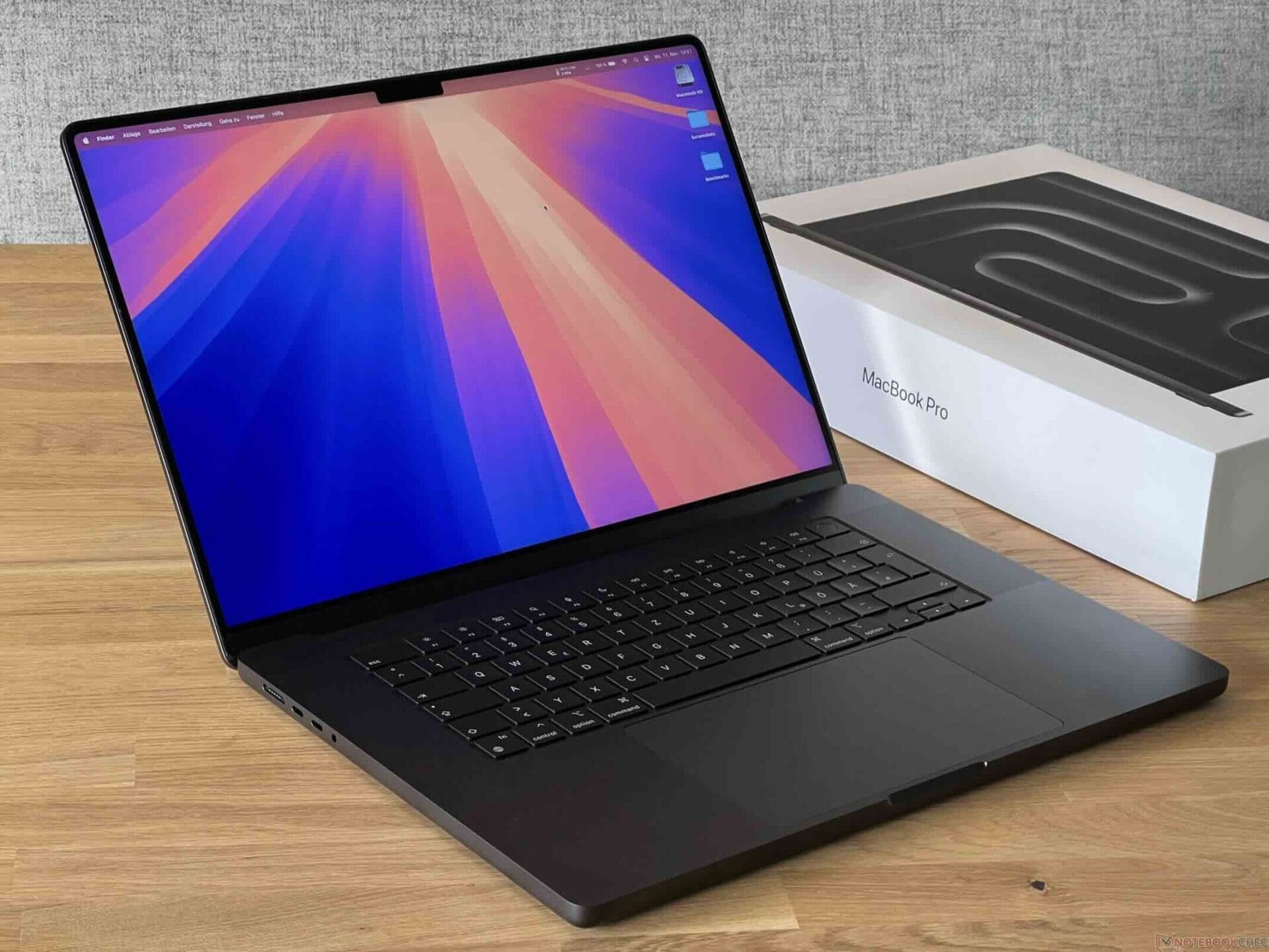
    Apple’s latest M4 Max chip proves to be an impressive upgrade from the M3 Max. The entire M4 series showcases significant performance enhancements, especially within the built-in GPUs, which have seen the most substantial generational boost so far.

    Gaming Limitations on Mac

    Despite these advancements, gaming continues to be a weak spot for Macs. While Apple is actively trying to improve this situation, in 2024, many popular AAA games are still missing from the platform. Nevertheless, tools like CodeWeavers’ Crossover and Apple’s GPT have made some titles accessible on the Mac, although the performance is notably limited. Andrew Tsai’s recent video explores the gaming capabilities of the M4 Max, highlighting both native and non-native games.

    Impressive Performance in Native Games

    One standout title for the Mac, Resident Evil 4 Remake, reveals the M4 Max’s potential in a native setting. This game operates smoothly at 48–60 frames per second on the 4K high graphics preset, maintaining a steady frame rate even in challenging situations. When MetalFX upscaling is activated in Quality mode, players can achieve frame rates between 60 and 70 FPS for those seeking enhanced performance over visual quality. This seamless gameplay illustrates the M4 Max’s proficiency with demanding Mac-native titles.

    Racing Games and Their Performance

    GRID Legends is among the few native racing games that truly leverage the M4 Max’s capabilities. It impressively hits 100 FPS at 4K resolution with all settings maxed out. The M4 Max boasts a 52% performance increase compared to the M3 Max, averaging 96 FPS instead of the M3 Max’s 63 FPS. This clear progress underscores the advancements Apple has achieved, particularly regarding GPU performance.

    Cyberpunk 2077’s Compatibility

    While Cyberpunk 2077 isn’t natively available for macOS yet, it surprisingly performs well on the M4 Max through the Crossover compatibility tool. With DirectX 12 converted to Metal, the M4 Max achieves frame rates that are 55% higher than its predecessor, making the game playable even with ray tracing enabled. Although frame timing and consistency could be polished, the chip’s capability to run such a demanding Windows title is quite impressive. Cyberpunk is expected to debut on Apple Silicon early next year, raising our hopes.

    Black Myth: Wukong Tested

    Another challenging title for the M4 Max is Black Myth: Wukong, which is perhaps one of the most graphically intense games in testing. With FSR 3 upscaling set at 65%, the game operates at 45–55 frames per second at 1440p medium settings while using Crossover. Performance dips during intense combat, but fine-tuning the upscaling settings might enhance the experience. The smooth running of this DirectX 12 game on Mac demonstrates the tremendous processing power of Apple Silicon and the effectiveness of the translation layers. However, the performance doesn’t match what a native port would offer, which isn’t surprising.

    Source: Link

  • PS5 Pro vs PS5: Energy Efficiency and FPS Boost Comparison

    PS5 Pro vs PS5: Energy Efficiency and FPS Boost Comparison

    The Sony PlayStation 5 Pro hit the market on November 7, retailing for $699.99 in the United States. This model, priced $200 more than the original PS5, boasts a significant upgrade in GPU performance, thanks to Sony’s unique PSSR upsampling technology. While it retains the same Zen 2 CPU, it has a 10% higher clock speed and an additional 2 GB of DDR5 RAM, among other enhancements. These features are expected to improve the gaming experience, making it noticeably better for both PS5 Pro-optimized and standard PS5 games.

    Power Consumption Insights

    As expected, the PS5 Pro’s enhanced capabilities come with increased power usage. Digital Foundry has observed a slight yet noticeable difference in energy consumption when comparing the base PS5 to the PS5 Pro. Interestingly, the PS5 Slim appears to have a less efficient SoC, leading to higher power consumption than the original PS5.

    When testing Elden Ring in “Quality” mode, the PS5 Pro’s power draw ranges from 228 to 230 W, while the standard PS5 uses less, around 215 to 218 W. The PS5 Slim stands out in this test, as it consumes nearly the same amount of power as the PS5 Pro, despite being built with a 6 nm SoC that should ideally use less energy.

    Game Performance Comparisons

    In Marvel’s Spider-Man 2, the PS5 Pro consumes over 230 W, while the base PS5’s usage varies between 200 and 216 W. The PS5 Slim again shows higher power consumption, deviating from the expected trend.

    In F1 24 with “Quality” mode activated, the PS5 Pro’s power draw climbs above 230 W, peaking at around 240 W. This uptick in energy consumption is aligned with noticeable improvements in graphics quality, better ray tracing, and more stable frame rates. According to Digital Foundry, the PS5 Pro achieves a performance boost of 30-35% in Elden Ring’s “Quality” mode, despite the game not being specifically enhanced for the Pro version. This leads to frame rates consistently above 50 FPS, while the original PS5 experiences frame rates that fluctuate in the low-to-mid 40s, sometimes dipping into the high 30s.

    Impressive Energy Efficiency

    The performance metrics for Elden Ring are striking, considering the console only needs about 12 W more energy, or 5.5%, to deliver a performance increase of up to 35%.

    For those interested in the ray tracing enhancements, Alan Wake 2 is a prime example of the PS5 Pro’s capabilities. Digital Foundry highlights the effective ray-traced reflections in the 30 FPS RT mode. Likewise, F1 24 benefits from ray tracing reflections and RT Ambient Occlusion, adding to the features available in the base PS5 version.

    For more detailed information regarding the upgrades offered by the PS5 Pro, including PSSR, be sure to check out Digital Foundry’s review linked below.

    Buy the Sony PlayStation 5 Slim on Amazon

    Digital Foundry on YouTube, Wccftech

    Source: Link,Link,,,


    Image 1
    Image 1
    Image 1
  • AMD Ryzen 7 9800X3D Review: Fastest Gaming CPU Yet

    AMD Ryzen 7 9800X3D Review: Fastest Gaming CPU Yet

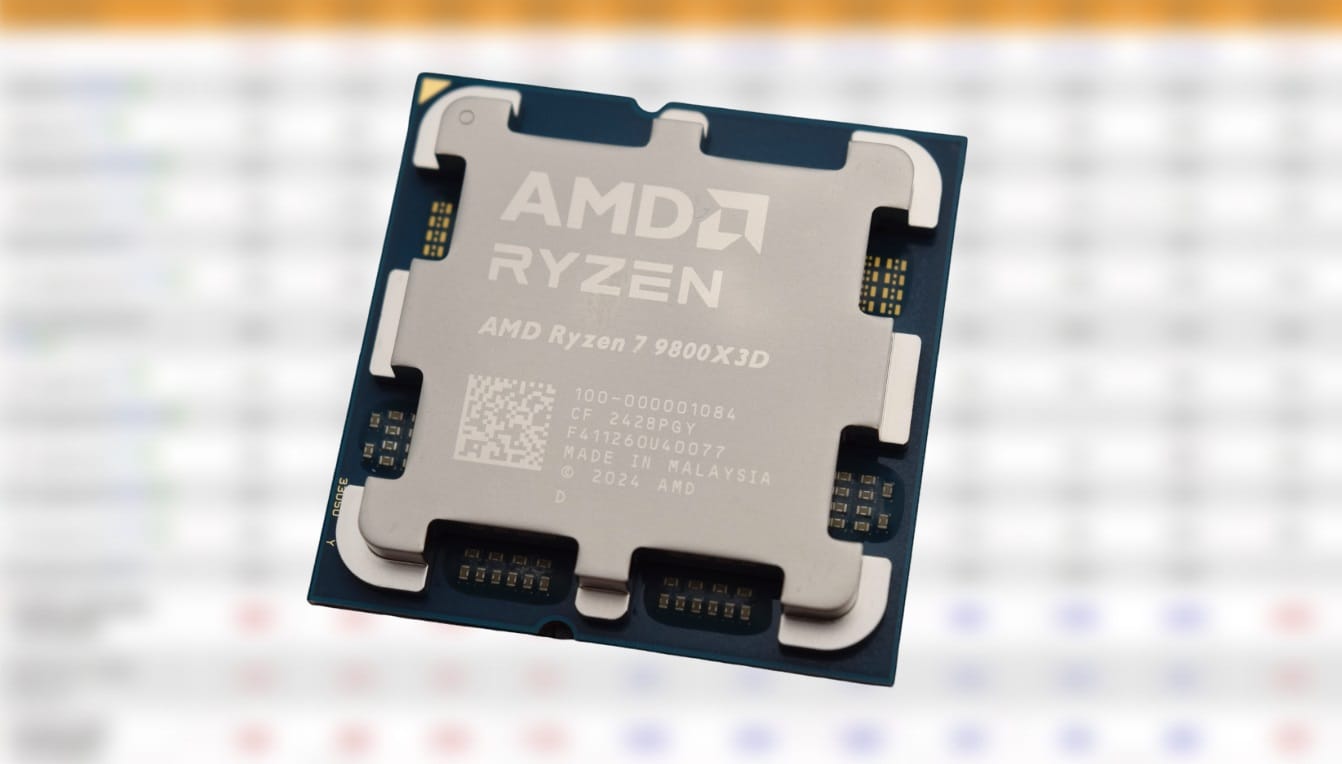
    Keeping in line with the legacy of the Ryzen 7 5800X3D, AMD has introduced a new Zen 5 processor featuring 3D V-Cache. The processor is named “Ryzen 7 9800X3D,” and it boasts 8 cores. This latest chip not only aims to reclaim the gaming performance throne once occupied by the Ryzen 7 7800X3D but also intends to extend its lead over Intel. The Ryzen 7 9800X3D has successfully achieved this goal.

    Performance Overview

    According to our evaluation of the Ryzen 7 9800X3D (linked below), this X3D processor ranks as the top gaming CPU available today, showing an average performance boost of 14% compared to Intel’s Core i9-14900K, and an impressive 40% over the Core Ultra 9 285K.

    Nonetheless, like with all CPU launches, reviews can vary widely. Therefore, it is beneficial to consider a thorough analysis of launch reviews. Fortunately, 3DCenter has provided a detailed roundup of the Ryzen 7 9800X3D reviews following the Arrow Lake launch. The overall findings portray the Ryzen 7 9800X3D as a very strong option for gamers.

    Comparative Analysis

    From the 14 launch reviews compiled by 3DCenter, the Ryzen 9800X3D is, on average, 9% quicker than the Ryzen 7 9700X and about 7% faster than the Core i5-14600K in various applications. This is a noteworthy achievement from a technical perspective, especially since previous X3D models typically lagged behind in productivity when compared to their non-X3D siblings due to lower TDP and clock speeds.

    However, the Ryzen 7 9800X3D struggles against the Core i7-14700K, Core Ultra 7 265K, and Ryzen 9 9900X, as it falls short by as much as 20%.

    Gaming Highlights

    The gaming capabilities of the Ryzen 7 9800X3D are where it truly excels. The analysis by 3DCenter indicates that this processor provides around an 11% performance increase over the Ryzen 7 7800X3D and a 23% improvement over the Ryzen 9 9950X. Unfortunately for Intel, their best gaming processor, the Core i9-14900K, is approximately 19% slower, while the Core Ultra 9 285K lags behind by 23%.

    For those still using the Ryzen 7 5800X3D, upgrading could be worthwhile, as the newer Ryzen 7 9800X3D delivers an average performance boost of 32%.

    Efficiency Considerations

    Ryzen X3D processors are recognized for their excellent efficiency. This time, though, AMD has chosen to prioritize higher clock speeds over efficiency, leading to the Ryzen 7 9800X3D not meeting or surpassing the benchmarks set by the Ryzen 7 7800X3D (available on Amazon).

    Despite this, the Ryzen 7 9800X3D still presents a solid argument for its performance with an average consumption of around 107 W in tested applications and just 73 W while gaming. In contrast, the Ryzen 7 7800X3D shows consumption figures of roughly 65 W and 53 W for applications and gaming, respectively.

    Moreover, the Core Ultra 5 245K and Ryzen 7 9700X showcase lower average application consumption at 95 W and 81 W compared to the Ryzen 7 9700X. However, in gaming, the Ryzen 7 9700X consumes a bit more at 86 W, while the Core Ultra 5 245K uses 67 W, which is 6 W less than the Zen5 X3D chip.

    Conclusion

    In summary, the Ryzen 7 9800X3D is a remarkable launch by AMD, bringing fresh excitement after a series of less impressive releases. Sadly, Intel does not have a competitive response, and it may be some time before they do with future CPU designs.

    3DCenter


  • Red Magic 10 Pro Launches with R3 Gaming Chip and Snapdragon 8 Elite

    Red Magic 10 Pro Launches with R3 Gaming Chip and Snapdragon 8 Elite

    Nubia’s sub-brand, Red Magic, will unveil its Red Magic 10 Pro series smartphones on November 13. This new lineup, which consists of the 10 Pro and 10 Pro Plus models, emphasizes performance above all else. Ahead of the launch, the company has been actively highlighting the powerful features of these devices.

    Impressive Cooling and Processing Power

    Recently, Red Magic disclosed that the Red Magic 10 Pro series incorporates liquid metal cooling technology. Today, they confirmed that the smartphones will utilize their proprietary R3 gaming chip along with the Snapdragon 8 Elite processor. The Red Magic 10 Pro is capable of running games at a stunning 2K resolution with 120 frames per second.

    Superior Speed and Efficiency

    The new smartphones are outfitted with high-speed LPDDR5X RAM, which supports data transfer speeds of 9600 Mbps, and utilizes UFS 4.0 Pro storage. Furthermore, Red Magic’s Frame Scheduling 2.0 technology is designed to enhance gaming performance by anticipating computing power needs and optimizing resource allocation, thus improving energy efficiency.

    Based on data provided by the brand, the gameplay of Honkai Impact 3 on the device can last for 60 minutes, maintaining an average frame rate of 60.1 fps and a minimal frame rate variation of only 0.2 fps. Moreover, the device can support gaming at resolutions reaching 2K and 120 fps.

    Stunning Display Features

    The Red Magic 10 Pro series boasts a new generation of true full-screen displays. It features a spacious 6.85-inch screen with an impressive 95.3% screen-to-body ratio, designed with ultra-thin borders—measuring just 1.25mm on the black edge and a 0.7mm frame.

    This display is tailored for high-end visuals, offering a resolution of 1.5K, a refresh rate of 144Hz, and a peak brightness of 2000 nits. The phone also integrates a Triple AI under-screen camera algorithm to provide a flawless front-camera experience.

    With the Snapdragon 8 Elite processor and Red Magic’s custom gaming chip working together, the Red Magic 10 Pro promises reliable frame rates. It also features advanced battery technology, promoted as a “perpetual motion machine” for longer battery life, making it perfect for gamers engaging in demanding activities.


    Image 1
    Image 1
  • PlayStation 5 Pro Hardware Boost Revealed in New Gameplay Videos

    PlayStation 5 Pro Hardware Boost Revealed in New Gameplay Videos

    Sony revealed the PS5 Pro in September, and fans can expect the new console to hit stores on November 7. Priced at $699.99, this mid-generation upgrade offers more powerful hardware compared to the standard PlayStation 5. In the launch event, Sony emphasized three major enhancements: AI-driven upscaling, improved ray tracing, and an expanded GPU.

    Improved Gaming Experience

    Thanks to these upgrades, the PlayStation 5 Pro is expected to deliver a significantly better gaming experience than its non-Pro counterpart (Slim model can be found on Amazon). Leading up to the launch, YouTuber Gabriel Master has shared footage showcasing several games on the new console. He claims that the enhanced hardware provides a clear performance boost.

    Performance Highlights

    For instance, a gameplay video of Dragon’s Dogma 2 reveals that it operates more smoothly on the PS5 Pro. The same can be said for Monster Hunter Wilds, which seems to run at a higher resolution and maintain steadier FPS when compared to the original model.

    Gabriel Master also posted gameplay of Spider-Man 2, and it looks like the game runs seamlessly at 60 FPS with the resolution cranked up to 4K and ray tracing enabled.

    Game Boost Feature

    The YouTuber also highlighted the Game Boost feature. In his footage of Red Dead Redemption 2, it’s visible that the texture quality has improved, and the game runs at a higher resolution than what the standard PlayStation 5 offers.

    Other gameplay clips shared by the YouTuber include Dragon Age: The Vanguard and The Last of Us Part II Remastered. Both titles are displayed running at 4K resolution and 60 FPS.

    Gabriel Master’s YouTube channel (videos embedded above) via: Wccftech.

  • A18 Pro Performance Test: Assassin’s Creed, Death Stranding, RE4

    A18 Pro Performance Test: Assassin’s Creed, Death Stranding, RE4

    Apple has just unveiled the iPhone 16 Pro Max, which comes equipped with the A18 Pro, the company’s most potent chip so far. This new SoC is making waves in the premium smartphone market, showcasing remarkable performance in single-core tasks. Its efficiency also sets it apart from other competitors.

    Gaming Performance Insights

    In a recent video featuring MrMacRight, the gaming strengths of the A18 Pro were showcased. He compared it with the iPhone 15 Pro, which runs on the A17 Pro, across several renowned gaming titles. Some of the games tested included Assassin’s Creed Mirage, Death Stranding, and Resident Evil 4. The evaluation not only focused on performance but also looked at various factors like frame rate stability, thermal management, and memory usage.

    Detailed Game Tests

    When it came to Assassin’s Creed Mirage by Ubisoft, the A18 Pro in the iPhone 16 Pro delivered a stable 30 FPS on high settings, with few frame drops, which is a major step forward compared to the previous model that struggled in demanding scenes. The Metal HUD displayed that the game used around 5.3 GB of RAM, while the iPhone itself maintained a temperature of 44.3 C, which is over 5 degrees cooler than the iPhone 15 Pro.

    Moving on to Death Stranding, the iPhone 16 Pro continued to impress. It not only outperformed the earlier model but also ran cooler. When set to a 60 FPS cap with lower graphics, the iPhone 16 Pro could achieve around 40 FPS, experiencing some drops in more intense parts. Apple’s revamped thermal design seems to be working effectively, showing real gains in performance.

    Performance Challenges

    There’s not much to critique about Resident Evil 4, as the iPhone 16 Pro kept up its reputation for better performance and lower heat. However, issues arose with Resident Evil Village, where both the iPhone 16 Pro and 15 Pro crashed when memory usage hit 6 GB, highlighting a demand for more memory in future models. Nevertheless, the iPhone 16 Pro managed to outpace its predecessor by roughly 10 FPS, although both devices eventually reached their thermal limits.

    In Alien: Isolation, which has recently been optimized for the Metal 3 API, the iPhone 16 Pro Max kept a solid 60 FPS throughout most of the gameplay, with memory usage staying under 2 GB. Similarly, Wreckfest from HandyGames ran smoothly with the A18 Pro, achieving a stable 60 FPS at max settings while only using 1.5 GB of memory, and temperatures were kept at a cool 37.6C.

    MrMacRight via YouTube


    A18 Pro Performance Test: Assassin's Creed, Death Stranding, RE4