Key Takeaways
1. The Apple M5 Max scored 29,233 in multi-core and 4,260 in single-core tests on Geekbench 6, outperforming its predecessor, the M4 Max.
2. The M5 Max shows a 9% increase in single-core performance and a 14% increase in multi-core performance compared to the M4 Max.
3. The M5 Max is the fastest CPU Apple has produced, surpassing the top-tier M3 Ultra by 5.4%.
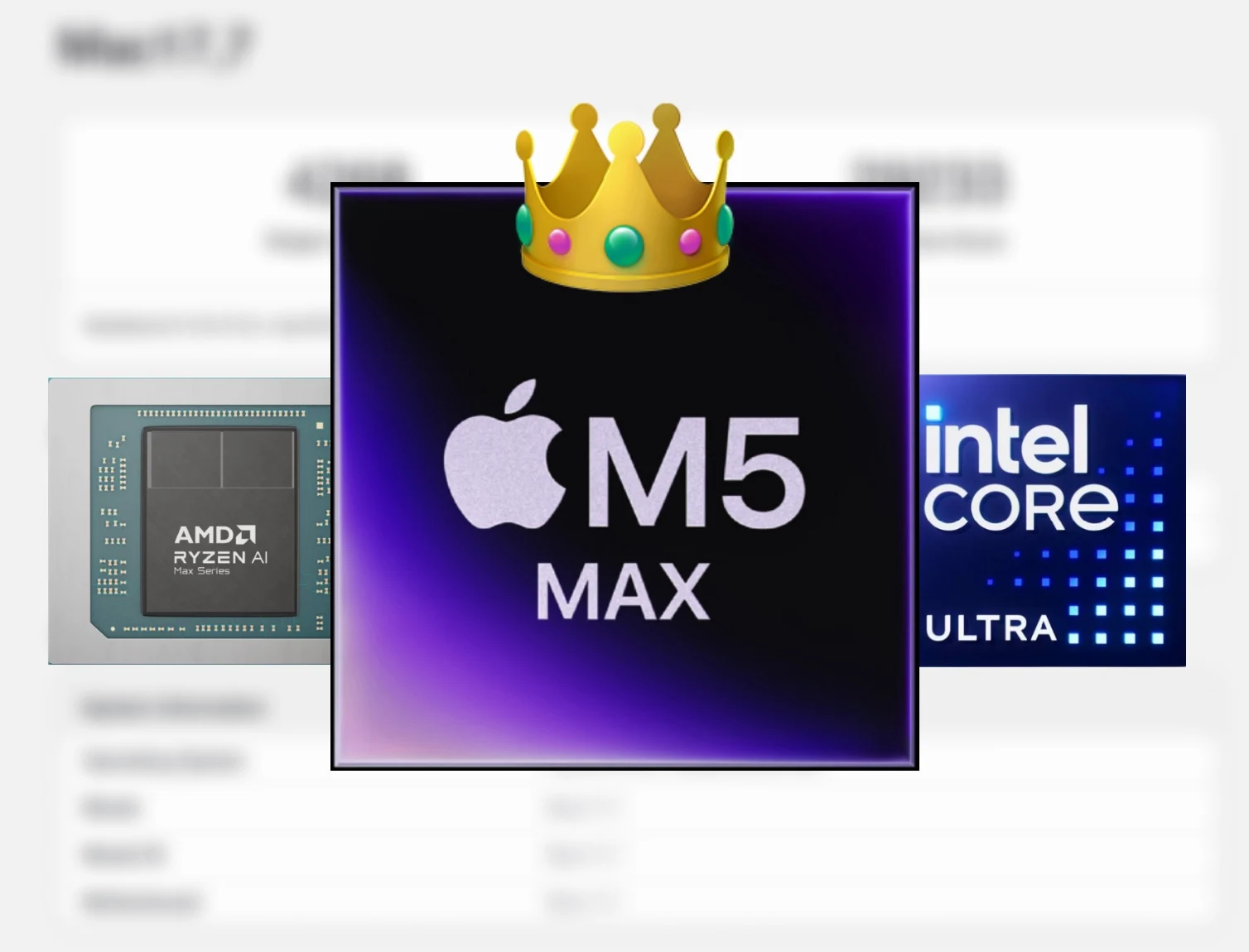
4. The M5 Max outperforms Intel and AMD competitors, exceeding the Intel Core Ultra 9 275HX by 34% and the AMD Ryzen AI Max+ 395 by 25% in multi-core tests.
5. While benchmarks are useful, real-world performance may vary; however, the M5 Max is expected to be one of the fastest options available for consumers.
The initial benchmarks for the Apple M5 Max have emerged, and the results are impressively high, as expected from a premium Apple Silicon system on a chip.
Benchmark Scores
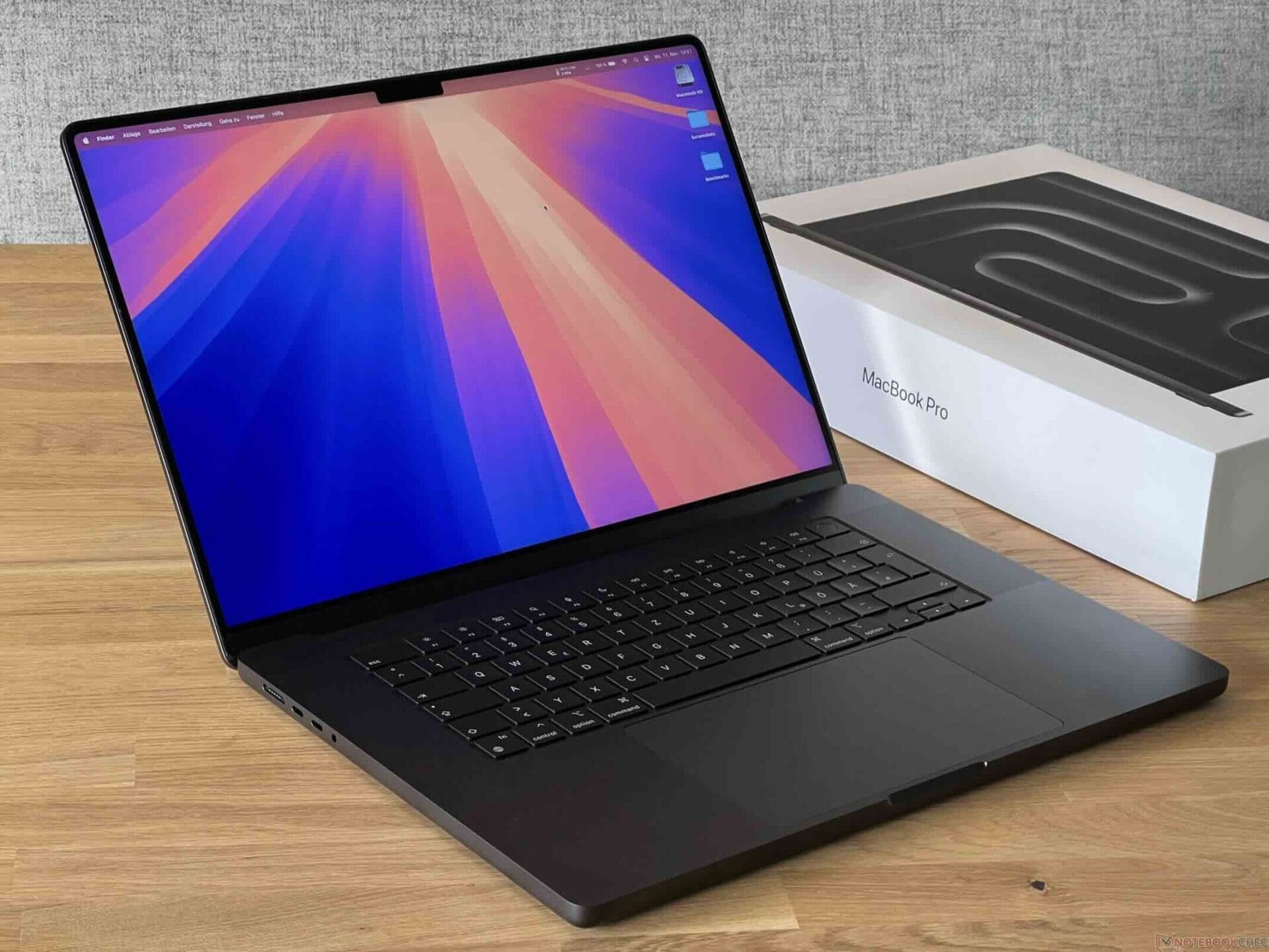
The leaked Geekbench 6 results reveal that the 18-core Apple M5 Max achieved an impressive score of 29,233 points in multi-core testing and about 4,260 points in single-core tests. For comparison, the standard M5 MacBook Pro, which is currently priced at $1,440 on Amazon, scores similarly in single-core tests while scoring approximately 17,100 in multi-core tests.
Performance Improvements
When evaluating its predecessor, the M4 Max, the M5 Max shows an increase of about 9% in single-core performance. In contrast, for multi-core performance, this new chip is around 14% quicker. Notably, this makes the M5 Max the fastest CPU Apple has ever produced, boasting a lead of 5.4% over the top-tier M3 Ultra.
Competing Chips
In comparison to AMD and Intel offerings in the x86 sector, there simply isn’t a consumer CPU that matches the M5 Max in Geekbench 6. The M5 Max outperforms the Intel Core Ultra 9 275HX by roughly 34% in multi-core tests, while the AMD Ryzen AI Max+ 395 “Strix Halo” lags behind by about 25%.
Even chips designed for desktops can’t keep up with the Apple M5 Max in Geekbench 6. The M5 Max surpasses both the Intel Core Ultra 9 285K and the AMD Ryzen 9 9950X by around 23%. In a rather amusing twist, the 64-core Threadripper 9980X is also left behind, though by a smaller margin of 6.6%.
Real-World Applications
It’s important to note that a single benchmark doesn’t fully reflect real-world performance in professional tasks. However, it’s clear that Apple’s new silicon lineup is likely to be among the fastest options available for consumers.
Source:
Link