Tag: iPhone 16 Pro Max

  • Vivo X300 Pro: Display Upgrades and Enhanced Camera Aesthetics

    Key Takeaways

    1. Vivo has not yet announced the official launch date for the X300 series.
    2. Executive Han Bo Xiao shared details about the display of the X300 Pro, claiming it has thinner bezels than the iPhone 16 Pro Max.
    3. The X300 Pro will feature a 6.78-inch display.
    4. Vivo has previously used similar display sizes in their X200 series phones.
    5. Significant investments and improvements have been made in the camera hardware of the X300 Pro.


    We are still waiting for Vivo to announce when the X300 series will officially be launched. Meanwhile, Vivo’s executive Han Bo Xiao has given new details about another flagship phone that has yet to be released.

    Teasing the Display

    This time, the executive has hinted at the display that will be featured on the X300 Pro, having shared a similar image related to the X300 last week. Just like with the X300, Han Bo Xiao has made comparisons between the X300 Pro and what Vivo sees as its biggest rival from Apple. According to the image below, the X300 Pro has thinner display bezels than the iPhone 16 Pro Max (curr. $990 – refurbished on Amazon), although it feels like we are nitpicking at this point.

    Display Size and Innovations

    Furthermore, Han Bo Xiao has confirmed that the X300 Pro will come with a 6.78-inch display. Vivo has previously used 6.78-inch and 6.82-inch screens in the X200 Pro and X200 Ultra, respectively. Interestingly, the same executive has suggested that the X300 Pro includes the results of ‘significant investments and improvements’ in its camera hardware. Therefore, it appears that Vivo or one of its representatives will soon provide information about the X300 or X300 Pro regarding this matter in the next few days.

    Source:
    Link


  • Pixel 10 Pro XL Ranks Top Five in DxOMark, Beats iPhone 16 Pro Max

    Pixel 10 Pro XL Ranks Top Five in DxOMark, Beats iPhone 16 Pro Max

    Key Takeaways

    1. The iPhone 17 Pro features an advanced telephoto lens, potentially shifting the smartphone camera rankings.
    2. The Google Pixel 10 Pro XL currently outperforms the iPhone 16 Pro Max, according to DxOMark evaluations.
    3. The Pixel 10 Pro XL received high scores for its ultra-wide camera and video quality, including a top score of 145 points in video tests.
    4. The camera excels in exposure, dynamic range, white balance, and detail from its 5x telephoto lens.
    5. Areas for improvement include enhancing the bokeh effect in portraits, medium-range zoom detail, and reducing flare in outdoor images.


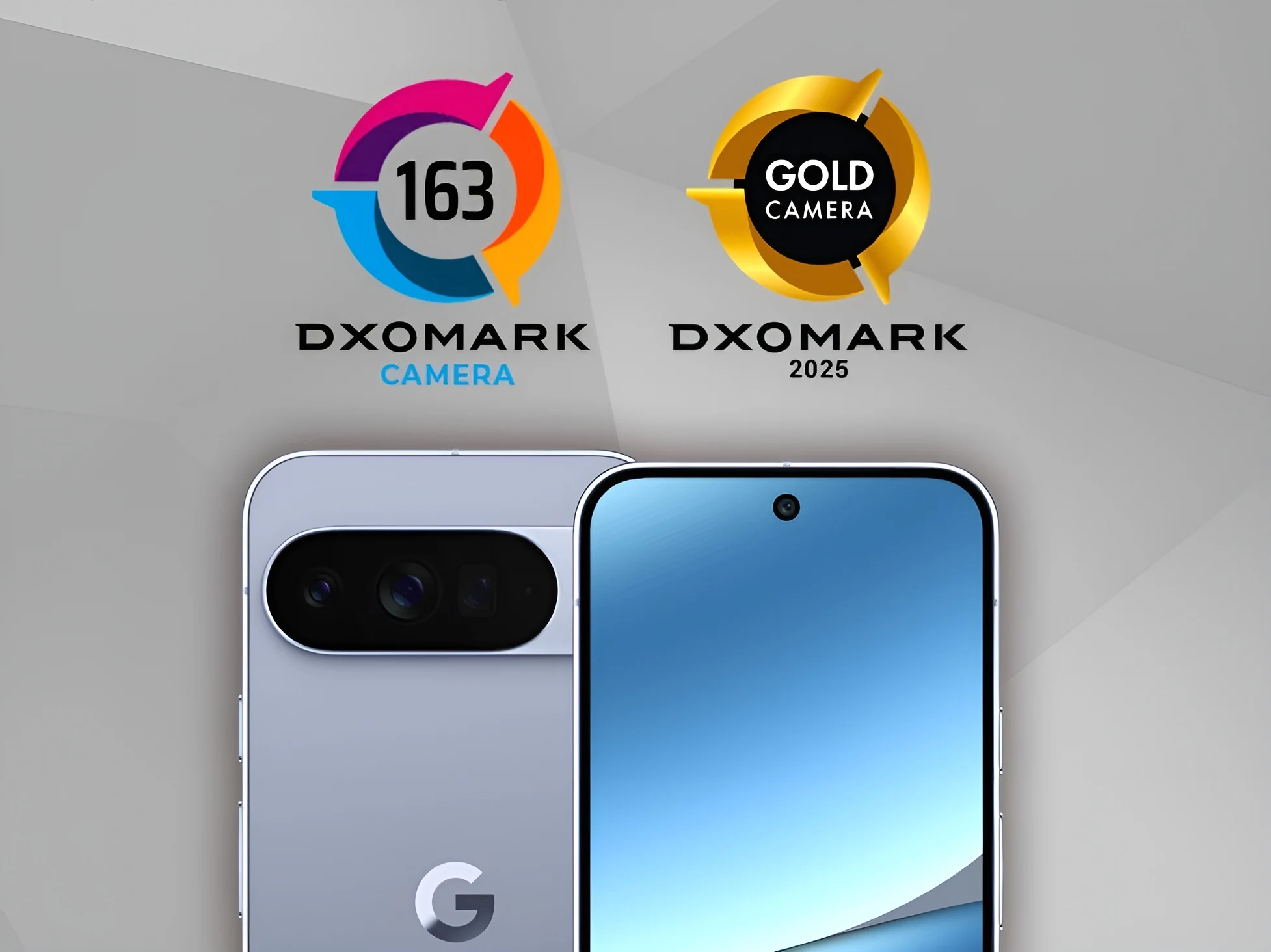
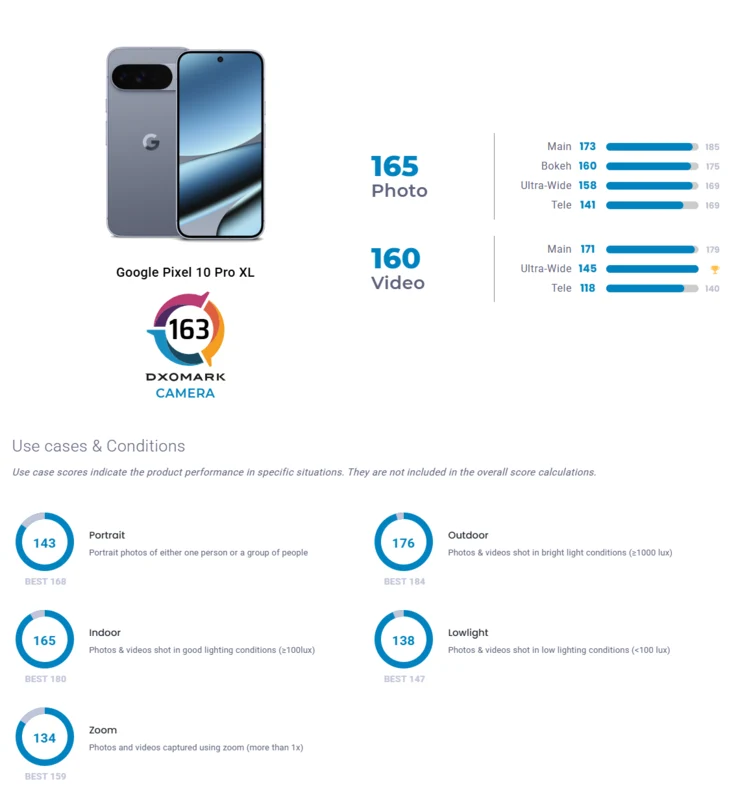
    When Apple reveals its top-tier iPhone 17 Pro, featuring what is claimed to be the most advanced telephoto lens in any smartphone to date, the leaderboard for the best camera phones could shift. Yet, as of now, Google’s latest camera flagship has surpassed the iPhone 16 Pro Max. The freshly released DxOMark camera evaluation of the Pixel 10 Pro XL is very favorable, even though last year’s Pixel 9 Pro had snagged the second position, just behind the Huawei Pura 70 Ultra.

    2025 Rankings and Performance

    In 2025, it managed to take the fourth position, which is still impressive as it sits within the top 5, trailing the Huawei Pura 80 Ultra, Oppo Find X8 Ultra, and Vivo X200 Ultra. It may come as a surprise that the Pixel 10 Pro XL’s ultra-wide camera got the highest score in the video test with 145 points, outdoing the X200 Ultra. Vivo’s flagship, equipped with a 1/1.28-inch sensor and 4K120 support, should theoretically perform better than the Pixel 10 Pro, but this is only true in the photo category. It’s puzzling why the Pixel 10 Pro is deemed the best in this segment, and this isn’t the first time DxOMark has faced some backlash regarding its smartphone camera rankings.

    Camera Quality Insights

    The review highlights the excellent exposure and dynamic range of images and videos captured with the Pixel 10 Pro XL, emphasizing its accurate white balance and natural skin tone rendering. In comparison to other models, it showed a low propensity for artifacts and a reliable autofocus system. The impressive detail from the 5x telephoto lens was also commended.

    Areas for Improvement

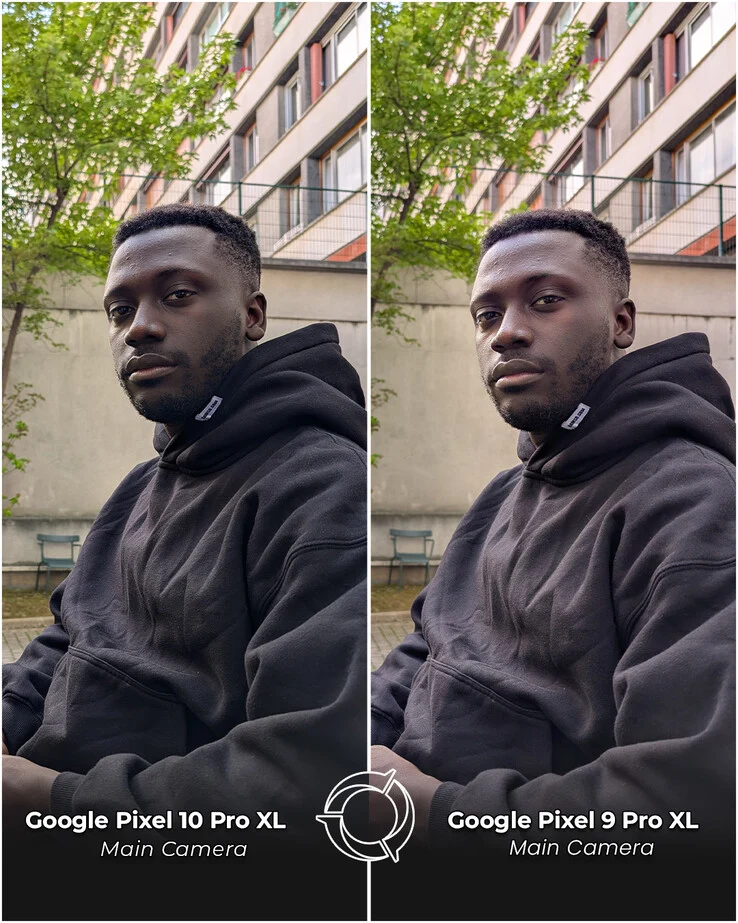
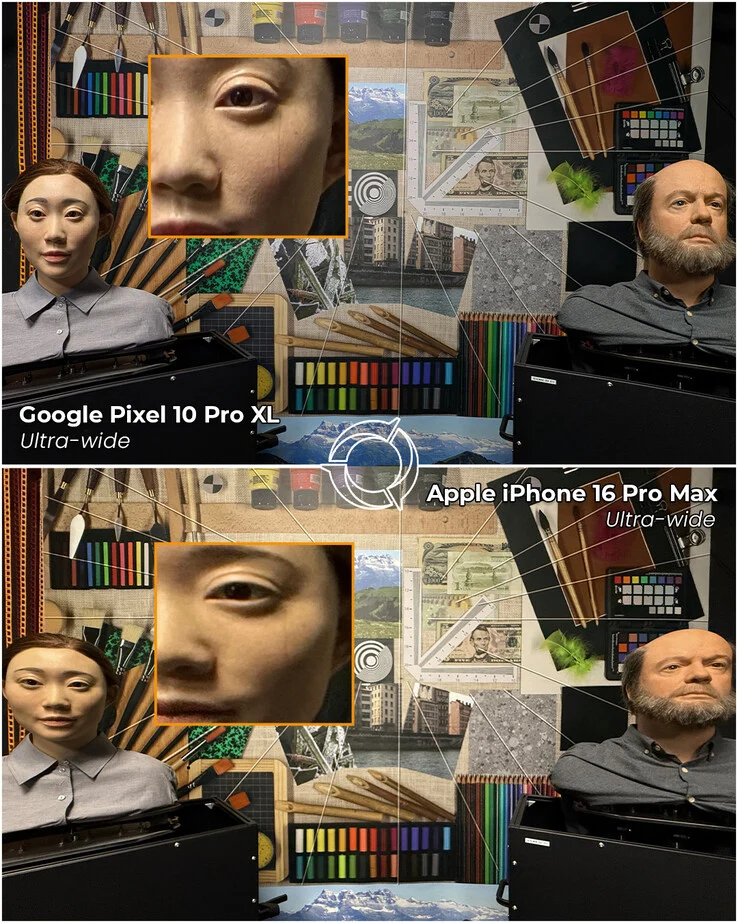
    There were not many drawbacks noted. Nevertheless, Google could enhance the bokeh effect in portrait mode and medium-range zoom shots, which currently lack a bit of detail. Furthermore, reviewers observed some flare in outdoor images, and low-light captures miss some detail when compared to rival devices. You can view the complete camera assessment here. Below are three comparison images shared on X, illustrating how the Google Pixel 10 Pro XL stacks up against its predecessor, the Samsung Galaxy S25 Ultra, and the iPhone 16 Pro Max.

    Source:
    Link


  • Vivo X200 Ultra Dominates Samsung, Apple, Oppo Flagships

    Vivo X200 Ultra Dominates Samsung, Apple, Oppo Flagships

    Key Takeaways

    1. Vivo X200 Ultra and iPhone 16 Pro Max tied for first in studio images with 14 points.
    2. Vivo dominated in daytime portraits, scoring 13 points, and maintained a strong performance in low-light portraits with another 13 points.
    3. Vivo excelled in additional categories for daylight and low-light portrait videos, achieving maximum points in both.
    4. The Pixel and Sony Xperia 1 VII ranked lowest in the evaluation, finishing in eighth andninth place, respectively.
    5. Vivo X200 Ultra previously excelled in zoom photography among flagship devices, indicating its overall camera capabilities.


    In this evaluation, Versus analyzed nine top-tier smartphones using the Lumix S5II mirrorless camera as a benchmark. The assessment was segmented into three primary categories: studio images, daytime portraits, and low-light portraits. Throughout the evaluation, the Pixel and Sony Xperia 1 VII quickly secured their spots, finishing in eighth and ninth place, respectively.

    Performance in Studio Shots

    During the studio image segment, the Vivo X200 Ultra shared the top spot with the iPhone 16 Pro Max, both earning 14 points. In the daytime portrait category, Vivo once again took the lead, scoring 13 points. The low-light portrait section saw Vivo maintaining its dominance with another 13 points. Versus added two additional categories: daylight portrait video and low-light portrait video, where Vivo excelled, achieving the maximum points in both.

    Overall Ranking in Portrait Photography

    Vivo’s success is not merely a coincidence—our review of the Vivo X200 Ultra highlights its exceptional capabilities in portrait photography. In a previous assessment we reported, the X200 Ultra was crowned the champion of zoom photography among the same lineup of flagship devices, although Sony was not included in that comparison.


  • Vivo X Fold 5: First Android to Work with Apple Watch and iPhones

    Vivo X Fold 5: First Android to Work with Apple Watch and iPhones

    Key Takeaways

    1. Significant upgrades for the Vivo X Fold 5 include improved dust and water resistance and reduced weight.
    2. Vivo aims to compete with the Samsung Galaxy Z Fold 7 and attract Apple users in China with enhanced iCloud integration.
    3. Users will receive calls and messages on their Apple Watch from Vivo foldables and sync health data to the Vivo Health app.
    4. The Vivo X Fold 5 allows iPhone users to manage calls and messages through the foldable device, even without a SIM card.
    5. The new foldable display promises to be the brightest on the market, featuring a dynamic LTPO AMOLED cover display and high-frequency PWM dimming.


    Initial rumors about the Vivo X Fold 4’s successor hinted at rather ordinary upgrades, like the expected use of the Snapdragon 8 Gen 3, leading many to believe that this year’s enhancements would be limited. However, things have shifted recently, as product manager Han Bo Xiao has teased some significant and practical day-to-day enhancements for the Vivo X Fold 5. These improvements include better dust and water resistance along with a reduction in weight.

    Competing with the Best

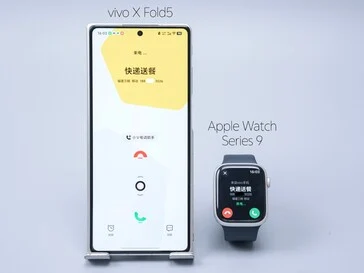
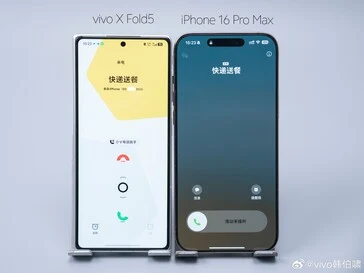
    Earlier today, Han Bo Xiao shared more information about the upgrade of the Vivo foldable, aiming to compete with the Samsung Galaxy Z Fold7 set to launch in July. This move seems to be part of Vivo’s strategy to lure Apple device users in China, as suggested by some recent posts on Weibo. Notably, Vivo has promised enhanced iCloud integration and better teamwork with iPhones, including the iPhone 16 Pro Max, plus a unique collaboration with the Apple Watch, marking a first for the Android ecosystem.

    New Features for Users

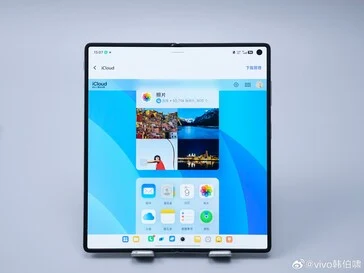
    In terms of functionality, users will have the capability to receive calls and messages on their Apple Watch from their Vivo foldables. They can also sync health data from the Apple Watch to the Vivo Health app. Additionally, iPhone users will be able to manage incoming calls and messages on their iPhones through the Vivo X Fold 5, even if there’s no SIM card in the foldable device. The information flow between the two devices will feel seamless, as if they were one. Moreover, iCloud will see closer integration and synchronization, particularly for photos and memos. Finally, the 8-inch foldable display can function as an extension of an iPad for a MacBook.

    Impressive Display Specs

    The diligent Vivo manager also shared some details about the display of the Vivo X Fold 5. A preview of the specifications indicates that it will feature the brightest foldable display compared to rivals like Samsung, Oppo, Honor, and Google, even though the previous model already had a peak brightness of 4,500 nits. A notable new feature is the dynamic LTPO AMOLED cover display on the outside, along with mentions of high-frequency PWM dimming.

    Source:
    Link


  • Vivo X Fold5 vs Apple iPhone 16 Pro Max: Latest Teaser Review

    Vivo X Fold5 vs Apple iPhone 16 Pro Max: Latest Teaser Review

    Key Takeaways

    1. Vivo’s upcoming X Fold5 will be lighter than its predecessor, the X Fold3, which weighs 219 g.
    2. The company is targeting competition with the iPhone 16 Pro Max in its teaser campaign.
    3. Vivo promotes the X Fold5 as significantly thinner than the iPhone 16 Pro Max when opened, potentially around 4.1 mm to 4.2 mm thick.
    4. Internal bezels may add extra thickness, making the X Fold5 thicker than the iPhone 16 Pro Max when closed.
    5. The X Fold5 is expected to be smaller than the current models, the X Fold3 and X Fold3 Pro.


    Vivo has begun another round of teasing for its upcoming flagship smartphone. Initially, the company revealed that the X Fold5 will be noticeably lighter than its predecessor, the X Fold3, which still holds the title of the lightest book-style foldable at 219 g, over a year after it was first launched.

    Targeting the Competition

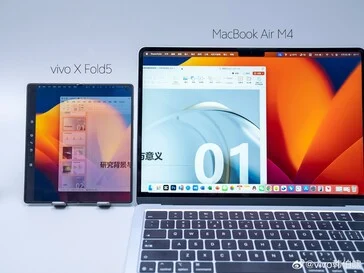
    Currently, Vivo has set its sights on the iPhone 16 Pro Max (priced at $1,089 – refurbished on Amazon) with its new teaser campaign. The images below follow a trend of Vivo contrasting its upcoming models against Apple’s top-tier iPhone. Earlier in the year, the company used the iPhone 16 Pro Max to highlight camera features in comparison with the X200 Ultra.

    Slimmer Design

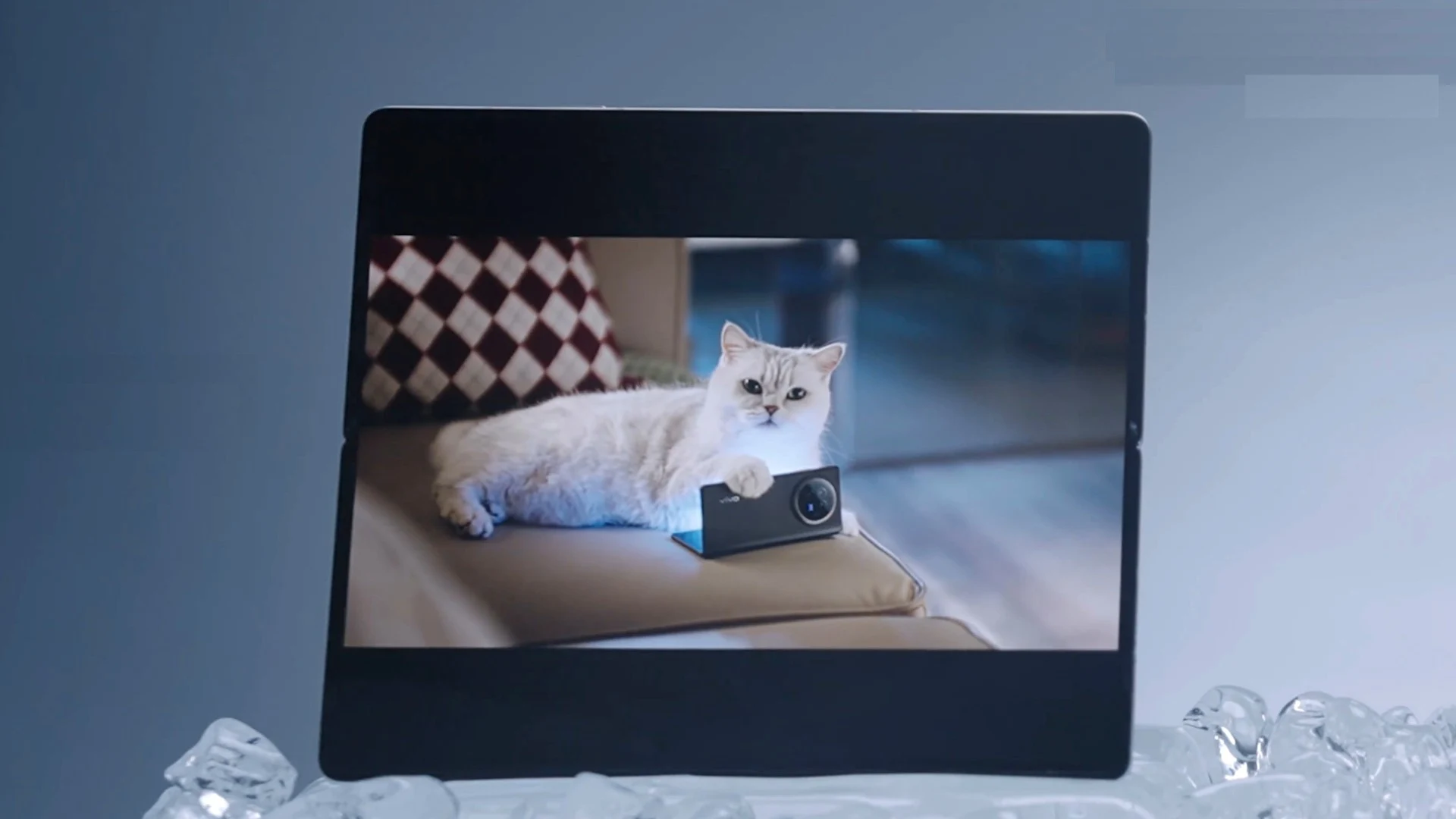
    Similar to what Oppo did previously, Vivo is promoting its latest foldable as being much thinner than the iPhone 16 Pro Max when opened. The exact measurements are not available yet, but it appears that the X Fold5 is about half as thick as the iPhone 16 Pro Max when it is opened. If this is true, the thickness of the X Fold5 would be around 4.1 mm or 4.2 mm.

    Nevertheless, the internal bezels may add an additional 0.7~0.8 mm to the total thickness, which could clarify why the X Fold5 is thicker than the iPhone 16 Pro Max when closed. Even so, Vivo’s upcoming foldable is expected to be smaller than its current models, the X Fold3 and X Fold3 Pro. It’s expected that Vivo will share more information about the X Fold5 soon.

    Source:
    Link


  • Samsung Galaxy S25 Edge Outperforms Flagships in Battery Test

    Samsung Galaxy S25 Edge Outperforms Flagships in Battery Test

    Key Takeaways

    1. The Galaxy S25 Edge has a 3,900 mAh battery, which is smaller than competitors, leading to shorter battery life.
    2. In a battery endurance test, the Galaxy S25 Edge lasted 7 hours and 57 minutes, ranking last among flagship smartphones.
    3. The iPhone 16 Pro Max, despite being known for good battery life, placed fifth with a run time of 9 hours and 33 minutes.
    4. The Galaxy S25 Edge matched the iPhone 16 Pro Max’s efficiency, achieving 8.2 mAh per minute, ranking second in this category.
    5. The most efficient device in the test was the Vivo X200 Pro, while the Xiaomi 15 Ultra had the lowest efficiency at 10.1 mAh per minute.


    The Galaxy S25 Edge has made a notable sacrifice when it comes to battery life. This 6.7-inch smartphone is equipped with a modest 3,900 mAh battery. While it operates reasonably well, a recent battery endurance test has revealed how it compares to other high-end smartphones.

    Battery Endurance Test Results

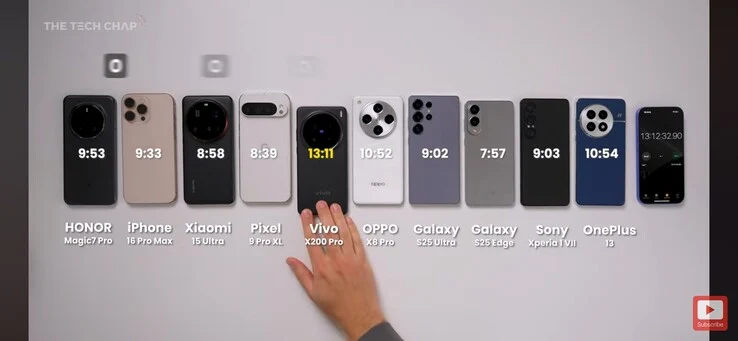
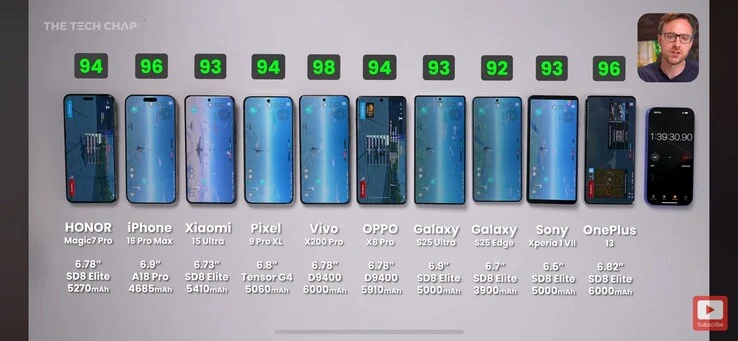
    In a comparison conducted by The Tech Chap on YouTube, the Galaxy S25 Edge was tested alongside other flagship models, such as the Xiaomi 15 Ultra, Pixel 9 Pro XL, OnePlus 13, and iPhone 16 Pro Max. Unsurprisingly, the Galaxy S25 Edge came in last place, achieving a total run time of just 7 hours and 57 minutes. This can be attributed to its smaller battery, especially since all other Android devices in the test had batteries with a minimum capacity of 5,000 mAh.

    Interestingly, while Apple tends to lead these tests, the iPhone 16 Pro Max landed in fifth place, relatively average, with a run time of 9 hours and 33 minutes. The full results are as follows:

    Efficiency Rankings

    When looking at performance in terms of mAh per minute, the Galaxy S25 Edge actually performed quite well. It matched the iPhone 16 Pro Max’s efficiency of 8.2 mAh per minute, placing both phones second in this category. The Vivo X200 Pro was the most efficient at 7.6 mAh per minute, while the Xiaomi 15 Ultra had the lowest efficiency at 10.1 mAh per minute.

    Other devices ranked by efficiency, from best to least efficient, include the Honor Magic7 Pro at 8.9 mAh per minute, the Oppo Find X8 Pro at 9.0 mAh per minute, and the Galaxy S25 Ultra, Xperia 1 VII, and OnePlus 13 all at 9.2 mAh per minute. The Google Pixel 9 Pro XL rounded out the list at 9.7 mAh per minute.

    Source:
    Link


  • OnePlus 13T Beats iPhone 16 Pro Max in Battery Drain Test

    OnePlus 13T Beats iPhone 16 Pro Max in Battery Drain Test

    Key Takeaways

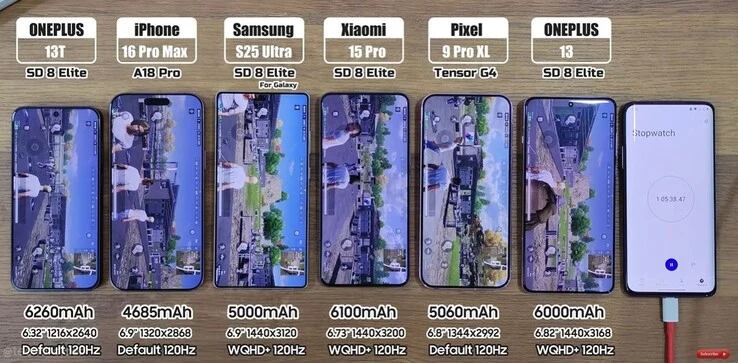
    1. The OnePlus 13T features a 6260 mAh battery in a compact 6.32-inch design.
    2. In battery drain tests, the OnePlus 13T outperformed competitors, achieving 13 hours and 42 minutes of usage time.
    3. The iPhone 16 Pro Max, typically strong in battery performance, placed second with 13 hours and 10 minutes.
    4. The OnePlus 13T has the largest battery among tested devices but a lower efficiency rating of 7.1 mAh/min compared to the iPhone 16 Pro Max’s 5.9 mAh/min.
    5. The OnePlus 13T is positioned as the smartphone with the best battery life among premium models available today.


    The OnePlus 13T was launched last month, presenting itself as a revolutionary smartphone due to its impressive 6260 mAh battery, all packed into a compact 6.32-inch design. Recently, this new phone has undergone a battery drain test against other flagship models, yielding some varied results.

    Battery Performance Comparison

    According to tests conducted by TechDroider, the OnePlus 13T has emerged victorious against competitors like the iPhone 16 Pro Max, Google Pixel 9 Pro XL, Samsung Galaxy S25 Ultra, Xiaomi 15 Pro, and its predecessor, the OnePlus 13. The Pixel 9 Pro XL finished last with a total usage time of 11 hours and 1 minute, while the Galaxy S25 Ultra clocked in at 12 hours and 31 minutes. The OnePlus 13 achieved 12 hours and 45 minutes, and the Xiaomi 15 Pro managed 13 hours and 5 minutes.

    Surprising Results

    Typically, the iPhone 16 Pro Max excels in battery drain evaluations, but this time it was surpassed by the OnePlus 13T. The iPhone secured the second place with a total time of 13 hours and 10 minutes, whereas the OnePlus 13T achieved an impressive 13 hours and 42 minutes, establishing it as the device with the best battery life among premium smartphones available today.

    Efficiency Considerations

    It’s not really a shock that the OnePlus 13T topped this test. With the largest battery of all the devices evaluated, it also features the smallest screen size. However, as is often the case with OnePlus models, the 13T falls short on a mAh per minute basis. This compact flagship manages an efficiency rating of 7.1 mAh/min, which is interesting given its smaller display. In contrast, the iPhone 16 Pro Max leads the class with 5.9 mAh/min, while the Galaxy S25 Ultra (buy on Amazon) achieves 6.7 mAh/min.

    Source:
    Link


  • T-Mobile, Verizon, AT&T Warn of Possible Phone Price Increases

    T-Mobile, Verizon, AT&T Warn of Possible Phone Price Increases

    Key Takeaways

    1. Executives from Verizon, T-Mobile, and AT&T are worried about new tariffs on foreign products affecting smartphone prices.
    2. Current tariffs include a general 10% and a doubled rate for devices made in China, leading to expected price hikes for consumers.
    3. Verizon’s CEO indicated that the company will not absorb significant tariff increases, suggesting that prices will rise for customers.
    4. AT&T’s CEO mentioned the need for innovative ways to help customers handle the upcoming price increases due to tariffs.
    5. Apple, holding a major market share, is impacted by tariffs and is shifting production from China to India, which may take time and potentially raise prices further.


    The top executives of the three biggest cell phone providers in the US, which are Verizon, T-Mobile, and AT&T, have all expressed concerns about the impact of new tariffs on foreign products. They have made it clear that they cannot absorb any rises in phone prices that may come from these tariffs.

    Tariff Effects on Smartphones

    While smartphones and tablets are temporarily exempt from reciprocal tariffs, they are still subject to a general 10% tariff from the Trump administration, which doubles for devices manufactured in China. The major carriers are evaluating the situation, but their leaders have collectively indicated that any price hikes will be passed on to consumers.

    Verizon’s CEO, Hans Vestberg, stated, “if the tariff is going to be as high as they say on the handsets, we are not planning to cover that in our work” and “we will not cover any enormous increase on tariffs on handsets.” This suggests that Verizon is preparing for significant price adjustments.

    Price Increases Coming

    For example, a Verizon iPhone 16 Pro Max currently priced at $1,199 at Best Buy, before the carrier’s trade-in discount of up to $1,000, could rise to $1,439 if the existing tariffs are enforced. Many customers have been buying iPhones quickly, anticipating these increases, which might lead to a drop in demand later on. Even if Apple moves production of US-bound iPhones away from China to countries with lower tariffs, prices could still go up.

    AT&T’s John Stankey mentioned, “So I think that if ultimately, costs are passed to us from those that we buy handsets from, unfortunately, for the customer, we’re going to have to come up with some new ways for them to figure out how to digest that increase in pricing.” He highlighted that while the business model may not change drastically, they will find innovative methods to help customers manage these price increases.

    Apple and Market Implications

    Apple held a dominant position in the US smartphone market last year with a 49.9% share, followed by Samsung at 21.4% and Motorola at 9.4%. This means Apple could be more affected by the tariff increases than others. Reports suggest that Apple is planning to release cheaper iPhones in the spring, allowing its more expensive Pro line to launch in the fall, which could help smooth out consumer purchasing patterns.

    Additionally, Apple is shifting its US-bound iPhone production from China to India, but this transition may take time. The multibillion-dollar investment for US production that Apple announced will take even longer and could increase prices further. T-Mobile’s CEO has clearly stated that these cost increases “have to be borne by the customer.” He added, “I mean, our model isn’t prepared for something like that.”

    Source:
    Link

  • T-Mobile Cuts Starlink Satellite Service Price 50% for Verizon, AT&T

    T-Mobile Cuts Starlink Satellite Service Price 50% for Verizon, AT&T

    Key Takeaways

    1. T-Mobile will reduce the monthly fee for Starlink connectivity to $10, significantly lower than AT&T and Verizon’s rates.
    2. The service currently offers limited messaging functionality, primarily for emergency texts, but is expected to expand to voice and data services in the future.
    3. T-Mobile’s Starlink service will be available to customers of AT&T and Verizon, not just T-Mobile users.
    4. Virtual eSIM cards will allow users to access Starlink connectivity while using multiple carriers simultaneously.
    5. T-Mobile will offer free Starlink connectivity to premium plan subscribers at the official launch in July.


    At the recent earnings call for T-Mobile, the company revealed important details about the pricing for its Starlink satellite service, which is set to exit its beta phase in July.

    Pricing Details for Starlink

    T-Mobile plans to lower the monthly fee for Starlink connectivity to $10. This is a significant reduction compared to the fees for AT&T and Verizon customers, who would pay double that amount, and $15 for T-Mobile users. Although this service currently provides limited functionality—mainly messaging when users are outside T-Mobile’s coverage—it has been highlighted by the carrier as potentially “lifesaving” for emergency texts. This was part of their argument for an FCC exemption to speed up the service’s rollout to older mobile devices.

    Future Capabilities

    Additionally, the growth of SpaceX’s direct-to-cell satellite network will enable T-Mobile’s Starlink users to access voice and data services, including the ability to stream podcasts and videos. T-Mobile’s CEO, Mike Sievert, confirmed that the $10 monthly Starlink service will also be available to customers of AT&T and Verizon, just like it is currently offered during its beta phase.

    How Connectivity Works

    To enable Starlink connectivity for users of Verizon or AT&T, T-Mobile uses virtual eSIM cards available in devices like the iPhone 16 Pro Max, allowing customers to utilize two carriers simultaneously. While in beta, T-Mobile has also made the service available for free to those who switch from AT&T or Verizon to their network, although it is uncertain how many individuals have taken up this offer.

    For T-Mobile subscribers who are on premium plans such as Experience Beyond and Go5G Next, the Starlink connectivity will also be offered at no cost when the service officially launches in July.

    Source:
    Link

  • Vivo X200 Ultra Camera Samples: 14mm & 85mm Features Revealed

    Key Takeaways

    1. Vivo will launch the X200 Ultra next week, available in black, white, and red color options.
    2. The unboxing video reveals various accessories included with the phone, such as a color-matching silicone case, a power adapter, and a USB cable.
    3. The X200 Ultra features impressive camera capabilities, with a 14 mm ultra-wide-angle lens using a Sony LYT-818 sensor and an 85 mm telephoto lens likely using an ISOCELL HP9 sensor.
    4. The ultra-wide-angle camera captures 50 MP images, while the telephoto lens offers a native output of 200 MP.
    5. The official unveiling will take place on April 21, alongside the X200s smartphone, Watch 5 smartwatch, and Pad SE and Pad5 Pro tablets.


    Vivo has announced that it will be introducing the X200 Ultra next week, featuring three color choices. A photo that has been shared on Chinese social platforms shows what the black, white, and red options actually look like in real life. Although the image isn’t very high quality, it comes along with an unboxing video that highlights two of these three color variants.

    Plenty of Accessories Included

    From the video, it appears that Vivo is including a host of accessories with the X200 Ultra, setting itself apart from competitors like Apple and Samsung, which includes the iPhone 16 Pro Max and Galaxy S25 Ultra (curr. $1,054.99 on Amazon). Notably, a silicone case that matches the phone’s color is visible, as well as a power adapter and a USB cable.

    Impressive Camera Features

    In addition, Vivo has released another collection of camera samples captured with its upcoming flagship device. This time, the focus is on the 14 mm ultra-wide-angle and 85 mm telephoto lenses instead of the new 35 mm main camera. To give you an idea, the ultra-wide-angle camera uses the Sony LYT-818 sensor, which delivers images at 50 MP with a 1/1.28-inch optical format and an f/2.0 aperture.

    Conversely, the telephoto lens on the X200 Ultra is likely to use the same ISOCELL HP9 sensor found in the Xiaomi 15 Ultra, offering a native output of 200 MP. Vivo is set to officially unveil the X200 Ultra on April 21, alongside the X200s smartphone, the Watch 5 smartwatch, and the Pad SE and Pad5 Pro tablets.

    Source:
    Link