Tag: T-Mobile

  • T-Mobile Ends JUMP! On Demand with Special Goodbye Offer

    T-Mobile Ends JUMP! On Demand with Special Goodbye Offer

    Key Takeaways

    1. T-Mobile will discontinue its JUMP! On Demand service on December 1, with upgrades ending after November 30.
    2. Launched in 2015, JUMP! On Demand allowed customers to lease devices for 18 months and upgrade frequently.
    3. Current users can make one last upgrade before the deadline, after which they will own their leased devices without extra fees.
    4. The closure is linked to financial risks and complications associated with smartphone leasing and returns.
    5. T-Mobile is shifting towards simpler device financing tied to longer service contracts for better customer retention.


    T-Mobile is set to discontinue its JUMP! On Demand service starting December 1. While the company hasn’t made an official announcement, information shared by The Mobile Report indicates that the program will come to an end, meaning customers will lose the ability for upgrades after November 30. This signifies the quiet end of a leasing option that was once a key part of T-Mobile’s appeal to those who frequently upgraded their devices.

    Launch and Features of JUMP! On Demand

    Initiated in 2015, JUMP! On Demand promised monthly phone upgrades without requiring full retail payments. Customers were able to lease a device for a period of 18 months, with the flexibility to change phones whenever they wanted. This was particularly attractive for users looking to get their hands on the latest iPhones or Samsung Galaxy phones every few months. However, over time, the program became more difficult to access as T-Mobile tightened eligibility requirements, raised deposits, and eliminated various promotions associated with leasing.

    Final Upgrade and Device Ownership

    As per the information leak, existing JUMP! On Demand users can take advantage of one last upgrade prior to November 30. Once that date passes, T-Mobile will terminate all ongoing leases and transfer the ownership of the leased devices to their respective customers. Additionally, the internal documents state that all remaining lease payments will be canceled by T-Mobile, meaning customers won’t have to pay a buyout fee and can keep their current devices without any additional cost. This is quite an unusual decision for a US carrier and seems to be a strategy for T-Mobile to phase out the program without facing backlash from customers.

    Reasons Behind the Closure

    Though T-Mobile hasn’t offered a specific explanation for ending JUMP! On Demand, the underlying business rationale is clear. Leasing smartphones carries financial risks, especially as device prices continue to rise. It also complicates the billing process and returns, which can lead to customer service issues. Currently, T-Mobile favors straightforward device financing linked to longer service contracts, which keeps customers tied to their plans for extended periods and simplifies the process of handling returned leased devices.

    Source:
    Link


  • T-Mobile Offers Starlink Internet for Older Phones and Video Apps

    T-Mobile Offers Starlink Internet for Older Phones and Video Apps

    Key Takeaways

    1. T-Mobile’s T-Satellite Starlink data service is launching on phones in October, expanding support for more device models.
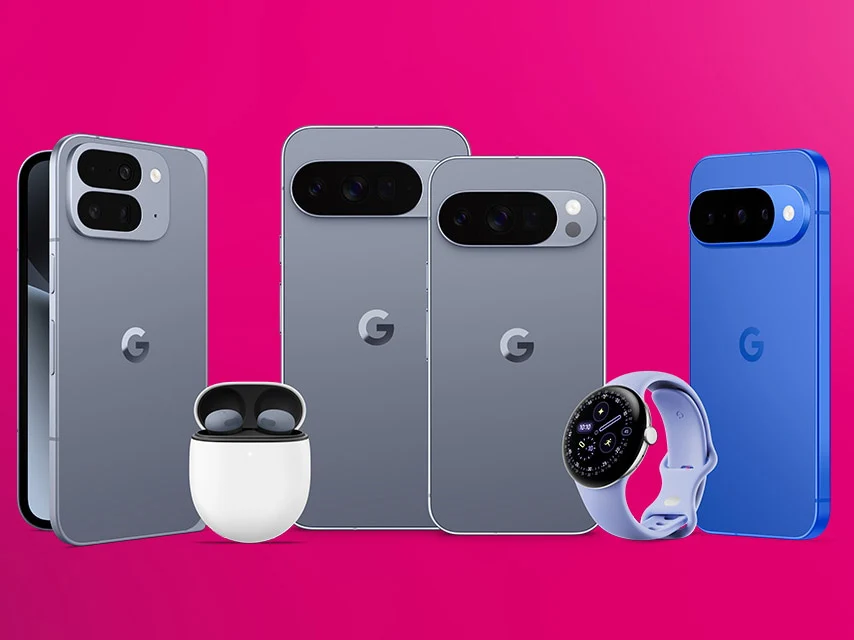
    2. Initial support includes Google Pixel 10, Samsung Z Fold 7, and Z Flip 7, with plans to add more iPhones, Samsung Galaxy, and Motorola models.
    3. Upcoming compatibility includes Google Pixel 9, Moto Razr 2025, and older Samsung Galaxy models like S22 and S23.
    4. T-Mobile collaborates with app developers to enhance T-Satellite apps, expanding beyond just Google applications.
    5. SpaceX is seeking FCC approval for up to 15,000 satellites, promising improved speeds and coverage for T-Mobile’s Starlink service.


    T-Mobile has announced that its T-Satellite Starlink data service will be available on phones starting in October, and they have fulfilled that commitment with a significant increase in supported phone models.

    Expanded Support for More Devices

    The T-Satellite data service was launched earlier than expected for specific devices, including the Google Pixel 10 series and the Samsung Z Fold 7 and Z Flip 7, which is currently offered at a reduced price on Amazon. Now, the service is broadening its reach to include a variety of compatible iPhones, Samsung Galaxy models, and Motorola smartphones.

    Upcoming Compatibility for More Phones

    In addition, Starlink satellite data connectivity will soon be available on the Google Pixel 9 and Moto Razr 2025 series. It will also extend to several older Samsung Galaxy devices like the S22 and S23 series, as well as budget-friendly models ranging from the Galaxy A15 to the A56.

    Collaboration with App Developers

    Starlink has teamed up with app developers to enhance its initial lineup of T-Satellite apps that are tailored for data received from its direct-to-cell satellite network. When the T-Satellite data service was first introduced for Pixel 10 phones, the optimized apps were limited to Google applications, such as Maps. Now, T-Mobile has provided a complete list of all apps that are ready for T-Satellite:

    While it may not be the 5G carrier service that Elon Musk has imagined, the expansion of T-Satellite data options on T-Mobile offers basic media messaging and outdoor applications for all popular phone models, included in their premium plans.

    Future Growth in Satellite Connectivity

    SpaceX has sought approval from the FCC to deploy up to 15,000 direct-to-cell satellites, indicating that T-Mobile’s Starlink data speeds and coverage will continue to improve in the future.

    Source:
    Link


  • T-Mobile Reveals Starlink-Compatible Phones and Apps Before Pixel 10

    T-Mobile Reveals Starlink-Compatible Phones and Apps Before Pixel 10

    Key Takeaways

    1. The new Google Pixel 10 series will be the first phones to use Starlink satellite Internet data, available from August 28.
    2. The Pixel 9a supports only satellite messaging, without the capability to send pictures or use app data through Starlink.
    3. T-Mobile has a list of compatible phones and apps for Starlink data, including certain Google Pixel models, Apple’s iPhone 13-16 series, and select older Samsung models.
    4. Users of the Galaxy S21 series and Galaxy Z Fold/Flip models will not have access to Starlink data, despite their high price points.
    5. New apps optimized for the limited bandwidth of T-Satellite data include Google Maps, Google Messages, and Find Hub.


    Google and T-Mobile surprised everyone with the announcement of a new phone that can use Starlink’s data capabilities during the launch event for the Pixel 10 series.

    Exciting New Features

    According to Big Magenta, the latest Google Pixel phones will be the first to tap into Starlink satellite Internet data after the Pixel 10 series is released on August 28. However, the previously launched Pixel 9a, which is currently on sale at Amazon, only allows for satellite messaging and lacks the ability to send pictures or use app data through Starlink’s connection.

    The Latest Updates

    T-Mobile has revealed a list of phones and applications that are ready for Starlink data, just ahead of the general release of the T-Satellite data service in October. Other Google Pixel models from the 9 series and later are either already supporting Starlink data or will receive support soon.

    In addition, Apple’s iPhone 13, 14, 15, and 16 series will also be compatible with Starlink’s satellite Internet service on T-Mobile. Some older Samsung models are included too, but not all. For example, the Samsung Galaxy A14 won’t have access to Starlink data, which makes sense considering its lower price point.

    Disappointing News for Some Users

    It may frustrate users of the Galaxy S21 series that they will not be able to use Starlink’s data service on T-Mobile. Those who invested in the Galaxy Z Fold 3 and Flip 3, and their successors, Z Fold 5 and Z Flip 5, are also left out, even though these foldable phones are priced quite high.

    This situation is particularly surprising because some of T-Mobile’s budget-friendly options, like the Revvl 7, 7 Pro, and Revvl 8, are marked as “coming soon” for Starlink data support. To top it off, no Motorola phone scheduled for release in 2024 will offer Starlink data support, adding to the growing list of 14 incompatible devices.

    T-Mobile advocated for the inclusion of older phones for Starlink satellite Internet service compatibility and successfully secured exemptions for many. However, the new Starlink data connectivity won’t be available for all of the older models.

    New Apps for Limited Bandwidth

    The first apps designed to work with the limited bandwidth of the T-Satellite data option are now confirmed. Not surprisingly, all of these apps are from Google, including essential tools like Google Maps, Google Messages, and the Find Hub service for tracking down lost devices linked to your Google account.

    Source:
    Link


  • Pixel 10 Users Get Early Access to T-Mobile’s Starlink App Support

    Pixel 10 Users Get Early Access to T-Mobile’s Starlink App Support

    Key Takeaways

    1. Early Access to Satellite Data: Pixel 10 users can experience app support through T-Mobile’s Cellular Starlink service before its official launch on October 1.

    2. Limited App Availability: Initially, only three Google apps—Maps, Messages, and Find Hub—will be available for satellite connectivity.

    3. Manage Expectations: Connection speeds are limited (around 4 Mbps), making it unsuitable for streaming but functional for basic apps.

    4. Priority for Pixel 10 Users: Pixel 10 users get priority access as the service is fine-tuned, with plans to include more apps in the future.

    5. Preorder and Pricing Details: The Pixel 10 series is available for preorder starting at $799.99, with options for trade-in credits and various plans for T-Satellite service.


    If you decide to get a Pixel 10, you’ll be one of the first to experience app support through T-Mobile’s Cellular Starlink service. The new flagship device is set to launch on August 28, and T-Mobile is providing early access to satellite-powered data features for Pixel 10 users ahead of the official launch on October 1. This means that if your Pixel 10 is linked to T-Mobile’s T-Satellite plan, you can utilize selected apps via Starlink’s satellites before anyone else does. As stated in a blog post on T-Mobile’s website, the company believes this capability is “far too important to hold back.”

    Limited App Availability at Launch

    At the start, the service will be restrictd to three Google applications. Maps, Messages, and Find Hub have been enhanced to work with satellite connectivity. This could prove to be especially handy if you find yourself without service in remote locations. Google Maps can guide you without cell towers, while Find Hub can assist in locating a lost device even when it’s off the grid. Messages already supports SMS and RCS through T-Satellite, but early access will also allow features like group chats and integration with Google’s Gemini chatbot.

    Manage Your Expectations

    T-Mobile officials warn users to keep their expectations in check. Gavin Gee, the carrier’s senior director of product marketing, mentions that the connection is significantly more limited than a 5G network. Early tests indicate download speeds of roughly 4 Mbps, which means that while basic maps and text-based apps are usable, streaming video is out of the question. He states that the intention was to ensure that the system worked reliably for the crucial apps in areas where people often lose service. “Customers shouldn’t expect to stream a 4K movie. That’s simply not going to happen. However, there are still valuable use cases like being able to access Maps.”

    Priority Access for Pixel 10 Users

    T-Mobile mentions that Pixel 10 users receive priority access because the service still requires fine-tuning across various devices and operating systems. Updates to Android and Pixel software have enabled the certification of these phones first. iPhones running iOS 26 are also anticipated to join the early access program in September. By October, the company aims to broaden its offerings beyond Google’s core apps to also include AccuWeather, WhatsApp, and X.

    For those thinking about getting the new phone, T-Mobile is already accepting preorders for the Pixel 10, 10 Pro, and 10 Pro XL, with the Pixel 10 Pro Fold scheduled to arrive on October 9. Prices start at $799.99, and the carrier is providing trade-in credits and discounts on its premium plans. The T-Satellite service is free on Go5G Next and Experience Beyond plans, or can be added to other T-Mobile plans for $10 per month. Customers on AT&T and Verizon can also enroll by paying the same monthly fee, but activation requires either a call or a visit to a store, as the service operates on a secondary eSIM.

    Source:
    Link


  • T-Mobile Starlink Supports IoT: SpaceX Satellites Monitor Beehives

    T-Mobile Starlink Supports IoT: SpaceX Satellites Monitor Beehives

    Key Takeaways

    1. One NZ and T-Mobile are the first cellular companies to implement Starlink’s direct-to-cell satellite connectivity service.
    2. One NZ began offering Starlink connections in November, while T-Mobile launched theirs in July.
    3. Starlink plans to roll out IoT connectivity, with One NZ already providing this service to beekeepers in New Zealand.
    4. The cost of monitoring beehives has decreased, allowing beekeepers to track conditions remotely without overspending.
    5. T-Mobile’s T-Satellite plan now includes multimedia messaging, but it’s currently only compatible with Samsung devices.


    While various cellular network companies around the world have shown interest in Starlink’s direct-to-cell satellite connectivity service, it was One NZ from New Zealand and T-Mobile in the United States who were the first to implement it.

    One NZ has been offering a Starlink connection option since November, whereas T-Mobile only introduced it in July, making One NZ lead in the extra services their satellite link provides.

    Exciting Developments in IoT

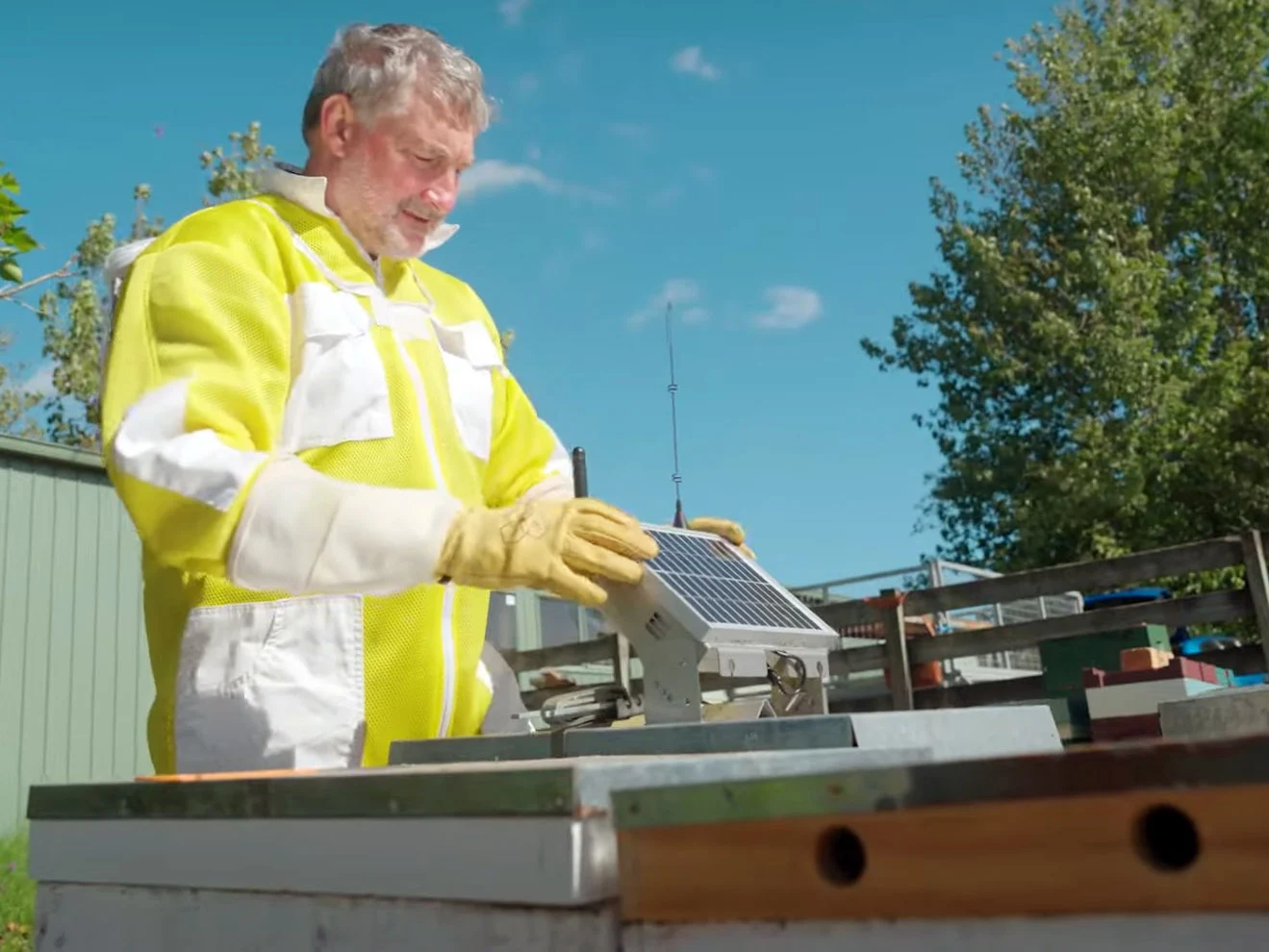
    Starlink has announced plans to roll out IoT connectivity this year, and indeed, One NZ is now providing this service to its satellite users. Beekeepers in New Zealand are already taking advantage of the initial Starlink IoT connection option.

    By using equipment that combines common components, they can track factors like temperature and humidity in their beehives, located in isolated regions of New Zealand that are great for honey production but lack cellular service.

    Cost-Effective Solutions for Beekeepers

    Before the introduction of Starlink’s direct-to-cell constellation, this type of monitoring was too costly for many beekeepers, according to the company that supplies the beehive monitoring tools linking the hives to the One NZ Satellite service. This is no longer the case, allowing them to keep an eye on their beehives remotely, getting valuable insights for honey production or deciding when to relocate the hives to better locations without overspending.

    T-Mobile has also stated that it will provide IoT connectivity through the T-Satellite service, likely aligning with the data download service set to launch in October.

    New Features from T-Mobile

    In the meantime, T-Mobile has enhanced the T-Satellite plan by adding multimedia messaging capabilities, enabling users to send photos, GIFs, and short video or audio clips from areas lacking cell tower coverage. However, the Multimedia Messaging Service of T-Satellite is currently compatible only with Samsung devices, like the Galaxy S25 Ultra, which is now available for $300 off on Amazon.

    Source:
    Link

  • Ukraine Carrier First in Europe to Launch Starlink Cell Service

    Ukraine Carrier First in Europe to Launch Starlink Cell Service

    Key Takeaways

    1. Kyivstar is the first major carrier outside the US to implement Starlink’s cellular service for standard handsets, aiming for a launch by the end of the year.

    2. The initial Starlink service will focus on text messaging and chat applications, with plans for satellite internet and voice services by early 2026.

    3. Current testing includes compatibility tests for SIM cards and messaging trials in Ukraine, with an anticipated launch of SMS and OTT messaging by Q4 2025.

    4. Pricing for the Starlink service in Ukraine is yet to be determined, although T-Mobile’s service in the US starts at $10/month.

    5. Starlink’s mobile service may initially be slower and less functional than traditional services, but future V3 satellites launching in 2026 are expected to enhance speed and capacity.


    The top mobile cellular technology provider in Ukraine, Kiyvstar, is set to be the first significant carrier outside the US to implement Starlink’s cellular service for standard handsets.

    They have reached an agreement with SpaceX to introduce a mobile Starlink service by year’s end. Similar to T-Mobile in the US, this service will initially focus on text messaging and chat applications like Signal or WhatsApp, with plans to roll out satellite internet and voice services for phones in Ukraine by early 2026.

    Testing Phase Underway

    Initial compatibility tests for the carrier’s SIM cards with Starlink’s direct-to-cell satellite system have already occurred in the US, and messaging trials are currently taking place in Ukraine.

    According to Kyivstar’s parent company, “The anticipated launch of D2C services featuring SMS and over-the-top (OTT) messaging is set for Q4 2025 and aims to significantly improve Kyivstar’s ability to deliver crucial connectivity for Ukraine, particularly in areas affected by infrastructure damage and in rural locales, as well as during emergencies.”

    Pricing Details

    In the US, the T-Satellite with Starlink service is priced at $10/month starting July 23, available on both older devices and newer ones like the iPhone 16 Pro. However, it remains unclear how much this service will cost for users in Ukraine.

    Kiyvstar is now the first European carrier to become a customer of Starlink’s direct cell phone service, aiming “to ensure constant communication for our clients, no matter the situation.” The service provides an alternative for connectivity in areas impacted by natural or human-made disasters, as it operates without the need for traditional cell tower infrastructure by transmitting signals directly from space.

    Functionality and Speed

    However, it’s important to note that Starlink’s mobile service is expected to be slower and less functional compared to terrestrial services, at least initially. In the US, T-Mobile plans to start with text messaging in July, and will then expand to data through certified apps like X or WhatsApp by October.

    SpaceX has plans to begin launching its V3 satellites, which will provide ten times the capacity of the current satellites, in 2026. This means the direct-to-cell network should become faster and offer more bandwidth in the future, too.

    Source:
    Link

  • T-Mobile Offers Starlink Satellite Internet for iPhone 13 and More

    T-Mobile Offers Starlink Satellite Internet for iPhone 13 and More

    Key Takeaways

    1. T-Mobile will launch its satellite communication service, T-Satellite, in partnership with Starlink on July 23, expanding access to older mobile phones.
    2. The FCC approved a waiver allowing almost all mobile phones, regardless of age, to register for the T-Satellite service, enhancing emergency communication capabilities.
    3. The waiver was justified as it supports the public interest by allowing consumers and first responders to access vital services in emergencies or remote areas.
    4. Older phone models face challenges in obtaining necessary certifications for satellite messaging, as manufacturers are reluctant to invest time and resources for devices over four years old.
    5. The FCC has encouraged manufacturers to certify older devices for the service while granting waivers to T-Mobile and SpaceX to facilitate satellite connectivity without additional licensing requirements.


    T-Mobile is set to introduce its satellite communication service, T-Satellite, in partnership with Starlink on July 23. They’ve received approval for a waiver that allows users with older phones to register for the service.

    Expanded Access for Users

    Initially, T-Mobile Starlink’s beta service was limited to newer devices that were authorized within the last four years. Eligible models included iPhone 14 through iPhone 16, Samsung Galaxy S21, and Google Pixel 9 and later versions. Interestingly, even basic models like the Galaxy A14 were permitted, but older devices like the iPhone 13 were excluded.

    Recently, the Federal Communications Commission (FCC) has given T-Mobile the go-ahead for its exemption request. This means that T-Satellite will now be available for almost all mobile phones, regardless of their age.

    Justification for the Waiver

    The FCC determined that there was a valid reason to approve the waiver request, agreeing with T-Mobile and SpaceX that strict adherence to the rules could hinder the Commission’s objective. This objective is to ensure that consumers and first responders can access vital services, like emergency alerts and limited texting, during emergencies or in remote locations without traditional service. T-Mobile and SpaceX pointed out that enforcing the rules would prevent subscribers and first responders from using SCS due to the failure of certain device manufacturers to seek waivers for their equipment. Granting access serves the public interest by enabling T-Mobile customers to communicate where they otherwise could not, despite the Commission’s efforts to authorize new services.

    The rationale behind T-Mobile’s exemption request stemmed from the FCC’s rules requiring each phone to be certified for its Supplemental Coverage from Space (SCS) service, which includes Starlink satellite messaging and data.

    Challenges for Older Devices

    It’s worth noting that phone manufacturers have little motivation to tackle the extensive paperwork and testing for devices older than four years, just for T-Mobile to offer satellite messaging. This situation also applies to Verizon and AT&T phones, which can use T-Satellite for the same $10 per month fee.

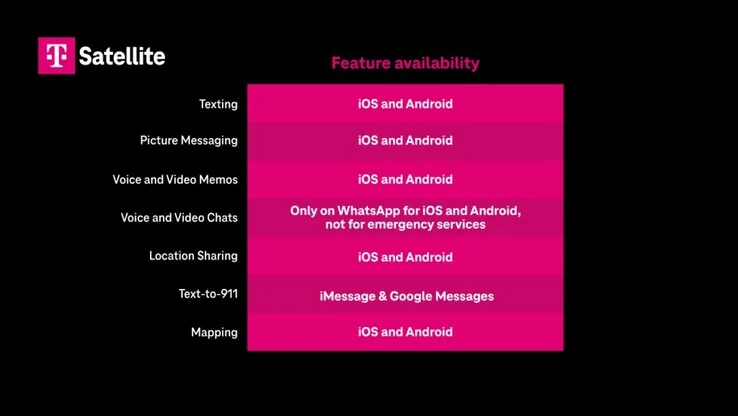
    Initially, the service will provide text and voice messaging, but starting October 1, it will also enable satellite Internet access for specific optimized Android and iOS applications, like chat, social media, or weather services.

    The FCC acknowledges this issue and has granted the waiver for T-Mobile’s Starlink service, stating that neither the carrier nor users should be blamed for the necessary software updates from manufacturers.

    Manufacturer Responsibilities

    The FCC recognizes that T-Mobile and SpaceX are not primarily responsible for updating device certifications for the phones on their networks. They urge T-Mobile and SpaceX to remind their suppliers about the importance of getting handsets authorized after June 29, 2024, into compliance. They expect manufacturers to take the necessary actions, yet considering the limited number of consumer devices involved and users’ inability to update certifications independently, the benefits to the public are deemed to outweigh potential drawbacks in this case. Therefore, the waiver for sections 2.805(a), 25.125(c), and 25.125(d)(3) of the rules is granted. Additionally, the FCC has waived section 25.115(q)(1) to allow T-Mobile users to connect with SpaceX satellites without needing extra earth station licenses, aligning with the rule’s purpose.

    The FCC continues to “encourage” manufacturers of older Galaxy and iPhone models to certify them for the SCS option, although the associated paperwork can now be submitted voluntarily.

  • T-Mobile Announces Starlink Data Service Launch for X and WhatsApp

    T-Mobile Announces Starlink Data Service Launch for X and WhatsApp

    Key Takeaways

    1. T-Mobile will launch its Starlink satellite voice and text messaging service on July 23, with Starlink Internet available in October.
    2. The T-Satellite feature requires no special gear and is compatible with T-Mobile and select devices from other carriers, including Verizon and AT&T.
    3. Initially, users can send texts, image messages, and short audio clips from areas lacking cellular service.
    4. Starting October 1, T-Mobile Starlink subscribers will have access to optimized apps for iOS and Android, including popular messaging and social media platforms.
    5. The service will cost $10 per month, with a free trial available in beta; T-Mobile will offer it for free to customers on the Experience Beyond unlimited 5G data plan.


    T-Mobile is set to launch its Starlink satellite voice and text messaging service on July 23, with Starlink Internet rolling out in October.

    T-Satellite Details

    This new T-Satellite feature doesn’t need any special gear and is available for T-Mobile phone models from 2021 onwards, like the iPhone 15 Pro Max. It’s also compatible with devices from other carriers, including Verizon and AT&T.

    Initially, the T-Satellite with Starlink will allow users to send texts and image messages. Additionally, customers can send short audio clips from over 500,000 square miles that currently lack Verizon, T-Mobile, or AT&T cellular service.

    Availability of Apps

    Beginning October 1, subscribers to T-Mobile Starlink will have access to optimized apps for iOS and Android. These apps will function even in areas without cell phone towers and will include popular messaging and social media platforms like WhatsApp and X.

    To provide the best user experience for satellite connectivity, T-Mobile is collaborating with a select group of widely-used app providers in areas most important for those traveling to remote locations. We expect to see satellite-enabled applications from AccuWeather, AllTrails, Apple, Google, WhatsApp, and X, among others, in the near future.

    Pricing and Free Trials

    On July 23, the T-Mobile Starlink data and messaging service for remote areas will be priced at $10 per month, even for users on Verizon and AT&T. The Starlink satellite connectivity is currently in a beta trial, allowing anyone to test it without any cost, with over 1.8 million users already participating.

    T-Mobile will continue to offer Starlink for free to customers on the Experience Beyond unlimited 5G data plan, while they also work on making it available for phones older than four years.

    Source:
    Link

  • T-Mobile Cuts Starlink Satellite Service Price 50% for Verizon, AT&T

    T-Mobile Cuts Starlink Satellite Service Price 50% for Verizon, AT&T

    Key Takeaways

    1. T-Mobile will reduce the monthly fee for Starlink connectivity to $10, significantly lower than AT&T and Verizon’s rates.
    2. The service currently offers limited messaging functionality, primarily for emergency texts, but is expected to expand to voice and data services in the future.
    3. T-Mobile’s Starlink service will be available to customers of AT&T and Verizon, not just T-Mobile users.
    4. Virtual eSIM cards will allow users to access Starlink connectivity while using multiple carriers simultaneously.
    5. T-Mobile will offer free Starlink connectivity to premium plan subscribers at the official launch in July.


    At the recent earnings call for T-Mobile, the company revealed important details about the pricing for its Starlink satellite service, which is set to exit its beta phase in July.

    Pricing Details for Starlink

    T-Mobile plans to lower the monthly fee for Starlink connectivity to $10. This is a significant reduction compared to the fees for AT&T and Verizon customers, who would pay double that amount, and $15 for T-Mobile users. Although this service currently provides limited functionality—mainly messaging when users are outside T-Mobile’s coverage—it has been highlighted by the carrier as potentially “lifesaving” for emergency texts. This was part of their argument for an FCC exemption to speed up the service’s rollout to older mobile devices.

    Future Capabilities

    Additionally, the growth of SpaceX’s direct-to-cell satellite network will enable T-Mobile’s Starlink users to access voice and data services, including the ability to stream podcasts and videos. T-Mobile’s CEO, Mike Sievert, confirmed that the $10 monthly Starlink service will also be available to customers of AT&T and Verizon, just like it is currently offered during its beta phase.

    How Connectivity Works

    To enable Starlink connectivity for users of Verizon or AT&T, T-Mobile uses virtual eSIM cards available in devices like the iPhone 16 Pro Max, allowing customers to utilize two carriers simultaneously. While in beta, T-Mobile has also made the service available for free to those who switch from AT&T or Verizon to their network, although it is uncertain how many individuals have taken up this offer.

    For T-Mobile subscribers who are on premium plans such as Experience Beyond and Go5G Next, the Starlink connectivity will also be offered at no cost when the service officially launches in July.

    Source:
    Link

  • T-Mobile Offers Starlink Coverage for Older Phones for Emergency Messaging

    T-Mobile Offers Starlink Coverage for Older Phones for Emergency Messaging

    Key Takeaways

    1. T-Mobile seeks FCC waiver for easier device approval for its Supplemental Coverage from Space (SCS) service.
    2. The SCS service currently supports a range of devices, including newer iPhones, Samsung Galaxy, and Pixel models.
    3. Users with older phones, like the iPhone 13 series, may face challenges due to extensive FCC paperwork for access during the beta phase.
    4. T-Mobile argues that device-specific approvals hinder access to critical services and emergency alerts in remote areas.
    5. The partnership with Starlink currently offers messaging, with plans to expand data services as satellite coverage grows.


    T-Mobile has asked the FCC to allow a waiver for its requirement to approve each device for the Supplemental Coverage from Space (SCS) service.

    Current Offerings

    The SCS list features the Starlink satellite messaging service, which T-Mobile is providing for free in beta to all phone users, even those on Verizon or AT&T, ahead of its full launch in July. The current compatibility includes devices from the iPhone 14 to iPhone 16, as well as the Samsung Galaxy 21 and Pixel 9 series and newer. It even extends to older models like the Galaxy A14 that have been approved in the last few years.

    Legacy Devices and Challenges

    However, users with older phones such as the iPhone 13 series may face a daunting amount of FCC authorization paperwork if they wish to access Starlink satellite messaging during the beta phase. Those who still use these devices might find themselves in a tough spot when trying to enjoy the free service.

    T-Mobile argues to the FCC that forcing companies or their SCS partners to restrict access based on individual device approvals—when it’s not a technical barrier—goes against public interest. They believe this approach would help people receive vital services and emergency alerts in hard-to-reach areas, especially in emergencies.

    Life-Saving Services

    The carrier emphasizes that the burdensome FCC authorization process for each device hinders access to “life-saving” services on older phones and is urging the regulator to fix this issue. Right now, T-Mobile’s partnership with Starlink only provides a messaging service, but as SpaceX’s satellite network expands, the service is expected to also deliver data to remote locations without cell tower coverage.

    Source:
    Link