Tag: Apple

  • Mac vs Windows: How Companies Choose Between Apple and PC

    Mac vs Windows: How Companies Choose Between Apple and PC

    Key Takeaways

    1. Windows dominates the business sector with over 75% of global computer shipments, while Apple accounts for only 5%.
    2. Organizations typically fall into three categories regarding computer usage: PC-first, allowing employee choice, or strictly PC-based.
    3. Macs are often designated for specific tasks like design and software development, where macOS tools offer advantages.
    4. Some businesses implement performance-based criteria, like 30-day trials, to assess the value of Mac purchases, reducing unnecessary requests by 67%.
    5. Analysts suggest that Apple’s value proposition is evolving, potentially increasing its presence in enterprises as younger decision-makers prefer flexibility.


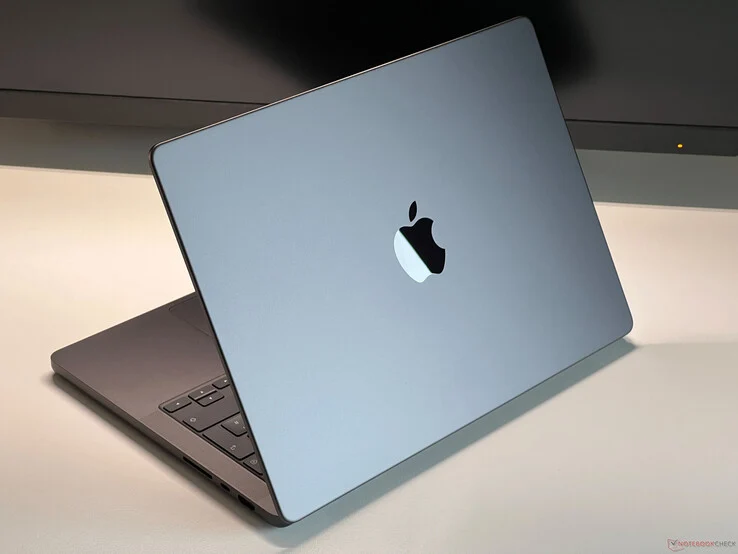
    Despite Apple becoming more noticeable in workplaces, Windows still dominates the business sector. A recent report from IDC indicates that Apple only makes up 5% of worldwide commercial computer shipments. In contrast, Lenovo, HP, and Dell together hold more than 75%. In the United States, Macs have reached around 11% of laptop deployments, which still keeps them in a smaller group.

    Division of Computer Usage

    Organizations generally fall into three categories regarding computer usage. There are PC-first companies with few exceptions for Macs, those that allow employees to choose freely, and firms that strictly use PCs. According to BlueRadius Cyber, an IT consultancy, the choice often hinges on the specific needs and budget. Macs are usually designated for tasks such as design, software development, or testing within Apple’s ecosystem, where tools in macOS provide distinct benefits.

    Performance-Based Purchase Criteria

    Some businesses even use performance criteria before allowing Mac purchases. Luca Dal Zotto from Rent a Mac explained to The Register a system where employees go through a 30-day trial to document measurable enhancements before getting approval. These improvements can be about video render times or debugging speeds. This method has reportedly decreased unnecessary Mac requests by 67%.

    Changing Value Proposition

    Yet, analysts believe that Apple’s value proposition is evolving. Canalys analyst Kieren Jessop pointed out that the MacBook Air’s 16GB RAM and its price of $1,199 are closing the gap between Apple and other premium PCs like the Dell XPS 13. As younger IT decision-makers lean towards flexibility, Apple’s presence in enterprises might keep increasing, although Windows still stands as the corporate standard for now.

    Source:
    Link


  • Apple M5 Mac Lineup Leaked: Timeline, Models, and Specs Revealed

    Apple M5 Mac Lineup Leaked: Timeline, Models, and Specs Revealed

    Key Takeaways

    1. M5 MacBook Pro Launch: The first M5 MacBook Pro is expected to debut before October 2025, maintaining the same design as the M4 but featuring a significantly upgraded M5 chip for better GPU performance.

    2. MacBook Air Models: Two M5 MacBook Air models (13-inch and 15-inch) are anticipated to launch in early 2026, featuring a new 3 nm M5 SoC for improved CPU performance and energy efficiency, along with a potential price increase.

    3. Premium M5 Pro and M5 Max: Higher-end M5 Pro and M5 Max models are set for a spring 2026 release, promising enhanced gaming performance through advanced GPU capabilities without external design changes.

    4. Desktop Model Updates: M5 desktop models, including the Mac mini, Mac Studio, and iMac, are expected in mid-2026, aligning with Apple’s silicon upgrade schedule while focusing on performance improvements rather than visual redesigns.

    5. Future Prototypes: Early indications suggest that M6-series prototypes are already being tested, hinting at ongoing advancements in Apple’s chip technology beyond the M5 series.


    Apple might have unintentionally disclosed its entire upcoming Mac lineup in the latest macOS Tahoe 26. Code details found by AppleInsider indicate every forthcoming M5-equipped device, starting with a base 14-inch MacBook Pro anticipated to launch later this month. Additionally, there are updates on the MacBook Air, iMac, Mac mini, and Studio models expected to debut through 2026. Notably, the findings also highlight the introduction of new M5 Pro and M5 Max chips, as well as some early indications of M6-series prototypes already being tested.

    First M5 MacBook Pro on the Horizon

    AppleInsider reports that internal codes included in macOS Tahoe 26.0.2 verify the M5 MacBook Pro (J704) is indeed in the works. This model is likely to be the first Mac to feature the M5 chip, aiming for a launch before October 2025. It’s set to succeed the existing M4 MacBook Pro while keeping the same chassis, mini-LED display, and port configuration.

    The main upgrade here is the new M5 chip, which, according to preliminary benchmarks from the iPad Pro, seems to offer a notable boost in GPU performance over the M4. Design-wise, no significant changes are anticipated, indicating that this refresh will be more focused on enhancing graphics performance.

    Upcoming MacBook Air Models

    The M5 MacBook Air is expected to make its debut in early 2026, coinciding with the launch of macOS 26.2. Code references reveal two models: the 13-inch (J813) and the 15-inch (J815) versions.

    Design-wise, Apple is likely to maintain the sleek aluminum chassis, MagSafe 3 charging port, and Liquid Retina display. The significant update will be the transition to the M5 SoC, manufactured with an improved 3 nm process, which should offer slight CPU enhancements and better energy efficiency. Battery life might see minor upgrades due to this new chip. Furthermore, the M5 MacBook Air could see a small price hike compared to the M4 MacBook Air that started at $999. To keep the entry price low for the MacBook series, there are rumors of a new model powered by a Pro SoC similar to that used in iPhones.

    Higher-End Models and Gaming Performance

    The premium M5 Pro and M5 Max MacBook Pro variants, known internally as J714 and J716, are slated for a spring 2026 release alongside macOS 26.3. These chips are expected to use TSMC’s SoIC-MH packaging tech, allowing Apple to separate CPU and GPU units, which could lead to more flexible scaling and possibly higher GPU core counts. With the performance of the M4 chip already evident in demanding games like Cyberpunk 2077, an upgraded GPU could significantly enhance gaming experiences on Macs, especially as the game library expands.

    While these changes might lead to impressive graphics performance, don’t expect any external design modifications this time. An OLED MacBook Pro featuring a touch panel is rumored to be released later in 2026, according to a reliable industry insider.

    Desktop Models and Future Releases

    M5 desktop models are anticipated to follow in mid-2026, probably during WWDC 2026 when Apple announces macOS 26.4. The leaked identifiers include the M5 Mac mini (J873s / J873g), M5 Mac Studio (J775c / J775d), and M5 iMac (J833ct).

    These desktop variants are expected to align with Apple’s standard silicon upgrade schedule, incorporating M5, M5 Pro, or M5 Max chips to enhance efficiency and performance while maintaining the current design aesthetic. While no substantial visual changes are expected, the updated SoC may enable better thermal management and consistent performance during heavy workloads.

    Based on this leaked information, if you can wait a little longer, it might be wise to hold out for the base M5 MacBook Pro arriving later this October. It could either provide better value for the same price or drive down the costs of the existing M4 models.

    Source:
    Link


  • iPhone Antennagate: 20-Byte Error Explained in Code Analysis

    iPhone Antennagate: 20-Byte Error Explained in Code Analysis

    Key Takeaways

    1. The Antennagate controversy prompted Steve Jobs to hold an emergency press conference to address user concerns about the iPhone 4’s antenna issues.
    2. Apple responded by offering free bumper cases and releasing a firmware update (iOS 4.0.1) to help mitigate the antenna problem.
    3. The update adjusted only about 20 bytes of code, recalibrating how signal strength bars were displayed on the iPhone 4.
    4. Prior to the update, the iPhone 4 inaccurately displayed signal strength, making weak signals appear more severe when the antenna was touched.
    5. The changes improved the accuracy of signal strength representation, leading to a decrease in user complaints and enhancing the overall user experience.


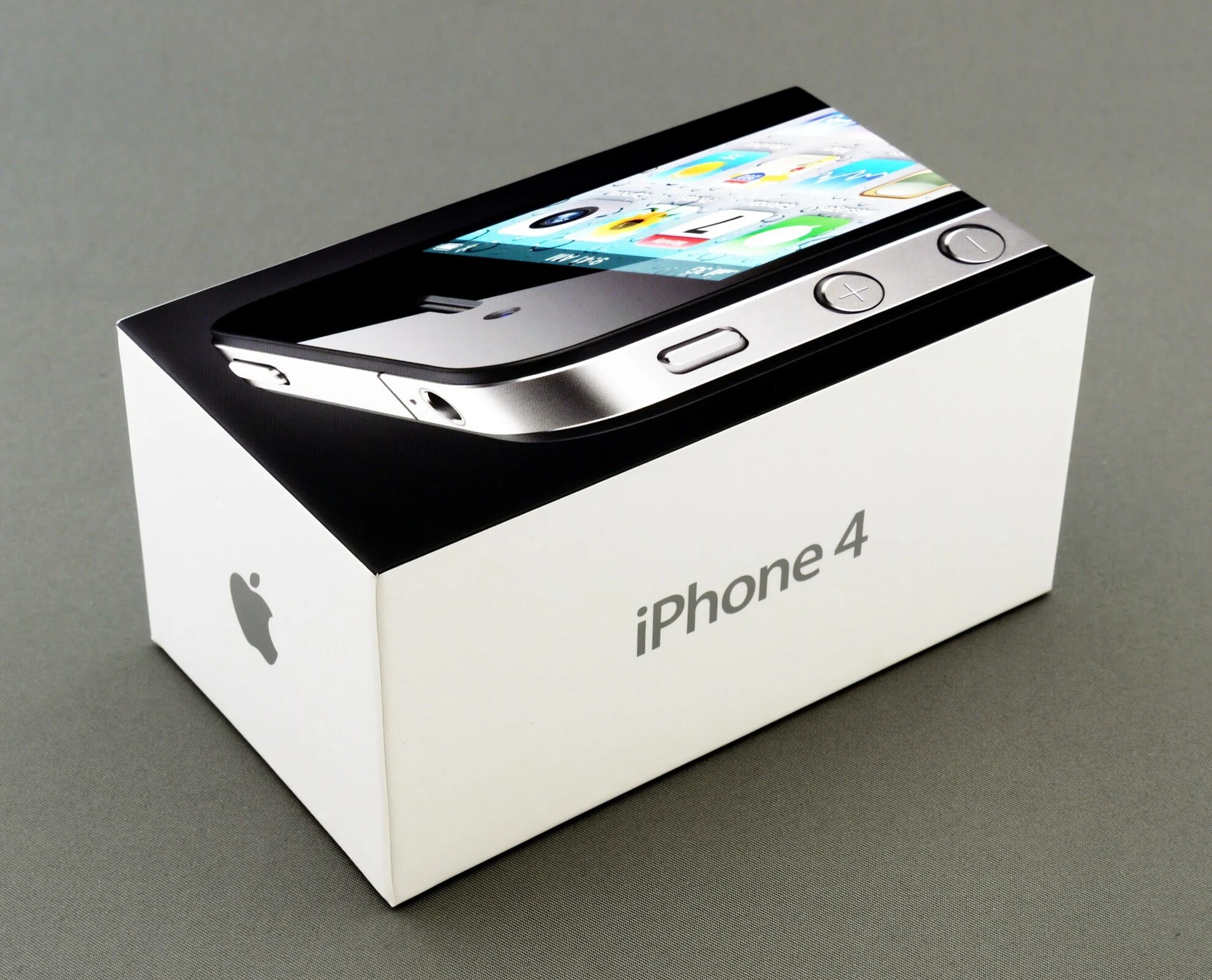
    The Apple iPhone 4 was at the center of one of its largest controversies known as Antennagate. This problem was so significant that Steve Jobs, Apple’s co-founder, held an emergency press conference to explain that users were improperly holding the iPhone 4.

    Apple’s Response to the Controversy

    To remedy this situation, Apple provided customers with a complimentary bumper case, which was intended to stop users from inadvertently touching the antenna that was built into the phone’s frame. Additionally, the company rolled out a firmware update to version iOS 4.0.1, aimed at fixing the antenna issue. While the update did not completely eliminate the problem, it did lead to a noticeable decrease in Antennagate-related complaints from users.

    Code Adjustments and Their Effects

    Sam Henri Gold has scrutinized the changes made in the code, revealing that Apple needed to modify only about 20 bytes to help reduce the Antennagate issue. Before this update, the iPhone 4 would show five bars even when the signal was relatively weak. However, if the signal strength decreased even slightly, the display would drop to two or three bars. This made the signal loss, when the antenna was touched, seem more severe than it truly was.

    With the introduction of iOS 4.0.1, Apple recalibrated the 20 parameters that dictate how many bars appear at different signal strengths, aligning them with the recommendations from US carrier AT&T. As a result, a signal strength that used to show five bars now displayed only two bars, giving users a much clearer picture of their signal quality before they even touched the antenna, thus making the signal loss appear less severe.

    Conclusion

    In conclusion, the adjustments made by Apple helped change the perception of the iPhone 4’s antenna issues, creating a more accurate representation of signal strength. This change ultimately led to a decrease in user complaints and improved the overall experience for iPhone 4 users.

    Source:
    Link


  • How to Turn Off PWM Flickering on iPhone 17: Benefits Explained

    How to Turn Off PWM Flickering on iPhone 17: Benefits Explained

    Key Takeaways

    1. Most OLED screens in smartphones use pulse-width modulation (PWM) for power control, which can cause discomfort for sensitive individuals due to low frequencies.
    2. Apple has introduced a feature called Display Pulse Smoothing in the iPhone 17, allowing users to disable PWM dimming, but it is limited to brightness levels up to 25%.
    3. Above 25% brightness, the iPhone 17 still relies on PWM dimming, and the effectiveness of the new feature remains uncertain.
    4. YouTuber Nick Sutrich suggests Apple may be using pulse amplitude modulation (PAM) for smoother brightness transitions, but specifics are not confirmed.
    5. Users sensitive to PWM report continued discomfort even with Display Pulse Smoothing activated, indicating limited relief from the new feature.


    Most OLED screens found in today’s smartphones utilize a technique known as pulse-width modulation (PWM). This technique controls the average power of an electrical signal by rapidly toggling the screen on and off. PWM can be implemented in a way that is more precise, energy-saving, and cost-effective compared to analog methods.

    The Issue with PWM

    The downside to PWM is its typically low frequencies, often under 500 Hz. People who are sensitive to flickering may notice this and could experience discomfort like burning eyes, headaches, and nausea, among other symptoms.

    Apple’s New Solution

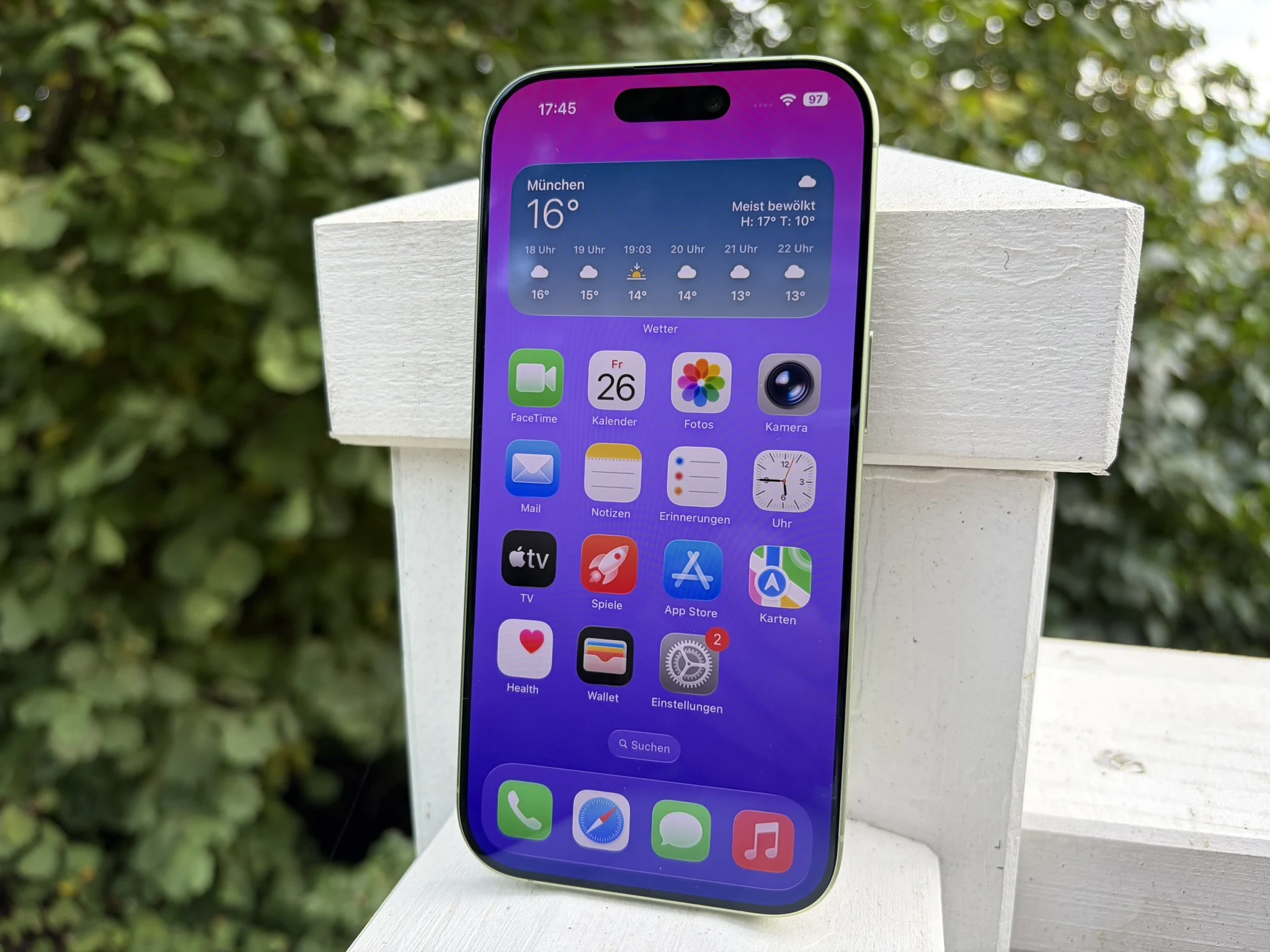
    It is therefore a positive development that Apple has introduced an option to disable PWM dimming in its latest iPhones, including the Apple iPhone 17. This feature, called Display Pulse Smoothing, can be found in iOS 26 under Settings, Accessibility, and Display & Text Size.

    Limitations of the PWM Option

    However, as shown in our review of the Apple iPhone 17, users shouldn’t have high expectations for this PWM feature. It only functions effectively at screen brightness levels up to 25%, and the dimming frequency remains unchanged. Above 25% brightness, the device still relies on PWM dimming.

    Apple vaguely describes the activation of display pulse smoothing as an “alternative method for dimming the OLED display.” While it is suspected that the company employs a form of DC dimming or a hybrid approach, no specific technical information is provided.

    Insights from YouTuber Nick Sutrich

    In a video, YouTuber Nick Sutrich suggests that Apple might be using pulse amplitude modulation (PAM) for the display pulse smoothing feature. PAM differs from PWM by altering the signal amplitude, or voltage level, which creates a sine wave-like signal curve rather than a square wave, leading to smoother transitions in brightness.

    Measurement Observations

    Our measurements support this effect. When display pulse smoothing is enabled, the frequency response appears significantly flatter at brightness levels up to 25%.

    Despite the method employed, it seems that the new feature provides little relief for those sensitive to PWM. Numerous users on the Reddit forum r/PWM_Sensitive have reported that even with this dimming option activated, they still suffer from the same symptoms associated with traditional PWM dimming.

    Conclusion

    The reasons for the limited effectiveness of the display pulse smoothing option seem to stem from the unchanged dimming frequency and modulation rate in comparison to PWM dimming—these factors are significant contributors to the symptoms experienced by users.

    While it’s commendable that Apple has introduced a PWM option in its latest iPhone models, it remains unclear if this feature will be more effective in the future and truly assist PWM-sensitive users. Let’s hope that improvements come soon through a software update rather than waiting for the next generation of devices.

    Source:
    Link


  • Apple Removes Carbon-Neutral Labels Amid EU Regulations

    Apple Removes Carbon-Neutral Labels Amid EU Regulations

    Key Takeaways

    1. Apple removed “carbon-neutral” labels from products globally, including Apple Watch Series 11, Apple Watch Ultra 3, and M4 Mac mini, following a German court ruling.
    2. The change was prompted by accusations of “greenwashing” from the environmental group Deutsche Umwelthilfe and new EU regulations effective in September 2026.
    3. Apple originally claimed carbon neutrality by reducing emissions by 75% and offsetting the remaining 25% with carbon credits, including projects like tree planting in Paraguay.
    4. Ecologists raised concerns about the sustainability of Apple’s eucalyptus monoculture approach and its impact on biodiversity and water resources.
    5. Despite label removal, Apple maintains that its products meet environmental standards and aims for carbon neutrality across its global supply chain by 2030.


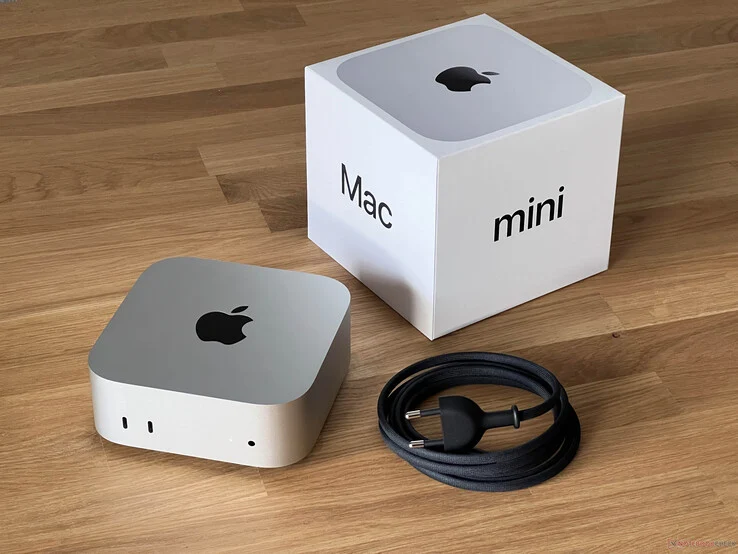
    Apple has recently taken down its “carbon-neutral” labels from product pages and packaging all over the globe. This change impacts the Apple Watch Series 11, Apple Watch Ultra 3, and M4 Mac mini. The updates came into effect last month, right after Apple’s iPhone event in September 2025. Notably, the Apple Watch was the initial product line to sport this label back in 2023, which was later adopted by Mac mini versions.

    Legal Issues Prompt Changes

    The shift was prompted by a German court’s decision in August 2025, which ruled that Apple could no longer market the Apple Watch as “carbon-neutral.” The environmental group Deutsche Umwelthilfe accused Apple of allegedly “greenwashing” its products, thus misleading buyers. New regulations from the EU, effective in September 2026, will prohibit companies from using “carbon-neutral” labels if they depend on carbon credits or offset projects. Initially, Apple removed these labels in Germany and then extended the action globally to prevent any confusion among consumers.

    Apple’s Claims and Partnerships

    Reportedly, Apple claimed it reached its carbon-neutral status by cutting emissions by 75 percent, while the remaining 25 percent was offset through carbon credits. At that time, Apple stated that its products fulfilled rigorous environmental standards: utilizing 100 percent clean energy for manufacturing and product use, incorporating at least 30 percent recycled or renewable materials by weight, and ensuring that at least half of its shipments were made by land instead of air. The rest of the emissions were offset using “high-quality carbon credits” from initiatives like the Paraguay tree planting project. The company is believed to have teamed up with Forestal Apepu to create fast-growing eucalyptus forests on previously deforested land.

    Environmental Concerns

    However, ecologists have raised concerns regarding Apple’s eucalyptus monoculture approach, arguing that it poses a risk to biodiversity. Additionally, it’s important to highlight that these carbon offset plantations require significant water resources. The German court pointed out that Apple had not secured 75 percent of the land lease for the Paraguay project by 2029, leaving the contract renewal in question and bringing up concerns about the project’s long-term sustainability.

    Internally, Apple may still regard the affected products as carbon-neutral, even though the public labels have been removed. A spokesperson for the company stated that this choice was made to adhere to upcoming regulations, not as a reflection of any changes in their environmental efforts. Apple has reaffirmed its aim to achieve carbon neutrality throughout its entire global supply chain by 2030, claiming that all its products are designed with environmental factors in mind, no matter the new EU marketing limitations.

    Source:
    Link


  • Apple Revamps Vision Pro for AI Smart Glasses Innovation

    Apple Revamps Vision Pro for AI Smart Glasses Innovation

    Key Takeaways

    1. Apple is reallocating resources from the Vision Pro headset redesign to focus on AI-driven smart glasses due to positive market interest in similar products.
    2. Staff are being moved to develop two eyewear models: N50, a companion device without a display, and a more advanced version with its own display.
    3. The N50 model is expected to be unveiled next year, with a potential market launch in 2027, while the advanced model’s timeline has been accelerated to compete with existing smart glasses.
    4. The shift in strategy follows a disappointing launch of the Vision Pro headset, deemed too complex and expensive for general use, leading Apple to target business markets instead.
    5. The success of the new smart glasses hinges on Apple’s AI capabilities and will feature a redesigned Siri, custom chip, cameras, and voice control.


    Apple is said to be making a significant shift in its resource distribution, halting efforts on a planned revamp of its Vision Pro headset to speed up the creation of AI-focused smart glasses. This internal strategy change appears to be a reaction to the market’s positive response to products like the Meta Ray-Ban smart glasses.

    Staff Reallocation

    As reported by Bloomberg, the immediate change involves moving staff away from the cheaper redesign of Vision Pro (codenamed N100, which was originally aimed for a 2027 launch) and into the smart glasses team.

    The report also states that Apple is currently working on two separate eyewear models, each designed for a specific purpose and timeline.

    Upcoming Models

    The first version, known as N50, will act as a companion device that needs a connected iPhone for processing and will not have a display. The company hopes to reveal this model next year, with a market launch potentially set for 2027.

    At the same time, Apple is speeding up the schedule for a more advanced version that will include its own display. Originally scheduled for 2028, the development of this model is being fast-tracked to rival recently launched smart glasses with displays.

    Market Context

    This shift in priorities comes after a lackluster consumer launch of the original Vision Pro headset. Reports suggest that executives have seen the $3,499 headset as too complex, heavy, and pricey for widespread use. Apple has since adjusted its marketing strategy, targeting business and enterprise markets instead.

    The success of the new glasses will largely depend on the company’s AI prowess. These devices are expected to feature Apple Intelligence along with a redesigned Siri assistant—set to launch in early March—as the main user interface. The eyewear will also include a custom chip, cameras for capturing media, and voice control, marking the glasses as Apple’s next significant hardware category.

    Source:
    Link


  • Apple MacBook Pro with M5 and Matter Support Leaks Before Release

    Apple MacBook Pro with M5 and Matter Support Leaks Before Release

    Key Takeaways

    1. The new MacBook Pro models (14 and 16 inches) are expected to launch sooner than anticipated, following the introduction of the Apple M4 generation.
    2. An early indication of an Apple M5-based MacBook Pro has been found on the FCC website, linked to model number ‘A3434.’
    3. The upcoming M5 MacBook Pro models may include Thread connectivity, enabling them to work with smart home devices using the Matter protocol.
    4. The new MacBook Pros are likely to run on Wi-Fi 6E, rather than upgrading to the Wi-Fi 7 standard available in newer iPad Pro models.
    5. The integration of Thread and Matter is expected to be part of macOS Tahoe, enhancing compatibility with Apple’s Home app.


    It appears that the upcoming generation of MacBook Pro is arriving sooner than many had anticipated. Initially, there were speculations suggesting Apple might not release the new MacBook Pro 14 and MacBook Pro 16 models during its usual autumn launch period (currently priced at $2,249 on Amazon). However, Apple introduced the Apple M4 generation of MacBook Pros just a week after the first year anniversary of the Apple M3-based models.

    Early Signs of the M5 Model

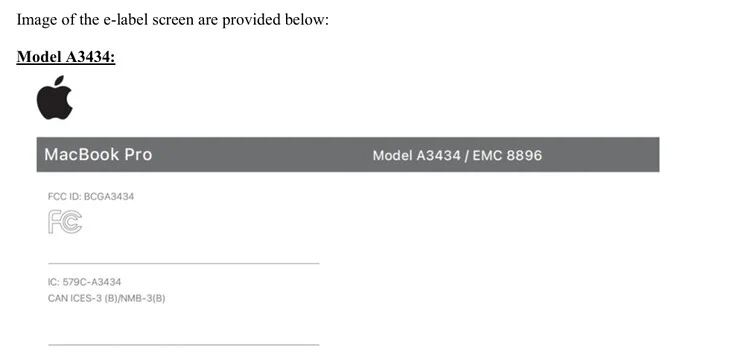
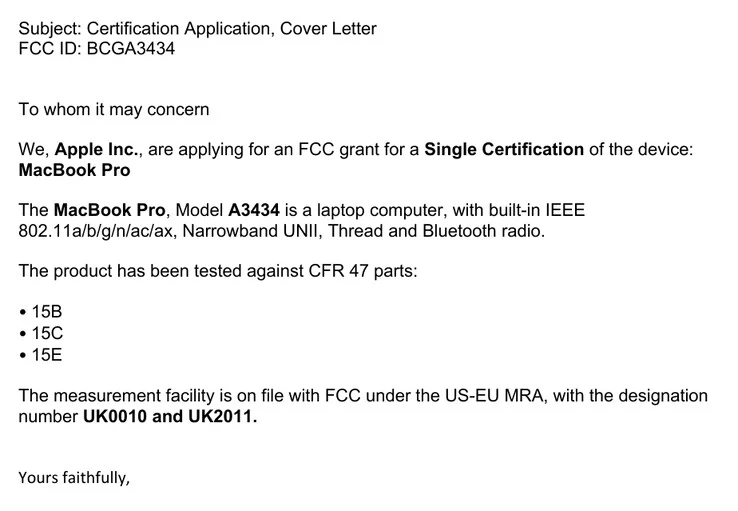
    Recently, there has been an early indication of what is thought to be an Apple M5-based laptop, spotted on the Federal Communications Commission (FCC) website in the United States. Although the regulatory agency has not shared complete images of the device, it has clearly connected the model number ‘A3434’ to an upcoming MacBook Pro. Furthermore, the FCC has shared some clues regarding what Apple may be planning for its next lineup of MacBook Pros.

    New Features in Sight

    For example, some documents refer to the Apple M5-based MacBook Pro models featuring Thread connectivity, which is the wireless standard that supports the Matter smart home protocol. This feature is absent in the current Apple M4 generation MacBook Pros but seems to be available internally. If Apple decides to enable this capability in macOS Tahoe, it could allow the new MacBook Pros to work seamlessly with smart home devices through Apple’s Home app.

    Interestingly, the integration of Thread and Matter will not happen alongside Apple upgrading its laptops to the Wi-Fi 7 standard. The initial documents from the FCC indicate that at least the machines powered by Apple M5 will continue using Wi-Fi 6E, even though Wi-Fi 7 is available for similarly equipped iPad Pro models.

    FCC via MacRumors

    Source:
    Link


  • Apple Powerbeats Fit: Secure Fit for Exercise with Wingtip Design

    Apple Powerbeats Fit: Secure Fit for Exercise with Wingtip Design

    Key Takeaways

    1. Design and Fit: The Powerbeats Fit feature “wingtips” for a secure fit during workouts and have an IPX4 rating for sweat and light rain protection.
    2. Sound Quality: They offer incredibly balanced sound, strong active noise cancellation (ANC), and a Transparency Mode for awareness in busy areas.
    3. Advanced Features: Equipped with an adaptive equalizer and 3D audio compatibility, they pause music playback when one earbud is removed.
    4. Battery Life: The earbuds have a battery life of seven hours, extending up to 30 hours with the charging case.
    5. Pricing and Availability: Priced at $199.99, available in four colors, and come with ear tips in four sizes and a three-month free trial of Apple Music.


    The latest Apple Powerbeats Fit has a similar look to the Beats Fit Pro. Apple keeps using “wingtips” to make sure they fit really well in the ear, even when working out. With an IPX4 rating, these earbuds are protected against sweat and light rain.

    Sound Quality and Comfort

    While the Powerbeats Fit often beat other earbuds when it comes to comfort and fit, Apple also claims that they provide “incredibly balanced sound” along with strong active noise cancellation (ANC) and a Transparency Mode. This mode is particularly helpful for running in busy areas, as it helps users stay aware of their surroundings, such as cars and other possible dangers.

    Advanced Features

    An adaptive equalizer utilizes five microphones to modify the sound of the fully wireless earbuds based on how they fit, ensuring optimal audio quality all the time. Additionally, the Powerbeats Fit are compatible with 3D audio and head tracking. If one earbud is taken out, music playback will automatically pause. The battery life is said to be seven hours, but it can last up to 30 hours with the charging case. The touch-sensitive button on the outside can be personalized through the Beats app.

    Pricing and Availability

    The Powerbeats Fit can be purchased now for $199.99 directly from the manufacturer’s website, and they come in orange, pink, gray, or black. Apple also provides ear tips in four different sizes, and customers can enjoy a free trial of Apple Music for three months.

    Beats by Dre’

    Source:
    Link


  • Apple Plans Multiple iPhones Before 2027, No iPhone 19 Expected

    Apple Plans Multiple iPhones Before 2027, No iPhone 19 Expected

    Key Takeaways

    1. Apple has launched four flagship iPhones this year: iPhone 17, iPhone Air, iPhone 17 Pro, and iPhone 17 Pro Max.
    2. The iPhone 17 series may be the last set of models released together for a few years.
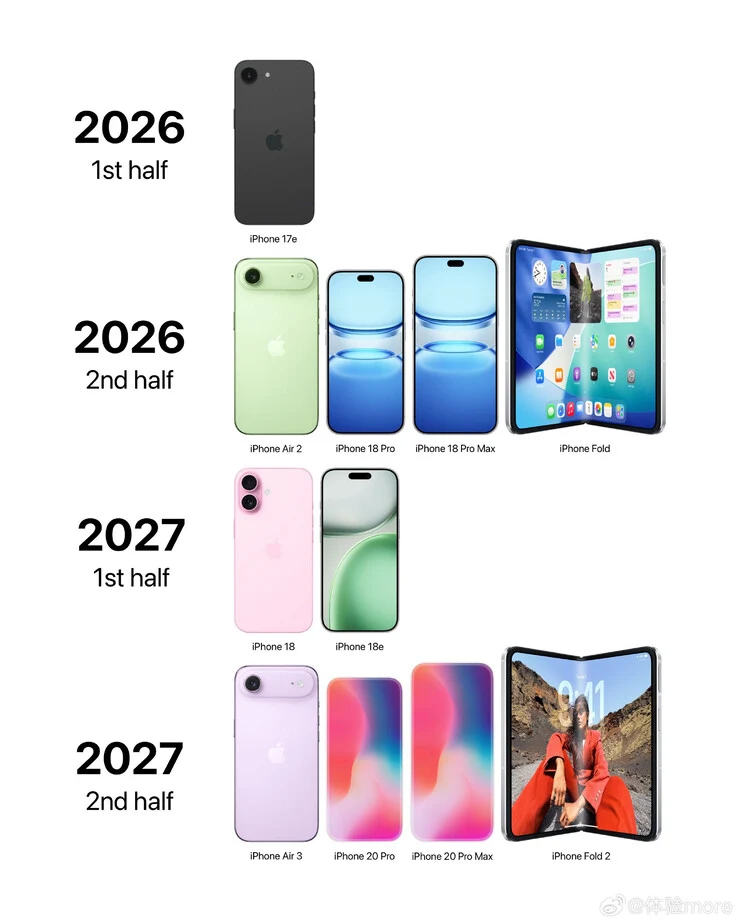
    3. In 2026, Apple plans to release only the iPhone 17e in the first half, followed by a quadruple launch in the fall featuring the iPhone 18 series.
    4. The iPhone Fold will replace the iPhone 18, which will still be available alongside the iPhone 18e in 2027.
    5. Apple is rumored to have around nine new devices set for release before mid-next year.


    Apple has maintained its tradition of launching four flagship iPhones this year, unveiling the iPhone 17, iPhone Air, iPhone 17 Pro, and iPhone 17 Pro Max. These new models come about six months after the launch of the iPhone 16e, which is currently priced at $421 on Amazon. The iPhone 17 series is believed to be the last set of models that Apple will release together for a few years.

    Future Releases

    Recent rumors indicate that Apple made its plans for the 2026 and 2027 release timelines several months ago. A well-known Weibo account, Experience More, has reported that Apple plans to launch only the iPhone 17e in the first half of next year. Then, in the fall of 2026, Apple is expected to host another quadruple flagship launch event featuring the iPhone 18 Pro, iPhone 18 Pro Max, and the possibly named iPhone Air 2.

    Changes Ahead

    Interestingly, the iPhone Fold will take the place of the iPhone 18, but it won’t completely replace it. Instead, the iPhone 18 will be available alongside the iPhone 18e in the first half of 2027. It seems that the iPhone Air 3 and iPhone Fold 2 are set to debut in the fall of 2027, along with the iPhone 20 Pro and iPhone 20 Pro Max, skipping over the iPhone 19 series entirely. In the meantime, Apple is also rumored to have around nine other new devices scheduled for release before mid-next year.

    Source:
    Link


  • Apple’s Propaganda Hides Its Battles with Consumers and EU

    Apple’s Propaganda Hides Its Battles with Consumers and EU

    Key Takeaways

    1. Major corporations, especially American tech giants, have significant control over news and user experiences, impacting consumer choices.
    2. The European Union’s Digital Markets Act (DMA) aims to reduce the dominance of these tech companies, but progress is slow due to resistance from firms like Apple.
    3. Apple employs manipulation tactics to influence consumer perceptions and pressure the EU regarding privacy and feature availability.
    4. Rival brands prove that innovation and privacy can coexist, highlighting Apple’s limitations and reluctance to embrace competition.
    5. Apple’s concerns about third-party payment systems and app safety may be more about protecting its revenue than about user privacy.


    People today are increasingly influenced by major corporations. Firms like Google and various social media platforms control the news that users encounter, while Palantir works on privatizing mass surveillance. Apple dictates which apps can be used on more than a third of smartphones across Europe. The European Union’s introduction of the Digital Markets Act (DMA) seeks to counterbalance the dominance of these American tech giants.

    Slow Progress

    Progress is indeed underway, though it is happening at a sluggish pace. This delay is largely due to companies like Apple who constantly search for ways to keep as much control as they can over their users and their finances. For instance, while installing third-party app stores is now finally an option, Apple has made it intentionally complicated. They also possess the ability to disable apps coming from alternative stores, which goes against the principles of a free market.

    Manipulation Tactics

    For years, Apple has tried to sway consumers into making choices that aren’t in their best interest as a way to pressure the EU. Just recently, Apple released a new piece of propaganda, where it openly accuses the EU for the absence of features like live translations, iPhone mirroring, and the “Places Visited” in Apple Maps in some countries. Essentially, the message suggests that “the EU is compelling Apple to compromise user privacy.”

    Alternatives Exist

    On the other hand, rival brands demonstrate that innovation and privacy can coexist. The features mentioned earlier have long been available on other platforms within the EU. Moreover, Apple is currently set to allow notifications from third-party smartwatches on iPhones by simply adding an option to the system settings. This indicates that someone at Apple realizes that empowering consumers with choices is better than limiting them while claiming that the EU is hindering the launch of new, innovative features.

    Apple has voiced concerns about being obliged to permit payment systems from other companies—is it really about privacy, or is it the 30% commission that Apple misses out on? Additionally, Apple argues that third-party app marketplaces harbor unsafe apps, much like its own App Store does. It’s quite ironic that Apple criticizes the DMA for not fostering a more competitive marketplace, especially when successful companies manipulate the rules to benefit themselves. Perhaps it’s time for Apple to reflect on its own practices.

    Source:
    Link