Tag: Apple Watch Series 11

  • Apple Watch Ultra Gets Short Update Support for No Reason

    Apple Watch Ultra Gets Short Update Support for No Reason

    Key Takeaway

    – watchOS 27 drops support for Series 6, 7, 8, and 9, requiring Series 10/11, Ultra 2/3, or SE 3.
    – Series 9 (with S9 chip) is excluded, while the same-chip Ultra 2 is supported, creating inconsistency.
    – Apple Watch software support is no longer reliable, cutting off devices after just two major updates.
    – Long-term updates, once a key advantage over competitors, are no longer guaranteed for Apple Watch.


    watchOS 27 Anounced at WWDC With New Restrictions

    Apple introduced watchOS 27 at WWDC today, which is a big new operating system update for the Apple Watch that should be coming out in the fall. Excluding the Siri AI and the new chatbot built on Google Gemini, there are not many fresh features to get excited about. But, the software support for older watches is going to be heavily cut down, which is a massive change from before.

    Which Apple Watch Models Are Compatible

    Even though watchOS 26 worked with the Apple Watch Series 6, 7, 8, and 9, as well as the first-gen Ultra and the second-gen SE, Apple has slashed support by four generations all at once. To run watchOS 27, you will need a Series 10 or Series 11 ($299 on Amazon), an Apple Watch Ultra 2 or 3, or an Apple Watch SE 3. That means the Series 9, which launched only two and a half years back, has only got two major software updates.

    Performance and Chip Similarities

    This is really bothersome, mainly because the Series 9 watch uses the exact same Apple S9 chip which is also inside the Apple Watch Ultra 2. That Ultra 2 model came out at the same time and is confirmed to work with watchOS 27, so the inconsistency is confusing. Since the S6, S7, and S8 chips from the earlier generations were practically identical, maybe there is some technical reasons for dropping support for those models.

    Long-Term Support and Consumer Trust

    Apple is leaving customers who bought a costly smartwatch just two years ago out in the cold, which shows that you cannot always count on future updates. People who purchase an Apple Watch now should not expect long-term software support anymore, which is a shame. In the smartwatch market especially, having long updates was a real plus for the Apple Watch compared to many of its rivals.

    Sources
  • Rivian Launches Apple Watch App for Vehicle Control on Your Wrist

    Rivian Launches Apple Watch App for Vehicle Control on Your Wrist

    Key Takeaways

    1. Rivian has launched a new companion app for the Apple Watch, allowing users to manage their vehicles directly from their wrists.
    2. Users can lock/unlock doors, roll down windows, and activate the alarm, with specific features varying for Gen 1 and Gen 2 Rivian owners.
    3. Gen 2 Rivian owners benefit from automatic unlocking when approaching the vehicle, using a digital key setup with compatible devices.
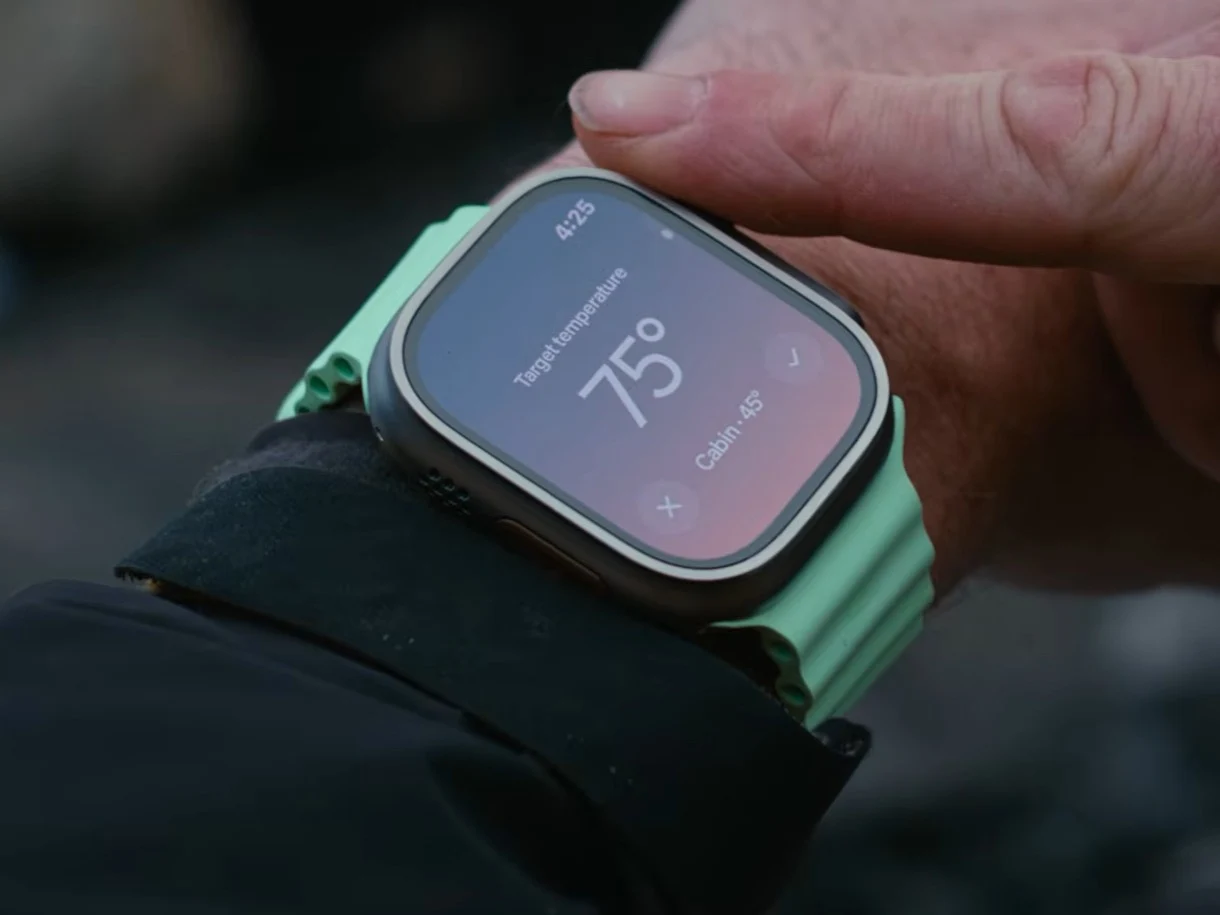
    4. The Apple Watch app includes options for precise control adjustments, such as cabin temperature and charge state, using the digital crown.
    5. Users can add a battery status complication to their watch face and select frequently used controls for quicker access, with more features expected in future updates.


    Rivian has rolled out a new update for its mobile application, which includes a companion app designed for the Apple Watch. This new feature enables users to manage their vehicles straight from their wrists, making it unnecessary to reach for their phones for simple car functions.

    Handy Features for Users

    With the Apple Watch app, users can conveniently lock or unlock their car doors and trunks, roll down the windows, or activate the alarm. The functionality differs depending on whether the user owns a Gen 1 or Gen 2 Rivian. For Gen 1 owners, they can simply tap the lock symbol on their watch to manage their vehicle’s security.

    Gen 2 Advantages

    For those with a Gen 2 Rivian, there’s no need for manual control as the car will automatically unlock as the user approaches, assuming they have set up a digital key. This requires an iPhone and an Apple Watch equipped with UWB, like the iPhone 17 and the Apple Watch Series 11, which is currently available on Amazon for $329.

    Enhanced Control Options

    The press release and product demonstration show that users can utilize the digital crown on the Apple Watch for precise adjustments, such as tweaking cabin temperature or managing the charge state. Additionally, users can add a battery status complication to their chosen watch face and select up to four frequently used controls for quicker access. Rivian has indicated that more features will be rolled out to the Apple Watch app in the future.

    To access the app, you should update (or download) the latest version of the Rivian app, which will automatically include the companion Apple Watch app.

    Source:
    Link


  • Garmin Patents Inertial Scrolling Digital Crown for Smartwatches

    Garmin Patents Inertial Scrolling Digital Crown for Smartwatches

    Key Takeaways

    1. Garmin is exploring digital crown technology for wearable devices, but source transparency is lacking in reports.
    2. A newly discovered patent titled ‘rotatable control button assembly for a wearable device’ supports earlier claims about this technology.
    3. The patent describes a control button assembly with a rotating crown and a Hall effect sensor for inertial scrolling.
    4. The design of the control button assembly resembles Garmin’s current Fenix series, but patents don’t guarantee final product realization.
    5. The timeline for turning this patent into a mass-produced device is uncertain, making claims of an imminent release misleading.


    Yesterday, fresh details came to light about Garmin’s planned digital crown technology. According to Gadgets & Wearables, the website didn’t disclose where the information came from in their report. This lack of source transparency was also true for the earlier statements made a few weeks ago.

    Patent Speculation

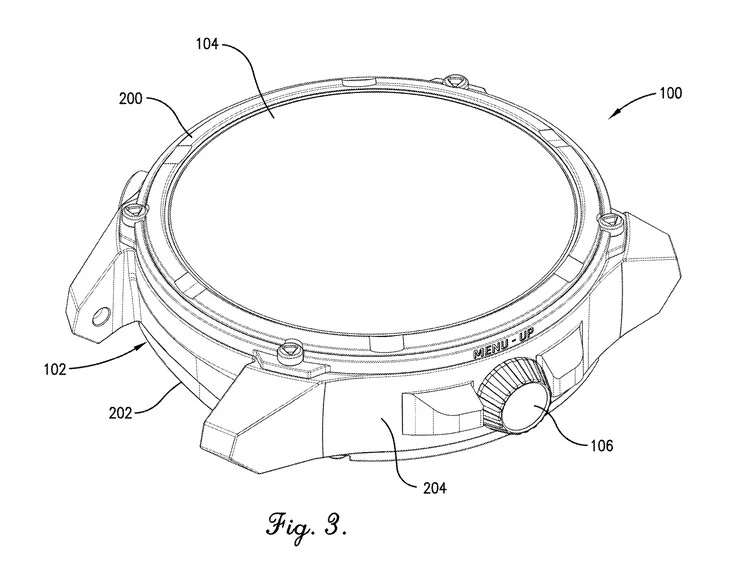
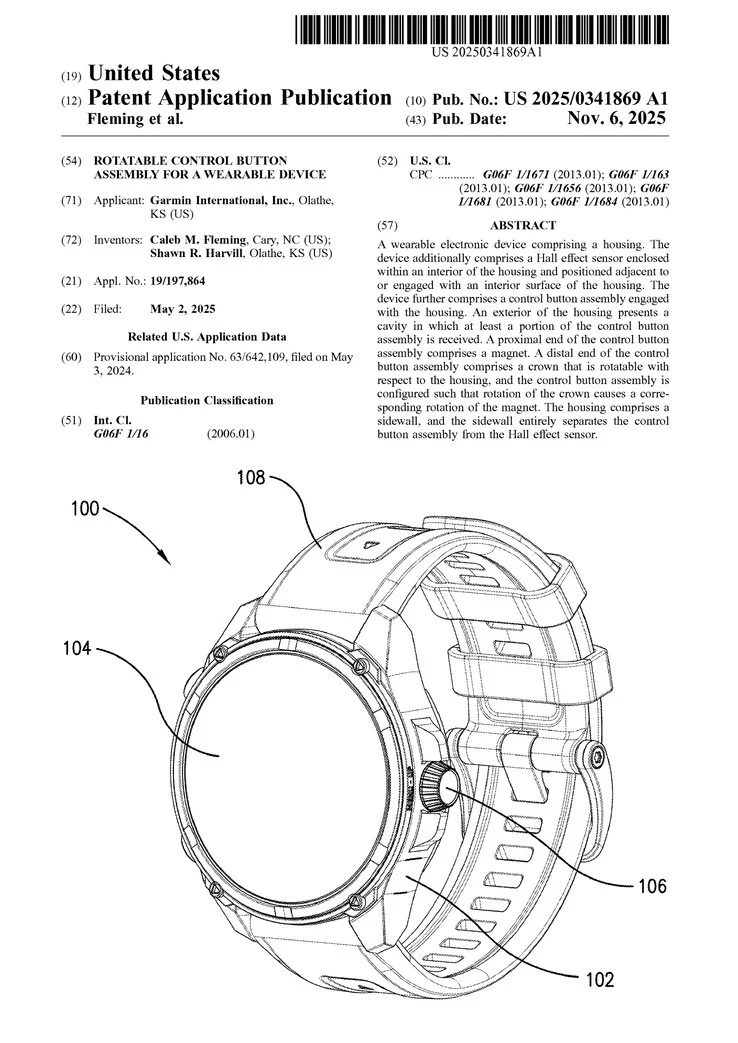
    At first, we thought that a recent patent might be the basis for Gadgets & Wearables’ claims. Regrettably, searches on Justia and similar sites yielded no useful findings. Nevertheless, Wearable has recently found the patent that likely supports many of the earlier assertions made by Gadgets & Wearables. This patent, titled ‘rotatable control button assembly for a wearable device’ and assigned the number 20250341869, provides a description of the control button as follows:

    A wearable electronic device, which consists of a body. In addition, the device contains a Hall effect sensor that is placed within the body’s interior and is either close to or in contact with an inner surface of the body.

    Control Button Assembly

    Moreover, the device includes a control button assembly that is attached to the body. The outer part of the body has a hollow section where at least part of the control button assembly fits. The control button assembly has a magnet at its proximal end.

    At the opposite end, the control button assembly has a crown that can rotate in relation to the body, and the assembly is designed so that turning the crown results in a corresponding movement of the magnet. The body also has a sidewall that completely separates the control button assembly from the Hall effect sensor.

    This patent additionally confirms that the assembly includes a sensor to facilitate inertial scrolling, similar to the existing Apple Watch Series 11 and Pixel Watch 4 (currently priced at $349 on Amazon). As mentioned before, the drawings in the patent are very similar to the design language of Garmin’s current Fenix series. It’s important to note, however, that patent submissions seldom reflect the final product.

    Reality Check

    In the same vein, any implication that this patent is on the verge of being realized is a bit misleading. Generally, patents may take many years to transform into mass-production devices, if they ever do. Therefore, it would be surprising if Garmin were to release this hardware ‘soon,’ as prior reports have suggested.

    USPTO via Wareable

    Source:
    Link


  • Vivo Watch GT 2: Smartwatch with 33 Days Battery & iOS Support

    Vivo Watch GT 2: Smartwatch with 33 Days Battery & iOS Support

    Key Takeaways

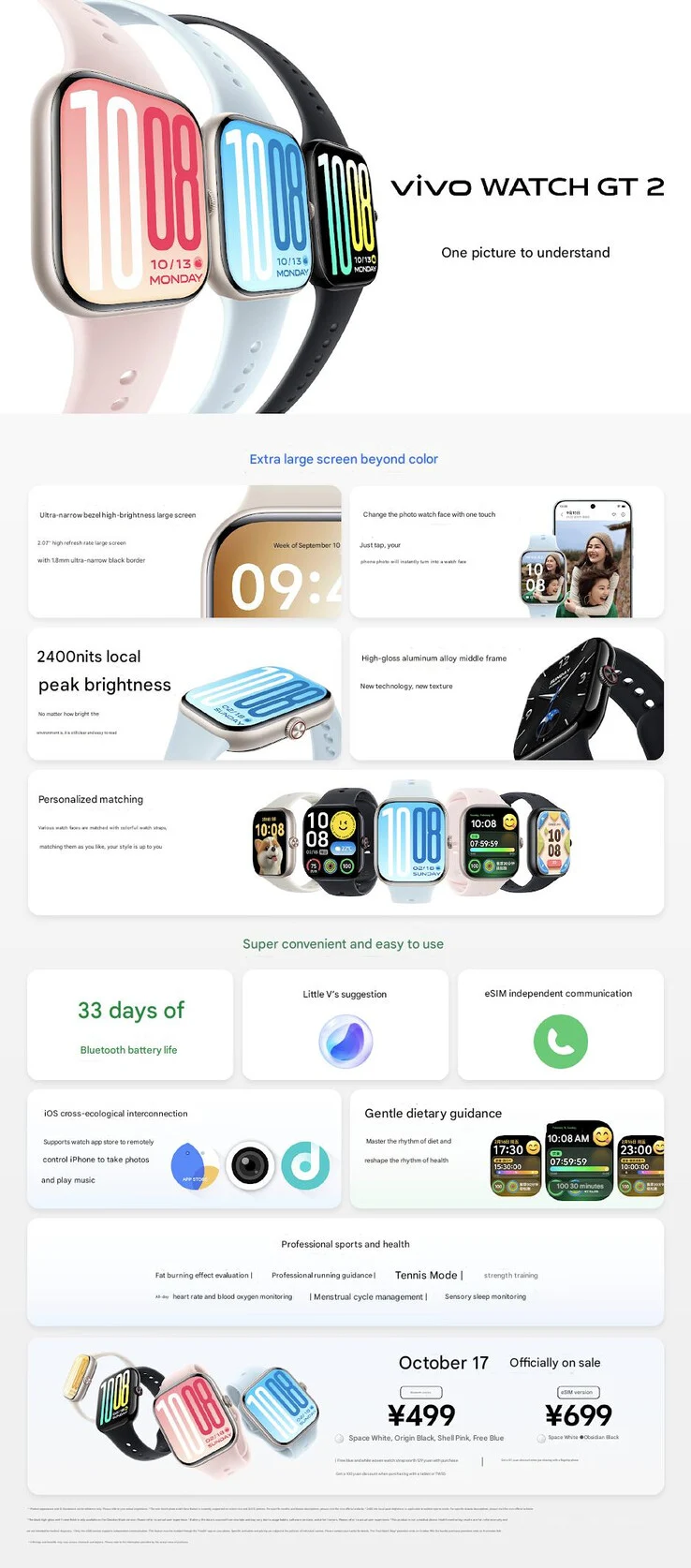
    1. Design and Compatibility: The Watch GT 2 retains the squircle shape of its predecessor and can connect to both iPhones and Vivo phones simultaneously.

    2. Display and Battery Specs: It features a 2.07-inch screen with a resolution of 514 x 432 pixels, 60 Hz refresh rate, and up to 2,400 nits brightness. Battery life varies by model, with the Bluetooth version lasting up to 33 days in power-saving mode.

    3. eSIM vs. Bluetooth Model: The eSIM model has a smaller battery capacity (595 mAh) and offers around 8 days of battery life, compared to the Bluetooth model’s 14-33 days depending on usage.

    4. Health Tracking Features: Both versions include sleep and cycle tracking, along with built-in microphones and speakers for calls without needing a smartphone.

    5. Pricing and Availability: The Watch GT 2 starts at CNY 499 (around $70) for the Bluetooth model and goes up to CNY 699 (approximately $98) for the eSIM model, with no global availability details announced yet.


    Vivo has made some updates to its smartwatch lineup with the introduction of the Watch GT 2, which was unveiled today in China alongside the new X300 and X300 Pro smartphones, as well as the Pad 5e tablet and other gadgets. Building on the Watch 5 that debuted earlier this year, the Watch GT 2 keeps the squircle-shaped design of its earlier model.

    Similarities to Apple Watch

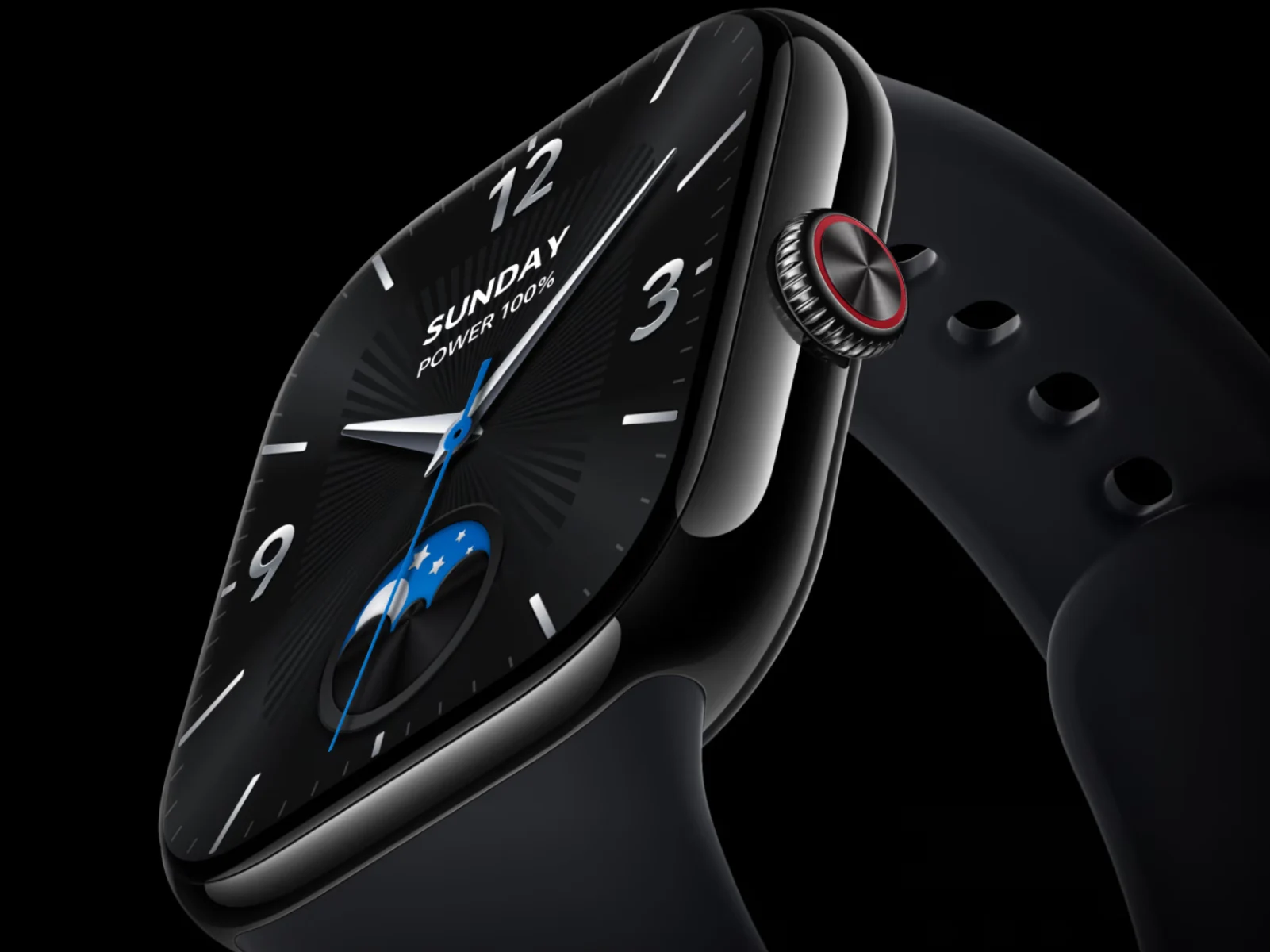
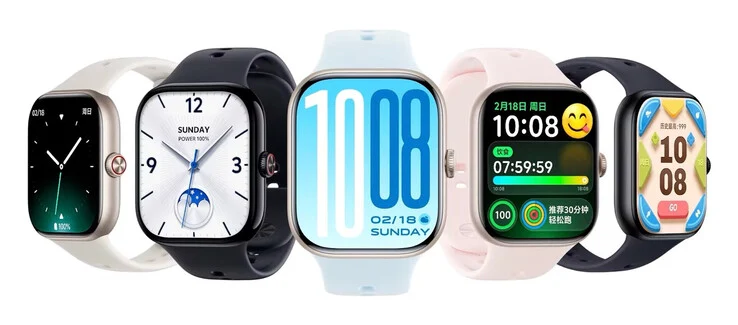
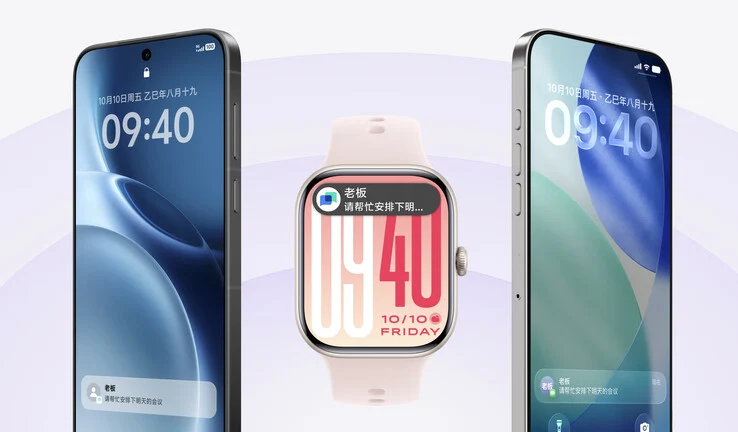
    The Watch GT 2 closely resembles the Apple Watch Series 11 (currently priced at $419.99 on Amazon). It can connect to both an iPhone and a Vivo phone at the same time. However, you’ll need a Chinese Apple account to make this work. When this feature is activated, the Watch GT 2 can show notifications from both devices at once.

    Display and Battery Life

    Vivo claims that the Watch GT 2 has a 2.07-inch screen housed in an aluminum body. The display offers a resolution of 514 x 432 pixels and a refresh rate of 60 Hz, reportedly reaching a brightness of 2,400 nits in bright environments. Although Vivo markets the Watch GT 2 with a 695 mAh battery, the eSIM model has a reduced capacity of 595 mAh.

    In simpler terms, the eSIM version will have less battery life compared to the Bluetooth model. The latter can last up to 33 days in power-saving mode, but that drops to 17 days under normal usage and 14 days if the always-on display (AoD) is active. On the other hand, the eSIM model only provides around 8 days of battery life with its LTE modem running.

    Features and Pricing

    Regardless of the model, both versions offer sleep and cycle tracking, and they come equipped with microphones and speakers for making calls without needing to grab your paired smartphone. The Vivo Watch GT 2 starts at CNY 499 (approximately $70) and goes up to CNY 699 (around $98) for the eSIM variant. Vivo has yet to announce any details about global availability, unlike the X300 series which also debuted today.

    Source:
    Link


  • Apple Removes Carbon-Neutral Labels Amid EU Regulations

    Apple Removes Carbon-Neutral Labels Amid EU Regulations

    Key Takeaways

    1. Apple removed “carbon-neutral” labels from products globally, including Apple Watch Series 11, Apple Watch Ultra 3, and M4 Mac mini, following a German court ruling.
    2. The change was prompted by accusations of “greenwashing” from the environmental group Deutsche Umwelthilfe and new EU regulations effective in September 2026.
    3. Apple originally claimed carbon neutrality by reducing emissions by 75% and offsetting the remaining 25% with carbon credits, including projects like tree planting in Paraguay.
    4. Ecologists raised concerns about the sustainability of Apple’s eucalyptus monoculture approach and its impact on biodiversity and water resources.
    5. Despite label removal, Apple maintains that its products meet environmental standards and aims for carbon neutrality across its global supply chain by 2030.


    Apple has recently taken down its “carbon-neutral” labels from product pages and packaging all over the globe. This change impacts the Apple Watch Series 11, Apple Watch Ultra 3, and M4 Mac mini. The updates came into effect last month, right after Apple’s iPhone event in September 2025. Notably, the Apple Watch was the initial product line to sport this label back in 2023, which was later adopted by Mac mini versions.

    Legal Issues Prompt Changes

    The shift was prompted by a German court’s decision in August 2025, which ruled that Apple could no longer market the Apple Watch as “carbon-neutral.” The environmental group Deutsche Umwelthilfe accused Apple of allegedly “greenwashing” its products, thus misleading buyers. New regulations from the EU, effective in September 2026, will prohibit companies from using “carbon-neutral” labels if they depend on carbon credits or offset projects. Initially, Apple removed these labels in Germany and then extended the action globally to prevent any confusion among consumers.

    Apple’s Claims and Partnerships

    Reportedly, Apple claimed it reached its carbon-neutral status by cutting emissions by 75 percent, while the remaining 25 percent was offset through carbon credits. At that time, Apple stated that its products fulfilled rigorous environmental standards: utilizing 100 percent clean energy for manufacturing and product use, incorporating at least 30 percent recycled or renewable materials by weight, and ensuring that at least half of its shipments were made by land instead of air. The rest of the emissions were offset using “high-quality carbon credits” from initiatives like the Paraguay tree planting project. The company is believed to have teamed up with Forestal Apepu to create fast-growing eucalyptus forests on previously deforested land.

    Environmental Concerns

    However, ecologists have raised concerns regarding Apple’s eucalyptus monoculture approach, arguing that it poses a risk to biodiversity. Additionally, it’s important to highlight that these carbon offset plantations require significant water resources. The German court pointed out that Apple had not secured 75 percent of the land lease for the Paraguay project by 2029, leaving the contract renewal in question and bringing up concerns about the project’s long-term sustainability.

    Internally, Apple may still regard the affected products as carbon-neutral, even though the public labels have been removed. A spokesperson for the company stated that this choice was made to adhere to upcoming regulations, not as a reflection of any changes in their environmental efforts. Apple has reaffirmed its aim to achieve carbon neutrality throughout its entire global supply chain by 2030, claiming that all its products are designed with environmental factors in mind, no matter the new EU marketing limitations.

    Source:
    Link


  • Huawei Watch Ultimate 2 Leaked: Key Upgrades Revealed

    Huawei Watch Ultimate 2 Leaked: Key Upgrades Revealed

    Key Takeaways

    1. Samsung updated the Galaxy Watch Ultra for 2024, priced at $599.99 on Amazon.
    2. Apple launched the Watch Ultra 3 and more affordable Watch Series 11 this week.
    3. Huawei is set to release the Watch Ultimate 2, along with the Watch GT 6 and GT 6 Pro.
    4. The Watch Ultimate 2 will feature a new bezel design and a silicon-carbon battery with 37% improved energy density.
    5. The expected launch date for Huawei’s new smartwatches is September 19, 2025, with the Watch Ultimate 2 priced around €899 (~$1,054).


    Samsung updated the Galaxy Watch Ultra this year with a small change from the 2024 version (curr. $599.99 on Amazon). In a similar way, Apple launched the Watch Ultra 3 just this week, along with more affordable and compact Watch Series 11 smartwatches. Now, it appears that Huawei is getting ready to follow suit with not only the Watch GT 6 and Watch GT 6 Pro but also the Watch Ultimate 2.

    Similar Features Expected

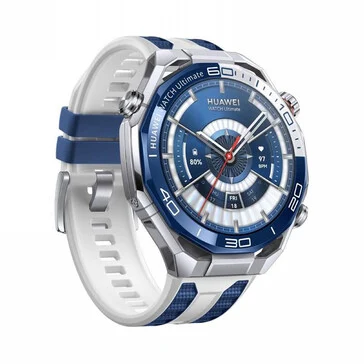
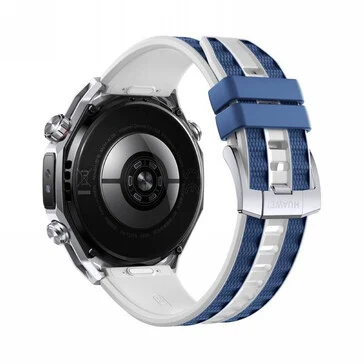
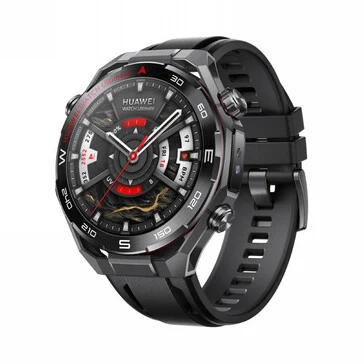
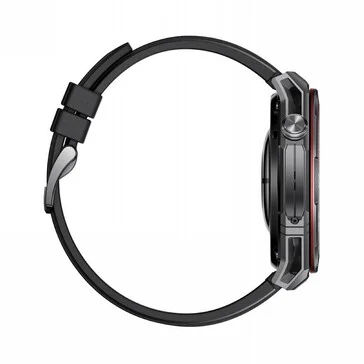
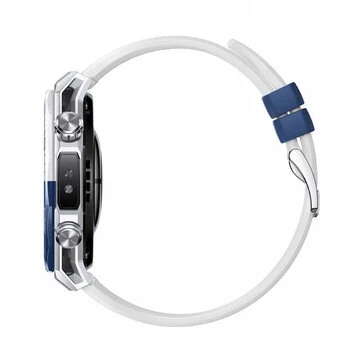
    The Watch Ultimate 2 is rumored to feature nearly the same specifications as the Watch Ultimate that Huawei released over two years ago. For example, it will have a 48.5 mm case size, three prominent hardware buttons, and a design that harks back to classic sports watches, along with minimal display bezels.

    New Design Elements

    However, Huawei has decided to go with a new bezel design for this version, which is also marked with ‘Huawei Watch Ultimate’ branding. It’s said that the Watch Ultimate 2 will come equipped with a silicon-carbon battery that boasts a 37% improved energy density and a 65% increase in overall capacity compared to the 530 mAh battery used in the existing Watch Ultimate. Currently, insider Roland Quandt predicts that the Watch Ultimate 2 will hit the market at a price of €899 (~$1,054) and will be available in two color options.

    Launch Timeline

    The same insider believes that Huawei plans to unveil the smartwatch globally alongside the more affordable Watch GT 6 and Watch GT 6 Pro around September 19, 2025.

    Source:
    Link


  • Apple Watch Series 12 Code Leak: Discover Two Major Upgrades

    Apple Watch Series 12 Code Leak: Discover Two Major Upgrades

    Key Takeaways

    1. The Apple Watch Series 11 is expected to be revealed in September, with minimal new features and a design similar to Series 10.
    2. A potential new feature for high blood pressure warnings may be introduced in Series 11, but significant updates are likely reserved for Series 12 next year.
    3. Possible design changes may include a redesigned exterior and additional sensors for improved measurements and battery life.
    4. There are indications of Touch ID being integrated into the smartwatch, possibly in the side button or beneath the display, enhancing security for Apple Pay.
    5. The upcoming Series 12 will feature a new processor (T8320), while Series 9, 10, and 11 share the same processor (T8310).


    The Apple Watch Series 11 is expected to be revealed in September, with only a few new features anticipated. Reports indicate that Apple plans to keep the design and processor from the Series 10, but there may be an introduction of a warning feature for high blood pressure. A more significant update is likely not until the Apple Watch Series 12 next year.

    Potential Design Changes

    According to a recent report, the upcoming smartwatch might showcase a redesigned exterior and added sensors, aiming to provide more accurate and efficient measurements. This could lead to a slight improvement in battery life. Macworld has uncovered hints in Apple’s internal coding that refer to an Apple Watch featuring “AppleMesa,” which suggests the possibility of Touch ID being included.

    Touch ID Integration

    At least, this implies that Apple is actively working on a prototype smartwatch with a built-in fingerprint sensor. However, it’s still uncertain if this feature will be ready for release next year. Touch ID might be incorporated into the side button or could be hidden beneath the display. This fingerprint technology could enhance the security for Apple Pay transactions and replace the four-digit PIN that users must enter every time they take off their Apple Watch.

    New Processor Insights

    The internal code also indicates a new processor. While the Apple Watch Series 9, 10, and 11 are categorized under the codename “Watch7” and use the same processor, the upcoming Series 12 is referred to as “Watch8.” The processor for the new model is designated as “T8320,” which is different from the “T8310” used in the previous three generations.

    Source:
    Link


  • Apple Watch Series 11 and Ultra 3 May Feature Same Processor

    Apple Watch Series 11 and Ultra 3 May Feature Same Processor

    Key Takeaways

    1. Apple will focus on the iPhone 17 series at the September launch event, with the iPhone 17 Air expected to generate the most interest due to its ultra-slim design.
    2. The event will also showcase the Apple Watch Series 11 and Apple Watch Ultra 3, following the previous year’s format.
    3. The new smartwatches are not expected to have major upgrades in performance or battery life.
    4. Both smartwatch models will use a processor called ‘T8310’, which is a rebranding of previous chipsets.
    5. The Series 11 and Ultra 3 are likely to maintain the same specifications as their predecessors, including 64 GB of storage and 2 GB of RAM.


    Apple is likely to focus on the iPhone 17 series during its launch event in September. Out of the four expected iPhones, the iPhone 17 Air is anticipated to attract the most interest due to its ultra-slim design. The event will also likely showcase the Apple Watch Series 11 and Apple Watch Ultra 3, similar to how the Watch Series 10 and Watch Ultra 2 (current price: $649.99 on Amazon) were featured last year.

    Upcoming Smartwatch Specs

    As reported by MacRumors, the new smartwatches from Apple are not expected to have significant upgrades in performance or battery life. The site mentions that both models are equipped with a processor known internally as ‘T8310’. This name doesn’t provide much insight by itself, but it’s interesting to note that Apple has used the same code for its S9 and S10 chipsets.

    Rebranding Strategy

    In essence, the findings from MacRumors suggest that Apple is choosing to rebrand its smartwatch system-on-chip (SoC) for the third consecutive year. This is similar to what the company did with the Apple S6, S7, and S8. It is also believed that both the Series 11 and Ultra 3 will maintain the same specifications as their predecessors, including 64 GB of storage and 2 GB of RAM, along with features like Bluetooth 5.3, U1 UWB, and Wi-Fi 4 connectivity.

    Source:
    Link


  • Apple iPhone 17 Launch Date Leaked by German Telecom Sources

    Apple iPhone 17 Launch Date Leaked by German Telecom Sources

    Key Takeaways

    1. The iPhone 17 launch event is scheduled for Tuesday, September 9, 2024.
    2. Four new iPhone models are expected: iPhone 17, iPhone 17 Air, iPhone 17 Pro, and iPhone 17 Pro Max.
    3. The base iPhone 17 model may feature a 120 Hz OLED display.
    4. Major upgrades, including the Apple A19 Pro chip and a 48 MP telephoto camera, are likely exclusive to the Pro versions.
    5. Other products expected to debut at the event include Watch Series 11, Watch Ultra 3, new Watch SE, Apple TV 4K, and AirPods Pro 3.


    Back in July, Bloomberg’s Mark Gurman mentioned that the iPhone 17 launch event is set for the week of September 8. A German site, iPhone-Ticker, has now revealed the specific date for the event, citing sources from local telecom companies. The iPhone 17 is expected to be officially revealed on Tuesday, September 9.

    Event Timing and Context

    This date aligns with the iPhone 16 launch, which took place on September 9, 2024, although that year it was a Monday. If iPhone-Ticker’s information is accurate, we can anticipate the unveiling of the new iPhone models in precisely 35 days. Four smartphones are likely to be introduced: the standard iPhone 17, iPhone 17 Air, iPhone 17 Pro, and iPhone 17 Pro Max.

    Expected Specifications

    The base model might finally come with a 120 Hz OLED display, but several major upgrades, such as the powerful Apple A19 Pro chip, a 48 MP telephoto camera, and an extra camera shutter button, appear to be exclusive to the “Pro” versions. The iPhone 17 Air is said to have a slim profile of just 5.5 mm (0.22 in), but this extreme thinness means it will have a smaller 3,000 mAh battery and only one rear camera. Additionally, Apple is likely to introduce the Watch Series 11, Watch Ultra 3, and a new Watch SE at the same event. There might also be a new Apple TV 4K and AirPods Pro 3 debuting on that day.

    Source:
    Link


  • Apple’s 2025 Roadmap: Watch SE Redesign, iPhone Air, M4 Mac Studio

    According to Bloomberg analyst Mark Gurman, 2025 is set to be a significant year for Apple. Gurman has a solid track record for providing accurate insights and leaks about Apple’s various products. His most recent edition of the Power One Newsletter discusses what we can look forward to with the iPhone, iPad, and Mac in 2025, offering a succinct overview of Apple’s plans along with some intriguing new details.

    Upcoming iPhone Launch

    The Apple product lineup for 2025 will kick off with the iPhone SE of 2025, codenamed V59. Rumors suggest that it will not be called iPhone SE 4 or iPhone SE 2025, but instead, it will be known as the iPhone 16E. While Gurman doesn’t specifically mention the name of this new budget-friendly iPhone, he does confirm that it will feature a redesign based on the iPhone 14, including Face ID and Apple Intelligence capabilities. The price is expected to increase slightly, but the older iPhone SE 2022 might still draw in customers in emerging markets, which may not please Apple, per Gurman.

    New MacBook Air and iPads

    Coming soon after the iPhone launch, likely in the first quarter but not in January, are the 13-inch and 15-inch MacBook Air models, codenamed J713 and J715. These are already in production and will feature the Apple M4 chip. Gurman anticipates that Apple will keep the M2 MacBook Air models available while replacing the current M3 versions with the new ones. Around the same time, new entry-level iPads (codenamed J481 and J482) are also expected, equipped with the Apple A17 Pro chip, 8 GB of RAM, and support for Apple Intelligence, matching the current iPad Mini’s capabilities.

    Spring Product Releases

    In spring, Apple is set to unveil two new iPad Magic Keyboards (R307 and R308) alongside refreshed iPad Air models, which will likely receive an upgrade to the Apple M4 chip, as an M3 launch wouldn’t be logical. This will bring the iPad Air models closer to the iPad Pro range. Gurman notes that the iPad Pro will not see an upgrade until the Apple M5 is released, either late in 2025 or early in 2026. The model numbers for the iPad Airs set for 2025 are J607, J608, J637, and J638.

    Upgrades Coming for Mac Studio and More

    A Mac Studio upgrade is on the horizon for the first half of 2025, featuring either the M4 Max or M4 Ultra chip, which would put it ahead of the Mac Mini with its M4 Pro chip. Gurman also mentions a new version of the Mac Pro, though details remain unclear. The AirTags 2 (codenamed B589), which have been discussed multiple times, are also expected to launch soon after the spring announcements. New MacBook Pro M5 models might debut at the end of 2025, but a significant redesign is likely postponed until 2026, which marks the 20th anniversary of the MacBook Pro.

    Excitement in September

    September, traditionally known as Techtember, will likely be busy for Apple, featuring new iPhones and Apple Watches. Gurman suggests that this year could include surprises, with a redesign for both the Apple Watch SE and the iPhone 17 lineup. He hints that Apple could call the new ultra-slim iPhone 17 either the “iPhone Air” or “iPhone 17 Air.” This model is expected to utilize Apple’s first in-house modem and could pave the way for future foldable devices, as thinner components are necessary for that. The iPhone 17 Air should feature the Apple A19 SoC, and it might rely on a sensor for its camera, similar to the iPhone SE.

    Health Features on the Apple Watch

    Gurman envisions a fresh aesthetic for the Apple Watch SE, although specifics are still vague. Meanwhile, the Apple Watch Series 11 and Apple Watch Ultra 3 are likely to receive significant hardware upgrades while maintaining their current designs. The Ultra Watch is anticipated to include satellite connectivity and 5G RedCap access, and both the Series 11 and Ultra 3 models are expected to finally feature high blood pressure detection. In the long run, Apple plans to enhance the health functionalities of its smartwatches and implement an AI-based training system.

    Updates and Future Products

    Gurman also foresees updates for long-overdue products like the HomePod mini and Apple TV Box in the latter half of the year. However, prospects look less bright for the Apple Vision Pro, which seems unlikely to receive a successor soon. There are indications of a second-generation model in 2026 using the Apple M5, but a more affordable, simplified version (codenamed N107) is seen as more probable. Smart glasses reminiscent of Ray-Ban Meta might also be on the table, but not until 2026.

    One lingering question is about the new smart home tablet, which has been mentioned in various reports. Initially expected to launch in early 2025, it now seems delayed due to software issues (codenamed Pebble), which will integrate closely with iOS 18.4 or even iPhone 19, based on a refined version of Siri. Consequently, this AI hub is now likely pushed to the second half of 2025 or possibly early 2026, when both a more advanced Siri and a Face ID-enabled doorbell might be introduced.

    Source:
    Link