Category: Software

  • Kamuriki Linux 4.00: Windows-Like Experience Now Available

    Kamuriki Linux 4.00: Windows-Like Experience Now Available

    Key Takeaways

    1. Kamuriki Linux 4.00 offers a user-friendly interface with a classic Windows-like LXQt theme and Wine compatibility.
    2. The update is available only as an installation ISO, requiring a complete system installation from version 3.00.
    3. It features the DEB package manager, Calamares installer, and has low minimum system requirements for installation.
    4. The software bundle includes popular applications like LibreOffice, Firefox ESR, and VLC, along with support for multiple file systems.
    5. An upgrade path from version 3.00 to 4.00 is being planned for future release, allowing users to upgrade without a full reinstallation.


    Kamuriki Linux, a distribution derived from Debian, seeks to provide a user-friendly interface for those accustomed to Windows. With a classic Windows-like LXQt theme and the Wine compatibility layer, it has released a significant update. This version, known as 4.00, is only offered as an installation ISO, lacking a live mode option. Unfortunately, users of version 3.00 are unable to upgrade to 4.00 directly; they must perform a complete system installation to experience the new features.

    Key Features of Kamuriki Linux 4.00

    The latest Kamuriki Linux 4.00 includes the DEB package manager, the Calamares installer, and LXQt as the main desktop environment. The ISO file is about 5.5 GB in size and has very low minimum system requirements. These requirements include a 64-bit processor running at 512 MHz or faster, 512 MB of RAM (though at least 1 GB is recommended), 128 MB of video memory (256 MB recommended), a minimum screen resolution of 720p, and 32 GB of disk space for proper setup. Besides the free version, there’s a professional support edition available for 3,000 Japanese yen (excluding taxes), which is approximately $20.31.

    Software and Compatibility

    This Debian-based distribution utilizes systemd for its initialization process and provides support for file systems like Btrfs, ext4, and XFS. The software bundle is quite extensive, featuring notable applications such as LibreOffice 25.2.3, 7-Zip 24.09, bash 5.2.37, Firefox ESR 128.14.0, VLC 3.0.21, and vim 9.1, among others. For those who prefer a graphical interface for managing applications, Kamuriki includes the Discover Software Center. Meanwhile, command line enthusiasts can make use of the nako command tool.

    Future Upgrade Path

    Finally, it’s important to note that an upgrade path from version 3.00 to 4.00 without needing to reinstall the entire system is being considered and is expected to be available down the line.

    Source:
    Link


  • Linux Mint 22.2 Released with Some Old Bugs Still Present

    Linux Mint 22.2 Released with Some Old Bugs Still Present

    Key Takeaways

    1. Linux Mint 22.2 “Zara” has several bugs despite being labeled as stable, affecting all main versions of the distribution.
    2. Nvidia users with older GPUs face crashes when using the 470 driver, and the HWE kernel 6.14 has issues with VirtualBox.
    3. ZFS support has been removed from the installer due to low user demand, and graphics card issues may cause system freezes during boot.
    4. The incorporation of Pipewire as the new sound server may lead to sound stuttering over HDMI on certain hardware setups.
    5. Sticky Notes for MATE is reported to be non-functional, and users experience problems with deleting icons related to file actions.


    While the recent update was intended to be the stable release of Linux Mint 22.2 “Zara,” it appears to have several bugs hidden within. Beyond user feedback, the official release notes also mention some issues that should not exist in software labeled as “stable.” All three main versions of this distribution seem to be encountering similar challenges.

    Nvidia Users Struggle

    One of the most frustrating issues, particularly for Nvidia users with older GPUs using the 470 driver, involves crashes. Additionally, the HWE kernel 6.14, included with all three Linux Mint versions, presents problems with VirtualBox. For the time being, the best option is to continue using Mint 22.1, as it comes with the more reliable 6.8 LTS kernel.

    ZFS Support Removed

    The installer has removed ZFS support due to its low usage among users. During the boot process, certain graphics cards may cause the system to freeze, and users can resolve this by selecting the “Compatibility Mode” boot option.

    Pipewire Sound Issues

    Given that Linux Mint 22.2 incorporates Pipewire, this new sound server could lead to problems on specific hardware setups. One notable issue is the sound stuttering over HDMI, which is currently on the list for fixes.

    In the Linux Mint forum, one user mentioned that Sticky Notes for MATE is “in a non-working state” and also pointed out that any actions related to files result in an inability to delete the icons created by those actions.

    If you use Linux Mint and are experiencing other issues or can confirm any of the ones mentioned above, please let us know in the comments below.

  • Nova Launcher to Shut Down Permanently: What You Need to Know

    Nova Launcher to Shut Down Permanently: What You Need to Know

    Key Takeaways

    1. Nova Launcher is being discontinued, with the last update released in May 2024.
    2. There are no plans for an open-source release, despite earlier promises.
    3. Nova was a leading third-party launcher, offering extensive customization options for Android users.
    4. Users are encouraged to export their layouts and consider alternative launchers like Lawnchair, Niagara, or Smart Launcher.
    5. The discontinuation of Nova Launcher highlights the unpredictability of app availability and the impact on long-time users.


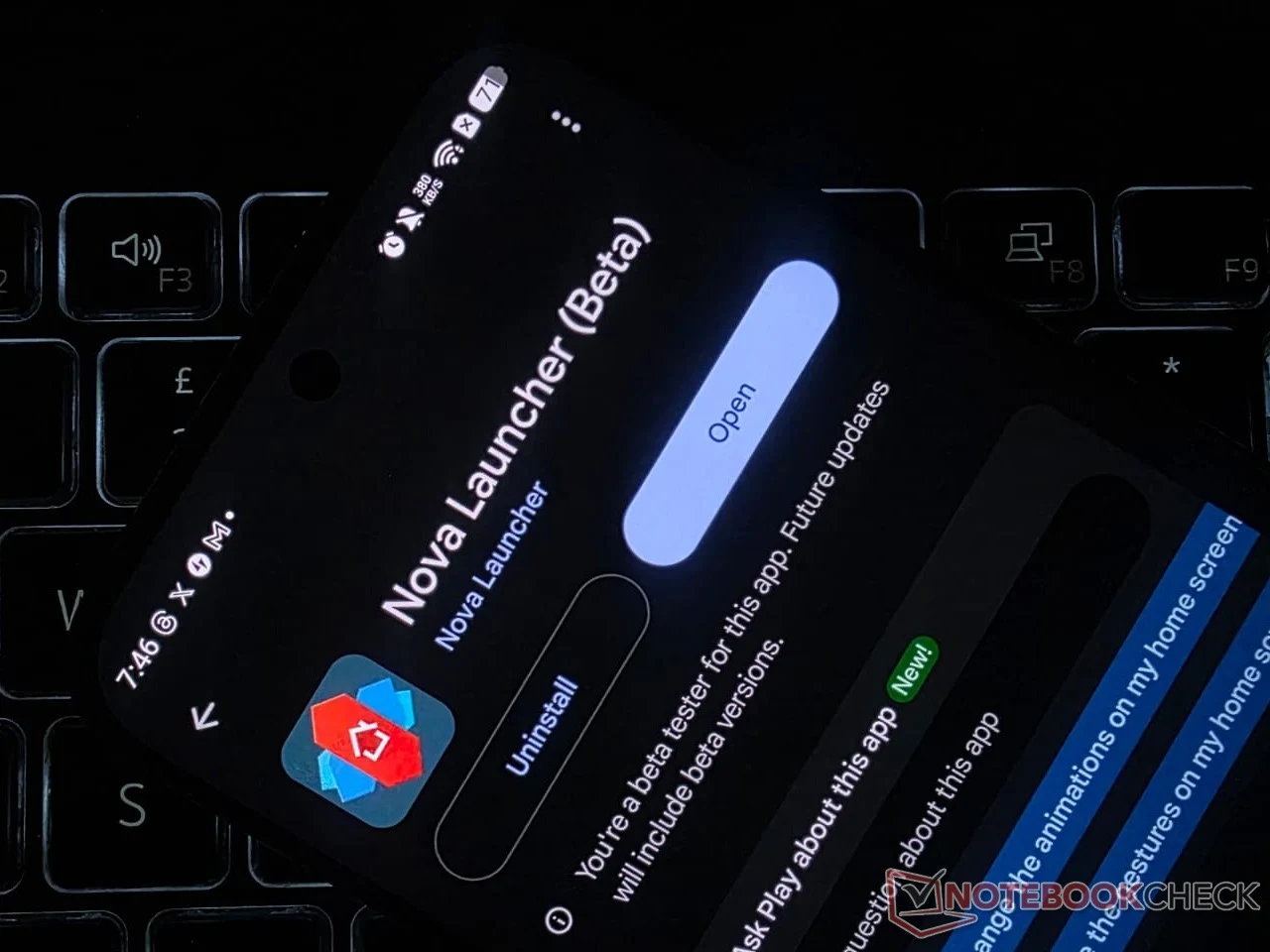
    I woke up to the shocking news that Nova Launcher is being discontinued. As a person who frequently tests new phones, my first action is to download Nova Launcher and set up my layout. The end of Nova feels really personal to me. On September 6, 2025, Kevin Barry, the creator of Nova, announced that he has departed from Branch, the company that bought Nova in 2022, and that all development on the app will cease.

    No Open-Source Future

    There are no plans for an open-source release anymore, as he was instructed to stop working on it, even though Branch had previously promised that the code would be shared with the community if he ever left. While Nova can still be downloaded and used, it will eventually fail to function properly as Android updates continue. Nova was a key player among third-party launchers on Android, giving users customization options for their home screens that stock launchers simply didn’t offer. I was dependent on Nova’s grid settings, gestures, icon packs, and its reliable performance across various devices. Whenever I transitioned to a new phone, Nova made the experience feel like home.

    A Sad Farewell

    By 2024, Branch had terminated most of its developers, leaving Barry as the sole person working on the app. The final update was released in May 2024. Many users took to Reddit and other forums to express their sadness and appreciation. One user shared, “Nova has been part of my daily life since my first smartphone… Thanks for all those years of hard work.” Another user simply commented, “This is very sad. Nova is iconic.”

    At this moment, Nova still functions, but it’s wise for users to export their layouts and consider alternatives like Lawnchair, Niagara, or Smart Launcher. I assumed that Nova would always be available and didn’t really think about what might happen if Barry chose to leave or if Branch lost interest. Nova shaped Android customization for over ten years, and its discontinuation serves as a stark reminder that even the most dependable tools can vanish.

    What’s Next for Users?

    If you are like me and the first thing you do is download Nova Launcher, it’s time to face the reality that it has come to an end. The launcher that set the benchmark for Android customization is no longer available, and now we have to figure out what to do next. Have you ever used Nova Launcher? I’d be really interested to hear your thoughts on this development.

    Source:
    Link


  • Signal Launches Free and Paid Secure Backup Options

    Signal Launches Free and Paid Secure Backup Options

    Key Takeaways

    1. Signal has launched new free and paid plans for backing up messages and media, currently available only on the Android beta version.
    2. The free backup option lasts for 45 days, while a $1.99 subscription allows backups of up to 100GB.
    3. The subscription fee helps cover the costs of data storage and transfer, as Signal does not sell user data.
    4. A unique 64-bit recovery key is created for each user, and losing this key means Signal cannot assist with message recovery.
    5. Future enhancements are planned, including secure backup options and cross-platform message transfer features.


    Open-source messaging platform Signal has rolled out new free and paid plans for safely backing up messages and media. This feature is optional and you must download the newest beta version on Android to access it.

    Limited Release for Testing

    According to Signal, restricting the launch to Android lets them “test this feature in a limited setting, before it expands to iOS and Desktop shortly.”

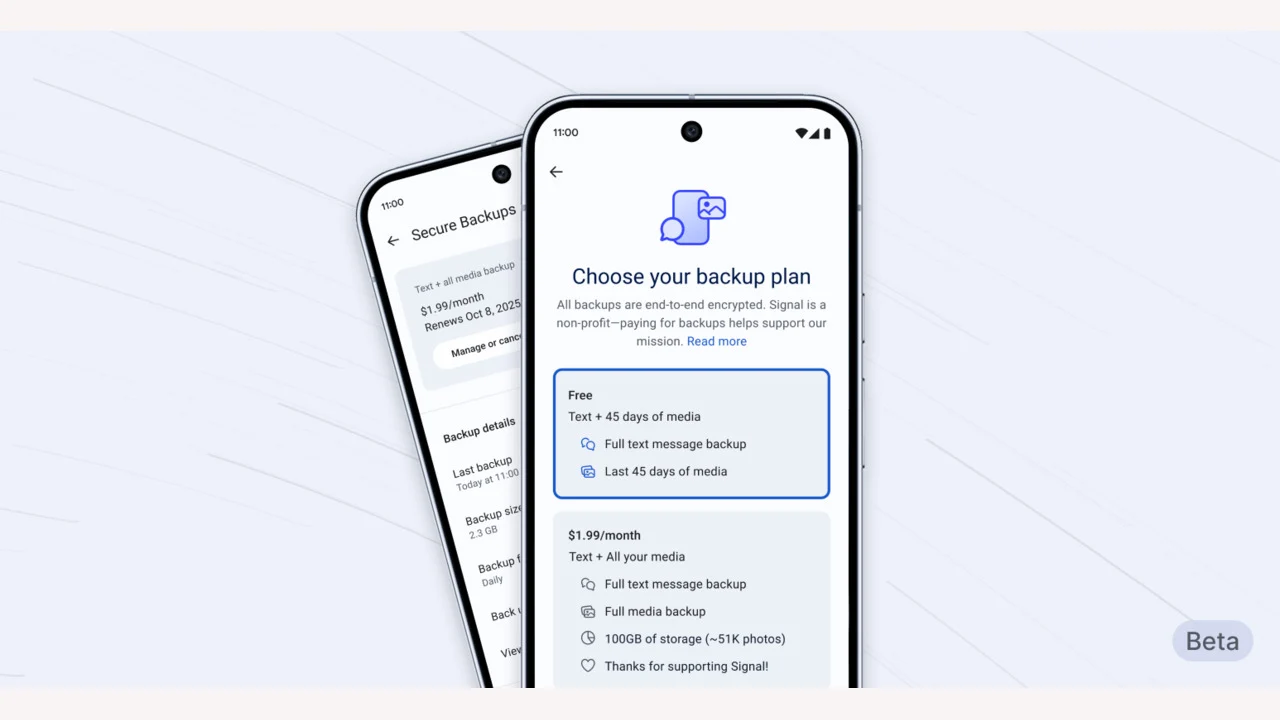
    The free option permits users to back up all text messages and media for a period of up to 45 days. If users wish to increase this limit, they can opt for a $1.99 subscription that allows full media backups of up to 100GB.

    Cost of Data Storage

    Signal explained that “storing and transfering large amounts of data is costly.” As the company does not gather or sell user data, the $1.99 subscription helps them manage these expenses.

    The secure backup functionality adheres to the same “zero-knowledge” principle that the company embraces. This means that all backup archives “are stored without a direct link to a specific backup payment or Signal user account.”

    Recovery Key and User Responsibility

    Signal creates a 64-bit recovery key on your device that isn’t shared with their servers and is the sole means to “restore access to your messages.” If you lose this key, the company cannot assist you in recovering it.

    To use the new feature, you must download the latest beta version of the app from the Play Store. You will find the option to activate it in the Signal settings menu. Currently, this feature is exclusive to beta versions of the app on Android, but it will be available on all platforms soon.

    Future Enhancements

    The technology being utilized for the “initial version of secure backups will also provide the groundwork for more secure backup alternatives in the near future.”

    Signal also hinted at adding more comprehensive options soon, such as the ability to save “a secure backup archive to a location of your choice, along with features that facilitate transferring your encrypted message history across Android, iOS, and Desktop devices.”

    Source:
    Link


  • Workaround for Android App Sideloading Block Explained

    Workaround for Android App Sideloading Block Explained

    Key Takeaways

    1. Google is tightening control over Android by limiting unverified app sideloading starting in late 2026.
    2. A possible workaround for sideloading apps involves using the Android Debug Bridge (ADB), a command-line tool for developers.
    3. ADB allows experienced users to install unverified apps, but requires technical knowledge and is less user-friendly than previous methods.
    4. The new policy aims to protect less tech-savvy users from downloading harmful apps and malware.
    5. Developers must authenticate their identity with Google to distribute apps, replacing the traditional Play Protect system with a new app called Android Developer Verifier.


    If you enjoy the freedom of installing apps from various sources on Android, you might have felt uneasy following Google’s latest news. The tech giant is tightening its control over its mobile operating system, introducing a policy that will limit unverified app sideloading starting in late 2026. This means, in theory, you won’t be able to install external APKs from unverified developers anymore. However, recent discoveries indicate that there may be a workaround to keep sideloading apps on your Android device.

    Key Findings on Sideloading Workaround

    Android specialist Mishaal Rahman has shared both positive and negative updates regarding the restrictions on app sideloading. I stumbled across a small yet significant detail in Google’s FAQ that hints at a possible workaround: the Android Debug Bridge (ADB). This command-line tool, essential for developers, might be the solution for those looking to install unverified apps. According to the FAQ, developers can “install apps without verification using ADB.”

    Understanding ADB and Its Use

    For those who might not know, ADB is a technique for installing software (like apps, mods, and more) on Android devices and is favored by experienced users. Although it’s not overly complicated, it does require at least one line of code to kick off the process. This makes sideloading apps less straightforward than just a few taps on your device, which is a bit of a drawback.

    On the flip side, this development means that the option to sideload apps won’t completely vanish.

    Impact on Developers and Users

    Google’s new policy aims to minimize the risks for individuals who aren’t tech-savvy and may accidentally download malware by installing harmful apps. Meanwhile, experienced users can still sideload apps on Android by utilizing ADB as a workaround.

    According to the new guidelines, every developer who wants to distribute an Android app—whether on the Play Store or not—must first authenticate their identity with Google. Failing that, their applications won’t be installable on certified devices. Instead of relying on Play Protect, Google will launch a new system app called Android Developer Verifier. It’s intriguing that Google is opting for this new approach instead of the traditional Play Protect, and the reasons for this change are not yet clear. We can only hope for more information in the near future.

    Source:
    Link


  • Xiaomi Confirms HyperOS 3 Won’t Launch on These 6 Smartphones

    Xiaomi Confirms HyperOS 3 Won’t Launch on These 6 Smartphones

    Key Takeaways

    1. Xiaomi has launched HyperOS 3 in China, currently available in beta for eight devices.
    2. The Pad 7 Pro is priced at $679 on Amazon and is one of the devices receiving the update.
    3. More than twelve additional devices are expected to get HyperOS 3 Beta later this month.
    4. Some recent smartphones from Redmi, Poco, and Xiaomi will not receive the update, with their support ending this month.
    5. Xiaomi has not provided a global list of devices eligible for the stable version of HyperOS 3.


    Xiaomi has officially introduced HyperOS 3 in China as its latest significant update for mobile software. To summarize, the company has made this new version available in beta to eight devices so far, including the Pad 7 Pro, currently priced at $679 on Amazon. At this moment, the devices set to receive the HyperOS 3 Beta updates in China include:

    Upcoming Devices

    In addition, more than twelve other devices are expected to get access to HyperOS 3 Beta later this month. Nevertheless, Xiaomi Adictos has found out that many current smartphones will probably not receive the next OS update when it becomes stable. Currently, Xiaomi has not released a global list of eligible devices.

    Devices Missing Out

    Interestingly, Xiaomi Adictos has noted that six recent smartphones from Redmi, Poco, and Xiaomi will cease to receive updates at the end of this month. Since even security updates will stop after this point, it seems unlikely that these devices will transition from HyperOS 2 to HyperOS 3.

    Source:
    Link


  • Google Hit with $3.5 Billion EU Fine for Ad Practices

    Google Hit with $3.5 Billion EU Fine for Ad Practices

    Key Takeaways

    1. The European Commission fined Google €2.95 billion ($3.5 billion) for anti-competitive advertising practices in the Adtech sector.
    2. Google was accused of misusing its dominant position by favoring its own services over competitors, impacting advertisers and publishers negatively.
    3. The EU stated that Google’s actions could lead to poorer service quality and increased subscription prices for consumers.
    4. This fine is part of a history of penalties against Google, following previous fines in 2017, 2018, and 2019 for various competition law violations.
    5. Google has 60 days to address the issues outlined by the EU or face further action, and the company plans to appeal the ruling, claiming it could harm European businesses.


    The European Commission, which is the main executive part of the European Union (EU), has slapped Google with a hefty fine of €2.95 billion ($3.5 billion) due to anti-competitive advertising practices.

    Accusations Against Google

    In an announcement, the EU claimed that Google had violated competition laws and was “misusing its dominant status in the display advertising technology sector (Adtech).” They stated that Google misused its position “on both ends of the Adtech supply chain.”

    The EU accused the tech giant of giving preference to its own services, “to the disadvantage” of other competitors, publishers, and advertisers. They argued that because of Google’s actions, advertisers faced increased marketing expenses, while publishers saw a drop in their earnings.

    Impact on Consumers

    The EU explained that these actions might have led to “poorer service quality and increased subscription prices for consumers.” The hefty fine comes after two earlier violations in the digital and advertising marketplaces.

    Back in 2017, Google faced a fine of €2.42 billion for misusing its market dominance in the Search engine field. In 2018, a record fine of €4.34 billion was imposed for putting illegal restrictions on Android device makers, which helped solidify its leading position in Search.

    Ongoing Legal Challenges

    In 2019, Google was penalized with €1.49 billion for compelling third-party websites to enter contracts that blocked competitors from displaying ads on their sites.

    In 2023, Google received a Statement of Objections, alerting the company about its favoritism towards its own ad-tech services over those of its rivals.

    Google now has a period of 60 days “to cease its illegal practices and to eliminate its inherent conflict of interests in the Adtech sector.” They are required to present a plan to the Commission, or else “the Commission will not hesitate to enforce an appropriate remedy.”

    In a statement relayed to Bleeping Computer, Google’s Global Head of Regulatory Affairs, Lee-Anne Mulholland, argued that the EU’s ruling was “incorrect” and mentioned that the company intends to appeal.

    Mulholland stated that the ruling “imposes an unjustified fine and demands changes that could harm thousands of European businesses by making it more difficult for them to earn revenue.”

    Source:
    Link


  • Philips Hue App Update Brings Apple HomeKit Support

    Philips Hue App Update Brings Apple HomeKit Support

    Key Takeaways

    1. The Philips Hue app has been updated to version 5.50.0 for iOS and Android users.
    2. The update includes support for the new Hue Bridge Pro, which connects up to 150 smart lights and 500 accessories.
    3. Users can now use their smart lights as motion detectors and benefit from Wi-Fi connectivity.
    4. Migration guidance is available for users of older Hue Bridges, but a specific assistant for multiple bridges is still pending.
    5. The app now supports synchronization with Apple Home using Matter and is compatible with new products like the Starter Kit Pro and various bulbs.


    The Philips Hue app has been updated to version 5.50.0, available for both iOS and Android users. This release comes soon after the company introduced a new selection of products at IFA 2025.

    New Features with Version 5.50.0

    With this update, the Philips Hue app now includes support for the Hue Bridge Pro. This new hub is capable of connecting to up to 150 smart lights and 500 accessories, plus it can save up to 500 scenes. Notably, it is Wi-Fi enabled, eliminating the need for a physical Ethernet connection. Additionally, users will be able to utilize their smart lights as motion detectors.

    Philips Hue mentions that those using an older Hue Bridge will receive guidance on migrating to the Hue Bridge Pro, with detailed instructions available on the company’s website. However, users who have multiple Hue Bridges will have to wait a bit longer for a specific migration assistant to be provided.

    Syncing and HomeKit Integration

    The company also highlights that users can now synchronize Apple Home using Matter. For those with the Pro Bridge, there will be a need to reconnect through Matter after the migration. Meanwhile, it seems that users with the original Hue Bridge can continue using the earlier HomeKit integration without any issues.

    The updated Philips Hue app version 5.50 also introduces compatibility for new products, including the Starter Kit Pro (currently priced at $219.99 at Amazon), the Essential Starter Kit, A19 bulbs, Festavia lights, and the Essential range bulbs. Users can download the latest version of the Philips Hue app from the Apple App Store or the Google Play Store.

    Source:
    Link


  • Mark Zuckerberg Sued Over Facebook Bans: Legal Battle Explained

    Mark Zuckerberg Sued Over Facebook Bans: Legal Battle Explained

    Key Takeaways

    1. Mark Zuckerberg, an Indianapolis bankruptcy attorney, is suing Meta over account suspensions that have affected his business.
    2. He claims negligence and breach of contract due to repeated automated flagging of his account, despite complaints.
    3. The account suspensions have disrupted his legal practice and caused financial losses, including $11,000 on advertising.
    4. Zuckerberg doubts the effectiveness of Meta’s moderation systems and feels insulted by their inability to prevent account issues.
    5. Meta acknowledged the mistake in disabling his account and stated they are working to prevent future occurrences.


    Mark Zuckerberg, a bankruptcy attorney based in Indianapolis, is taking legal action against Meta, the company behind Facebook. He has faced account suspensions five times over the past eight years due to allegations of impersonating a public figure.

    “It’s not a joke,” Zuckerberg expressed to WTHR. “It becomes serious when they start messing with my finances. This really makes me angry.”

    Legal Claims Against Meta

    Zuckerberg’s lawsuit against Meta includes accusations of negligence and breach of contract. He argues that automated systems are repeatedly flagging his account, even after he has lodged numerous complaints. These ongoing suspensions have disrupted his legal practice, halted communication with clients, and resulted in a loss of $11,000 spent on advertising for his professional profiles.

    Doubts About Account Safety

    Although Meta has restored his account, Zuckerberg remains skeptical about the effectiveness of their moderation systems.

    “It’s quite insulting that a company known for its technological expertise can’t seem to manage flagging my accounts to prevent this from reoccurring,” he told The New York Post. “It feels like they might be doing it intentionally, although I know that’s probably not the case.”

    Zuckerberg acknowledges that Meta has “greater financial power, more attorneys, and a wealth of resources” compared to him. He prefers to avoid confrontation but is at a loss for what else to do to get them to cease these issues.

    Meta’s Response

    In a response provided to WTHR, a representative from Meta stated that Zuckerberg’s account had been restored “after it was determined that it had been disabled mistakenly.”

    “We are grateful for Mr. Zuckerberg’s understanding regarding this matter and are actively working to ensure this does not occur again,” the spokesperson said.

    Source:
    Link


  • Google Faces $425 Million Verdict in App Data Collection Case

    Google Faces $425 Million Verdict in App Data Collection Case

    Key Takeaways

    1. A federal jury found Google responsible for two out of three claims regarding user privacy in a lawsuit that started in 2020.
    2. The lawsuit accused Google of unlawfully collecting data from mobile devices over eight years, contradicting their privacy assurances.
    3. Plaintiffs claimed Google continued to gather information even when users opted out of data collection through privacy settings.
    4. The jury ordered Google to pay $425 million in damages, significantly less than the $31 billion initially sought by the plaintiffs.
    5. Google plans to appeal the ruling, arguing that their privacy tools give users control over their data and that the verdict misinterprets their practices.


    A federal jury has determined that Google is responsible for two out of three claims regarding user privacy in a lawsuit that has been ongoing since 2020. This trial occurred in a federal courtroom located in San Francisco, USA, and it accused Google of unlawfully accessing mobile devices to gather data over a span of eight years.

    Privacy Assurances in Question

    The allegations directly contradicted the privacy guarantees that Google provided through their web and activity settings. The plaintiffs claimed that Google kept collecting their information even when users opted out of data collection.

    As reported by Reuters, Google defended itself by stating that the data was “nonpersonal, pseudonymous, and stored in segregated, secured, and encrypted locations.” The company emphasized that the information gathered was not tied to any specific user accounts.

    Case Background

    The lawsuit was originally filed by Anibal Rodriguez, who expressed that Google continued to gather data despite the assurance that users could opt out via the privacy settings in the “Web and App Activity” area.

    According to Courthouse News Service, the plaintiffs’ legal team contended that Google never obtained consent to collect and retain data even when users turned off the web activity settings. They accused the tech giant of misleading users by claiming they had the ability to manage, view, and erase the data collected from their activities.

    Damages and Appeal

    The jury has mandated that Google pay $425 million in damages to resolve the lawsuit, while the plaintiffs had initially aimed for $31 billion.

    A spokesperson for Google, Jose Castaneda, informed Reuters that the company plans to appeal the ruling, asserting that the verdict “misunderstands” how their products “work.”

    “Our privacy tools allow people to have control over their data, and when they choose to turn off personalization, we respect that decision,” Castaneda remarked.

    Source:
    Link