Category: Phones

Stay updated with the latest phone news, reviews, and trends. Discover cutting-edge smartphones, features, and innovations in our Phones category at GizNewsDaily

  • Vivo X300 Specs Leak: What to Expect Before October Launch

    Vivo X300 Specs Leak: What to Expect Before October Launch

    Key Takeaways

    1. Vivo is set to launch the X300 series, including the standard X300 and X300 Pro, in October.
    2. The X300 features a 6.31-inch LTPO display with a 120Hz refresh rate and 1.5K resolution, designed by BOE.
    3. The camera system includes a 200MP primary sensor, a 50MP ultrawide lens, and a 50MP telephoto lens with Zeiss T coating for improved image quality.
    4. Powered by the MediaTek Dimensity 9500 processor, the X300 is expected to have a battery around 6,000mAh with 90W wired and wireless charging.
    5. The smartphone will first launch in China, followed by a global release.


    Vivo is likely to unveil its new flagship X300 series this October. This series is anticipated to consist of at least two variants: the standard X300 and the X300 Pro. One of the standout features of the Vivo X300 is its compact design, complemented by the ZEISS camera system. A reputable source has leaked detailed specifications for this upcoming smartphone.

    Display Features

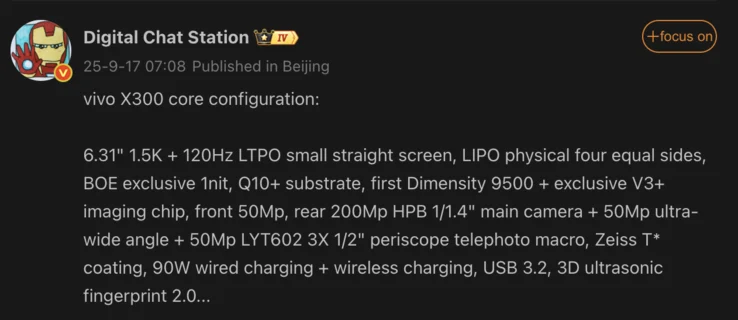
    As per the information shared by Digital Chat Station on Weibo, the Vivo X300 will sport a 6.31-inch LTPO display boasting a 120Hz refresh rate and a 1.5K resolution. The screen will be manufactured by BOE and will utilize LIPO technology to ensure consistent and slim bezels across all edges.

    Camera Specifications

    The Vivo X300 is rumored to come equipped with a 200MP primary sensor measuring 1/1.4″, a 50MP ultrawide lens, and a 50MP LYT602 periscope telephoto lens offering 3X optical zoom. The camera system is also expected to include a Zeiss T anti-reflective coating which aims to minimize lens flare and ghosting effects. Additionally, it has been confirmed that the Vivo X300 will be fitted with the in-house V3+ imaging chip, enabling users to record cinematic portrait videos at 4K 60fps. For selfies, the X300 is believed to feature a 50MP front camera.

    Performance and Battery

    The smartphone is set to be powered by the Dimensity 9500, which is MediaTek’s forthcoming flagship processor. While the leak did not specify the battery capacity, it is projected to be around 6,000mAh. The leakster also hints at the inclusion of 90W wired charging and wireless charging support. Other significant characteristics include a USB 3.2 port and an ultrasonic fingerprint scanner. The Vivo X300, along with the X300 Pro, is expected to launch first in China, followed by a global release.

    Source:
    Link


  • Xiaomi 15T Series Offers Pro-Grade Leica Photography Experience

    Xiaomi 15T Series Offers Pro-Grade Leica Photography Experience

    Key Takeaways

    1. Xiaomi is set to launch the flagship Xiaomi 17 series powered by the Snapdragon 8 Elite Gen 5 and the global Xiaomi 15T series.
    2. The Xiaomi 15T series will likely include the Xiaomi 15T Pro with Dimensity 9400+ and the Xiaomi 15T with Dimensity 8400 Ultra.
    3. The series is expected to feature a “pro-grade” Leica camera system, with a 5x telephoto sensor exclusive to the 15T Pro.
    4. Both models will likely have a 6.83-inch display and a 5,500 mAh battery, with the Pro version supporting faster charging.
    5. Pricing for the Xiaomi 15T series is rumored to start at €649 in Europe, pending official confirmation from Xiaomi.


    Xiaomi is preparing to launch its new flagship smartphones, which will be driven by the Snapdragon 8 Elite Gen 5, known as the Xiaomi 17 series. Additionally, they are planning another event aimed at the global audience, where they will introduce the Xiaomi 15T series.

    Expected Models and Specs

    This upcoming series is likely to include two models: the Xiaomi 15T Pro and the Xiaomi 15T. The Pro version is rumored to feature the Dimensity 9400+, while the standard model is expected to have the Dimensity 8400 Ultra. As the launch date of September 24 approaches, Xiaomi has begun teasing the camera features of these sub-flagship devices.

    Camera Features and Capabilities

    According to the latest teasers, the Xiaomi 15T series is said to offer a “pro-grade” Leica camera system. One teaser specifically highlights a 5x telephoto sensor, which will probably be exclusive to the 15T Pro. The standard version might have a telephoto camera with a lesser optical zoom capability.

    Display and Battery Information

    In addition, a recent leak has indicated that the Xiaomi 15T will feature a 6.83-inch display, which is likely to be the same size for the Pro variant as well. The leak also mentioned that the non-Pro version will come with a 5,500 mAh battery, a specification that is expected to be consistent across both models. It’s important to remember that Pro models generally support quicker charging (20K 100 W Ugreen power bank currently priced at $59.99 on Amazon).

    Pricing and Future Announcements

    Concerning pricing, recent reports have indicated that the Xiaomi 15T series could start at €649 in Europe, though Xiaomi has not officially confirmed this figure. More information about the lineup is anticipated to be released in the near future.

    Source:
    Link


  • Vivo X300 Ultra Set to Launch with 35MP Camera Upgrade

    Vivo X300 Ultra Set to Launch with 35MP Camera Upgrade

    Key Takeaways

    1. Vivo is set to launch the X300 and X300 Pro soon, with a release expected within a month.
    2. The X300 and X300 Pro will feature MediaTek’s Dimensity 9500 chipset, joining Oppo’s Find X9 series.
    3. The X300 Ultra’s launch is delayed until spring 2026, as indicated by the release schedule of previous models.
    4. The X300 Ultra may include a 200 MP Sony IMX09E main camera, which offers advanced features compared to competitors.
    5. The IMX09E sensor could potentially be paired with a 35 mm lens, promising exceptional image quality and positioning Vivo against high-end rivals like Samsung’s Galaxy S25 Ultra.


    The Vivo X300 Ultra’s launch is still some time away. Meanwhile, Vivo is getting ready to unveil the X300 and X300 Pro. These two devices are expected to be released within a month at most.

    New Features Ahead

    As we’ve mentioned before, the X300 and X300 Pro are among the first smartphones to use MediaTek’s Dimensity 9500 chipset, sharing the spotlight with the Oppo Find X9 and Find X9 Pro. In contrast, the X100 Ultra and X200 Ultra’s release schedule suggests that Vivo will hold off on the X300 Ultra until spring 2026.

    Camera Innovations

    Nevertheless, Digital Chat Station has shared that they have some early insights on Vivo’s upcoming Ultra-branded flagship. In a post on Weibo, the leaker hinted that Vivo plans to include the Sony IMX09E as the main camera for the X300 Ultra. This 200 MP sensor is believed to be technically better than the LYT-900, featuring a 1/1.12-inch optical format, 0.7 μm pixel size, and over 100 dB dynamic range.

    Although it has not been confirmed, the IMX09E could position Vivo against Samsung’s Galaxy S25 Ultra (currently priced at $1,075 on Amazon), which is one of the limited flagships with a 200 MP primary camera. To enhance this, Digital Chat Station proposes that Vivo might pair the IMX09E with a 35 mm lens, potentially outdoing the Vivo X200 Ultra as well. This sensor is reportedly large enough to deliver ‘exception image quality’ even at 70 mm.

    Source:
    Link


  • iPhone 18 Pro Leak: Design Stays the Same, Standard Model Delayed

    iPhone 18 Pro Leak: Design Stays the Same, Standard Model Delayed

    Key Takeaways

    1. Apple recently announced four new iPhone models: iPhone Air, iPhone 17, iPhone 17 Pro, and iPhone 17 Pro Max.
    2. A leak suggests that the iPhone 18 Pro will have a rectangular camera setup similar to the iPhone 17 Pro, with a slightly transparent rear glass panel.
    3. The iPhone 18 Pro is expected to feature a stainless steel vapor chamber and retain display sizes of 6.3 inches for the Pro and 6.9 inches for the Pro Max.
    4. The iPhone 18e may be in production, but the standard iPhone 18 could face delays, with potential launches in September 2026 for the Pro series and early 2027 for the standard and budget models.
    5. Apple has not officially confirmed any details about the iPhone 18 lineup, so the information from the leak should be treated with caution.


    Earlier this month, Apple unveiled four new iPhone models: the iPhone Air, iPhone 17, iPhone 17 Pro, and iPhone 17 Pro Max. Recently, however, a new leak has come to light about the upcoming iPhone 18 lineup.

    Details of the Leak

    According to a well-known leaker, Digital Chat Station, who shared info on Weibo, the engineering prototype for the iPhone 18 Pro is said to have a rectangular camera setup. The arrangement of the camera is expected to be the same as the 17 Pro models. Yet, the leak also suggests that the rear glass panel has a slight transparent finish. It’s important to remember that the final design may vary since this info is based on an early prototype.

    Specifications and Features

    Reports indicate that the iPhone 18 Pro could include a stainless steel vapor chamber. The display sizes for the iPhone 18 Pro series are predicted to stay the same. Consequently, the iPhone 18 Pro is likely to feature a 6.3-inch display, while the 18 Pro Max could come with a larger 6.9-inch display.

    Future Plans and Launch Dates

    Additionally, the leak indicates that the iPhone 18e might be in the current production schedule, but the regular iPhone 18 could face delays. This isn’t the first time news has circulated about the iPhone 18’s possible postponement. Back in April, it was reported that Apple might launch the iPhone 18 Pro series in September 2026, while the standard iPhone 18 and the more budget-friendly iPhone 18e could debut in early 2027.

    As of now, Apple hasn’t officially confirmed any details about its next smartphones. Therefore, the details mentioned should be viewed skeptically.

    Source:
    Link


  • Snapdragon 8 Elite Gen 5 vs Apple A19 Pro: Geekbench Results

    Snapdragon 8 Elite Gen 5 vs Apple A19 Pro: Geekbench Results

    Key Takeaways

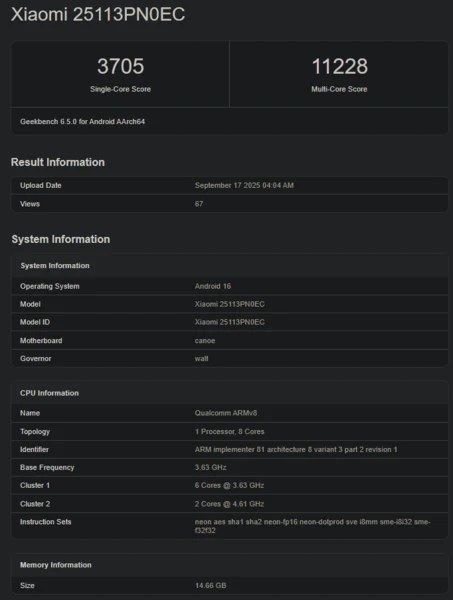
    1. The Snapdragon 8 Elite Gen 5 scored 3,705 points in single-core and 11,228 points in multi-core benchmarks on Geekbench 6.4.
    2. The chip was tested on a Xiaomi device with 16 GB of RAM and Android 16, showcasing its capabilities.
    3. Compared to competitors, it outperformed the Apple A18 Pro but still trails behind the A19 Pro in single-core performance.
    4. In the Android market, it surpassed the Exynos 2600 and MediaTek Dimensity 9500 in performance metrics.
    5. The Snapdragon 8 Elite Gen 5’s performance improvements are attributed to better software and effective P-core clock speeds.


    So far, the Snapdragon 8 Elite Gen 5 has not managed to effectively break the ~3,000 point barrier in Geekbench 6.4’s single-core benchmark. Recently, it was tested alongside the Xiaomi 17 Pro, achieving scores of 3,025 and 9,178 points in single-core and multi-core benchmarks. A recent listing reveals the Qualcomm chip operating at close to its full potential, if not entirely so.

    Performance Scores

    In the latest results, the Snapdragon 8 Elite Gen 5 achieved scores of 3,705 and 11,228 points in Geekbench 6.4’s single and multi-core tests, respectively. This performance surfaced with a Xiaomi device identified as 25113PN0EC, probably the Xiaomi 17 Pro Max or the standard Xiaomi 17. This specific device is equipped with 16 GB of RAM and is running on Android 16.

    Comparison with Competing Chips

    To better understand the significance of the new Snapdragon 8 Elite Gen 5 scores, it is comparable to the Apple A19 Pro (4,019/11,054) in multi-core tests. It even outperforms the Apple A18 Pro (3,461/8,546). Although Apple’s chips still dominate in single-core performance, the gap is decreasing, and it is expected to continue closing as more devices with Snapdragon 8 Elite Gen 5 are released.

    Android Competition

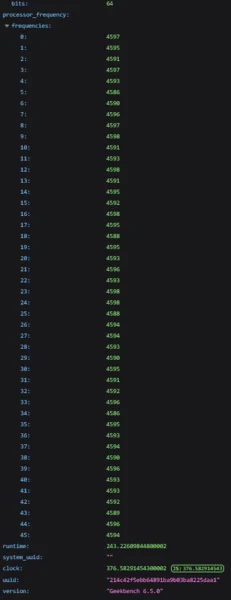
    In the Android arena, the Snapdragon 8 Elite Gen 5 significantly outperforms both the Exynos 2600 (3,308/11,256) and the MediaTek Dimensity 9500 (3,177/9,701). This impressive boost in performance can be linked to improved software and the SoC’s P-cores being capable of maintaining their 4.6 GHz boost clock.

    Source:
    Link


  • Xiaomi 17 Pro Series Teases Magic Back Screen Customization Features

    Xiaomi 17 Pro Series Teases Magic Back Screen Customization Features

    Key Takeaways

    1. Xiaomi is set to launch flagship phones in the Xiaomi 17 series with the Snapdragon 8 Elite Gen 5 processor.
    2. The Pro models will feature a revamped back design with a practical secondary display called the Magic Back Screen.
    3. The Magic Back Screen allows for customization options, including an always-on display for personalized content.
    4. Users may be able to take selfies with the rear cameras using the secondary display, similar to previous models.
    5. The camera setup on the Xiaomi 17 Pro may not see significant upgrades, while the Pro Max variant is expected to feature a superior Leica-enhanced camera.


    Xiaomi is preparing to unveil its flagship phones powered by the Snapdragon 8 Elite Gen 5 processor, which will belong to the Xiaomi 17 series. The company has recently revealed the revamped back design of the Pro models, featuring a secondary display known as the Magic Back Screen.

    Enhanced Functionality

    This implementation of a rear display seems to be a continuation of Xiaomi’s earlier attempts with the Mi 11 Ultra. However, the back screen on the 17 Pro models looks to be much more practical. It resembles the recently introduced vertical foldable smartphones, like the Motorola Razr 2025, which is currently priced at $599.99 on Amazon. The Magic Back Screen takes up a significant portion of the phone’s rear, surrounding the two back cameras.

    Customization Options

    While Xiaomi hasn’t disclosed the exact dimensions of the screen yet, they have introduced the customization features available for the Magic Back Screen. A new video demonstrates that users will be able to activate an always-on display, showcasing personalized content.

    Even though the video does not reveal additional functionalities that the secondary display on the Xiaomi 17 Pro series may provide, it is expected to allow users to take selfies using the rear cameras, similar to the Mi 11 Ultra. The size of the screen also seems adequate to support widgets and apps, but the company has not yet demonstrated this capability.

    Camera Expectations

    Regarding the rear cameras, a recent leak indicates that the Xiaomi 17 Pro may not present a significant upgrade from its earlier version. Instead, it is the Pro Max variant that is anticipated to feature a superior Leica-enhanced camera setup. Xiaomi is expected to disclose more information about its new Snapdragon 8 Elite Gen 5 devices in upcoming teasers on Weibo.

    Source:
    Link


  • Samsung Exynos 2600 2nm Chip Promises Strong Performance for Galaxy S26

    Samsung Exynos 2600 2nm Chip Promises Strong Performance for Galaxy S26

    Key Takeaways

    1. The Exynos 2600 is expected to rival Snapdragon chips in performance and efficiency, based on early benchmark results and insider reports.
    2. Mass production of the Exynos 2600 will start this month, aligning with the launch of the Galaxy S26 series in early 2026.
    3. The Exynos 2600 will be the first commercially available 2nm chip in a smartphone, showcasing advanced manufacturing technology.
    4. The chip features improved heat management due to its SF2 GAA process and a special heat spreader.
    5. Despite potential improvements, the Snapdragon 8 Elite Gen 5 is likely to maintain an advantage in raw computing power over the Exynos 2600.


    This time they are surely gonna nail it! Industry insiders have been buzzing for weeks about the Exynos 2600, which might be the first Exynos chip that rivals the Snapdragon in both performance and efficiency. While testers will ultimately make the call, early clues, like leaked benchmark results from Exynos 2600 tests, seem to back this up. Additionally, a recent Korean report has provided some insider info concerning the Exynos 2600.

    Production Timeline

    According to a quote from Samsung executives during a recent internal meeting, the Exynos 2600 is set to begin mass production this month, just in time for the Galaxy S26 series launch in early 2026. Yong-In Park, who heads Samsung’s System SLI division, reportedly expressed a lot of optimism about the Exynos 2600’s development to reporters at an event, assuring them of “good results.” This chip will be the successor to the somewhat troublesome Exynos 2500, which has only been utilized in the Galaxy Z Flip 7 so far. The Exynos 2600 is anticipated to be the first commercially available 2nm chip in a smartphone.

    Technology Insights

    Manufactured with the SF2 GAA (Gate-All-Around) process, Samsung’s SoC could showcase impressive heat management for the first time. This is not just due to its smaller structure width but also thanks to a special type of heat spreader that sits directly on the chip. Despite steadily improving benchmark scores in Geekbench, the Snapdragon 8 Elite Gen 5 will probably still hold an advantage in raw computing power, based on earlier leaks, especially since the new Qualcomm flagship has been operating at reduced capacity so far. On a positive note for Samsung, they will achieve a symbolic win with the Exynos 2600, as the 2nm chips made by TSMC for competing brands are expected to be released much later. Both the Apple A20 in the iPhone 18 and the MediaTek Dimensity 9600, along with the Snapdragon 8 Elite Gen 6, will not be available to smartphone users until late 2026.

    Source:
    Link


  • Xiaomi 17 Pro Max Leak Shows Key Camera Upgrade Over Pro

    Xiaomi 17 Pro Max Leak Shows Key Camera Upgrade Over Pro

    Key Takeaways

    1. The Xiaomi 17 series is set to launch in September 2025, with a new design for the Pro models’ back already revealed.
    2. The Xiaomi 17 Pro will feature a 50 MP primary camera and a 17 mm ultrawide sensor.
    3. The Pro model will include a 5x telephoto lens with an f/3.0 aperture, while the Pro Max will have a telephoto lens with a larger f/2.6 aperture for better low-light performance.
    4. The telephoto lens of the Xiaomi 17 Pro Max maintains a 115 mm equivalent focal length, which is shorter than the 120 mm of the Xiaomi 15 Pro.
    5. The specifications for the ultrawide and telephoto camera sensor sizes are still unknown, with more details expected soon.


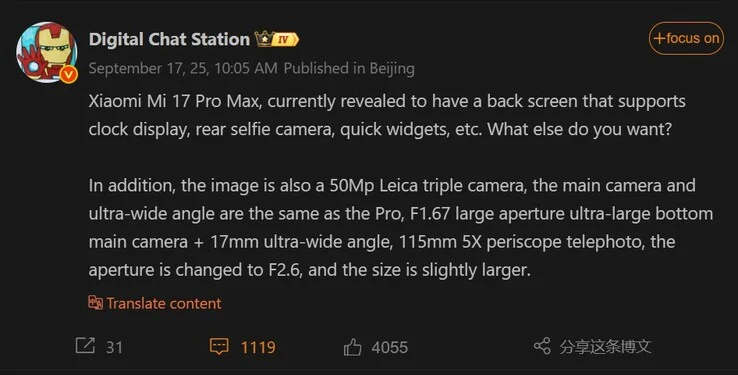
    The Xiaomi 17 series is expected to be unveiled in September 2025, and the company has already revealed the revamped design of the Pro models’ back. A recent leak from Digital Chat Station, a reliable source on Weibo, has disclosed the potential camera specifications for the 17 Pro, and the tipster has now provided insights into the camera setup of the 17 Pro Max.

    Camera Details and Features

    According to the latest information, the Xiaomi 17 Pro Max will keep the same main and ultrawide cameras as the standard Pro model. For those who may not have seen our earlier reports, Digital Chat Station indicated that the forthcoming 17 Pro will feature a 50 MP primary camera with an f/1.67 aperture and an ultrawide sensor with a 17 mm focal length.

    Telephoto Specifications

    Moreover, the Xiaomi 17 Pro is said to include a 5x telephoto lens with an f/3.0 aperture and a 115 mm equivalent focal length. As for the Pro Max variant, Digital Chat Station claims it will come with an enhanced telephoto sensor boasting an f/2.6 aperture. This larger aperture on the telephoto lens of the Xiaomi 17 Pro Max is expected to enhance low-light photography compared to the Pro model. Nevertheless, the leaker points out that the 115 mm equivalent focal length stays the same, which could be seen as a step back from the telephoto camera of the Xiaomi 15 Pro (Chinese 12/256 GB currently priced at $706.16 on TradingShenzhen).

    Comparisons with Predecessor

    To give you some context, the Xiaomi 15 Pro features a telephoto sensor with a longer equivalent focal length of 120 mm. In light of the leaked specifications, the older model’s telephoto camera is superior for taking portraits and macro images because it can produce a shallower depth of field.

    On the flip side, the Xiaomi 17 Pro Max’s telephoto with a 115 mm equivalent focal length will excel in landscape photography, providing a slightly deeper depth of field. The resolutions and sizes of the ultrawide and telephoto camera sensors are still unknown, but more information, along with sensor sizes, is anticipated to surface shortly.

    Source:
    Link


  • Starlink 5G Mobile Chip for Phones: SpaceX Leverages Dish Spectrum

    Starlink 5G Mobile Chip for Phones: SpaceX Leverages Dish Spectrum

    Key Takeaways

    1. SpaceX will launch V3 Starlink satellites next year, offering 10 times the throughput of the current V2 generation with a capacity of 1 Tbps.
    2. Dedicated equipment, such as the expensive Performance kit, is needed to access gigabit speeds, though improvements to the Starlink Standard dish may be forthcoming.
    3. The new V3 satellite constellation aims to create a 5G Starlink network that can connect directly to smartphones, with some models already compatible with an additional solution.
    4. SpaceX is developing custom connectivity chips with mobile processor manufacturers to allow smartphones to connect directly to Starlink’s 5G service, with testing beginning in 2026.
    5. Strategic partnerships with major mobile chipset manufacturers are in progress to integrate Starlink connectivity directly into smartphones, moving away from reliance on carrier partnerships.


    SpaceX is set to initiate the launch of its V3 satellites next year, kicking off its gigabit network. The new Starlink satellites are comparable in size to a Boeing 737 and will offer 10 times the throughput of the current V2 generation, with a staggering capacity of 1 Tbps. Users can expect peak Starlink speeds to surpass 1 Gbps for downloads and 160 Gbps for uploads, with the uplink being 24 times faster than what’s currently available on the Starlink network.

    Dedicated Gear Needed

    To fully experience the gigabit Starlink speeds, dedicated equipment is essential. The only dish that can currently support these speeds is the expensive Performance kit, which is aimed at enterprise clients. There is a possibility that Starlink may enhance the Starlink Standard dish, which is presently on sale at Amazon, to accommodate gigabit speeds, at least theoretically. Additionally, the company intends to provide fast satellite Internet access directly to cell phones.

    Future of Connectivity

    The forthcoming launch of its direct-to-cell V3 satellite constellation will enable SpaceX to establish a 5G Starlink network that transmits data from space. The company is already considering ways to connect every phone to Starlink. Currently, smartphones in the new Pixel 10 series and the Galaxy Z Fold 7 and Z Flip 7 can connect to the Starlink direct-to-cell satellites with an additional solution. However, after acquiring $17 billion worth of Dish spectrum, SpaceX is contemplating a more integrated solution.

    Custom Chips in Development

    SpaceX is reportedly in discussions with leading mobile processor manufacturers to incorporate a custom Starlink satellite connectivity chip into their devices. These new chipsets would allow iPhones, Pixels, Samsung Galaxies, and others to connect directly to the future Starlink 5G service, eliminating the need for the current dish kit.

    Testing for the first phones equipped with these Starlink chips is expected to begin in 2026, with Starlink aiming to complete its V3 direct-to-cell satellite constellation by 2027. By that time, most smartphones should have the capability to access fast satellite Internet data directly. However, it’s important to note that while SpaceX’s Starlink service will comply with the 5G network standard, due to its space-based nature, it may reach speeds closer to LTE Advanced, around 100 Mbps.

    Despite these advancements, this remains a significant upgrade compared to current carrier satellite connectivity services, like the T-Satellite collaboration with T-Mobile, which primarily supports messaging and image sharing, with only a select number of apps such as Google Maps optimized for Starlink direct-to-cell satellite data.

    Strategic Partnerships

    Gwynne Shotwell, SpaceX’s President, mentioned that the company is currently working on a custom Starlink connectivity modem for major mobile chipset manufacturers like Qualcomm, Apple, or MediaTek. The aim is to ensure that the appropriate Starlink chip is integrated into all phones, rather than depending on carrier partnerships such as T-Satellite. Shotwell noted, “Now it’s our spectrum, but we want to collaborate with them, essentially providing capacity and wholesaling it to their customers.”

    Source:
    Link


  • Motorola Moto G36: Upcoming Smartphone with 7,000mAh Battery

    Motorola Moto G36: Upcoming Smartphone with 7,000mAh Battery

    Key Takeaways

    1. The Moto G36 is rumored to have a 6,790mAh battery capacity, slightly less than the Moto G06 Power’s 7,000mAh.
    2. It is expected to feature a 6.72-inch IPS LCD display with a resolution of 1080 x 2400, likely with a 120Hz refresh rate.
    3. The device may include dual rear cameras: a 50MP main sensor and an 8MP ultrawide, along with a 32MP front camera.
    4. Storage options could range from 4GB RAM with 64GB storage to a high-end variant of 16GB RAM with 512GB storage.
    5. The Moto G36 is anticipated to have a new design with a larger camera island and may initially launch in China before a global release.


    The Moto G86 Power, which featured a massive 6,720mAh battery, was once the king of Motorola smartphones in terms of battery size. However, that title was taken earlier this month when Motorola introduced the Moto G06 Power, boasting a 7,000mAh battery. Recently, TENAA in China has hinted that another Motorola device is on the horizon, matching that same battery capacity.

    Speculation Around the Moto G36

    The new Motorola smartphone, labeled as the Motorola XT2533-4 on TENAA, has led to rumors that it could be launched as the Moto G36. The TENAA listing indicates that this device will come with a 6.72-inch IPS LCD display, featuring a resolution of 1080 x 2400. While the refresh rate wasn’t mentioned, it’s likely that Motorola will equip it with at least a 120Hz refresh rate, as has become common for its devices.

    Camera and Performance Features

    The Moto G36 is expected to feature dual rear cameras, consisting of a 50MP main sensor and an 8MP ultrawide sensor, along with a 32MP front-facing camera. In terms of performance, the device is rumored to be powered by an unspecified processor with a prime core clocked at 2.4GHz. This processor is likely an improvement over the Unisoc T760, also known as the Unisoc T8100, which is used in the Moto G35 (currently priced at €115 on Amazon.de).

    Storage Options and Battery Details

    The RAM and storage configurations are reported to start at 4GB RAM with 64GB of storage and can go up to 16GB RAM with 512GB storage. However, given that the Moto G35 (check our review) peaks at 8GB RAM and 256GB storage, a 16GB RAM + 512GB model could be a bit ambitious.

    According to TENAA, the Moto G36 will have a battery capacity of 6,790mAh, which should be the rated capacity. Its typical capacity is anticipated to be around 7,000mAh, and it will support 33W wired charging. The Moto G36 is said to weigh 210 grams, making it lighter in comparison to the Moto G06 Power, which comes in at 220 grams.

    Design and Global Release

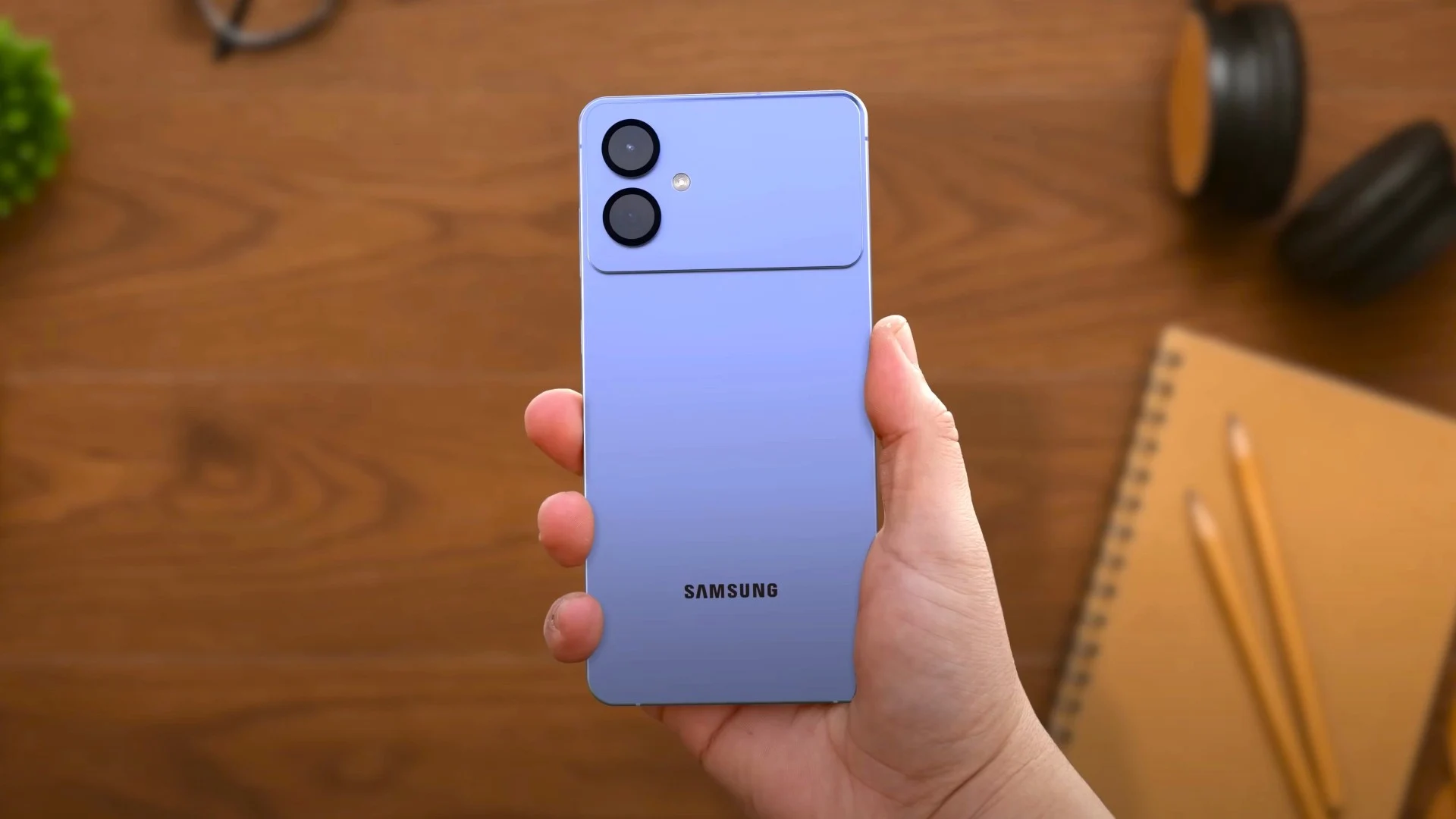
    Images released show that the Moto G36 will feature a larger camera island than its predecessor. The phone appears in a purple color, showcasing what seems to be a faux leather finish. Initially, the Moto G36 might launch in China before making its way to other regions worldwide.

    Source:
    Link