Category: EV vehicles

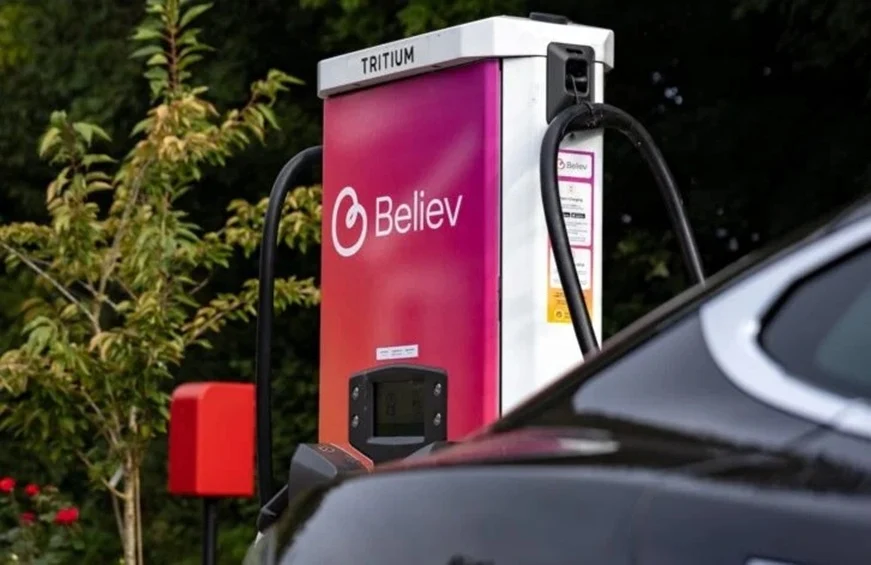
  • Believ Raises £300M for 30,000 EV Chargers in UK Retail

    Believ Raises £300M for 30,000 EV Chargers in UK Retail

    Key Takeaways

    1. Believ is investing £300 million to install 30,000 public EV chargers across the UK.
    2. The company is focusing on retail and hospitality venues to enhance convenience for EV users.
    3. Businesses can benefit financially from having EV chargers, as they attract customers and encourage longer stays.
    4. The funding for the initiative involves multiple partners, including Liberty Global and Santander.
    5. The UK government is supporting EV infrastructure with a £2.3 billion pledge, including £600 million for public charging improvements.


    UK company Believ is set to enhance the availability of public EV charging with a significant £300 million investment. This financial boost will fund the installation of 30,000 chargers across various public locations throughout the country.

    Targeting Key Locations

    Believ identifies retail and hospitality venues as the main focus for these installations, enabling customers to “refuel” their electric vehicles while they engage in daily activities. The company asserts that the increased number of chargers will motivate more drivers to adopt vehicles with zero tailpipe emissions.

    Financial Benefits for Businesses

    In addition to easing concerns about range and charging, having EV chargers can prove advantageous for businesses financially. Research indicates that customers prefer destination chargers that offer faster charging than their home units. This preference often results in longer stays, increasing the chances of customers spending more at those locations.

    The funding for this initiative comes from a variety of sources, including Liberty Global, Zouk Capital, Santander, ABN Amro, NatWest, and MUFG.

    CEO’s Perspective

    Guy Bartlett, the CEO of Believ, commented on the funding, stating, “This highlights the level of investment needed and the urgent demand. As drivers observe more infrastructure being developed, confidence in EVs will undoubtedly rise. We take great pride in being central to this progress.”

    EV owners can look forward to positive developments as the UK government has pledged £2.3 billion to promote EV usage, with around £600 million specifically allocated for enhancing public charging infrastructure.

    Source:
    Link

  • Tesla Cybertruck 0% APR Financing: Cheaper with FSD Included

    Tesla Cybertruck 0% APR Financing: Cheaper with FSD Included

    Key Takeaways

    1. Tesla is offering 0% APR financing for the Cybertruck when purchased with the Full Self-Driving package, making it a more attractive option compared to the standard 5.54% rate.

    2. The free Full Self-Driving promotion is extended until June 30th to boost Cybertruck sales as the quarter ends, targeting well-qualified buyers.

    3. Buyers must have good credit, make a minimum down payment of 4%, and can apply for a $7,500 federal tax credit towards the down payment.

    4. Despite high preorders, Cybertruck sales have not met expectations, with significant depreciation in value and increasing inventory.

    5. The 0% APR financing aims to stimulate demand for the Cybertruck and increase the number of vehicles equipped with Full Self-Driving features for Tesla’s self-driving technology development.


    After introducing a 1.99% APR financing for the Model Y and a zero APR rate for the Model 3, Tesla is now offering a 0% APR deal for the Cybertruck, provided it’s bought with the Full Self-Driving package included.

    Better Financing Options

    Tesla’s fans of electric pickups can now finance the Cybertruck at a lower rate of 0% APR when they choose the Full Self-Driving option, compared to the standard interest rate of 5.54% for those who don’t. This makes the deal very appealing.

    The deal is even more attractive with the free FSD transfer, which Tesla has shifted from a temporary promotion to a nearly fixed offer. This change makes the Cybertruck deal sound even better.

    Sales Boost

    The free FSD promotion is set to continue until June 30th, suggesting it aims to boost Cybertruck sales as the quarter wraps up. The promotional rates are available for well-qualified buyers who have good credit, ordering a new Cybertruck with the Full Self-Driving (supervised) option on or after June 5, 2025, and taking delivery by June 30, 2025. A minimum down payment of 4% plus any taxes and fees is required. If buyers qualify for the $7,500 federal tax credit, this can be applied to the down payment.

    As is common, used Cybertrucks from Tesla’s inventory do not qualify for the free FSD promotion, and enterprise sales are excluded as well. The 0% APR financing is only applicable for the 36-month, 48-month, and 5-year payment plans, starting with the most affordable Cybertruck Long Range RWD version at $992 per month.

    Market Challenges

    Despite a strong start, the sales of Tesla’s Cybertruck have not met expectations. The first electric pickup had over two million preorders before Tesla revealed the launch price starting at $100,000 and above. This price was for the Foundation Series edition, which included free FSD among other features. However, even the most basic RWD Cybertruck is now significantly higher than the initial price Elon Musk hinted at when he first announced the electric pickup project.

    It took just over a year for the uniquely designed Cybertruck to shift from a severe shortage, where it was resold for tens of thousands over its MSRP, to being one of the fastest depreciating vehicles on the market.

    The Cybertruck has lost 37% of its value in the first complete year of ownership and is accumulating in factory parking lots, with its design being a taste that not everyone appreciates. Therefore, the 0% APR financing option is beneficial for Tesla as it could help boost Cybertruck demand and increase the number of vehicles with Full Self-Driving on the roads.

    Tesla aims to have as many of these vehicles as possible to refine its self-driving algorithms, which will be prominently featured after the introduction of its robotaxi platform on June 12, launching with a pilot fleet of Model Y cars operating with unsupervised FSD.

    Source:
    Link

  • Tesla Shares Drop Amid Escalating Trump-Musk Feud

    Tesla Shares Drop Amid Escalating Trump-Musk Feud

    Key Takeaways

    1. The relationship between Donald Trump and Elon Musk has deteriorated after a brief partnership, highlighted by Musk’s recent departure from the White House’s agency DOGE.
    2. Musk criticized Trump’s new budget proposal, which cuts social and healthcare benefits while increasing military spending and providing tax breaks for the wealthy.
    3. Musk’s primary concern appears to be the projected $2.4 trillion deficit from the legislation, rather than the social security cuts.
    4. Trump retaliated by suggesting Musk’s criticism was motivated by reduced subsidies for electric vehicles and hinted at cutting government contracts with SpaceX.
    5. Tesla’s stock dropped over 14%, resulting in a $34 billion loss in value, following the escalating conflict between Musk and Trump.


    It is seen as one of the most debatable celebrity pairings in the last few years, and it might’ve been a key factor in the election: the right-leaning presidential hopeful and repeat candidate Donald Trump on one side, and the right-leaning tech mogul and keen advocate for civil servant layoffs Elon Musk on the other. Is this a connection meant to last forever?

    Not really. After a brief partnership, the relationship is now in disarray. Musk was just recently “honorably” let go from his “position” at the White House’s agency DOGE, which now gives him more time to focus on his various enterprises, including Tesla. However, this was just the beginning of the conflict between the two ex-friends.

    Musk’s Criticism of Trump’s Budget Bill

    In multiple interviews that followed, part-time politician and businessman Musk took aim at the new budget proposal that Trump is championing. To sum it up, the legislation significantly slashes social and healthcare benefits, rolls back green energy subsidies, and provides expansive tax breaks that mainly help the wealthy. Plus, there’s an additional $300 billion earmarked for military expenses.

    It’s questionable whether Musk genuinely cares about the cuts to social security. His main concern seems to be the projected additional $2.4 trillion deficit that this legislation could create for the already burdened US treasury by 2034. As we all know, Trump isn’t one to handle criticism gracefully.

    The Clash Intensifies

    Trump remarked that Musk’s issue with the bill stemmed solely from the fact that it decreased subsidies for electric vehicles. He then wrote that substantial savings could be achieved by cutting government contracts with SpaceX. The “humble” Musk is now pushing Republicans to take his advice, pointing out that Trump has only 3.5 years left in his term, while he (Musk) “will be around for over 40 years.” He’s even calling for impeachment actions.

    As a result, Tesla’s stock dropped by more than 14% earlier this week, with the company losing $34 billion in value just on Thursday. The stock has seen a slight recovery since that dip.

    Source:
    Link

  • XPeng Partners with Huawei for Innovative AR Heads-Up Display

    XPeng Partners with Huawei for Innovative AR Heads-Up Display

    Key Takeaways

    1. XPeng and Huawei are collaborating to introduce an augmented-reality heads-up display (AR HUD) for XPeng cars, set to be revealed on June 5.
    2. An AR HUD enhances traditional heads-up displays by providing interactive visual guidance, such as lane directions.
    3. Huawei offers automotive solutions, including the Advanced Driving System (ADS), which supports autonomous driving with driver oversight.
    4. Huawei’s ADS is designed to be data-efficient, using LiDAR and cameras to detect obstacles.
    5. Huawei is also launching its Pura 80 Ultra smartphone, with more details available in a separate article.


    In a recent post on Weibo, XPeng pointed out that the car industry has been missing groundbreaking innovations for quite a while. The company shared a link to Huawei Qiankun, which then responded by tagging XPeng with a message saying, “See you tomorrow, Xiaopeng Motors.”

    Exciting Collaboration

    XPeng and Huawei are teaming up to bring an exciting new augmented-reality heads-up display (AR HUD) to XPeng’s cars. This advanced technology is scheduled to be revealed on June 5 at 2:30 PM CST during a launch event titled “Light Chasing Panorama” (link to livestream). Both firms are keeping the details of this new system under wraps for now.

    Understanding HUD Technology

    A typical heads-up display (HUD) shows important info like speed and remaining range directly in the driver’s view. An AR HUD enhances this experience by displaying additional features. For instance, it can guide drivers on the correct lane to take by projecting helpful visuals onto the road.

    Huawei’s Innovations in Automotive

    In addition to its well-known smartphones and networking technologies, Huawei also provides automotive solutions. A significant product is the Advanced Driving System (ADS), which is currently in version 3.2. Depending on how it’s set up, ADS facilitates autonomous driving while still requiring a driver to be present in the vehicle.

    Huawei’s ADS is designed to use less data than many other systems, utilizing LiDAR sensors and cameras to identify people, objects, and other obstacles in the environment.

    Upcoming Smartphone Release

    On a similar note, Huawei has also confirmed the launch date for its Pura 80 Ultra smartphone. More information can be found in another article.

    Source:
    Link


  • Tesla Model S Boosted to 1700 HP with Chevy Drag Race Engine

    Tesla Model S Boosted to 1700 HP with Chevy Drag Race Engine

    Key Takeaways

    1. A Tesla Model S has been converted into a gasoline-powered drag racer featuring a 565 cid Big Block Chevy engine.
    2. The conversion was part of Sick Week 2025, where the modified Tesla generates 1700 HP, initially intended for a different project.
    3. Significant modifications were made to the Model S’s chassis to accommodate the drag race shifter and engine components.
    4. The team added a twin-turbo kit, with potential for an additional 500 HP with the right sponsorship.
    5. The modified Model S can achieve impressive 60-foot drag race times of around 8.4-8.5 seconds and is also street-driven.


    It’s always an excitement when a Tesla electric vehicle is combined with a gasoline engine for any reason. A Tesla Model S converted into a smoke-spewing drag racer takes the fun to a whole new level.

    Previous Conversions

    To be fair, there has been a gas-powered version of the Model S before (or more accurately, a diesel one). Last year, an enthusiast added a generator in the trunk to travel 3500 miles on just 76 gallons of fuel.

    New Project Unveiled

    The latest act in the Teslas-on-gas comedy show is, however, a serious attempt, featuring a 565 cid Big Block Chevy engine conversion. During Sick Week 2025, Robert Freund’s modification team presented a turbocharged Tesla generating 1700 HP, which was originally intended for a different project. The plan was to install the 1020 HP electric powertrain from the Model S into a ’68 Mustang, but they had to scrap that idea and pondered what to do with the stripped-down Model S they had left. After a few drinks, they decided to transform the Tesla into a gasoline-powered drag racer.

    Technical Specifications

    The Big Block Chevy sourced from Dart was fitted with its relevant cylinder heads and an Eagle crankshaft, then connected to an FTI TH400 transmission. The team had to significantly modify the unusually wide chassis of the Model S to fit the drag race shifter, but they eventually made it work.

    They also added a rather modest twin-turbo kit with 20 lbs of boost to elevate the power output to 1700 HP. With the right sponsorship to provide suitable turbochargers for the engine’s displacement, they believe they can extract an additional 500 HP from the Tesla.

    Performance Achievements

    Even in its current state, the modified Model S can achieve a commendable time in the 60-foot drag race of around 8.4-8.5 seconds, despite its relatively large and heavy frame. What’s even more impressive is that the turbocharged Tesla has been “street-driven a ton,” according to Freund, unlike typical race cars, and it has seemingly gained respect from both Tesla enthusiasts and traditional car lovers alike when displayed.

    Source:
    Link

  • First Moonlander Electric Bulldozer with 15-Foot Remote Blade

    First Moonlander Electric Bulldozer with 15-Foot Remote Blade

    Key Takeaways

    1. Lumina has developed the Moonlander, the first battery-operated 32-ton bulldozer, capable of moving up to nine cubic meters of material daily.
    2. The Moonlander features a 15-foot blade, pushing double the material of traditional bulldozers, and has a footprint similar to a midsize Caterpillar D6.
    3. Equipped with 750 HP electric motors, the bulldozer can operate for up to ten hours on a single charge and charges rapidly, reaching 80% in 50 minutes.
    4. The bulldozer includes remote operation capabilities with 360-degree cameras, allowing for operation in challenging terrains and can receive updates over-the-air (OTA).
    5. Lumina’s strategy focuses on developing both hardware and software in-house, aiming for potential autonomous features using Nvidia chips and various sensors.


    Lumina, a startup focused on electric construction machinery, has created a prototype for the first battery-operated 32-ton bulldozer, capable of moving up to nine cubic meters of material each day.

    Introducing the Moonlander

    This innovative bulldozer, named the Moonlander, features a 15-foot blade that can push double the amount of a traditional bulldozer. It has the same footprint as a midsize Caterpillar D6 but can handle the load of a larger Caterpillar D9 machine, showcasing its impressive capabilities.

    Specifications and Charging

    The Lumina Moonlander is equipped with electric motors that deliver 750 HP and can operate for as long as ten hours on a single charge thanks to regenerative braking technology. The bulldozer charges rapidly, reaching 80% in just 50 minutes when using a 300 kW charger and takes about an hour and fifteen minutes to reach full charge. A quick 30-minute charge can bring a drained battery back to 50%.

    With its electric motors running, the Moonlander operates quietly, with sounds primarily coming from its 36-inch steel tracks and the material being moved, as shown in the video of the prototype below.

    Remote Operation Features

    This first 32-ton electric bulldozer includes 360-degree cameras, enabling it to be operated remotely in challenging terrains or dangerous environments. Furthermore, the remote control system can be enhanced through over-the-air (OTA) updates.

    Several major construction equipment companies, like Liebherr and Caterpillar, are developing electric mining trucks, dozers, and excavators, but these are typically retrofits of their diesel versions. For instance, Australia’s Fortescue is gradually replacing its 240-ton Liebherr T 264 haul trucks with an electric version that converts the diesel engine into a large 1.9 MWh battery pack.

    A Unique Approach

    Lumina has chosen to emulate Tesla by developing both the hardware and software in-house, allowing for the potential introduction of autonomous features in the electric bulldozer. This approach utilizes Nvidia chips and a variety of sensors that will be integrated into the machine. According to Lumina’s founder:

    “Waymo created all their sensors from scratch. Tesla built a car from scratch. And to achieve significant market penetration, I believe we must adopt the same strategy instead of just using off-the-shelf components.”

    Source:
    Link

  • Xiaomi Delivers 28,000 Electric Cars in May 2023

    Xiaomi Delivers 28,000 Electric Cars in May 2023

    Key Takeaways

    1. Xiaomi delivered over 28,000 electric vehicles in May 2025, marking the eighth consecutive month of deliveries exceeding 20,000 units.
    2. The YU7 electric SUV is in mass production, set for official launch in July 2025, following its debut in May.
    3. Xiaomi currently offers the SU7 model, with the SU7 Ultra released in February 2025 at a price of RMB 529,900 ($73,550).
    4. The company opened 29 new electric car showrooms in May, bringing the total to 298 across 82 cities in China.
    5. Xiaomi faces increasing competition in the electric vehicle market, with notable sales growth from brands like Leapmotor, Li Auto, and Xpeng.


    Xiaomi’s enchanting journey into the electric vehicle market keeps on going strong with impressive results for May 2025. The company, which transitioned from making phones to cars, shared on Weibo that it delivered more than 28,000 cars last month.

    Although Xiaomi didn’t specify exact figures, the numbers were close to what was seen in April. Notably, May represents the eighth month in a row where electric vehicle deliveries have gone over 20,000 units.

    Exciting Developments for the YU7

    Fans of Xiaomi will be pleased to hear that work is in progress for the mass production of the YU7. This was highlighted in another official announcement from the company. The electric SUV was debuted in May, and its official launch is anticipated for July.

    Currently, Xiaomi’s only model available is the SU7, which was first launched in 2024 and comes in Standard, Pro, and Max versions. In February 2025, they released the SU7 Ultra, priced at RMB 529,900 ($73,550), with deliveries starting in March.

    Expansion and Events

    May was a particularly active time for Xiaomi, as they opened 29 new electric car showrooms across China, raising the total to 298 in 82 cities. Customers now have access to support services at 153 centers located in 88 cities. Additionally, Xiaomi is participating in the 2025 Shenzhen auto show, which runs from May 31 to June 8, where attendees can closely inspect their EVs, including the YU7 SUV.

    The competition in the Chinese electric vehicle market is intensifying. Alongside major players like Tesla and BYD, Xiaomi faces challenges from newer brands that are also increasing their sales. Leapmotor reported impressive figures with 45,067 units sold in May, marking an almost 150 percent increase year-on-year. Li Auto also performed well, with 40,856 deliveries for the month. Xpeng announced 33,525 deliveries, achieving the milestone of surpassing 30,000 units for the seventh month in a row.

    Source:
    Link

  • Porsche Halts UK Taycan EV Sales Over Battery Safety Issues

    Porsche Halts UK Taycan EV Sales Over Battery Safety Issues

    Key Takeaways

    1. Porsche has halted sales of specific Taycan EVs due to battery fire concerns.
    2. The issue involves potential short-circuiting of the battery pack, which could lead to fires.
    3. Not all Taycan models are affected; buyers can still purchase unaffected vehicles.
    4. A software solution to enhance battery monitoring is expected by the end of June.
    5. This is the 12th safety recall for the Taycan since its launch, highlighting ongoing safety issues.


    Porsche has reached out to its dealerships to put a stop to the sales of a specific group of Taycan EVs. This recall is due to concerns over a possible battery fire.

    Battery Fire Concerns

    As per the Driver and Vehicle Standards Agency (DVSA), the issue stems from the potential for the battery pack to short-circuit, which “might result in thermal events and subsequently cause a fire in the vehicle.” The DVSA oversees recalls when safety risks for passengers are found in vehicles.

    Affected Models

    It’s important to note that not every Taycan model is involved in this issue, so buyers can still acquire vehicles that are not part of the affected group. Nevertheless, Porsche has assured that a software solution will be rolled out in July to identify the issue and alert drivers.

    Porsche stated, “We expect enhanced battery monitoring software for the first-generation Taycan models to be ready by the end of June. With this update on the horizon, we have instructed our retail partners to refrain from selling a limited, specific batch of first-generation Taycan models until the software update is available.”

    Previous Recalls

    Since the Taycan’s launch, there have been 12 safety recalls. Previous concerns included problems with faulty cell blocks in the high-voltage battery, issues with the brake hose, and suspension troubles. Porsche has also recently dealt with the danger of tires detaching from other models while on the road.

    Source:
    Link

  • BYD Sued in Brazil for Alleged Slave Labor at EV Plant

    BYD Sued in Brazil for Alleged Slave Labor at EV Plant

    Key Takeaways

    1. The Public Labour Prosecutor’s Office (MPT) has filed a civil lawsuit against BYD and two contractors due to labor law violations involving 220 Chinese workers in Brazil.

    2. Workers were found living in cramped, unhealthy conditions, with reports of lack of mattresses, withheld passports, and illegal contract terms.

    3. The MPT is seeking R$257 million (approximately US$51.5 million) in damages, leading to a halt in construction at the Camacari plant.

    4. The lawsuit threatens BYD’s global reputation and expansion plans in Latin America, as it was meant to be their first EV manufacturing site outside Asia.

    5. Brazilian laws define “slavery-like conditions” broadly, which may lead BYD to reconsider its operations amidst increasing scrutiny of its labor practices.


    The Public Labour Prosecutor’s Office (MPT) has initiated a civil lawsuit against BYD along with two of its contractors over the construction of a new electric vehicle plant in Camacari, Brazil. Reports reveal that 220 Chinese workers were found to be living and working under conditions that breach Brazilian labor laws, with prosecutors stating these situations were “similar to slavery”.

    Investigation Findings

    The inquiry commenced following an anonymous report, which unveiled cramped living spaces, unhealthy housing, and exploitative workplace conditions. Official documents indicate that many workers slept without mattresses, their passports were allegedly taken away, and their contracts included illegal terms. Witnesses noted that they worked excessively long hours without any day off for an entire week, with 60 to 70 percent of their earnings being withheld.

    Compensation Demands

    The MPT is demanding R$257 million (around US$51.5 million) in damages from the involved companies. Construction at the Camacari plant was halted in late 2023 due to these alarming findings. BYD, which has asserted its “zero tolerance for human rights and labor law violations,” had not provided a response to the lawsuit at the time this article was written.

    Impact on Expansion Plans

    This facility was intended to be BYD’s first manufacturing site for electric vehicles outside Asia and a key part of its growth strategy in Latin America. The lawsuit poses a significant threat to the company’s global reputation and expansion plans. The timing is particularly noteworthy, as BYD is in direct competition with Tesla and other electric vehicle manufacturers for market dominance, having recently surpassed Tesla in European EV sales this year.

    Brazilian legislation classifies “slavery-like conditions” not just as forced labor but also includes debt bondage, degrading living situations, and breaches of human dignity. The ongoing legal battle might prompt BYD to rethink its operations in the area and attract global scrutiny towards its labor practices abroad.

    Source:
    Link


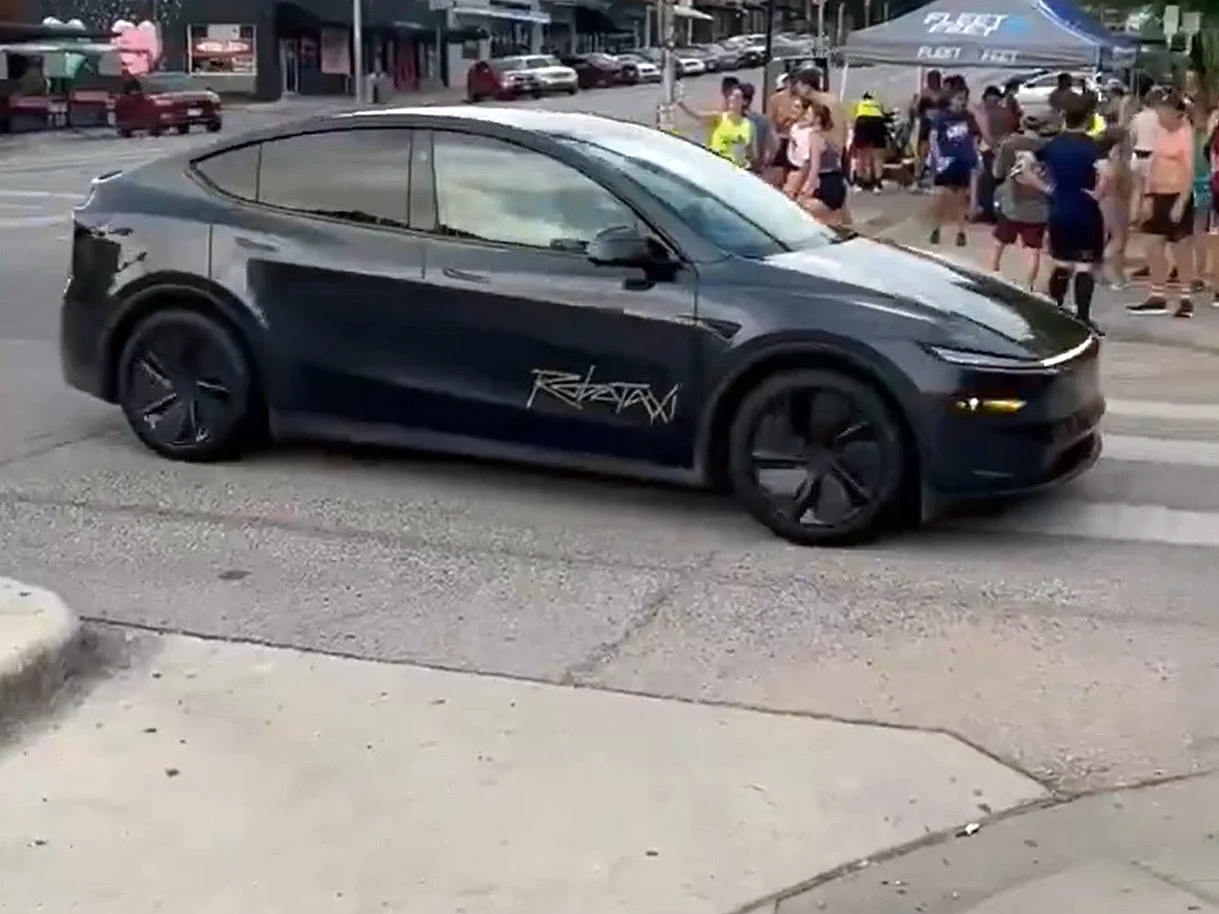
  • Tesla’s Driverless Model Y Launching June 12, Roaming Austin Now

    Tesla’s Driverless Model Y Launching June 12, Roaming Austin Now

    Key Takeaways

    1. Tesla will launch its first robotaxi service in Austin on June 12, allowing rides in fully autonomous vehicles without drivers.
    2. The new Model Y has completed initial journeys with fully autonomous driving (FSD) activated, but public access starts on June 12.
    3. The robotaxi feature will be available in the Tesla app, with pricing details to be announced at launch, potentially offering lower fares than competitors due to the absence of drivers.
    4. If testing continues to be accident-free, Tesla plans to expand its robotaxi service to more cities later this year.
    5. By 2026, Tesla will allow vehicle owners to rent their cars to the robotaxi fleet, with Tesla taking a commission similar to ride-sharing companies like Uber.


    People in Austin, as well as visitors arriving after June 12, will have the chance to try out the first Tesla robotaxi service, which has been in development for several years. These won’t just be test drives; the vehicles that Tesla will put on the streets will be operating without drivers.

    The Model Y’s First Steps

    Elon Musk has confirmed that the new Model Y has successfully completed its initial journeys with fully autonomous driving (FSD) activated, with a Tesla staff member onboard in Austin. However, the public will have to wait until June 12 to use the Tesla robotaxi ride-share feature.

    Testing the Driverless Experience

    When asked if visitors to Austin could summon and experience a driverless Model Y using unsupervised FSD, Musk answered positively. The robotaxi option will be available in the Tesla app once the service launches, and that’s when the pricing for rides will be revealed.

    It’s still unclear how the pricing of Tesla’s robotaxi services will stack up against competitors like Uber and Lyft. However, since there will be no driver and only around ten Model Y pilot vehicles owned and operated by Tesla, it is likely the fares will be lower.

    Future Expansion Plans

    Musk noted that the recent days of testing a driverless Model Y in Austin have been accident-free, and if everything continues smoothly, Tesla intends to broaden its robotaxi service to additional cities later this year. By 2026, the platform will be accessible to vehicle owners who wish to rent out their cars to the robotaxi fleet for various durations in order to earn money, with Tesla taking a cut similar to Uber’s model.

    In June, Tesla is also set to make its first driverless delivery of a brand-new Model Y directly from the factory to its owner, as shared by Elon. This delivery will likely occur in Austin again, since Texas has relatively lenient regulations concerning self-driving vehicles compared to those that have a human driver.

    Source:
    Link