Category: EV vehicles

  • Tesla Owners Sue Elon Musk for Refunds Over Vandalism Claims

    Tesla Owners Sue Elon Musk for Refunds Over Vandalism Claims

    Key Takeaways

    1. Vandalism incidents involving Tesla cars have increased since Elon Musk became more politically active, affecting both the U.S. and international markets.

    2. A group of French Tesla owners has filed a lawsuit against the company, citing breaches of a French law that requires manufacturers to ensure peaceful use of their products.

    3. The lawsuit claims that Musk’s political involvement has turned Teslas into political symbols, hindering owners’ enjoyment of their vehicles.

    4. Public perception of Tesla has declined sharply due to Musk’s political activities, leading owners to seek compensation and explore other electric vehicle options.

    5. Tesla’s sales have dropped significantly, especially in Europe, with a reported 60% decrease in countries like France and Germany, despite the release of the refreshed Model Y.


    Vandalism incidents involving Tesla cars and showrooms have sharply increased since CEO Elon Musk became more politically active.

    Many Teslas have been set ablaze, scratched, had their tires damaged, windows broken, or were marked with anti-Elon slogans both in the United States and internationally.

    Lawsuit from French Owners

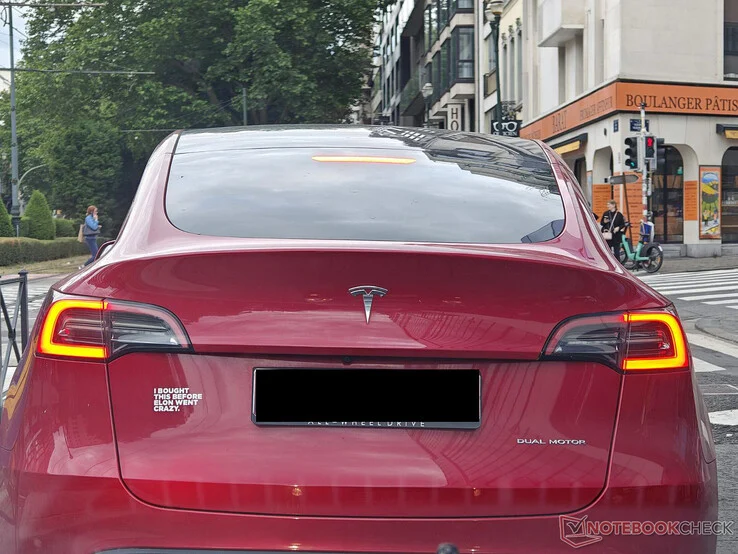
    After experiencing vandalism, including swastikas and even feces on their cars, a group of French Tesla owners decided to take legal action against the company due to Musk’s political involvement. This could be a significant case for other customers.

    Their lawyer from GKA has submitted a lawsuit claiming breaches of a special French law that requires manufacturers to guarantee a “peaceful use” of their products. GKA argues that while Tesla owners purchased their vehicles for their innovative and eco-friendly features, Musk’s actions have turned them into “strong political symbols,” hindering their enjoyment of the cars.

    Declining Brand Perception

    This year, the public’s view of Tesla has declined drastically because of Musk’s political activities and his brief role at the Department Of Government Efficiency (DOGE). Caught off-guard by the changing perceptions, Tesla owners are now seeking compensation.

    The plaintiffs are asking Tesla to buy back their cars and return any lease payments or cash they have made as they look for other eco-friendly electric vehicle options.

    Court Proceedings

    The lawsuit was filed in the Commercial Court of Paris on June 11th, and the judge must now decide if other Tesla owners wishing to join the case can do so after the lawsuit was made known.

    Despite the introduction of the highly anticipated Model Y refresh, Tesla’s sales have significantly decreased this year. The situation in Europe is especially troubling, as Tesla is the only electric vehicle manufacturer facing a negative brand image and a 60% drop in sales in countries like France and Germany.

    Although the Model Y remains one of the leading electric vehicles, its sales have dropped by 50% compared to the same time last year, even with the recent updates.

    Source:
    Link


  • Tesla’s 4680 Battery Exclusivity Ends as China Joins the Market

    Tesla’s 4680 Battery Exclusivity Ends as China Joins the Market

    Key Takeaways

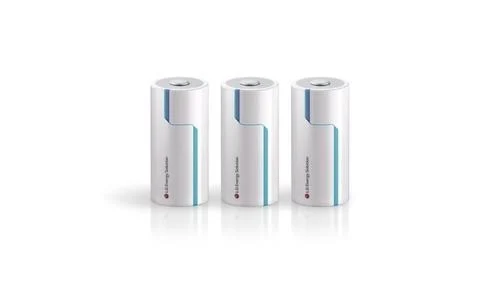
    1. LG Energy has secured a delivery agreement to supply 8 GWh of cylindrical batteries to Chery, ending Tesla’s exclusive rights to the 4680 battery series.
    2. Tesla’s 4680 battery has faced challenges, achieving only about half of the projected cost reductions and showing lower energy density compared to other suppliers’ batteries.
    3. The second generation of the 4680 battery, called Cybercell, offers a 15% increase in energy density but still struggles with slow charging speeds.
    4. Tesla claims to have reached cost parity with other suppliers for the 4680 battery, though it’s uncertain if this considers U.S. government subsidies for local production.
    5. LG is developing its own dry-cathode production method for its 46-series batteries, promising improved performance in energy density, cold weather capabilities, and charging efficiency for Chery’s premium EVs starting in 2026.


    One of Tesla’s suppliers for the cylindrical 4680 battery has recently entered into a delivery agreement with one of the biggest car manufacturers in China.

    Details of the Agreement

    According to the contract, Chery’s high-end electric vehicles will receive 8 GWh of cylindrical batteries from LG Energy, marking the end of Tesla’s exclusive rights to the 4680 battery series.

    Tesla’s Ambitious Plans

    When Elon Musk revealed the 4680 cells during Battery Day back in 2020, he highlighted their potential to be significantly cheaper while also offering a notable increase in capacity. Now, five years later, Tesla has only begun to fulfill parts of that ambitious promise.

    The 4680 battery has proven to be quite a challenge, with the CEO of CATL, the world’s leading battery company, advising Musk that he may be wasting his efforts on this concept. Musk even mentioned that Tesla might need to abandon the 4680 battery if they cannot reduce costs to compete with other suppliers like Panasonic and LG.

    Initial Challenges

    The first generation of the 4680 battery that Tesla produced and used in some Model Y vehicles faced numerous problems. It showed lower energy density and had a less favorable charging curve compared to batteries from Tesla’s other suppliers, and the anticipated savings in manufacturing costs simply did not materialize.

    Tesla achieved only about half of the projected cost reductions, which was the simpler part that came from packing more capacity into larger cells that also functioned as a chassis structure, which then affected vehicle repairability.

    New Developments

    The 4680 battery was revived for the Cybertruck in a second generation dubbed the Cybercell, which offers a 15% increase in energy density along with some additional production cost savings, but it still suffers from slow charging speeds.

    After the Cybertruck’s unveiling, Tesla fine-tuned the charging curve and introduced a dry-cathode manufacturing technique that is a key to lowering 4680 battery costs. Now, Musk asserts that Tesla has reached cost parity with cells made by its suppliers, claiming that the 4680 battery is now the most affordable option on a per kWh basis.

    Important Considerations

    However, it’s uncertain whether these cost reductions account for the substantial subsidies provided by the U.S. government for local battery production, which may face changes under the Trump administration.

    Regardless, LG is also preparing to implement a dry-cathode production method for its 46-series batteries and has signed a contract to supply these batteries to China’s leading automobile exporter.

    LG asserts that its cylindrical batteries destined for China will outperform others in energy density, cold weather capabilities, and charging efficiency. This will be put to the test, as Chery is set to begin installing these batteries in its premium EVs starting in early 2026 under a $730 million agreement that could last six years, with potential extensions for additional models.

    Source:
    Link


  • England Plans 100,000 EV Chargers to Boost Electric Car Adoption

    England Plans 100,000 EV Chargers to Boost Electric Car Adoption

    Key Takeaways

    1. The UK government plans to install over 100,000 street chargers for electric vehicles to support those without off-street parking.
    2. Up to £4 billion will be allocated to promote electric car usage, doubling the current number of public chargers.
    3. The initiative will leverage £381 million in Local Electric Vehicle Infrastructure funding to attract up to £6 billion in private investments by 2030.
    4. A charge point will be installed every 29 minutes as part of the commitment to improve charging infrastructure in England.
    5. The UK is also investing £500 million to develop hydrogen energy infrastructure for hydrogen-powered vehicles.


    One group of people who feel hesitant about moving to electric vehicles are those without off-street parking. They can’t put in home chargers, which makes the switch feel more difficult. However, the government is making a significant effort in England by planning to install over 100,000 street chargers for electric vehicles (EVs).

    Government Investment

    Lilian Greenwood, the minister for the Future of Roads, has announced that up to £4 billion will be allocated to encourage the use of electric cars. This funding will more than double the current 80,000 public chargers available for EV users, enabling those without driveways to charge their vehicles “at home” on street.

    Funding from Multiple Sources

    Taxpayers won’t bear the full cost of this initiative. The plan in England includes using Local Electric Vehicle Infrastructure (LEVI) funding, which is £381 million, to draw in “significant private investments” of as much as £6 billion by the year 2030.

    Scotland, Wales, and Northern Ireland are not left out from this transition. Each of these nations has its own funding dedicated to electrifying road transport.

    Progress in Charging Infrastructure

    Greenwood mentioned, “A charge point [is installed] every 29 minutes, and our initiative to deploy over 100,000 local charge points in England illustrates our dedication to making further advancements.”

    Recently, Believ secured £300 million to set up 30,000 EV chargers at various retail and hospitality locations throughout the UK.

    Hydrogen Vehicles Getting Attention

    Hydrogen-powered vehicles are also part of the equation, even though this type of transportation hasn’t gained much popularity yet. The Department for Energy Security and Net Zero has obtained £500 million to enhance the nation’s hydrogen energy infrastructure.

    Source:
    Link

  • ÆMotion Unveils Four-Wheeled Micro EV at Paris Event

    ÆMotion Unveils Four-Wheeled Micro EV at Paris Event

    Key Takeaways

    1. ÆMotion unveiled a micro EV prototype for two passengers at Vivatech 2025, designed for urban environments like Paris.
    2. The vehicle features a tilting chassis to enhance stability, addressing motorcycle slippage issues in challenging conditions.
    3. It can lean over 35 degrees and reach speeds of up to 115 km/h (71 mph), with a range of up to 200 km (124 miles) on a fixed battery.
    4. The micro EV includes advanced safety features, such as crash cells, seat belts, and a closed riding area, weighing 230 kg (507 lbs.).
    5. Its compact dimensions (235 x 79 x 171 cm) make it ideal for narrow streets and tight parking spaces.


    ÆMotion recently revealed its innovative micro EV prototype designed for two passengers in the vibrant streets of Paris during Vivatech 2025. The firm has been working on this vehicle since 2014, aiming to merge the nimbleness of motorcycles with the safety features typically found in cars.

    Understanding Motorcycle Limitations

    Motorcycle stability has been thoroughly examined, revealing that a key drawback is the difficulty in staying upright when slippage happens. This slippage can occur due to wet roads, taking turns too quickly, or other challenging road conditions. Unfortunately, motorcyclists often suffer serious injuries or even fatal accidents.

    Innovative Design Features

    To address these issues, the company created a sleek four-wheeled electric vehicle featuring a tilting chassis, similar to the 2013 Toyota i-ROAD three-wheeled electric vehicle concept. Both designs lean side-to-side like a motorcycle during turns, ensuring the center of gravity remains stable.

    The i-ROAD can lean more than 35 degrees while reaching speeds of up to 115 km/h (71 mph). It offers a range of up to 200 km (124 miles) with a fixed battery, and up to 70 km (43 miles) when utilizing a swappable battery.

    Safety and Specifications

    Despite its advanced safety features, including crash cells at the front and back, seat belts, a closed riding area, and a windshield wiper, the ÆMotion EV weighs in at 230 kg (507 lbs.). This puts it between the entry-level Honda Rebel 300 motorcycle, which weighs 165 kg (364 lbs.), and the high-end Honda Goldwing Tour at 383 kg (845 lbs.). The vehicle’s dimensions are 235 x 79 x 171 cm (7.7 x 2.6 x 5.6 ft.), making it suitable for narrow streets and tight parking spots.

    Source:
    Link


  • Tesla Cuts Prices by Up to $12,000 on Model S and Model X

    Tesla Cuts Prices by Up to $12,000 on Model S and Model X

    Key Takeaways

    1. Tesla is offering significant discounts on older Model S and Model X units, with savings up to $12,000 in the U.S.
    2. Discounts for the Model X range between $860 and $7,000, depending on the car’s configuration.
    3. Buyers of demo Model X units can save an additional $12,000, provided they are comfortable with a few thousand miles on the odometer.
    4. The refreshed Model S and Model X feature design updates, a new front Autopilot camera, and enhanced interior space and comfort.
    5. The new versions of Model S and Model X are priced $5,000 higher than the older models.


    Hours after the reveal of the refreshed Model S and Model X, Tesla has started offering big discounts on the older versions still in stock. Customers can save as much as $12,000 in the United States.

    Discount Details

    According to their website, Tesla is selling the Model X for between $860 and $7,000 less than the usual price. The specific discount varies based on the car’s configuration, such as paint color and seating capacity.

    Additional Savings on Demo Models

    For those interested in demo Model X units, buyers can save an extra $12,000 as long as the few thousand miles on the odometer isn’t an issue.

    Tesla is also reducing prices on the pre-refresh Model S, with discounts ranging from $800 to $9,000. Customers have the option to choose from both brand-new and demo models.

    Targeting Inventory Clearance

    Tesla aims to clear its inventory by appealing to buyers who are okay with not having the latest features on the Model S and Model X. The company has revamped the exterior design with updated styling at the front and back, added a front Autopilot camera, and introduced new paint options and wheel designs. Inside, the refreshed Model X offers more space for the third-row seat and trunk. Other enhancements include improved suspension, a quieter cabin, customizable ambient lighting, as well as LED footwell and door lights.

    The latest Model S and Model X come at a price increase of $5,000 compared to the older versions for all trims.

    Source:
    Link

  • Tesla Model S Refresh: Longest Range & New Autopilot Camera

    Tesla Model S Refresh: Longest Range & New Autopilot Camera

    Key Takeaways

    1. The refreshed 2026 Model S and Model X feature a new front bumper camera for enhanced visibility during Autopilot and Smart Summon use.

    2. Improvements in ride comfort, cabin noise, and efficiency are highlighted, resulting from new wheel designs and better aerodynamics.

    3. The 2026 Model S achieves the longest range in Tesla history at an EPA estimate of 410 miles, only with standard Magnetite Wheels.

    4. Upgrading to 21-inch Velarium Wheels decreases the range by 30 miles and adds an extra cost of $4,500.

    5. The price of the refreshed Model S has increased by $5,000 compared to the previous model.


    With the introduction of the refreshed 2026 Model S and Model X, Tesla has highlighted the function of a new front bumper camera. This feature, which is also seen in the Cybertruck and the redesigned Model Y, adds more than just parking assistance.

    Enhanced Visibility Features

    The front camera, positioned just above the grille of the updated Model S, is designed to provide “better visibility when utilizing Autopilot and Actually Smart Summon.” This suggests that its purpose goes beyond mere parking support, raising speculation about whether Tesla might add similar front cameras to the upcoming Model 3 refresh, the last facelifted model lacking this feature.

    Impressive Range and Comfort

    In addition to aesthetic changes like a subtle redesign and multicolor ambient lighting throughout, the refreshed 2026 Model S boasts improvements in ride comfort, cabin noise, and overall efficiency. Tesla acknowledges that the enhanced efficiency largely results from new wheel designs and slightly better aerodynamics, rather than changes to the powertrain, similar to what we see in the latest Model Y.

    The modifications in wheel and body design have contributed to reduced power consumption while driving, leading to better range from the same battery and electric motors.

    Longest Range in Tesla History

    Remarkably, the 2026 Model S now holds the record for the longest range of any Tesla vehicle, with an EPA estimate of 410 miles. Although this is just a modest increase from its predecessor’s range, it positions the Model S Long Range refresh as the farthest-traveling car in Tesla’s entire history.

    It’s important to note that this impressive 410-mile range is only attainable with the standard Model S Magnetite Wheels. Opting for the sleek 21-inch Velarium Wheels results in a decrease of 30 miles in range and adds $4,500 to the price, which has already seen an increase of $5,000 compared to the previous model.

    Source:
    Link


  • Tesla Launches Updated Model S and Model X in the US

    Tesla Launches Updated Model S and Model X in the US

    Key Takeaways

    1. Tesla has updated the Model S and Model X with new exterior colors and redesigned bumpers for improved aerodynamics.
    2. Enhanced suspension and noise reduction features have been added for a more comfortable ride.
    3. New safety features include a front bumper camera with a washer and adaptive driving beams.
    4. The Model X interior is now more spacious with optional third-row seats, but the yoke steering wheel is only available on Plaid versions for an additional cost.
    5. Prices for all trims of the Model S and Model X have increased by $5,000, with the Model S starting at $84,990 and the Model X at $89,990.


    Tesla’s priciest electric vehicles have finally gotten some upgrades as the American EV manufacturer officially reveals the enhanced Model S and Model X for its domestic market.

    Model S and Model X Updates

    The Model S and Model X, which are Tesla’s second cars, were launched in 2012 and 2015. Recently, the company has refreshed the exterior with new color choices like Frost Blue Metallic and Diamond Black. Additional changes to the outside include redesigned front and rear bumpers for the Model Y, along with aerodynamic wheel designs that improve the driving range.

    Enhanced Features for Smoother Rides

    Tesla has also improved the suspension for a more comfortable ride. The interior has been upgraded to minimize noise, similar to the recent Model 3 and Model Y. Another feature taken from the Model Y is the front bumper camera, which now includes a washer, and adaptive driving beams for better visibility and safety.

    Customers may appreciate the new dynamic ambient lighting that can animate when entering the cabin. The EV company has also added more customizable LED lighting for the footwell and door pockets.

    Increased Space and New Pricing

    Inside, the Model X now seems more spacious. The optional third-row seats and cargo area provide extra room, which is great for families. However, only the Plaid versions will feature the yoke steering wheel, available as a $1,000 upgrade.

    Tesla has not overlooked the pricing either, as each trim of the Model S and Model X now costs $5,000 more. The Model S Long Range starts at $84,990, while the Plaid is priced at $99,990. The Model X Long Range is available for $89,990, and the Plaid version costs $104,990.

    Source:
    Link

  • 2026 Tesla Model S Facelift Revealed in New Blue Color

    2026 Tesla Model S Facelift Revealed in New Blue Color

    Key Takeaways

    1. Tesla is preparing to unveil refreshed versions of the luxury Model X and Model S after updating the Model 3 and Model Y.
    2. The 2026 Model S was recently spotted without camouflage, revealing its design changes, including the removal of the contrasting Tesla logo.
    3. The redesign of the Model S has received mixed reviews, with some features looking outdated, but it may still be a temporary testing body.
    4. The new Model S features a painted emblem and a front bumper camera, which is now standard in Tesla’s latest models.
    5. Updates to the powertrain and battery performance for the Model S are still uncertain, but improvements are anticipated given its exceptional range and acceleration capabilities.


    After wrapping up updates for the Model 3 and Model Y, Tesla is gearing up to unveil refreshed versions of its luxury Model X and Model S, both of which have been around for a while now.

    Model S Spotted

    The 2026 Model X has already been seen covered in camouflage, with glimpses of its new interior design being shared. Now, it’s the Model S’s turn to take the spotlight. Recently, the 2026 Model S was caught parked on the roadside, completely free of camouflage on both its front and back ends, showcasing Tesla’s speedy car with the longest range.

    Design Changes

    However, “showcasing” might be a bit generous, as this redesign is somewhat of an acquired taste. The previously contrasting Tesla logo on the front is no longer there, and the rear bumper along with the spoiler seem a bit outdated. Still, the fact that Tesla staff are driving around in it without any camouflage suggests this might not be the final design—it could just be a temporary body kit used for testing while engineers check the internals.

    New Features

    In terms of details, the Tesla emblem is now painted to match the color of the front slit, which looks a bit sharper than before. However, this doesn’t necessarily add an aggressive edge to the car’s appearance, and the new blue paint job fails to give it a sporty vibe. It remains uncertain what kind of updates Tesla will introduce for the Model S’s powertrain or battery, particularly since it’s the only vehicle in their lineup that can exceed 400 miles on a single charge and can sprint from 0 to 60 mph in less than two seconds. Tesla is likely to enhance these impressive features.

    At this point, the only noticeable addition is the front bumper camera, which is standard in Tesla’s latest models, including the Cybertruck and the updated Model Y.

    Source:
    Link


  • Kia PV5 Passenger Pricing Revealed: New VW ID. Buzz Rival

    Kia PV5 Passenger Pricing Revealed: New VW ID. Buzz Rival

    Key Takeaways

    1. The Kia PV5 Passenger electric vehicle starts at €39,995 in Europe, competing with the Volkswagen ID.Buzz.
    2. The PV5 offers two battery options: 51.5 kWh and 71.2 kWh, with higher trims featuring more advanced features.
    3. The Elite trim, available only with the larger battery, starts at €47,745 and includes premium features like a blind spot camera.
    4. The PV5 Passenger is approximately €10,000 cheaper than the ID.Buzz for entry-level models in the EU market.
    5. Orders for the PV5 Passenger will begin in the coming weeks, with deliveries expected to start in October 2025.


    Kia has shared the cost details for its new PV5 Passenger electric family car across multiple EU nations. This electric vehicle (EV) was first revealed earlier this year, aiming to rival the Volkswagen ID.Buzz. Aside from the Passenger model, there are also commercial variants available: the PV5 Cargo, PV5 Crew, and PV5 Chassis Cab.

    Pricing in Europe

    In countries such as the Netherlands, France, and Germany, the starting price for the PV5 Passenger is €39,995 for the Essential version. The Plus trim, which includes features like a heated steering wheel, a wireless phone charger, and V2L support, begins at €40,995. Both variants can be equipped with either a 51.5 kWh or a 71.2 kWh battery.

    Higher Trims and Features

    Moving up, the Elite trim, which is exclusively available with the 71.2 kWh battery, starts at €47,745. This variant comes with various features, including a blind spot camera, side parking sensors, and a 360° camera. The most premium option is the Elite Executive trim, also using the larger battery, priced from €50,245. This model boasts 16-inch alloy wheels along with an electrically operated tailgate and sliding doors.

    Market Comparison and Availability

    When comparing entry-level models, the Kia PV5 Passenger costs roughly €10,000 less than the ID.Buzz in this market. In the UK, pricing for the PV5 Passenger begins at £32,995. Kia has mentioned that it will begin taking orders for the PV5 Passenger in Europe “in the coming weeks,” with initial deliveries planned for October 2025. The Kia PV5 is set to launch in Europe and Korea in 2025, with a rollout to other regions in 2026. However, there are no current plans to sell this EV in the US market.

    Source:
    Link

  • BYD Launches UK’s Most Affordable Electric Car

    BYD Launches UK’s Most Affordable Electric Car

    Key Takeaways

    1. The BYD Dolphin Surf is the most affordable electric car in the UK, starting at £18,650, and offers features typically found in higher-end vehicles.
    2. It has a range of up to 200 miles on a single charge and can recharge from 10 to 80 percent in just 30 minutes.
    3. Analysts suggest that BYD may further reduce the Dolphin Surf’s price, as a similar model in China costs around £6,000.
    4. The UK market is attractive for Chinese electric vehicle manufacturers due to the absence of tariffs, leading to significant sales of Chinese EVs.
    5. The Dolphin Surf competes with other budget-friendly electric cars like the Dacia Spring and Citroen e-C3 while also offering a variety of other models in the UK.


    BYD has just rolled out its most affordable electric car in the UK. The Dolphin Surf starts at £18,650, distinguishing itself from other budget-friendly options by providing features that are usually found in higher-end vehicles.

    Impressive Range and Features

    This new BYD electric vehicle can travel up to 200 miles on a single charge, thanks to its lithium iron phosphate (LFP) battery that can go from 10 to 80 percent in just 30 minutes. While the hatchback is primarily designed for city driving, it makes up for its shorter range with premium features like a 10.1-inch rotating touchscreen, smart cruise control, vehicle-to-load technology, and automatic emergency braking. BYD aims to lower sensor costs by integrating advanced features into its entry-level offerings.

    Potential Price Cuts Ahead

    However, some analysts are cautioning that BYD might reduce the price of the Dolphin Surf even further. The company offers a similar model, the Seagull, in China for around £6,000.

    The UK market is becoming more appealing for Chinese electric vehicle manufacturers. Unlike other parts of Europe, the UK has not imposed tariffs on Chinese brands, which face a 17.4 percent increase elsewhere. Consequently, UK consumers accounted for 30 percent of all Chinese EV sales in Europe, with brands such as BYD, Xpeng, Leapmotor, Jaecoo, Geely, and SAIC Motors-owned MG making a mark.

    Competing with Other Affordable Models

    The Dolphin Surf competes against cars like the £14,995 Dacia Spring and the £18,305 Citroen e-C3. Additionally, BYD offers other models in the UK, including the Sealion 7, ATTO 3, and Seal.

    Source:
    Link