Category: Computers

  • Jonsbo N6 NAS Chassis: 9 Hot-Swap 3.5-Inch Drive Slots Available

    Jonsbo N6 NAS Chassis: 9 Hot-Swap 3.5-Inch Drive Slots Available

    Key Takeaways

    1. The Jonsbo N6 NAS chassis is priced at 699 Yuan (about $100) and is currently available in China, with potential global availability via import platforms like AliExpress.
    2. It features a unique layout with two sections: one for PC components and another for up to nine 3.5″ drives, supporting mATX motherboards and GPUs up to 320 mm long.
    3. The chassis supports CPU coolers with a maximum height of 160 mm and includes a server-grade drive backplane for hot swapping drives.
    4. It offers various I/O options, including a USB-C port (10 Gbps), USB-A port (5 Gbps), and a 3.5 mm audio combo jack, along with nine drive status indicators and a fan controller.
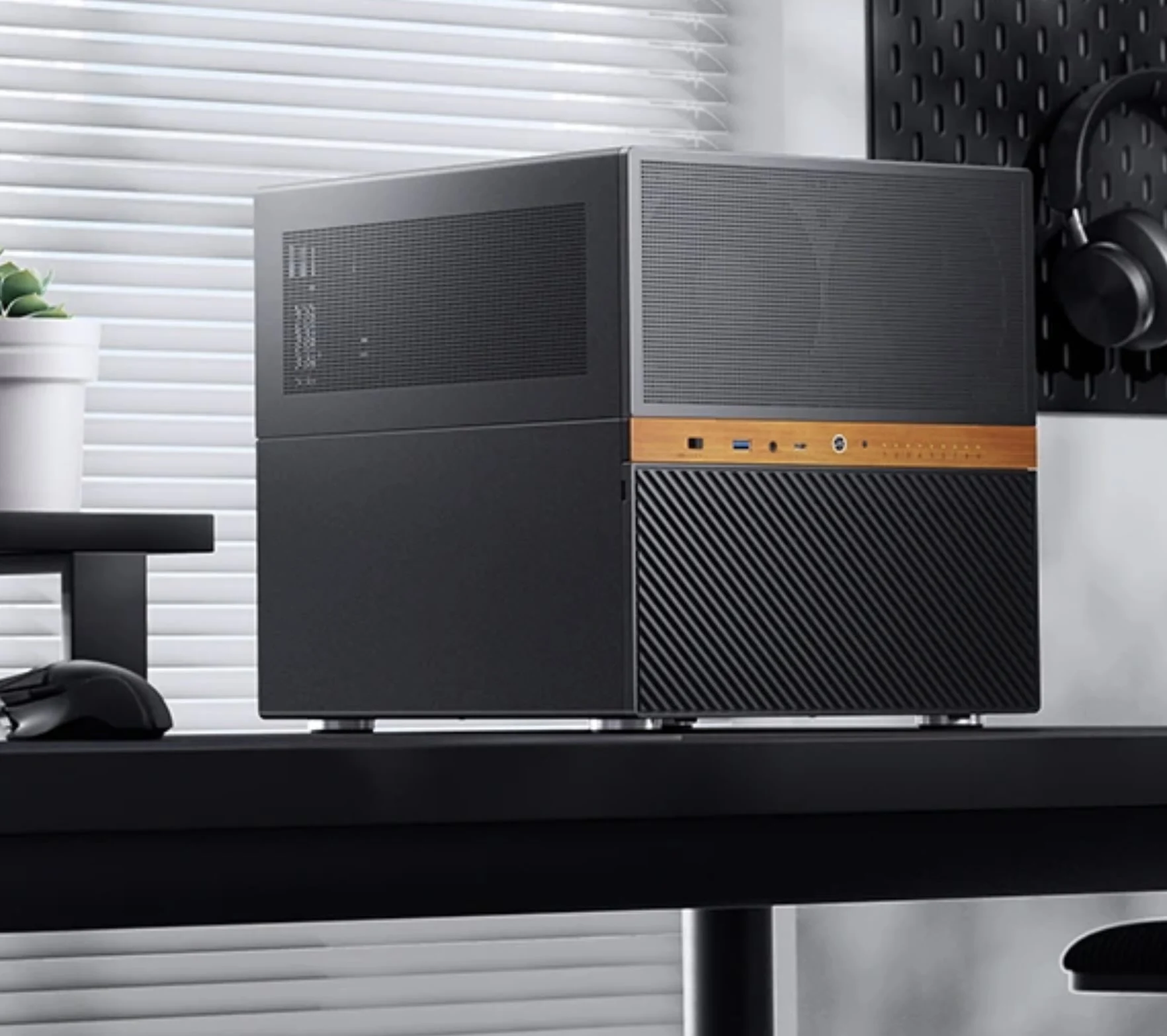
    5. The N6 measures 30.5 x 35.3 x 31.8 cm (about 12 x 13.9 x 12.5 inches) and has a steel construction with a wooden I/O strip, giving it an appealing cube-like design.


    The Jonsbo N6 NAS chassis was introduced in China a few weeks ago and is now available for purchase in the country at a price of 699 Yuan, which is just under $100. As of now, it’s unclear when it will be globally launched, but it should be possible to find it for import on platforms like AliExpress.

    Design Features

    The N6 NAS features a unique layout that provides two separate sections: one for the main PC components and another beneath it for the drives. It can hold up to nine 3.5″ drives, and the upper section is designed to accommodate the mATX format. Users can fit GPUs that are up to 320 mm long, and the chassis allows for seven internal fans in total.

    Compatibility and Performance

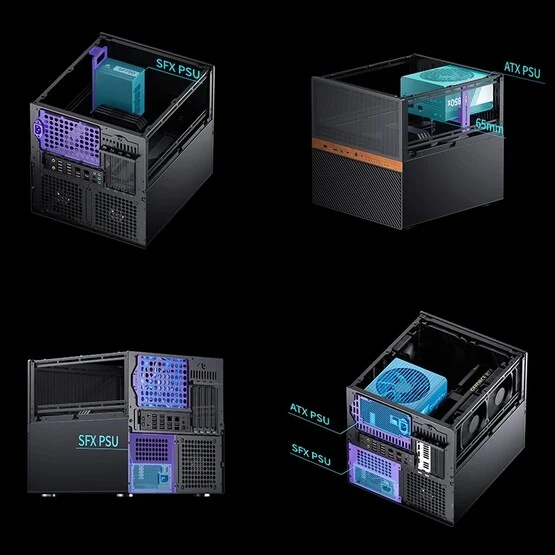
    For CPU coolers, a maximum height of 160 mm is supported. A significant benefit of the Jonsbo N6 NAS is its server-grade drive backplane, enabling users to hot swap individual drives. The chassis is compatible with both ATX and SFX power supply units (like the Cooler Master V850, currently priced at $125 on Amazon), with three different mounting options available as shown in the image below.

    Connectivity Options

    In terms of I/O options, the chassis has a decent selection located on a wooden panel at the center. The ports include a USB-C port (10 Gbps), a USB-A port (5 Gbps), and a 3.5 mm audio combo jack. Additionally, there are nine drive status indicators and a fan controller with three speed settings.

    Measuring 30.5 x 35.3 x 31.8 cm, or about 12 x 13.9 x 12.5 inches, the N6 has a cube-like shape and features an appealing design. The case is primarily made of steel, except for the I/O strip, which is made from wood. As noted earlier, the Jonsbo N6 NAS chassis is priced at 699 Yuan or approximately $100.

    ITHome

    Source:
    Link


  • Asteroid Expected to Enter Earth’s Orbit in Coming Years

    Asteroid Expected to Enter Earth’s Orbit in Coming Years

    Key Takeaways

    1. Asteroid 2022 RD2 is part of the Arjunas and is confirmed to be of natural origin, not an alien spacecraft.
    2. 2022 RD2 will closely approach Earth and is expected to orbit from November 12 to December 12, 2043, and again on February 29 and May 21, 2044.
    3. The asteroid’s trajectory may change over time due to gravitational influences from Earth and the Moon.
    4. Scientists are currently assessing the potential risks of an impact from 2022 RD2.
    5. There is a small probability (0.097%) of instability and potential risk of impact between 2080 and 2114 after the asteroid’s orbits around Earth.


    Many celestial objects come close to Earth each year, and some can pose risks, like an asteroid anticipated to hit the Moon in 2032. However, in the coming years, we might have a new companion in Earth’s orbit that will need careful observation.

    Discovery of 2022 RD2

    This asteroid is called 2022 RD2 and it is part of the Arjunas, which are found in a secondary asteroid belt. Naturally, whenever a new celestial body is spotted, there are those who speculate it could be an alien spacecraft. Nevertheless, this asteroid is confirmed to be of natural origin since its movements align with those of typical asteroids.

    Trajectory Details

    2022 RD2 will approach Earth closely and will be influenced by the gravitational pull of both our planet and the Moon. Specifically, this asteroid is expected to orbit Earth from November 12, 2043, to December 12, 2043, then again on February 29, 2044, and on May 21, 2044. It will also have a presence from July 10, 2044, until July 29, 2044. It’s crucial to remember that its path may shift over the years, potentially altering its trajectory.

    Potential Risks

    It is essential to highlight that scientists are currently assessing the possible risks of an impact. Indeed, after making three orbits around Earth, this small asteroid may become unstable. Caution is warranted, as this instability could occur between 2080 and 2114, even though the current probability stands at 0.097%.

    Source:
    Link


  • AMD ThinkPad T16: Thunderbolt 4 and Feature-Rich Performance

    AMD ThinkPad T16: Thunderbolt 4 and Feature-Rich Performance

    Key Takeaways

    1. Premium business laptops like the Lenovo ThinkPad T16 offer unmatched overall value despite newer gaming laptops having advanced features.
    2. The ThinkPad T16 Gen 4 AMD variant includes two Thunderbolt 4 ports, enhancing connectivity options.
    3. User-friendly maintenance features include easy access to RAM, SSD, fan, battery, and keyboard removal.
    4. Integrated 5G connectivity with eSIM support provides significant convenience for frequent travelers.
    5. Business laptops often have higher costs due to extended warranties and guaranteed availability of replacement parts.


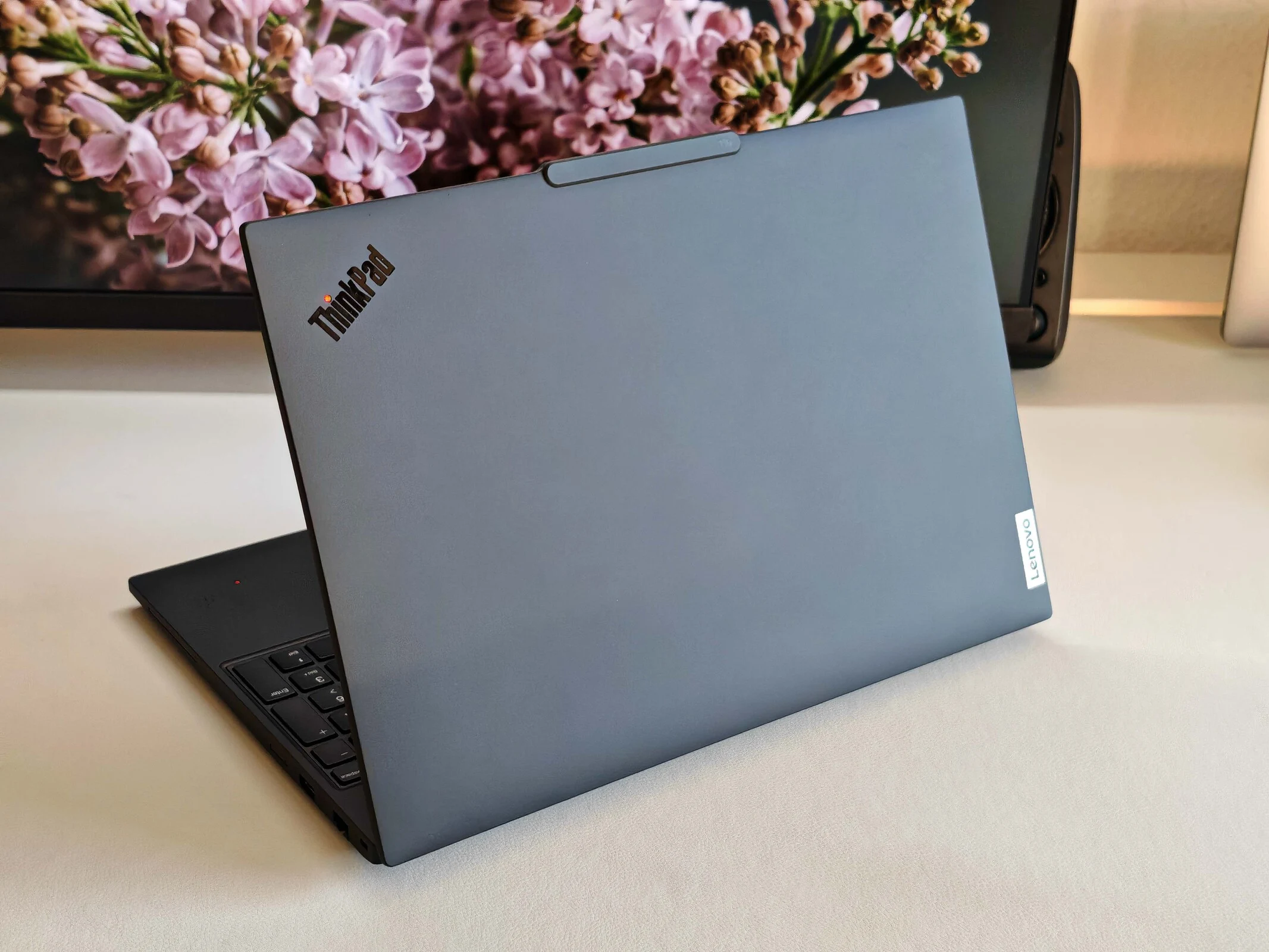
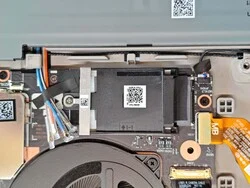
    Premium business laptops, such as the recently analyzed Lenovo ThinkPad T16, remain a standard for features. While gaming laptops and mobile workstations may have more up-to-date capabilities like Thunderbolt 5 or PCIe 5.0, the overall value of business laptops is tough to match. This begins with the ports, where typical connectors are usually paired with Ethernet ports and SmartCard readers, which are particularly crucial for larger organizations. It’s a little surprising that the AMD variant of the ThinkPad T16 Gen 4 includes two Thunderbolt 4 ports instead of just USB 4.0. Additionally, maintenance is quite user-friendly with two SO-DIMM slots, and replacing the SSD is straightforward. Accessing the fan and battery is simple, too, and you can remove the keyboard after loosening just two screws on the underside.

    Connectivity Options

    Although many new laptops support Wi-Fi 7, the choices for mobile Internet connections are more limited. Most consumer laptops lack 5G or LTE capabilities, and if you frequently travel, you understand how frustrating it is to depend on your smartphone or public Wi-Fi hotspots. Having an integrated 5G connection is significantly more convenient, and with an eSIM, it becomes easy to use in various countries. Our review model of the ThinkPad T16 Gen 4 was ready for WWAN, which means it came with a Nano-SIM card reader (besides eSIM) and had antennas already installed.

    Cost Considerations

    When you take into account factors like extensive warranties (including on-site services) and guaranteed availability of replacement parts over a specified duration, it becomes clear why business laptops tend to be pricier than similarly equipped consumer models. For more details, refer to our in-depth review of the latest ThinkPad T16 Gen 4 AMD.


  • Huawei Unveils New Luxurious Finish for MateBook Fold Laptop

    Huawei Unveils New Luxurious Finish for MateBook Fold Laptop

    Key Takeaways

    1. Huawei launched the Mate 80 series smartphones and several other devices, including a new Watch Ultimate Design and a 110-inch Mini LED TV.
    2. The MateBook Fold received updates just six months after its initial release, now resembling the ThinkPad X1 Fold more than dual-screen laptops.
    3. New color options for the MateBook Fold include a Red variant for the 2 TB model, along with previously available colors.
    4. The updated MateBook Fold is priced at CNY 26,999 (approximately $3,815) but has not yet been released globally.
    5. The new Red color is also available for the Mate XTs Ultimate Design and Mate X7 models, raising questions about the timing of its release.


    Yesterday, Huawei launched a variety of new devices in China, including four smartphones from the Mate 80 series. These models range from the Mate 80 to the Mate 80 RS Ultimate Design. In addition to these smartphones, Huawei also revealed a new Watch Ultimate Design, the MatePad Edge, the Mate X7, and a 110-inch Mini LED TV.

    MateBook Fold Update

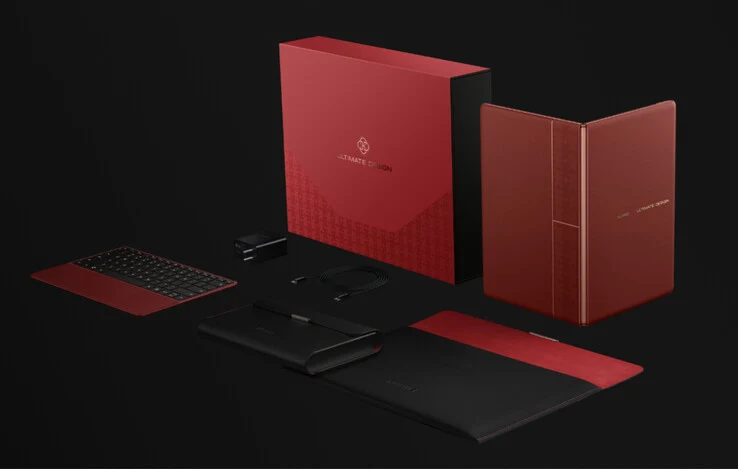
    Among the new products, Huawei has quietly made updates to the MateBook Fold just six months after it first came out. Although it has not yet been made available globally, the MateBook Fold is more similar in design to the ThinkPad X1 Fold rather than to dual-screen laptops such as the Asus Zenbook Duo (currently priced at $1,692.99 on Amazon). Previously, the MateBook Fold was offered in black, blue, and white, each with matching keyboard accessories that go perfectly with their 18-inch foldable screens.

    New Color Options

    From what we’ve observed, the latest MateBook Fold brings a visual update. Initially, Huawei only offered the foldable with a 32 GB RAM and 2 TB storage option in the Forged Shadow Black color. For some unknown reason, the Cloud Water Blue and The Sky is White colors were limited to a 1 TB model. However, Huawei has now added a new Red option, which roughly translates to ‘Ruihong,’ to the 2 TB lineup.

    Interestingly, this new color is also available for the Mate XTs Ultimate Design. The same applies to the Mate X7, which raises the question of why it took Huawei six months to provide one of its pricier devices in this color. The updated MateBook Fold is priced at CNY 26,999 (approximately $3,815), but as of now, there is no indication of a global release. For more information, check out our launch article on the MateBook Fold.

    Source:
    Link


  • ASRock Launches Fanless iBOX Mini-PCs with Intel Arrow Lake Chips

    ASRock Launches Fanless iBOX Mini-PCs with Intel Arrow Lake Chips

    Key Takeaways

    1. ASRock has updated its mini-PC lineup with new models, including the iBOX-225H and iBOX-255H, which feature Intel’s Arrow Lake architecture.
    2. The iBOX-225H is powered by the Intel Core Ultra 5 225H processor, while the iBOX-255H uses the Core Ultra 7 255H processor, which includes two additional performance cores.
    3. The integrated Arc 140T in the iBOX-255H offers significantly better performance compared to the Arc 130T in the iBOX-225H.
    4. Both new mini-PC models are fanless, using metal casings for heat dissipation, and support up to 96 GB of DDR5 RAM at 6,400 MT/s.
    5. The iBOX series models include Thunderbolt 4 and 2.5 Gigabit LAN connectivity, but pricing and availability details are not yet available.


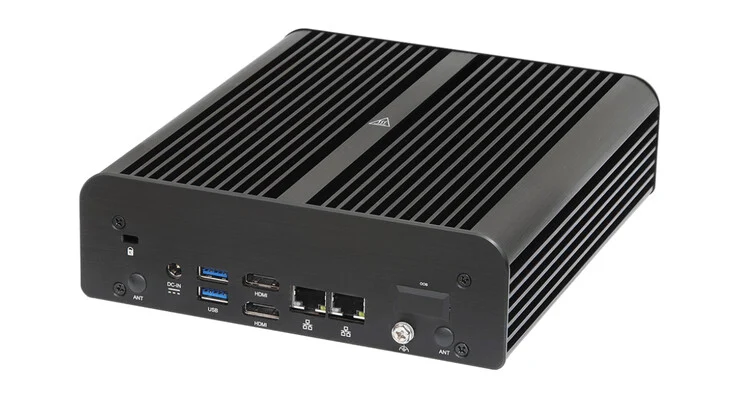
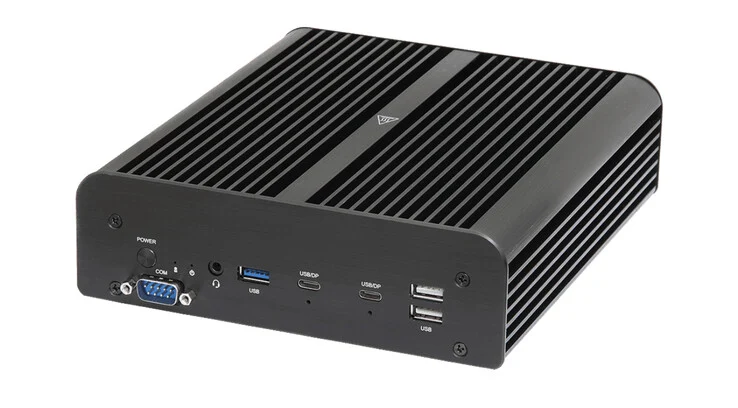
    ASRock has made some quiet updates to its mini-PC lineup, introducing new models after the release of the DeskMini X600, which boasts USB4 connectivity and is currently priced at $172.79 on Amazon. This time, the company is embracing Intel’s Arrow Lake architecture, which is already being utilized in various mini-PCs like the ASUS NUC 15 Pro and Khadas Mind 2s, just to name a few.

    New Additions to the iBOX Series

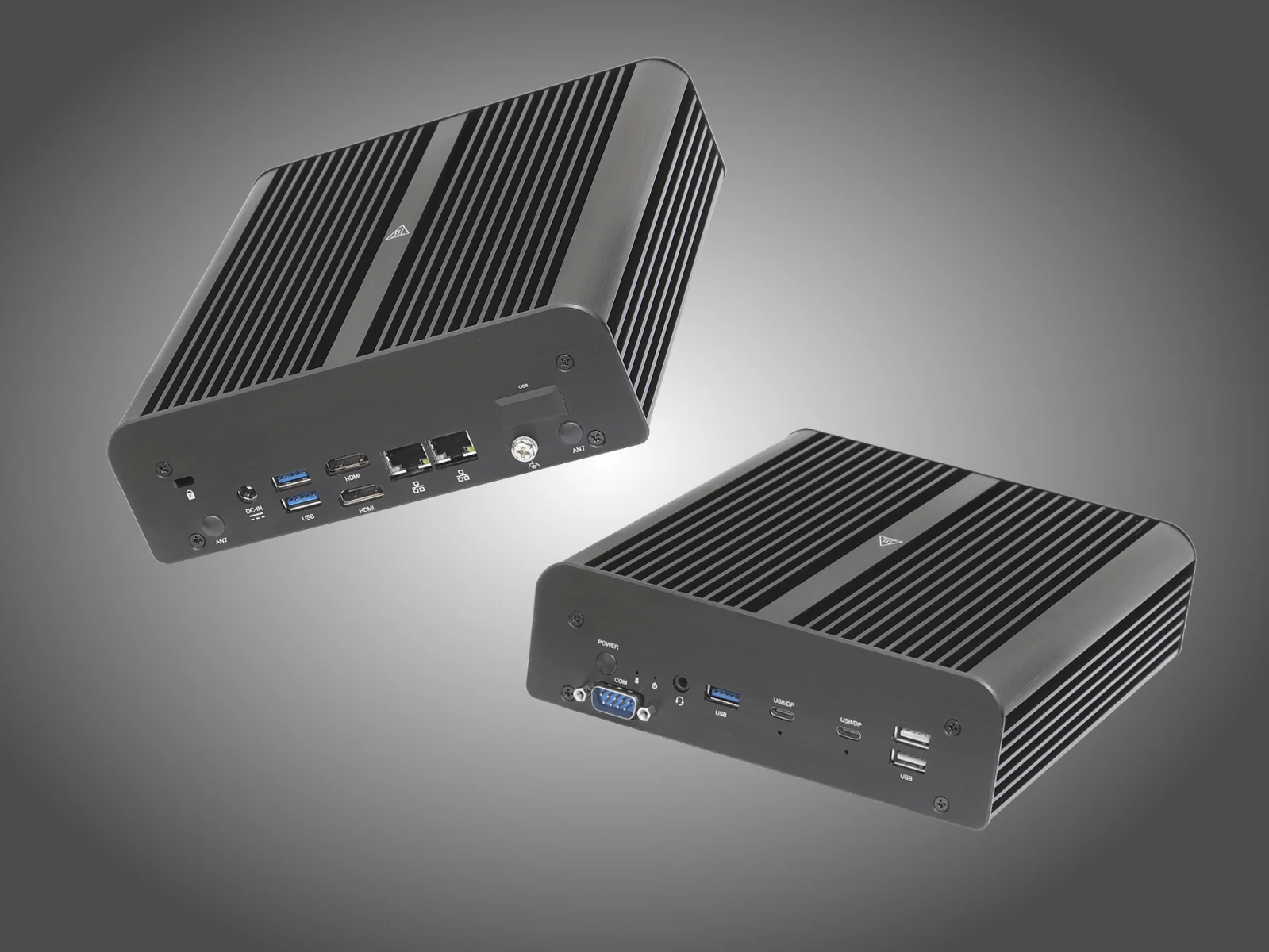
    The latest additions to ASRock’s lineup are the BOX-225H and iBOX-255H, now listed on their website as expansions to the iBOX series. As indicated by their names, these models are powered by Intel’s Core Ultra 5 225H and Core Ultra 7 255H processors, respectively. According to our tests, the extra two performance cores in the Core Ultra 7 255H do not seem to provide significant performance improvements.

    Performance Insights

    In contrast, the Arc 140T integrated within the Core Ultra 7 255H shows a much more substantial performance increase compared to the Arc 130T found in the Core Ultra 5 225H. Both the iBOX-225H and iBOX-255H are designed as fanless systems, utilizing their metal casings for heat dissipation. Additionally, both models are equipped with a variety of ports on their front and back panels.

    Furthermore, ASRock claims that both mini-PCs can support up to 96 GB of DDR5 RAM running at 6,400 MT/s, along with Thunderbolt 4 and 2.5 Gigabit LAN connectivity. Unfortunately, details on pricing and availability have not yet been disclosed. For further information on the iBOX-225H and iBOX-255H, please refer to ASRock’s product listings.

    Source:
    Link


  • Rapidus Plans to Mass-Produce 1.4 nm Chips by 2029

    Rapidus Plans to Mass-Produce 1.4 nm Chips by 2029

    Key Takeaways

    1. Rapidus aims to compete with TSMC and Intel in the sub-2 nm technology field, planning to mass-produce 1.4 nm chips by 2029.
    2. The project will require several trillion yen in investments, primarily funded by the Japanese government and private investors.
    3. Full-scale research and development for the 1.4 nm chips will start in 2026, in partnership with IBM.
    4. Rapidus has completed the design for its 2 nm chip but has not announced mass production capabilities or secured clients yet.
    5. If successful, Rapidus’s 1.4 nm technology will still be behind TSMC’s and Intel’s production timelines, potentially increasing competition in the semiconductor market.


    Rapidus, an unexpected newcomer in Japan’s semiconductor sector, is aiming to compete with TSMC and Intel in the sub-2 nm technology field. According to a report by Nikkei Asia, the company plans to begin mass production of 1.4 nm chips by 2029, just two years after it launches its first 2 nm chips into the market.

    Major Investments Ahead

    This ambitious project is expected to cost Rapidus several trillion yen, with most of the financing coming from the Japanese government and private investors. The full-scale research and development for the 1.4 nm chips is set to begin in 2026, in collaboration with IBM.

    Current Status of Production

    While Rapidus has successfully completed the design for its 2 nm chip, details regarding its mass production capabilities have not been disclosed. The company intends to utilize ten ASML EUV scanners, likely reserving five for the 2 nm chips and the others for future nodes. As of now, Rapidus has not secured any clients, but such information is rarely shared, especially for new entrants in the industry.

    If Rapidus manages to launch its 1.4 nm technology by 2029, it will still lag behind TSMC’s A14 node, which is projected to begin production in 2028. Additionally, Intel’s 14A node is anticipated to debut a year prior, coinciding with Samsung Foundry’s SF1.4. If everything unfolds as planned, OEMs could benefit from three more foundries, which would help to lessen their dependence on TSMC.

    Source:
    Link


  • Asustor Lockerstor Gen2+ NAS: Intel, Dual 5GbE, 212TB Storage

    Asustor Lockerstor Gen2+ NAS: Intel, Dual 5GbE, 212TB Storage

    Key Takeaways

    1. The Asustor Lockerstor Gen2+ NAS series includes 2-bay, 4-bay, and 6-bay models, with a maximum storage capacity of 212 TB.
    2. It is powered by an Intel Celeron N5105 CPU, featuring four cores and a base clock speed of 2 GHz, suitable for home NAS setups.
    3. The NAS features dual 5 Gbps Ethernet ports and supports up to 10 Gbps throughput with SMB multichannel, plus an option for a 10 Gbps network card.
    4. It offers four M.2 slots for tool-free installation of PCIe 3.0 drives, enhancing caching capabilities.
    5. Connectivity options include dual USB 3.2 Gen2, USB 2.0, and HDMI 2.0b ports, with pricing details to be discussed later in the article.


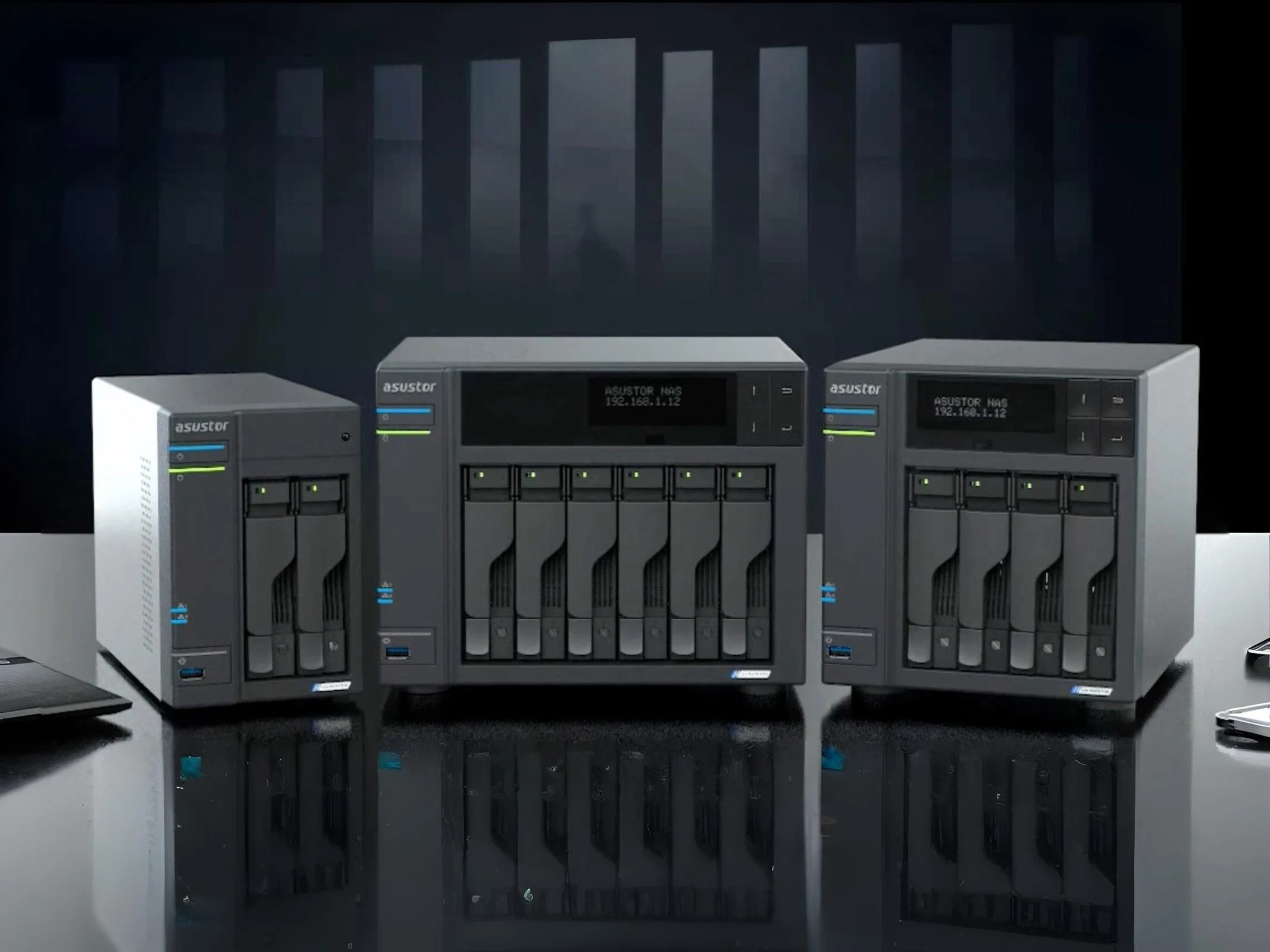
    Asustor has unveiled the new Lockerstor Gen2+ NAS series, which includes options for 2-bay, 4-bay, and 6-bay models. The 6-bay model can accommodate an impressive total of 212 TB of storage, with 32 TB coming from solid-state drives via M.2 slots. Pricing information will be discussed later in the article.

    Performance Specs

    At the heart of the Lockerstor Gen2+ NAS lineup lies the Intel Celeron N5105 CPU, which features four cores and four threads. This processor has a base clock speed of 2 GHz and can boost to 2.9 GHz on a single core.

    Although the N5105 chip was released over four years ago, it still offers reasonable performance for a home NAS setup. It supports a maximum of 16 GB of DDR4-2933 RAM, which should be suitable for most users’ needs.

    Networking Features

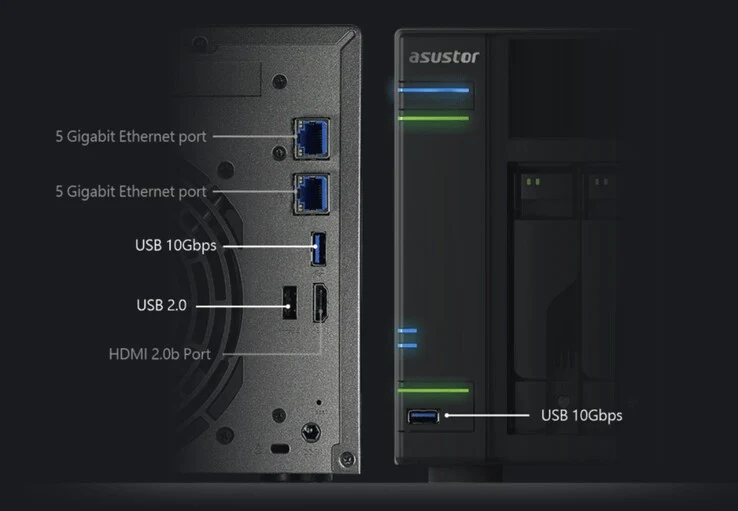
    Networking is an essential component of any NAS, and the Asustor Lockerstor Gen2+ does not disappoint. It comes equipped with dual 5 Gbps Ethernet ports, adequate for various applications. With the help of SMB multichannel, users can achieve a total throughput of up to 10 Gbps. Additionally, a 10 Gbps networking card can be added using the available PCIe slot.

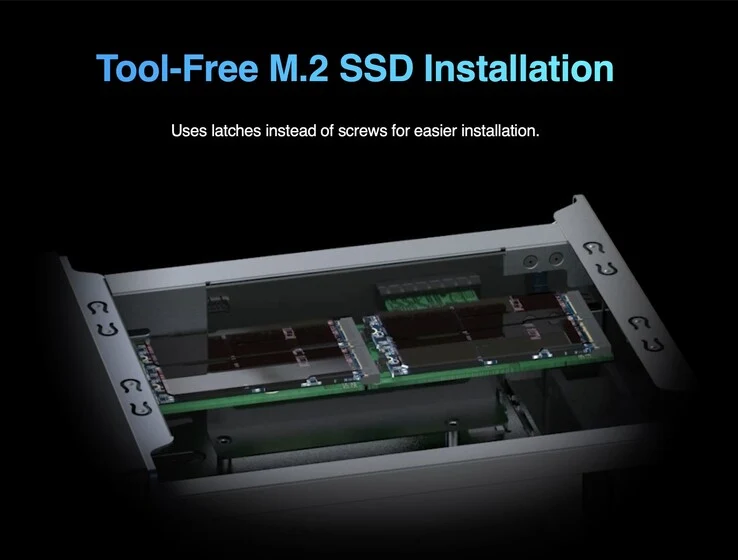
    The Lockerstor Gen2+ offers configurations with two, four, and six drive bays that can accommodate both 2.5″ and 3.5″ drives. It features four M.2 slots that allow for tool-free installation and support PCIe 3.0 drives, which is beneficial for caching. Overall, the maximum storage capacity is a remarkable 212 TB.

    Connectivity Options and Pricing

    The available ports include dual USB 3.2 Gen2, USB 2.0, and an HDMI 2.0b port. Pricing for the Lockerstor Gen2+ is as follows:

    A potential alternative to consider is the Ugreen DXP4800 (4-bay, 10G), which is currently available for $559.99 on Amazon.

    Asustor’s new NAS lineup has been highlighted by TechPowerUp.

    Source:
    Link


  • Minisforum Launches AtomMan G1 Pro Mini-PC with RTX 5060 GPU

    Minisforum Launches AtomMan G1 Pro Mini-PC with RTX 5060 GPU

    Key Takeaways

    1. The AtomMan G1 Pro features AMD’s Ryzen 9 8945HX APU with 16 cores and 32 threads, offering peak clock speeds of 5.4 GHz.
    2. It includes an Nvidia GeForce RTX 5060 desktop GPU, which has 3,840 CUDA cores and 8 GB of GDDR7 VRAM, outperforming the RTX 4060.
    3. The mini-PC measures 315 x 215 x 57 mm and offers multiple connectivity options, including DisplayPort 2.1, HDMI 2.1, and five USB ports.
    4. The starting price for the AtomMan G1 Pro is $1,439.90, which includes 32 GB of DDR5 RAM and 1 TB of storage.
    5. A barebones version is expected at $1,039 but is currently out of stock; only the fully equipped version is available on certain regional websites.


    Minisforum has recently introduced the AtomMan G1 Pro, an upgrade to its AtomMan series, following a preview last month. This new mini-PC comes more than a year after the release of the AtomMan G7 and G7 Ti, which currently retails for $1,389 on Amazon. The G1 Pro features a much stronger CPU and GPU setup compared to its predecessors.

    Powerful Components

    The AtomMan G1 Pro is powered by AMD’s Ryzen 9 8945HX APU from the Dragon Range refresh series. This APU boasts 16 cores and 32 threads, reaching peak clock speeds of 5.4 GHz, and has a total of 80 MB of L2 and L3 cache. It can deliver up to 100 W of performance in ‘Best Mode’. Alternatively, users can opt for lower performance modes, with 60 W for Office tasks and 80 W for gaming.

    Enhanced Graphics

    In addition, the G1 Pro features an Nvidia GeForce RTX 5060 desktop GPU, which has 3,840 CUDA cores and 8 GB of GDDR7 VRAM connected via a 128-bit memory bus. During testing, the GeForce RTX 5060 outperformed the older GeForce RTX 4060 but fell short by approximately 14% compared to the RTX 5060 Ti. While this GPU is theoretically upgradable, the 145 W TDP and the mini-PC’s 350 W power supply may pose limitations on upgrades.

    Connectivity and Pricing

    Despite its compact dimensions of 315 x 215 x 57 mm, the AtomMan G1 Pro is well-equipped with various ports. It includes DisplayPort 2.1 and HDMI 2.1 through the GeForce RTX 5060, along with five USB ports and 5 Gbps LAN connectivity. The starting price for the AtomMan G1 Pro is $1,439.90, which includes 32 GB of DDR5 RAM and 1 TB of storage, not accounting for any available discounts. A barebones version is expected to be priced at $1,039, but it is currently out of stock. At the moment, only the 32 GB RAM and 1 TB SSD variant is shown on Minisforum’s Eurozone, Canadian, and UK websites.

    Source:
    Link


  • Thunderobot Unveils 16-Core Gaming Desktop to Compete with Intel

    Thunderobot Unveils 16-Core Gaming Desktop to Compete with Intel

    Key Takeaways

    1. Thunderobot launched new Mix G2 and Mix NUC mini-PCs featuring Intel and AMD processors, targeting competitors like Asus ROG NUC 2025 and Beelink SER9.
    2. The Hygon C86 processor, also known as Black Warrior Hunting Blade Pro, has 16 cores and 32 threads but lacks disclosed thermal design power (TDP).
    3. Hygon C86’s multi-core performance is claimed to be between Intel’s Core i7-13700 and i7-14700K, but its single-core performance is comparable to the older Core i7-12700.
    4. Hygon C86 scored 1,073 in single-core and 8,811 in multi-core tests on Geekbench 6, which are considered disappointing results.
    5. Thunderobot employs an all-in-one cooler with multiple fans for the Hygon C86, but details on pricing and availability are still unknown.


    Earlier this month, Thunderobot unveiled its new Mix G2 and Mix NUC mini-PCs, which utilize Intel and AMD processors, respectively. To put it in perspective, the Mix G2 competes with the Asus ROG NUC 2025, while the Mix NUC shares the same form factor and processor as the Beelink SER9, along with other similar mini-PCs (currently priced at $649 on Amazon).

    New Developments

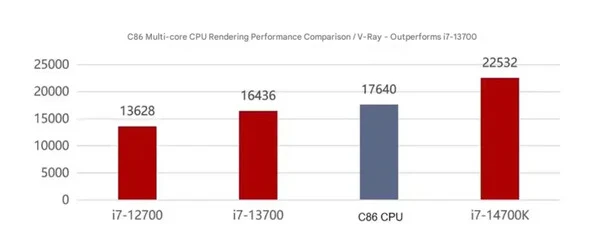
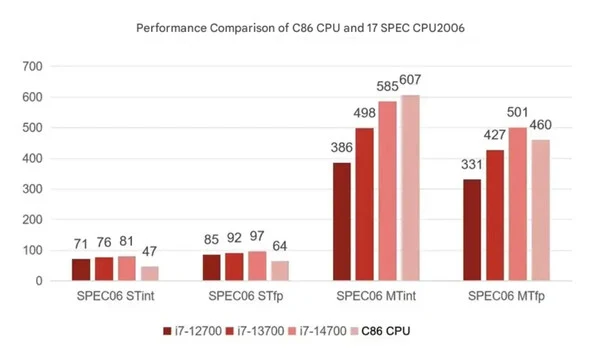
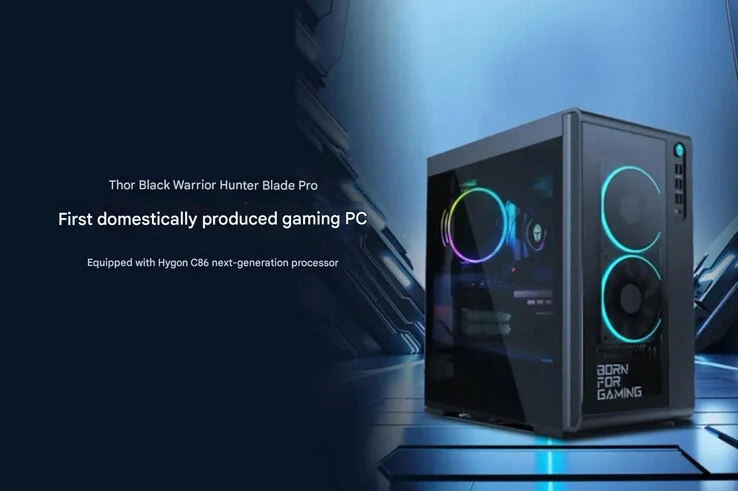
    Now, Thunderobot has shifted its focus to the Hygon C86, an x86 processor produced in China, also known as the Black Warrior Hunting Blade Pro. This processor features 16 cores and 32 threads, although its thermal design power (TDP) is not disclosed. It is claimed to perform between Intel’s Core i7-13700 and Core i7-14700K in multi-core tasks. However, with a peak clock speed of 2.8 GHz, the Hygon C86 achieves single-core performance comparable to the Core i7-12700, scoring only 1,073 and 8,811 points in Geekbench 6’s single-core and multi-core tests, which is quite disappointing.

    Cooling and Design

    Despite these underwhelming performance figures, Thunderobot has opted to keep the Hygon C86 well-cooled with an all-in-one (AIO) cooler, which includes a radiator mounted on top and three other sizable fans. Unfortunately, specifics regarding pricing and availability have not been released yet. From the image below, it’s clear that Thunderobot’s gaming desktop has ample room for a full-length graphics card, along with various front-mounted input/output options.

    Source:
    Link


  • RAM Prices Now Like Stocks: Retailers Remove Tags, Ask to Know

    RAM Prices Now Like Stocks: Retailers Remove Tags, Ask to Know

    Key Takeaways


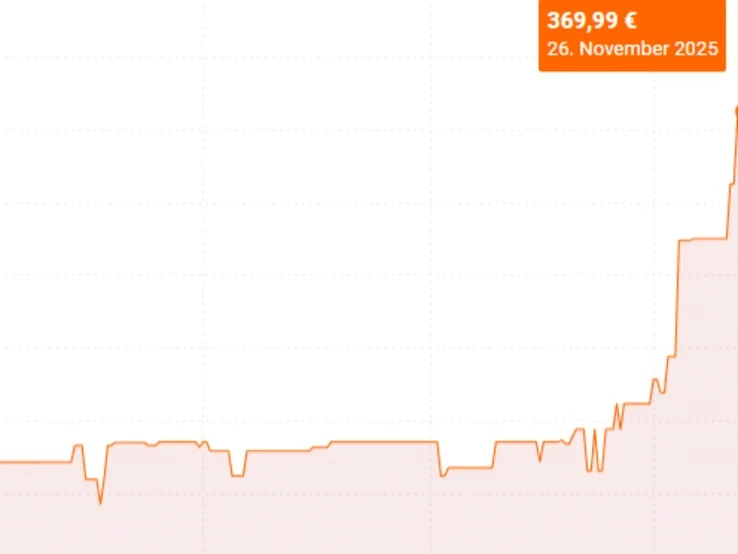
    RAM prices have recently skyrocketed, mainly due to a surge in demand for high-bandwidth memory (HBM) utilized in AI accelerators. This increasing demand has led major companies like Samsung, SK Hynix, and Micron to redirect their production efforts towards these more lucrative AI components. Consequently, we are seeing a typical supply shortage, which continues to drive prices upwards. A prime illustration of this is the Crucial Pro DDR5-6400 CL40 64 GB kit, which, as reported by the German price comparison website Idealo, has seen its price nearly double since the beginning of October.

    Reason for the Shift

    The logic behind this transition is straightforward: HBM chips yield significantly higher profit margins compared to conventional DDR4 or DDR5 RAM. Standard DRAM products compete in a market with thin margins, while AI server manufacturers like Nvidia and AMD are ready to pay more to ensure prompt production of their accelerator cards. For chip makers, prioritizing HBM production is thus much more lucrative—even if it leads to supply shortages in the PC market for the time being.

    Volatile Pricing Trends

    At this moment, memory prices are not only elevated but also extremely unstable. The market behaves similarly to a stock exchange, with prices changing rapidly. On Reddit, some users have mentioned that certain US retailers have taken down all price tags from their RAM products. Instead, customers are instructed to check with staff for the latest pricing.

    The significant price variations can be attributed to the erratic nature of the wholesale market. As HBM production diverts resources away from traditional DRAM, many retailers are racing to secure any remaining stock—usually at increased prices. These last-minute acquisitions, along with limited availability, can cause buying costs to fluctuate several times within a single day. Hence, printed price tags often become obsolete almost instantly.

    Community Reactions

    This scenario has ignited vibrant discussions on Reddit, where participants are likening the current RAM market to cryptocurrencies or meme stocks due to its erratic movements. Numerous users express their annoyance as previously planned PC upgrades suddenly become too expensive, with some RAM kits costing double what they did just a week ago. At present, it is uncertain how long this rise in prices will persist.


    Source:
    Link