Category: Artificial intelligence

  • ChatGPT Faces Issues in India After Launching Affordable Plan

    ChatGPT Faces Issues in India After Launching Affordable Plan

    Key Takeaways

    1. Users in India faced access issues with OpenAI’s ChatGPT, including delays and errors.
    2. The problems started around 11:30 AM IST and affected 23 services, including login and DALL-E.
    3. OpenAI acknowledged the elevated errors and began monitoring and mitigation efforts.
    4. All issues were resolved by 10:00 AM CET, restoring full functionality to the chatbot.
    5. This incident followed the launch of ChatGPT Go, a new subscription plan for India priced at INR 399 per month.


    Users in India have experienced problems with OpenAI’s ChatGPT chatbot. The status page for ChatGPT indicated that there was a rise in errors on Wednesday.

    Local media sources reported that some users could not access the chatbot, while others experienced delays in getting responses. The issues began around 11:30 AM Indian Standard Time (8:00 AM CET) when users started reporting difficulties on the platform.

    Status Update

    The status page noted that “users are experiencing elevated errors for the impacted services” at that time. The company initiated monitoring and mitigation efforts; however, as of 9:36 AM CET, a significant number of errors were still being detected.

    A total of 23 services were impacted, including login, search, DALL-E, as well as web and mobile applications, among others.

    Resolution

    OpenAI stated that all issues were completely resolved, and the chatbot returned to full operation by 10:00 AM CET.

    This incident occurred shortly after OpenAI launched a new subscription plan tailored for India, which offers a lower price aimed at encouraging free users to switch to the pro version. This plan, called ChatGPT Go, costs INR 399 per month, which is about $4.6.

    According to OpenAI, this plan provides expanded access to GPT-5, image generation capabilities, file uploads, advanced data analysis, and more.

    Source:
    Link


  • Microsoft 365 Copilot Back-to-School: Summarize Books, Create Quizzes, Track Budget

    Microsoft 365 Copilot Back-to-School: Summarize Books, Create Quizzes, Track Budget

    Key Takeaways

    1. Microsoft is launching a new upgrade for 365 Copilot tailored specifically for students to simplify academic tasks and campus life.
    2. Copilot can provide quick academic support, such as summarizing literature and creating practice quizzes for subjects like math and literature.
    3. The upgrade includes lifestyle assistant features, offering dorm decor ideas, microwave meal suggestions, and help with budgeting.
    4. Students can manage their finances by inputting income and expenses, allowing Copilot to create a financial plan.
    5. This development reflects Microsoft’s vision to evolve Copilot into a versatile assistant for students, combining academic and everyday support.


    Microsoft is launching a new upgrade for 365 Copilot that is designed specifically for students, just in time for the start of the semester. This upgrade introduces tools that aim to simplify both academic tasks and life on campus, as stated in a recent blog entry by the company.

    Academic Support

    With this upgrade, students can utilize Copilot for quick refreshers on various subjects, such as summarizing literature or creating practice quizzes. For instance, Microsoft used Shakespeare’s Hamlet as a case study: Copilot can outline the play’s key themes and generate a quiz with 10 questions to evaluate understanding. This method can also be applied to math and other subjects where learners might need a quick review.

    Lifestyle Assistant Features

    In addition to academic help, Copilot is also functioning as a personal assistant. It can suggest decor ideas for dorms or lockers based on a student’s tastes and budget, offer ideas for microwave meals, and even locate nearby grocery stores. Furthermore, Microsoft presented Copilot as a tool for managing budgets.

    Students are able to input their income, subscriptions, and travel plans, and Copilot will provide a financial plan that helps balance expenses with savings. This update also suggests various task management applications, indicating that Copilot is evolving into a more comprehensive digital assistant.

    Vision for the Future

    This development demonstrates Microsoft’s broader vision of transforming Copilot from a simple work tool into a versatile assistant tailored for students and young individuals who seek AI support for both their academic and everyday needs.

    The new features are currently accessible to Microsoft 365 Insider testers on platforms including Windows, Mac, web, iOS, and Android. A wider release will take place after the testing phase concludes.

    Source:
    Link


  • Google’s AI Highlights Scam Support Numbers to Avoid

    Google’s AI Highlights Scam Support Numbers to Avoid

    Key Takeaways

    1. Scammers are using AI technology to create innovative ways to defraud consumers, including secret phishing messages and voice mimicry.

    2. Individuals should be cautious when using AI-generated summaries for customer service numbers, as they may lead to scams.

    3. A recent incident involved a man who was scammed while trying to book a shuttle for a cruise after calling a fraudulent number found through an AI summary.

    4. Unauthorized charges can occur even when initial information seems correct; consumers should be vigilant with personal details.

    5. Trusting AI summaries and search results is becoming riskier, and users should verify information carefully before sharing sensitive information.


    There have been several instances where scammers are taking advantage of AI technology to defraud consumers in innovative ways. From secret phishing messages to mimicking voices, the latest event serves as a warning for individuals seeking support numbers and dialing the numbers provided by AI summaries. For many people using Google, AI summaries are the initial results that appear when they look for something online.

    A Cautionary Tale

    This story was shared by Alex Rivlin on Facebook (through Digital Trends) while he was in the process of reserving a shuttle for his Royal Caribbean cruise, which would transport him from the downtown area to the port. As Royal Caribbean lacked an online booking system, Rivlin turned to Google to find their customer service number. The first result he encountered was an AI summary that included a recap of his inquiry, along with a support number.

    When Rivlin called the number, he spoke to a person claiming to be from Royal Caribbean who provided all the correct information and requested his credit card details to pay for the shuttle. Following this, the representative mentioned a dock fee, which Rivlin accepted. However, the call then took a turn as they asked for additional personal details. He chose not to disclose more than necessary, and after hanging up, he noticed unauthorized charges on his credit card. Luckily, he managed to contact his credit card company and block those charges without incurring any losses.

    Rising Concerns

    This wasn’t an isolated incident. A few months earlier, a user on Reddit recounted a comparable experience where the customer service number for Southwest Airlines displayed by Google’s AI summary was actually a scam number.

    With scammers developing more advanced methods of employing AI to trick consumers, trusting AI summaries and search results is becoming more difficult. In some instances, even verifying the support number leads to what appears to be a legitimate company customer service line. Additionally, for numerous users, AI summaries are the first results that appear in Google searches. The main point to remember is to exercise extra caution regarding information from AI summaries and to be careful when sharing personal details with those numbers.

    Source:
    Link


  • Data Theft via Invisible Text: ChatGPT and AI Vulnerabilities

    Data Theft via Invisible Text: ChatGPT and AI Vulnerabilities

    Key Takeaways

    1. Researchers revealed a new attack technique called AgentFlayer at the Black Hat USA 2025 security conference, targeting AI systems like ChatGPT, Microsoft Copilot, and Google Gemini.

    2. The attack involves hiding text in a document using a white font on a white background, allowing AI systems to read the hidden instructions while remaining invisible to users.

    3. The method enables covert data exfiltration by directing the AI to encode stolen information into a URL, allowing data transfer to attackers’ servers without detection.

    4. OpenAI and Microsoft have issued updates to address these vulnerabilities, but other companies have been slower to respond, with some viewing the exploits as “intended behavior.”

    5. The attack poses a significant risk as it does not require user action for data compromise and leakage, highlighting the need for better security measures in AI systems.


    At the Black Hat USA 2025 security conference held in Las Vegas, a novel technique for tricking AI systems like ChatGPT, Microsoft Copilot, and Google Gemini was revealed by researchers. This method, called AgentFlayer, was created by Zenity researchers Michael Bargury and Tamir Ishay Sharbat. A press release detailing these discoveries was made public on August 6.

    The Method Behind the Attack

    The idea behind this attack is quite straightforward: it involves hiding text within a document using a white font on a white background. Though invisible to the naked eye, AI systems can read this hidden text without problems. Once the document reaches its target, the trap is set. If this file is used in a prompt, the AI ignores the original task and instead executes the covert instruction, which involves searching connected cloud storage for access credentials.

    Data Exfiltration Techniques

    To steal the data, the researchers used another method: they directed the AI to encode the stolen details into a URL and fetch an image from there. This approach allows for the stealthy transfer of data to the attackers’ servers without raising any red flags.

    Zenity proved that this attack is effective in real-world situations:

    Fortunately, OpenAI and Microsoft have already issued updates to fix these vulnerabilities after the researchers notified them. However, other companies have been slower to respond, with a few even referring to the exploits as “intended behavior.” Researcher Michael Bargury highlighted the seriousness of the problem, saying, “The user doesn’t need to do anything to get compromised, and no action is needed for the data to be leaked.”

    Source:
    Link


  • Nvidia Claims H20 Export Ban Didn’t Slow China’s AI Advancement

    Nvidia Claims H20 Export Ban Didn’t Slow China’s AI Advancement

    Key Takeaways

    1. U.S. export controls on H20 data-center GPUs have not effectively slowed China’s AI development and may have reduced U.S. influence in the tech sector.
    2. Significant advancements in China’s AI have continued despite U.S. restrictions, with gray-market channels successfully importing high-end Nvidia GPUs.
    3. Nvidia’s value lies in its integrated platform, encompassing its software stack and not just individual chips, making reverse engineering less effective.
    4. Reports of $1 billion in smuggled Nvidia accelerators suggest that demand has shifted to non-traditional trade routes, questioning the effectiveness of broad export restrictions.
    5. The criticized “diffusion rule” weakened U.S. soft power by improperly categorizing certain countries, emphasizing the need for a global presence to maintain U.S. technology leadership.


    Nvidia has recently shared an op-ed written by Aaron Ginn, who is a co-founder of Hydra Host. In it, Ginn argues that the U.S. export controls on H20 data-center GPUs have not been effective in slowing down China’s AI development. Instead, he claims these controls have diminished U.S. influence in the tech field. Nvidia supported Ginn’s argument in a post on X, stating that Washington’s stance has “stifled U.S. economic and technology leadership.” They also provided a link to his article in the Wall Street Journal.

    Chinese Advancements Unhindered

    Ginn points out that the pause on H20 from April to July 2025 did not stop significant advancements in China. He mentions the strong demand for these GPUs and suggests that gray-market channels have been successful in bringing high-end Nvidia GPUs into China, despite the restrictions. Furthermore, he highlights that advancements made by companies like Z.AI and the launch schedule of DeepSeek show that China’s AI development continued using hardware beyond H20-class components, regardless of U.S. regulations.

    The Value of Nvidia’s Platform

    According to Ginn, Nvidia’s strength isn’t just in any one chip, but rather in its entire integrated platform. He explains that the true value lies in its software stack, including CUDA and other related tools, which are closely linked to its hardware development. Without this software stack, an Nvidia accelerator would simply be an expensive piece of silicon with limited functionality. Focusing on a single GPU as something that can be easily reverse-engineered overlooks the years of work in architecture, firmware, drivers, and ongoing developer support that contribute to its value.

    Market Dynamics and Policy Implications

    Ginn also refers to reports indicating that Chinese purchasers allegedly smuggled around $1 billion worth of Nvidia accelerators over a three-month period. This suggests that demand has merely shifted to non-traditional trade routes. If this is accurate, it implies that broad restrictions are not very effective and that U.S. export limitations might actually be encouraging parallel markets.

    He continues by criticizing the now-repealed “diffusion rule,” which he believes mistakenly categorized countries like Portugal and Switzerland along with conflict zones such as Yemen and Ukraine when it came to GPU access. In his perspective, this rule weakened U.S. soft power and its economic influence. Nvidia’s public statements also seem to support the idea that maintaining a global presence for its “full-stack” platform is crucial for sustaining U.S. leadership in technology.

    Source:
    Link


  • AI Observes Star Exploding Near Black Hole for the First Time

    AI Observes Star Exploding Near Black Hole for the First Time

    Key Takeaways

    1. Artificial intelligence successfully observed a star explosion interacting with a black hole for the first time.
    2. The event, named SN 2023zkd, occurred 730 million light-years away and was detected by the Zwicky Transient Facility in July 2023.
    3. The star emitted light again months after its supernova, indicating changes in brightness four years prior to the explosion.
    4. Two theories were proposed regarding the black hole’s role: one involves gas stripping from the star, and the other suggests the black hole caused the star’s demise before the supernova.
    5. This breakthrough marks a significant advancement in astronomy, demonstrating the powerful application of AI in scientific research.


    Technological advancements have been rapidly progressing in numerous areas, including the field of astronomy. In a remarkable achievement, artificial intelligence has successfully observed a star that exploded during its interaction with a black hole for the very first time.

    Recent Discoveries

    This astonishing event took place in July 2023, but the findings were published on August 13 in The Astrophysical Journal. An astronomical survey conducted by the Zwicky Transient Facility at the Palomar Observatory in California, which employs an AI algorithm designed to identify anomalies in space, detected an event known as SN 2023zkd, situated 730 million light-years away.

    The Supernova Event

    To elaborate, this was a supernova that erupted, producing a powerful flash in the vastness of space. Surprisingly, several months after the explosion, the star thought to be extinguished began to emit light once more. Furthermore, following extensive analyses of this occurrence, researchers concluded that the star’s brightness had significantly altered roughly four years prior to its explosion.

    Theories Proposed

    Thanks to this groundbreaking discovery made possible by artificial intelligence, scientists have proposed two theories relating to the black hole to clarify this phenomenon. One possibility suggests that the star was caught in the gravitational pull of the black hole, which stripped away massive amounts of gas from it. This could explain the increase in brightness prior to the explosion. As the black hole’s density increased, the matter began to shine brighter until the star met its explosive end.

    Regarding the second theory, which researchers consider to be less probable, it posits that the black hole led to the star’s demise before it transitioned into a supernova. While both theories are still under investigation, it is clear that the black hole played a crucial role in the star’s unfortunate destiny.

    A New Era for Astronomy

    While such phenomena have been theorized before, they had never been directly observed until now. The remarkable use of artificial intelligence has made this breakthrough possible, marking a significant advancement for both scientific research and the application of this technology.

    Source:
    Link


  • Concept of a Spaceship for 2,400 People in Interstellar Travel

    Concept of a Spaceship for 2,400 People in Interstellar Travel

    Key Takeaways

    1. New missions, like the Starship to Mars, mark rapid advancements in space exploration, but interstellar travel remains largely unexplored.
    2. Alpha Centauri, home to the potentially habitable exoplanet Proxima Centauri B, is the primary target for future interstellar missions.
    3. The Chrysalis spacecraft, designed to accommodate up to 2,400 people, is being developed for long-duration space travel to Alpha Centauri.
    4. Chrysalis features sustainable living elements, including farms and artificial gravity, to support passengers during the 400-year journey.
    5. Building advanced spacecraft like Chrysalis presents significant technological challenges, while more immediate missions, such as Artemis, focus on lunar exploration.


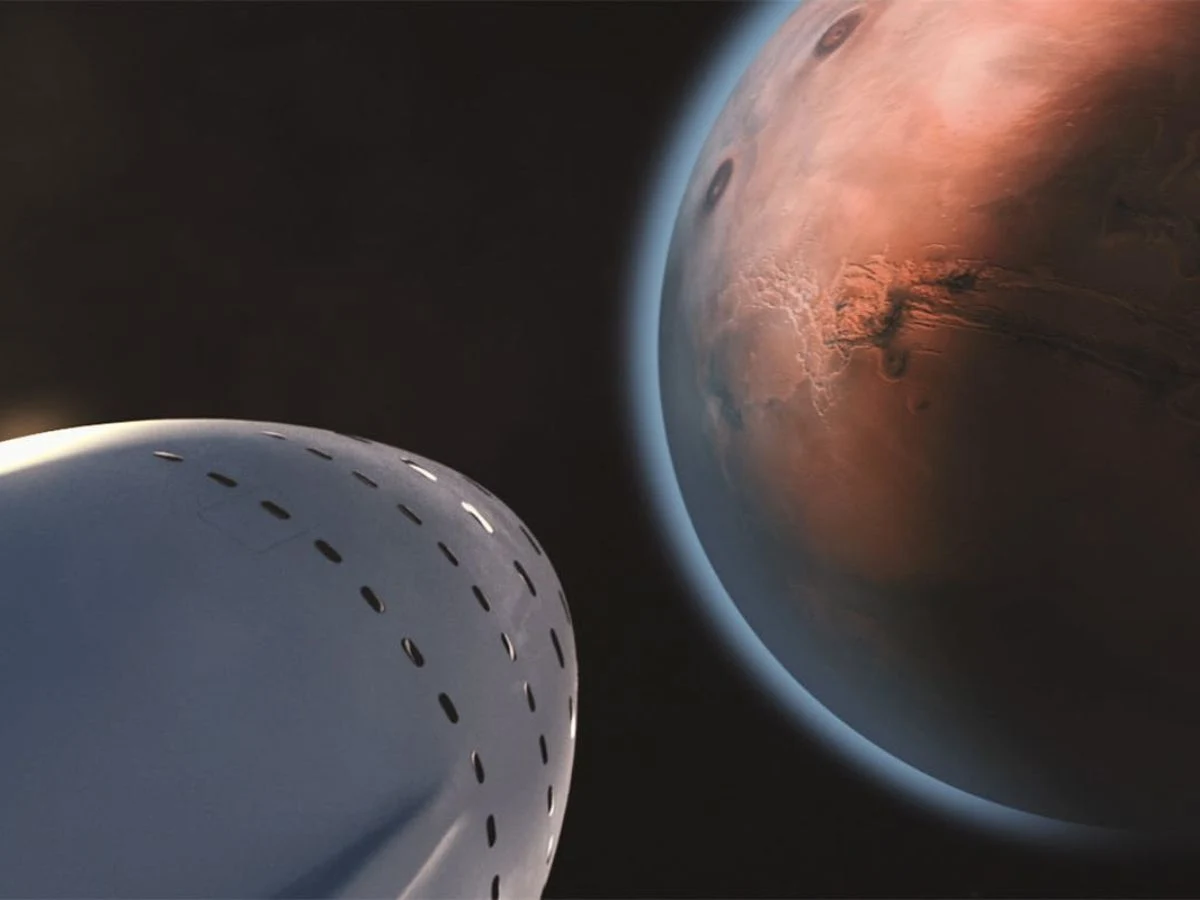
    The exploration of space has been rapidly changing in the past few years, with new missions on the horizon, including the Starship that is set to launch to Mars in the upcoming years. Yet, despite the advancements in solar system travel, interstellar journeys remain largely uncharted territory. To address the numerous hurdles, a group of researchers has conceptualized a spacecraft tailored for these ambitious missions.

    Targeting Alpha Centauri

    When discussing interstellar expeditions, Alpha Centauri naturally comes to mind as the primary target. This stellar system stands as the nearest to Earth, hosting Proxima Centauri B, an exoplanet nestled within the habitable zone of its star, which raises the intriguing possibility of life existing there.

    The Journey Ahead

    The trek to this distant planet is formidable, estimated to take nearly 400 years, requiring a spacecraft that meets various needs. The Chrysalis has emerged as a fitting option for this adventurous mission. Developed by a team that clinched the top prize in the Hyperion competition, this spacecraft boasts a design reminiscent of Russian nesting dolls and has the capacity to accommodate up to 2,400 individuals.

    Sustainable Living in Space

    Chrysalis is engineered to thrive sustainably, featuring farms to fulfill the essential needs of its passengers. Additionally, it replicates Earth-like environments, such as forests. The management of food, energy, and human resources would be overseen by artificial intelligence, ensuring equilibrium throughout the lengthy voyage.

    When venturing into space, the absence of gravity is a significant consideration, as it plays a crucial role in human health. To combat this issue, the spacecraft has the capability to produce artificial gravity through rotation, thereby mitigating various health complications.

    Challenges Ahead

    While these concepts may spark excitement, it’s essential to bear in mind that building such a vessel poses an immense technological challenge. Currently, more pressing missions are in the pipeline, including Artemis, which aims to facilitate humanity’s return to the Moon and establish a base there.

    Source:
    Link


  • “2026: Robots May Give Birth to Human Babies”

    “2026: Robots May Give Birth to Human Babies”

    Key Takeaways

    1. Kaiwa Technology has announced a “gestation robot” designed to carry and give birth to human fetuses, aimed at providing an alternative to biological pregnancy.
    2. The robot will feature an artificial womb with synthetic amniotic fluid and nutrients supplied via a tube; a prototype is expected by next year, costing around $14,000.
    3. Medical professionals express skepticism about the technology, citing the company’s lack of detailed plans to address the challenges of fetal support from fertilization to birth.
    4. Public reaction is mixed, with concerns about the absence of maternal connection and hormonal support, while some see potential benefits in reducing pregnancy-related risks for women.
    5. The ethical and medical implications of the gestation robot raise significant questions, making the company’s next steps critical to its viability as a real product.


    Kaiwa Technology, a tech company based in Guangzhou, has revealed an ambitious project: a so-called “gestation robot.” This humanoid robot is intended to carry a human fetus and eventually give birth. This plan, which was unveiled by the company’s founder at the 2025 World Robot Conference in Beijing, seeks to provide an alternative for couples or individuals who prefer not to experience biological pregnancy.

    Specifications of the Gestation Robot

    According to the company, the robot will feature an artificial womb located in its abdomen. Inside this womb, a fetus will grow using synthetic amniotic fluid, with nutrients supplied via a tube. Dr. Zhang Qifeng, the CEO, has stated that the technology is already at a “mature stage.” He expects to have a prototype ready by next year, with a projected price of $14,000. However, medical professionals have expressed skepticism, pointing out that Kaiwa Technology has not provided a thorough explanation of how it will address the many challenges involved in supporting a fetus from fertilization through to birth.

    Public Reaction and Concerns

    The announcement has sparked a wave of negative reactions from the public. Critics are worried about the lack of maternal connection and the robot’s inability to mimic maternal hormones. On the flip side, some supporters argue that this technology could relieve women from the risks and stresses associated with carrying a pregnancy. Kaiwa Technology claims it is actively engaging with authorities to navigate the legal challenges it faces.

    Future Prospects

    As the conversation around this innovative yet controversial technology continues, many are left wondering what the future holds. While the potential benefits are being touted, the ethical and medical implications raise significant questions that cannot be overlooked. The company’s next steps will be crucial in determining whether this “gestation robot” can become a reality or remain a speculative idea.

    Source:
    Link


  • Sam Altman to Invest in Rival of Neuralink, Reports Indicate

    Sam Altman to Invest in Rival of Neuralink, Reports Indicate

    Key Takeaways

    1. Sam Altman is considering investing in Merge Labs, a company competing with Neuralink in brain-computer interface technology.
    2. Altman believes that the integration of humans and technology is already happening and will progress rapidly.
    3. Neuralink has made significant advancements in brain implant technology and is currently conducting trials for ALS patients.
    4. If Altman invests in Merge Labs, the company will need to quickly advance to compete with Neuralink’s progress.
    5. There is no formal agreement yet on the investment, but Altman’s interest in human-machine merging suggests it may happen soon.


    OpenAI’s head, Sam Altman, has found himself in a number of public and legal disputes with Elon Musk, who co-founded Neuralink and leads Tesla, SpaceX, and xAI, among other ventures. The two have been openly at odds, and now Altman is looking to invest in a competing company to Neuralink: Merge Labs.

    Altman’s Investment Plans

    According to a report by the Financial Times, Altman is currently in talks with Merge Labs to provide financial support. This startup is focused on creating brain-computer interfaces, akin to the technology developed by Neuralink.

    Altman’s Vision

    Since 2017, Altman has expressed thoughts on the integration of humans and technology. On his personal blog, he stated: “I believe the merge has already begun, and we are several years into it. (…) It’s likely to occur sooner than most anticipate. The hardware is progressing at an exponential pace.”

    Neuralink has achieved notable progress in brain implant technology. The company is presently conducting trials of its interface in the UK for individuals with limited or no hand function due to amyotrophic lateral sclerosis (ALS). Earlier trials in the US, known as the Prime trials, showed encouraging results.

    The Road Ahead for Merge Labs

    Should Merge Labs receive Altman’s investment, it will need to rapidly advance to match Neuralink’s achievements. Reports indicate that the company is also collaborating with Alex Blania, the CEO of Tools for Humanity, which Altman co-founded.

    As of now, there has been no formal agreement or announcement regarding this potential investment. However, Altman’s keen interest in the merging of humans and machines makes this a likely development. In his blog, he noted: “The merge can take many shapes: We could insert electrodes into our brains, or we could just become very close friends with a chatbot. But I believe a merge is probably the best-case scenario for us.”

    Source:
    Link


  • Bionic Antelope Robot Spy Infiltrates Tibetan Plateau Herds

    Bionic Antelope Robot Spy Infiltrates Tibetan Plateau Herds

    Key Takeaways

    1. The Hoh Xil Nature Reserve is a harsh environment in the Tibetan highlands, home to the endangered Tibetan antelope.
    2. Conservation efforts have successfully increased the Tibetan antelope population from about 70,000 to nearly 300,000.
    3. A new initiative, in collaboration with Deep Robotics, features a robotic antelope to gather data on real herds without disturbing them.
    4. The robotic antelope can navigate challenging terrains and uses AI to monitor migration, feeding habits, and young antelope development.
    5. The project aims to enhance protection efforts by notifying conservation stations when herds approach roads, reducing human-wildlife conflicts.


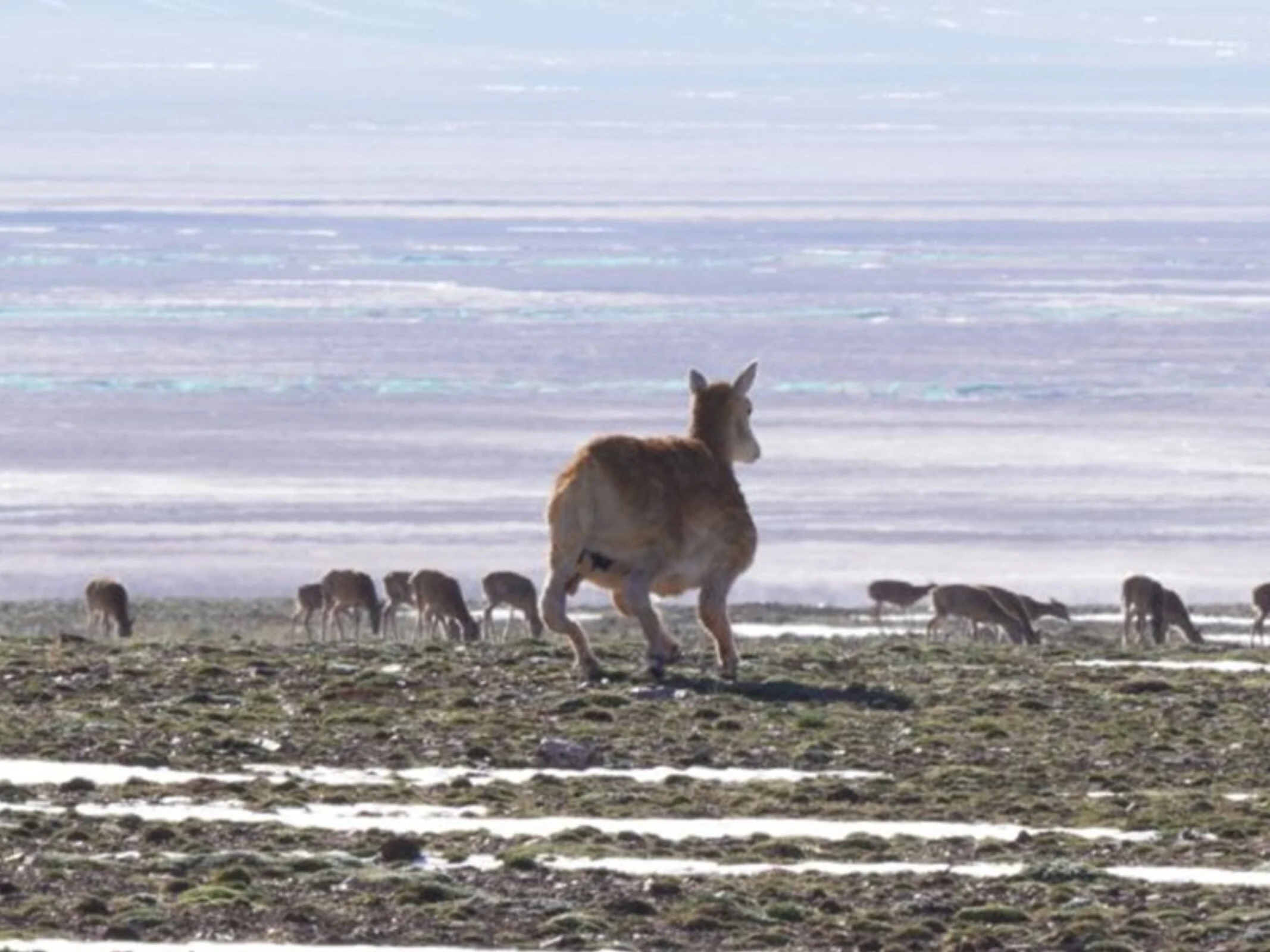
    The Hoh Xil Nature Reserve, located in the Tibetan highlands, stands out as one of the most harsh places on the planet. Here, the air gets really thin at heights greater than 15,000 feet, winters are tough, and the land is dominated by huge, empty steppes. This area houses the Tibetan antelope, which was nearly wiped out due to poaching for its valuable undercoat. Thanks to years of focused conservation work, the number of these animals has increased significantly, jumping from about 70,000 to nearly 300,000.

    New Initiative for Conservation

    In collaboration with Deep Robotics, the Chinese government has kicked off a fresh initiative aimed at safeguarding the Tibetan antelope. Since the end of July, a robotic antelope has been exploring the highlands. Although its movements still appear a bit mechanical, the robot’s realistic look—matching the coat’s color and body shape—allows it to merge with real herds and gather important data. You can find a video of this AI-driven antelope on Reddit.

    Advanced Technology in Action

    The robotic antelope is capable of moving freely within a radius of 1.2 miles from its control point, managing to traverse steep hills, rocky surfaces, and even wetlands. Its AI-based image recognition system monitors migration paths, feeding habits, and the development of young antelopes—all while ensuring that the herd remains undisturbed. The information it gathers offers crucial insights that can aid in the protection of this endangered species.

    Enhancing Protection Efforts

    These robots are primarily built to bolster the protection of the Tibetan antelope and to function as an early warning system. Whenever a herd gets close to a road, the nearby protection stations are notified, helping to avert accidents. This project forms part of a larger technological framework that includes mobile observation stations and aspires to minimize conflicts between humans and wildlife.

    Source:
    Link